1. Search Result
Search Result
Results for "

inositol pyrophosphates

" in MedChemExpress (MCE) Product Catalog:

8

Inhibitors & Agonists

4

Natural
Products

Targets Recommended:
Cat. No. Product Name Target Research Areas Chemical Structure
  • HY-N2581
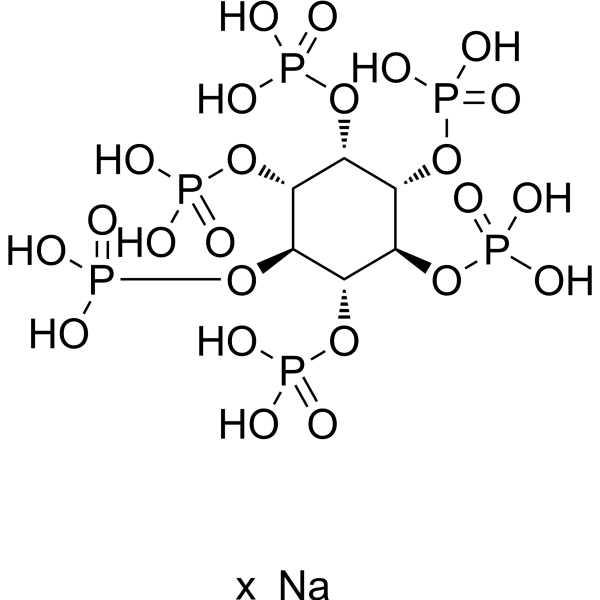
    Phytic acid sodium salt
    1 Publications Verification

    myo-inositol, hexakisdihydrogen phosphate sodium salt; inositol hexaphosphate sodium salt

    MOFs Endogenous Metabolite Amyloid-β Autophagy Cardiovascular Disease Neurological Disease Metabolic Disease Cancer
    Phytic acid (myo-Inositol; hexakis dihydrogen phosphate; Inositol hexaphosphate) sodium salt is an orally active compound. Phytic acid sodium salt can be derived from the seeds of legumes. Phytic acid sodium salt is a [PO4] 3- storage depot and precursor for other inositol phosphates and pyrophosphates. Phytic acid sodium salt attenuates oligomers and upregulates autophagy protein. Phytic acid sodium salt can be used in cardiovascular disease, metabolic disease, nervous system disease and cancer research .
    Phytic acid sodium salt
  • HY-N0814
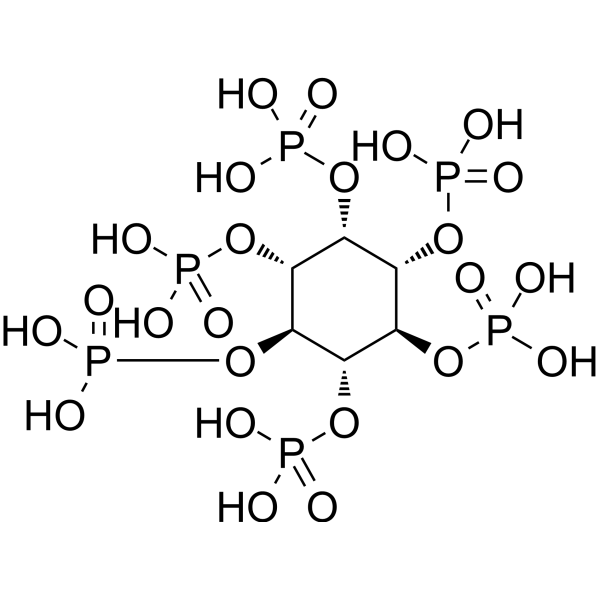
    Phytic acid (50% w/w in water)
    1 Publications Verification

    inositol hexaphosphate; SNF472 free acid

    Endogenous Metabolite Amyloid-β Autophagy Cardiovascular Disease Neurological Disease Metabolic Disease Cancer
    Phytic acid (myo-Inositol; hexakis dihydrogen phosphate; Inositol hexaphosphate) is an orally active compound. Phytic acid can be derived from the seeds of legumes. Phytic acid is a [PO4] 3- storage depot and precursor for other inositol phosphates and pyrophosphates. Phytic acid attenuates oligomers and upregulates autophagy protein. Phytic acid can be used in cardiovascular disease, metabolic disease, nervous system disease and cancer research .
    Phytic acid (50% w/w in water)
  • HY-171099

    LI-2124

    IPK Superfamily Cardiovascular Disease Endocrinology
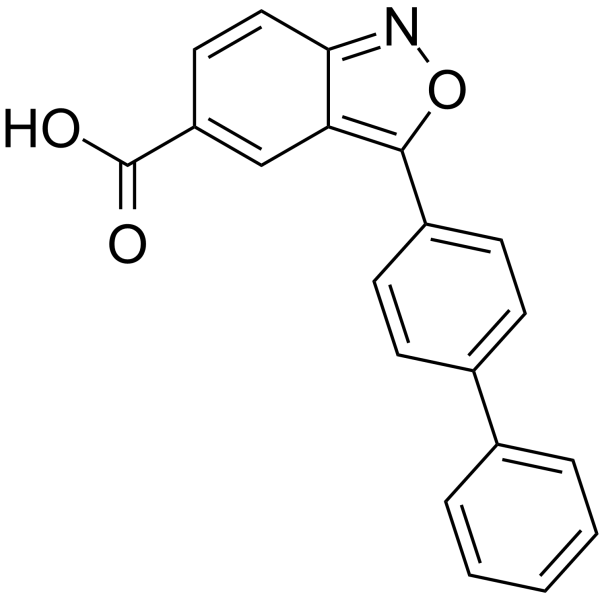
    SC-919 is an orally active IP6K inhibitor, with an IC50 of < 5.2 nM against IP6K1, < 3.8 nM against IP6K2, and 0.65 nM against IP6K3. By inhibiting the activity of IP6K, SC-919 reduces intracellular IP7 levels, thereby suppressing XPR1-mediated cellular phosphate efflux. SC-919 increases intracellular phosphate and ATP levels while reducing phosphate entry into the bloodstream, thus decreasing plasma phosphate levels. SC-919 can be used in research related to chronic kidney disease and hyperphosphatemia .
    SC-919
  • HY-150607

    IPK Superfamily Others
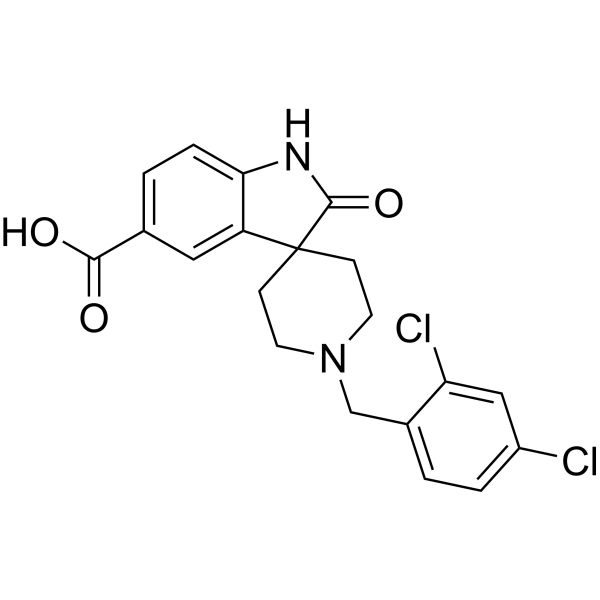
    UNC7467 is a potent IP6K inhibitor with values of 4.9, 8.9 and 1320 nM for IP6K2, IP6K1 and IP6K6, respectively. UNC7467 reduces levels of inositol pyrophosphates. UNC7467 can be used for obesity research .
    UNC7467
  • HY-N2580
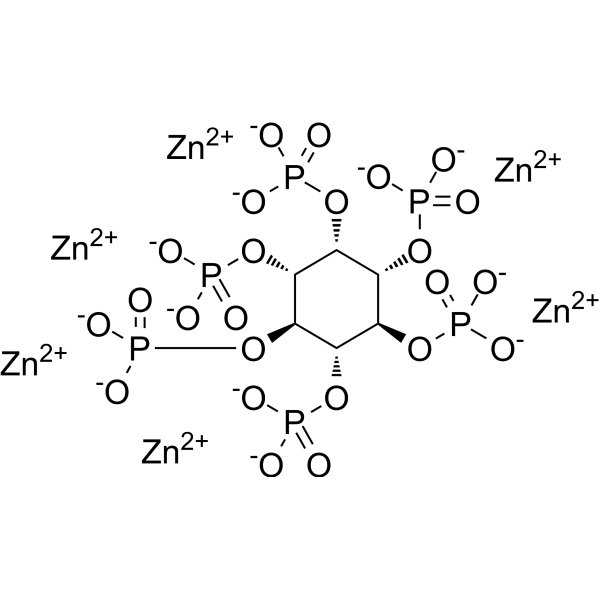
    Zinc Phytate
    1 Publications Verification

    Endogenous Metabolite Amyloid-β Autophagy Cardiovascular Disease Neurological Disease Metabolic Disease Cancer
    Zinc Phytate (myo-Inositol; hexakis dihydrogen phosphate; Inositol hexaphosphate) is an orally active compound. Zinc Phytate can be derived from the seeds of legumes. Zinc Phytate is a [PO4] 3- storage depot and precursor for other inositol phosphates and pyrophosphates. Zinc Phytate attenuates oligomers and upregulates autophagy protein. Zinc Phytate can be used in cardiovascular disease, metabolic disease, nervous system disease and cancer research .
    Zinc Phytate
  • HY-153530

    IPK Superfamily Neurological Disease Metabolic Disease
    LI-2242 is an inositol hexakisphosphate kinase (IP6K) inhibitor. LI-2242 has inhibition effect for IP6K1, IP6K2, IP6K3 and IPMK with IC50 values of 31 nM, 42 nM, 8.7 nM and 1944 nM, respectively. LI-2242 can be used for thew research of type II diabetes, obesity, metabolic complications, venous thrombosis, and psychiatric disorders .
    LI-2242
  • HY-N16070

    Endogenous Metabolite Others
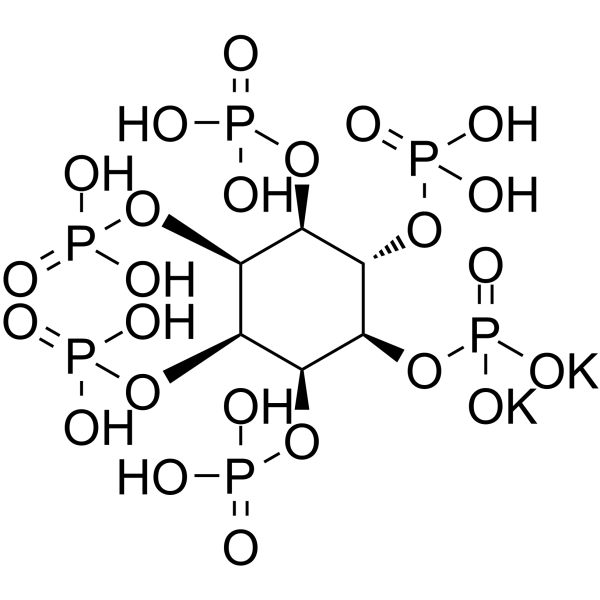
    1-PP-myo-InsP5 is an inositol pyrophosphate. 1-PP-myo-InsP5, as a signaling molecule in mammals, can transmit signals by binding to specific receptors or through non-enzymatic transphosphorylation. 1-PP-myo-InsP5 can be involved in various biological processes such as insulin signaling and telomere length regulation .
    1-PP-myo-InsP5
  • HY-181448

    inositol hexaphosphate hexalithium; SNF472 hexalithium

    Endogenous Metabolite Amyloid-β Autophagy Cardiovascular Disease Neurological Disease Metabolic Disease Cancer
    Phytic acid (Inositol hexaphosphate hexalithium) hexalithium is an orally active compound. Phytic acid hexalithium can be derived from the seeds of legumes. Phytic acid is a [PO4] 3- storage depot and precursor for other inositol phosphates and pyrophosphates. Phytic acid hexalithium attenuates oligomers and upregulates Autophagy protein. Phytic acid hexalithium can be used in cardiovascular disease, metabolic disease, nervous system disease and cancer research .
    Phytic acid hexalithium

Inquiry Online

Your information is safe with us. * Required Fields.

Salutation


Country or Region *

Applicant Name *


Organization Name *

Department *


Email Address *


Product Name *

Cat. No.


Requested quantity *

Phone Number *


Remarks

Inquiry Online

Inquiry Information

Product Name:
Cat. No.:
Quantity:
MCE Japan Authorized Agent:

