35 Results for "

living tissue

" in MedChemExpress (MCE) Product Catalog:
Products (35)

35 Results for "living tissue" in MCE Product Catalog:

81
81 Publications Verification
Cat. No.: HY-116215
CAS No.: 186689-07-6
Purity:  99.74%
Target:  

Fluorescent Dye

Research Areas:  

Others

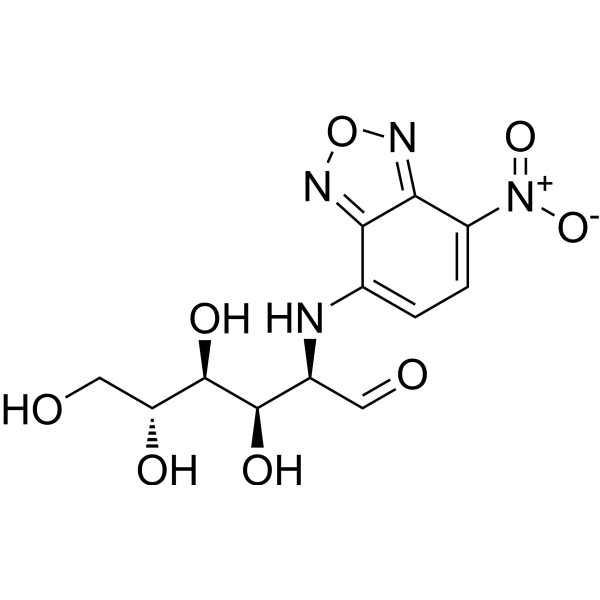
2-NBDG is a fluorescently-labeled deoxyglucose analog that is used primarily to directly monitor glucose uptake by living cells and tissues. It is also used as a topical contrast reagent for the detection of neoplasia. 2-NBDG can be used in real-time confocal, high-resolution, or wide-field fluorescence microscopy as well as in flow cytometry. The probe can be excited by the Argon laser at 488 nm to give the environment-sensitive fluorescence. It has lower photostability than the rhodamine-based fluorescent probes.
loading...
    loading...
12
12 Cited Publications
Cat. No.: HY-D0714
CAS No.: 298-96-4
Synonyms: 2,3,5-Triphenyltetrazolium chloride; TPTZ; TTC
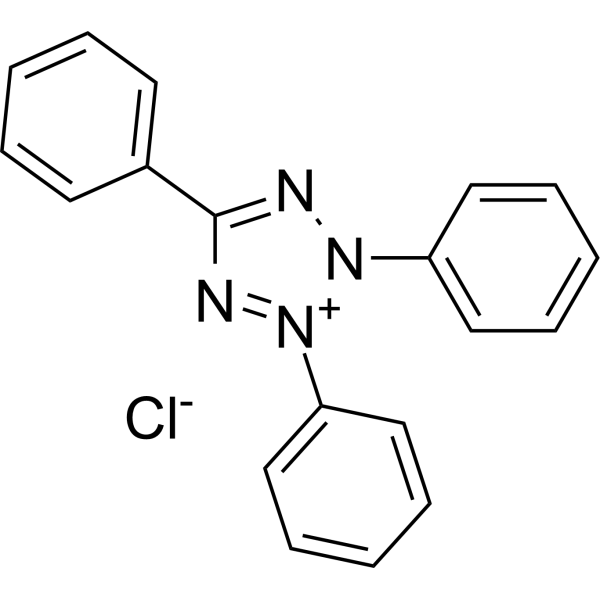
Tetrazolium Red (2,3,5-Triphenyltetrazolium chloride; TTC) is a not brain-penetrant, colorless, water-soluble dye that is reduced by mitochondrial enzymes to a deep red, water-insoluble compound (formazan) mainly in the mitochondria of living cells. Tetrazolium Red is used to observe the activity of dehydrogenase, and it turns colorless to red when exposed to hydrogen. Tetrazolium Red distinguishes between surviving and infarcted brain tissue after stroke. Tetrazolium Red has been used to stain heart tissue to measure the extent of acute lesions and also used to stain brain tissue to detect the size of the infarcted area. The absorption wavelength of Tetrazolium Red is 570 nm .
loading...
    loading...
4
4 Cited Publications
Cat. No.: HY-D0220
CAS No.: 92-31-9
Synonyms: Toluidine Blue O
Target:  

Fluorescent Dye

Research Areas:  

Cancer

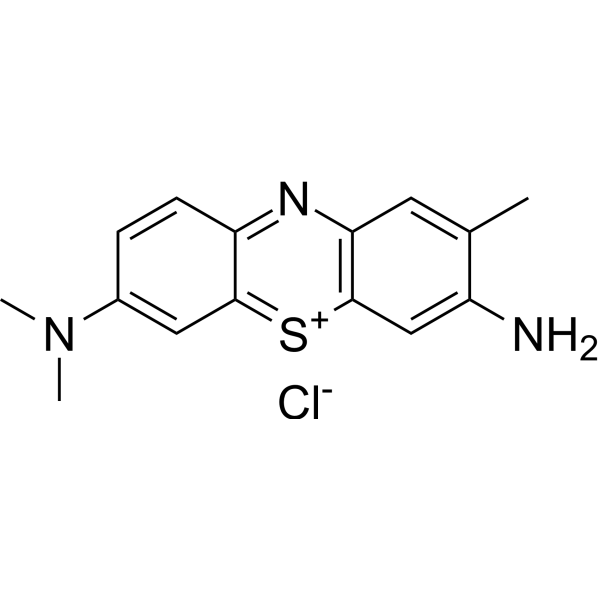
Toluidine Blue (Toluidine Blue O) is an alkaline quinonimine dye (vivo dye) with high affinity for acidic tissue components, staining nuclei blue and polysaccharides purple. Toluidine Blue shows heterostaining properties for mast cells, mucins and chondrocytes. Toluidine Blue can stain different components of plant tissues and cells in different colours. Toluidine Blue is also used as a diagnostic aid to identify malignant lesions, such as cancer .
loading...
    loading...
3
3 Cited Publications
Cat. No.: HY-D0970
CAS No.: 72-57-1
Synonyms: Direct Blue 14; Trypan Blue
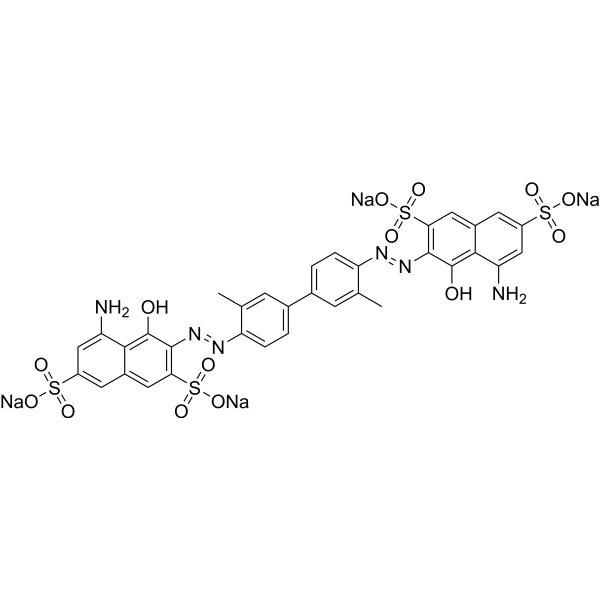
Diphenyl Blue (Trypan Blue) is a cell active dye, the most commonly used dye for the identification of dead cells, of en used to test cell membrane integrity and cell viability. Diphenyl Blue staining is one of the methods for tissue and cell culture. When cells are deactivated or have incomplete cell membranes, Diphenyl Blue can stain them Blue. Normal living cells with intact cell membranes reject Diphenyl blue and do not stain them blue. However, macrophages are capable of phagocytosis of Diphenyl Blue, so it can be used as a living stain for macrophages .
loading...
    loading...
Cat. No.: HY-W094758A
CAS No.: 959-81-9
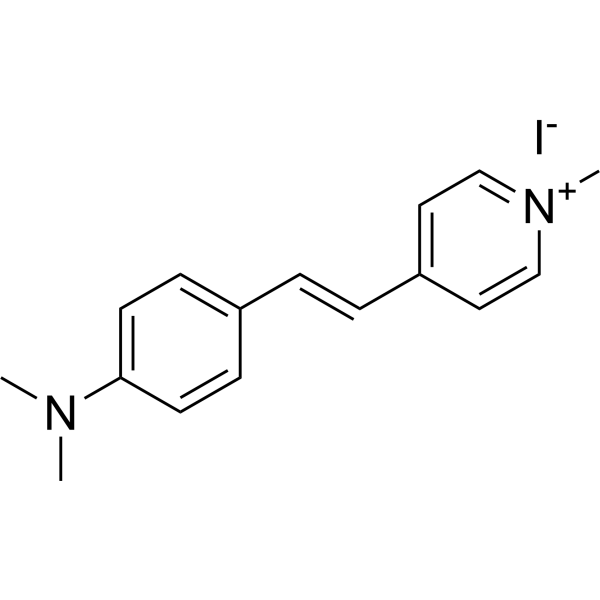
4-Di-1-ASP is a styryl dye used to stain glioma cells in living brain tissue for analysis of cell structure, viability, proliferation and endocytosis, cytokinesis and phagocytosis, as well as for observation of mitochondrial structures in living cells. 4-Di-1-ASP fluoresces green when imaged microscopically (λexem = 475/606 nm) .
loading...
    loading...
Cat. No.: HY-P4154
CAS No.: 2276787-79-0
Synonyms: ALM-488
Target:  

Fluorescent Dye

Research Areas:  

Neurological Disease Cancer

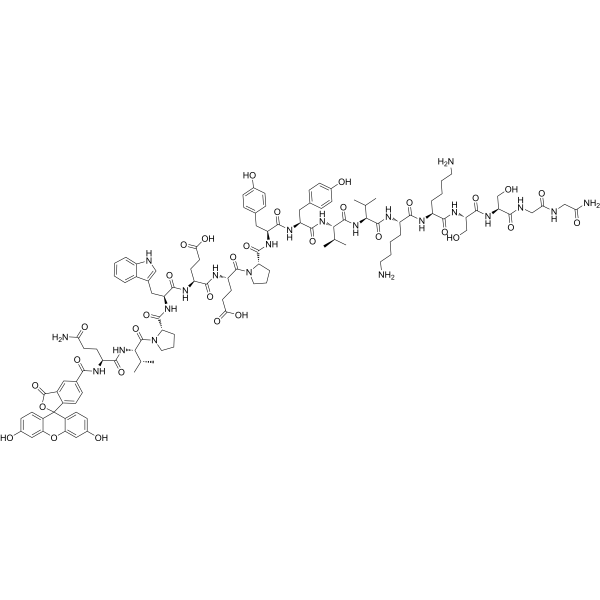
Bevonescein (ALM-488) is a fluorescein-conjugated peptide that facilitates the targeted delivery of a fluorescent moiety (5-FAM (HY-66022)) to nerves after intravenous (IV) administration. Bevonescein binds nerve-associated connective tissue, labels peripheral nerves under real-time fluorescence imaging (FL) in living mice and human ex vivo nerve tissue. Bevonescein is a peptide-linked tracer which fluorescently labeled both intact and degenerated nerves (Ex/Em = 480/530 nm) .
loading...
    loading...
Cat. No.: HY-D2836
Synonyms: FITC-Hyaluronate (MW 1000000)
FITC-HA (MW 1000000) is hyaluronic acid (HA) (HY-B0633A) labeled with FITC (HY-66019). FITC-HA retains the ability of HA to bind to receptors (such as CD44) and form extracellular matrices, while it can be detected by fluorescence microscopy or flow cytometry for tracing the localization, binding, internalization and metabolic pathways of HA in cells, tissues or living organisms (Ex/Em ≈ 490/520 nM) .
loading...
    loading...
Cat. No.: HY-DY1019
CAS No.: 186689-07-6
2-NBDG (solution) is a fluorescently-labeled deoxyglucose analog that is used primarily to directly monitor glucose uptake by living cells and tissues. It is also used as a topical contrast reagent for the detection of neoplasia. 2-NBDG can be used in real-time confocal, high-resolution, or wide-field fluorescence microscopy as well as in flow cytometry. The probe can be excited by the Argon laser at 488 nm to give the environment-sensitive fluorescence. It has lower photostability than the rhodamine-based fluorescent probes.
Solvent and Concentration: Sterile PBS: 5 mM
loading...
    loading...
Cat. No.: HY-D2318
CAS No.: 2081888-04-0
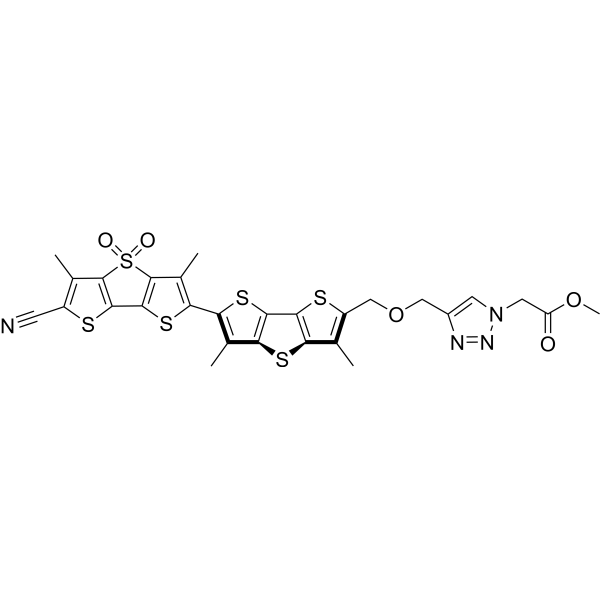
Flipper-TR 5 is a Flipper probe containing a terminal carboxylate for retention on the plasma membrane. Flipper-TR 5 selectively labels the cytoplasmic membrane, and exhibits excellent mechanical sensitivity, negligible cytotoxicity and controllable phototoxicity .
loading...
    loading...
Cat. No.: HY-D2344
CAS No.: 325721-44-6
Synonyms: 3-Benzothiazole-daphnetin
3-BTD (3-Benzothiazole-daphnetin) is a Catechol-O-methyltransferase (COMT) two-photon fluorescence probe. 3-BTD can also be used for biological imaging of endogenous COMT in living cells and tissue sections .
loading...
    loading...
Cat. No.: HY-D1275
CAS No.: 2119597-33-8
CAY10731 (compound 3) is a highly selective fluorescent probe for detection of hydrogen sulfide (H2S). CAY10731 is used to monitor exo- and endogenous H2S in both cancer and normal cells. CAY10731 is applied for imaging of H2S in living tissues at variable depths and in nematodes .
loading...
    loading...
Cat. No.: HY-130013
CAS No.: 1448821-89-3
Purity:  99.36%
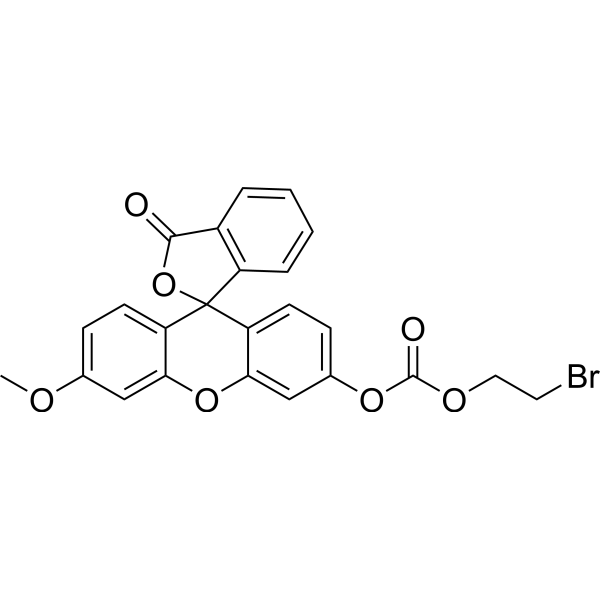
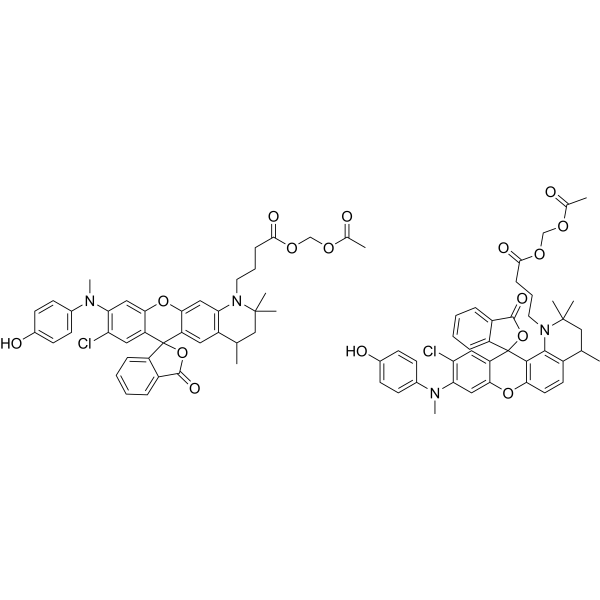
HKYellow-AM (6/12-mixture) is a yellow fluorescent probe that can detect ONOO- in living cells and tissues with high selectivity and sensitivity without cytotoxicity .
loading...
    loading...
Cat. No.: HY-D2836I
Synonyms: FITC-Hyaluronate (MW 5000)
FITC-HA (MW 5000) is hyaluronic acid (HA) (HY-B0633A) labeled with FITC (HY-66019). FITC-HA retains the ability of HA to bind to receptors (such as CD44) and form extracellular matrices, while it can be detected by fluorescence microscopy or flow cytometry for tracing the localization, binding, internalization and metabolic pathways of HA in cells, tissues or living organisms (Ex/Em ≈ 490/520 nM) .
loading...
    loading...
Cat. No.: HY-D2994
CAS No.: 2434651-49-5
Synonyms: SNAP-MaP555
SPY555-BG (SNAP-MaP555) is the benzylguanine derivative of SPY555 fluorophore. SPY555-BG emits light in the orange part of the UV-ViS spectrum. SPY555-BG is fluorogenic, highly cell permeable and well suited for STED and SIM superresolution imaging. SPY555-BG can be imaged with a standard Cy3 filterset. SPY555-BG can be used for widefield, confocal, SIM or STED imaging in living or fixed cells and tissue .
loading...
    loading...
Cat. No.: HY-D2836B
Synonyms: FITC-Hyaluronate (MW 200000)
FITC-HA (MW 200000) is hyaluronic acid (HA) (HY-B0633A) labeled with FITC (HY-66019). FITC-HA retains the ability of HA to bind to receptors (such as CD44) and form extracellular matrices, while it can be detected by fluorescence microscopy or flow cytometry for tracing the localization, binding, internalization and metabolic pathways of HA in cells, tissues or living organisms (Ex/Em ≈ 490/520 nM) .
loading...
    loading...
Cat. No.: HY-D2836C
Synonyms: FITC-Hyaluronate (MW 100000)
FITC-HA (MW 100000) is hyaluronic acid (HA) (HY-B0633A) labeled with FITC (HY-66019). FITC-HA retains the ability of HA to bind to receptors (such as CD44) and form extracellular matrices, while it can be detected by fluorescence microscopy or flow cytometry for tracing the localization, binding, internalization and metabolic pathways of HA in cells, tissues or living organisms (Ex/Em ≈ 490/520 nM) .
loading...
    loading...
Cat. No.: HY-D2836D
Synonyms: FITC-Hyaluronate (MW 50000)
FITC-HA (MW 50000) is hyaluronic acid (HA) (HY-B0633A) labeled with FITC (HY-66019). FITC-HA retains the ability of HA to bind to receptors (such as CD44) and form extracellular matrices, while it can be detected by fluorescence microscopy or flow cytometry for tracing the localization, binding, internalization and metabolic pathways of HA in cells, tissues or living organisms (Ex/Em ≈ 490/520 nM) .
loading...
    loading...
Cat. No.: HY-D2836E
Synonyms: FITC-Hyaluronate (MW 10000)
FITC-HA (MW 10000) is hyaluronic acid (HA) (HY-B0633A) labeled with FITC (HY-66019). FITC-HA retains the ability of HA to bind to receptors (such as CD44) and form extracellular matrices, while it can be detected by fluorescence microscopy or flow cytometry for tracing the localization, binding, internalization and metabolic pathways of HA in cells, tissues or living organisms (Ex/Em ≈ 490/520 nM) .
loading...
    loading...
Cat. No.: HY-D2836A
Synonyms: FITC-Hyaluronate (MW 500000)
FITC-HA (MW 500000) is hyaluronic acid (HA) (HY-B0633A) labeled with FITC (HY-66019). FITC-HA retains the ability of HA to bind to receptors (such as CD44) and form extracellular matrices, while it can be detected by fluorescence microscopy or flow cytometry for tracing the localization, binding, internalization and metabolic pathways of HA in cells, tissues or living organisms (Ex/Em ≈ 490/520 nM) .
loading...
    loading...
Cat. No.: HY-D2836J
Synonyms: FITC-Hyaluronate (MW 3000)
FITC-HA (MW 3000) is hyaluronic acid (HA) (HY-B0633A) labeled with FITC (HY-66019). FITC-HA retains the ability of HA to bind to receptors (such as CD44) and form extracellular matrices, while it can be detected by fluorescence microscopy or flow cytometry for tracing the localization, binding, internalization and metabolic pathways of HA in cells, tissues or living organisms (Ex/Em ≈ 490/520 nM) .
loading...
    loading...

