1. Search Result
Search Result
Results for "

mesenteric

" in MedChemExpress (MCE) Product Catalog:

23

Inhibitors & Agonists

2

Peptides

3

Natural
Products

Cat. No. Product Name Target Research Areas Chemical Structure
  • HY-112234
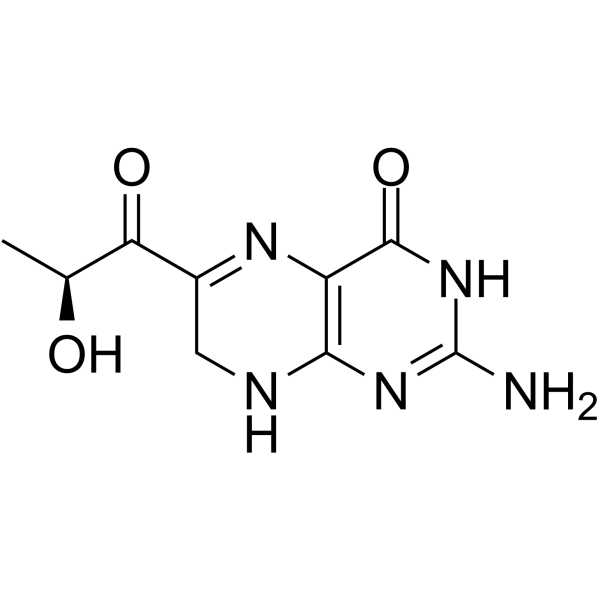
    L-Sepiapterin
    1 Publications Verification

    Sepiapterin

    Endogenous Metabolite Cancer
    L-Sepiapterin (Sepiapterin), is a phenylalanine hydroxylase activator, is a precursor of the endothelial nitric oxide synthase (eNOS) cofactor tetrahydrobiopterin (BH4). L-Sepiapterin improves endothelial dysfunction in small mesenteric arteries from db/db mice, and induces angiogenesis. L-Sepiapterin inhibits cell proliferation and migration of ovarian cancer cells via down-regulation of p70 S6K-dependent VEGFR-2 expression. L-Sepiapterin can be used for the study of hyperphenylalaninemia .
    L-Sepiapterin
  • HY-122542B
    PPACK TFA
    2 Publications Verification

    Ligands for E3 Ligase Molecular Glues IKZF Family Cardiovascular Disease
    PPACK TFA is an orally active, selective molecular glue degrader targeting IKZF2. Through a molecular glue mechanism, PPACK TFA binds to CRBN, recruits IKZF2 to form a ternary complex, and promotes its ubiquitination and proteasomal degradation. This further converts inhibitory regulatory T cells (Treg) into effector-like T cells, enhances CD8 + T cell responses, and modulates the Teff:Treg balance. PPACK TFA also increases the production of the inflammatory cytokine IL-2 and reduces the suppressive activity of Treg. PPACK TFA can be used in cancer immunotherapy research, and exhibits a synergistic effect when combined with immune checkpoint inhibitors such as anti-PD1 .
    PPACK TFA
  • HY-132184

    5,6-EET; (±)5,6-EpETrE

    Adrenergic Receptor Calcium Channel Endocrinology
    5,6-Epoxyeicosatrienoic acid (5,6-EET; (±)5,6-EpETrE) is a fully racemic version of the enantiomeric forms biosynthesized from arachidonic acid by cytochrome P450 enzymes. In solution, 5,6-Epoxyeicosatrienoic acid degrades into 5,6-DiHET and 5,6-δ-lactone, which can be converted to 5,6-DiHET and quantified by GC-MS. In neuroendocrine cells, such as the anterior pituitary and pancreatic islets, 5,6-Epoxyeicosatrienoic acid has been implicated in the mobilization of calcium and hormone secretion. 5,6-Epoxyeicosatrienoic acid is an inhibitor of T-type voltage-gated calcium channels (Cav3) that inhibits isoforms Cav3.1, Cav3.2 (IC50=0.54 μM), and Cav3. and decreases nifedipine-resistant phenylephrine-induced vasoconstriction in isolated mouse mesenteric arteries via Cav3.2 blockade when used at a concentration of 3 μM. In addition, it is a substrate of COX-1 and COX-2.
    5,6-Epoxyeicosatrienoic acid
  • HY-156613

    EP-7041

    Factor XI Infection
    Frunexian (EP-7041) is a selective and potent inhibitor of coagulation factor XI/activated factor XI, targeting to factor XIa. Frunexian exhibits antithrombotic activity, with no bleeding liability in rat mesenteric arterial puncture model. Frunexian can be used in extracorporeal membrane oxygenation (ECMO) research .
    Frunexian
  • HY-118941

    Prostaglandin Receptor Cardiovascular Disease
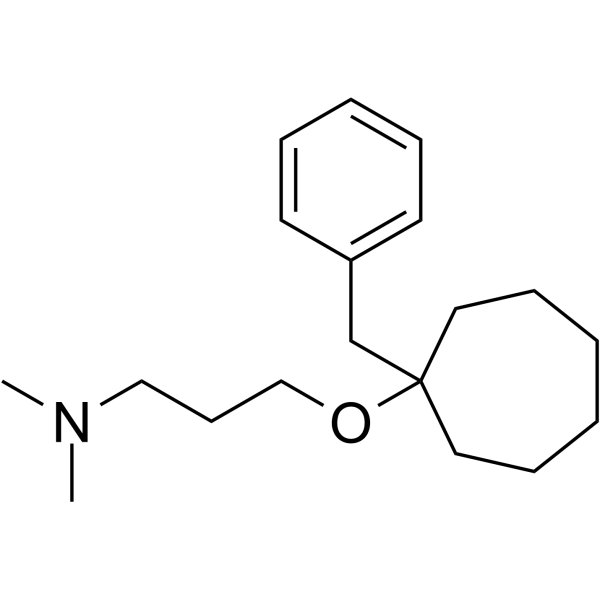
    BAY 73-1449 is a selective antagonist of prostacyclin receptor (IP), with high potency (IC50 of less than 0.1 nM) in cAMP assays in Human HEL cells and rat DRG. BAY 73-1449 can be used in the research of lowering blood pressure .
    BAY 73-1449
  • HY-111804
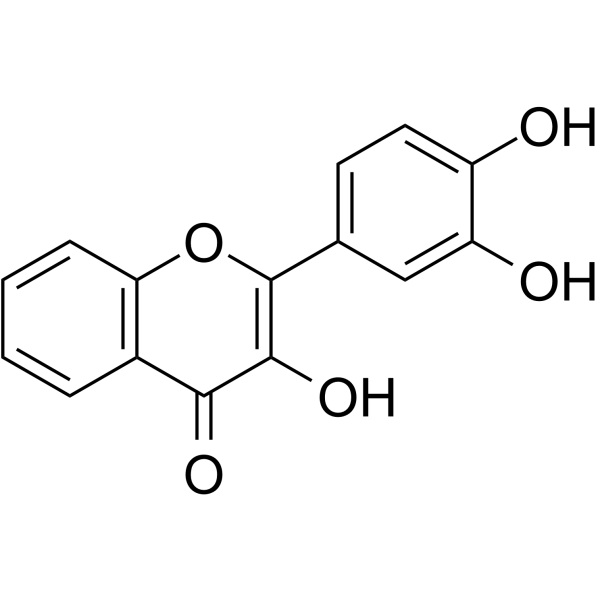
    3',4'-Dihydroxyflavonol
    1 Publications Verification

    DiOHF

    NO Synthase Cardiovascular Disease Metabolic Disease
    3',4'-Dihydroxyflavonol (DiOHF) is an effective antioxidant, which reduces superoxide and improves nitric oxide (NO) function in diabetic rat mesenteric arteries .
    3',4'-Dihydroxyflavonol
  • HY-113040A

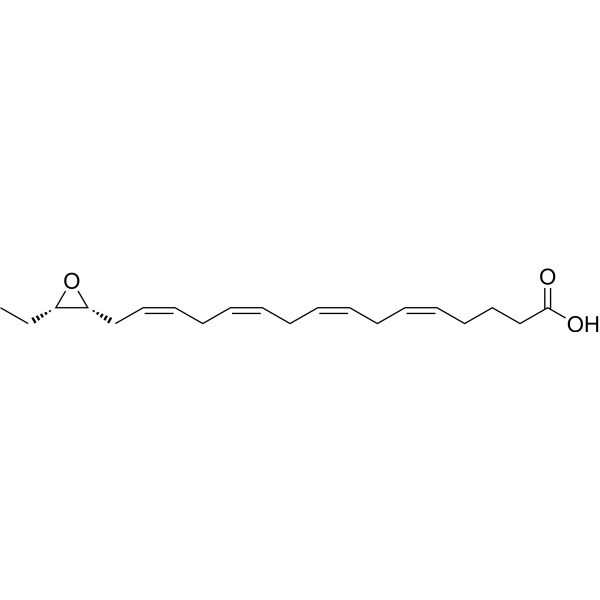
    17(R),18(S)-EETeTr

    Calcium Channel Cardiovascular Disease
    (17R,18S)-Epoxyeicosatetraenoic acid (17 (R),18 (S)-EETeTr) is a physiologically active fatty acid metabolite and also a vasodilator targeting BKα. (17R,18S)-Epoxyeicosatetraenoic acid activates the outward potassium current mediated by BK channels, and this effect is independent of the BKβ1 subunit, intracellular/extracellular calcium levels, and sarcoplasmic reticulum calcium release regulated by RyR3. (17R,18S)-Epoxyeicosatetraenoic acid is produced by the epoxidation of eicosapentaenoic acid mediated by CYP1A1 variants. (17R,18S)-Epoxyeicosatetraenoic acid is applicable to research related to arrhythmia .
    (17R,18S)-Epoxyeicosatetraenoic acid
  • HY-N4267

    Calcium Channel Platelet-activating Factor Receptor (PAFR) UGT Leukotriene Receptor TNF Receptor PGE synthase Interleukin Related Cardiovascular Disease Infection Inflammation/Immunology
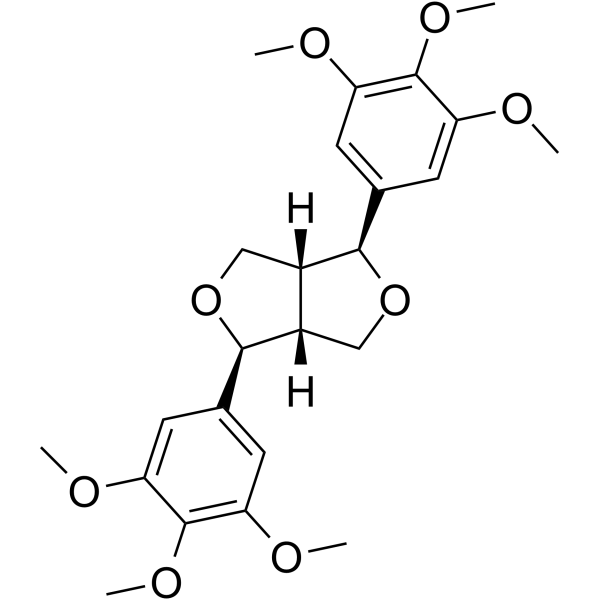
    Yangambin is a PAF receptor antagonist and UGT1A1/UGT1A3 inhibitor, with an IC50 of 29.7 μM and a Ki of 17.1 μM against human UGT1A1, and an IC50 of 56.5 μM and a Ki of 66.8 μM against human UGT1A3. Yangambin blocks PAF-mediated responses, inhibits LTB4-mediated neutrophil infiltration, and suppresses inflammatory events and anaphylactic contraction. Yangambin acts as a central nervous system inhibitor to reduce spontaneous activity, and also exhibits analgesic, anticonvulsant, antileishmanial, vasodilatory and hypotensive effects. Yangambin blocks voltage-gated Ca 2+ channels, reduces the production of NO, TNF-α, IL-6 and PGE2 in cells, increases the production of IL-10, and exerts a protective effect against cardiovascular injury. Yangambin can be used in research related to allergies, cutaneous leishmaniasis, central nervous system diseases and cardiovascular diseases .
    Yangambin
  • HY-15378

    ZD2079 hydrochloride

    Adrenergic Receptor Cardiovascular Disease
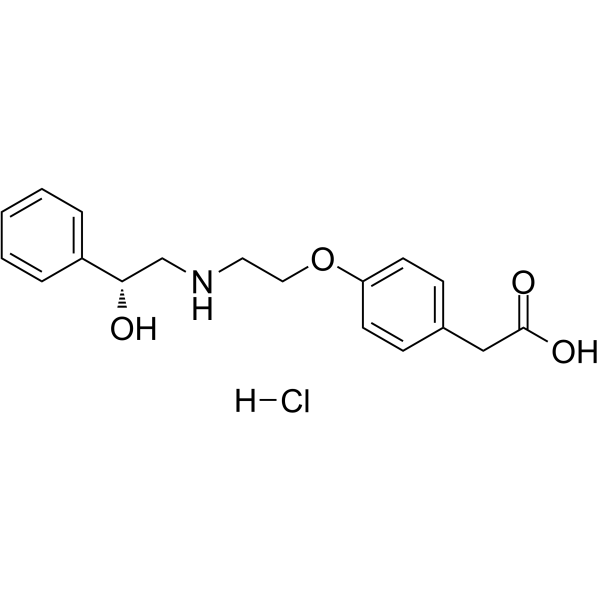
    Talibegron hydrochloride (ZD2079 hydrochloride) is a potent β3-adrenoceptor agonist with a pD2 of 3.72 on phenylephrine-preconstricted rat mesenteric artery. Talibegron hydrochloride has potent vasorelaxant effect .
    Talibegron hydrochloride
  • HY-P2501

    Amylin Receptor Metabolic Disease
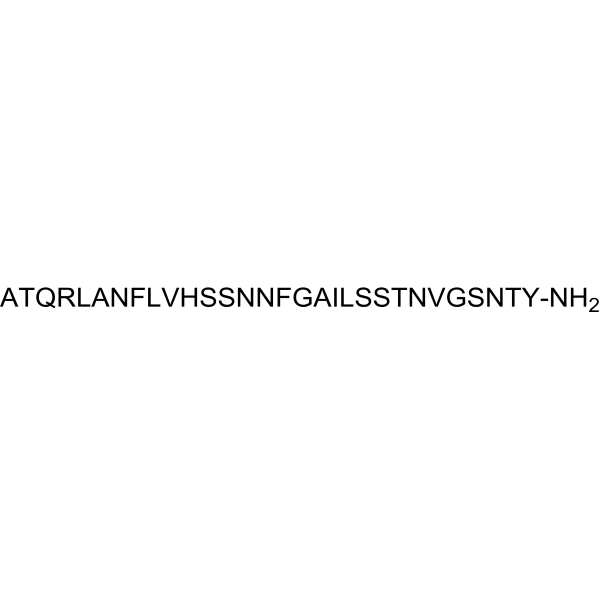
    Amylin (8-37), human is a fragment of human Amylin. Amylin (8-37), human has direct vasodilator effects in the isolated mesenteric resistance artery of the rat. Human Amylin is a small hormone secreted by pancreatic β-cells that forms aggregates under insulin deficiency metabolic conditions, and it constitutes a pathological hallmark of type II diabetes mellitus .
    Amylin (8-37), human
  • HY-118387

    Potassium Channel Cardiovascular Disease
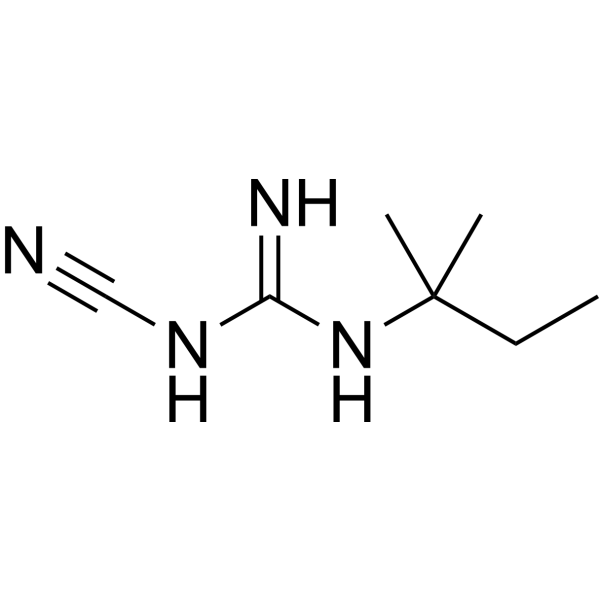
    AVE-0118 is a Kv1.5 potassium channel blocker and antiarrhythmic agent. AVE-0118 blocks neuronal Kv1.5 potassium channels, thereby enhancing the release of norepinephrine. AVE-0118 enhances field stimulation-induced neurogenic contraction, an effect sensitive to α1-adrenergic receptor blockade. AVE-0118 terminates persistent atrial fibrillation in some dogs. AVE-0118 is applicable to research related to atrial fibrillation and persistent atrial fibrillation .
    AVE-0118
  • HY-137608

    UDP-β-S

    P2Y Receptor DNA/RNA Synthesis Cardiovascular Disease Inflammation/Immunology
    Uridine 5'-O-thiodiphosphate (UDP-β-S) is a P2Y6 receptor agonist with an EC50 of 25 nM. Uridine 5'-O-thiodiphosphate resists degradation by extracellular nucleotidases and stimulates the accumulation of inositol phosphates. Uridine 5'-O-thiodiphosphate stimulates contractile responses in endothelium-denuded rat mesenteric arteries. As a mitogen, Uridine 5'-O-thiodiphosphate stimulates DNA synthesis, [ 3H] thymidine incorporation, protein synthesis, [ 3H]leucine incorporation, and increases the number of vascular smooth muscle cells. Uridine 5'-O-thiodiphosphate can be used in the research of cardiovascular diseases such as atherosclerosis .
    Uridine 5'-O-thiodiphosphate
  • HY-137608A

    UDP-β-S trisodium

    P2Y Receptor DNA/RNA Synthesis Cardiovascular Disease Inflammation/Immunology
    Uridine 5'-O-thiodiphosphate trisodium (UDP-β-S trisodium) is a P2Y6 receptor agonist with an EC50 of 25 nM. Uridine 5'-O-thiodiphosphate trisodium resists degradation by extracellular nucleotidases and stimulates the accumulation of inositol phosphates. Uridine 5'-O-thiodiphosphate trisodium stimulates contractile responses in endothelium-denuded rat mesenteric arteries. As a mitogen, Uridine 5'-O-thiodiphosphate trisodium stimulates DNA synthesis, [ 3H] thymidine incorporation, protein synthesis, [ 3H]leucine incorporation, and increases the number of vascular smooth muscle cells. Uridine 5'-O-thiodiphosphate trisodium can be used in the research of cardiovascular diseases such as atherosclerosis .
    Uridine 5'-O-thiodiphosphate trisodium
  • HY-120960

    ARA-S

    Akt p38 MAPK Apoptosis Potassium Channel Cardiovascular Disease Neurological Disease
    N-Arachidonoyl-L-serine (ARA-S) is an endocannabinoid. N-Arachidonoyl-L-serine induces phosphorylation of Akt and MAPK in endothelial cells. N-Arachidonoyl-L-serine also induces endothelium-dependent vasodilation in isolated rat mesenteric and abdominal aortas. N-Arachidonoyl-L-serine exhibits neuroprotective effects after traumatic brain injury by reducing apoptosis. N-Arachidonoyl-L-serine promotes the opening of KV7.1/KCNE1 channels in mammalian cells and shortens the action potential duration in cardiomyocytes. N-Arachidonoyl-L-serine may be used in research on cardiovascular and cerebrovascular diseases and neurological disorders .
    N-Arachidonoyl-L-serine
  • HY-117572

    P2Y Receptor Others
    MRS2567 is a P2Y receptor antagonist with the activity of inhibiting contraction of mouse mesenteric arteries. MRS2567 can inhibit the sustained contraction caused by UTP and UDP, and inhibit the Na +, K +, 2Cl - co-transport-dependent signaling pathway, thereby affecting the myogenic tone of mouse mesenteric arteries.
    MRS2567
  • HY-D1501

    Fluorescent Dye Others
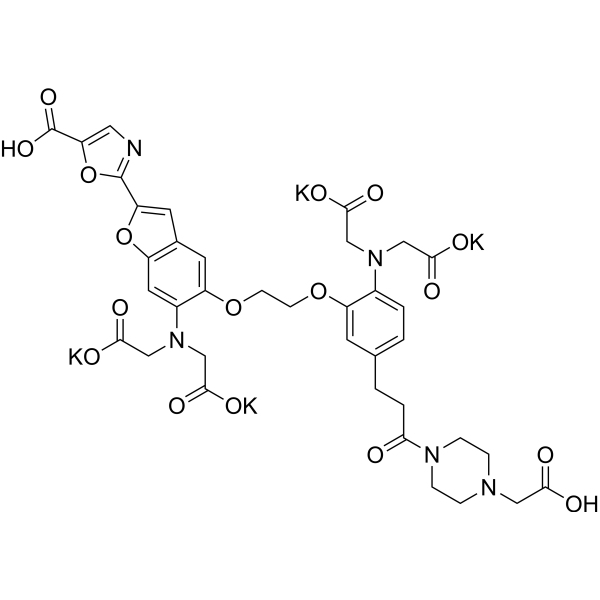
    Fura PE-3 potassium is a Ca 2+sensitive fluorophore. Fura PE-3 potassium loads in IPA (intrapulmonary arteries) and MA (mesenteric resistance arteries) for the research of vasoconstriction .
    Fura PE-3 potassium
  • HY-19420

    Phosphodiesterase (PDE) Others
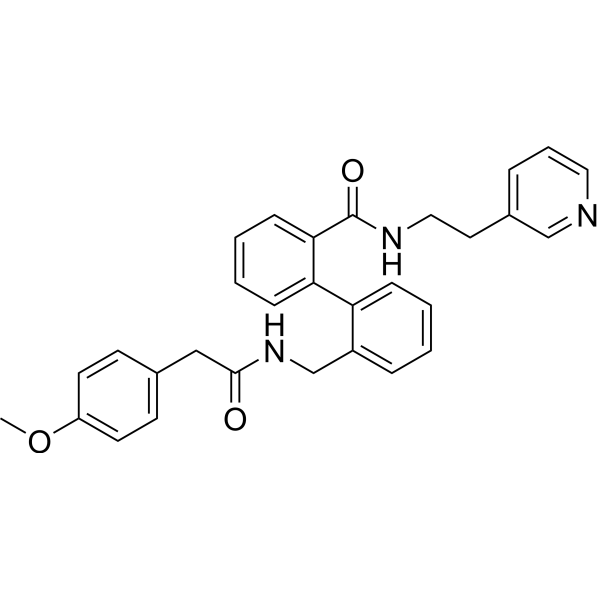
    UK 357903 is a selective inhibitor for phosphodiesterase 5 (PDE5), with IC50s of 1.7 and 714 nM, for PDE5 and PDE6. UK 357903 exhibits vasodilatory effects on the mesenteric and hindlimb vascular beds, and is potential for ameliorating erectile dysfunction .
    UK 357903
  • HY-131395

    N-Acetyl-LTE4

    Endogenous Metabolite Cardiovascular Disease
    N-Acetyl-Leukotriene E4 (N-Acetyl-LTE4) is a metabolite of Leukotriene E4 (LTE4) (HY-113465), which is detected in bile and urine . N-Acetyl-Leukotriene E4 produces a vasoconstriction in the mesenteric vessels which led to reduction of blood flow to the gut .
    N-Acetyl-Leukotriene E4
  • HY-101824

    PPAR Metabolic Disease
    NC-2100 is a PPAR activator. NC-2100 can effectively reduce the plasma glucose and triglyceride levels of obese KKAy mice. NC-2100 can induce UCP1 and UCP2 expression in mesenteric and subcutaneous WAT of mice. NC-2100 can be used in research related to type 2 diabetes .
    NC-2100
  • HY-130448

    Prostaglandin Receptor ROCK Cardiovascular Disease
    8-iso Prostaglandin F1β is an isoprostane, that exhibits vasoconstrictive effect in neonatal porcine pulmonary arteries, pulmonary veins, and mesenteric arteries. 8-iso Prostaglandin F1β targets TXA2 receptor and exhibits the blood vessel contractile efficacy under the influence of tyrosine kinase and Rho kinase .
    8-iso Prostaglandin F1β
  • HY-114986
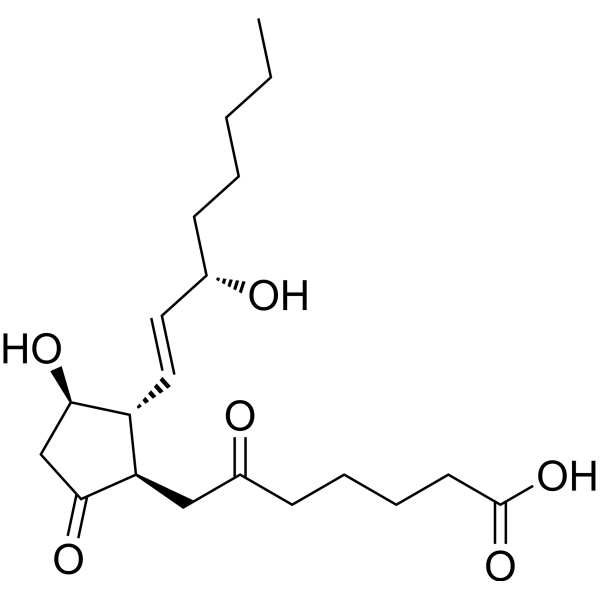
    6-Keto-PGE1
    1 Publications Verification

    6-keto-Prostaglandin E1

    β-glucuronidase Cardiovascular Disease
    6-Keto-PGE1 (6-keto-Prostaglandin E1) is a biologically active derivative of PGE1. 6-Keto-PGE1 inhibits adenosine diphosphate-induced platelet aggregation. 6-Keto-PGE1 reduces cardiac afterload, decreases the accumulation of plasma myocardial depressant factor (MDF), lowers arterial blood pressure, dilates vascular beds, inhibits the vasoconstrictive response of vascular smooth muscle, and increases pulmonary compliance. 6-Keto-PGE1 directly stabilizes isolated cat liver lysosomes and significantly reduces the release of β-glucuronidase and cathepsin D. 6-Keto-PGE1 prolongs the survival time of traumatized rats and exerts protective effects through hemodynamic and cytoprotective actions. 6-Keto-PGE1 reduces central airway resistance. 6-Keto-PGE1 can be used in studies related to traumatic shock .
    6-Keto-PGE1
  • HY-N13111

    Others Others
    Neoliensinine is a benzylisoquinoline that effectively inhibits KCl (124 mM)-induced contraction of isolated mesenteric vascular smooth muscle (MVSM) with an IC50 value of 2.407 μM. Neoliensinine can be isolated from the embryo of Nelumbo nucifera Gaertn., a traditional Chinese medicine.
    Neoliensinine
  • HY-W040167

    LPL Receptor Cardiovascular Disease
    VPC 23153 is a S1P4 receptor agonist and vasoconstrictor. VPC 23153 activates the S1P4 receptor, thereby triggering vasoconstriction. VPC 23153 induces pulmonary artery contraction. VPC 23153 can be used in studies related to pulmonary arterial hypertension .
    VPC 23153

Inquiry Online

Your information is safe with us. * Required Fields.

Salutation


Country or Region *

Applicant Name *


Organization Name *

Department *


Email Address *


Product Name *

Cat. No.


Requested quantity *

Phone Number *


Remarks

Inquiry Online

Inquiry Information

Product Name:
Cat. No.:
Quantity:
MCE Japan Authorized Agent:

