1. Search Result
Search Result
Results for "

mitochondrial unfolded protein response

" in MedChemExpress (MCE) Product Catalog:

10

Inhibitors & Agonists

1

Natural
Products

Cat. No. Product Name Target Research Areas Chemical Structure
  • HY-18705
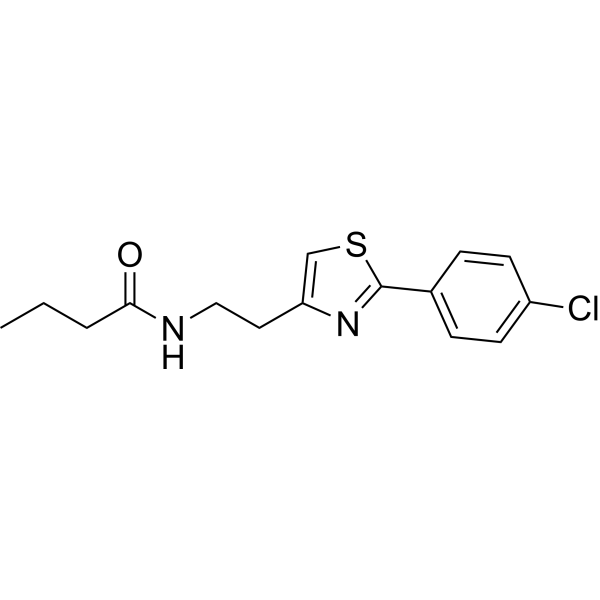
    Azoramide
    5+ Cited Publications

    Apoptosis Reactive Oxygen Species (ROS) Caspase Bcl-2 Family Mitochondrial Metabolism Endocrinology
    Azoramide is a potent, orally active small-molecule modulator of the unfolded protein response (UPR). Azoramide improves ER protein folding and elevates ER chaperone capacity, which together protects cells against ER stress. Azoramide alleviates PLA2G6 mutant-induced ER stress through modulating unfolded protein response, and enhances the CERB signaling to rescue mitochondrial function, thereby preventing apoptosis of DA neurons. Azoramide has antidiabetic activity .
    Azoramide
  • HY-109076

    EBC-46

    PKC Caspase Cancer
    Tigilanol tiglate (EBC-46) is a protein kinase C (PKC)/C1 domain activator. Tigilanol tiglate is associated with mitochondrial/endoplasmic reticulum (ER) dysfunction, leading to activation of the unfolded protein response (UPRmt/ER) and subsequent induction of ATP depletion, organelles expansion, Caspase activation, gasdermin E cleavage, and terminal necrosis. Tigilanol tiglate, as a small anti-tumor molecule with immunomodulatory effects, can be used in the study of head and neck squamous cell carcinoma and soft tissue sarcoma .
    Tigilanol tiglate
  • HY-115445
    LCS-1
    3 Publications Verification

    Apoptosis SOD Cancer
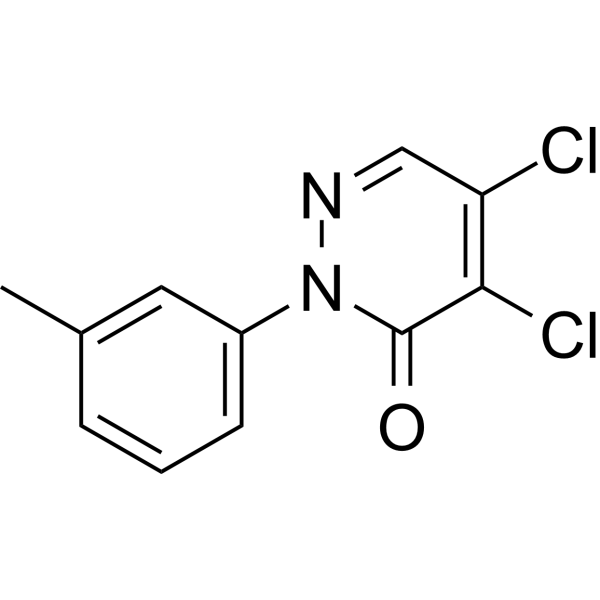
    LCS-1 is a superoxide dismutase 1 (SOD1) inhibitor. LCS-1 inhibits SOD1 activity with an IC50 value of 1.07 μM. LCS-1 induces the early- and late-stage apoptosis of multiple myeloma (MM.1S) cells .
    LCS-1
  • HY-171616

    HSP β-catenin Cancer
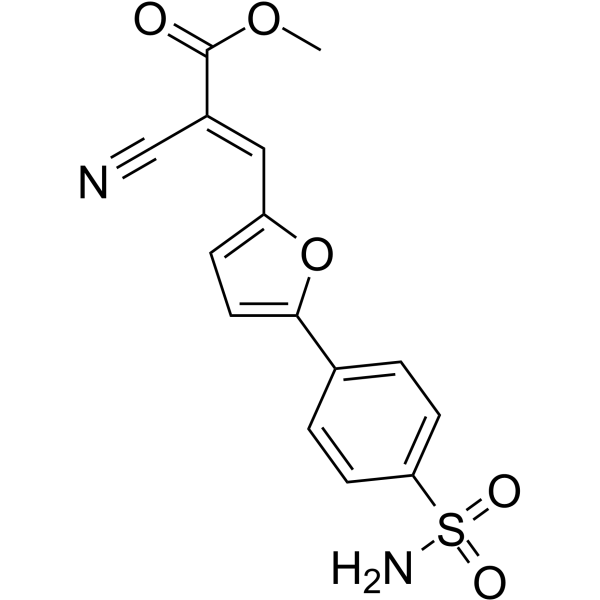
    DCEM1 binds to heat shock protein 60 (HSP60) and inhibits the interaction of HSP60 with ClpP, thereby blocking the mitochondrial unfolded protein response. DCEM1 inhibits β-catenin expression and ATP production in PC-3 and TKO cells. DCEM1 can be used in prostate cancer research .
    DCEM1
  • HY-114410

    Mitochondrial Metabolism Cancer
    CCI-006 is a selective inhibitor and chemosensitizer of MLL-rearranged leukemia cells, by inhibits mitochondrial respiration resulting in insurmountable mitochondrial depolarization and a pro-apoptotic unfolded protein response (UPR) in a subset of MLL-r leukemia cells .
    CCI-006
  • HY-133859

    Mitochondrial Metabolism Metabolic Disease
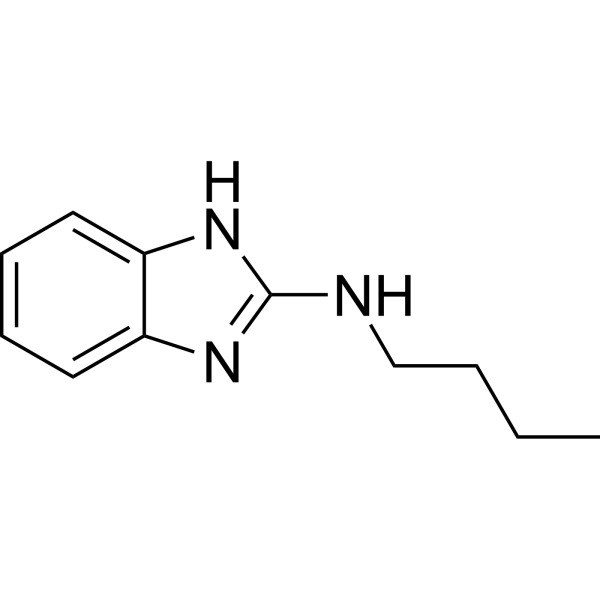
    M084 is a benzimidazole derivative. M084 inhibits the mitochondrial respiration, activate mitochondrial unfolded protein response and AMPK, recruites SIR-2.1 and SKN-1, and finally through the transcription factor DAF-16, delays the aging process of C. elegans .
    M084
  • HY-169581

    Reactive Oxygen Species (ROS) Mitosis Cancer
    DIM-C-pPhtBu is an orally active endoplasmic reticulum stress activator. DIM-C-pPhtBu induces mitochondrial and lysosome dysfunction, excessive mitosis, ROS production, and unfolded protein response-mediated cell death in neck cancer cells. DIM-C-pPhtBu has antitumor activity .
    DIM-C-pPhtBu
  • HY-N12887

    Mitochondrial Metabolism Others Cancer
    Mycothiazole is an inhibitor for mitochondrial electron transport chain (ETC) complex I. Mycothiazole exhibits cytotoxicity in cancer cells Huh7 (IC50 is 55.8 μM), U87 and MCF7. Mycothiazole induces apoptosis in Huh7. Mycothiazole utilizes the unfolded protein response (UPR) and heat shock response (HSR) pathway involved transcription factors ATFS-1 and HSF1, to extend the lifespan of C. elegans .
    Mycothiazole
  • HY-120825

    Apoptosis DNA/RNA Synthesis Reactive Oxygen Species (ROS) Keap1-Nrf2 Cancer
    QD 232 is a quinazolinedione-based ROS inducer and an apoptosis inducer with cytotoxicity and redox regulatory activity. QD 232 promotes ROS accumulation, activates the NRF2-mediated oxidative stress response and unfolded protein response pathways, and upregulates downstream antioxidant and stress response genes. QD 232 inhibits mtDNA transcription driven by HSP2 and LSP promoters, and impairs mitochondrial oxidative phosphorylation function. QD 232 induces apoptosis of pancreatic ductal adenocarcinoma cells and exerts cytotoxicity against gemcitabine (HY-17026)-resistant pancreatic ductal adenocarcinoma cells. QD 232 delays tumor growth in a mouse pancreatic cancer xenograft model .
    QD 232
  • HY-182360

    PERK Eukaryotic Initiation Factor (eIF) Bcl-2 Family Apoptosis Reactive Oxygen Species (ROS) STING DNA/RNA Synthesis PD-1/PD-L1 Cancer
    Cytisine-Platinum(IV) Prodrug-1 is a Pt(IV) prodrug incorporating the natural compound Cytisine (HY-N0175) with antiproliferative activity against tumor cells. Cytisine-Platinum(IV) Prodrug-1 promotes calcium transfer across the IP3R1-GRP75-VDAC1 axis to drive mitochondrial calcium overload. Cytisine-Platinum(IV) Prodrug-1 initiates unfolded protein response via PERK, eIF2α, ATF4, and CHOP to modulate Bcl-2 and Bax, triggering apoptosis. Cytisine-Platinum(IV) Prodrug-1 induces mitochondrial dysfunction, ROS production, reduced ATP synthesis, DNA damage, and S-phase cell cycle arrest. Cytisine-Platinum(IV) Prodrug-1 activates the cGAS-STING pathway, reduces PD-L1 expression, drives immunogenic cell death. Cytisine-Platinum(IV) Prodrug-1 exhibits high physiological stability, efficient cellular accumulation, and enhanced platinum-DNA binding, and inhibits tumor growth in mouse models with reduced systemic toxicity. Cytisine-Platinum(IV) Prodrug-1 can be used for the research of lung cancer .
    Cytisine-platinum(IV) prodrug-1

Inquiry Online

Your information is safe with us. * Required Fields.

Salutation


Country or Region *

Applicant Name *


Organization Name *

Department *


Email Address *


Product Name *

Cat. No.


Requested quantity *

Phone Number *


Remarks

Inquiry Online

Inquiry Information

Product Name:
Cat. No.:
Quantity:
MCE Japan Authorized Agent:

