1. Search Result
Search Result
Results for "

motivational

" in MedChemExpress (MCE) Product Catalog:

16

Inhibitors & Agonists

1

Screening Libraries

Cat. No. Product Name Target Research Areas Chemical Structure
  • HY-108677
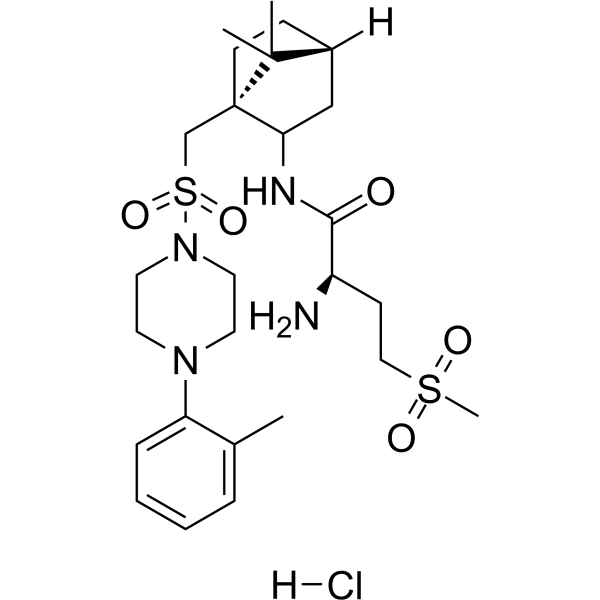
    L-368,899 hydrochloride
    5+ Cited Publications

    Oxytocin Receptor Endocrinology
    L-368,899 hydrochloride is a potent, selective, orally bioavailable, non-peptide oxytocin receptor antagonist, with IC50s of 8.9 nM and 26 nM for rat uterus and human uterus oxytocin receptor, respectively. L-368,899 hydrochloride used as a tocolytic agent .
    L-368,899 hydrochloride
  • HY-175188

    BPN-0027490

    Myosin Neurological Disease
    MT-110 (BPN-0027490) is a non-muscle myosin NMIIB-selective inhibitor with high brain penetration and favorable safety profile. MT-110 specifically disrupts NMIIB-dependent actin dynamics in dendritic spines, while it exerts no significant adverse effects on cardiac myosin II and cardiac functions (such as cardiac output and heart rate) at tested concentrations. A single administration of MT-110 produces long-lasting (sustained for several weeks) blockade of methamphetamine motivation associated with environmental cues. MT-110 exhibits extremely high specificity, with no interference with cocaine motivation, hippocampus-dependent memory, fear memory, or locomotor and anxiety-like behaviors. MT-110 serves as a valuable tool compound for investigating the mechanisms of methamphetamine use disorder .
    MT-110
  • HY-167856

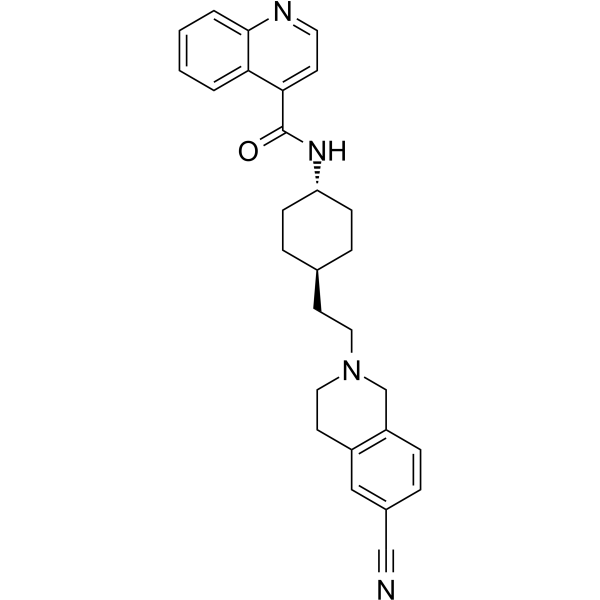
    GPR88 Neurological Disease
    RTI-122 is a selective, blood-brain barrier-permeable GPR88 agonist (cAMP EC50=11 nM), with EC50 values of 11.5 nM and 155 nM for human and mouse GPR88, respectively ([ 35S]GTPγS assay). By activating the GPR88 receptor to regulate the cAMP signaling pathway and G protein activity, RTI-122 significantly attenuates Binge-like drinking, reduces alcohol intake, and decreases alcohol-seeking motivation. RTI-122 blocks the reinstatement of alcohol-seeking behavior without affecting water or sucrose intake. RTI-122 exhibits metabolic stability in mice (T1/2=5.8 h) and can be used to investigate alcohol use disorder .
    RTI-122
  • HY-17549

    CRL 40028

    Adrenergic Receptor Neurological Disease
    Adrafinil (CRL 40028) is an orally active vigilance promoting agent. Adrafinil enhances central noradrenergic transmission, improves spontaneous activity, exploratory behavior, discriminative learning ability and response motivation, but impairs visuospatial working memory. Adrafinil antagonizes Prazosin (HY-B0193)-induced hypoactivity and hypothermia, exerts anticonvulsant effects, and induces sustained enhancement of high-frequency electrocortical activity. Adrafinil can be used for research on decreased alertness and specific cognitive deficits .
    Adrafinil
  • HY-163384

    Dopamine Transporter Neurological Disease
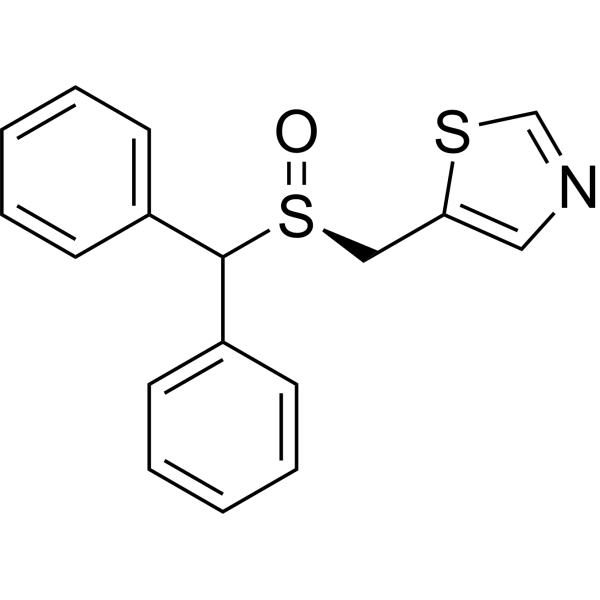
    (S)-CE-123 is a potent, selective, and novel atypical dopamine transporter (DAT) inhibitor with an EC50 of 2.76 μM in uptake inhibition assays conducted in HEK293 cells stably expressing human isoforms of DAT. (S)-CE-123, a Modafinil analogue, is able to penetrate the blood–brain barrier. (S)-CE-123 improves cognitive and motivational processes in experimental animals .
    (S)-CE-123
  • HY-177508

    Cholecystokinin Receptor Neurological Disease
    BC264 is a highly potent and selective CCK-B agonist that crosses the blood-brain barrier. BC264 increases dopamine in the nucleus accumbens and facilitates motivation and attention in rats .
    BC264
  • HY-14408

    Adenosine Receptor Neurological Disease
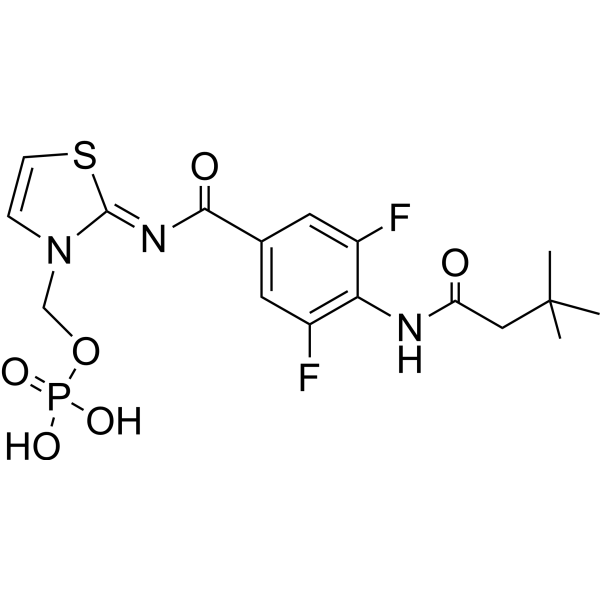
    Lu AA47070 is a phosphonooxymethylene prodrug of a potent and selective Adenosine A2A receptor antagonist. Lu AA47070 reverses the motor and motivational effects produced by dopamine D2 receptor blockade .
    Lu AA47070
  • HY-106660

    Dopamine Receptor Neurological Disease
    BP 897 hydrochloride is a potent and partial dopamine D3 receptor agonist and a weak D2 receptor antagonist. BP 897 hydrochloride displays a high affinity at the dopamine D3 receptor (Ki=0.92 nM) and a 70 times lower affinity at the D2 receptor (Ki=61 nM) .
    BP 897 hydrochloride
  • HY-158014

    Dopamine Transporter Neurological Disease
    JJC8-089 is a dopamine transporter (DAT) inhibitor that may improve motivational dysfunction and increase effortful behavior in goal-directed activities. JJC8-089 significantly reversed the low-effort effects induced by the VMAT-2 inhibitor Tetrabenazine (HY-B0590) in rats and increased the choice of high-effort fixed-ratio 5-bar presses versus food intake. .
    JJC8-089
  • HY-164011

    5-HT Receptor Neurological Disease
    Alaproclate is an inhibitor for serotonin (5-HT) reuptake. Alaproclate affects mechanisms that related to cued navigation performance such as sensory, sensorimotor, or motivational factors, impairs spatial navigation ability of rats .
    Alaproclate
  • HY-114085

    Dopamine Receptor Neurological Disease
    BP 897 is a potent and partial dopamine D3 receptor agonist and a weak D2 receptor antagonist. BP 897 displays a high affinity at the dopamine D3 receptor (Ki=0.92 nM) and a 70 times lower affinity at the D2 receptor (Ki=61 nM) .
    BP 897
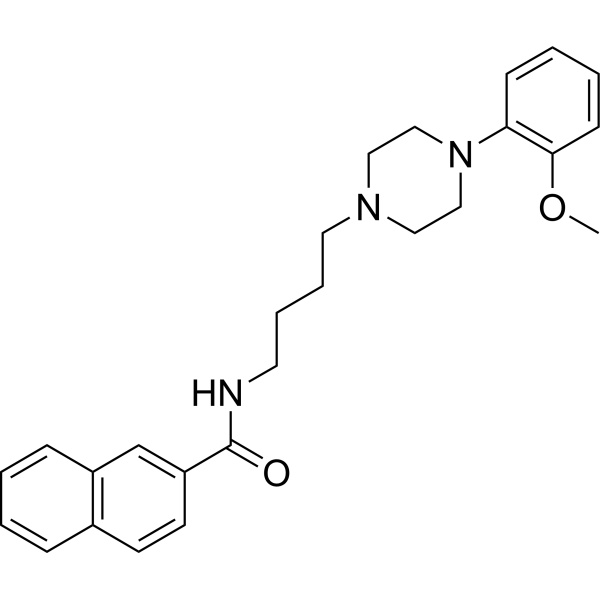
  • HY-110010

    Dopamine Receptor Neurological Disease
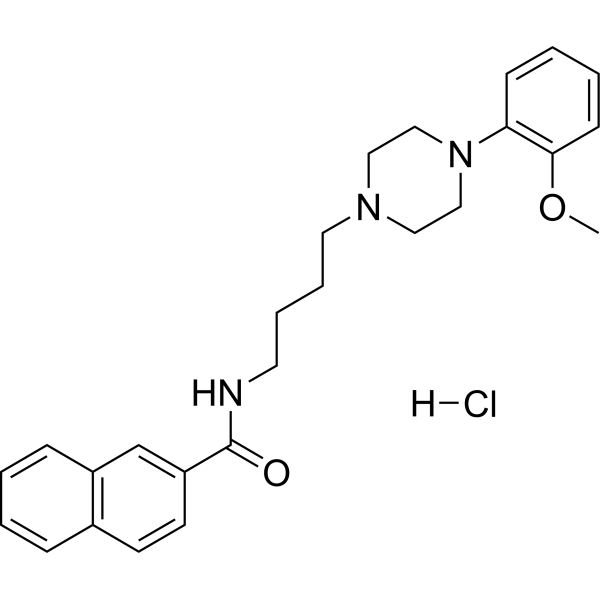
    Nafadotride is a dopamine D3 receptor antagonist. Nafadotrode regulates dopamine signaling primarily by antagonizing dopamine D3 receptors. The dopamine D3 receptor plays an important role in regulating emotion, motivation, reward, and certain motor functions. By blocking these receptors, Nafadotrode may affect neurotransmission processes associated with these functions. Nafadotrode can be used to explore the role of dopamine D3 receptors in various behavioral and neuropsychiatric disorders .
    Nafadotride
  • HY-106660R

    Reference Standards Dopamine Receptor Neurological Disease
    BP 897 hydrochloride (Standard) is the analytical standard of BP 897 (hydrochloride) (HY-106660). This product is intended for research and analytical applications. BP 897 hydrochloride is a potent and partial dopamine D3 receptor agonist and a weak D2 receptor antagonist. BP 897 hydrochloride displays a high affinity at the dopamine D3 receptor (Ki=0.92 nM) and a 70 times lower affinity at the D2 receptor (Ki=61 nM) .
    BP 897 hydrochloride (Standard)
  • HY-108677R

    Reference Standards Oxytocin Receptor Endocrinology
    L-368,899 hydrochloride (Standard) is the analytical standard of L-368,899 hydrochloride (HY-108677). This product is intended for research and analytical applications. L-368,899 hydrochloride is a potent, selective, orally bioavailable, non-peptide oxytocin receptor antagonist, with IC50s of 8.9 nM and 26 nM for rat uterus and human uterus oxytocin receptor, respectively. L-368,899 hydrochloride used as a tocolytic agent .
    L-368,899 hydrochloride (Standard)
  • HY-181960

    Histamine Receptor Neurological Disease
    BP1.3656B is a selective, orally active, blood-brain barrier-permeable histamine H3 receptor (histamine H3 receptor) inverse agonist/antagonist, with a KB value of 0.08 nM for antagonizing agonist-induced activity and an IC50 value of 0.38 nM for directly inhibiting the basal activity of the receptor. BP1.3656B reduces alcohol consumption, alcohol-seeking behavior, alcohol self-administration, motivation to drink, alcohol relapse, alcohol-induced hyperlocomotion, and binge alcohol intake. BP1.3656B is applicable for the research of alcohol use disorder .
    BP1.3656B
  • HY-167856A

    GPR88 Neurological Disease
    RTI-122 dihydrochloride is a selective, blood-brain barrier-permeable GPR88 agonist (cAMP EC50=11 nM), with EC50 values of 11.5 nM and 155 nM for human and mouse GPR88, respectively ([ 35S]GTPγS assay). By activating the GPR88 receptor to regulate the cAMP signaling pathway and G protein activity, RTI-122 dihydrochloride significantly attenuates Binge-like drinking, reduces alcohol intake, and decreases alcohol-seeking motivation. RTI-122 dihydrochloride blocks the reinstatement of alcohol-seeking behavior without affecting water or sucrose intake. RTI-122 dihydrochloride exhibits metabolic stability in mice (T1/2=5.8 h) and can be used to investigate alcohol use disorder .
    RTI-122 dihydrochloride

Inquiry Online

Your information is safe with us. * Required Fields.

Salutation


Country or Region *

Applicant Name *


Organization Name *

Department *


Email Address *


Product Name *

Cat. No.


Requested quantity *

Phone Number *


Remarks

Inquiry Online

Inquiry Information

Product Name:
Cat. No.:
Quantity:
MCE Japan Authorized Agent:

