1. Search Result
Search Result
Results for "

mu

" in MedChemExpress (MCE) Product Catalog:

342

Inhibitors & Agonists

1

Screening Libraries

3

Fluorescent Dyes

1

Biochemical Assay Reagents

63

Peptides

33

Natural
Products

13

Recombinant Proteins

13

Isotope-Labeled Compounds

38

Antibodies

3

Oligonucleotides

Cat. No. Product Name Target Research Areas Chemical Structure
  • HY-W019823
    4-MUNANA
    2 Publications Verification

    Fluorescent Dye Infection Neurological Disease
    4-MUNANA is a substrate of influenza virus neuraminidase (NA) with high selectivity and irreversible reaction. In the enzymatic reaction, 4-MUNANA is hydrolyzed by NA to generate fluorescent 4-methylumbelliferone (4-MU). By detecting the fluorescence intensity of 4-MU, quantitative analysis of NA activity can be achieved. 4-MUNANA can be used in influenza-related research, such as screening NA inhibitors, developing new anti-influenza drugs, and studying the infection mechanism of influenza viruses .
    4-MUNANA
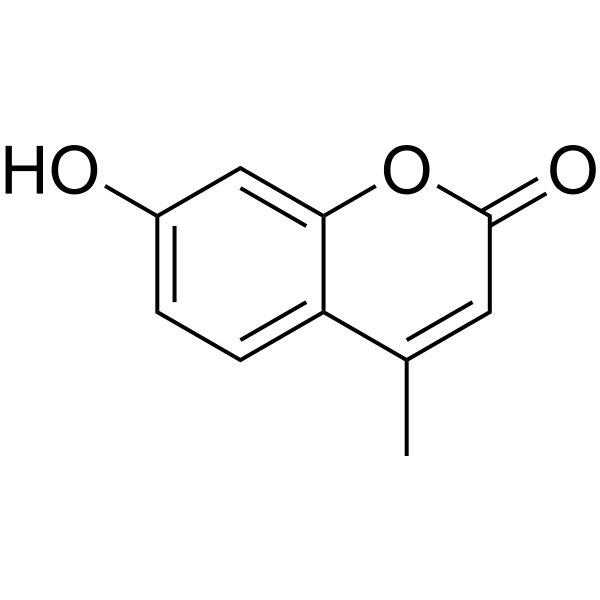
  • HY-N0187
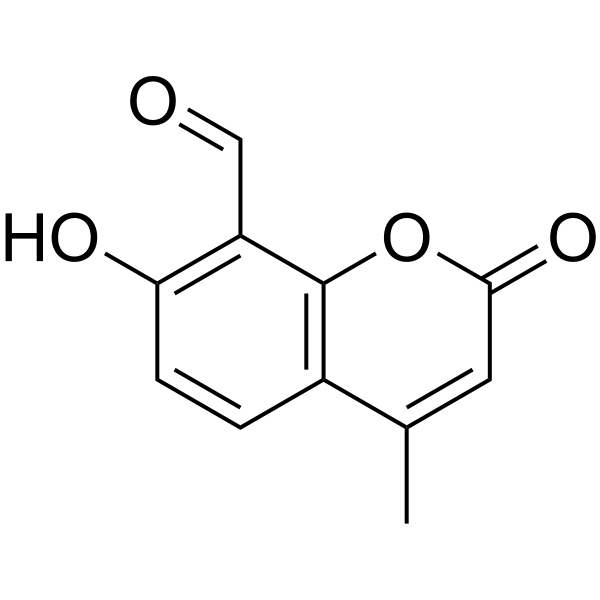
    4-Methylumbelliferone
    5+ Cited Publications

    Hymecromone; 4-mu

    Others Cardiovascular Disease Cancer
    4-Methylumbelliferone is a hyaluronic acid biosynthesis inhibitor with antitumoral and antimetastatic effects.
    4-Methylumbelliferone
  • HY-10940
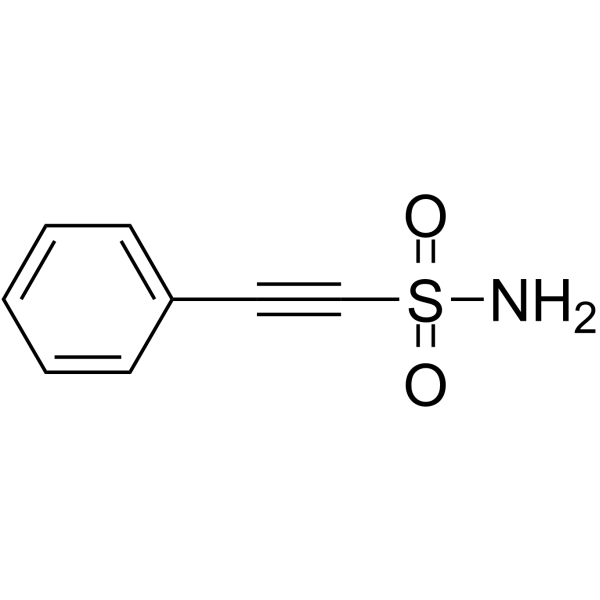
    Pifithrin-μ
    15+ Cited Publications

    PFTμ; 2-Phenylethynesulfonamide

    MDM-2/p53 HSP Autophagy Neurological Disease Cancer
    Pifithrin-μ is an inhibitor of p53 and HSP70, with antitumor and neuroprotective activity.
    Pifithrin-μ
  • HY-19707
    4μ8C
    Maximum Cited Publications
    69 Publications Verification

    IRE1 Inhibitor III

    IRE1 Metabolic Disease
    4μ8C (IRE1 Inhibitor III) is a small-molecule inhibitor of IRE1α.
    4μ8C
  • HY-P0210
    DAMGO
    Maximum Cited Publications
    12 Publications Verification

    Opioid Receptor Cancer
    DAMGO is a μ-opioid receptor (μ-OPR ) selective agonist with a Kd of 3.46 nM for native μ-OPR .
    DAMGO
  • HY-123633

    Glycosidase Others
    4-Methylumbelliferyl β-D-Glucopyranoside, a β-D-glucoside, is a fluorogenic substrate for β-glucosidase, utilizes to assay β-glucosidase activity . 4-Methylumbelliferyl β-D-Glucopyranoside releases the highly fluorescent 4-methylumbelliferyl (4-MU), which has an emission maximum at 445-454 nm. The excitation maximum for 4-MU is pH-dependent: 330, 370, and 385 nm at pH 4.6, 7.4, and 10.4, respectively .
    4-Methylumbelliferyl β-D-Glucopyranoside
  • HY-118135

    4mu-α-Gal

    Fluorescent Dye Others
    4-Methylumbelliferyl-α-D-galactopyranoside (4MU-α-Gal), a substrate for α-galactosidase A (GLA), is a blue pro-fluorogenic substrate. 4-Methylumbelliferyl-α-D-galactopyranoside forms two products, galactose and fluorescent 4MU, upon cleavage by GLA .
    4-Methylumbelliferyl-α-D-galactopyranoside
  • HY-145519

    Fluorescent Dye Neurological Disease
    Mu-6S-Palm-β-Glc is a fluorogenic substrate for palmitoyl-protein thioesterase (PPT). Mu-6S-Palm-β-Glc can be used for the research of neuronal ceroid lipofuscin disease in infants .
    Mu-6S-Palm-β-Glc
  • HY-137873

    4-Methylumbelliferyl-α-D-Glucose; 4-Methylumbelliferyl-α-D-Glucoside; 4-mu-α-D-Glucopyranoside

    Fluorescent Dye Glycosidase Others
    4-Methylumbelliferyl-α-D-Glucopyranoside (4-Methylumbelliferyl-α-D-Glucose) is a fluorescent substrate for α-glucosidase, which releases the fluorescent moiety 4-methylumbelliferyl (4-MU) upon cleavage. 4-MU has pH-dependent fluorescence excitation activity, with excitation wavelengths of 320 nm at low pH (1.97-6.72) and 360 nm at high pH (7.12-10.3), respectively. The emission wavelength of 4-Methylumbelliferyl-α-D-Glucopyranoside increases with decreasing pH, ranging from 445-455 nm. 4-Methylumbelliferyl-α-D-Glucopyranoside can be used as a biomarker for Fabry and Pompe diseases to quantify α-glucosidase activity in infant blood spot samples.
    4-Methylumbelliferyl-α-D-Glucopyranoside
  • HY-P1087

    Metorphamide

    Opioid Receptor Cancer
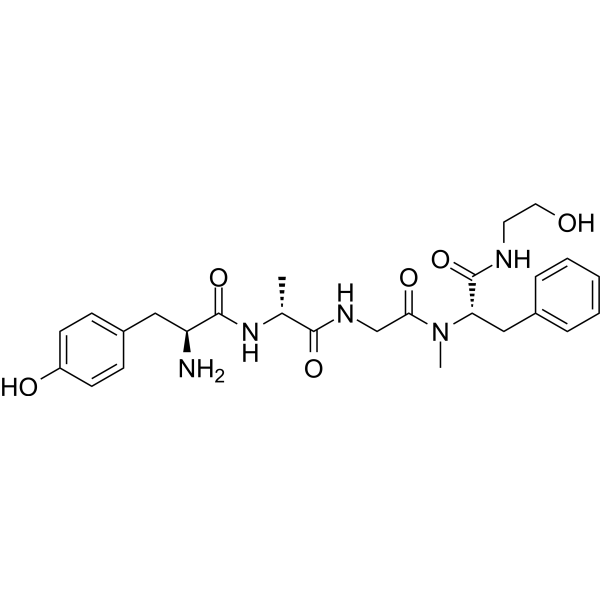
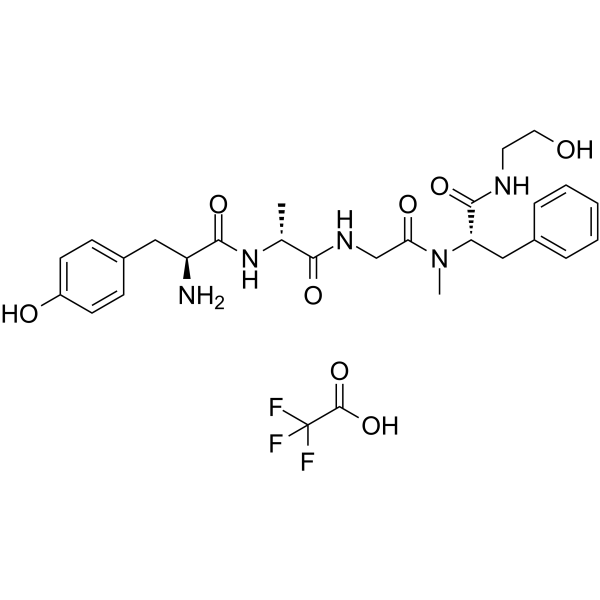
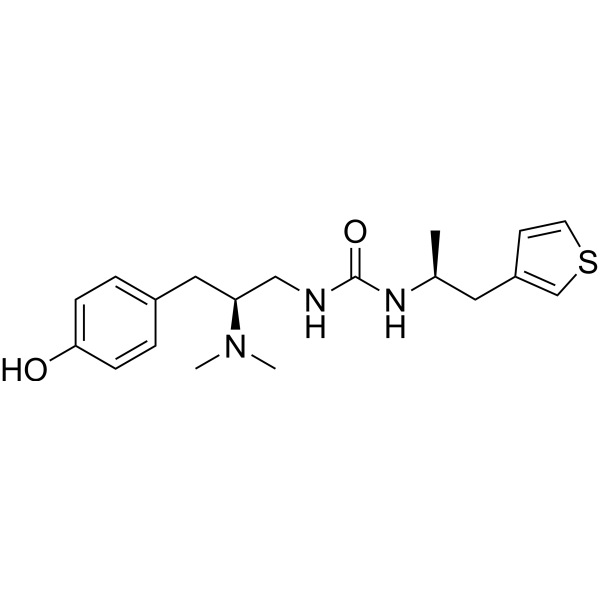
    Adrenorphin is a opioid octapeptide, acting as a potent agonist of μ-opioid receptor, with Ki of 12 nM.
    Adrenorphin
  • HY-148251

    Casein Kinase Cancer
    MU1742 is a probe for CK1δ and CK1ε protein kinases .
    MU1742
  • HY-P0210B
    DAMGO TFA
    Maximum Cited Publications
    12 Publications Verification

    Opioid Receptor Cancer
    DAMGO TFA is a μ-opioid receptor (μ-OPR ) selective agonist with a Kd of 3.46 nM for native μ-OPR .
    DAMGO TFA
  • HY-P1701

    Opioid Receptor Cardiovascular Disease Neurological Disease
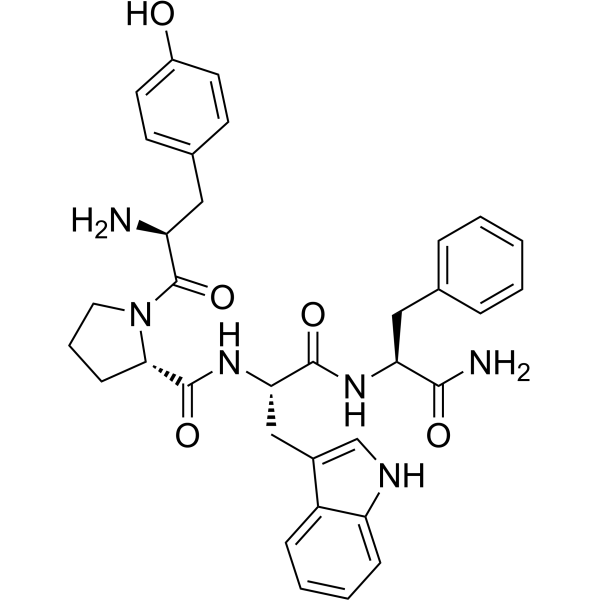
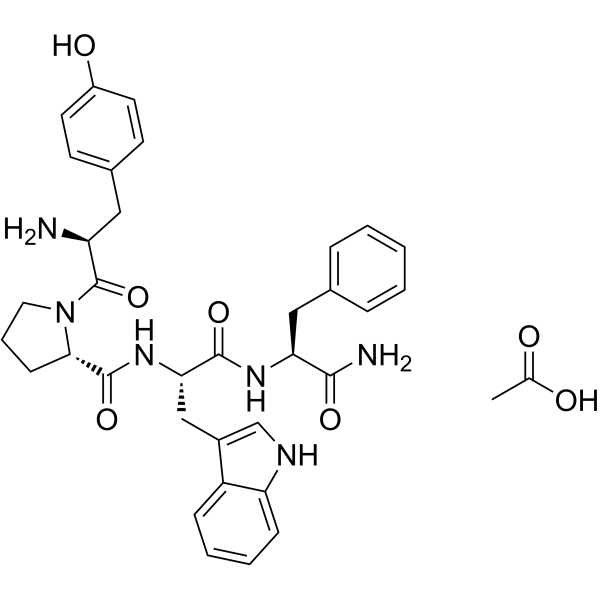
    Morphiceptin is a potent and specific agonist for morphine (μ) receptors. Morphiceptin, as a synthetic peptide, is the amide of a fragment of the milk protein β-casein. Morphiceptin has morphinelike activities and is highly specific for morphine (μ) receptors but not for Enkephalin receptors .
    Morphiceptin
  • HY-170844

    Endonuclease Cancer
    MU147 is an MRE11 nuclease inhibitor and chemical probe with anticancer activity, which is lethal to Ehrlich ascites tumor cells both in vitro and in vivo. MU147 also eliminates the double-strand break repair mechanism dependent on the MRE11 nuclease activity without impairing the activation of ATM. MU147 also impairs the degradation of nascent strands of stalled replication FOX and selectively affects brca2-deficient cells .
    MU147
  • HY-177416

    DYRK Cancer
    MU1787 is a highly selective homeodomain-interacting protein kinase (HIPK) inhibitor with a furopyridine core, and shows improved selectivity against CLKs, with inactivity against DYRK1B, DYRK2, and MLK2/3 in in vitro cellular assays. MU1787 can be used for the research of malignancies .
    MU1787
  • HY-Y1109

    Tetrachlorobis(mu-4-cymene)diruthenium(II)

    Biochemical Assay Reagents Cancer
    Dichloro(p-cymene)ruthenium(II) dimer (Tetrachlorobis(mu-4-cymene)diruthenium(II)) is a ruthenium-based organometallic catalyst precursor, which is widely applied in the field of organic synthesis .
    Dichloro(p-cymene)ruthenium(II) dimer
  • HY-W654272

    4-mu-α-idoa 2-sulfate sodium

    Fluorescent Dye Metabolic Disease
    4-Methylumbelliferyl-α-L-iduronide 2-sulfate (4-MU-α-idoa 2-sulfate) sodium is a fluorogenic substrate of iduronate-2-sulfatase (I2S). 4-Methylumbelliferyl-α-L-iduronide 2-sulfate sodium can be hydrolyzed by lysosomal enzyme α-l-iduronidase (IDUA) and release the fluorophore 4-Methylumbelliferone (HY-N0187). 4-Methylumbelliferyl-α-L-iduronide 2-sulfate sodium can be used to detect Hurler syndrome .
    4-Methylumbelliferyl-α-L-iduronide 2-sulfate sodium
  • HY-DY1034

    Fluorescent Dye Infection Neurological Disease
    4-MUNANA (solution) is a substrate of influenza virus neuraminidase (NA) with high selectivity and irreversible reaction. In the enzymatic reaction, 4-MUNANA is hydrolyzed by NA to generate fluorescent 4-methylumbelliferone (4-MU). By detecting the fluorescence intensity of 4-MU, quantitative analysis of NA activity can be achieved. 4-MUNANA can be used in influenza-related research, such as screening NA inhibitors, developing new anti-influenza drugs, and studying the infection mechanism of influenza viruses .
    Solvent and Concentration: Sterile water: 10 mM
    4-MUNANA (solution)
  • HY-135036

    Fluorescent Dye Others
    4-Methylumbelliferyl butyrate (4-MUB) is a coumarin-based fluorogenic substrate used for the identification of M. catarrhalis C4- esterase. 4-Methylumbelliferyl butyrate can converse to the blue-emissive 4-methylumbelliferone (4-MU; HY-N0187) .
    4-Methylumbelliferyl butyrate
  • HY-D1632

    Fluorescent Dye Others
    4-MU-α-GlcNS sodium is a fluorogenic substrate of heparin sulphamidase, is desulfurized into 4-MU-α-GlcNH2. 4-MU-α-GlcNH2 can liberate 4-methylumbelliferone (4-MU, fluorescent product) via α-glucosaminidase catalysis, with the emission wavelength maxima of 445-454 nm. 4-MU-α-GlcNS sodium can be used to heparin sulphamidase deficiencies associated with Mucopolisaccaridosis IIIA and other lysosomal disorders researches .
    4-MU-α-GlcNS sodium
  • HY-170845

    Endonuclease Cancer
    MU1409 is an inhibitor of MRE11 nuclease with an IC50 of 12.1 μM. Additionally, MU1409 also inhibits FEN1 and EXO1, with IC50 values of 24.2 and 176.4 μM, respectively. MU1409 affects DNA repair in cells, preventing the degradation of stalled replication forks in BRCA2-deficient cells, making it a promising candidate for research on BRCA2 mutation-induced cancers .
    MU1409
  • HY-125290

    CDK DYRK Cancer
    MU1210 (compound 12f), a chemical probe, is an inhibitor of CDC-like kinases Clk1, Clk2, and Clk4 (with IC50 values of 8, 20, and 12 nM respectively), with IC50 for HIPK1 and DYRK2 are 187 and 1309 nM. MU1210 also has favorable pharmacokinetic characteristics (in mice, 10 mg/kg, intraperitoneal injection: Cmax=1.24 μM, T1/2=58 minutes; no acute toxicity observed) .
    MU1210
  • HY-79503

    Mandyphos SL-M001-1, (2R,2μR)-1,1μ-Bis[(R)-(dimethylamino)phenylmethyl]-2,2μ-bis(diphenylphosphino)ferrocene (acc to CAS)

    Drug Intermediate Others
    (Rp,R'p)-(R)-Mandyphos (Mandyphos SL-M001-1, (2R,2μR)-1,1μ-Bis[(R)-(dimethylamino)phenylmethyl]-2,2μ-bis(diphenylphosphino)ferrocene (acc to CAS)) is a drug intermediate for synthesis of various active compounds.
    (Rp,R'p)-(R)-Mandyphos
  • HY-141515

    Opioid Receptor Neurological Disease
    BMS-986121 is a positive allosteric modulator (PAM) of the μ opioid receptor extracted from patent WO2014107344. BMS-986121 is built on a chemical scaffold representing a new chemotype for μ receptor PAMs .
    BMS-986121
  • HY-137279
    Naloxone methiodide
    1 Publications Verification

    Opioid Receptor Inflammation/Immunology
    Naloxone methiodide is a peripherally restricted, nonselective, and competitive opioid receptor antagonist. Naloxone methiodide does not penetrate the blood-brain barrier .
    Naloxone methiodide
  • HY-100122
    Bevenopran
    1 Publications Verification

    CB-5945; ADL-5945

    Opioid Receptor Neurological Disease
    Bevenopran is a peripheral μ-opioid receptor antagonist .
    Bevenopran
  • HY-148246

    TGF-β Receptor Cancer
    MU1700, a chemical probe, is an orally active and potent ALK1/2 inhibitor with IC50s of 13 nM and 6 nM, respectively. MU1700 shows cell membrane permeability and high brain permeability .
    MU1700
  • HY-10940R

    PFTμ (Standard); 2-Phenylethynesulfonamide (Standard)

    MDM-2/p53 HSP Autophagy Reference Standards Neurological Disease Cancer
    Pifithrin-μ (Standard) is the analytical standard of Pifithrin-μ. This product is intended for research and analytical applications. Pifithrin-μ is an inhibitor of p53 and HSP70, with antitumor and neuroprotective activity.
    Pifithrin-μ (Standard)
  • HY-112927

    Checkpoint Kinase (Chk) Cancer
    MU380 is a potent and selective CHK1 inhibitor that induces apoptosis and has anticancer activity .
    MU380
  • HY-107750A

    Opioid Receptor Neurological Disease
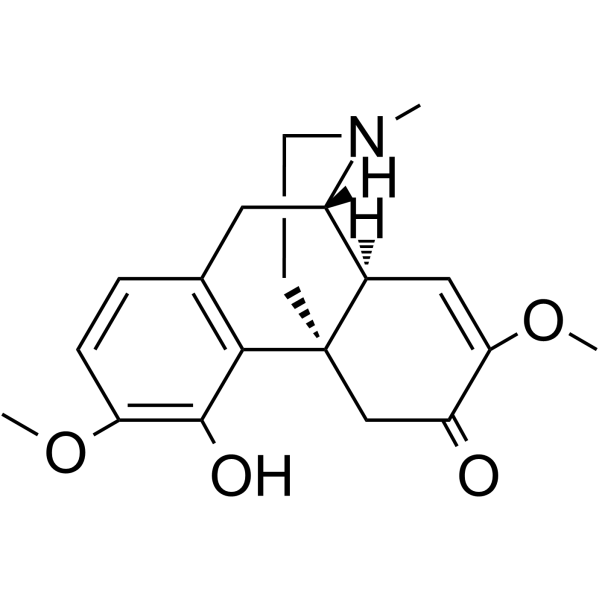
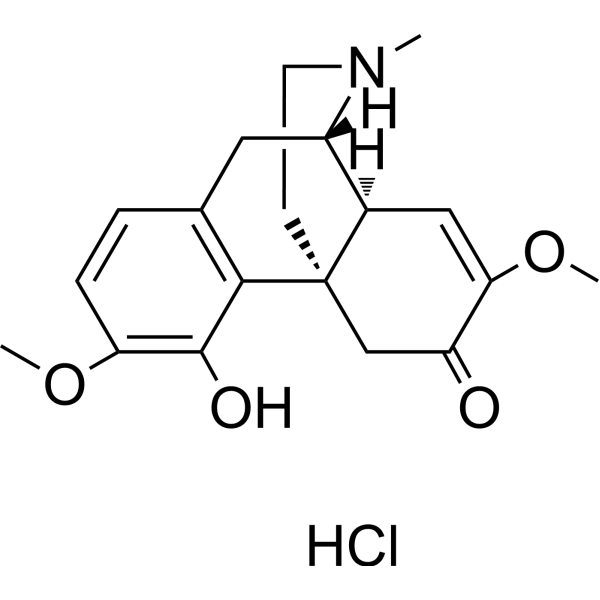
    Cyprodime hydrochloride is a highly selective μ-opioid receptor antagonist with Ki values of 5.4 nM, 244.6 nM and 2187 nM for μ-, δ- and κ-opioid receptors, respectively. Cyprodime hydrochloride has anti-depressant-like effect .
    Cyprodime hydrochloride
  • HY-175812

    Endonuclease Cancer
    MU876 (Compound 32) is a MUS81 inhibitor with an IC50 of 0.5  μM. MU876 effectively inhibits MUS81-dependent homologous recombination (HR) and break-induced replication (BIR) pathways. MU876 sensitizes cancer cells to DNA-damaging agents, such as Cisplatin (HY-17394), through impairing their ability to repair DNA lesions. MU876 can be used for cancers chemotherapy research .
    MU876
  • HY-170546

    Haspin Kinase Cancer
    MU1920 is an ATP-competitive, selective inhibitor for haspin with an IC50 of 6 nM. MU1920 exhibits good pharmacokinetic properties and metabolic stability in mouse plasma and microsomes without obvious anticancer effects, which can be used for development of chemical probes .
    MU1920
  • HY-P5809

    μ-TrTx-Pe1b

    Sodium Channel Neurological Disease
    Pe1b (μ-TrTx-Pe1b) is a selective Nav1.7 inhibitor with an IC50 of 167 nM .
    Pe1b
  • HY-P5989

    mu-Val-HPh-FMK

    Antibiotic Infection
    Calpain inhibitor V (Mu-Val-HPh-FMK) is a cell-permeable and irreversible inhibitor of calpain that has anti-chlamydial activity .
    Calpain inhibitor V
  • HY-N0187A

    Hymecromone sodium salt; 4-mu sodium salt

    Biochemical Assay Reagents Cancer
    4-Methylumbelliferone (sodium salt) is a coumarin derivative. 4-Methylumbelliferone (sodium salt) can be used as a standard to quantify the free 4-methylumbelliferone released as a result of enzyme-substrate action. 4-Methylumbelliferone (sodium salt) inhibits hyaluronan production in vitro. 4-Methylumbelliferone (sodium salt) can be studied in ovarian cancer research .
    4-Methylumbelliferone sodium salt
  • HY-118416

    Opioid Receptor Neurological Disease
    BMS-986124 is a μ-opioid receptor silent allosteric modulator (μ-SAMs). BMS-986124 antagonizes positive allosteric modulator effect of BMS-986122 (µ-OR PAM) .
    BMS-986124
  • HY-162771

    Opioid Receptor Neurological Disease
    Mu opioid receptor agonist 1 (compound 12) is a Mu opioid receptor agonist. Mu opioid receptor agonist 1 can be used in nervous system related research .
    Mu opioid receptor agonist 1
  • HY-144609

    Opioid Receptor Neurological Disease
    Mu opioid receptor antagonist 4 (compound 31) is a potent and selective μ opioid receptor (MOR) antagonist with a Ki of 0.38 nM and an EC50 of 1.07 nM. Mu opioid receptor antagonist 4 has remarkable CNS antagonism against morphine, and precipitated fewer withdrawal symptoms than Naloxone. Mu opioid receptor antagonist 4 Mu opioid receptor antagonist 4 can be used for researching opioid use disorders (OUD) .
    Mu opioid receptor antagonist 4
  • HY-144606

    Opioid Receptor Neurological Disease
    Mu opioid receptor antagonist 1 (compound 19) is a selective and orally active μ opioid receptor (MOR) ligand with an Ki value of 0.58 nM and an EC50 of 1.15 nM. Orally administrating with Mu opioid receptor antagonist 1 increases intestinal motility during morphine-induced constipation. Mu opioid receptor antagonist 1 can be used for researching opioid-induced constipation (OIC) .
    Mu opioid receptor antagonist 1
  • HY-144607

    Opioid Receptor Neurological Disease
    Mu opioid receptor antagonist 2 (compound 25) is a potent, selective and blood-brain barrier (BBB) penetrant μ opioid receptor (MOR) antagonist with a Ki of 0.37 nM and an EC50 of 0.44 nM. Mu opioid receptor antagonist 2 has remarkable CNS antagonism against morphine, and precipitated fewer withdrawal symptoms than Naloxone. Mu opioid receptor antagonist 2 can be used for researching opioid use disorders (OUD) .
    Mu opioid receptor antagonist 2
  • HY-155320

    Opioid Receptor Neurological Disease
    Mu opioid receptor antagonist 7 (compound 24) is a potent and CNS permeable antagonist of µOR (µ-opioid receptor), with an IC50 of 29 ± 3.0 nM. Mu opioid receptor antagonist 7 can be used for the research of pain and opioid use disorder .
    Mu opioid receptor antagonist 7
  • HY-E70197

    μ-Calpain

    Cathepsin Others
    Calpain-1 (pig) (μ-Calpain) is an intracellular Ca 2+-regulated cysteine protease. Calpain-1 (pig) exhibits neuroprotective effect .
    Calpain-1 (pig)
  • HY-P2018

    Opioid Receptor Cardiovascular Disease
    FK 33-824, a synthetic analogue of Met-enkephalin, is a selective agonist of the μ-opioid receptor (μ-OR) .
    FK 33-824
  • HY-122681

    SR-16435 free base

    Opioid Receptor Neurological Disease
    SR-16434 is a nociceptin/orphanin FQ (NOP)/μ-opioid receptor partial agonist, with high binding affinity (NOP receptor Ki=7.49; μ-Opioid receptor Ki=2.70). SR-16434 can relieve pain .
    SR-16434
  • HY-145813

    Histone Methyltransferase Cancer
    MU1656 is a potent and selective inhibitor of histone methyltransferase DOT1L, with an IC50 of 2 nM. MU1656 can be used for the research of hematological malignancies .
    MU1656
  • HY-176825

    Casein Kinase Ligands for Target Protein for PROTAC Cancer
    MU1742-amide-C6-acid is a CK1δ/ε inhibitor. MU1742-amide-C6-acid can be used for synthesis of PROTAC AH081 (HY-170859A) .
    MU1742-amide-C6-acid
  • HY-162669

    Opioid Receptor Neurological Disease
    Mu opioid receptor antagonist 8 (368) is a μ-opioid receptor antagonist. Mu opioid receptor antagonist 8 (368) significantly inhibits met-enkephalin-induced µOR activation of Gi .
    Mu opioid receptor antagonist 8
  • HY-155319

    Opioid Receptor Neurological Disease
    μ opioid receptor agonist 3 (compound 20) is a potent μ opioid receptor (µOR) agonist with an EC50 of 0.87 nM. μ opioid receptor agonist 3 has the potential for pain and neuropsychiatric indications research .
    μ opioid receptor agonist 3
  • HY-144608

    Opioid Receptor Neurological Disease
    Mu opioid receptor antagonist 3 (compound 26) is a potent and selective μ opioid receptor (MOR) antagonist with a Ki of 0.24 nM and an EC50 of 0.54 nM. Mu opioid receptor antagonist 3 has remarkable CNS antagonism against morphine, and precipitated fewer withdrawal symptoms than Naloxone. Mu opioid receptor antagonist 3 can be used for researching opioid use disorders (OUD) .
    Mu opioid receptor antagonist 3
  • HY-144610

    Opioid Receptor Neurological Disease
    Mu opioid receptor antagonist 5 (compound NAP) is a selective and blood-brain barrier (BBB) penetrant μ opioid receptor (MOR) antagonist with an EC50 value of 1.14 nM and a Ki value of 0.37 nM. Mu opioid receptor antagonist 5 can be used for researching opioid use disorders (OUD) .
    Mu opioid receptor antagonist 5

Inquiry Online

Your information is safe with us. * Required Fields.

Salutation


Country or Region *

Applicant Name *


Organization Name *

Department *


Email Address *


Product Name *

Cat. No.


Requested quantity *

Phone Number *


Remarks

Inquiry Online

Inquiry Information

Product Name:
Cat. No.:
Quantity:
MCE Japan Authorized Agent:

