10 Results for "

mutation rate

" in MedChemExpress (MCE) Product Catalog:
Products (10)

10 Results for "mutation rate" in MCE Product Catalog:

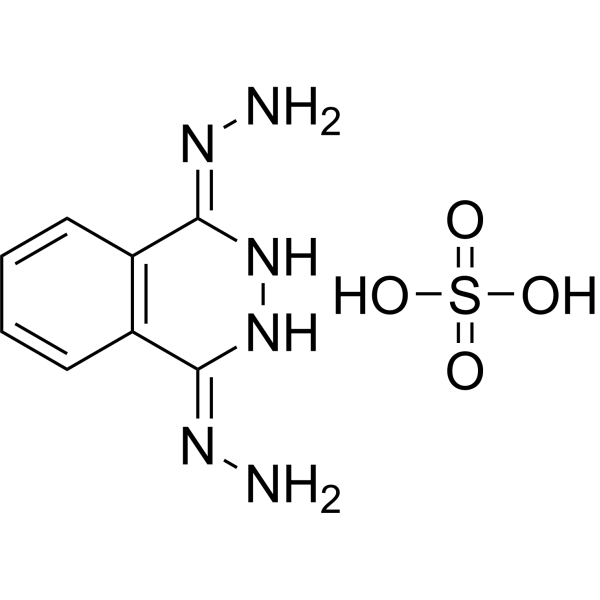
Cat. No.: HY-N7065
CAS No.: 7327-87-9
Dihydralazine sulfate is an antihypertensive hydrazine derivative and also a low-potency genotoxic agent. Dihydralazine sulfate is a direct-acting mutagen with a mixed gene mutation mechanism, which induces DNA fragmentation in the lung, kidney and spleen of mice, and induces sister chromatid exchange in mouse bone marrow cells. Dihydralazine sulfate specifically kills DNA repair-deficient bacteria. Dihydralazine sulfate is a vasodilator and antihypertensive agent that reduces systemic vascular resistance, increases cardiac output and heart rate, thereby lowering blood pressure. Dihydralazine sulfate can be used in research related to hypertension and severe early-onset preeclampsia .
loading...
    loading...
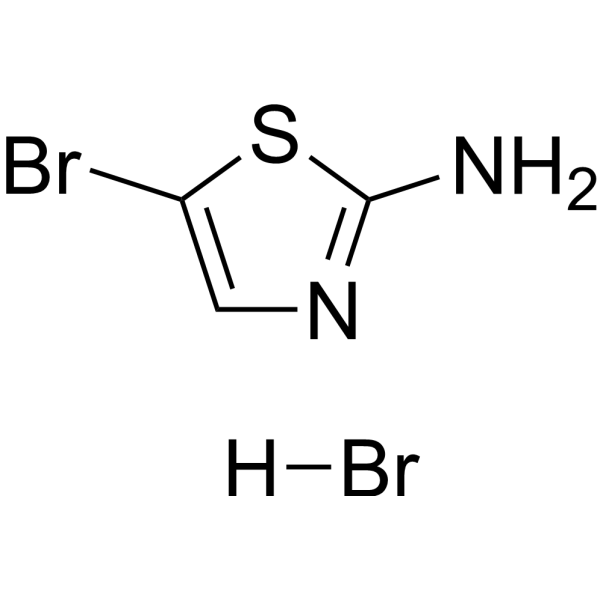
Cat. No.: HY-59343
CAS No.: 61296-22-8
Research Areas:  

Others

2-Amino-5-bromothiazole hydrobromide is an aminothiazole and brominated thiazole derivative. 2-Amino-5-bromothiazole hydrobromide induces base-pair substitutions in bacterial test organisms. 2-Amino-5-bromothiazole hydrobromide exhibits mutagenic activity in Klebsiella pneumoniae and Salmonella typhimurium. 2-Amino-5-bromothiazole hydrobromide acts as a Hg 2+-binding moiety in rhodamine-based fluorescent chemical sensors .
loading...
    loading...
Cat. No.: HY-Z7733
CAS No.: 72956-44-6
Synonyms: Desmethylcarvedilol; BM-14242
Target:  

Calcium Channel

Research Areas:  

Metabolic Disease

O-Desmethylcarvedilol (Desmethylcarvedilol) is an active metabolite of the non-selective β-adrenergic receptor (β-AR) antagonist Carvedilol (HY-B0006). O-Desmethylcarvedilol inhibits store-overload-induced calcium release in HEK293 cells expressing the ryanodine receptor 2 (RyR2) R4496C (RyR2 R4496C) mutation (IC50 = 7.62 µM). O-Desmethylcarvedilol reduces increases in heart rate and prevents decreases in diastolic blood pressure induced by Isoproterenol (HY-B0468) in conscious rabbits (ED50s = 32 and 5 µg/kg, respectively) .
loading...
    loading...
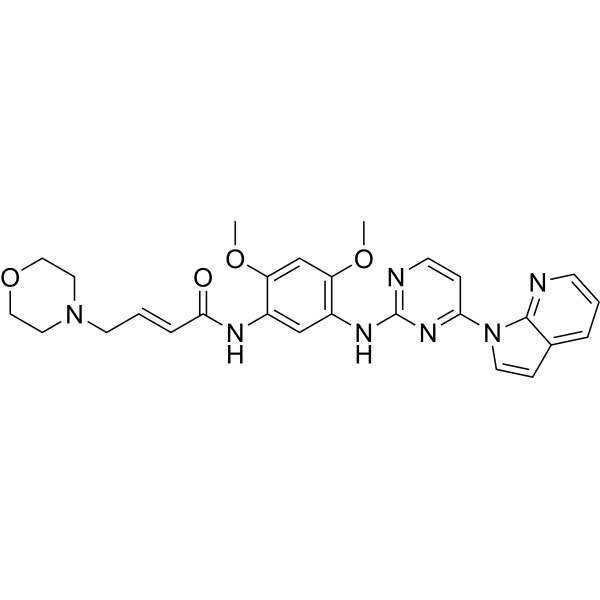
Cat. No.: HY-158178
CAS No.: 3032760-90-7
Target:  

EGFR

Research Areas:  

Cancer

EGFR T790M/L858R-IN-7 (Compound 72) is a novel pyrimidine compound that inhibits the EGFR T790M and L858R mutation with a high efficacy (93% inhibition rate at 0.05 μM). EGFR T790M/L858R-IN-7 functions by specifically binding to the kinase domain of EGFR, thereby inhibiting its phosphorylation activity .
loading...
    loading...
Cat. No.: HY-169400
Research Areas:  

Cancer

HDACs/EZH2-IN-1 (Compound 22a) is a HDACs/EZH2 inhibitor (EZH2 Y641N inhibition rate at 50 nM: 98%), with selective inhibition against HDAC1 and HDAC6 (IC50: 0.23 μM and 0.07 μM, respectively). HDACs/EZH2-IN-1 exerts a antiproliferative effect on diffuse large B-cell lymphoma cells harboring an EZH2 mutation and on various acute myeloid leukemia cells. HDACs/EZH2-IN-1 has the ability to induce cell differentiation and Apoptosis .
loading...
    loading...
Cat. No.: HY-166478S
CAS No.: 1794817-24-5
Synonyms: Desmethylcarvedilol-d5; BM-14242-d5
O-Desmethyl carvedilol-d5 (Desmethylcarvedilol-d5) is deuterium labeled O-Desmethylcarvedilol. O-Desmethylcarvedilol (Desmethylcarvedilol) is an active metabolite of the non-selective β-adrenergic receptor (β-AR) antagonist Carvedilol (HY-B0006). O-Desmethylcarvedilol inhibits store-overload-induced calcium release in HEK293 cells expressing the ryanodine receptor 2 (RyR2) R4496C (RyR2 R4496C) mutation (IC50 = 7.62 μM). O-Desmethylcarvedilol reduces increases in heart rate and prevents decreases in diastolic blood pressure induced by Isoproterenol (HY-B0468) in conscious rabbits (ED50s = 32 and 5 μg/kg, respectively) .
loading...
    loading...
Cat. No.: HY-184408
CAS No.: 3033990-94-9
Research Areas:  

Infection

AAP-SO2 is a Bactericide and Mycobacterium tuberculosis RNA polymerase (Mtb RNAP) inhibitor, with an IC50 of 0.025 μM against Mtb RNAP. AAP-SO2 allosterically slows the nucleotide addition rate during transcriptional elongation and enhances transcription termination efficiency. AAP-SO2 exhibits increased activity against β S450L-type Mtb, possesses activity against non-replicating Mtb, and shows whole-cell activity against Mtb and related mycobacterial species. AAP-SO2 reduces the overall emergence rate of Rifampicin (HY-B0272) tolerance in Mtb, alters the mutation spectrum, and decreases the proportion of β S450L-type Rifampicin-resistant mutants. AAP-SO2 acts synergistically with Rifampicin to kill non-replicating Mtb in a rabbit caseous necrosis model. AAP-SO2 can be used for the research of tuberculosis .
loading...
    loading...
Cat. No.: HY-115465
CAS No.: 908510-73-6
Target:  

DNA/RNA Synthesis

Research Areas:  

Cancer

Rev1-CT/RIR PPI-IN-1 (Compound 1) is a thiophene-based compound. Rev1-CT/RIR PPI-IN-1 can specifically disrupt the protein-protein interaction between Rev1-CT and RIR, with an IC50 value of 2.5 µM. Rev1-CT/RIR PPI-IN-1 can enhance chemosensitivity and reduce the mutation rate in Cisplatin (HY-17394)-sensitive HT-1080 cells. Rev1-CT/RIR PPI-IN-1 can be used for tumor research .
loading...
    loading...
Cat. No.: HY-N7065R
CAS No.: 7327-87-9
Dihydralazine sulfate (Standard) is the analytical standard of Dihydralazine sulfate (HY-N7065). This product is intended for research and analytical applications. Dihydralazine sulfate is an antihypertensive hydrazine derivative and also a low-potency genotoxic agent. Dihydralazine sulfate is a direct-acting mutagen with a mixed gene mutation mechanism, which induces DNA fragmentation in the lung, kidney and spleen of mice, and induces sister chromatid exchange in mouse bone marrow cells. Dihydralazine sulfate specifically kills DNA repair-deficient bacteria. Dihydralazine sulfate is a vasodilator and antihypertensive agent that reduces systemic vascular resistance, increases cardiac output and heart rate, thereby lowering blood pressure. Dihydralazine sulfate can be used in research related to hypertension and severe early-onset preeclampsia .
loading...
    loading...
Cat. No.: HY-L201
3,628 compounds

Cell proliferation, the increase in cell numbers resulting from cell division, is a complex and tightly regulated process. Cell proliferation is regulated by coordinated entry into the cell cycle, and changes in proliferation are closely linked to disease development. Evolutionary dynamics links tumor growth and progression with cell proliferation, cell death, and mutation rates. In addition, cell proliferation is central to degenerative diseases, the development of which is often accompanied by accelerated multiplication of cancer cells. Therefore, assays of cell proliferation levels are frequently used for laboratory research purposes and increasingly for clinical assessment of tumor aggressiveness and potentially to guide care. It has been shown that multiple key targets are collectively involved in regulating the process of cell proliferation, such as CDK, E2F, pRB, β-Catenin, and others.

MCE collects 3,628 compounds that target and regulate key targets of cell proliferation, which can be used in studies of cell proliferation mechanisms and drug discovery.

