






1. Search Result
Search Result
Results for "

penetrating

" in MedChemExpress (MCE) Product Catalog:

317

阻害剤およびアゴニスト

2

蛍光色素

27

生化学アッセイ試薬

260

ペプチド

5

阻害性抗体

9

天然物

3

同位体標識化合物

27

オリゴヌクレオチド

製品番号 製品名 Target 研究分野 構造式
  • HY-100474
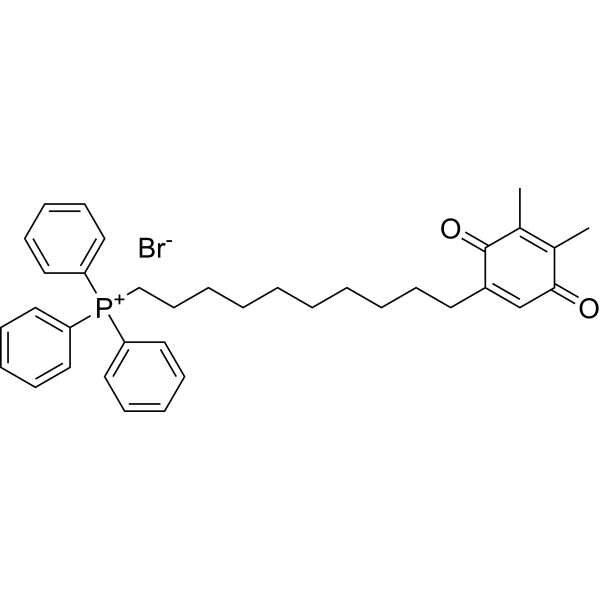
    SKQ1
    15+ Cited Publications

    Reactive Oxygen Species (ROS) Inflammation/Immunology Cancer
    SKQ1 is a mitochondrial-targeted antioxidant with the high mitochondrion membrane penetrating ability and potent antioxidant capability .
    SKQ1
  • HY-100223
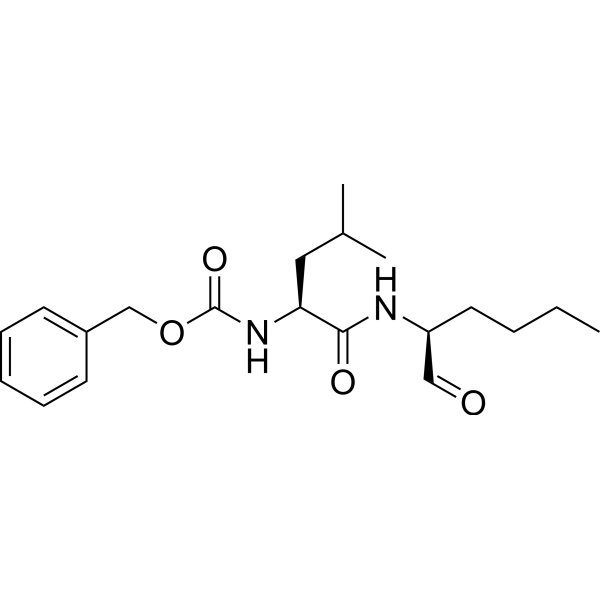
    Calpeptin
    25+ Cited Publications

    Cathepsin Proteasome Apoptosis Inflammation/Immunology
    Calpeptin is a potent, cell penetrating calpain inhibitor, with an ID50 of 40 nM for Calpain I in human platelets . Calpeptin is also an inhibitor of cathepsin K .
    Calpeptin
  • HY-P0281

    TAT(47-57); HIV-1 TAT protein (47-57)

    HIV Infection
    TAT (YGRKKRRQRRR) is derived from the transactivator of transcription (TAT) of human immunodeficiency virus-1 (HIV-1) and is a cell-penetrating peptide. TAT can increase the yields and the solubility of heterologous proteins .
    TAT
  • HY-P0122
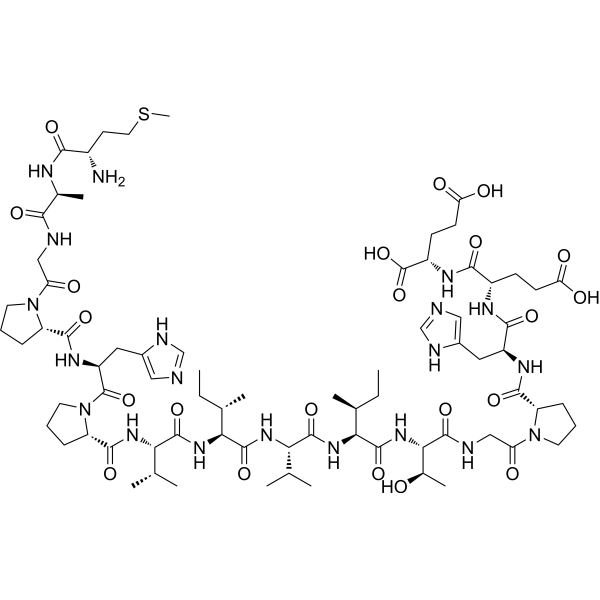
    iRGD peptide
    5+ Cited Publications

    c(CRGDKGPDC)

    Integrin Cancer
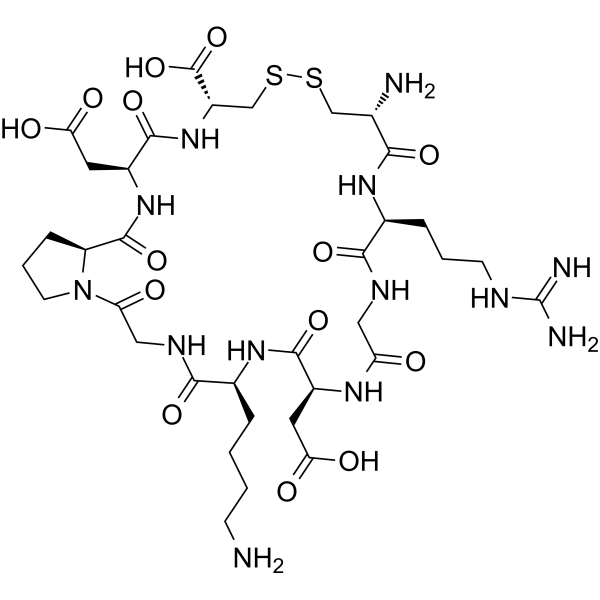
    iRGD peptide is a 9-amino acid cyclic peptide, triggers tissue penetration of agents by first binding to αv-integrins, then proteolytically cleaved in the tumor to produce CRGDK/R to interact with neuropilin-1, and has tumor-targeting and tumor-penetrating properties.
    iRGD peptide
  • HY-100740
    Lanabecestat
    2 Publications Verification

    AZD3293; LY3314814

    Beta-secretase Neurological Disease
    Lanabecestat (AZD3293; LY3314814) is a potent, orally active and blood-brain barrier penetrating BACE1 inhibitor with a Ki of 0.4 nM. Lanabecestat is used for the research of Alzheimer's disease .
    Lanabecestat
  • HY-P4108

    Influenza Virus Infection
    TAT-HA2 Fusion Peptide is a peptide-based delivery agent that combines the pH-sensitive HA2 fusion peptide from Influenza and the cell-penetrating peptide TAT from HIV. TAT-HA2 Fusion Peptide is a transactivator of transcription and hemaglutanin for endosomal release. TAT-HA2 Fusion Peptide enhances cellular uptake of macromolecules .
    TAT-HA2 Fusion Peptide
  • HY-P0282A

    HIV Infection
    TAT peptide (TFA) is a cell penetrating peptide (GRKKRRQRRRPQ) derived from the trans-activating transcriptional activator (Tat) from HIV-1 .
    TAT peptide TFA
  • HY-112723

    ACT-709478

    Calcium Channel Neurological Disease
    Apinocaltamide (ACT-709478) is a potent, selective, orally active, and brain penetrating T-type calcium channel blocker. ACT-709478 is used in the research of generalized epilepsies .
    Apinocaltamide
  • HY-100475
    KYP-2047
    1 Publications Verification

    Apoptosis MDM-2/p53 Prolyl Endopeptidase (PREP) Neurological Disease Inflammation/Immunology Cancer
    KYP-2047 is a potent and BBB-penetrating prolyl-oligopeptidase (POP) inhibitor, with an Ki value of 0.023 nM. KYP-2047 reduces glioblastoma proliferation through angiogenesis and apoptosis modulation .
    KYP-2047
  • HY-P4093

    Biochemical Assay Reagents Others
    Cys-Penetratin is a cysteine-containing cell-penetrating peptide with sequence CRQIKIWFQNRRMKWKK. Cys-Penetratin can Cys-Penetratin can be used for the research for the research of drug delivery .
    Cys-Penetratin
  • HY-122697

    Potassium Channel Cardiovascular Disease Neurological Disease Endocrinology
    ML418 is a potent, selective and CNS penetrating Kir7.1 potassium channel blocker. ML418 inhibits Kir7.1 with an IC50 value of 0.31 μM. ML418 can be used for the research of neurological, cardiovascular, endocrine and muscle disorders.
    ML418
  • HY-P0133

    Nona-L-arginine; Peptide R9

    Ser/Thr Protease Neurological Disease
    (Arg)9 (Nona-L-arginine) is a cell-penetrating peptide (CPP) made up of 9 arginine residues, which is an inhibitor of serine endoprotease Furin. (Arg)9 has neuroprotective property, exhibits neuroprotective activity with an IC50 of 0.78 μM in the glutamic acid model .
    (Arg) 9
  • HY-P1732

    Biochemical Assay Reagents Cancer
    Transportan is an amphipathic cell-penetrating peptide containing 12 functional amino acids from the amino terminus of the neuropeptide galanin and mastoparan in the carboxyl terminus, connected via a lysine. Transportan interacts with galanin receptors and G-proteins, modulates GTPase activity, enters cells via direct translocation and endocytic pathways, accumulates in cytoplasmic, nuclear, and membranous structures, and delivers cargo including peptides, PNAs, proteins, siRNA, and liposomes [12].
    Transportan
  • HY-P4076

    HIV DNA Alkylator/Crosslinker Infection
    MPG peptides, Pβ is an amphipathic cell-penetrating peptide. MPG peptides, Pβ consists of three components: the hydrophobic fusion sequence (GALFLGFLGAAGSTMGA) of HIV glycoprotein 41, a spacer domain (WSQP), and the nuclear localization signal (KKKRKV) of the large T antigen of Simian virus 40. MPG peptides, Pβ can form stable non-covalent complexes with nucleic acids (including DNA) through electrostatic interactions and improve their intracellular delivery. MPG peptides, Pβ can be used in studies of HIV-1-related immune responses .
    MPG peptides, Pβ
  • HY-P11016

    MMP Neurological Disease Inflammation/Immunology Cancer
    PLGLAG is a peptide that serves as the linker in activatable cell-penetrating peptides (ACPPs) and can be used in cancer research .
    PLGLAG
  • HY-14880

    JNJ-31001074

    Histamine Receptor Neurological Disease Metabolic Disease
    Bavisant (JNJ-31001074) is an orally active, potent, brain-penetrating and highly selective antagonist of the histamine H3 receptor. Bavisant can be used for attention-deficit hyperactivity disorder (ADHD) research .
    Bavisant
  • HY-P0282

    HIV Infection
    TAT peptide is a cell penetrating peptide (GRKKRRQRRRPQ) derived from the trans-activating transcriptional activator (Tat) from HIV-1 .
    TAT peptide
  • HY-P1491

    HIV Infection
    HIV-1 TAT (48-60) is a cell-penetrating peptide derived from the human immunodeficient virus (HIV)-1 Tat protein residue 48-60. It has been used to deliver exogenous macromolecules into cells in a non-disruptive way.
    HIV-1 TAT (48-60)
  • HY-P0133A
    (Arg)9 TFA
    1 Publications Verification

    Nona-L-arginine TFA; Peptide R9 TFA

    Ser/Thr Protease Neurological Disease
    (Arg)9 (Nona-L-arginine) TFA is a cell-penetrating peptide (CPP) made up of 9 arginine residues. (Arg)9 TFA has neuroprotective property, exhibits neuroprotective activity with an IC50 of 0.78 μM in the glutamic acid model .
    (Arg)9 TFA
  • HY-P1848
    Pep-1 (uncapped)
    2 Publications Verification

    Interleukin Related Cancer
    Pep-1 (uncapped) is a specific ligand of IL-13Ra2. Pep-1 (uncapped) exerts cell penetrating activity through receptor-mediated endocytosis, can cross the blood-tumor barrier (BTB) and target glioma cells. Pep-1 (uncapped) can enhance the uptake of nanoparticles by tumor cells and enhance the cell penetration ability of nanoparticles, and can be used to develop targeted drug delivery systems for glioma .
    Pep-1 (uncapped)
  • HY-P4086

    RABV nAChR Neurological Disease Cancer
    Chimeric Rabies Virus Glycoprotein Fragment (RVG-9R) is a cell-penetrating peptide that is synthesized by adding nona-arginine motif to the carboxy terminus of RVG (rabies virus glycoprotein). Chimeric Rabies Virus Glycoprotein Fragment (RVG-9R) binds to
    nAChR
    on neuronal cells to mediate receptor-mediated endocytosis and targeted siRNA delivery. Chimeric Rabies Virus Glycoprotein Fragment (RVG-9R) protects complexed siRNA from degradation, enhances transcellular siRNA delivery in neuronal cells, and promotes efficient, pecific gene silencing. Chimeric Rabies Virus Glycoprotein Fragment (RVG-9R) can be used for the researches of neurological disease and cancer .
    Chimeric Rabies Virus Glycoprotein Fragment (RVG-9R)
  • HY-112305

    ATM/ATR Cancer
    AZ32 is an orally bioavailable and blood-brain barrier-penetrating ATM inhibitor with an IC50 of <6.2 nM for ATM enzyme, and an IC50 of 0.31 μM for ATM in cell.
    AZ32
  • HY-107730

    Neuropeptide Y Receptor Neurological Disease
    NPY5RA-972 is an orally active, central nervous system (CNS) penetrating, potent and selective NPY Y5 receptor antagonist that prevents feeding driven by activation of this receptor .
    NPY5RA-972
  • HY-P4122A

    HIV Others
    TAT (47-57), FAM-labeled acetate is a 5(6)-Carboxyfluorescein (HY-15940)-labeled TAT (HY-P0281). TAT (YGRKKRRQRRR) is derived from the transactivator of transcription (TAT) of human immunodeficiency virus-1 (HIV-1) and is a cell-penetrating peptide .
    TAT (47-57), FAM-labeled acetate
  • HY-P4122

    HIV Others
    TAT (47-57), FAM-labeled is a 5(6)-Carboxyfluorescein (HY-15940)-labeled TAT (HY-P0281). TAT (YGRKKRRQRRR) is derived from the transactivator of transcription (TAT) of human immunodeficiency virus-1 (HIV-1) and is a cell-penetrating peptide .
    TAT (47-57), FAM-labeled
  • HY-P0285
    Rabies Virus Glycoprotein
    1 Publications Verification

    RABV Infection
    Rabies Virus Glycoprotein is a 29-amino-acid cell penetrating peptide derived from a rabies virus glycoprotein that can cross the blood-brain barrier (BBB) and enter brain cells.
    Rabies Virus Glycoprotein
  • HY-P0281A

    TAT(47-57) TFA; HIV-1 TAT protein (47-57) TFA

    HIV Infection
    TAT TFA (YGRKKRRQRRR) is derived from the transactivator of transcription (TAT) of human immunodeficiency virus (HIV-1) and is a cell-penetrating peptide. TAT can increase the yields and the solubility of heterologous proteins .
    TAT TFA
  • HY-P3432

    Biochemical Assay Reagents Others
    DfTat is a dimer of the prototypical cell-penetrating peptide TAT. DfTat can deliver small molecules, peptides and proteins into live cells with a particularly high efficiency. DfTat labeled with the rhodamine can be used as a tracer for easy detection .
    DfTat
  • HY-P0133B
    (Arg)9 acetate
    1 Publications Verification

    Nona-L-arginine acetate; Peptide R9 acetate

    Ser/Thr Protease Neurological Disease
    (Arg)9 (Nona-L-arginine) acetate is a cell-penetrating peptide (CPP) made up of 9 arginine residues. (Arg)9 acetate has neuroprotective property, exhibits neuroprotective activity with an IC50 of 0.78 μM in the glutamic acid model .
    (Arg)9 acetate
  • HY-111409

    RIP kinase Inflammation/Immunology
    RIP1 kinase inhibitor 1 (compound 22) is a highly potent, orally available, and brain-penetrating RIP1 kinase inhibitor (pKi=9.04) .
    RIP1 kinase inhibitor 1
  • HY-W011400
    TLR1
    3 Publications Verification

    MyD88 Inflammation/Immunology
    TLR1 (compound 4a) is a low molecular weight, cell-penetrating Toll/IL-1 receptor/resistance (TIR) domain/BB-Loop mimic. TLR1 inhibits IL-1 receptor-mediated responses .
    TLR1
  • HY-P4118

    penetrating analog

    Amino Acid Derivatives Peptide-Drug Conjugates (PDCs) Others
    EB1 peptide (Penetrating analog) is an endosomolytic agent and siRNA delivery agent. EB1 peptide forms an amphipathic alpha helix upon protonation in early-late endosomes, drives endosomal membrane permeabilization, and enables endocytosed siRNA escape into the cytosol. EB1 peptide facilitates biologically active siRNA cellular uptake and targeted gene silencing. EB1 peptide forms complexes with siRNA. EB1 peptide can be used for drug delivery research .
    EB1 peptide
  • HY-P2500

    Fluorescent Dye Others
    (Arg)9, FAM-labeled, a cell-penetrating peptide (CPP), is a nona-arginine (ARG) with FAM label. CPPs have emerged as powerful tools for delivering bioactive cargoes into the cytosol of intact cells .
    (Arg)9, FAM-labeled
  • HY-P4079

    Drug Derivative Metabolic Disease
    hCT(18-32) is a hCT (human calcitonin)-derived peptide .
    hCT(18-32)
  • HY-P4119

    Biochemical Assay Reagents Others
    Pep-1-Cysteamine is an amphipathic chimeric cell-penetrating peptide. Pep-1-Cysteamine can penetrate biological membranes in an energy-independent manner without forming transmembrane pores, and efficiently deliver active proteins into cells, with its translocation dominated by electrostatic interactions and membrane perturbation .
    Pep-1-Cysteamine
  • HY-P1801A

    Cys-[HIV-Tat (47-57)] TFA

    HIV Drug Derivative Others
    Cys-TAT(47-57) (Cys-[HIV-Tat (47-57)]) TFA, TAT (HY-P0281) derivative, is a Cysteine (HY-Y0337)-tagged cell-penetrating peptide (CPP) derived from the HIV TAT protein. Cys-TAT(47-57) TFA can be used for the research for the research of drug delivery .
    Cys-TAT(47-57) TFA
  • HY-P4087

    HIV Infection Cancer
    Cys(Npys)-(Arg)9 is a synthetic cationic cell-penetrating peptide with a reversible thiol-reactive nitropyridyl (Npys) group. Cys(Npys)-(Arg)9 efficiently mediates the internalization and delivery of various "cargo" such as proteins and antibodies by forming reversible disulfide bonds with surface-exposed cysteine residues. Cys(Npys)-(Arg)9 endows TALEN proteins with cell-penetrating activity, enabling gene knockout in mammalian cells and protein transduction in wheat microspores. Cys(Npys)-(Arg)9 can be conjugated with antibodies to form cationized IgG for enhancing endosomal escape of oligonucleotides, or form siRNA delivery complexes. When the molar ratio of Cys(Npys)-(Arg)9 to loaded molecules is higher than 1:1, it exerts certain cytotoxic effects on cells. Cys(Npys)-(Arg)9 can be used in studies related to oral squamous cell carcinoma and HIV infection .
    Cys(Npys)-(Arg)9
  • HY-P4123

    MMP Cardiovascular Disease Inflammation/Immunology Cancer
    TAT (47-57) GGG-Cys (Npys) is a cell-penetrating peptide and delivery carrier derived from TAT. TAT (47-57) GGG-Cys (Npys) facilitates the translocation of conjugated drug molecules across cell membranes. TAT (47-57) GGG-Cys (Npys) acts as a delivery carrier for MT1-MMP inhibitors. TAT (47-57) GGG-Cys (Npys) is applicable to research on diseases associated with MT1-MMP activity, such as cancer, arthritis, heart disease, and vascular disorders .
    TAT (47-57) GGG-Cys(Npys)
  • HY-P2483

    Proteasome Bacterial Infection Inflammation/Immunology Cancer
    Octaarginine is a cell-penetrating peptide and proteasome inhibitor. Octaarginine exhibits mixed-type inhibition against 20S proteasome chymotrypsin-like, caspase-like, and trypsin-like activities, and inhibits 26S proteasome activity with decreased efficiency. Octaarginine induces ubiquitin-conjugated protein accumulation, mediates HSPG-dependent cellular internalization via macropinocytosis, enhances liposomal cargo uptake and gene delivery. Octaarginine can be used for the research of cervix carcinoma, collagen antibody-induced arthritis, and bacterial infections .
    Octaarginine
  • HY-100777

    Topoisomerase Neurological Disease Cancer
    DACA (XR 5000) is a potential and blood-brain barrier-penetrating topoisomerase I and II inhibitor. DACA can be used in the research of colorectal cancer, leukemia and lung cancer .
    DACA
  • HY-P0285A
    Rabies Virus Glycoprotein TFA
    1 Publications Verification

    RABV Infection
    Rabies Virus Glycoprotein (TFA) is a 29-amino-acid cell penetrating peptide derived from a rabies virus glycoprotein that can cross the blood-brain barrier (BBB) and enter brain cells .
    Rabies Virus Glycoprotein TFA
  • HY-108335
    Sipatrigine
    1 Publications Verification

    619C89; BW 619C89

    Sodium Channel Calcium Channel Neurological Disease
    Sipatrigine (619C89), a neuroprotective agent, is a glutamate release inhibitor, voltage-dependent sodium channel and calcium channel inhibitor, penetrating the central nervous system. Has the potential in the study for focal cerebral ischemia and stroke .
    Sipatrigine
  • HY-14880B

    JNJ31001074AAC; JNJ31001074 dihydrochloride hydrate

    Histamine Receptor Neurological Disease Metabolic Disease
    Bavisant (JNJ31001074AAC) dihydrochloride hydrate is an orally active, potent, brain-penetrating and highly selective antagonist of the histamine H3 receptor. Bavisant dihydrochloride hydrate can be used for attention-deficit hyperactivity disorder (ADHD) research .
    Bavisant dihydrochloride hydrate
  • HY-172279

    Liposome Infection
    DSPE-PEG1000-TAT is a PEG compound which composed of DSPE and a cell-penetrating peptide (TAT) (HY-P0281). DSPE-PEG1000-TAT can be used for drug delivery .
    DSPE-PEG1000-TAT
  • HY-172279C

    Liposome Infection
    DSPE-PEG3400-TAT is a PEG compound which composed of DSPE and a cell-penetrating peptide (TAT) (HY-P0281). DSPE-PEG3400-TAT can be used for drug delivery .
    DSPE-PEG3400-TAT
  • HY-105235

    CI-977

    Opioid Receptor Neurological Disease
    Enadoline (CI-977) is a highly selective, brain-penetrating, and nonpeptide kappa-opioid receptor (KOR) agonist (Ki=1.25 nM). Antinociceptive effects .
    Enadoline
  • HY-P10644

    Fluorescent Dye Cancer
    CPP9 is a small, amphipathic, cyclic cell penetrating peptide (CPP). CPPs bind directly to the plasma membrane phospholipids and enter mammalian cells via endocytosis, followed by efficient release from the endosome. CPP9 can be used for intracellular delivery of therapeutic agents and chemical probes .
    CPP9
  • HY-P4087B

    HIV Others
    Cys(Npys)-(Arg)9 acetate is a synthetic cationic cell-penetrating peptide with a reversible thiol-reactive nitropyridyl (Npys) group. Cys(Npys)-(Arg)9 acetate efficiently mediates the internalization and delivery of various "cargo" such as proteins and antibodies by forming reversible disulfide bonds with surface-exposed cysteine residues. Cys(Npys)-(Arg)9 acetate endows TALEN proteins with cell-penetrating activity, enabling gene knockout in mammalian cells and protein transduction in wheat microspores. Cys(Npys)-(Arg)9 acetate can be conjugated with antibodies to form cationized IgG for enhancing endosomal escape of oligonucleotides, or form siRNA delivery complexes. When the molar ratio of Cys(Npys)-(Arg)9 acetate to loaded molecules is higher than 1:1, it exerts certain cytotoxic effects on cells. Cys(Npys)-(Arg)9 acetate can be used in studies related to oral squamous cell carcinoma and HIV infection .
    Cys(Npys)-(Arg)9 acetate
  • HY-P1801

    Cys-[HIV-Tat (47-57)]

    HIV Drug Derivative Others
    Cys-TAT(47-57) (Cys-[HIV-Tat (47-57)]), TAT (HY-P0281) derivative, is a Cysteine (HY-Y0337)-tagged cell-penetrating peptide (CPP) derived from the HIV TAT protein. Cys-TAT(47-57) can be used for the research for the research of drug delivery .
    Cys-TAT(47-57)
  • HY-164077

    Biochemical Assay Reagents Others
    mPEG-PLGA is a mucus-penetrating polymer. mPEG-PLGA is a raw material to prepare nanomedicine .
    mPEG-PLGA

オンラインお問い合わせ

入力情報は安全に管理されます. 必須入力項目.

タイトル


国或いは地域 *

お名前 *


組纖名 *

デパートメント *


メールアドレス *


製品名 *

製品番号


カスタマ需要量 *

電話番号 *


必ず会社名を記載ください。個人への返信は行いません。

備考

バルクお問い合わせ

Inquiry Information

製品名:
製品番号:
数量:
MCE 日本正規代理店:

