








1. Search Result
Search Result
Results for "

peptide amide

" in MedChemExpress (MCE) Product Catalog:

126

Inhibitors & Agonists

8

Fluorescent Dyes

46

Biochemical Assay Reagents

84

Peptides

2

Click Chemistry

6

Oligonucleotides

Cat. No. Product Name Target Research Area
  • HY-P0264
    Exendin(9-39) amide
    Maximum Cited Publications
    34 Publications Verification

    Avexitide

    GLP Receptor Metabolic Disease
    Exendin(9-39) amide (Avexitide) is a glucagon-like peptide-1 (GLP-1) antagonist that competes with endogenous GLP-1 for binding to GLP-1 receptors, thereby antagonizing the effects of excess GLP-1 secretion. Exendin(9-39) amide can be used to study postoperative hypoglycemia (PBH) .
  • HY-P0054A
    GLP-1(7-36), amide
    5+ Cited Publications

    Glucagon-like peptide-1 (GLP-1)(7-36), amide; Human GLP-1 (7-36), amide

    GCGR Metabolic Disease
    GLP-1(7-36), amide is a physiological incretin hormone that stimulates insulin secretion.
  • HY-P3719
    MOG(35-55) amide, mouse, rat
    1 Publications Verification

    CCR Inflammation/Immunology
    MOG (35-55) amide, mouse, rat the terminal amidation form of the 35-55 fragment of the myelin oligodendrocyte glycoprotein (MOG) immunogenic peptide (MOG (35-55) (HY-P1240)). MOG(35-55) amide, mouse, rat can be used for experimental autoimmune encephalomyelitis (EAE) modeling .
  • HY-P1120

    WKYMVm-amide; W-peptide

    Formyl Peptide Receptor (FPR) PERK Apoptosis Neurological Disease Metabolic Disease Inflammation/Immunology Cancer
    WKYMVm is a selective formylpeptide receptor 2 (FPR2) agonist. WKYMVm has a powerful anti-inflammatory effect that can reduce lung injury and spinal cord injury. WKYMVm ameliorates obesity by regulating lipid metabolism and leptin signaling. WKYMVm is involved in the regulation of immune cells by activating FPRs. WKYMVm can promote the chemotactic migration of immune cells and inhibit the apoptosis of phagocytes. In addition, WKYMVm may play a favorable or unfavorable role in tumors, depending on the type of tumor .
  • HY-W010712
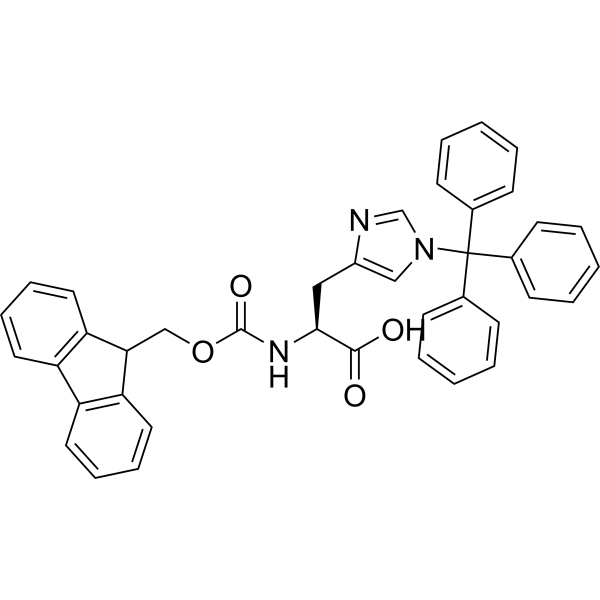
    Fmoc-His(Trt)-OH
    1 Publications Verification

    Amino Acid Derivatives Others
    Fmoc-His(Trt)-OH is a histidine derivative with a trityl (Trt) group protecting the His side chain. Fmoc-His(Trt)-OH also has an Fmoc group protecting the α-NH2 group. Fmoc-His(Trt)-OH can be used in solid-phase peptide synthesis to prevent racemization and byproduct formation. Fmoc-His(Trt)-OH acts as a protected histidine precursor in solid-phase peptide synthesis (SPPS), participating in peptide chain construction through amide bond formation. Fmoc-His(Trt)-OH can be precisely incorporated into the target peptide sequence, ensuring correct peptide chain synthesis and reducing impurity formation. Fmoc-His(Trt)-OH is mainly used in the solid-phase synthesis research of pharmaceutical peptides and bioactive peptides, and is particularly suitable for the preparation of peptide drugs requiring precise control of histidine configuration .
  • HY-P4744
    LL-37 amide
    2 Publications Verification

    Formyl Peptide Receptor (FPR) Bacterial Infection Cancer
    LL-37 amide is a selective agonist of formyl peptide receptor-like FPRL1, effectively inhibiting periodontal pathogens (ED99=8.5-8.7 μg/mL). LL-37 amide exerts its bactericidal effect by activating FPRL1-mediated immune cell chemotaxis and disrupting bacterial cell membrane integrity. It can also regulate inflammatory responses (inhibiting the release of factors such as TNF-α) and promote angiogenesis. Amidation modification reduces its sensitivity to serum inhibition and improves its stability. LL-37 amide possesses key activities in bactericidal action, immunomodulation, and wound healing, and is mainly used in research on infection-related diseases such as periodontal disease and deep tissue injuries (pressure ulcers), and wound healing .
  • HY-P1309
    PAR-4 Agonist Peptide, amide
    2 Publications Verification

    PAR-4-AP; AY-NH2

    Protease Activated Receptor (PAR) Inflammation/Immunology
    PAR-4 Agonist Peptide, amide (PAR-4-AP; AY-NH2) is a proteinase-activated receptor-4 (PAR-4) agonist, which has no effect on either PAR-1 or PAR-2 and whose effects are blocked by a PAR-4 antagonist.
  • HY-P1141

    GCGR Metabolic Disease
    GLP-1(9-36)amide is a major metabolite of glucagon-like peptide-1-(7-36) amide formed by the enzyme dipeptidyl peptidase-4 (DPP-4). GLP-1(9-36)amide acts as an antagonist to the human pancreatic GLP-1 receptor .
  • HY-P0054
    GLP-1(7-36), amide acetate
    5+ Cited Publications

    Glucagon-like peptide-1 (GLP-1)(7-36), amide acetate; Human GLP-1 (7-36), amide acetate

    GCGR Metabolic Disease
    GLP-1(7-36), amide acetate is a major intestinal hormone that stimulates glucose-induced insulin secretion from β cells.
  • HY-P1034
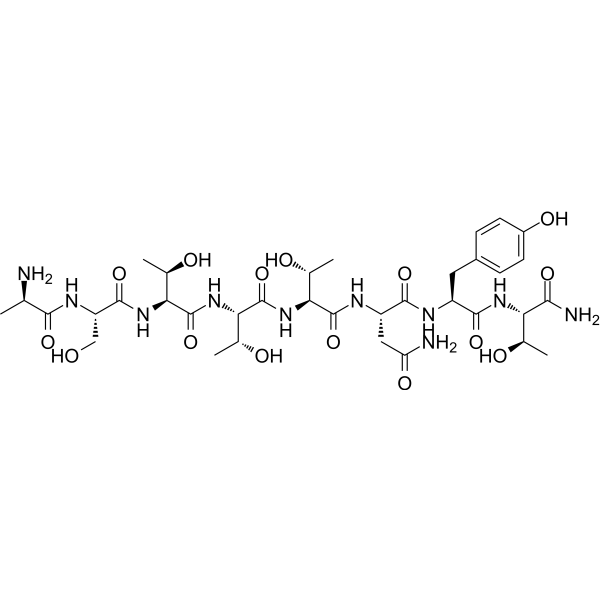
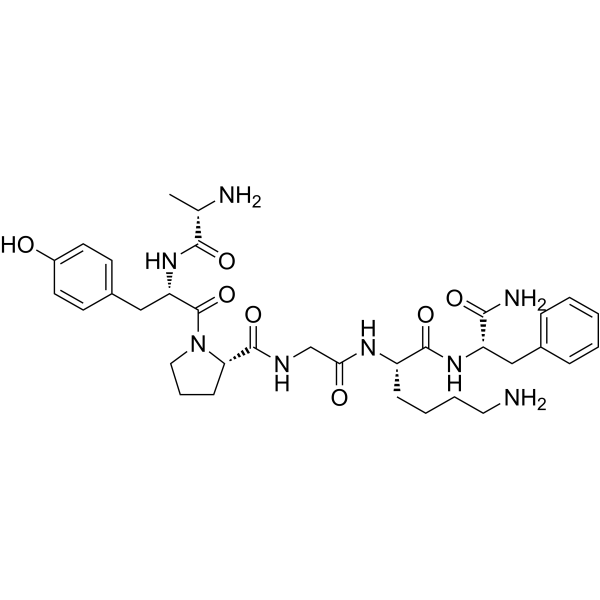
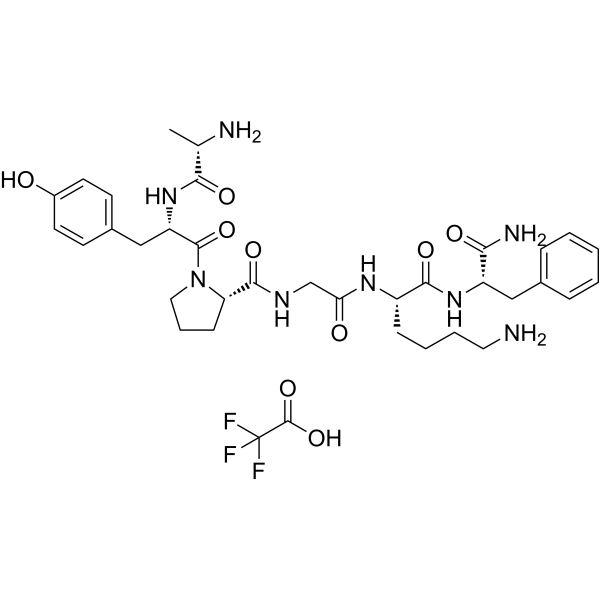
    DAPTA
    4 Publications Verification

    D-Ala-peptide T-amide; Adaptavir

    CCR HIV Infection Endocrinology
    DAPTA is a synthetic peptide, functions as a viral entry inhibitor by targeting selectively CCR5, and shows potent anti-HIV activities.
  • HY-P0283
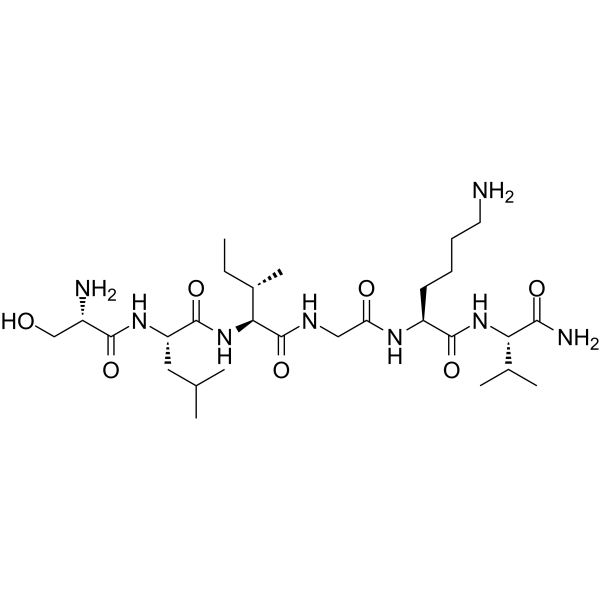
    Protease-Activated Receptor-2, amide
    2 Publications Verification

    Protease Activated Receptor (PAR) Cancer
    Protease-Activated Receptor-2, amide (SLIGKV-NH2) is a highly potent protease-activated receptor-2 (PAR2) activating peptide.
  • HY-P1883A

    Fluorescent Dye Infection
    Bacterial Sortase Substrate III, Abz/DNP TFA is a fluorescent peptide substrate. Bacterial Sortase Substrate III, Abz/DNP TFA undergoes cleavage catalyzed by Staphylococcus aureus sortase A (SrtAΔN24) and Streptococcus pyogenes sortase A (SrtAΔN81), and catalyzes the formation of an amide bond between the carboxyl group of threonine and the amino group of the cell wall cross-bridge. Cleavage of this substrate can be detected at Ex/Em=320 nm/420 nm .
  • HY-P1248

    NPFF

    Neuropeptide FF Receptor Cardiovascular Disease Neurological Disease
    Neuropeptide FF (NPFF), an octapeptide belonging to the RF-amide family of peptides, is a NPFF1 and NPFF2 receptors agonist with Ki values of 2.82 nM and 0.21 nM, respectively. Neuropeptide FF induces abstinence syndrome, exerts antiopioid and analgesic effects, releases via calcium-dependent mechanisms from rat spinal cord, regulates memory, autonomic function, and neuroendocrine function, modulates pain and opioid antinociception, reduces food intake, stimulates water intake, alters cardiovascular parameters, and shows differential activity in hypothalamic paraventricular nucleus neurons. Neuropeptide FF is present in mammalian central nervous system and periphery, with NPFF-immunoreactivity increases in rat cerebrospinal fluid during opiate tolerance, and its NPFF gene and NPFF-R2 gene are up-regulated in rat spinal cord and dorsal root ganglia during peripheral inflammation. Neuropeptide FF can be used for the research of opioid tolerance, morphine-induced analgesia, abstinence syndrome, pain, hypertension, nociception, inflammatory pain, and neuropathic pain .
  • HY-P2535

    GLP-1 (7-36)-Lys(biotin)-amide

    GLP Receptor Metabolic Disease
    Glucagon-Like Peptide 1 (GLP-1) (7-36)-Lys (Biotin), amide, human is an C-terminal-labelled biotinylated GLP-1 (7-36) amide.
  • HY-P0054B
    GLP-1(7-36), amide TFA
    5+ Cited Publications

    Glucagon-like peptide-1 (GLP-1)(7-36), amide TFA; Human GLP-1 (7-36), amide TFA

    GCGR Metabolic Disease
    GLP-1(7-36), amide TFA is a major intestinal hormone that stimulates glucose-induced insulin secretion from β cells .
  • HY-P1701

    Opioid Receptor Cardiovascular Disease Neurological Disease
    Morphiceptin is a potent and specific agonist for morphine (μ) receptors. Morphiceptin, as a synthetic peptide, is the amide of a fragment of the milk protein β-casein. Morphiceptin has morphinelike activities and is highly specific for morphine (μ) receptors but not for Enkephalin receptors .
  • HY-P1309A
    PAR-4 Agonist Peptide, amide TFA
    2 Publications Verification

    PAR-4-AP TFA; AY-NH2 TFA

    Protease Activated Receptor (PAR) Inflammation/Immunology
    PAR-4 Agonist Peptide, amide TFA (PAR-4-AP TFA; AY-NH2 TFA) is a proteinase-activated receptor-4 (PAR-4) agonist, which has no effect on either PAR-1 or PAR-2 and whose effects are blocked by a PAR-4 antagonist .
  • HY-P2193

    Peptides Infection
    TAT-amide is a cell penetrating peptide. Cell-penetrating peptides (CPPs) are short amino acid sequences able to enter different cells .
  • HY-P1155
    GRF (1-29) amide (rat)
    1 Publications Verification

    rGHRH(1-29)NH2

    GHSR Cancer
    GRF (1-29) amide (rat) is a synthetic peptide which can stimulate the growth hormone (GH) secretion.
  • HY-P4821

    Peptides Others
    pTH (1-34) amide (human) is a polypeptide that can be found by peptide screening. Peptide screening is a research tool that pools active peptides primarily by immunoassay. Peptide screening can be used for protein interaction, functional analysis, epitope screening, especially in the field of agent research and development .
  • HY-P1526

    Natriuretic Peptide Receptor (NPR) Cardiovascular Disease
    ANP [Des18-22] 4-23 amide rat is a polypeptide fragment of rat atrial natriuretic peptide (ANP) that specifically binds NPR-C .
  • HY-P5815

    Glucagon-like peptide 1 (1-36) amide (human, rat)

    GLP Receptor GCGR Metabolic Disease
    GLP-1 (1-36) amide (human, rat) (Glucagon-like Peptide 1 (1-36) amide (human, rat) ) is a molecular variant of glucagon-like peptide 1 (GLP-1)-(7-36) amide. GLP-1 (1-36) amide (human, rat) can stimulate [14C]aminopyrine accumulation on enzymatically dispersed enriched rat parietal cells .
  • HY-P5904

    Caveolin-1 scaffolding domain peptide

    c-Met/HGFR Others
    Caveolin-1 (82-101) amide (human, mouse, rat) (Caveolin-1 scaffolding domain peptide) is a peptide that reverses aging-associated deleterious changes in multiple organs. Caveolin-1 (82-101) amide (human, mouse, rat) inhibits tyrosine kinases .
  • HY-P3622

    GCGR Metabolic Disease
    (Ser8)-GLP-1 (7-36) amide, human is a glucagon-like peptide 1 amide derived from glucagonogen, a cleavage product of the GLP-1 (1-36) amide peptide. (Ser8)-GLP-1 (7-36) amide, human is an entero-insulinotropic hormone that causes glucose-dependent release of insulin from pancreatic β-cells and affects gastrointestinal motility and secretion .
  • HY-P0264A
    Exendin(9-39) amide acetate
    Maximum Cited Publications
    34 Publications Verification

    Avexitide acetate

    GLP Receptor Metabolic Disease
    Exendin(9-39) amide (Avexitide) acetate is a glucagon-like peptide-1 (GLP-1) antagonist that competes with endogenous GLP-1 for the GLP-1R, counteracting the effects of excessive GLP-1 secretion. Exendin(9-39) amide acetate can be utilized in Postbariatric hypoglycemia (PBH) research .
  • HY-P2609F

    PACAP Receptor Others
    PACAP (1-38), amide, Biotin-labeled is a biological active peptide. (Biotin-labeled HY-P0221)
  • HY-P1531

    Melanocortin Receptor Cardiovascular Disease Metabolic Disease Endocrinology
    γ-1-Melanocyte Stimulating Hormone (MSH), amide is a 11-amino acid peptide. γ-1-Melanocyte Stimulating Hormone (MSH) regulates sodium (Na +) balance and blood pressure through activation of the melanocortin receptor 3 (MC3-R).
  • HY-P4744A
    LL-37 amide TFA
    2 Publications Verification

    Formyl Peptide Receptor (FPR) Bacterial Infection Cancer
    LL-37 amide TFA is a selective agonist of formyl peptide receptor-like FPRL1, effectively inhibiting periodontal pathogens (ED99=8.5-8.7 μg/mL). LL-37 amide TFA exerts its bactericidal effect by activating FPRL1-mediated immune cell chemotaxis and disrupting bacterial cell membrane integrity. It can also regulate inflammatory responses (inhibiting the release of factors such as TNF-α) and promote angiogenesis. Amidation modification reduces its sensitivity to serum inhibition and improves its stability. LL-37 amide TFA possesses key activities in bactericidal action, immunomodulation, and wound healing, and is mainly used in research on infection-related diseases such as periodontal disease and deep tissue injuries (pressure ulcers), and wound healing .
  • HY-P5481

    Peptides Others
    DABCYL-LPETG-EDANS is a biological active peptide. (This 5-amino acid peptide is a sortase substrate, C-terminal sorting signal. Sortase cleaves surface proteins at the LPXTG motif and catalyzes the formation of an amide bond between the carboxyl group of threonine and the amino group of cell-wall crossbridges. Sortases are a family of Gram-positive transpeptidases responsible for anchoring surface protein virulence factors to the peptidoglycan cell wall layer. Cleavage of this FRET substrate by sortase reveals the fluorescent signal, Abs/Em = 340/490 nm.)
  • HY-P5815A

    Glucagon-like peptide 1 (1-36) amide (human, rat) TFA

    GLP Receptor GCGR Metabolic Disease
    GLP-1 (1-36) amide (human, rat) (Glucagon-like Peptide 1 (1-36) amide (human, rat) ) TFA is a molecular variant of glucagon-like peptide 1 (GLP-1)-(7-36) amide. GLP-1 (1-36) amide (human, rat) TFA can stimulate [14C]aminopyrine accumulation on enzymatically dispersed enriched rat parietal cells .
  • HY-P1141A

    GCGR Metabolic Disease
    GLP-1(9-36)amide TFA is a major metabolite of glucagon-like peptide-1-(7-36) amide formed by the enzyme dipeptidyl peptidase-4 (DPP-4). GLP-1(9-36)amide TFA acts as an antagonist to the human pancreatic GLP-1 receptor .
  • HY-P2321

    Protease Activated Receptor (PAR) Inflammation/Immunology
    TRAP-6 amide is a PAR-1 thrombin receptor agonist peptide .
  • HY-P1143A

    GCGR Metabolic Disease
    [Des-His1,Glu9]-Glucagon amide TFA is a potent and peptide antagonist of the glucagon receptor, with a pA2 of 7.2. [Des-His1,Glu9]-Glucagon amide TFA is potentially useful in the study of the pathogenesis of diabetes .
  • HY-P3869

    [D-Arg2]Dermorphin-(1-4) amide

    Peptides Neurological Disease
    Lumekefamide ([D-Arg2]Dermorphin-(1-4) amide) is a N-terminal shorter peptide amide of [D-Arg2]dermorphin with the hypothermic effect. Lumekefamide shows analgesic activity and degradation in soluble mouse liver and brain extracts .
  • HY-P1143

    GCGR Metabolic Disease
    [Des-His1,Glu9]-Glucagon amide is a potent and peptide antagonist of the glucagon receptor, with a pA2 of 7.2. [Des-His1,Glu9]-Glucagon amide is potentially useful in the study of the pathogenesis of diabetes .
  • HY-P4137

    Peptides Others
    Cys(Npys) Antennapedia Peptide, amide is a peptide. Cys(Npys) Antennapedia Peptide, amide can be used for various biochemical studies .
  • HY-P1922

    Melanocortin Receptor Endocrinology
    γ-2-MSH (41-58), amide is derived from γ-2-MSH. γ-2-MSH is a twelve amino acid peptide that is derived from the N-terminal fragment of proopiomelanocortin (POMC) and contains the His-Phe-Arg-Trp motif common to all melanocortin endogenous agonist ligands .
  • HY-P4974

    Peptides Others
    Tau Peptide (512-525) amide is a polypeptide that can be found by peptide screening. Peptide screening is a research tool that pools active peptides primarily by immunoassay. Peptide screening can be used for protein interaction, functional analysis, epitope screening, especially in the field of agent research and development .
  • HY-P3772

    Natriuretic Peptide Receptor (NPR) Cardiovascular Disease
    [Mpr7, DAla9] ANP (7-28), amide, rat is an atrial peptide .
  • HY-P3214

    MLCK(11-19) amide

    Peptides Cancer
    Myosin light chain kinase fragment 11-19 amide (MLCK(11-19) amide) is a substrate-specific peptide inhibitor of MLCK. Myosin light chain kinase fragment 11-19 amide inhibits hypotonicity-induced Ca 2+ entry. Myosin light chain kinase fragment 11-19 amide can be used in the research of human cervical cancer .
  • HY-P4819

    Peptides Others
    Acetyl-PHF4 amide is a polypeptide that can be found by peptide screening. Peptide screening is a research tool that pools active peptides primarily by immunoassay. Peptide screening can be used for protein interaction, functional analysis, epitope screening, especially in the field of agent research and development .
  • HY-P5113A

    Peptides Others
    Histone H3 (1-21)-Gly-Gly-Lys(biotinyl) amide TFA is a polypeptide that can be found by peptide screening. Peptide screening is a research tool that pools active peptides primarily by immunoassay. Peptide screening can be used for protein interaction, functional analysis, epitope screening, especially in the field of agent research and development .
  • HY-P4636

    Peptides Others
    (Lys(Me)34)-Histone H3 (1-21)-Gly-Gly-Lys(biotinyl) amide is a polypeptide that can be found by peptide screening. Peptide screening is a research tool that pools active peptides primarily by immunoassay. Peptide screening can be used for protein interaction, functional analysis, epitope screening, especially in the field of agent research and development .
  • HY-P1883

    Fluorescent Dye Infection
    Bacterial Sortase Substrate III, Abz/DNP is a fluorescent peptide substrate. Bacterial Sortase Substrate III, Abz/DNP undergoes cleavage catalyzed by Staphylococcus aureus sortase A (SrtAΔN24) and Streptococcus pyogenes sortase A (SrtAΔN81), and catalyzes the formation of an amide bond between the carboxyl group of threonine and the amino group of the cell wall cross-bridge. Cleavage of this substrate can be detected at Ex/Em=320 nm/420 nm .
  • HY-P3930

    IP20-amide

    PKA Neurological Disease
    PKI (5-24),amide (IP20-amide) is a 20-residue peptide that corresponds to the active portion of the heat-stable inhibitor protein of cAMP-dependent protein kinase. PKI (5-24),amide is a potent cAMP-dependent protein kinase (PKA) (PKA) inhibitor with a Ki of 2.3 nM .
  • HY-P4822

    Tau Protein Others
    Acetyl-PHF5 amide is an amyloidogenic protein tau peptide. Acetyl-PHF5 amide can polymerization into filamentous structures .
  • HY-P1226

    GCGR Metabolic Disease
    HAEGTFTSD is a 9-residue peptide of human GLP-1 peptide or GLP-1(7-36), amide (HY-P0054A). GLP-1(7-36), amide is a physiological incretin hormone that stimulates insulin secretionin a glucose-dependant manner
  • HY-P4828

    Peptides Others
    Acetyl-PHF6YA amide is a polypeptide that can be found by peptide screening. Peptide screening is a research tool that pools active peptides primarily by immunoassay. Peptide screening can be used for protein interaction, functional analysis, epitope screening, especially in the field of agent research and development .
  • HY-P4915

    Peptides Others
    Big Endothelin-3 (22-41) amide (human) is a polypeptide that can be found by peptide screening. Peptide screening is a research tool that pools active peptides primarily by immunoassay. Peptide screening can be used for protein interaction, functional analysis, epitope screening, especially in the field of agent research and development .
  • HY-105069A

    TP508 amide acetate

    Thrombin Metabolic Disease Inflammation/Immunology
    Rusalatide acetate (TP508 amide acetate), a regenerative peptide, mitigates radiation-induced gastrointestinal damage by activating stem cells and preserving crypt integrity .

Inquiry Online

Your information is safe with us. * Required Fields.

Salutation


Country or Region *

Applicant Name *


Organization Name *

Department *


Email Address *


Product Name *

Cat. No.


Requested quantity *

Phone Number *


Remarks

Inquiry Online

Inquiry Information

Product Name:
Cat. No.:
Quantity:
MCE Japan Authorized Agent:

