1. Search Result
Search Result
Results for "

photosensitizing

" in MedChemExpress (MCE) Product Catalog:

186

阻害剤およびアゴニスト

17

蛍光色素

10

生化学アッセイ試薬

2

ペプチド

1

阻害性抗体

30

天然物

10

同位体標識化合物

2

クリックケミストリー

4

オリゴヌクレオチド

製品番号 製品名 Target 研究分野 構造式
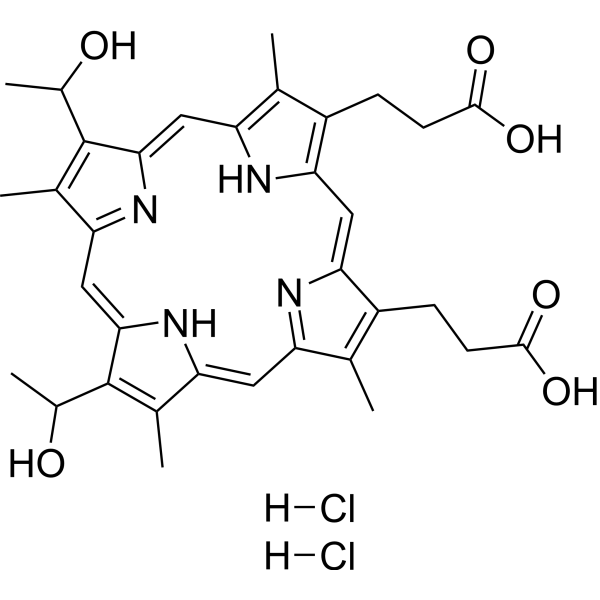
  • HY-B0754A
    Hematoporphyrin dihydrochloride
    10+ Cited Publications

    Hematoporphyrin IX dihydrochloride

    Apoptosis Endogenous Metabolite Cancer
    Hematoporphyrin dihydrochloride (Hematoporphyrin IX dihydrochloride), a photosensitizer, is a substrate for affinity chromatography of heme-binding proteins. Hematoporphyrin dihydrochloride can induce apoptosis in U87 glioma cells and decrease tumor growth in vivo when exposed to red light .
    Hematoporphyrin dihydrochloride
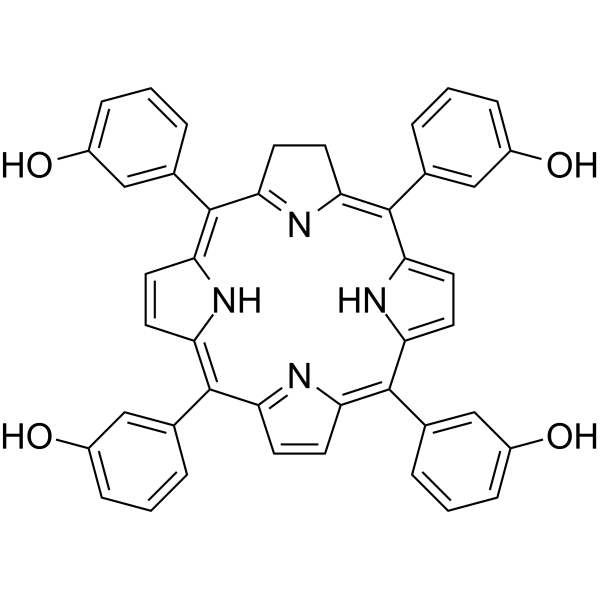
  • HY-16488
    Temoporfin
    10+ Cited Publications

    m-THPC; KW2345

    Reactive Oxygen Species (ROS) Cancer
    Temoporfin (m-THPC), a reduced porphyrin, is a potent second-generation photosensitizer. Temoporfin can be used in the research of photodynamic therapy (PDT) for head and neck cancers .
    Temoporfin
  • HY-D0259

    Erythrosin extra bluish

    Environmental Pollutants Fluorescent Dye Others
    Erythrosine B is an artificial dye widely used in the food and textile industries. Erythrosine B is also a novel photosensitizer which has been used to develop animal models.
    Erythrosine B
  • HY-P2213

    MMP Apoptosis Cancer
    GPLGIAGQ, a MMP2-cleavable polypeptide, is used as a stimulus-sensitive linker in both liposomal and micellar nanocarriers for MMP2-triggered tumor targeting. GPLGIAGQ can be used to synthesis unique MMP2-targeted photosensitizer in photodynamic therapy (PDT) .
    GPLGIAGQ
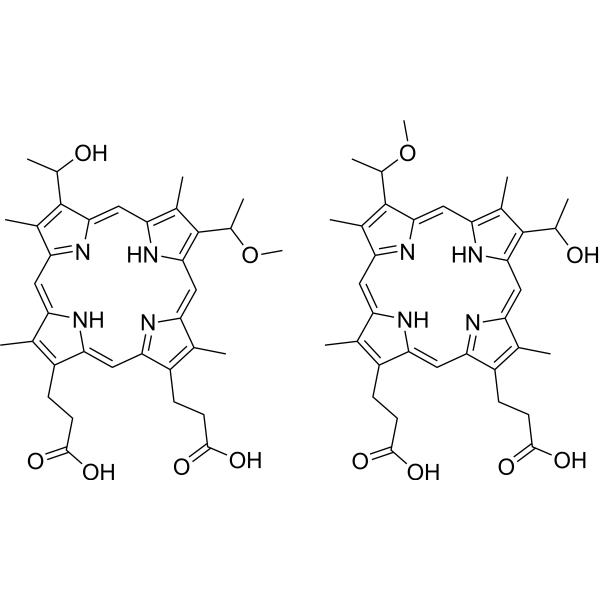
  • HY-134990
    Hematoporphyrin monomethyl ether
    2 Publications Verification

    Apoptosis Cancer
    Hematoporphyrin monomethyl ether, second generation of porphyrin-related photosensitizer, is characterized by its single form, high yield of singlet oxygen, high selectivity, and low toxicity, which has been widely used in the diagnosis and research of various tumors, including lung cancer, bladder cancer, and nevus flammeus and brain glioma .
    Hematoporphyrin monomethyl ether
  • HY-17644
    Redaporfin
    1 Publications Verification

    LUZ11; F2BMet

    Reactive Oxygen Species (ROS) Cancer
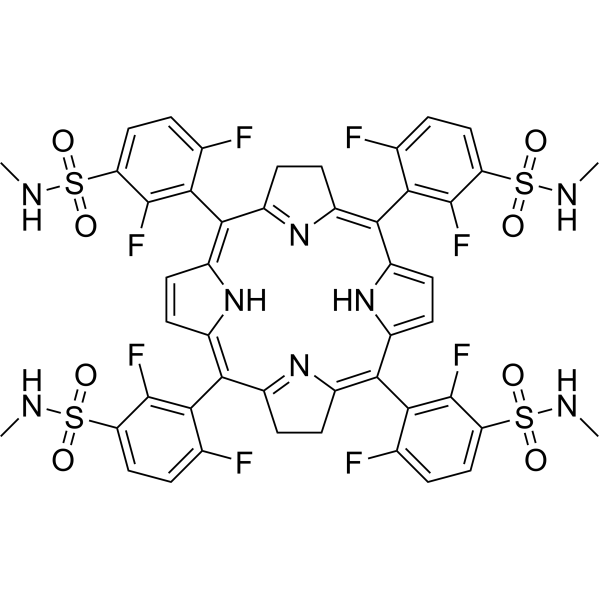
    Redaporfin (LUZ11) acts as a potent photosensitizer. Redaporfin causes direct antineoplastic effects as well as indirect immune-dependent destruction of malignant lesions .
    Redaporfin
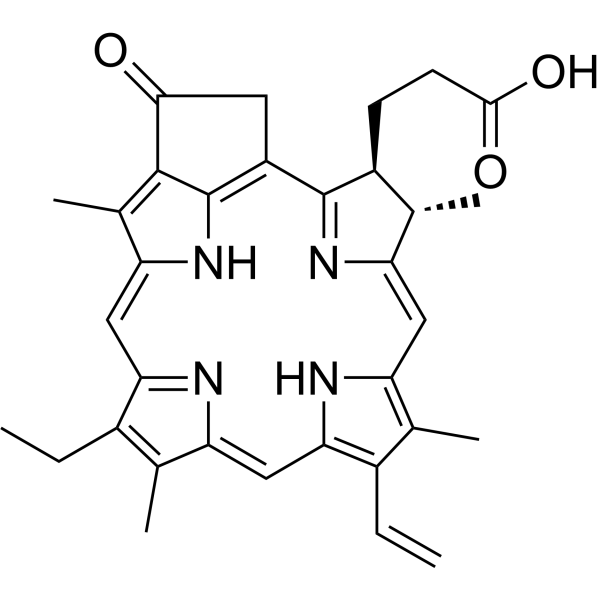
  • HY-128972
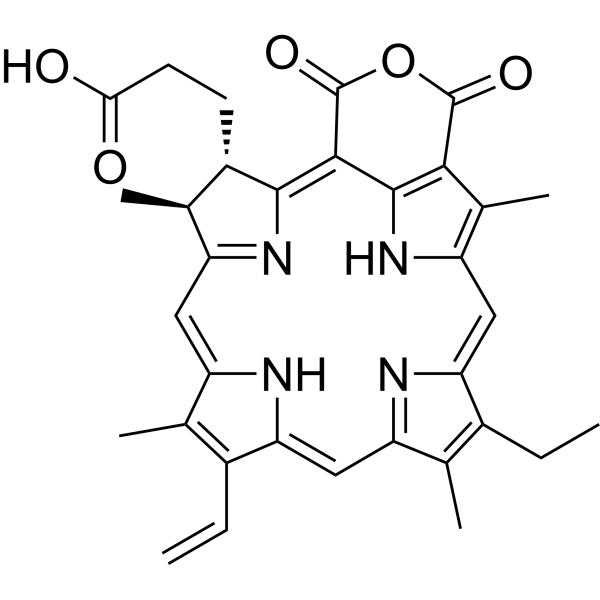
    Purpurin 18
    2 Publications Verification

    Reactive Oxygen Species (ROS) Apoptosis Others
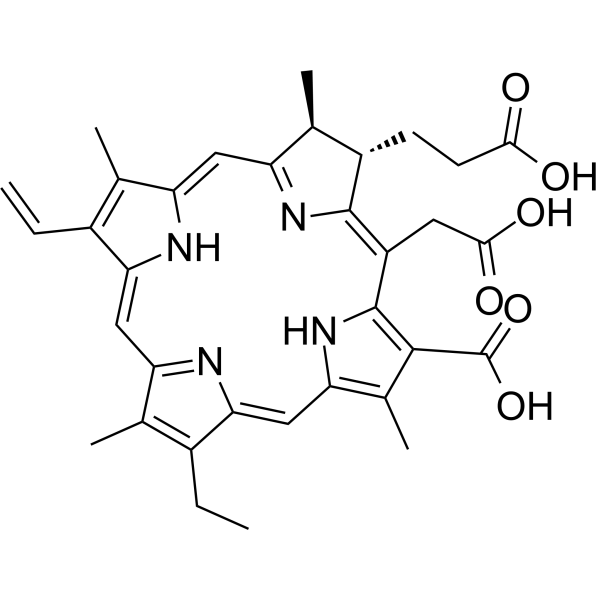
    Purpurin 18, a derivative of chlorophyll and a type of dihydroporphyrin, is used to produce photosensitizers. Purpurin 18 photodynamic therapy can induce cell apoptosis and has anti-tumor activity .
    Purpurin 18
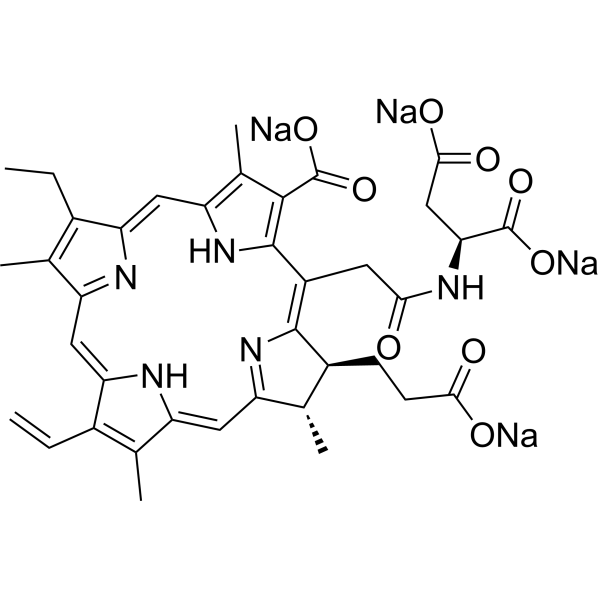
  • HY-16477
    Talaporfin sodium
    4 Publications Verification

    ME2906; Mono-L-aspartyl chlorin e6; NPe6

    Photosensitizer Cancer
    Talaporfin (ME2906) sodium is a chlorin based photosensitizer. Talaporfin sodium can be used for the research of various cancers by using photodynamic therapy (PDT) .
    Talaporfin sodium
  • HY-B0754

    Hematoporphyrin IX

    Apoptosis Endogenous Metabolite Cancer
    Hematoporphyrin (Hematoporphyrin IX), a photosensitizer, is a substrate for affinity chromatography of heme-binding proteins. Hematoporphyrin can induce apoptosis in U87 glioma cells and decrease tumor growth in vivo when exposed to red light .
    Hematoporphyrin
  • HY-137473
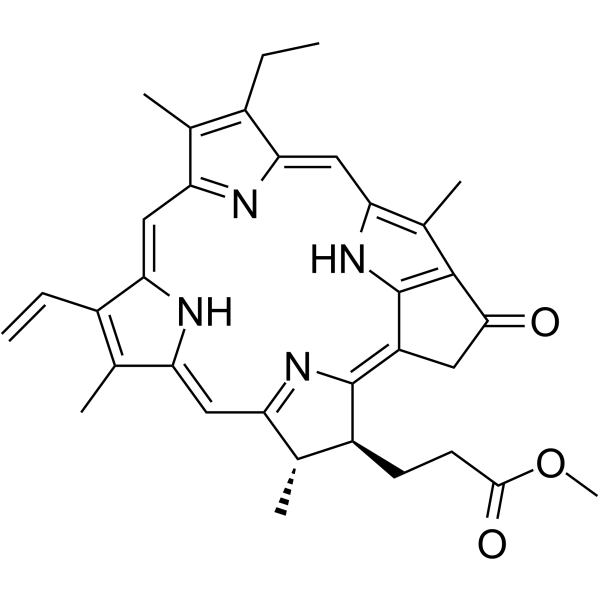
    Methyl pyropheophorbide-a
    2 Publications Verification

    Pyropheophorbide-a methyl ester

    Apoptosis Cancer
    Methyl pyropheophorbide-a (Pyropheophorbide-a methyl ester), a chlorophyll-a derivative, is a potent photosensitizer that can be used in photodynamic therapy (PDT) of cancer. Methyl pyropheophorbide-a has photodynamic activity and can induce apoptosis and inhibit tumor growth .
    Methyl pyropheophorbide-a
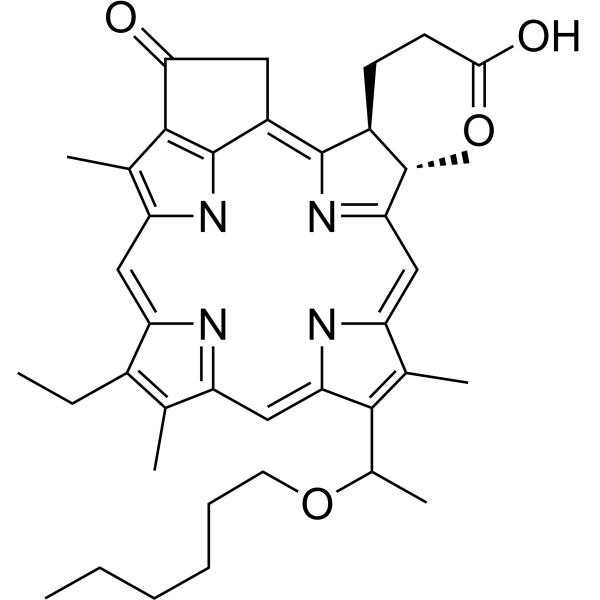
  • HY-13722
    HPPH
    3 Publications Verification

    Photochlor

    Reactive Oxygen Species (ROS) Cancer
    HPPH (Photochlor) is a second generation photosensitizer, which acts as a photodynamic therapy (PDT) agent.
    HPPH
  • HY-121310

    MOFs Bacterial Infection Cancer
    Phthalocyanine is a photosensitizer. Phthalocyanine has a light-killing effect on bacterial biofilms, effectively inactivating bacteria. Phthalocyanine can be linked to anticancer drugs to target cancer. Phthalocyanine can also be used to develop chemical sensors for studying microbial infections and tumors .
    Phthalocyanine
  • HY-U00128

    Parasite Infection Inflammation/Immunology
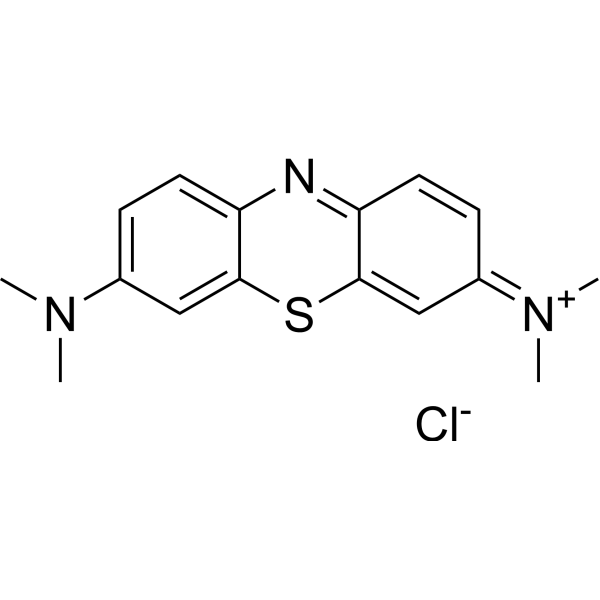
    PPA-904 is a specific phenothiazine photosensitizer in photodynamic research (PDT) research, especially topical application for cutaneous leishmaniasis in vivo .
    PPA-904
  • HY-126861
    2'-Deoxy-5-formylcytidine
    1 Publications Verification

    Reactive Oxygen Species (ROS) Others
    2'-Deoxy-5-formylcytidine is an effective internal triplet photosensitizer in DNA. 2'-Deoxy-5-formylcytidine could act as a new hot spot in DNA photodamage .
    2'-Deoxy-5-formylcytidine
  • HY-B1814

    Synkamin; Synkamin base

    Pyruvate Kinase Bacterial Fungal Apoptosis Infection Cancer
    Vitamin K5 (Synkamin) is a photosensitizer and a antimicrobial agent. Vitamin K5 is a specific PKM2 inhibitor with IC50 values of 28, 191 and 120 μM for PKM2, PKM1 and PKL. Vitamin K5 induces apoptosis of colon 26 cells. Vitamin K5 can be used for the research of infection and cancer, and it also can be used as a preservative for pharmaceuticals, foods, and beverages .
    Vitamin K5
  • HY-W130236

    Cholinesterase (ChE) Cancer
    Methylene Violet 3RAX is a phenazine dye to stain the mitochondria of cells. Methylene Violet 3RAX can change the molecular structure of DNA, undermine the module of DNA, and induce the generation of the reactive singlet oxygen. Methylene Violet 3RAX shows inhibition for human erythrocyte AChE and human plasma BChE with an Kis of 1.58, 0.51 μM, respectively. Methylene Violet 3RAX has the potential for the research of potential photosensitizers for mitochondrial targeting action in PDT (photodynamic therapy) .
    Methylene Violet 3RAX
  • HY-164294

    Photosensitizer Cancer
    Aluminum phthalocyanine disulfonate is a potential photosensitizer used for the research of Sonodynamic therapy (SDT) .
    Aluminum phthalocyanine disulfonate
  • HY-W076903

    p-Benzoylaniline; 4-Aminophenyl phenyl ketone; 4-Benzoylaniline

    Biochemical Assay Reagents Others
    4-Aminobenzophenone (p-Benzoylaniline; 4-Aminophenyl phenyl ketone; 4-Benzoylaniline) is Benzophenone (HY-Y0546) derivative, which behaves as photosensitizer .
    4-Aminobenzophenone
  • HY-W011376

    Biochemical Assay Reagents Others
    5-Bromo-2'-deoxycytidine is a DNA photosensitizer. 5-Bromo-2'-deoxycytidine modifies the double-stranded DNA, and determinate the DNA damage 300 nm photon .
    5-Bromo-2'-deoxycytidine
  • HY-137475
    Chlorin e6 trimethyl ester
    1 Publications Verification

    Reactive Oxygen Species (ROS) Cancer
    Chlorin e6 trimethyl ester, a methyl pheophorbide-a derivative, is a photosensitizer that can be used in photodynamic therapy (PDT) .
    Chlorin e6 trimethyl ester
  • HY-W010417

    Reactive Oxygen Species (ROS) Others
    4-Thiouracil is a thionucleobase with cytostatic properties. 4-Thiouracil can be used as biological photoprobes to detect RNA structures and nucleic acid-nucleic acid contacts. 4-Thiouracil can also act as a strong ultraviolet A (UVA) photosensitizer, providing a source of the reactive oxygen species of O2. 4-Thiouracil is promising for research of photocross linking, photodamage, as well as photodynamic therapy .
    4-Thiouracil
  • HY-W854659
    Chlorin e6 trisodium
    15+ Cited Publications

    Ce6 trisodium

    Photosensitizer Cancer
    Chlorin e6 Ce6 (trisodium) is a water-soluble derivative of chlorophyll, belonging to the chlorin class of photosensitizers with an absorption wavelength range of 600-670 nm. Chlorin e6 trisodium emits characteristic red fluorescence upon light excitation, enabling real-time identification of tumor boundaries and progression. Chlorin e6 trisodium can be used for the study of photodynamic therapy (PDT) of cancers (bladder cancer) and fluorescence diagnosis of neoplastic lesions .
    Chlorin e6 trisodium
  • HY-129959

    AlClPc

    Environmental Pollutants Parasite MOFs Infection
    Aluminum phthalocyanine chloride is a photosensitizer that effectively inhibits the parasite Leishmania amazonensis (the causative agent of cutaneous leishmaniasis) by light-mediated cytolysis. Aluminum phthalocyanine chloride causes parasite morphology and cytolysis of isolated amasilians, while higher photosensitizer concentrations and light intensities are required to induce lysis of mammalian cells. Aluminum phthalocyanine chloride lyses parasites within infected J774 macrophages and can be used to further investigate the study of leishmaniasis .
    Aluminum phthalocyanine chloride
  • HY-W035051

    MOFs Fluorescent Dye Infection Cancer
    TSPP tetrasodium is a photosensitizer that has shown impressive effects in in vivo regression of cancer and microorganism infections (Ex: 413 nm, Em: 640 nm) .
    TSPP tetrasodium
  • HY-W127820

    Tetrakis(2-N-methylpyridyl)porphine chloride

    Biochemical Assay Reagents Fluorescent Dye Others
    H2TMpyP-2 (tetrakis(2-N-methylpyridyl)porphine) chloride is an active photosensitizer with strong absorption properties in the visible to near-infrared region and excellent singlet oxygen quantum yield. Captisol-TMPyP complexes can be used in supramolecular nanosynthesis to increase singlet oxygen production, improve photostability and better photosensitization, and support photodynamic therapy activity. The Captisol:TMPyP complex also exhibited antibacterial activity against Escherichia coli and was cytotoxic against lung cancer A549 cells .
    H2TMpyP-2 chloride
  • HY-W424779

    Drug Metabolite Infection
    5-Carboxy-2′-deoxyuridine is a metabolite of Trifluridine . 5-Carboxy-2′-deoxyuridine is a methyl oxidation product of Thymidine that can be formed by menadione-mediated photosensitization of Thymidine .
    5-Carboxy-2′-deoxyuridine
  • HY-175329

    Pyroptosis Reactive Oxygen Species (ROS) Cancer
    BTF-DNBS is a glutathione (GSH)-responsive small-molecule photosensitizer (PS). BTF-DNBS disrupts mitochondrial function and triggers Golgi-mediated pyroptosis, serving as a reactive oxygen species (ROS) generator. BTF-DNBS is promising for research of cancers .
    BTF-DNBS
  • HY-111959
    2-Selenouracil
    1 Publications Verification

    Reactive Oxygen Species (ROS) Endocrinology
    2-Selenouracil is a useful specialized photosensitizer for photodynamical therapy .
    2-Selenouracil
  • HY-W587892

    1-Methoxydecane

    Biochemical Assay Reagents Others
    Decyl methyl ether is a new type of strong fatty ether. Decyl methyl ether is non-genotoxic and phototoxic/photosensitizing .
    Decyl methyl ether
  • HY-W013521

    Environmental Pollutants Others
    Hexyl Salicylate is a commonly used fragrance component, widely applied in cosmetics, perfumes, cleaning products, etc. Hexyl Salicylate has low acute toxicity, no irritation to human skin, no phototoxicity and no photosensitization .
    Hexyl salicylate
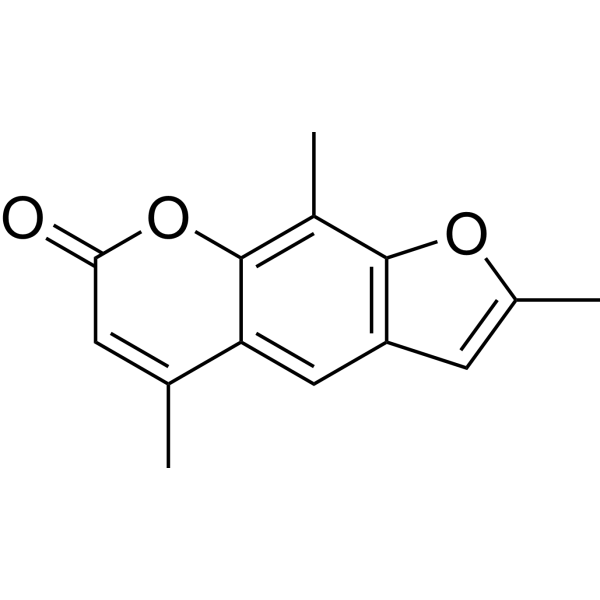
  • HY-139286

    Pacsph; Pacsphingosine (d18:1)

    Biochemical Assay Reagents Others
    Photoclick sphingosine (Pacsph) is a photosensitizing and clickable sphingosine analog. Photoclick sphingosine is metabolized in cells into endogenous lipid metabolic pathways and can be visualized by its clickable alkyne group. Photoclick sphingosine can be used to study intracellular sphingolipid metabolism and subcellular localization .
    Photoclick sphingosine
  • HY-137474

    Photosensitizer Cancer
    Purpurin 18 methyl ester, a chlorophyll-a derivative, is a photosensitizer that can be used in photodynamic therapy (PDT). Purpurin 18 methyl ester has photodynamic activity to induce cancer cell death .
    Purpurin 18 methyl ester
  • HY-175591

    Photosensitizer Apoptosis Reactive Oxygen Species (ROS) Cancer
    Photosensitizer-7 is a endoplasmic reticulum (ER)-targeted photosensitizer (PS) (λab = 610 nm, λem = 622 nm). Photosensitizer-7shows an IC50 of 4.006 μM in HeLa cells and 3.28 μM in MCF-7 cells under light irradiation. Photosensitizer-7 exhibits dose-dependent cellular uptake and predominant colocalization with ER. Photosensitizer-7 induces dose-dependent intracellular ROS generation, reduces mitochondrial membrane potential, and increases apoptosis upon light irradiation in cells. Photosensitizer-7 significantly inhibits tumor growth in MCF-7 tumor-bearing mice. Photosensitizer-7 can be used for the study of photodynamic anticancer applications .
    Photosensitizer-7
  • HY-162587

    Topoisomerase Cancer
    Fagopyrine is a DNA topoisomerase I (Topo I) inhibitor. Fagopyrine is a photosensitizer that can be used in the study of tumors .
    Fagopyrine
  • HY-W035145

    Drug Intermediate Others
    Tris(2,2′-bipyridine)ruthenium(II)hexafluorophosphate can be used to prepare Ru(II)-containing photodynamic therapy (PDT) photosensitizers .
    Tris2,2′-bipyridineruthenium(II) hexafluorophosphate
  • HY-W102471

    Photosensitizer Others
    3-Acetylbenzophenone (Compound 2) is the photolysis product of Ketoprofen (HY-B0227). 3-Acetylbenzophenone promotes the photoperoxidation reaction of Linoleic acid (HY-N0729), exhibits free radical scavenging and photosensitizing activity .
    3-Acetylbenzophenone
  • HY-P2213A

    MMP Apoptosis Cancer
    GPLGIAGQ TFA, a MMP2-cleavable polypeptide, is used as a stimulus-sensitive linker in both liposomal and micellar nanocarriers for MMP2-triggered tumor targeting. GPLGIAGQ TFA can be used to synthesis unique MMP2-targeted photosensitizer in photodynamic therapy (PDT) .
    GPLGIAGQ TFA
  • HY-W073074
    Mesoporphyrin IX dihydrochloride
    1 Publications Verification

    VSV Infection
    Mesoporphyrin IX (dihydrochloride) is a photosensitizer that can be used to modify liposomes. Mesoporphyrin IX (dihydrochloride) can insert into lipid vesicles and disrupt the viral membrane structure in vesicular stomatitis virus (VSV), inducing cross-linking of VSV glycoproteins, thereby inhibiting viral activity .
    Mesoporphyrin IX dihydrochloride
  • HY-D1453

    Biochemical Assay Reagents Cancer
    Immune initiator-1 (Compound 1a) is an amino acid-modified near-infrared Aza-BODIPY photosensitizer, acts as an immune initiator for potent photodynamic research in melanoma .
    Immune initiator-1
  • HY-N16417

    Apoptosis Reactive Oxygen Species (ROS) Infection Cancer
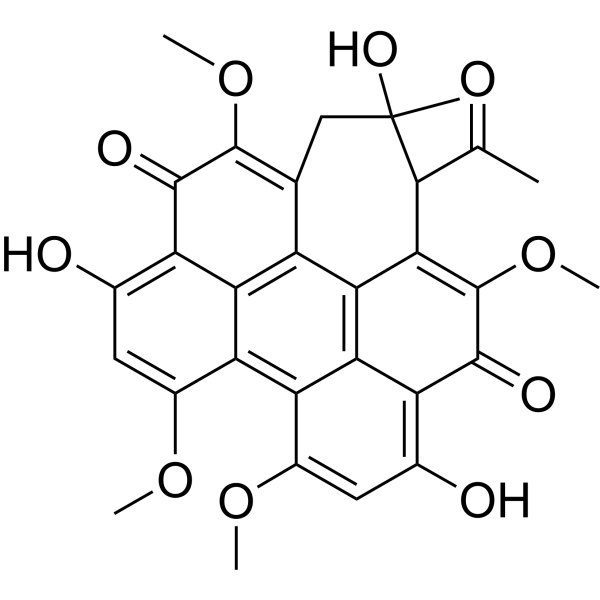
    Elsinochrome C is a photosensitizer. Elsinochrome C relies on light activation to generate reactive oxygen species (ROS) such as singlet oxygen (1O2), inducing apoptosis or directly disrupting pathogen structures. Elsinochrome C is promising for research of skin cancers, HIV-associated infections, and refractory skin diseases .
    Elsinochrome C
  • HY-N10611

    Reactive Oxygen Species (ROS) Apoptosis Autophagy Fungal Fluorescent Dye Infection Cancer
    Elsinochrome A is a perylene quinone photosensitizer, and can generate reactive oxygen species (ROS) to induce apoptosis and autophagy under light excitation. Elsinochrome A also shows antifungal activity against C. albicans biofilm through photodynamic antimicrobial chemotherapy (PACT). Elsinochrome A can be used for research of photodynamic therapy (PDT) (Ex: 460 nm) .
    Elsinochrome A
  • HY-P99500

    RM-1929; Cetuximab-IRDye-700DX

    EGFR Cancer
    Cetuximab sarotalocan (RM-1929) is an IRdye700DX (near-infrared photosensitizing dye) conjugate of Cetuximab (anti-EGFR monoclonal antibody). Cetuximab sarotalocan can be used for head and neck cancers research .
    Cetuximab sarotalocan
  • HY-150970

    Pyroptosis Cancer
    ICy-OH, an iodinated photosensitizer, is an effective anticancer agent. ICy-OH can be used not only for deep tissue imaging (λex=640 nm,λem=690-740 nm) but also to selectively induce cell death in pancreatic cancer cells via cell pyroptosis pathway .
    ICy-OH
  • HY-137473R

    Pyropheophorbide-a methyl ester (Standard)

    Apoptosis Reference Standards Cancer
    Methyl pyropheophorbide-a (Standard) is the analytical standard of Methyl pyropheophorbide-a. This product is intended for research and analytical applications. Methyl pyropheophorbide-a (Pyropheophorbide-a methyl ester), a chlorophyll-a derivative, is a potent photosensitizer that can be used in photodynamic therapy (PDT) of cancer. Methyl pyropheophorbide-a has photodynamic activity and can induce apoptosis and inhibit tumor growth .
    Methyl pyropheophorbide-a (Standard)
  • HY-16488R

    m-THPC (Standard); KW2345 (Standard)

    Reactive Oxygen Species (ROS) Reference Standards Cancer
    Temoporfin (Standard) is the analytical standard of Temoporfin. This product is intended for research and analytical applications. Temoporfin (m-THPC), a reduced porphyrin, is a potent second-generation photosensitizer. Temoporfin can be used in the research of photodynamic therapy (PDT) for head and neck cancers .
    Temoporfin (Standard)
  • HY-D1293

    Reactive Oxygen Species (ROS) Others
    Photosensitizer-1 (Compound CLB-13) is a photosensitizer .
    Photosensitizer-1
  • HY-147690

    Photosensitizer Cancer
    Photosensitizer-2 (compound 1) is a organic D-π-A sensitizer against phototoxicity. Photosensitizer-2 contains an acrylic acid moiety that exerts high levels of phototoxicity. Photosensitizer-2 shows antitumor activity against HeLa cells, with IC50 values of 20.9 ± 4.5 μM (dark) and 0.046 ± 0.012 μM (irradiation), respectively .
    Photosensitizer-2
  • HY-W094665

    Biochemical Assay Reagents Others
    7-(Diethylamino)-4-(hydroxymethyl)coumarin (compound 10) is an organic compound that can be used as a photosensitizer in organic synthesis .
    7-(Diethylamino)-4-(hydroxymethyl)coumarin
  • HY-13663

    QLT-0074; DRM-05; EA 6

    Photosensitizer Drug Derivative Cancer
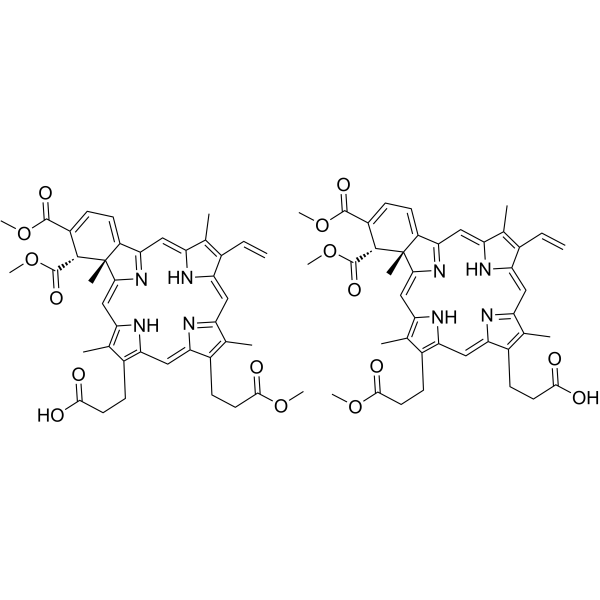
    Lemuteporfin (QLT-0074) is a benzoporphyrin derivative, diethylene glycol functionalized chlorin-type photosensitizer. Lemuteporfin rapidly sensitizes cells to photodynamic therapy. Lemuteporfin has anticancer activity against acute lymphoblastic leukemia .
    Lemuteporfin
  • HY-162867

    Ferroptosis Cancer
    Photosensitizer-5 is a photosensitizer. Photosensitizer-5 has cytotoxicity against HeLa and HepG2 cells, with IC50 values of 10.4 nM and 6.9 nM, respectively. Photosensitizer-5 can lead to lipid peroxidation and induces cell death through an iron-independent ferroptosis-like pathway. Photosensitizer-5 shows anti-tumor activity in HeLa tumor-bearing mice .
    Photosensitizer-5

オンラインお問い合わせ

入力情報は安全に管理されます. 必須入力項目.

タイトル


国或いは地域 *

お名前 *


組纖名 *

デパートメント *


メールアドレス *


製品名 *

製品番号


カスタマ需要量 *

電話番号 *


必ず会社名を記載ください。個人への返信は行いません。

備考

バルクお問い合わせ

Inquiry Information

製品名:
製品番号:
数量:
MCE 日本正規代理店:

