1. Search Result
Search Result
Results for "

phytotoxic activity

" in MedChemExpress (MCE) Product Catalog:

30

Inhibitors & Agonists

21

Natural
Products

Cat. No. Product Name Target Research Areas Chemical Structure
  • HY-19828

    GEX1A

    DNA/RNA Synthesis Cancer
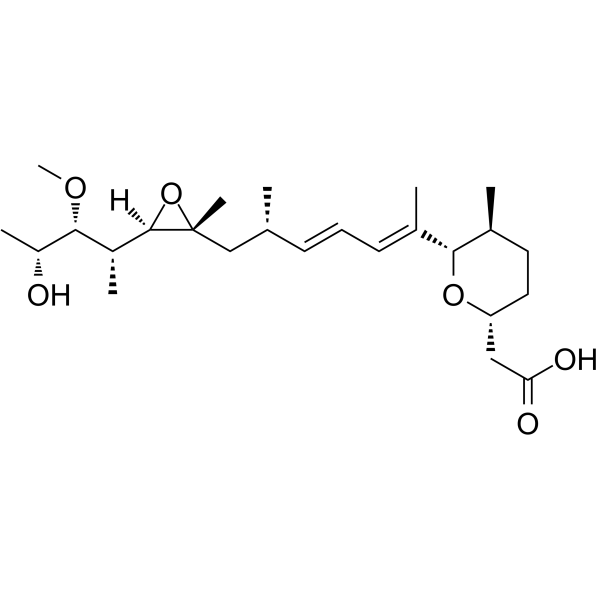
    Herboxidiene (GEX1A) is a potent phytotoxic polyketide from Streptomyces sp. A7847 with a diverse range of activities, including herbicidal, anti-cholesterol, anti-tumor effects. Herboxidiene inhibits the pre-mRNA splicing process by binding to spliceosome-associated protein (SAP) 155, a subunit of SF3b, in the splicesome .
    Herboxidiene
  • HY-137910

    Environmental Pollutants HPPD Herbicide Infection
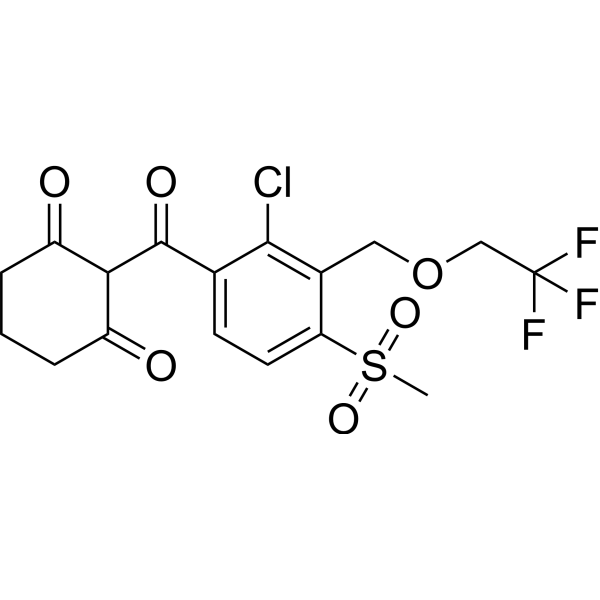
    Tembotrione is a herbicide belonging to the HPPD (dioxygenase) inhibitor class with crop selectivity. Tembotrione effectively controls a variety of weeds including broadleaf and gramineous species by disrupting carotenoid synthesis, which leads to chlorophyll degradation and leaf whitening. Mixing Tembotrione with isoxaflutole or adding surfactants optimizes its efficacy and reduces phytotoxicity, with no residual impact on subsequent cruciferous crops, thus helping to increase maize grain yield. The activity of Tembotrione decreases under drought conditions, and under specific conditions (such as double-dose treatment), it may cause reversible yellowing and even yield reduction in crops such as poppy .
    Tembotrione
  • HY-128467

    Sodium dehydroacetate

    Environmental Pollutants Fungal Bacterial Infection
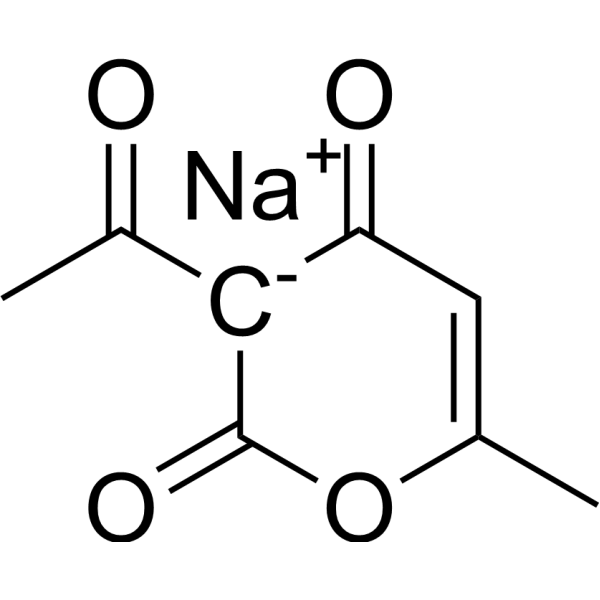
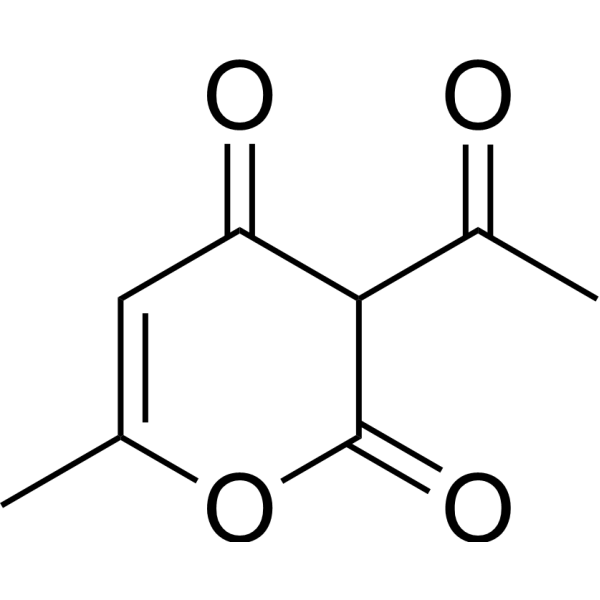
    Dehydroacetic acid sodium, a pyrone derivative acts as an antibacterial and antifungal agent. Dehydroacetic acid possess phytotoxic activity .
    Dehydroacetic acid sodium
  • HY-N3270

    Fungal Lipoxygenase Infection
    Methyl orsellinate is a phytotoxic compound with antifungal activities. Methyl orsellinate is a 5-lipoxygenase inhibitor with an IC50 value of 59.6 μM. Methyl orsellinate can be used for fungal infection research .
    Methyl orsellinate
  • HY-B1211

    Biocide 470F

    Environmental Pollutants Bacterial Fungal Infection
    Dehydroacetic acid (Biocide 470F) is a pyrone derivative. Dehydroacetic acid has antibacterial, antifungal and phytotoxic activities. Dehydroacetic acid can be added to cosmetics, food and beverages for preservation and other purposes. Dehydroacetic acid can also be used to synthesize various heterocycles and cycloaddition products .
    Dehydroacetic acid
  • HY-136376

    Environmental Pollutants Herbicide Others
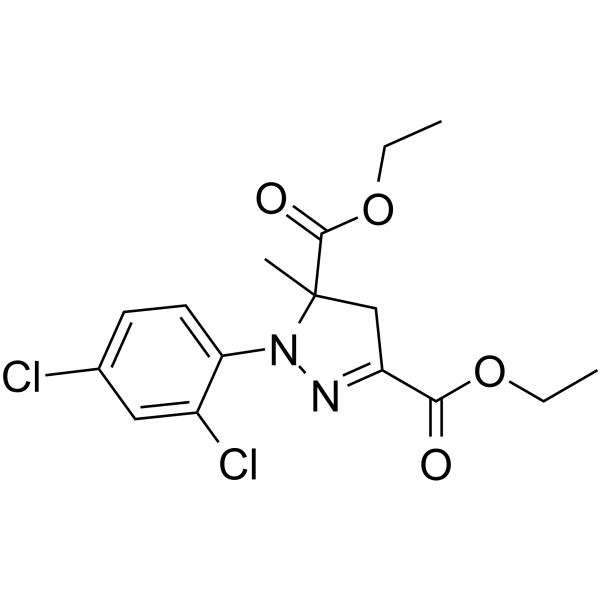
    Mefenpyr-diethyl is a pyrazoline-type herbicide safener that functions to enhance lipid biosynthesis. Mefenpyr-diethyl effectively prevents herbicide-induced phytotoxic damage caused by herbicides such as fenoxaprop-p-ethyl (HY-B2013) and mesosulfuron-methyl (HY-126987) by protecting cereal crops including wheat. Mefenpyr-diethyl significantly increases lipid content in wheat either when applied alone or in combination with the herbicide fenoxaprop-p-ethyl. The mechanism of action of Mefenpyr-diethyl does not involve the induction of glutathione S-transferase (GST) activity in wheat .
    Mefenpyr-diethyl
  • HY-N8349

    Parasite Endogenous Metabolite Infection Cancer
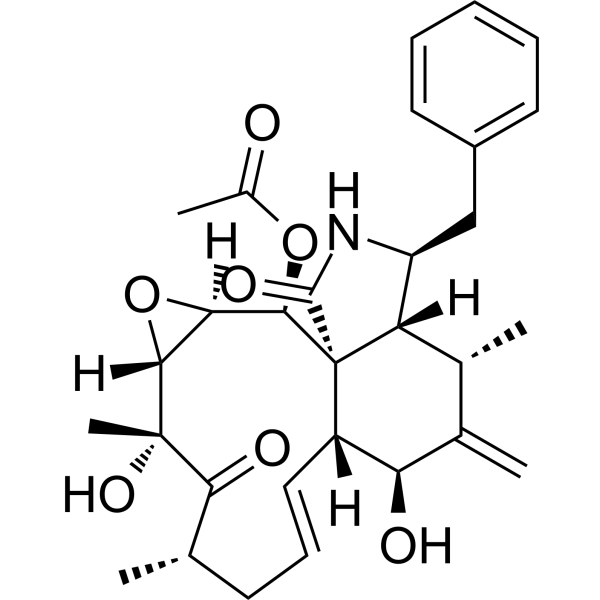
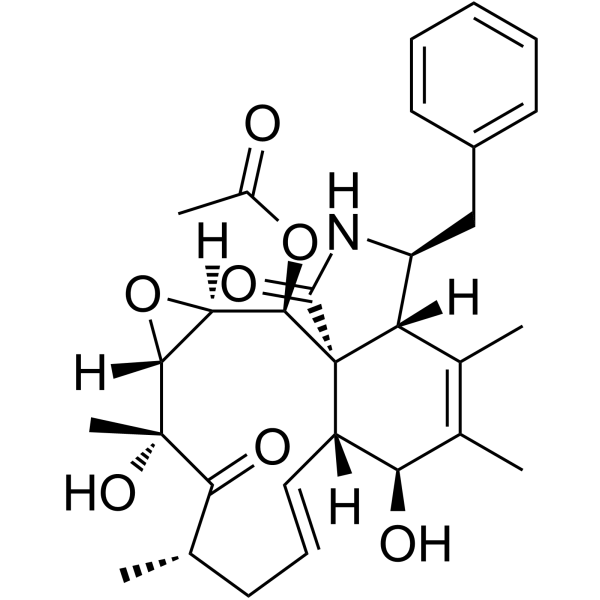
    19,20-Epoxycytochalasin D, a cytochalasin, is a fungal metabolite from Nemania sp. 19,20-Epoxycytochalasin D shows potent in vitro antiplasmodial activity and phytotoxicity .
    19,20-Epoxycytochalasin D
  • HY-N15497

    Reactive Oxygen Species (ROS) HIF/HIF Prolyl-Hydroxylase Cancer
    Terpestacin is found in Phoma exigua var. heteromorpha. Terpestacin binds to UQCRB to inhibit the production of mitochondrial ROS and HIF-1α. Terpestacin inhibits tumor angiogenesis in the FM3A breast cancer cell xenograft mouse model. Terpestacin has antitumor activity and phytotoxicity .
    Terpestacin
  • HY-113604

    TGF-β Receptor Cancer
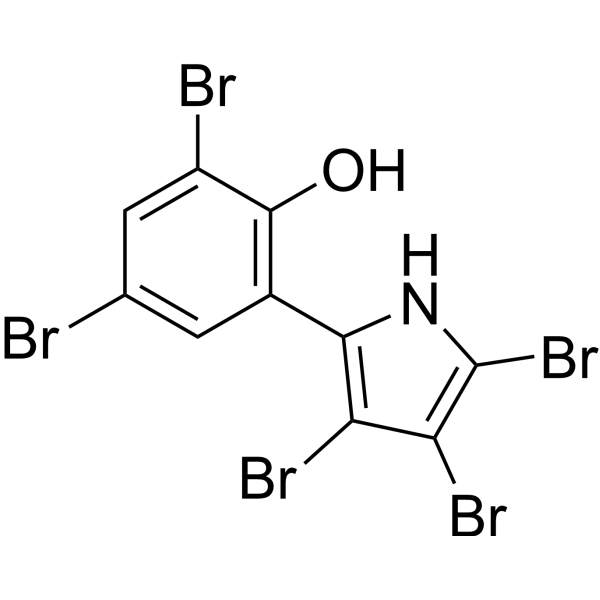
    Pentabromopseudilin (PBrP) is a marine antibiotic isolated from the marine bacteria Pseudomonas bromoutilis and Alteromonas luteoviolaceus. PBrP exhibits antimicrobial, anti-tumour and phytotoxic activities. PBrP is a reversible and allosteric inhibitor of myosin Va (MyoVa). PBrP also is a potent inhibitor of transforming growth factor-β (TGF-β) activity. PBrP can be used for the research of fibrotic diseases and cancer .
    Pentabromopseudilin
  • HY-108988

    Antibiotic Bacterial Topoisomerase DNA/RNA Synthesis Infection
    Albicidin is a peptide antibiotic with phytotoxic activity. Albicidin potently inhibits bacterial and plant DNA gyrase at nanomolar concentrations, blocks DNA replication, and exhibits excellent antibacterial efficacy against multidrug-resistant bacteria. Albicidin possesses bactericidal activity against Gram-positive and Gram-negative microorganisms, and acts as a virulence factor for the systemic plant infection by Xanthomonas albilineans. Albicidin can be used in studies related to bacterial infections and sugarcane leaf blight .
    Albicidin
  • HY-W751002

    (+)-Orthosporin

    Endogenous Metabolite Bacterial HIV Reverse Transcriptase Infection
    Orthosporin ((+)-Orthosporin), a phytotoxic isocoumarin compound, is a microbial secondary metabolite. Orthosporin can be isolated from the endophytic fungus Lasiodiplodia tbeobromae. Orthosporin has potent antibacterial activity against B. subtilis, E. coli and P. aeruginosa. Orthosporin also has antioxidant activity against DPPH radical and antiviral activities with inhibition of HIV-1 reverse transcriptase activity .
    Orthosporin
  • HY-114319

    Others Cancer
    β-Cembrenediol is a potent and orally active anticancer agent. β-Cembrenediol shows phytotoxic activities. β-Cembrenediol reduces the migration and colony formation. β-Cembrenediol decreases the protein expression of TDO2, IDO1. β-Cembrenediol has the potential for the research of prostate cancer .
    β-Cembrenediol
  • HY-138100

    (+)-Hyalodendrin

    Fungal Infection
    Hyalodendrin ((+)-Hyalodendrin) is a fungal growth inhibitor with inhibitory activity against wood decay fungi. Hyalodendrin has low phytotoxicity, with an acute toxicity (LD50) of 75 mg/kg in mice .
    Hyalodendrin
  • HY-N10260

    Others Others
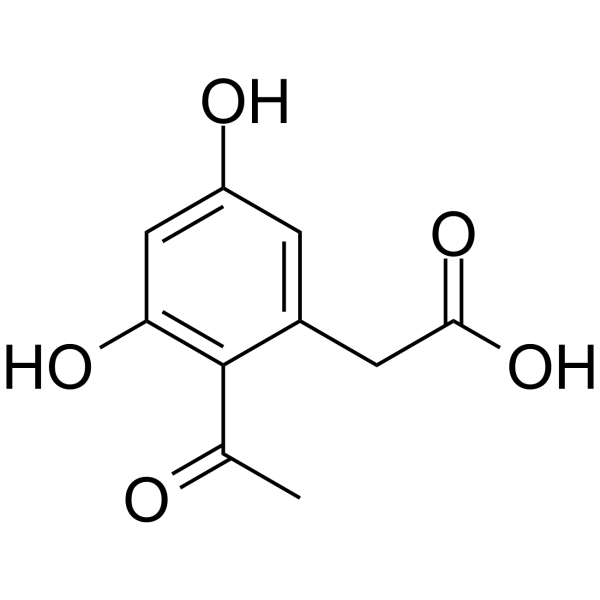
    Curvulinic acid is a phytotoxic compound, has herbicidal activity .
    Curvulinic acid
  • HY-N9207

    Others Others
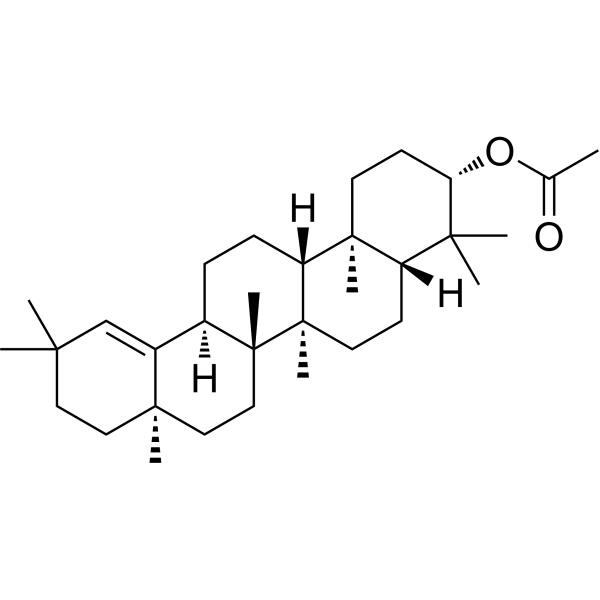
    Germanicol acetate can be extracted from Euphorbia heterophylla L. and has phytotoxic activity .
    Germanicol acetate
  • HY-N8385

    Parasite Endogenous Metabolite Infection Cancer
    19,20-Epoxycytochalasin C, a cytochalasin, is a fungal metabolite from Nemania sp. 19,20-Epoxycytochalasin C shows potent in vitro antiplasmodial activity and phytotoxicity .
    19,20-Epoxycytochalasin C
  • HY-N13889

    Fungal Infection
    Altiloxin A, a fungal metabolite, is a drimane-type sesquiterpenoid. Altiloxin A shows phytotoxic activity on the lettuce seedlings .
    Altiloxin A
  • HY-128467R

    Sodium dehydroacetate (Standard)

    Reference Standards Bacterial Fungal Infection
    Dehydroacetic acid (sodium) (Standard) is the analytical standard of Dehydroacetic acid (sodium). This product is intended for research and analytical applications. Dehydroacetic acid sodium, a pyrone derivative acts as an antibacterial and antifungal agent. Dehydroacetic acid possess phytotoxic activity .
    Dehydroacetic acid sodium (Standard)
  • HY-N6731

    Others Infection
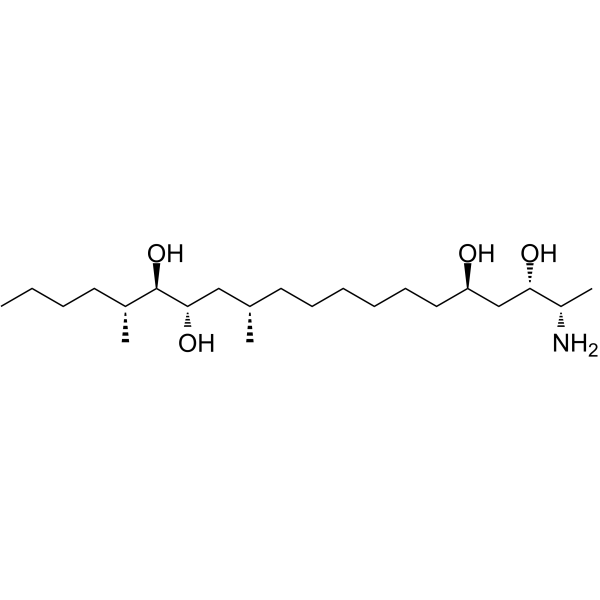
    Hydrolyzed Fumonisin B2 (HFB2) is a hydrolysis product of fumonisins (HF), which retains biological activity. Hydrolyzed Fumonisin B2 (HFB2) exhibits phytotoxicity .
    Hydrolyzed Fumonisin B2
  • HY-125461

    Stemphylin; NSC 173943

    Bacterial Infection
    Altersolanol A (Stemphylin; NSC 173943) exhibits antimicrobial activities against Bacillus subtilis and Pseudomonas aeruginosa, with MIC of 25-100 μg/mL. Altersolanol A exhibits no phytotoxicity to Taxus (at dose of 4 μg/μL) .
    Altersolanol A
  • HY-125698

    Parasite Infection
    3-Deoxyaphidicolin exhibits phytotoxic efficacy, that inhibits root growth of lettuce seedlings. 3-Deoxyaphidicolin also exhibits leishmanicidal activity against Leishmania major and Leishmania braziliensis .
    3-Deoxyaphidicolin
  • HY-N10267

    Fungal Infection
    Carviolin is a compound isolated from the mycelia of the ascomycete Neobulgaria pura. Carviolin inhibits the formation of appressoria in germinating conidia of Magnaporthe grisea on inductive (hydrophobic) surface. Carviolin exhibits moderate cytotoxic, but no antifungal, antibacterial, or phytotoxic activities .
    Carviolin
  • HY-B1211R

    Biocide 470F (Standard)

    Reference Standards Bacterial Fungal Infection
    Dehydroacetic acid (Standard) (Biocide 470F (Standard)) is the analytical standard of Dehydroacetic acid (HY-B1211). This product is intended for research and analytical applications. Dehydroacetic acid (Biocide 470F) is a pyrone derivative. Dehydroacetic acid has antibacterial, antifungal and phytotoxic activities. Dehydroacetic acid can be added to cosmetics, food and beverages for preservation and other purposes. Dehydroacetic acid can also be used to synthesize various heterocycles and cycloaddition products .
    Dehydroacetic acid (Standard)
  • HY-137910R

    Reference Standards Herbicide HPPD Others
    Tembotrione (Standard) is the analytical standard of Tembotrione. This product is intended for research and analytical applications. Tembotrione is a drug that may reduce the productivity of carrots. Tembotrione has the activity of reducing carrot stem mass. Tembotrione can be used to study the total productivity of carrot . Tembotrione is a herbicide belonging to the HPPD (dioxygenase) inhibitor class with crop selectivity. Tembotrione effectively controls a variety of weeds including broadleaf and gramineous species by disrupting carotenoid synthesis, which leads to chlorophyll degradation and leaf whitening. Mixing Tembotrione with isoxaflutole or adding surfactants optimizes its efficacy and reduces phytotoxicity, with no residual impact on subsequent cruciferous crops, thus helping to increase maize grain yield. The activity of Tembotrione decreases under drought conditions, and under specific conditions (such as double-dose treatment), it may cause reversible yellowing and even yield reduction in crops such as poppy .
    Tembotrione (Standard)
  • HY-N14066

    Fungal Infection
    Ascochitine, a polyketide-derived secondary metabolite, is a selective antifungal agent. Ascochitine exhibits broad-spectrum phytotoxicity and antimicrobial activities .
    Ascochitine
  • HY-N16432

    Fungal Infection
    Nidulol is a compound that can be isolated from the fungus Aspergillus nidulans metabolites. Nidulol shows no phytotoxic activity against Zea mays and Medicago polymorpha L. at a concentration of 5 mM .
    Nidulol
  • HY-N15185

    (-)-Pyrenophorin

    Herbicide Cancer
    Pyrenophorin ((-)-Pyrenophorin) is a fungal metabolite that has been found in D. avenae and has phytotoxic activity. Pyrenophorin shows strong cytotoxicity against several cancer cell lines with IC50 values ranging from 0.07 to 7.8 μM .
    Pyrenophorin
  • HY-N9715

    Herbicide Others
    4-Chloropinselin is a chlorine-containing xanthone herbicide that can be isolated from Alternaria sonchi. 4-Chloropinselin is a biosynthetic precursor or degradation product of chloromonilicin and exhibits phytotoxic and antimicrobial activity. 4-Chloropinselin can inhibit the growth of weeds such as field sowthistle and suppress the proliferation of certain microorganisms .
    4-Chloropinselin
  • HY-119633

    Herbicide Others
    Perfluidone is a selective 3-ketoacyl-CoA synthase (KCS) inhibitor with IC50s of 0.21 and 7.60 μM for CER6 (KCS6) and FAE1 (KCS18), respectively. Perfluidone significantly inhibits very-long-chain fatty acid (VLCFA) synthesis. Perfluidone has phytotoxic activity and inhibits Lemna paucicostata growth. Perfluidone can be uses as a plant growth regulator and herbicide for agriculture research .
    Perfluidone
  • HY-W748468

    Drug Derivative Bacterial Infection
    6-Isopentenyloxyisobergapten is a furanocoumarin found in the aerial parts of Semenovia transiliensis and the roots of Heracleum maximum. 6-Isopentenyloxyisobergapten has both selective phytotoxicity and antimycobacterial activity. 6-Isopentenyloxyisobergapten shows a minimum inhibitory concentration (MIC) of 166.5 μM and an IC50 of 27.4 μM against Mycobacterium tuberculosis H37Ra. 6-Isopentenyloxyisobergapten has an IC50 of 29 μM for the growth inhibition of Lemna paucicostata. 6-Isopentenyloxyisobergapten exhibits higher activity against Agrostis stolonifera than Lactuca sativa at a concentration of 1000 μM .
    6-Isopentenyloxyisobergapten

Inquiry Online

Your information is safe with us. * Required Fields.

Salutation


Country or Region *

Applicant Name *


Organization Name *

Department *


Email Address *


Product Name *

Cat. No.


Requested quantity *

Phone Number *


Remarks

Inquiry Online

Inquiry Information

Product Name:
Cat. No.:
Quantity:
MCE Japan Authorized Agent:

