12 Results for "

pro-oxidant activity

" in MedChemExpress (MCE) Product Catalog:
Products (12)

12 Results for "pro-oxidant activity" in MCE Product Catalog:

2
2 Cited Publications
Cat. No.: HY-N0411
CAS No.: 7235-40-7
Synonyms: provitamin A; beta-Carotene
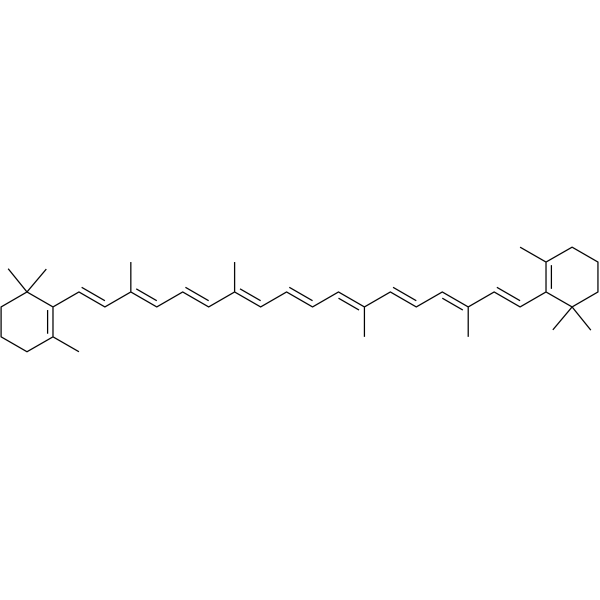
β-Carotene (Provitamin A), a carotenoid compound, is a naturally-occurring vitamin A precursor. β-Carotene is a modulator of reactive oxygen species (ROS), with antioxidant and antiinflammatory activities. β-Carotene may serve as an antioxidant or as a prooxidant, depending on its intrinsic properties as well as on the redox potential of the biological environment in which it acts. β-Carotene induces breast cancer cells apoptosis, with anticancer activities .
loading...
    loading...
2
2 Cited Publications
Cat. No.: HY-N0244
CAS No.: 28543-07-9
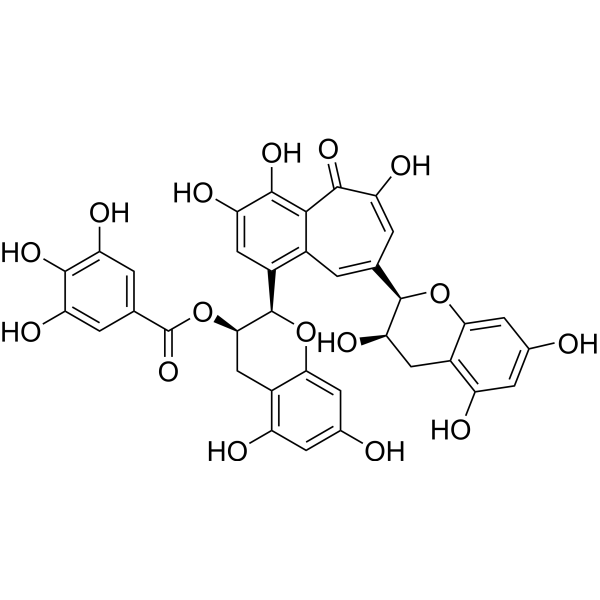
Theaflavin-3'-gallate is a monomer of theaflavins found in black tea, which has anti-UVB damage activity and inhibits cell apoptosis and necroptosis. Theaflavin-3'-gallate acts as a pro-oxidant and induces oxidative stress in cancer cells, inhibiting xanthine oxidase (OX), with an IC50 of 7.6 μM .
loading...
    loading...
Cat. No.: HY-W614507
CAS No.: 19132-12-8
Research Areas:  

Metabolic Disease Cancer

Dihydronicotinamide riboside is a potent NAD + concentration enhancer. Dihydronicotinamide riboside modulates targets BAX, PUMA, NQO2, and IκB kinase. Dihydronicotinamide riboside mediates apoptosis, induces pro-oxidant activity, mitochondrial dysfunction, metabolic dysregulation, redox modulation, and pro-inflammatory M1 phenotype induction. Dihydronicotinamide riboside increases intracellular and mitochondrial NAD + levels, maintains cell survival against NAD +-depleting genotoxins. Dihydronicotinamide riboside can be used for the research of hepatocellular carcinoma .
loading...
    loading...
Cat. No.: HY-N0411R
CAS No.: 7235-40-7
Synonyms: provitamin A (Standard); beta-Carotene (Standard)
β-Carotene (Standard) is the analytical standard of β-Carotene. This product is intended for research and analytical applications. β-Carotene (Provitamin A), a carotenoid compound, is a naturally-occurring vitamin A precursor. β-Carotene is a modulator of reactive oxygen species (ROS), with antioxidant and antiinflammatory activities. β-Carotene may serve as an antioxidant or as a prooxidant, depending on its intrinsic properties as well as on the redox potential of the biological environment in which it acts. β-Carotene induces breast cancer cells apoptosis, with anticancer activities .
loading...
    loading...
Cat. No.: HY-W115721
CAS No.: 523-21-7
Synonyms: Sodium rhodizonate dibasic
Rhodizonic acid disodium (Sodium rhodizonate dibasic) is a transition metal-dependent pro-oxidant and lead detection agent that induces reactive oxygen species generation, DNA damage, and inhibits Aconitase activity. Rhodizonic acid disodium generates superoxide anion radicals in an iron (II)-dependent manner, leading to aconitase inactivation. Rhodizonic acid disodium also triggers hydroxyl radical-mediated DNA strand breaks and 8-OHdG formation via copper ion reduction. Rhodizonic acid disodium reacts with lead to form a scarlet precipitate, with the color intensity proportional to lead content, enabling qualitative or quantitative analysis of lead. Rhodizonic acid disodium can also be used for real-time visualization of the dynamic process of lead sequestration in the plant rhizosphere and evaluation of the effects of environmental factors such as soil type on the stability of lead-sequestering structures .
loading...
    loading...
Cat. No.: HY-136913
CAS No.: 69617-84-1
Purity:  99.76%
Synonyms: (Rac)-Betuligenol
Target:  

Endogenous Metabolite

Research Areas:  

Inflammation/Immunology

(Rac)-Rhododendrol ((Rac)-Betuligenol) is an aromatic compound with pro-oxidant activity. (Rac)-Rhododendrol may be useful in the suppression of liver diseases. (Rac)-Rhododendrol can be toxic to melanocytes, leading to cell death. The metabolite of (Rac)-Rhododendrol, RD-quinone, is cytotoxic and causes enzyme inactivation and endoplasmic reticulum stress by binding to thiol proteins. (Rac)-Rhododendrol-derived melanin exhibits potent pro-oxidant activity and may cause oxidative stress .
loading...
    loading...
Cat. No.: HY-N0411S4
CAS No.: 301150-50-5
Synonyms: provitamin A-13C10; beta-Carotene-13C10
β-Carotene- 13C10 (Provitamin A- 13C10) is the 13C-labeled β-Carotene (HY-N0411). β-Carotene (Provitamin A), a carotenoid compound, is a naturally-occurring vitamin A precursor. β-Carotene is a modulator of reactive oxygen species (ROS), with antioxidant and antiinflammatory activities. β-Carotene may serve as an antioxidant or as a prooxidant, depending on its intrinsic properties as well as on the redox potential of the biological environment in which it acts. β-Carotene induces breast cancer cells apoptosis, with anticancer activities .
loading...
    loading...
Cat. No.: HY-121556
CAS No.: 82-12-2
Research Areas:  

Infection

Rufigallol is one of the earliest systems reported to form columnar mesophases. Rufigallol is also an oxidant agent. Rufigallol acts in a pro-oxidant fashion to produce oxygen radicals inside parasitized erythrocytes. Rufigallol has vitamin K activity and antimalarial activity .
loading...
    loading...
Cat. No.: HY-W402074
CAS No.: 16275-44-8
Synonyms: Butenolide
5-Acetamide-Butenolide (Butenolide) is a mycotoxin with pro-oxidant activity, which is found in Fusarium. 5-Acetamide-Butenolide disrupts the mitochondrial membrane potential in primary neonatal rat cardiomyocytes. 5-Acetamide-Butenolide also induces the production of thiobarbituric acid reactive substances (TBARS) in isolated rat myocardial mitochondria. 5-Acetamide-Butenolide increases the production of reactive oxygen species (ROS), decreases the levels of GSH and reduces the viability of HepG2 cells .
loading...
    loading...
Cat. No.: HY-136913R
CAS No.: 69617-84-1
Synonyms: (Rac)-Betuligenol (Standard)
(Rac)-Rhododendrol (Standard) ((Rac)-Betuligenol (Standard)) is the analytical standard of (Rac)-Rhododendrol (HY-136913). This product is intended for research and analytical applications. (Rac)-Rhododendrol ((Rac)-Betuligenol) is an aromatic compound with pro-oxidant activity. (Rac)-Rhododendrol may be useful in the suppression of liver diseases. (Rac)-Rhododendrol can be toxic to melanocytes, leading to cell death. The metabolite of (Rac)-Rhododendrol, RD-quinone, is cytotoxic and causes enzyme inactivation and endoplasmic reticulum stress by binding to thiol proteins. (Rac)-Rhododendrol-derived melanin exhibits potent pro-oxidant activity and may cause oxidative stress .
loading...
    loading...
Cat. No.: HY-149036
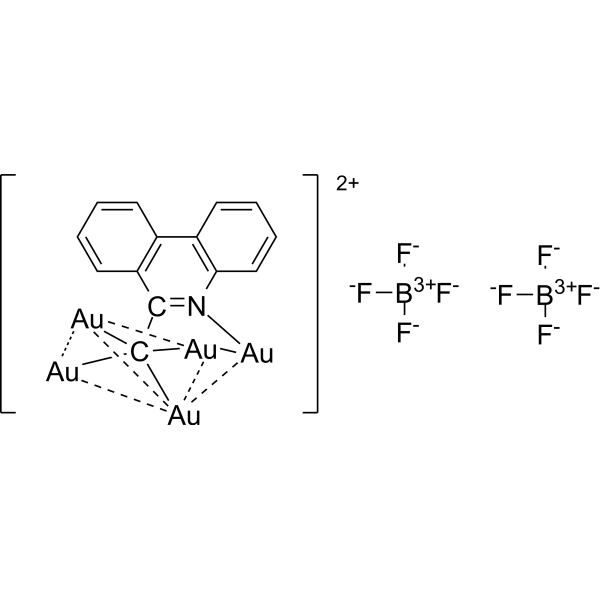
PAA5 is a methide carbon-centered polynuclear Au(I) cluster. PAA5 can release Au(I) causing Pro-oxidant response and accelerated ferroptosis. PAA5 increases the expression of pH2AX in a time-dependent manner. PAA5 has anticancer activity .
loading...
    loading...
Cat. No.: HY-N11648
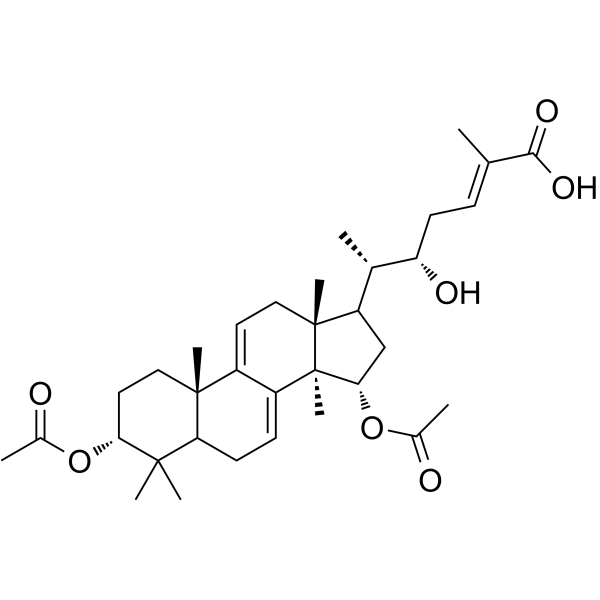
Ganoderic acid T1 is a deacetylated derivative of Ganoderic acid T. Ganoderic acid T1 attenuates antioxidant defense system and induces apoptosis of cancer cells. Ganoderic acid T1 decreases mitochondrial membrane potential and activates caspase-9 and caspase-3, to trigger apoptosis. Ganoderic acid T1 also increases the generation of intracellular ROS to produce pro-oxidant activities and cytotoxicity .
loading...
    loading...
  • 1

