1. Search Result
Search Result
Results for "

psychostimulant

" in MedChemExpress (MCE) Product Catalog:

24

Inhibitors & Agonists

2

Peptides

1

Isotope-Labeled Compounds

Cat. No. Product Name Target Research Areas Chemical Structure
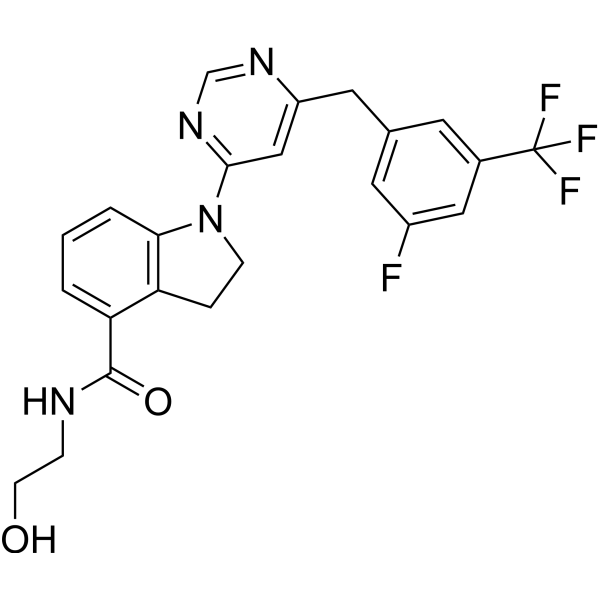
  • HY-138639
    PW0787
    1 Publications Verification

    GPR52 Neurological Disease
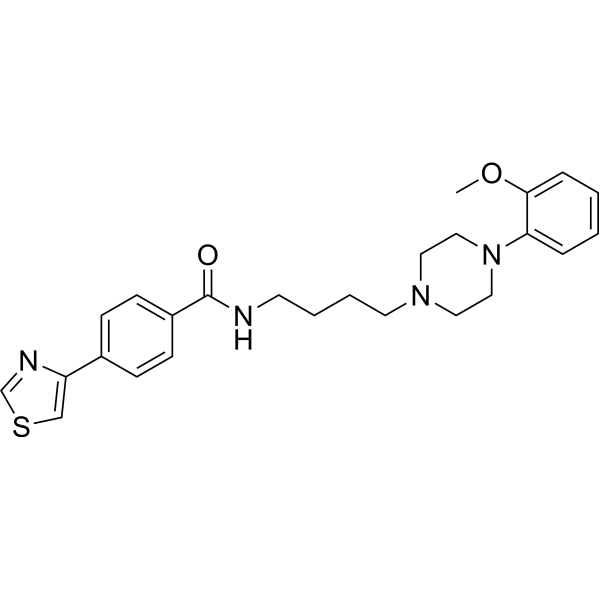
    PW0787 is a potent, selective, orally active, and brain-penetrant GPR52 agonist (EC50=135 nM). PW0787 suppresses psychostimulant behavior .
    PW0787
  • HY-B0970

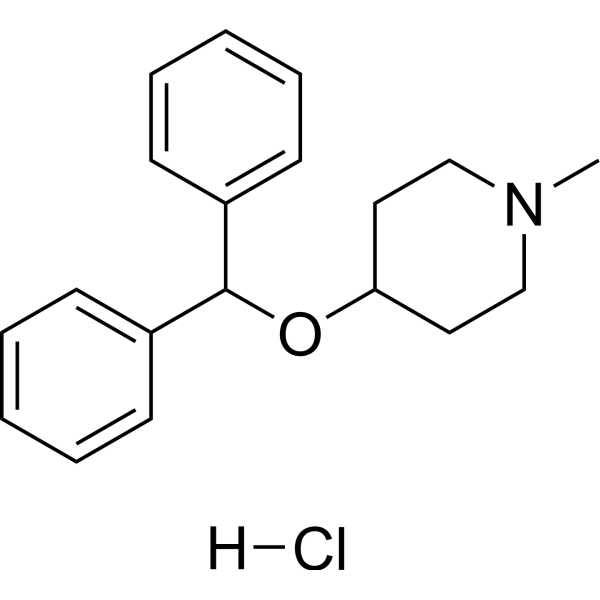
    4-Diphenylmethoxy-1-methylpiperidine hydrochloride

    Histamine Receptor Neurological Disease Endocrinology
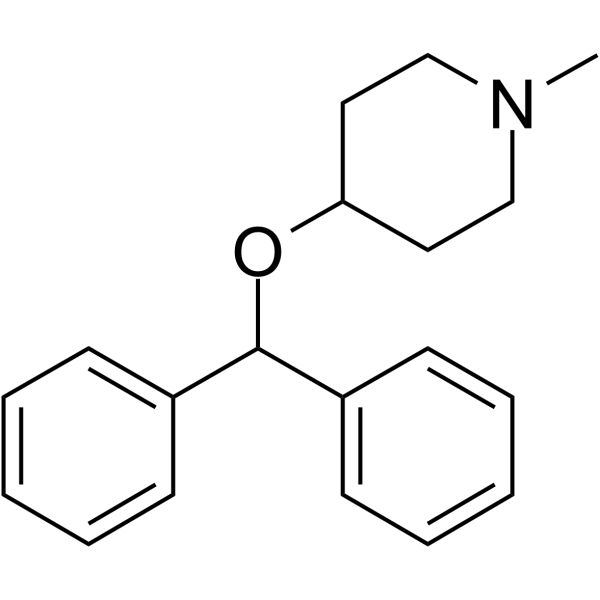
    Diphenylpyraline hydrochloride is a potent histamine H1?receptor antagonist. Diphenylpyraline hydrochloride acts as an orally active antihistamine agent?with antimuscarinic and antiallergic effects. Diphenylpyraline hydrochloride can be used for the relief of allergic conditions including rhinitis and hay fever, and in pruritic skin disorders in vivo.
    Diphenylpyraline hydrochloride
  • HY-16639

    GPR35 Neurotensin Receptor Neurological Disease Endocrinology
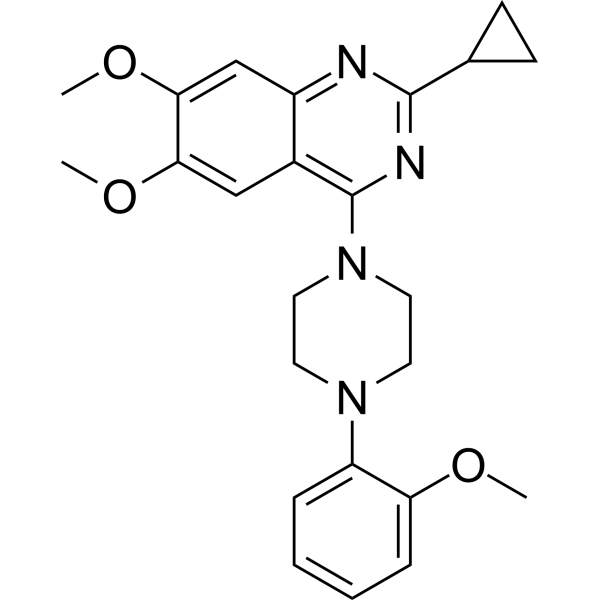
    ML314 is a potent, BBB-penetrant and β-arrestin biased molecule agonist of NTR1 (EC50 = 1.9 μM). ML314 shows good selectivity against NTR2 and GPR35, but does not stimulate Ca2+ mobilization. ML314 can attenuate amphetamine-like hyperlocomotion in dopamine transporter knockout mice. ML314 attenuates methamphetamine-associated hyperlocomotion and potentiates the psychostimulant inhibitory effects of a ghrelin antagonist in wild type mouse model. ML314 also acts as an allosteric enhancer of endogenous neurotensin. ML314 antagonizes G protein signaling. ML314 can be studied in research for methamphetamine abuse conditions .
    ML314
  • HY-158013A

    Dopamine Transporter Neurological Disease
    JJC8-088 dioxalate is the dioxalate salt form of JJC8-088 (HY-158013). JJC8-088 dioxalate is a derivative of modafinil. JJC8-088 dioxalate is an inhibitor for dopamine transporter (DAT). JJC8-088 dioxalate exhibits behavioral characteristics similar to cocaine in rat models, and can be to study psychostimulant use disorders .
    JJC8-088 dioxalate
  • HY-132225

    5-HT Receptor Inflammation/Immunology
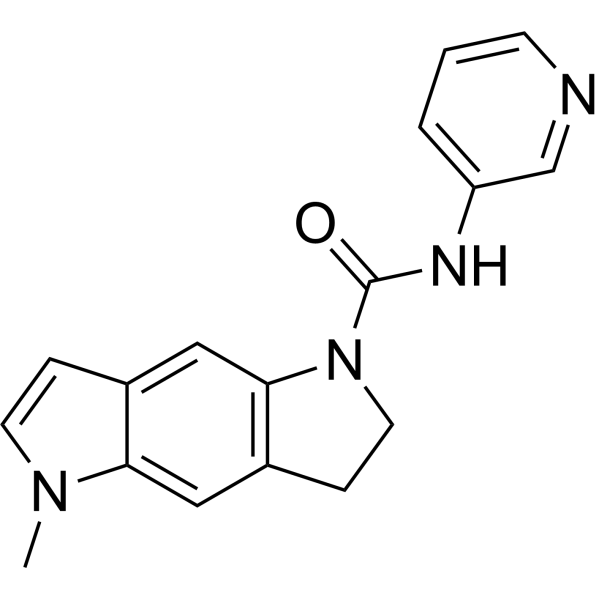
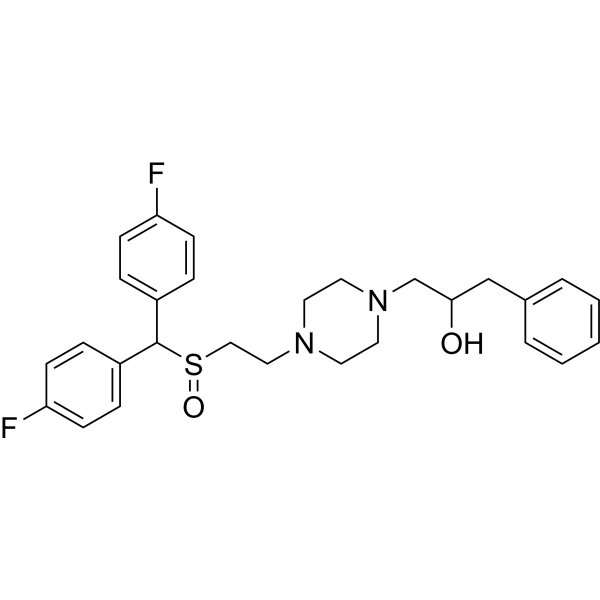
    SB 206553 is a 5-HT2C inverse agonist. SB 206553 can attenuate methamphetamine-seeking in rats. SB 206553 has activity for 5-HT2 receptor ligands in HEK-293 or CHO-K1 cells expressing human recombinant 5-HT2 receptors with pKi values of 5.6 nM (5-HT2A), 7.7 nM (5-HT2B) and 7.8 nM (5-HT2C), respectively. SB 206553 can be used for the research of psychostimulant abuse disorders .
    SB 206553
  • HY-B0950A

    ANP-297 hydrochloride

    Dopamine Receptor Neurological Disease
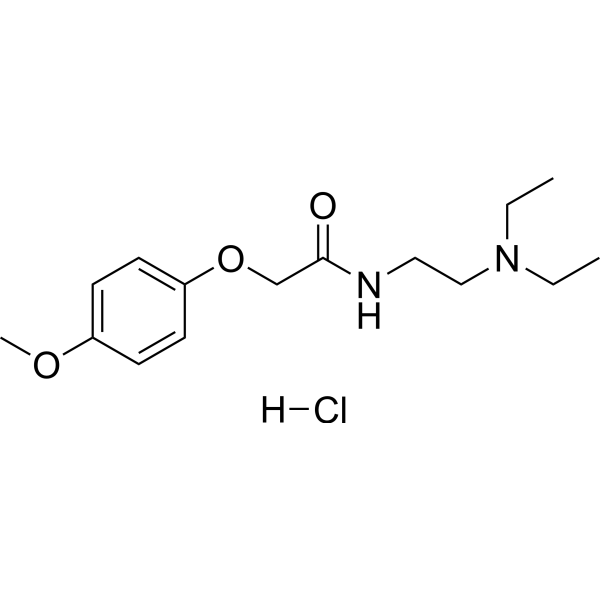
    Mefexamide (ANP-297) hydrochloride is a psychostimulant psychopharmaceutical and aryloxyacetic acid derivative antidepressant with dopaminergic activity. Mefexamide hydrochloride can be used for the research of depression .
    Mefexamide hydrochloride
  • HY-158013

    Dopamine Transporter Neurological Disease
    JJC8-088, a Modafinil-derived ligand, is a dopamine transporter (DAT) inhibitor with a Ki of 2.53 nM. JJC8-088 dioxalate can be to study psychostimulant use disorders .
    JJC8-088
  • HY-P10405A

    Dopamine Receptor Neurological Disease
    TAT-D1 peptide acetate is a dopamine D1-D2 receptor heterodimer inhibitor. TAT-D1 peptide acetate disrupts the function of dopamine D1-D2 receptor heteromers, enhances subchronic amphetamine-induced locomotor activity, and exacerbates the expression of amphetamine-induced locomotor sensitization. TAT-D1 peptide acetate produces rapid anxiolytic and antidepressant-like effects in rat models of depression and anxiety, and inhibits c-fos expression in the nucleus accumbens of rats. TAT-D1 peptide acetate can be used in the research of psychostimulant addiction, depression and anxiety disorders .
    TAT-D1 peptide acetate
  • HY-134042

    Drug Derivative Neurological Disease
    GP130 (G130) is a psychostimulant agent, exhibiting antagonist activity against central nervous system depressing agents [2.
    G 130
  • HY-18610A

    Ro 8-4650

    Dopamine Transporter Adrenergic Receptor 5-HT Receptor Neurological Disease
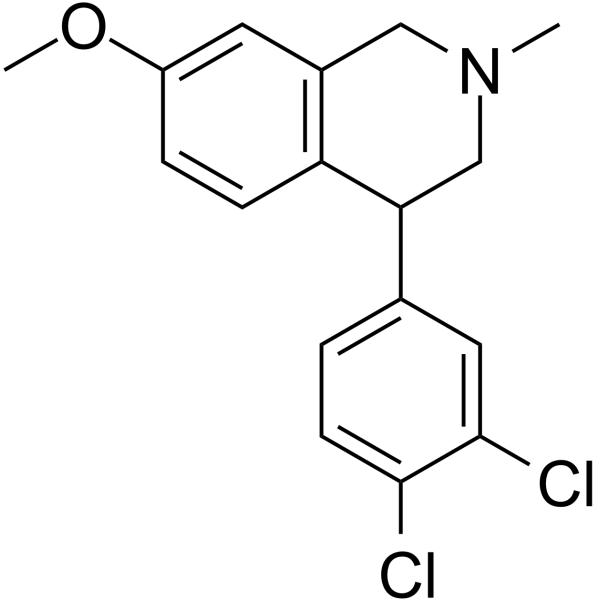
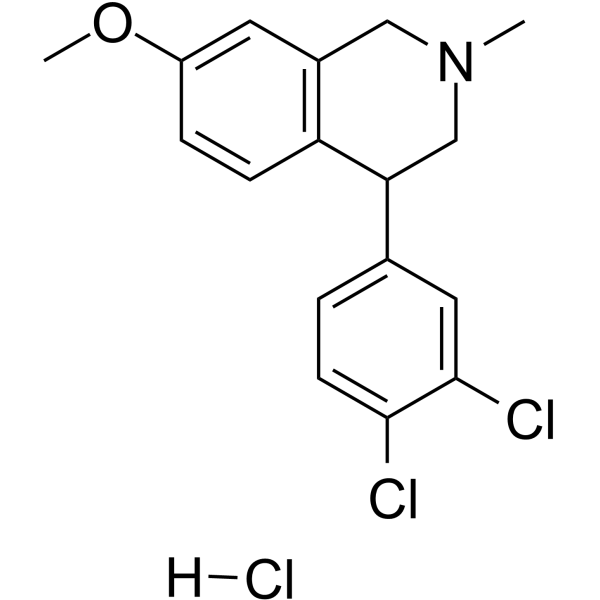
    Diclofensine (Ro 8-46500) is an orally active neuronal monoamine uptake inhibitor. Diclofensine blocks the uptake of dopamine, noradrenaline, and serotonin by rat brain synaptosomes with IC50 values of 0.74, 2.3 and 3.7 nM, respectively. Diclofensine potentiates norepinephrine-induced hypertension and attenuates Tyramine (HY-W007606)-induced hypertension. Diclofensine produces psychostimulant and mood-elevating effects without causing sudden disappearance or withdrawal reactions. Diclofensine can be used in the research of moderate to severe depression .
    Diclofensine
  • HY-B0950

    ANP-297

    Dopamine Receptor Neurological Disease
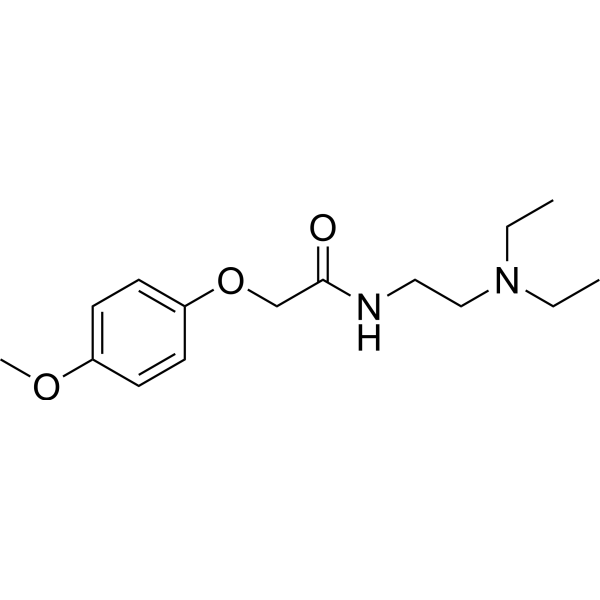
    Mefexamide (ANP-297) is a psychostimulant psychopharmaceutical and aryloxyacetic acid derivative antidepressant with dopaminergic activity. Mefexamide can be used for the research of depression .
    Mefexamide
  • HY-P10405

    Dopamine Receptor Neurological Disease
    TAT-D1 peptide is a dopamine D1-D2 receptor heterodimer inhibitor. TAT-D1 peptide disrupts the function of dopamine D1-D2 receptor heteromers, enhances subchronic amphetamine-induced locomotor activity, and exacerbates the expression of amphetamine-induced locomotor sensitization. TAT-D1 peptide produces rapid anxiolytic and antidepressant-like effects in rat models of depression and anxiety, and inhibits c-fos expression in the nucleus accumbens of rats. TAT-D1 peptide can be used in the research of psychostimulant addiction, depression and anxiety disorders .
    TAT-D1 peptide
  • HY-18610

    Ro 8-4650 hydrochloride

    Dopamine Transporter Adrenergic Receptor 5-HT Receptor Neurological Disease
    Diclofensine (Ro 8-46500) hydrochloride is an orally active neuronal monoamine uptake inhibitor. Diclofensine hydrochloride blocks the uptake of dopamine, noradrenaline, and serotonin by rat brain synaptosomes with IC50 values of 0.74, 2.3 and 3.7 nM, respectively. Diclofensine hydrochloride potentiates norepinephrine-induced hypertension and attenuates Tyramine (HY-W007606)-induced hypertension. Diclofensine hydrochloride produces psychostimulant and mood-elevating effects without causing sudden disappearance or withdrawal reactions. Diclofensine hydrochloride can be used in the research of moderate to severe depression .
    Diclofensine hydrochloride
  • HY-163138

    Dopamine Transporter Neurological Disease
    DAT-IN-1 (Coumpound 12b) is an atypical DAT inhibitor with a Ki of 8.37 nM. DAT-IN-1 can be used in the study of psychostimulant use disorder (PSUD) .
    DAT-IN-1
  • HY-163154

    Dopamine Transporter Neurological Disease
    JJC8-091 is a potent dopamine transporter (DAT) inhibitor with Ki values of 230, 97800 nM for DAT, SERT, respectively. JJC8-091 has the potential for the research of psychostimulant use disorders (PSUD) .
    JJC8-091
  • HY-19845

    ACR-325

    Dopamine Receptor Neurological Disease
    Ordopidine is a dopamine D2 receptor antagonist. Ordopidine can inhibit hyperactivity caused by psychostimulants. Ordopidine can be used in neurological research .
    Ordopidine
  • HY-174307

    Dopamine Receptor Neurological Disease
    Dopamine D3 receptor ligand-6 (Compound 196476) is a selective dopamine D3 receptor (D3) antagonist. Dopamine D3 receptor ligand-6 is promising for research of substance use disorders (such as opioid and psychostimulant addiction) .
    Dopamine D3 receptor ligand-6
  • HY-116820

    Dopamine Receptor Neurological Disease
    OS-3-106 is a potent, and selective dopamine D3 receptor (D3R) agonist. OS-3-106 binds with high affinity (Ki = 0.2 nM) at the D3R. OS-3-106 can be used for psychoactivator addiction research .
    OS-3-106
  • HY-107431

    Histamine Receptor Inflammation/Immunology
    Diphenylpyraline is a potent histamine H1 receptor antagonist. Diphenylpyraline acts as an orally active antihistamine agent with antimuscarinic and antiallergic effects. Diphenylpyraline can be used for the research of allergic diseases, including rhinitis and hay fever, and pruritic skin disorders et.al .
    Diphenylpyraline
  • HY-107431R

    Reference Standards Histamine Receptor Inflammation/Immunology
    Diphenylpyraline (Standard) is the analytical standard of Diphenylpyraline. This product is intended for research and analytical applications. Diphenylpyraline is a potent histamine H1?receptor antagonist. Diphenylpyraline acts as an orally active antihistamine agent?with antimuscarinic and antiallergic effects. Diphenylpyraline can be used for the research of allergic diseases, including rhinitis and hay fever, and pruritic skin disorders et.al .
    Diphenylpyraline (Standard)
  • HY-18610R

    Ro 8-4650 hydrochloride (Standard)

    Reference Standards Dopamine Transporter Adrenergic Receptor 5-HT Receptor Neurological Disease
    Diclofensine (Ro 8-4650) hydrochloride (Standard) is the analytical standard of Diclofensine hydrochloride. This product is intended for research and analytical applications. Diclofensine hydrochloride is an orally active neuronal monoamine uptake inhibitor. Diclofensine hydrochloride blocks the uptake of dopamine, noradrenaline, and serotonin by rat brain synaptosomes with IC50 values of 0.74, 2.3 and 3.7 nM, respectively. Diclofensine hydrochloride potentiates norepinephrine-induced hypertension and attenuates Tyramine (HY-W007606)-induced hypertension. Diclofensine hydrochloride produces psychostimulant and mood-elevating effects without causing sudden disappearance or withdrawal reactions. Diclofensine hydrochloride can be used in the research of moderate to severe depression.
    Diclofensine hydrochloride (Standard)
  • HY-18610S

    Isotope-Labeled Compounds Dopamine Transporter Adrenergic Receptor 5-HT Receptor Neurological Disease
    Diclofensine-d3 (Ro-8-4650-d3) hydrochloride is the deuterium labeled Diclofensine hydrochloride. Diclofensine hydrochloride is an orally active neuronal monoamine uptake inhibitor. Diclofensine hydrochloride blocks the uptake of dopamine, noradrenaline, and serotonin by rat brain synaptosomes with IC50 values of 0.74, 2.3 and 3.7 nM, respectively. Diclofensine hydrochloride potentiates norepinephrine-induced hypertension and attenuates Tyramine (HY-W007606)-induced hypertension. Diclofensine hydrochloride produces psychostimulant and mood-elevating effects without causing sudden disappearance or withdrawal reactions. Diclofensine hydrochloride can be used in the research of moderate to severe depression.
    Diclofensine-d3 hydrochloride
  • HY-165323

    Pyrisuccideanol

    Drug Intermediate Neurological Disease
    Pirisudanol (pyrisuccideanol) is a psychostimulant. Pirisudanol can be used for the research of neurological disease, such as depression .
    Pirisudanol
  • HY-186169B

    Serotonin Transporter Dopamine Transporter Neurological Disease
    (R,S)-MDDMA is an MDMA analog that lacks the psychostimulant effects of its parent compound. (R,S)-MDDMA still retains partial serotonin-releasing activity .
    (R,S)-MDDMA

Inquiry Online

Your information is safe with us. * Required Fields.

Salutation


Country or Region *

Applicant Name *


Organization Name *

Department *


Email Address *


Product Name *

Cat. No.


Requested quantity *

Phone Number *


Remarks

Inquiry Online

Inquiry Information

Product Name:
Cat. No.:
Quantity:
MCE Japan Authorized Agent:

