10 Results for "

ras antagonist

" in MedChemExpress (MCE) Product Catalog:
Products (10)

10 Results for "ras antagonist" in MCE Product Catalog:

Cat. No.: HY-100627
CAS No.: 2002381-25-9
Purity:  99.38%
Target:  

MEK

Research Areas:  

Cancer

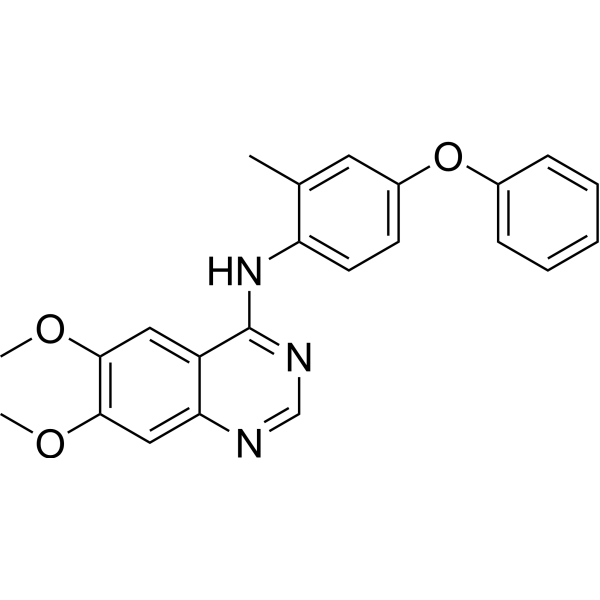
APS-2-79 is a KSR-dependent MEK antagonist. APS-2-79 inhibits ATP biotin binding to KSR2 within the KSR2-MEK1 complexe with an IC50 of 120 nM. APS-2-79 makes the stabilization of the KSR inactive state antagonizes oncogenic Ras-MAPK signaling .
loading...
    loading...
Cat. No.: HY-P10933
Target:  

Renin

Research Areas:  

Cardiovascular Disease

PRO20 is a specific and competitive (pro)renin receptor (PRR) antagonist. PRO20 inhibits Prorenin-induced calcium influx with an IC50 value of 81 nmol/L. PRO20 exerts antihypertensive activity by blocking the binding of prorenin to the PRR, inhibiting the activation of the renin-angiotensin system (RAS), and reducing the production of angiotensin II (Ang II). PRO20 is promising for research of antihypertensive agents .
loading...
    loading...
Cat. No.: HY-100627A
CAS No.: 2002381-31-7
Target:  

MEK

Research Areas:  

Cancer

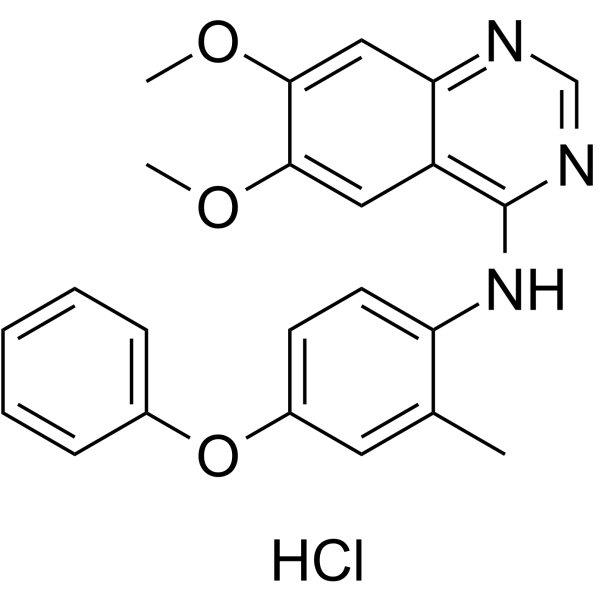
APS-2-79 hydrochloride is a KSR-dependent MEK antagonist. APS-2-79 inhibits ATP biotin binding to KSR2 within the KSR2-MEK1 complexe with an IC50 of 120 nM. APS-2-79 makes the stabilization of the KSR inactive state antagonizes oncogenic Ras-MAPK signaling .
loading...
    loading...
Cat. No.: HY-174306
Research Areas:  

Metabolic Disease

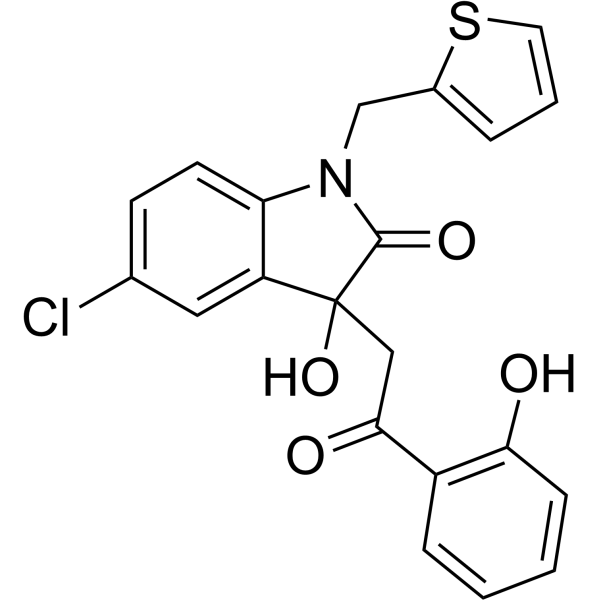
MARY1 is a selective 5-HT2BR antagonist with an IC50 of 380 nM and a Ki of 764 nM (human 5-HT2BR). MARY1 induces renal mitochondrial biogenesis (MB) and enhances renal mitochondrial function by increasing mitochondrial respiratory capacity, mitochondrial protein levels, and mitochondrial number in renal proximal tubular cells (RPTCs). MARY1 induces MB through 5-HT2BR and dual PI3K/AKT and RAS/MEK/ERK cell signaling pathways in RPTCs. MARY1 can be used to study renal diseases associated with metabolic and mitochondrial dysfunction .
loading...
    loading...
Cat. No.: HY-155542
CAS No.: 3049676-15-2
Target:  

ROR

Research Areas:  

Cancer

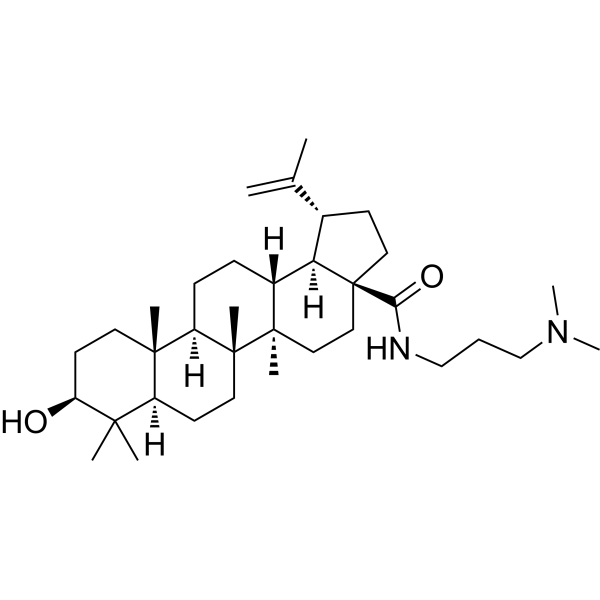
RORγ antagonist 1 (compound 22), a potent betulinic acid derivative, is an antagonist of RORγ (KD=0.18 μM). RORγ antagonist 1 exhibits anti-proliferative activity in HPAF-II pancreatic cancer xenograft model. RORγ antagonist 1 inhibits RAS/MAPK and AKT/mTORC1 pathway, and induces caspase-dependent apoptosis in pancreatic cancer cells .
loading...
    loading...
Cat. No.: HY-156363
CAS No.: 905794-70-9
Target:  

Ras

Research Areas:  

Cancer

K-Ras-IN-2 (Compound CHI-000-667) is a K-Ras antagonist, and can be used for tumor research .
loading...
    loading...
Cat. No.: HY-19224
CAS No.: 153235-15-5
Synonyms: HR 720
Target:  

Angiotensin Receptor

Research Areas:  

Cardiovascular Disease

Fonsartan (HR720) is an AT1 receptor antagonist. Fonsartan can be used for the study of myocardial infarction (MI) .
loading...
    loading...
Cat. No.: HY-L145
930 compounds

The majority of hypertensive patients have primary (or essential) hypertension, that is, hypertension in which secondary causes are not present. Management aims to control arterial pressure, prevent end-organ damage (cerebrovascular, cardiovascular, and renal), and reduce the risk of premature death.

Antihypertensive drugs may be divided into two broad groups, the first group being those which directly or indirectly block the renin–angiotensin system (RAS), for example, ACEIs, angiotensin receptor antagonists (ARAs), direct renin inhibitors (DRIs), and to a lesser extent β-blockers. The second group of drugs works by increasing water and sodium excretion, thereby reducing intravascular volume, or by causing vasodilatation through non-RAS pathways, for example, diuretics and calcium channel blockers (CCBs).

MCE offers a unique collection of 930 compounds with identified and potential antihypertensive activity. MCE Antihypertensive Compound Library is critical for antihypertensive drug discovery and development.

Cat. No.: HY-100627R
CAS No.: 2002381-25-9
Target:  

MEK Reference Standards

Research Areas:  

Cancer

APS-2-79 (Standard) is the analytical standard of APS-2-79 (HY-100627). This product is intended for research and analytical applications. APS-2-79 is a KSR-dependent MEK antagonist. APS-2-79 inhibits ATPbiotin binding to KSR2 within the KSR2-MEK1 complexe with an IC50 of 120 nM. APS-2-79 makes the stabilization of the KSR inactive state antagonizes oncogenic Ras-MAPK signaling .
loading...
    loading...
Cat. No.: HY-P991744

Target:  

CXCR

Research Areas:  

Cancer

Anti-Mouse CXCR4 Antibody is a monoclonal antibody that specifically recognizes murine CXCR4 (C-X-C chemokine receptor 4), also known as fusin or CD184. CXCR4 is a seven-transmembrane G protein–coupled receptor whose principal endogenous ligand is CXCL12 (stromal cell–derived factor-1α, SDF-1α) and is widely expressed in hematopoietic cells, endothelial cells, neurons, as well as embryonic and adult stem cells. The CXCR4–CXCL12 signaling axis activates multiple downstream pathways, including ERK1/2, Ras, p38 MAPK, PLC/MAPK, and SAPK/JNK, thereby regulating cell survival, proliferation, migration, and stemness maintenance. Aberrant overexpression of CXCR4 is closely associated with poor prognosis and metastasis in various cancers, with CXCR4-positive tumor cells preferentially home to CXCL12-rich tissues such as the liver, bone marrow, lung, and lymph nodes. Accordingly, CXCR4 and its CXCL12-related antagonists emerge as attractive targets for experimental anticancer therapy. Anti-Mouse CXCR4 Antibody is generated using a cell-based immunization and screening strategy and exhibits high affinity for both endogenous and exogenous murine CXCR4. Anti-Mouse CXCR4 Antibody can be used for thestudy of chronic lymphocytic leukemia and multiple myeloma .
loading...
    loading...

