1. Search Result
Search Result
Results for "

sensitive strain

" in MedChemExpress (MCE) Product Catalog:

51

Inhibitors & Agonists

2

Fluorescent Dyes

8

Natural
Products

1

Isotope-Labeled Compounds

2

Click Chemistry

Cat. No. Product Name Target Research Areas Chemical Structure
  • HY-108251
    Methotrexate metabolite
    1 Publications Verification

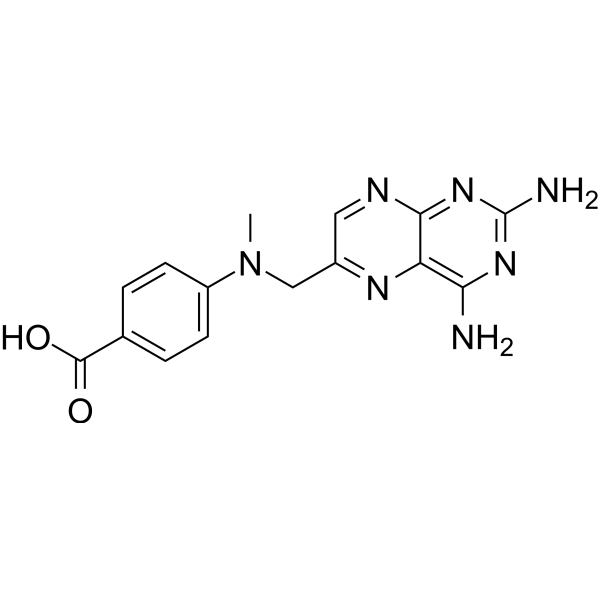
    DAMPA

    Antifolate Drug Metabolite Dihydrofolate reductase (DHFR) Parasite Infection Inflammation/Immunology
    Methotrexate metabolite (DAMPA) is an active metabolite of Methotrexate. Methotrexate is a Folic acid (HY-16637) antagonist, widely used as an immunosuppressant. Methotrexate metabolite is an antimalarial agent that inhibits parasite growth under physiological folic acid conditions, with IC50 values of 446 nM and 812 nM against folic acid-sensitive strains and highly resistant strains, respectively. Methotrexate metabolite exhibits pharmacokinetic characteristics of rapid clearance and extensive metabolism, with a mean clearance rate of 1.9 l/kg/h and a mean terminal half-life of 51 minutes. Methotrexate metabolite is promising for research in the field of inflammation .
    Methotrexate metabolite
  • HY-B0343A
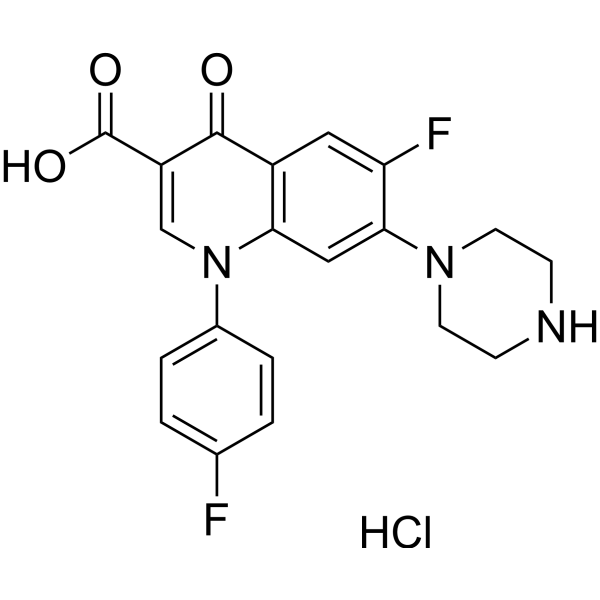
    Sarafloxacin hydrochloride
    2 Publications Verification

    A-56620 hydrochloride

    Bacterial Infection Inflammation/Immunology
    Sarafloxacin hydrochloride (A-56620 hydrochloride) is a fluoroquinolone Antibacterial agent. Sarafloxacin inhibits the growth of Staphylococcus aureus, Enterobacteriaceae, and both aminoglycoside-sensitive and aminoglycoside-resistant strains of Pseudomonas aeruginosa .
    Sarafloxacin hydrochloride
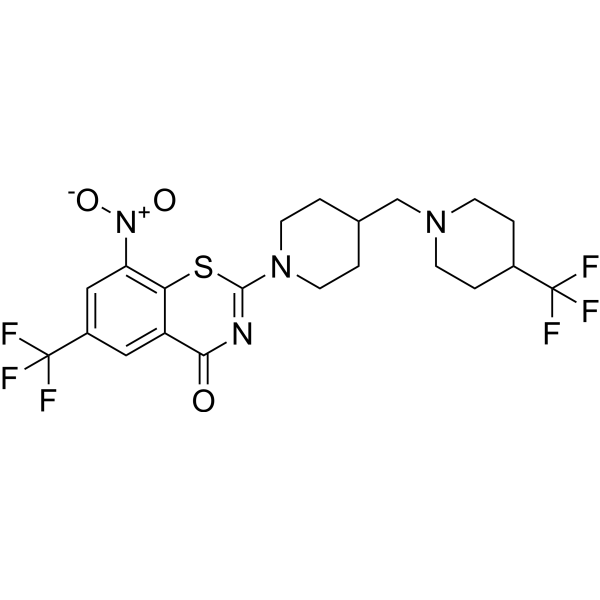
  • HY-133119

    Bacterial Infection
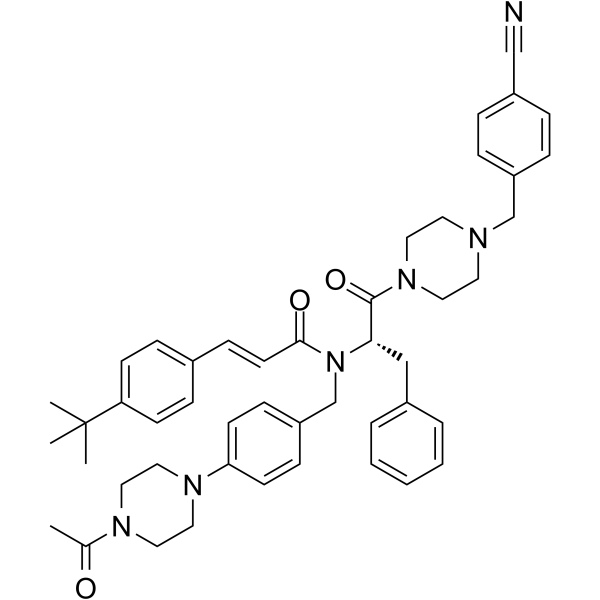
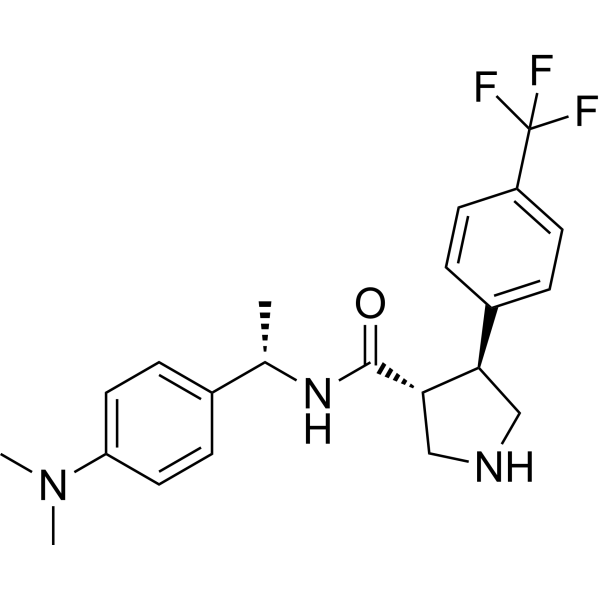
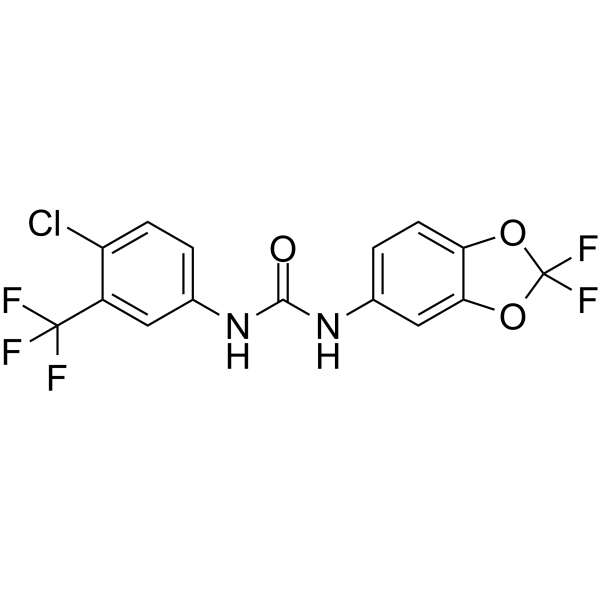
    PK150, an analogue of Sorafenib, shows oral bioavailability and antibacterial activity against several pathogenic strains at submicromolar concentrations. PK150 inhibits Gram-positive Methicillin-sensitive S. aureus (MSSA), Methicillin-resistant S. aureus (MRSA), Vancomycin intermediate S. aureus (VISA) with MICs of 0.3, 0.3-1, 0.3 μM, respectively .
    PK150
  • HY-151710

    Fluorescent Dye Others
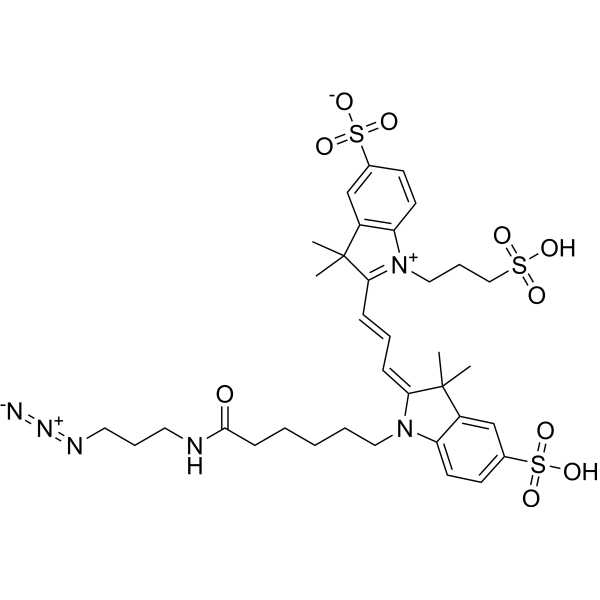
    Sulfo-Cy3 Azide is a water-soluble fluorogenic dye containing an azide group, which enables Click Chemistry. Sulfo-Cy3 Azide can be used for the labeling of sensitive molecules such as proteins . It contains an azide group and can undergo copper-catalyzed azide-alkyne cycloaddition (CuAAc) with molecules containing alkyne groups. It can also undergo ring strain-promoted alkyne-azide cycloaddition (SPAAC) with molecules containing DBCO or BCN groups.
    Sulfo-Cy3 Azide
  • HY-N3386

    Bacterial Infection
    Licoricone is an flavonoid extracted from licorice, exhibits anti-helicobacter pylori activity against the CLAR and AMOX-resistant strain as well as four CLAR (AMOX)-sensitive strains .
    Licoricone
  • HY-151711

    Fluorescent Dye Others
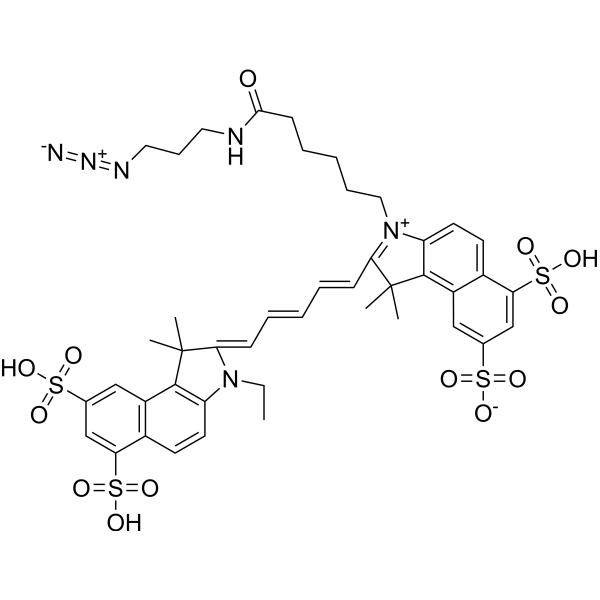
    Sulfo-Cy5.5 Azide is a click chemistry reagent containing an azide group. Sulfo-Cy5.5 Azide is also a water-soluble dye (Ex=673 nm, Em=707 nm), which designed to label sensitive molecules such as peptides, proteins and oligonucleotides. It contains an azide group and can undergo copper-catalyzed azide-alkyne cycloaddition (CuAAc) with molecules containing alkyne groups. It can also undergo ring strain-promoted alkyne-azide cycloaddition (SPAAC) with molecules containing DBCO or BCN groups.
    Sulfo-Cy5.5 Azide
  • HY-146145

    Fungal Mitochondrial Metabolism Infection
    Metyltetraprole is a promising fungicide with EC50 values of both 0.002 ppm against sensitive wild-type and G143A mutant of Zymoseptoria tritici. Metyltetraprole is effective against QoI (quinone outside inhibitor) resistant strains. Metyltetraprole inhibits the respiratory chain via complex III .
    Metyltetraprole
  • HY-111817

    Parasite Infection
    ACT-451840 is an orally active, potent and low-toxicity compound, showing activity against sensitive and resistant plasmodium falciparum strains. ACT-451840 targets all asexual blood stages of the parasite, has a rapid onset of action. ACT-451840 behaves in a way similar to artemisinin derivatives, with very rapid onset of action and elimination of parasite. ACT-451840 can be used for the research of malarial .
    ACT-451840
  • HY-13732

    Leo 1031; NSC 134087

    DNA Alkylator/Crosslinker Cancer
    Prednimustine (Leo 1031;NSC 134087) is the ester formed from Prednisolone (HY-17463) and Chlorambucil (HY-13593). Prednimustine can be used for leukemias and lymphomas research .
    Prednimustine
  • HY-B0343

    A-56620

    Bacterial Infection Inflammation/Immunology
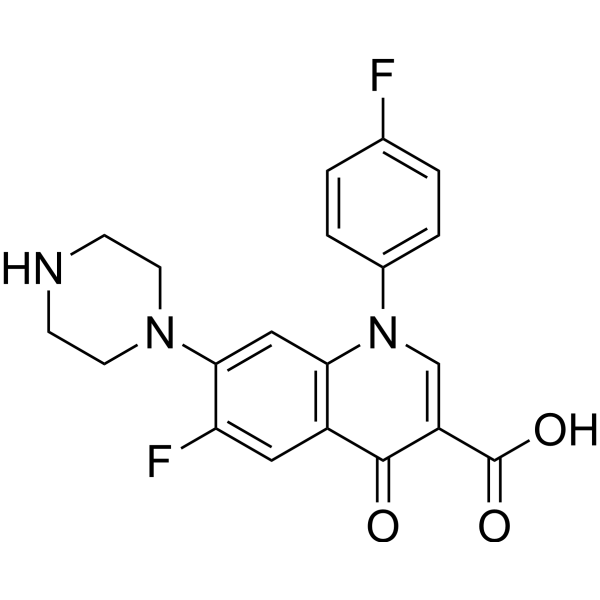
    Sarafloxacin (A-56620) is a fluoroquinolone Antibacterial agent. Sarafloxacin inhibits the growth of Staphylococcus aureus, Enterobacteriaceae, and both aminoglycoside-sensitive and aminoglycoside-resistant strains of Pseudomonas aeruginosa .
    Sarafloxacin
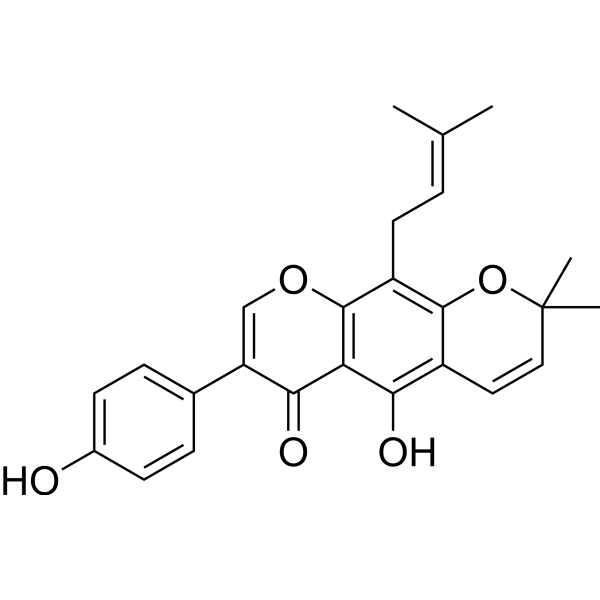
  • HY-N1074

    Scandenolone

    Parasite PKA Infection Inflammation/Immunology
    Warangalone is an anti-malarial compound which can inhibit the growth of both strains of parasite 3D7 (chloroquine sensitive) and K1 (chloroquine resistant) with IC50s of 4.8 μg/mL and 3.7 μg/mL, respectively. Warangalone can also inhibit cyclic AMP-dependent protein kinase catalytic subunit (cAK) with an IC50 of 3.5 μM.
    Warangalone
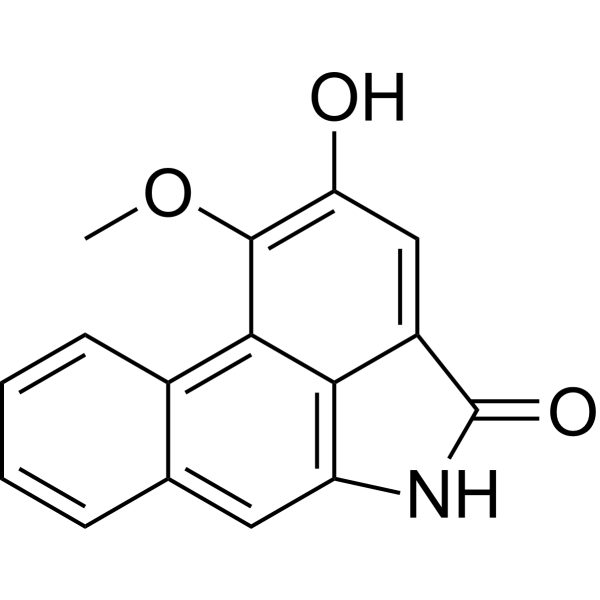
  • HY-N2891

    Aristololactam A II

    Parasite COX Infection
    Aristolactam A II (Aristololactam A II) is a weak COX inhibitor with cytotoxic and anti-plasmodial activities. Aristolactam A II exhibits inhibitory activity against Chloroquine (HY-17589A)-sensitive strains, and exerts its inhibitory effect on Plasmodium falciparum growth by inducing cell membrane damage marked by LDH release. Aristolactam A II can be applied to the research of malaria-related mechanisms .
    Aristolactam A II
  • HY-111746
    CWHM-1008
    1 Publications Verification

    Parasite Infection
    CWHM-1008 is a potent and orally active antimalarial agent, with EC50 values of 46 and 21 nM against agent-sensitive Plasmodium falciparum 3D7 and drug-resistant Dd2 strains, respectively .
    CWHM-1008
  • HY-157892

    Parasite Infection
    Antimalarial agent 38 is an orally active antimalarial agent, which inhibits Plasmodium falciparum D6 strain, Chloroquine (HY-17589A)-sensitive Thai strain and Chloroquine-resistant FcB1 strain and K1 strain, with IC50s of 0.5, 13, 1 and 13 μM, respectively. Antimalarial agent 38 is non-cytotoxic for mammalian cells MCR58 (IC50 >140 μM). Antimalarial agent 38 improves the survival rate of Plasmodium yoelii nigeriensis infected mouse model .
    Antimalarial agent 38
  • HY-114147

    Bacterial Infection Inflammation/Immunology
    Tuberculosis inhibitor 3 (compound 2i) displays potent anti-TB activity (MIC < 0.016 μg/mL) against agent-sensitive/resistant MTB strains. Tuberculosis inhibitor 3 (compound 2i) shows acceptable PK profiles with oral bioavailability .
    Tuberculosis inhibitor 3
  • HY-178436

    Bacterial Infection
    Antituberculosis agent-16 is an orally active antituberculosis agent. Antituberculosis agent-16 exhibits stable antituberculosis activity with a MIC of 0.48 μg/mL against Mycobacterium tuberculosis H37Rv sensitive strain and 0.49 μg/mL against multidrug-resistant strain 14862. Antituberculosis agent-16 shows high Caco-2 permeability. Antituberculosis agent-16 can be used for the research of infection .
    Antituberculosis agent-16
  • HY-158721

    Marinamide

    Endogenous Metabolite Parasite Infection Cancer
    Penicinoline (Marinamide) (Compound 1), a pyrrolyl 4-quinolinone alkaloid, is a microbial secondary metabolite. Penicinoline can be isolated from endophytic fungus Penicillium sp. Penicinoline has antimalarial activity against Chloroquine (HY-17589A) sensitive strain (pf3d7) and against Chloroquine resistant strain (pfDd2) of plasmodium falciparum. Penicinoline also has strong insecticidal activity against Aphis gossypii and selective anticancer effect with significant cytotoxicity for 95-D and HepG2 cells .
    Penicinoline
  • HY-113958

    LM-2219

    VD/VDR Others
    Difethialone (LM-2219) is an anticoagulant rodenticide. Difethialone shows high rodenticide activity in warfarin-sensitive and resistant strains of rats and mice. Difethialone interferes with the circulation of vitamin K in the liver, preventing the synthesis of coagulation factors, resulting in the inability of the blood to coagulate properly, ultimately causing internal bleeding and death. Difethialone can be used in studies of ecological impacts .
    Difethialone
  • HY-113958R

    LM-2219 (Standard)

    TrxR Reference Standards Others
    Difethialone (Standard) is the analytical standard of Difethialone. This product is intended for research and analytical applications. Difethialone (LM-2219) is an anticoagulant rodenticide. Difethialone shows high rodenticide activity in warfarin-sensitive and resistant strains of rats and mice. Difethialone interferes with the circulation of vitamin K in the liver, preventing the synthesis of coagulation factors, resulting in the inability of the blood to coagulate properly, ultimately causing internal bleeding and death. Difethialone can be used in studies of ecological impacts .
    Difethialone (Standard)
  • HY-W437569

    Parasite Insecticide Infection Cancer
    Melicopine is an alkaloid found in Z. simulans with antimalarial and anticancer activities. It exhibits inhibitory activity against chloroquine-sensitive 3D7 and chloroquine-resistant Dd2 strains of P. falciparum, with IC50 values of 29.7 and 33.7 µg/mL, respectively. Melicopine is cytotoxic to prostate cancer cells PC-3M and LNCaP (IC50 values of 47.9 and 37.8 µg/mL), but has no effect on non-cancerous HEK293 cells (IC50 greater than 100 µg/mL). Melicopine holds promise for research in anticancer and anti-infection fields .
    Melicopine
  • HY-148180

    Bacterial Parasite Infection
    Antimycobacterial agent-4 is a 2-amino-4-(2-pyridyl) thiazole derivative, with antimycobacterial activity, antiplasmodial activity, and cytotoxicity on a mammalian cell line .
    Antimycobacterial agent-4
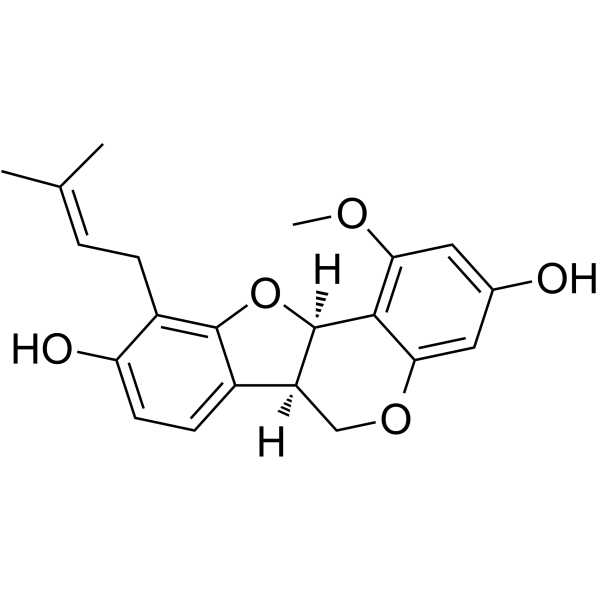
  • HY-N8489

    Endogenous Metabolite Bacterial Infection
    1-Methoxyphaseollidin, a flavonoid compound, is a lysoPAF acetyltransferase inhibitor, with an IC50 of 48 μM. 1-Methoxyphaseollidin exhibits anti-H.pylori activity against the CLAR and AMOX-resistant strain as well as four CLAR (AMOX)-sensitive strains .
    1-Methoxyphaseollidin
  • HY-106515

    WR228258

    Parasite Infection
    Tebuquine (WR228258), a 4-aminoquinoline, is a potent antimalarial agent. Tebuquine is active against the Chloroquine (HY-17589A) sensitive HB3 strain and the Chloroquine resistant K1 strain of Plasmodium falciparum with IC50s of 0.9 nM and 20.8 nM, respectively .
    Tebuquine
  • HY-126900

    HIV Reverse Transcriptase Others
    HI-253 is a non-nucleoside inhibitor of HIV-1 reverse transcriptase that has demonstrated greater activity than multiple anti-HIV compounds against both resistant and sensitive HIV-1 strains.
    HI-253
  • HY-10845

    Bacterial Others
    CGI-17341 is a 5-nitroimidazole antibacterial agent that has the activity of inhibiting sensitive and multidrug-resistant strains of Mycobacterium tuberculosis in vitro and prolonging the survival time of mice infected with Mycobacterium tuberculosis in vivo in a dose-dependent manner.
    CGI-17341
  • HY-174429

    HSV Infection
    HSV-1-IN-3 (Compound A50) is a HSV inhibitor. HSV-1-IN-3 shows good antiviral efficacy against both Acyclovir (HY-17422) -sensitive and -resistant HSV strains .
    HSV-1-IN-3
  • HY-163505

    Bacterial Others
    Anti-MRSA agent 11 suppresses fluoroquinolone-sensitive strain USA500 and -resistant MRSA isolate Mu50 (MIC =0.39 μg/mL). Anti-MRSA agent 11 displayes favorable in vivo half-life and safety profiles .
    Anti-MRSA agent 11
  • HY-111127

    Antibiotic Bacterial Infection
    LY164846 is an orally active cephalosporin. LY164846 is highly sensitive to Haemophilus influenzae (including Ampicillin (HY-B0522)-resistant strains) and Moraxella catarrhalis (with MIC90 ≤ 4 μg/mL). LY164846 is generally sensitive to Methicillin (HY-121544)-resistant Staphylococcus aureus and Streptococcus (except Enterococcus) (with MIC90: 0.25 - 8 μg/mL), and moderately sensitive to anaerobic bacteria. LY164846 has MBC/MIC ratio to Haemophilus influenzae of ≤ 2, showing bactericidal activity. LY164846 can be used for research on respiratory and skin infections .
    LY164846
  • HY-175262

    Bacterial Cytochrome P450 Infection
    Mtb-IN-12 (Compound 5m) is a dual-target inhibitor that can target the CYP125 (KD: 40 nM; KI: 0.1 μM) and CYP142 (KD: 160 nM; KI: 0.05 μM) enzymes of Mycobacterium tuberculosis. Mtb-IN-12 exhibits good inhibitory activity against both drug-sensitive strains and multidrug-resistant tuberculosis strains, with low toxicity to macrophages. Mtb-IN-12 can be used in the research of anti-tuberculosis drugs .
    Mtb-IN-12
  • HY-14926B

    (S)-(-)-Nadifloxacin arginine; WCK 771 arginine

    Bacterial Infection
    Levonadifloxacin ((S)-(-)-Nadifloxacin; WCK 771) arginine is a broad-spectrum antistaphylococcal agent. Levonadifloxacin arginine has antimicrobial activity against methicillin-sensitive Staphylococcus aureus (MSSA) and methicillin-resistant Staphylococcus aureus and reduces phagocytosis of MRSA and MSSA strains by monocytic THP-1 cells .
    Levonadifloxacin arginine
  • HY-116552

    Parasite Infection
    KAR425 is a potent and orally active antimalarial agent. KAR425 shows antimalarial activity against the Chloroquine-sensitive (CQS) D6, the Chloroquine-resistant (CQR) Dd2, and 7G8 strains of Plasmodium falciparum, with IC50 values of 62 nM, 55 nM, and 60 nM, respectively .
    KAR425
  • HY-147871

    Bacterial Infection
    Antimycobacterial agent-3 (Compound 1h) is an antimycobacterial agent against both agent-sensitive MTB strain H37Rv and drug-resistant clinical isolates (MIC: < 0.029–0.110 μM). Antimycobacterial agent-3 shows low cell cytotoxicity .
    Antimycobacterial agent-3
  • HY-149960

    Parasite Infection
    Antiparasitic agent-17 (compound 5u) is an orally active antiparasitic agent. Antiparasitic agent-17 inhibits Chloroquine sensitive (Pf3D7) and Chloroquine resistant (PfK1) strain with IC50s of 0.96 μM and 1.67 μM, respectively .
    Antiparasitic agent-17
  • HY-115905

    Parasite Infection
    Antimalarial agent 9 (Compound 11) is a potent antimalarial agent. Antimalarial agent 9 is a quinoline-imidazole derivative compound. Antimalarial agent 9 exhibits significant antimalarial efficacy in-vitro against both CQ-sensitive (IC50-0.14 μM) and MDR strain (IC50-0.41 μM) with minimal cytotoxicity and high selectivity .
    Antimalarial agent 9
  • HY-146395

    HBV DNA/RNA Synthesis Apoptosis Infection Cancer
    HBV-IN-23 (Compound 5k) is an inhibitor of HBV DNA replication with an IC50 of 0.58 μM. HBV-IN-23 inhibits HBV DNA replication in both agent sensitive and resistant HBV strains. HBV-IN-23 shows anti-hepatocellular carcinoma cell (HCC) activities. HBV-IN-23 induces HepG2 cells apoptosis .
    HBV-IN-23
  • HY-149346

    Bacterial Infection
    Mtb-IN-2 (compound 10c) is an antimicrobial agent against Mycobacterium tuberculosis (Mtb), without cytotoxicity. Mtb-IN-2 significantly decreases colony-forming units (CFU) in spleen of murine tuberculosis models, and distinguishes both drug-sensitive and drug-resistant Mtb H37Rv strains. Mtb-IN-2 affects methionine metabolism but not folate pathway directly.
    Mtb-IN-2
  • HY-N8374

    Parasite Infection
    Pheanthine (Compound 2) is an antiplasmodial agent, that inhibits chloroquine-resistant Plasmodium falciparum K-1 (IC50 is 0.8 μM) and chloroquine-sensitive P. falciparum strain NF54 A19A (IC50 of 0.03 μM). Pheanthine exhibits low cytotoxicity in human lung fibrosblast (MRC-5, IC50 is 11.2 μM) and macrophages (PMM, IC50 is 8 μM) .
    Pheanthine
  • HY-173277

    Bacterial Infection
    FtsZ-IN-13 (Compound C11) is an inhibitor of temperature-sensitive mutant Z (FtsZ), with IC50 values of 47.97, 34 μM against FtsZSa and FtsZPa, respectively. FtsZ-IN-13 has a notable antimicrobial activity against S. aureus (minimum inhibitory concentration value of 2 μg/mL), cystic fibrosis S. aureus clinical isolates, and methicillin-resistant S. aureus (MRSA) strains. FtsZ-IN-13 can be used for antimicrobial resistance study .
    FtsZ-IN-13
  • HY-175215

    Parasite Infection
    PfPK6-IN-1 is a potent and selective PfPK6 inhibitor with an IC50 of 0.3 μM. PfPK6-IN-1 inhibits hemozoin formation, a Plasmodium-specific pathway with IC50 of 13 μM against β-hematin (βH). PfPK6-IN-1 exhibits rapid and broad-spectrum anti-malarial properties, being effective against both chloroquine-sensitive and resistant strains.PfPK6-IN-1 can be used for the study of antimalarial .
    PfPK6-IN-1
  • HY-113958S

    Baraki-d4; LM 2219-d4

    Isotope-Labeled Compounds VD/VDR Others
    Difethialone-d4 (Baraki-d4; LM 2219-d4) is the deuterium labeled Difethialone (HY-113958). Difethialone (LM-2219) is an anticoagulant rodenticide. Difethialone shows high rodenticide activity in warfarin-sensitive and resistant strains of rats and mice. Difethialone interferes with the circulation of vitamin K in the liver, preventing the synthesis of coagulation factors, resulting in the inability of the blood to coagulate properly, ultimately causing internal bleeding and death. Difethialone can be used in studies of ecological impacts .
    Difethialone-d4
  • HY-W587414

    Bacterial Antibiotic Infection
    Neospiramycin I is a macrolide antibiotic and a derivative of Spiramycin I (HY-N7141). Neospiramycin I is effective against the macrolide-sensitive KB210 strain of S. aureus, but ineffective against the macrolide-resistant KB224 strain, with minimum inhibitory concentrations (MIC) of 3.12 and greater than 100 µg/mL, respectively; it is also effective against B. cereus, B. subtilis, M. luteus, E. coli, and K. pneumoniae, with respective MIC values of 1.56, 3.12, 3.12, 0.2, 50, and 12.5 µg/mL. Neospiramycin I binds to the ribosomes of E. coli, with an inhibitory concentration 50 (IC50) of 1.2 µM. It protects mice from death in a type III S. pneumoniae infection model, with an effective dose 50 (ED50) of 399.8 mg/kg .
    Neospiramycin I
  • HY-151599

    Bacterial Infection
    Pks13-TE inhibitor 3 (compound 23) is a 13-Thioesterase (Pks13-TE) inhibitor (IC50=1.55 μM). Pks13-TE inhibitor 3 shows good anti-tuberculosis activity against both agent-sensitive and drug-resistant Mtb strains (MIC=0.0625-0.25 μg/mL). Pks13-TE inhibitor 3 can be used in studies of multidrug-resistant TB and extensively drug-resistant TB .
    Pks13-TE inhibitor 3
  • HY-151598

    Bacterial Infection
    Pks13-TE inhibitor 2 (compound 32) is a 13-Thioesterase (Pks13-TE) inhibitor (IC50=1.30 μM). Pks13-TE inhibitor 2 shows good anti-tuberculosis activity against both agent-sensitive and drug-resistant Mtb strains (MIC=0.0039-0.0078 μg/mL). Pks13-TE inhibitor 2 can be used in studies of multidrug-resistant TB and extensively drug-resistant TB .
    Pks13-TE inhibitor 2
  • HY-126914

    Parasite Infection
    Diacetylcercosporin is a perylenequinone produced by Cercospora and Septoria that has diverse biological activities. Diacetylcercosporin inhibits the growth of P. falciparum strains that are sensitive and resistant to chloroquine (IC50s=2.75 and 1.94 μM for D6 and W2 clones, respectively) and L. donovani parasites (IC50=3.1 μM) in vitro. Diacetylcercosporin exhibits cytotoxicity against SK-MEL, KB, BT549, and SKOV3 human cancer cell lines (IC50s=4.8-8.7 μM). Diacetylcercosporin is also a phytotoxin that inhibits the growth of lettuce and bentgrass at a concentration of 1.62 mM.
    Diacetylcercosporin
  • HY-186053

    Parasite Infection
    Antimalarial agent 56 is an orally active antimalarial agent. Antimalarial agent 56 inhibits the growth of both drug-sensitive and drug-resistant Plasmodium falciparum strains in vitro. Antimalarial agent 56 can be used in malaria research .
    Antimalarial agent 56
  • HY-N18179

    Parasite Infection
    8-Acetonylidihydrochelerythrine is a benzophenanthridine alkaloid found in the stem bark of Zanthoxylum gilletii. 8-Acetonylidihydrochelerythrine inhibits growth of Chloroquine (HY-17589A)-resistant and Chloroquine-sensitive Plasmodium falciparum strains. 8-Acetonylidihydrochelerythrine can be used for the research of malaria .
    8-Acetonyldihydrochelerythrine
  • HY-180373

    Parasite Infection
    WR 30090 (Compound 37) is a broad-spectrum antimalarial agent that does not rely on the classical antifolate pathway. WR 30090 exhibits strong activity against a variety of chloroquine-sensitive and resistant Plasmodium falciparum strains, especially the highly resistant Vietnamese strain. WR 30090 shows high activity in mouse malaria tests, with a minimum effective dose of 5 mg/kg and a minimum cure dose of 20 mg/kg. WR 30090 can be used for research on acute malaria .
    WR 30090
  • HY-124195

    Bacterial Infection
    Antitubercular agent-57 is a selective antimycobacterial agent with low in vitro toxicity against mammalian cell lines including hepatocyte cell lines. Antitubercular agent-57 exhibits activity against drug-sensitive, multidrug-resistant and extensively drug-resistant Mycobacterium tuberculosis strains, and shows no cross-resistance with first-line or second-line antitubercular agents. Antitubercular agent-57 has no activity against Gram-positive bacteria, Gram-negative bacteria and fungal strains. Antitubercular agent-57 can be used in the research of tuberculosis and multidrug-resistant tuberculosis .
    Antitubercular agent-57
  • HY-183606

    Bacterial Infection
    Mycobacterium tuberculosis-IN-9 is an orally active Mycobacterium tuberculosis BioA inhibitor with a Ki value of 0.2 nM. Mycobacterium tuberculosis-IN-9 targets the biotin biosynthesis pathway. Mycobacterium tuberculosis-IN-9 inhibits the growth of Mycobacterium tuberculosis in mouse models and is effective against both drug-sensitive and drug-resistant strains. Mycobacterium tuberculosis-IN-9 can be used for the research of tuberculosis .
    Mycobacterium tuberculosis-IN-9
  • HY-182347

    Parasite Infection
    LSPN954 (compound 4i) is an indole-based peptidomimetic antiplasmodial agent that exhibits submicromolar activity against both sensitive and multidrug-resistant *Plasmodium falciparum* strains, with low cytotoxicity to human cells and a high selectivity index. LSPN954 shows slow-acting inhibitory activity, allowing the initial development of *Plasmodium* followed by morphological changes, and its activity is independent of the inhibition of plastid-dependent isoprenoid biosynthesis. LSPN954 can be used in malaria research .
    LSPN954

Inquiry Online

Your information is safe with us. * Required Fields.

Salutation


Country or Region *

Applicant Name *


Organization Name *

Department *


Email Address *


Product Name *

Cat. No.


Requested quantity *

Phone Number *


Remarks

Inquiry Online

Inquiry Information

Product Name:
Cat. No.:
Quantity:
MCE Japan Authorized Agent:

