
1. Search Result
Search Result
Results for "

specific ligand

" in MedChemExpress (MCE) Product Catalog:

164

Inhibitors & Agonists

3

Screening Libraries

8

Fluorescent Dye

3

Biochemical Assay Reagents

33

Peptides

5

MCE Kits

3

Inhibitory Antibodies

8

Natural
Products

3

Recombinant Proteins

2

Isotope-Labeled Compounds

1

Antibodies

4

Click Chemistry

7

Oligonucleotides

Cat. No. Product Name Target Research Area
  • HY-P0224
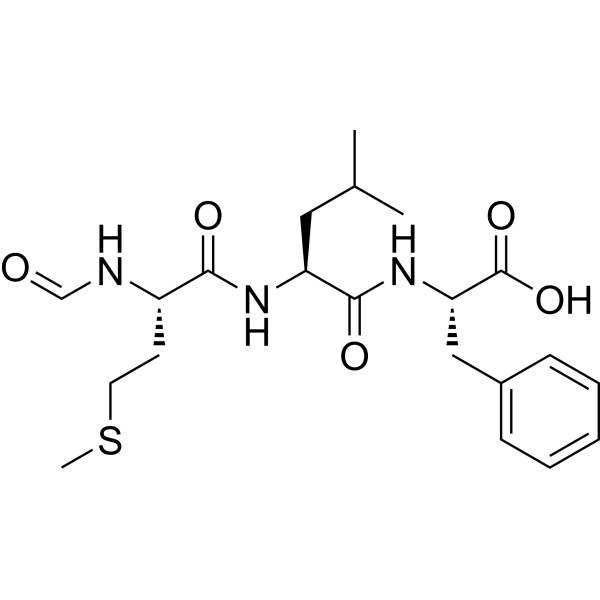
    N-Formyl-Met-Leu-Phe
    15+ Cited Publications

    fMLP; N-Formyl-MLF

    TNF Receptor Inflammation/Immunology
    N-Formyl-Met-Leu-Phe (fMLP; N-Formyl-MLF) is a chemotactic peptide and a specific ligand of N-formyl peptide receptor (FPR). N-Formyl-Met-Leu-Ph is reported to inhibit TNF-alpha secretion.
  • HY-105042

    Selanc; TP-7

    GABA Receptor Neurological Disease
    Selank (Selanc; TP-7) is a GABAA receptor modulator with anxiolytic activity. Selank allosterically modulates the specific binding of GABA to GABAA receptors and alters the affinity of endogenous ligands for these receptors. Selank reduces elevated anxiety levels, attenuates stress-induced exacerbation of anxiety, and produces a synergistic anxiolytic effect with diazepam. Selank can be used in the research of anxiety disorders .
  • HY-P0131A

    Laminin (925-933) TFA

    Peptides Cancer
    Laminin peptide CDPGYIGSR (Laminin (925-933)) TFA is a 67 kDa laminin receptor ligand and selective cell adhesion inducer. Laminin peptide CDPGYIGSR TFA not only promotes cell adhesion and mediates directed neurite outgrowth via matrix coating or covalent immobilization, but also inhibits neural crest cell migration under specific conditions. Laminin peptide CDPGYIGSR TFA inhibits lung colonization of melanoma cells, and suppresses the growth of Sarcoma 180 solid tumors and Lewis lung carcinoma (3LL) in mice. Laminin peptide CDPGYIGSR TFA also exerts significant anti-angiogenic effects by inhibiting embryonic angiogenesis in the chick chorioallantoic membrane and vascular endothelial cell migration induced by tumor-conditioned medium. Laminin peptide CDPGYIGSR TFA can be widely used in studies related to melanoma, Sarcoma 180, Lewis lung carcinoma (3LL), and other relevant areas .
  • HY-P4116

    pHLIP

    Peptides Metabolic Disease Cancer
    pH-Low Insertion Peptide (pHLIP) is a short, pH-responsive peptide capable of inserting across a cell membrane to form a transmembrane helix at acidic pH. pH-Low Insertion Peptide targets the acidic tumor microenvironment for tumors at early and metastatic stages with high specificity, used as a specific ligand. pH-Low Insertion Peptide successfully modify polylysine polymers to have the pH-responsive capability. pH-Low Insertion Peptide-based targeting of cancer presents an opportunity to monitor metabolic changes, and to selectively deliver imaging and therapeutic agents to tumors .
  • HY-P3732

    Integrin Cancer
    RGD-4C is a arginine-glycine-aspartic acid peptide (ACDCRGDCFC) with integrin binding activity. The Arg-Gly-Asp (RGD) sequence serves as the primary integrin recognition site in extracellular matrix proteins, and peptides containing this sequence can mimic the recognition specificity of the matrix proteins. RGD-4C is a αv-integrin ligand, can conjugate with bioactive molecule to exert antitumor effects in animal models .
  • HY-129724A

    ACTH-(11-13) acetate; Lys-Pro-Val acetate; H-Lys-Pro-Val-OH acetate

    Infection Metabolic Disease
    α-MSH (11-13) acetate is a melanocortin-1 receptor ligand and anti-inflammatory agent. α-MSH (11-13) acetate triggers acute intracellular calcium elevation under specific costimulation or pathway inhibition conditions. α-MSH (11-13) acetate inhibits TNF-α-induced NF-κB activation, GPx activity, HIV replication, as well as colony formation of S. aureus and C. albicans. α-MSH (11-13) acetate is applicable to the research of Staphylococcus aureus infection, Candida albicans infection, human immunodeficiency virus infection, traumatic brain injury, corneal epithelial wound and inflammatory bowel disease .
  • HY-P1380A

    Apoptosis Cancer
    Difopein TFA, a specific and competitive inhibitor of 14-3-3 protein (a highly conserved eukaryotic regulatory molecule), blocking the ability of 14-3-3 to bind to target proteins and inhibits 14-3-3/Ligand interactions. Difopein TFA is not cell permeable. Difopein TFA leads to induction of apoptosis and enhances the ability of Cisplatin (HY-17394) to kill cells .
  • HY-P1848
    Pep-1 (uncapped)
    2 Publications Verification

    Interleukin Related Cancer
    Pep-1 (uncapped) is a specific ligand of IL-13Ra2. Pep-1 (uncapped) exerts cell penetrating activity through receptor-mediated endocytosis, can cross the blood-tumor barrier (BTB) and target glioma cells. Pep-1 (uncapped) can enhance the uptake of nanoparticles by tumor cells and enhance the cell penetration ability of nanoparticles, and can be used to develop targeted drug delivery systems for glioma .
  • HY-P6825

    LY4181530; PSMA-62

    PSMA Cancer
    PNT2001 (LY4181530) is a potent prostate specific membrane antigen (PSMA) ligand with an IC50 of 3.1 nM. PNT2001 can improve cellular internalization. 177Lu- and 225Ac-labeled PNT2001 can be used in prostate cancer research .
  • HY-P5290

    Radionuclide-Drug Conjugates (RDCs) PSMA Cancer
    HYNIC-PSMA is a ligand for molecular imaging of tumors. Hynic-psma consists of two components: HYNIC (6-hydrazinonicotinamide) and PSMA (Prostate-Specific Membrane Antigen). HYNIC is a compound used to attach radioactive isotopes to targeted molecules, such as 188Re-HYNIC-PSMA. PSMA is a membrane antigen that is specifically expressed on the surface of prostate cancer cells. HYNIC-PSMA can be used in prostate cancer research . HYNIC-PSMA can be used for the synthesis/research of Radionuclide-Drug Conjugates (RDCs).
  • HY-P10831

    VEGFR Cardiovascular Disease Cancer
    GNQWFI, an anti-Flt1 peptide, is a VEGFR1-specific antagonist. GNQWFI blocks the interaction of VEGFR1 with various VEGFR1 ligands, such as VEGFA, VEGFB, and placental growth factor (PIGF) and inhibits VEGF-induced endothelial cell migration and tube formation. GNQWFI is promising for research of cancer, asthma, and other ocular diseases .
  • HY-P10740

    Peptide-Drug Conjugates (PDCs) PSMA Folate Receptor (FR) Cancer
    CBP-1018 is a PDC (peptide-drug conjugate) formed by conjugating Monomethyl auristatin E (HY-15162) to a dual-targeting ligand of FLOR1/PSMA (prostate-specific membrane antigen) via a linker (HY-78738). CBP-1018 binds to FLOR1 and prostate-specific membrane antigen (PSMA). CBP-1018 is applicable to the research of solid tumors and metastatic castration-resistant prostate cancer .
  • HY-P10501A

    Antifolate Cancer
    FRα-targeting peptide C7 TFA is a selective peptide ligand for folate receptor α (FRα) that has specific binding to FRα expressing cells and in vivo tumor targeting ability. FRα-targeting peptide C7 TFA can be used in the research of tumor diagnosis and treatment .
  • HY-P4116A

    pHLIP TFA

    Peptides Metabolic Disease Cancer
    pH-Low Insertion Peptide TFA (pHLIP TFA) is a short, pH-responsive peptide capable of inserting across a cell membrane to form a transmembrane helix at acidic pH. pH-Low Insertion Peptide TFA targets the acidic tumor microenvironment for tumors at early and metastatic stages with high specificity, used as a specific ligand. pH-Low Insertion Peptide TFA successfully modifys polylysine polymers to have the pH-responsive capability. pH-Low Insertion Peptide TFA -based targeting of cancer presents an opportunity to monitor metabolic changes and to selectively deliver imaging and therapeutic agents to tumors .
  • HY-P5292A

    Radionuclide-Drug Conjugates (RDCs) PSMA Cancer
    HYNIC-iPSMA TFA is a ligand for molecular imaging of tumors. Hynic-ipsma consists of two components: HYNIC (6-hydrazinonicotinamide) and iPSMA (Inhibitor of Prostate-Specific Membrane Antigen). HYNIC is a compound used to attach radioactive isotopes to targeted molecules. iPSMA is a specific inhibitor used to inhibit prostate-specific membrane antigen (PSMA). 68GA-labeled iPSMA has been used to detect prostate cancer by PET imaging. The further 99mTc-EDDA/HYNIC-iPSMA TFA has excellent specificity and sensitivity . HYNIC-iPSMA TFA can be used for the synthesis/research of Radionuclide-Drug Conjugates (RDCs).
  • HY-P11050A

    Apoptosis Cancer
    SP94 is a peptide ligand with high specificity for hepatocellular carcinoma cells. SP94 selectively binds to multiple hepatocellular carcinoma cell lines in vitro. SP94 inhibits tumor growth in a mouse model of hepatocellular carcinoma by promoting apoptosis and reducing angiogenesis. SP94 can be used as a specific probe for hepatocellular carcinoma imaging. SP94 is useful for hepatocellular carcinoma research .
  • HY-P1507

    Integrin Cardiovascular Disease
    Fibrinogen Binding Inhibitor Peptide is a dodecapeptide (HHLGGAKQAGDV, H12), which is a fibrinogen γ-chain carboxy-terminal sequence (γ400-411). Fibrinogen Binding Inhibitor Peptide is a specific binding site of the ligand for activated glycoprotein (GP) IIb/IIIa.
  • HY-P5292

    Radionuclide-Drug Conjugates (RDCs) PSMA Cancer
    HYNIC-iPSMA is a ligand for molecular imaging of tumors. Hynic-ipsma consists of two components: HYNIC (6-hydrazinonicotinamide) and iPSMA (Inhibitor of Prostate-Specific Membrane Antigen). HYNIC is a compound used to attach radioactive isotopes to targeted molecules. iPSMA is a specific inhibitor used to inhibit prostate-specific membrane antigen (PSMA). 68GA-labeled iPSMA has been used to detect prostate cancer by PET imaging. The further 99mTc-EDDA/HYNIC-iPSMA has excellent specificity and sensitivity . HYNIC-iPSMA can be used for the synthesis/research of Radionuclide-Drug Conjugates (RDCs).
  • HY-P3130

    CRFR Neurological Disease Inflammation/Immunology
    Stresscopin-related peptide (human) is a specific ligand for the type 2 CRH receptor. Stresscopin-related peptide (human) suppresses food intake, delayed gastric emptying and decreases heat-induced edema. Stresscopin-related peptide (human) maintains homeostasis after stress, and can be used in the research of stress-related diseases .
  • HY-P5072

    Bombesin Receptor Metabolic Disease
    GRP (14-27) (human, porcine, canine) is a bombesin receptor ligand. The specific binding of GRP (14-27) is inhibited by GTP and GDP, whereas GMP was without effect .
  • HY-P10501

    Antifolate Cancer
    FRα-targeting peptide C7 is a selective peptide ligand for folate receptor α (FRα) that has specific binding to FRα expressing cells and in vivo tumor targeting ability. FRα-targeting peptide C7 can be used in the research of tumor diagnosis and treatment .
  • HY-P11253

    VISTA Inflammation/Immunology
    DOTA-Bn-CA-170 is a molecular probe targeting the VISTA protein, with a Kd value of 0.124 nM. DOTA-Bn-CA-170 is formed by covalently linking the p-SCN-Bn-DOTA ligand with CA-170 (HY-101093). DOTA-Bn-CA-170 labeled with [ 68Ga]Ga successfully achieves specific and high-contrast PET imaging of VISTA expression in various tumor-bearing mouse models. DOTA-Bn-CA-170 can be used for the study of VISTA-targeted immunotherapy .
  • HY-P10673

    GHSR Metabolic Disease
    KwFwLL-NH2, a hexapeptide, is a ghrelin receptor ligand. KwFwLL-NH2 can act as a specific inverse agonist at the ghrelin receptor but with moderate potency (EC50=45.6 nM) .
  • HY-P11382

    GABA Receptor Neurological Disease
    Octadecaneuropeptide is an 18-residue peptide. Octadecaneuropeptide can be derived from Diazepam binding inhibitor. Octadecaneuropeptide includes a specific ligand for the gamma-aminobutyric acid receptor regulatory site occupied by beta-carbolines. Octadecaneuropeptide elicits a dose-related facilitation of the punishment- elicited suppression of drinking .
  • HY-P5768

    Biochemical Assay Reagents Others
    2× ST-tag II is an oligopeptide that can link proteins and dsDNA molecules in an efficient, rapid and specific manner. 2× ST-tag II is a peptide ligand of ST Tactin (STN). 2× ST-tag II specifically binds to ST Tactin. 2× ST-tag II can be used to construct DNA-protein hybrids .
  • HY-P5768A

    Biochemical Assay Reagents Cancer
    2× ST-tag II TFA is an oligopeptide that can link proteins and dsDNA molecules in an efficient, rapid and specific manner. 2× ST-tag II is a peptide ligand of ST Tactin (STN). 2× ST-tag II TFA specifically binds to ST Tactin. 2× ST-tag II TFA can be used to construct DNA-protein hybrids .
  • HY-P1318

    Opioid Receptor Neurological Disease
    Ac-RYYRIK-NH2 is a potent and partial agonist on ORL1 transfected in CHO cells (Kd=1.5 nM) and behaves as a endogenous ligand of ORL1. Ac-RYYRIK-NH2 is a specific antagonist for the activation of G protein and competitively antagonizes the stimulation of [ 35S]-GTPgS binding to G proteins by nociceptin/orphanin FQ (noc/OFQ) in membranes and sections of rat brain .
  • HY-P1318A

    Opioid Receptor Neurological Disease
    Ac-RYYRIK-NH2 TFA is a potent and partial agonist on ORL1 transfected in CHO cells (Kd=1.5 nM) and behaves as a endogenous ligand of ORL1. Ac-RYYRIK-NH2 is a specific antagonist for the activation of G protein and competitively antagonizes the stimulation of [ 35S]-GTPgS binding to G proteins by nociceptin/orphanin FQ (noc/OFQ) in membranes and sections of rat brain .
  • HY-P11702

    Bacterial Others
    f-MFFINTLTL is a formylated nonapeptide and a natural ligand from mitochondria or bacteria. f-MFFINTLTL serves as a tool chemical stimulant for the specific activation of sensory neurons expressing the specific vomeronasal receptor (V2rf2) .
  • HY-P11701

    MHC Others
    SEIDLILGY is a nonapeptide identified as a peptide ligand derived from mouse major histocompatibility complex class I (MHC). SEIDLILGY serves as a tool chemical stimulant for the specific activation of sensory neurons expressing the particular vomeronasal receptor (V2rf2) .
  • HY-P11768

    Bombesin Receptor Cancer
    AMBA is a gastrin-releasing peptide receptor (GRPR, BB2, BRS-2) ligand with a human IC50 of 0.82 nM and a human Ki of 0.65 nM. AMBA binds to GRPR with high specificity and high affinity, and undergoes receptor-mediated endocytosis, which retains the conjugated radiometal in target cells. AMBA is applicable for the research of prostate cancer .
  • HY-P11591

    PSMA-DOTA-PEI2

    Radionuclide-Drug Conjugates (RDCs) PSMA Cancer
    PDI2 (PSMA-DOTA-PEI2) is a prostate-specific membrane antigen (PSMA) ligand that acts as a tumor retention agent, renal uptake reducer, imaging agent and antitumor agent, applicable in SPECT diagnostic imaging and radiotheranostics. PDI2 specifically binds to PSMA on prostate cancer cells, enters cells via clathrin-dependent endocytosis, and exhibits higher tumor retention rate and lower renal uptake level. PDI2 is applicable in research related to prostate cancer and castration-resistant metastatic prostate cancer .
  • HY-P11698

    DNA Alkylator/Crosslinker Transthyretin (TTR) Cancer
    Guanidino-G-Clamp-PNA is a highly efficient sequence-specific RNA binder and gene silencer. Guanidino-G-Clamp-PNA precisely targets such targets as miR-155 or transthyretin (TTR) mRNA through base pairing: the former regulates tumor-related signaling pathways by reducing microRNA activity, while the latter inhibits the translation of harmful proteins via steric hindrance. Guanidino-G-Clamp-PNA effectively stabilizes DNA/RNA duplexes, induces cancer cell apoptosis, and suppresses tumor growth. In addition, Guanidino-G-Clamp-PNA can be conjugated with targeting ligands to improve tissue-specific delivery and reduce in vivo adverse reactions, and it can also enhance the splicing regulation efficacy of other oligonucleotide platforms (such as PMO) when integrated into them. Guanidino-G-Clamp-PNA is applicable to the research of various diseases including diffuse large B-cell lymphoma and hereditary transthyretin-related amyloidosis .

Inquiry Online

Your information is safe with us. * Required Fields.

Salutation


Country or Region *

Applicant Name *


Organization Name *

Department *


Email Address *


Product Name *

Cat. No.


Requested quantity *

Phone Number *


Remarks

Inquiry Online

Inquiry Information

Product Name:
Cat. No.:
Quantity:
MCE Japan Authorized Agent:

