16 Results for "

starch and sucrose metabolism

" in MedChemExpress (MCE) Product Catalog:
Products (16)

16 Results for "starch and sucrose metabolism" in MCE Product Catalog:

2
2 Cited Publications
Cat. No.: HY-N2024
CAS No.: 69-79-4
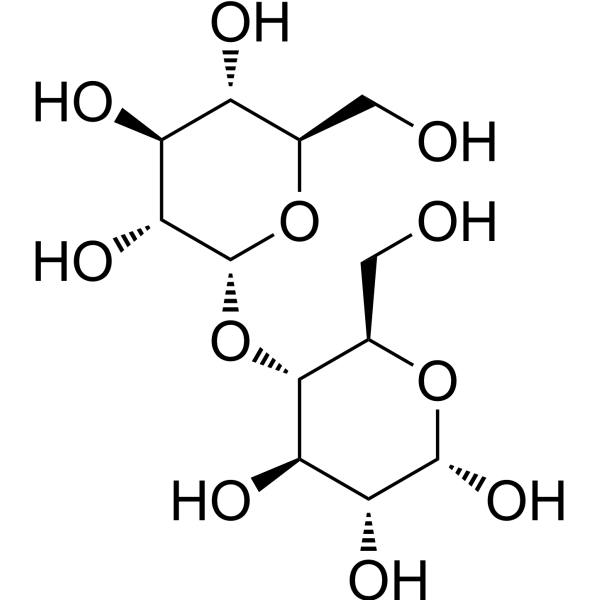
Maltose is a disaccharide composed of two glucose molecules linked together. Maltose is an endogenous metabolic product in plants, yeast, or bacteria, and it participates in carbon source storage and metabolism. Maltose is a key core metabolite and main transport form in the temporary starch degradation, carbon output, and subsequent sucrose synthesis metabolism of the night chloroplast. In X. dendrorhous, maltose can act as a sugar donor and is converted into isomaltulose by α-glucosidase). Maltose can act as a osmotic agent, supporting continuous capillary ultrafiltration and preventing severe metabolic disorders .
loading...
    loading...
2
2 Cited Publications
Cat. No.: HY-N2024A
CAS No.: 6363-53-7
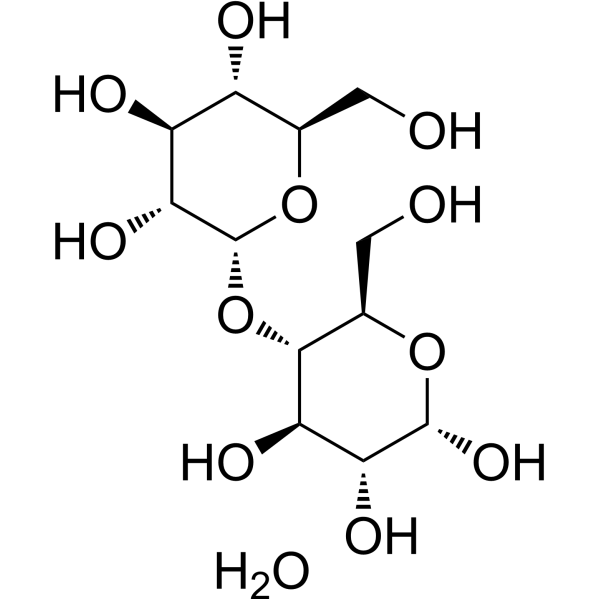
Maltose monohydrate is a disaccharide composed of two glucose molecules linked together. Maltose monohydrate is an endogenous metabolic product in plants, yeast, or bacteria, and it participates in carbon source storage and metabolism. Maltose monohydrate is a key core metabolite and main transport form in the temporary starch degradation, carbon output, and subsequent sucrose synthesis metabolism of the night chloroplast. In X. dendrorhous, maltose can act as a sugar donor and is converted into isomaltulose by α-glucosidase. Maltose monohydrate can act as a osmotic agent, supporting continuous capillary ultrafiltration and preventing severe metabolic disorders .
loading...
    loading...
1
1 Cited Publications
Cat. No.: HY-W754777
CAS No.: 68054-73-9
Research Areas:  

Others

IPPD-Q is a p-phenylenediamine quinone and also Environmental pollutant. IPPD-Q can be present in tires, fine particulate matter and urban water bodies. IPPD-Q increases the activities of antioxidant enzymes (SOD, CAT), alters photosynthesis and energy metabolism pathways, and changes gene expression and metabolic profiles. IPPD-Q exhibits phytotoxic effects. IPPD-Q shows acute toxicity to zebrafish embryos and reduces their survival rate .
loading...
    loading...
Cat. No.: HY-N2024AS1
Maltose monohydrate- 13C12 is the 13C labeled isotope of Maltose monohydrate. Maltose monohydrate is a disaccharide composed of two glucose molecules linked together. Maltose monohydrate is an endogenous metabolic product in plants, yeast, or bacteria, and it participates in carbon source storage and metabolism. Maltose monohydrate is a key core metabolite and main transport form in the temporary starch degradation, carbon output, and subsequent sucrose synthesis metabolism of the night chloroplast. In X. dendrorhous, maltose can act as a sugar donor and is converted into isomaltulose by α-glucosidase. Maltose monohydrate can act as a osmotic agent, supporting continuous capillary ultrafiltration and preventing severe metabolic disorders.
loading...
    loading...
Cat. No.: HY-N2024R
CAS No.: 69-79-4
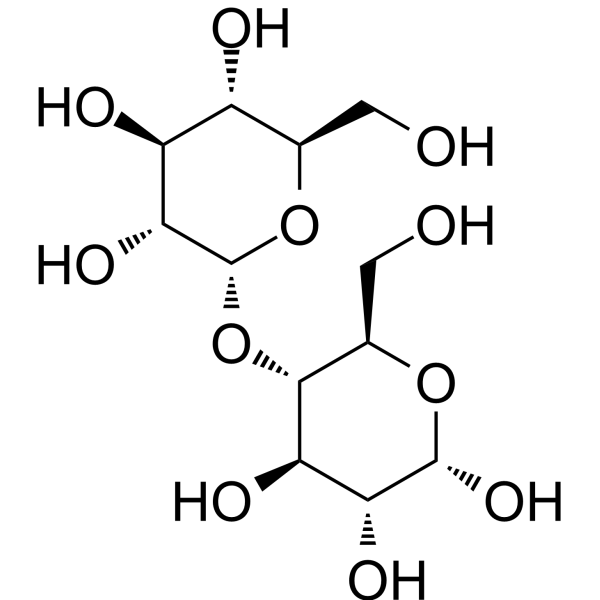
Maltose (Standard) is the analytical standard of Maltose. This product is intended for research and analytical applications. Maltose is a disaccharide composed of two glucose molecules linked together. Maltose is an endogenous metabolic product in plants, yeast, or bacteria, and it participates in carbon source storage and metabolism. Maltose is a key core metabolite and main transport form in the temporary starch degradation, carbon output, and subsequent sucrose synthesis metabolism of the night chloroplast. In X. dendrorhous, maltose can act as a sugar donor and is converted into isomaltulose by α-glucosidase (α-Glucosidase). Maltose can act as a osmotic agent, supporting continuous capillary ultrafiltration and preventing severe metabolic disorders.
loading...
    loading...
Cat. No.: HY-E70425
CAS No.: 9030-05-1
Target:  

Glycosyltransferase

Research Areas:  

Metabolic Disease

Sucrose synthase belongs to glycosyltransferases and is a reversible catalyst present in plants, which catalyzes the conversion of sucrose into fructose and UDP-G or ADP-G. Sucrose synthase localizes to the cytoplasm, plasma membrane, cell wall, vacuole and mitochondria of plants. Sucrose synthase regulates sugar metabolism, supports the development of taproots, fruits, seeds and vascular tissues, drives the synthesis of starch, cellulose and callose, and enhances nitrogen fixation capacity. Sucrose synthase mediates signal transduction in plant meristems. Sucrose synthase is associated with plant growth, anaerobic stress tolerance, as well as shoot apical meristem and leaf morphology; overexpression of this enzyme promotes plant growth, increases xylem size, and elevates cellulose and starch contents .
loading...
    loading...
Cat. No.: HY-N2024AS
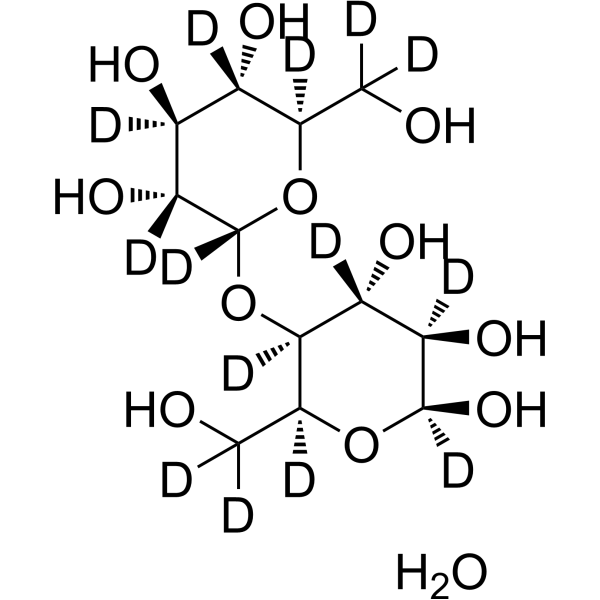
Maltose monohydrate-d14 is the deuterium labeled Maltose monohydrate. Maltose monohydrate is a disaccharide composed of two glucose molecules linked together. Maltose monohydrate is an endogenous metabolic product in plants, yeast, or bacteria, and it participates in carbon source storage and metabolism. Maltose monohydrate is a key core metabolite and main transport form in the temporary starch degradation, carbon output, and subsequent sucrose synthesis metabolism of the night chloroplast. In X. dendrorhous, maltose can act as a sugar donor and is converted into isomaltulose by α-glucosidase. Maltose monohydrate can act as a osmotic agent, supporting continuous capillary ultrafiltration and preventing severe metabolic disorders.
loading...
    loading...
Cat. No.: HY-N2024B
CAS No.: 69-79-4
Maltose solution, 20% in H2O is a 20% aqueous maltose solution. Maltose is a disaccharide composed of two glucose molecules linked together. Maltose is an endogenous metabolic product in plants, yeast, or bacteria, and it participates in carbon source storage and metabolism. Maltose is a key core metabolite and main transport form in the temporary starch degradation, carbon output, and subsequent sucrose synthesis metabolism of the night chloroplast. In X. dendrorhous, maltose can act as a sugar donor and is converted into isomaltulose by α-glucosidase. Maltose can act as a osmotic agent, supporting continuous capillary ultrafiltration and preventing severe metabolic disorders .
loading...
    loading...
Cat. No.: HY-N2024AR
CAS No.: 6363-53-7
Maltose monohydrate (Standard) is the analytical standard of Maltose monohydrate. This product is intended for research and analytical applications. Maltose monohydrate is a disaccharide composed of two glucose molecules linked together. Maltose monohydrate is an endogenous metabolic product in plants, yeast, or bacteria, and it participates in carbon source storage and metabolism. Maltose monohydrate is a key core metabolite and main transport form in the temporary starch degradation, carbon output, and subsequent sucrose synthesis metabolism of the night chloroplast. In X. dendrorhous, maltose can act as a sugar donor and is converted into isomaltulose by α-glucosidase. Maltose monohydrate can act as a osmotic agent, supporting continuous capillary ultrafiltration and preventing severe metabolic disorders.
loading...
    loading...
Cat. No.: HY-N2024AS2
Maltose monohydrate- 13C is the 13C labeled isotope of Maltose monohydrate. Maltose monohydrate is a disaccharide composed of two glucose molecules linked together. Maltose monohydrate is an endogenous metabolic product in plants, yeast, or bacteria, and it participates in carbon source storage and metabolism. Maltose monohydrate is a key core metabolite and main transport form in the temporary starch degradation, carbon output, and subsequent sucrose synthesis metabolism of the night chloroplast. In X. dendrorhous, maltose can act as a sugar donor and is converted into isomaltulose by α-glucosidase. Maltose monohydrate can act as a osmotic agent, supporting continuous capillary ultrafiltration and preventing severe metabolic disorders.
loading...
    loading...
Cat. No.: HY-E71204
Research Areas:  

Others

α,α-Phosphotrehalase (EC 3.2.1.93) belongs to the family of hydrolases, specifically those glycosidases that hydrolyse O-and S-glycosyl compounds. This enzyme participates in starch and sucrose metabolism.
loading...
    loading...
Cat. No.: HY-E71162
Research Areas:  

Others

1,4-β-D-Xylan synthase (EC 2.4.2.24) belongs to the family of glycosyltransferases, specifically the pentosyltransferases. 1,4-β-D-Xylan synthase (EC 2.4.2.24) participates in starch and sucrose metabolism and nucleotide sugars metabolism.
loading...
    loading...
Cat. No.: HY-P2820A
Research Areas:  

Metabolic Disease

β-Phosphoglucomutase, Lactococcus sp. (EC 5.4.2.6), belongs to the isomerase family and catalyzes the conversion of β-D-glucose-1-phosphate to β-D-glucose-6-phosphate. β-Phosphoglucomutase is involved in the metabolism of starch and sucrose.
loading...
    loading...
Cat. No.: HY-P2820B
Research Areas:  

Metabolic Disease

β-Phosphoglucomutase, E. coli (EC 5.4.2.6), belongs to the isomerase family and catalyzes the conversion of β-D-glucose-1-phosphate to β-D-glucose-6-phosphate. β-Phosphoglucomutase is involved in the metabolism of starch and sucrose.
loading...
    loading...
Cat. No.: HY-E70898
Target:  

Glycosidase

Research Areas:  

Metabolic Disease

Trehalose-6-phosphate hydrolase, Escherichia coli (EC 3.2.1.93), belongs to the hydrolase family and is a glycosidase that hydrolyzes O- and S-glycoside compounds. Trehalose-6-phosphate hydrolase participates in the metabolism of starch and sucrose. Its substrates are α,α'-trehalose-6-phosphate and water, and its products are D-glucose and D-glucose-6-phosphate.
loading...
    loading...
Cat. No.: HY-E70898A
Target:  

Glycosidase

Research Areas:  

Metabolic Disease

Trehalose-6-phosphate hydrolase, Bacillus subtilis (EC 3.2.1.93), belongs to the hydrolase family and is a glycosidase that hydrolyzes O- and S-glycoside compounds. Trehalose-6-phosphate hydrolase participates in the metabolism of starch and sucrose. Its substrates are α,α'-trehalose-6-phosphate and water, and its products are D-glucose and D-glucose-6-phosphate.
loading...
    loading...
  • 1

