1. Search Result
Search Result
Results for "

urinary bladder cancer

" in MedChemExpress (MCE) Product Catalog:

8

Inhibitors & Agonists

1

Natural
Products

Targets Recommended:
Cat. No. 상품명 Target 연구분야 Chemical Structure
  • HY-A0033
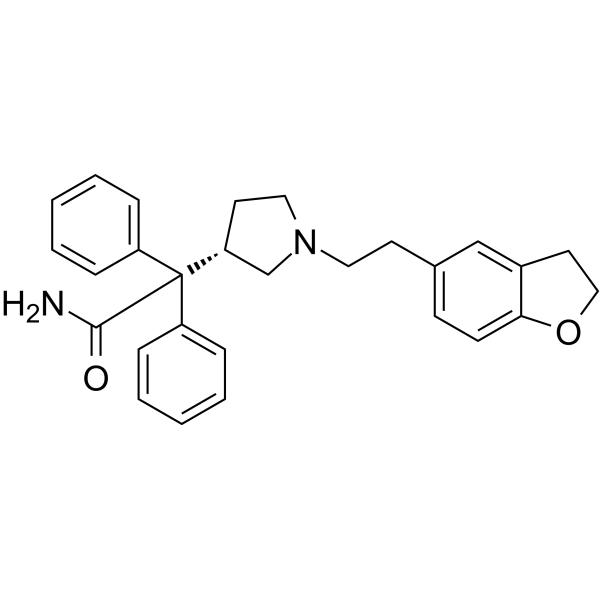
    Darifenacin
    Maximum Cited Publications
    7 Publications Verification

    UK-88525

    mAChR p38 MAPK Akt Neurological Disease Metabolic Disease Cancer
    Darifenacin (UK-88525) is a selective and orally active M3 muscarinic receptor (M3R) antagonist with a pKi of 8.9. Darifenacin binds >20-fold more specifically to M3R than to other muscarinic receptors. Darifenacin can be used in the study of urinary incontinence and other symptoms of overactive bladder. Darifenacin inhibits tumor growth in colorectal cancer cells and has anti-tumor effects .
    Darifenacin
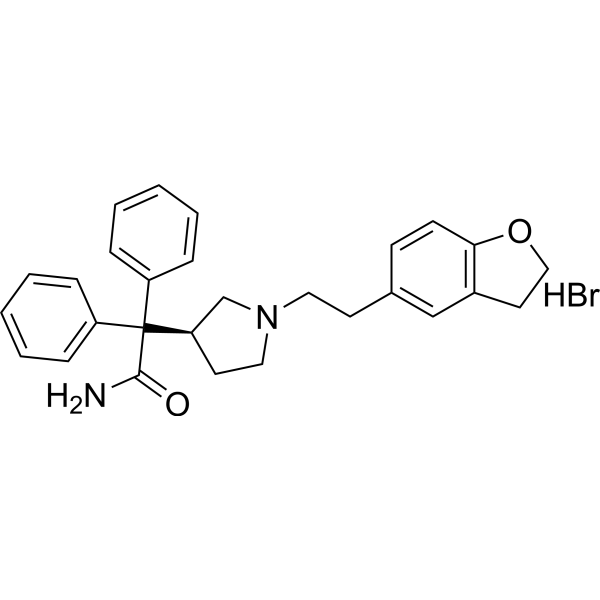
  • HY-A0012
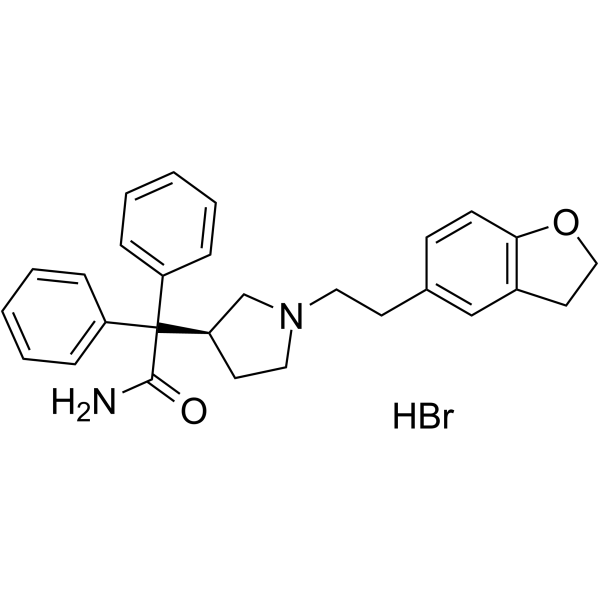
    Darifenacin hydrobromide
    Maximum Cited Publications
    7 Publications Verification

    UK-88525 hydrobromide

    mAChR p38 MAPK Akt Neurological Disease Metabolic Disease Cancer
    Darifenacin (UK-88525) hydrobromide is a selective and orally active M3 muscarinic receptor (M3R) antagonist with a pKi of 8.9. Darifenacin hydrobromide binds >20-fold more specifically to M3R than to other muscarinic receptors. Darifenacin hydrobromide can be used in the study of urinary incontinence and other symptoms of overactive bladder. Darifenacin hydrobromide inhibits tumor growth in colorectal cancer cells and has anti-tumor effects .
    Darifenacin hydrobromide
  • HY-W755252

    BBN

    DNA Alkylator/Crosslinker Cancer
    N-Butyl-N-(4-hydroxybutyl)nitrosamine is a potent mutagen that can cause high-level of mutagenesis specifically in the epithelial cells (urothelial) of the urinary bladder. N-Butyl-N-(4-hydroxybutyl)nitrosamine is used to induce bladder cancer in rodents .
    N-Butyl-N-(4-hydroxybutyl)nitrosamine
  • HY-Y1117
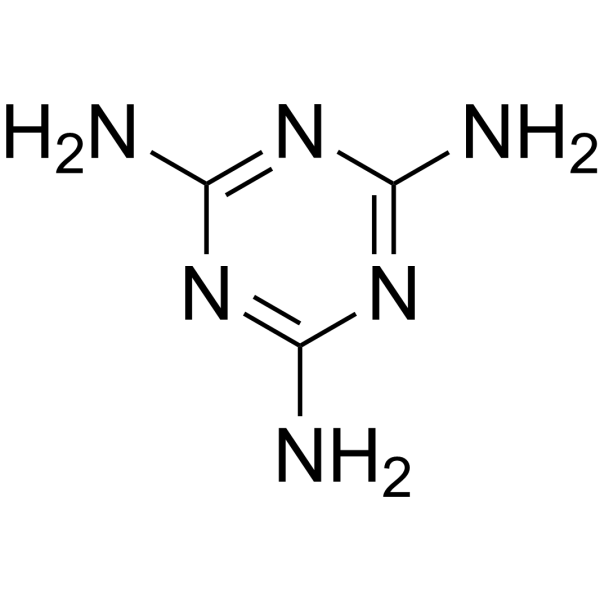
    Melamine
    1 Publications Verification

    Environmental Pollutants Drug Metabolite Apoptosis COX NADPH Oxidase NF-κB ROS Kinase TGF-β Receptor Neurological Disease Inflammation/Immunology Cancer
    Melamine is an orally active inducer of Apoptosis. Melamine induces animal disease models. Melamine affects the activity of Sertoli cell and can be used for research on male reproductive function. Melamine also has neurotoxicity and nephrotoxicity. Melamine induces cognitive impairment and acute kidney injury models. Melamine can also be used to induce bladder cancer and urinary stone models .
    Melamine
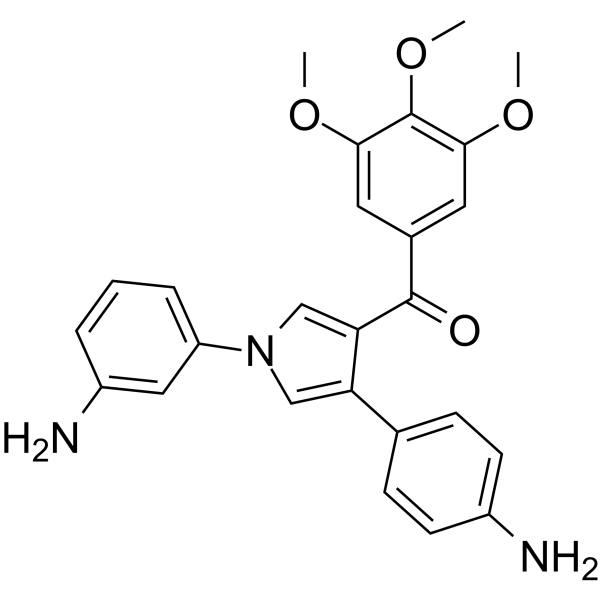
  • HY-146358

    Microtubule/Tubulin Cancer
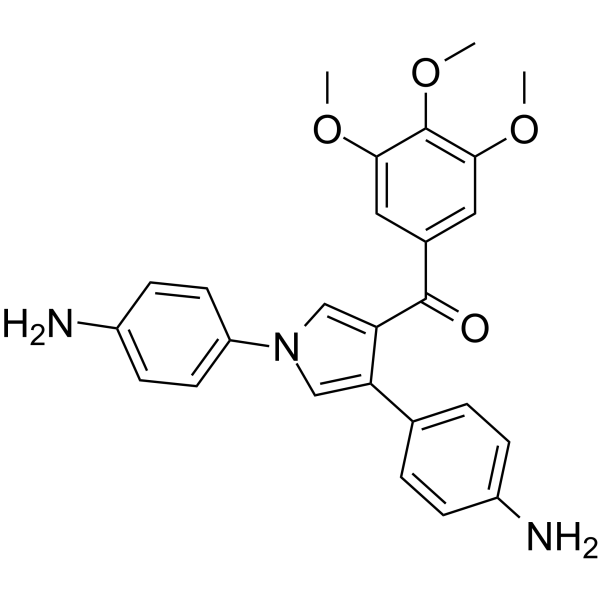
    Anticancer agent 49 (compound 69) is a broad spectrum anticancer agent. Anticancer agent 49 inhibits tubulin polymerization. Anticancer agent 49 shows antiproliferative activity. Anticancer agent 49 has the potential for the research of solid and hematological tumors .
    Anticancer agent 49
  • HY-146357

    Microtubule/Tubulin Cancer
    Anticancer agent 48 (compound 48) is a broad spectrum anticancer agent. Anticancer agent 48 inhibits tubulin polymerization. Anticancer agent 48 shows antiproliferative activity. Anticancer agent 48 shows antitumor activity in vivo. Anticancer agent 48 has the potential for the research of solid and hematological tumors .
    Anticancer agent 48
  • HY-A0012R

    UK-88525 hydrobromide (Standard)

    Reference Standards mAChR p38 MAPK Akt Neurological Disease Metabolic Disease Cancer
    Darifenacin (hydrobromide) (Standard) is the analytical standard of Darifenacin (hydrobromide). This product is intended for research and analytical applications. Darifenacin (hydrobromide) is a selective and orally active M3 muscarinic receptor (M3R) antagonist with a pKi of 8.9. Darifenacin (hydrobromide) binds >20-fold more specifically to M3R than to other muscarinic receptors. Darifenacin (hydrobromide) can be used in the study of urinary incontinence and other symptoms of overactive bladder. Darifenacin (hydrobromide) inhibits tumor growth in colorectal cancer cells and has anti-tumor effects .
    Darifenacin hydrobromide (Standard)
  • HY-177995

    Monoisoamyl meso-2,3-dimercaptosuccinic acid

    Reactive Oxygen Species (ROS) SOD Neurological Disease Cancer
    MiADMSA (Monoisoamyl meso-2,3-dimercaptosuccinic acid) is an orally active thiol chelator that can effectively remove heavy metals such as arsenic and lead from the body of animals. Arsenic binds with two vicinal sulfhydryl groups available in MiADMSA leading to marked reduction in body arsenic burden and also marked reduction in various oxidative stress parameters and antioxidant enzymes like-ROS, nitrite, TBARS, GSH, SOD and catalase. MiADMSA attenuates urinary bladder carcinogenesis, protects against oxidative stress, ameliorates copper-induced histopathology, reverses neurotoxicity, and is safe in animals. MiADMSA can be used in studies of bladder cancer, arsenic, and lead-induced developmental neurotoxicity .
    MiADMSA

온라인 문의

Your information is safe with us. * Required Fields.

호칭


Country or Region *

고객명 *


회사명 *

Department *


메일주소 *


상품명 *

Cat. No.


Requested quantity *

전화번호 *


비고

온라인 문의

Inquiry Information

상품명:
Cat. No.:
수량:
MCE Japan Authorized Agent:

