1. Search Result
Search Result
Results for "

visible wavelengths

" in MedChemExpress (MCE) Product Catalog:

16

Inhibitors & Agonists

9

Fluorescent Dyes

1

Biochemical Assay Reagents

1

Isotope-Labeled Compounds

Cat. No. Product Name Target Research Areas Chemical Structure
  • HY-D0989
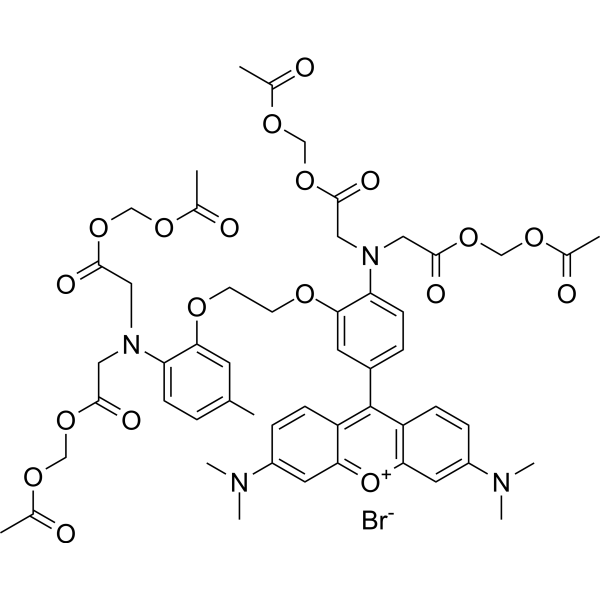
    Rhod-2 AM
    Maximum Cited Publications
    33 Publications Verification

    Fluorescent Dye Others
    Rhod-2 is a high-affinity visible light excitation wavelength Ca 2+ fluorescent probe, Rhod-2, AM is an acetyl methyl ester derivative of Rhod-2, which has cell membrane permeability and can easily enter cells with simple culture. Once it enters the cell, it is sheared by its lactesterase to produce Rhod-2 without membrane permeability, which remains in the cell to perform the corresponding physiological functions. Maximum excitation/emission wavelength: 549/578 nm .
    Rhod-2 AM
  • HY-143218
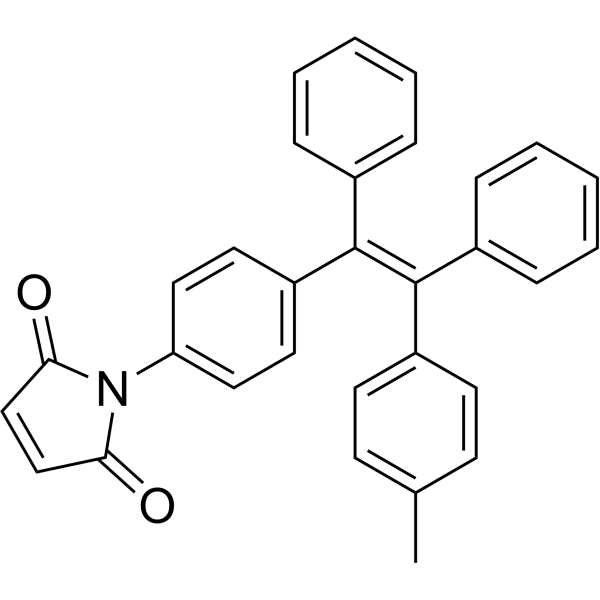
    TPE-MI
    10+ Cited Publications

    Tetraphenylethene maleimide

    Huntingtin Parasite Infection Neurological Disease
    TPE-MI (Tetraphenylethene maleimide) is a thiol probe for measuring unfolded protein load and proteostasis in cells (the excitation wavelength is 350 nm and the emission wavelength is 470 nm). TPE-MI can report imbalances in proteostasis in induced pluripotent stem cell models of Huntington disease, as well as cells transfected with mutant Huntington exon 1 before the formation of visible aggregates. TPE-MI also detects protein damage following dihydroartemisinin research of the malaria parasites Plasmodium falciparum .
    TPE-MI
  • HY-13615A
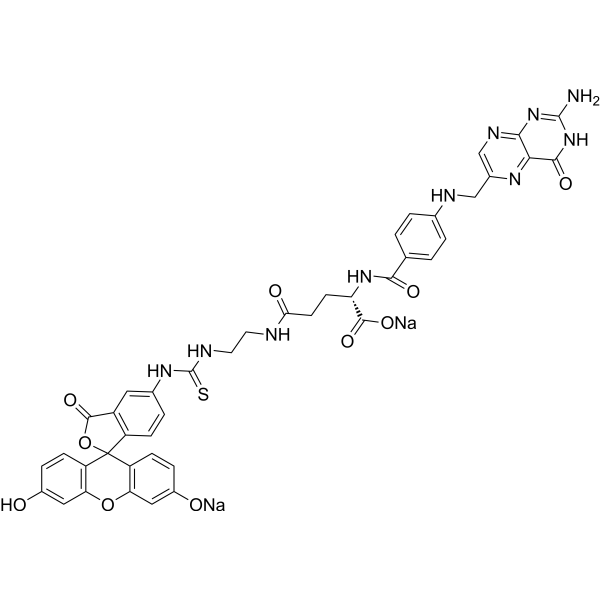
    EC-17 disodium salt
    1 Publications Verification

    Fluorescent Dye Folate Receptor (FR) Cancer
    EC-17 disodium salt is a folate receptor alpha (FRα) targeting contrast agent with fluorescent properties in the visible light spectrum. The EC-17 maximum excitation and emission wavelengths are 490 nm and 520 nm, respectively .
    EC-17 disodium salt
  • HY-D1224
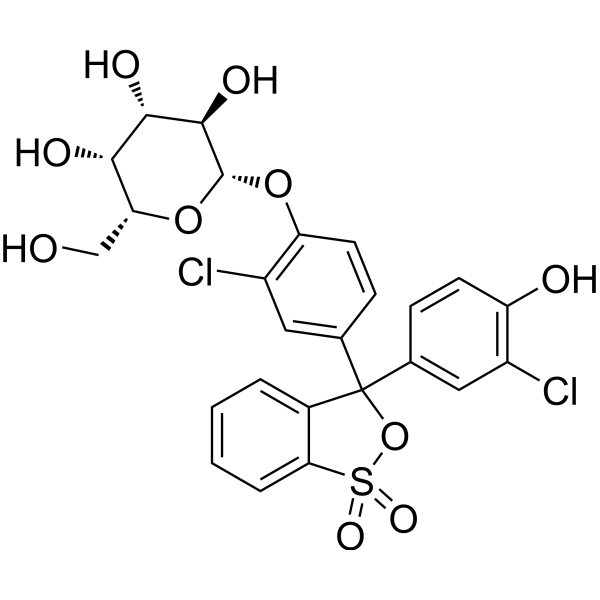
    Chlorophenol red-β-D-galactopyranoside
    2 Publications Verification

    CPRG

    Biochemical Assay Reagents Others
    Chlorophenol red-β-D-galactopyranoside (CPRG) is an efficient and sensitive chromogenic substrate for β-galactosidase (HY-P2869), widely used in colorimetric assays. Chlorophenol red-β-D-galactopyranoside itself appears pale yellow. When it is specifically hydrolyzed by β-galactosidase, it releases chlorophenol red. The released chlorophenol red turns purple-red under alkaline or neutral pH conditions. This color change from yellow to red can be quantitatively detected at wavelengths of 540-572 nm using visible spectrophotometry .
    Chlorophenol red-β-D-galactopyranoside
  • HY-13615

    EC-17

    Fluorescent Dye Folate Receptor (FR) Cancer
    Folate-FITC (EC-17) is a folate receptor alpha (FRα) targeting contrast agent with fluorescent properties in the visible light spectrum. The Folate-FITC maximum excitation and emission wavelengths are 490 nm and 520 nm, respectively .
    Folate-FITC
  • HY-N1442

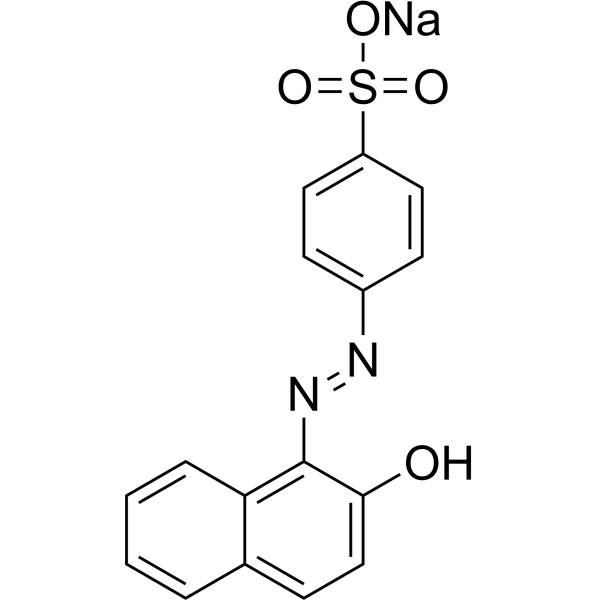
    Orange II; D&C Orange NO. 4

    Environmental Pollutants Biochemical Assay Reagents Others
    Acid Orange 7 (Orange II; D&C Orange NO. 4) is an azo dye widely used in the textile, food and cosmetic industries. Acid Orange 7 is mainly used as a colorant by combining with fibers and other substances through azo bonds. Acid Orange 7 has a maximum absorption wavelength at 484-485 nm, and the concentration is measured using a UV-visible spectrophotometer. Acid Orange 7 is difficult to degrade and has a certain degree of toxicity. It is often used to study various sewage treatment technologies and photocatalytic degradation reactions, and to evaluate the removal effects of different treatment methods on organic pollutants .
    Acid orange 7
  • HY-DY1020

    Fluorescent Dye Others
    Rhod-2 (solution) is a high-affinity visible light excitation wavelength Ca 2+ fluorescent probe, Rhod-2, AM is an acetyl methyl ester derivative of Rhod-2, which has cell membrane permeability and can easily enter cells with simple culture. Once it enters the cell, it is sheared by its lactesterase to produce Rhod-2 without membrane permeability, which remains in the cell to perform the corresponding physiological functions. Maximum excitation/emission wavelength: 549/578 nm .
    Solvent and concentration: DMSO: 1 mM
    Rhod-2 AM (solution)
  • HY-DY1024

    Huntingtin Parasite Infection Neurological Disease
    TPE-MI (Tetraphenylethene maleimide) (solution) is a thiol probe for measuring unfolded protein load and proteostasis in cells (the excitation wavelength is 350 nm and the emission wavelength is 470 nm). TPE-MI can report imbalances in proteostasis in induced pluripotent stem cell models of Huntington disease, as well as cells transfected with mutant Huntington exon 1 before the formation of visible aggregates. TPE-MI also detects protein damage following dihydroartemisinin research of the malaria parasitesPlasmodium falciparum .
    Solvent and concentration: DMSO: 10 mM
    TPE-MI (solution)
  • HY-103527

    GABA Receptor Neurological Disease
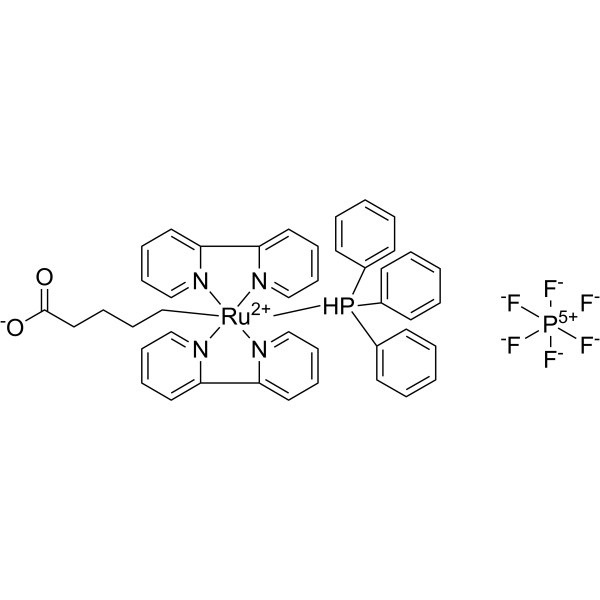
    RuBi-GABA is a new ruthenium-based caged GABA compound. RuBi-GABA photocleaves and releases GABA after being excited with visible wavelengths. RuBi-GABA produces gaba receptor-mediated currents .
    RuBi-GABA
  • HY-W923132

    Acryloyloxy fluorescein

    Fluorescent Dye Endogenous Metabolite Others
    Fluorescein O-acrylate (Acryloyloxy fluorescein) is a highly efficient fluorescent monomer that exhibits strong quantum yield in aqueous solutions, with its excitation and emission wavelengths situated within the visible light spectrum. This versatile monomer can be copolymerized with various compounds, including styrene, and acrylamide, enhancing its ability to bond with macromolecules.
    Fluorescein O-acrylate
  • HY-D1224A

    CPRG sodium

    Biochemical Assay Reagents Others
    Chlorophenol red-β-D-galactopyranoside (CPRG) sodium is an efficient and sensitive chromogenic substrate for β-galactosidase (HY-P2869), widely used in colorimetric assays. Chlorophenol red-β-D-galactopyranoside sodium itself appears pale yellow. When it is specifically hydrolyzed by β-galactosidase, it releases chlorophenol red. The released chlorophenol red turns purple-red under alkaline or neutral pH conditions. This color change from yellow to red can be quantitatively detected at wavelengths of 540-572 nm using visible spectrophotometry .
    Chlorophenol red β-D-galactopyranoside sodium
  • HY-144314

    Estrogen Receptor/ERR Cancer
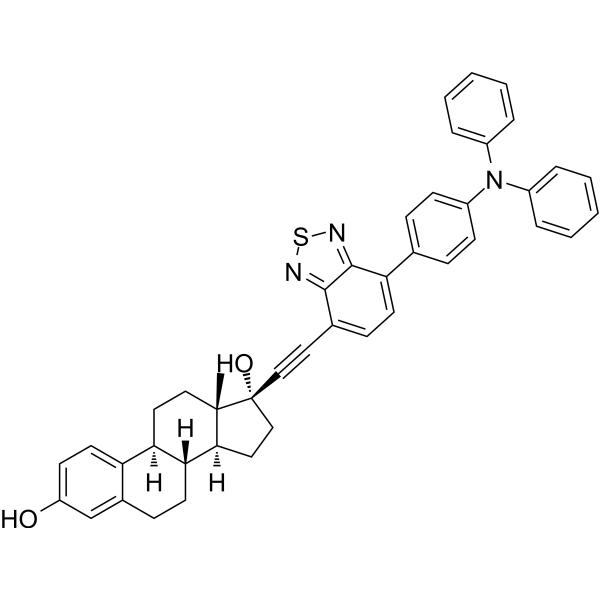
    PSDalpha is an ERα degrader conjugating photosensitizer (PS), triphenylamine benzothiadiazole (TB) and 17β-estradiol via an acetylene bond. PSDalpha shows excellent anti-proliferation performance on MCF-7 cells. The maximum absorption wavelength of PSDalpha in the visible region is located at 465 nm .
    PSDalpha
  • HY-W800831

    Fluorescent Dye Others
    Tetra-sulfo-Cy7 DBCO is a bright and photostable near-IR probe. The Cy7 DBCO is water-soluble, hydrophilic dye often a reagent of choice for assay where minimal non-specific binding and exceptional brightness is required. The fluorescence of Cy7 DBCO is pH insensitive from pH 4 to pH 10 and produces minimal autofluorescence of biological specimens in this region of the spectrum. Fluorescence of this long-wavelength Cyanine dye is not visible to the human eye but is readily detected by most imaging systems.
    Tetra-sulfo-Cy7 DBCO
  • HY-W750212

    Orange II-13C6; D&C Orange NO. 4-13C6

    Isotope-Labeled Compounds Biochemical Assay Reagents Others
    Acid Orange 7- 13C6 (Orange II- 13C6) is the 13C-labeled Acid orange 7 (HY-N1442). Acid Orange 7 (Orange II; D&C Orange NO. 4) is an azo dye widely used in the textile, food and cosmetic industries. Acid Orange 7 is mainly used as a colorant by combining with fibers and other substances through azo bonds. Acid Orange 7 has a maximum absorption wavelength at 484-485 nm, and the concentration is measured using a UV-visible spectrophotometer. Acid Orange 7 is difficult to degrade and has a certain degree of toxicity. It is often used to study various sewage treatment technologies and photocatalytic degradation reactions, and to evaluate the removal effects of different treatment methods on organic pollutants .
    Acid Orange 7-13C6
  • HY-N1442R

    Orange II (Standard); D&C Orange NO. 4 (Standard)

    Biochemical Assay Reagents Reference Standards Others
    Acid orange 7 (Standard) is the analytical standard of Acid orange 7 (HY-1442). This product is intended for research and analytical applications. Acid Orange 7 (Orange II; D&C Orange NO. 4) is an azo dye widely used in the textile, food and cosmetic industries. Acid Orange 7 is mainly used as a colorant by combining with fibers and other substances through azo bonds. Acid Orange 7 has a maximum absorption wavelength at 484-485 nm, and the concentration is measured using a UV-visible spectrophotometer. Acid Orange 7 is difficult to degrade and has a certain degree of toxicity. Acid Orange 7 is often used to study various sewage treatment technologies and photocatalytic degradation reactions, and to evaluate the removal effects of different treatment methods on organic pollutants .
    Acid orange 7 (Standard)
  • HY-W075708

    Cu(II) Meso-Tetra(4-carboxyphenyl)porphyrin

    MOFs Others
    Cu (II) MTCPP (Cu (II) Meso-Tetra (4-carboxyphenyl) porphyrin) is a copper coordination complex. Cu (II) MTCPP-sensitized TiO2 nanotubes are a type of visible-light photocatalyst. Cu (II) MTCPP-sensitized TiO2 nanotubes can expand the wavelength response range, transfer excited electrons more efficiently, and separate photogenerated electron-hole pairs .
    Cu(II) MTCPP

Inquiry Online

Your information is safe with us. * Required Fields.

Salutation


Country or Region *

Applicant Name *


Organization Name *

Department *


Email Address *


Product Name *

Cat. No.


Requested quantity *

Phone Number *


Remarks

Inquiry Online

Inquiry Information

Product Name:
Cat. No.:
Quantity:
MCE Japan Authorized Agent:

