Search Result
Results for "
vivo imaging
" in MedChemExpress (MCE) Product Catalog:
5
Biochemical Assay Reagents
2
Isotope-Labeled Compounds
| Cat. No. |
Product Name |
Target |
Research Areas |
Chemical Structure |
-
- HY-D1041
-
|
ICG-OSu
|
Fluorescent Dye
|
Cancer
|
|
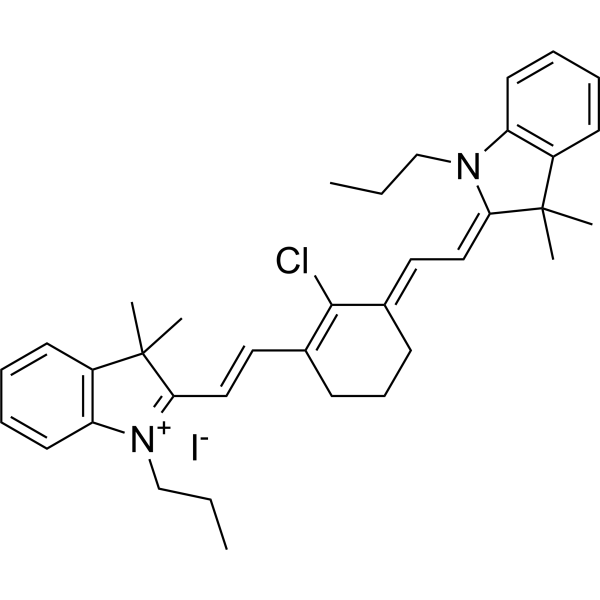
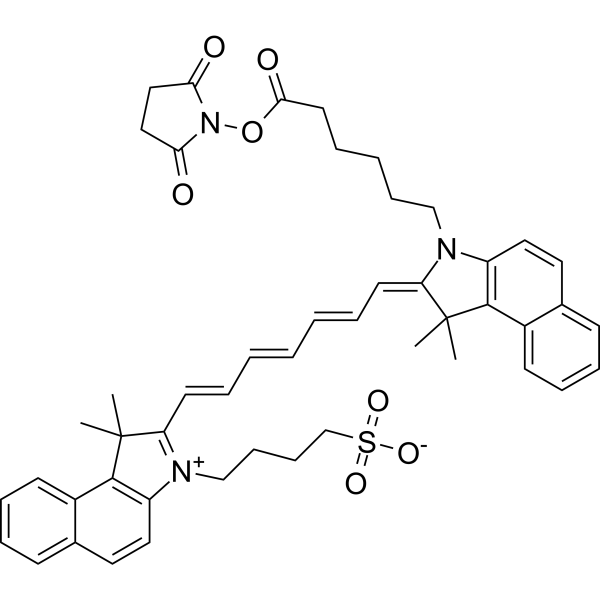
ICG NHS ester (ICG-OSu) is a near-infrared fluorescent agent ICG derivative. ICG NHS ester is amine-reactive and has been widely used to design in vivo imaging probes .
|
-
-
- HY-111653
-
CycLuc1
2 Publications Verification
|
Reactive Oxygen Species (ROS)
|
Others
|
|
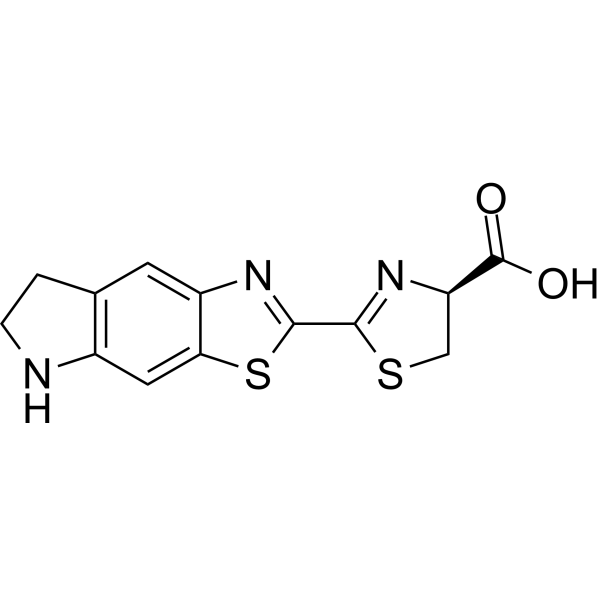
CycLuc1 is a blood-brain barrier permeable luciferase substrate that displays near-infrared (NIR) emission with a peak luminescence wavelength of 599 nm. CycLuc1 can be used for in vivo bioluminescence imaging .
|
-
-
- HY-133852
-
FD-1080
1 Publications Verification
|
Fluorescent Dye
MOFs
|
Others
|
|
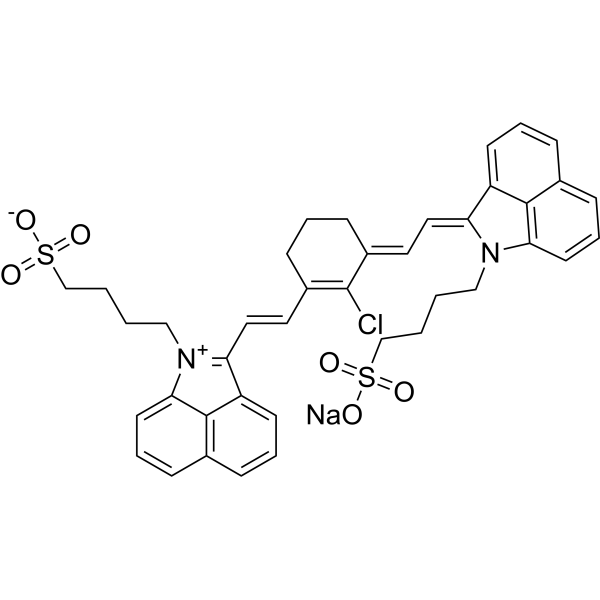
FD-1080 is a fluorophore with both excitation and emission in the NIR-II region (Ex=1064 nm, Em=1080 nm). FD-1080 can be used for in vivo imaging .
|
-
-
- HY-133852A
-
|
|
Fluorescent Dye
|
Others
|
|
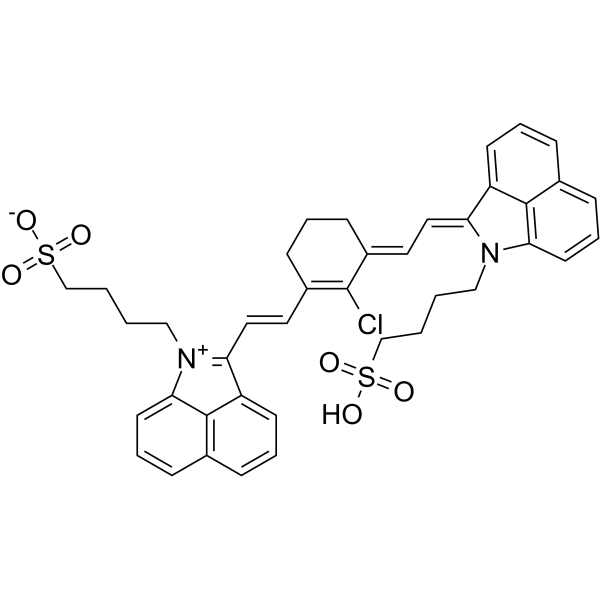
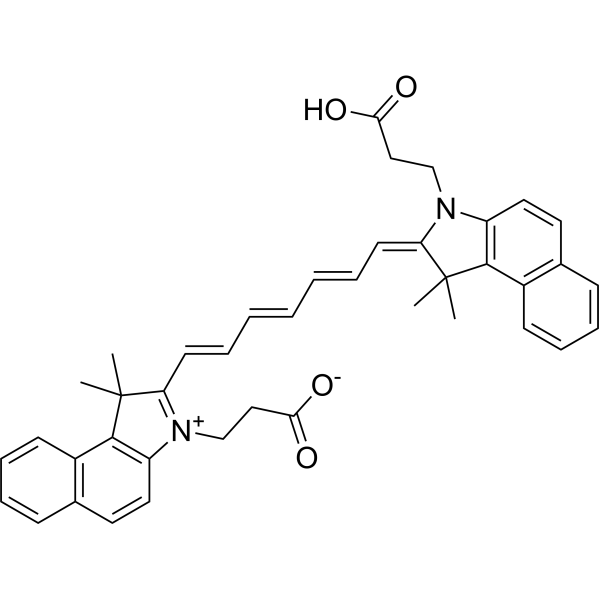
FD-1080 free acid is a fluorophore with both excitation and emission in the NIR-II region (Ex=1064 nm, Em=1080 nm). FD-1080 free acid can be used for in vivo imaging .
|
-
-
- HY-D1464
-
CH1055
1 Publications Verification
|
Fluorescent Dye
|
Cancer
|
|
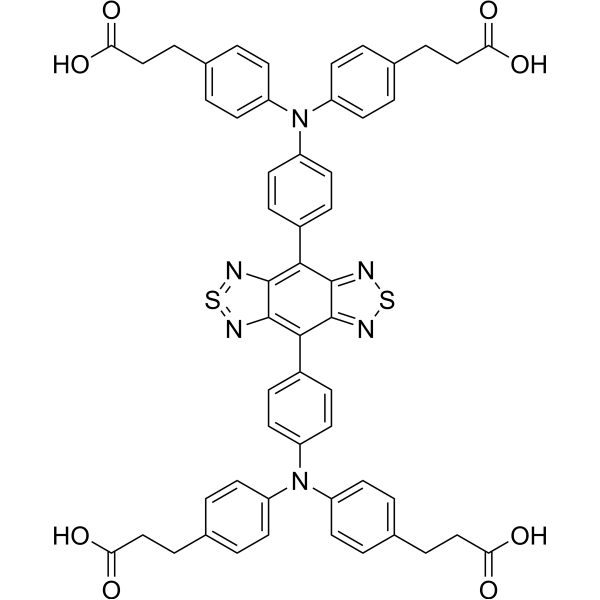
CH1055 is a near-infrared II (NIR-II) fluorescent dye that can be used as a fluorescent probe for in vivo imaging. CH1055 can be conjugated with antibodies or ligands for specific imaging (for example the tumor imaging) .
|
-
-
- HY-D1449
-
-
-
- HY-D1873
-
|
|
Fluorescent Dye
|
Others
|
|
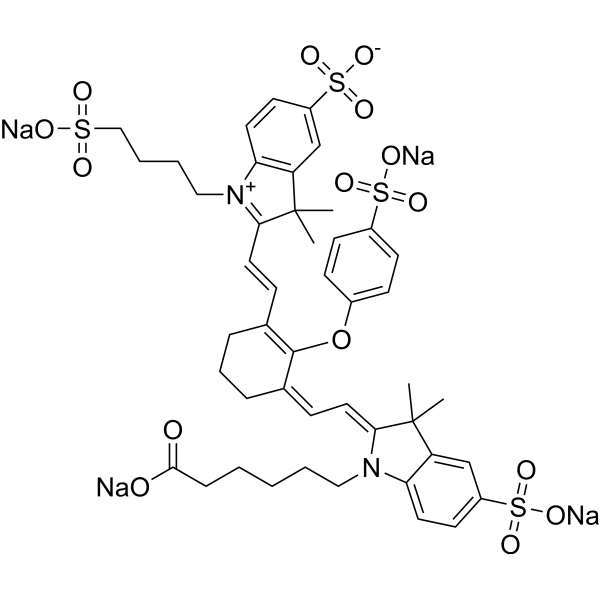
800CW acid is an orally active near-infrared (NIR) dye (excitation/emission 774/789 nm). 800CW acid can be used for intestinal permeability testing. 800CW acid can be used for in vivo imaging studies .
|
-
-
- HY-47176
-
|
|
Fluorescent Dye
|
Others
|
|
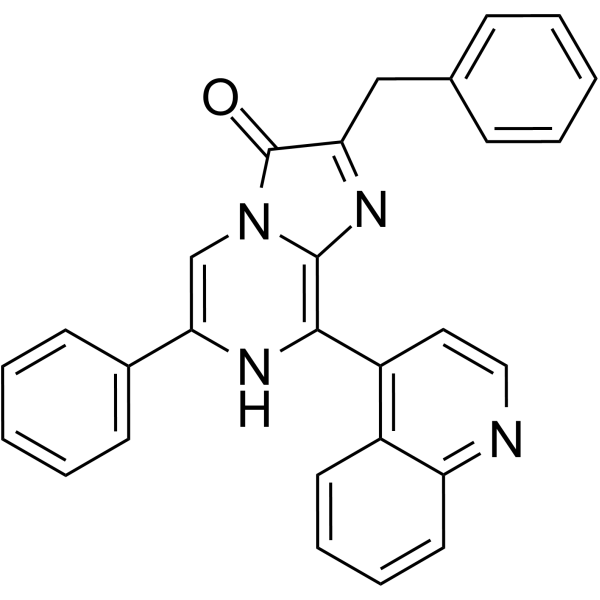
QTZ is a bioluminescence agent for in vivo imaging. QTZ has red-shifted emission and yields very little background. QTZ is a coelenterazine analog with the 4-quinolinyl substitution at the C8 position of the imidazopyrazinone core .
|
-
-
- HY-D1719
-
Cypate
1 Publications Verification
|
Fluorescent Dye
|
Others
|
|
Cypate, a cyanine dye, is a near infrared (NIR) fluorescent probe for in vivo tumor imaging .
|
-
-
- HY-135368
-
8pyDTZ
3 Publications Verification
|
Fluorescent Dye
|
Others
|
|
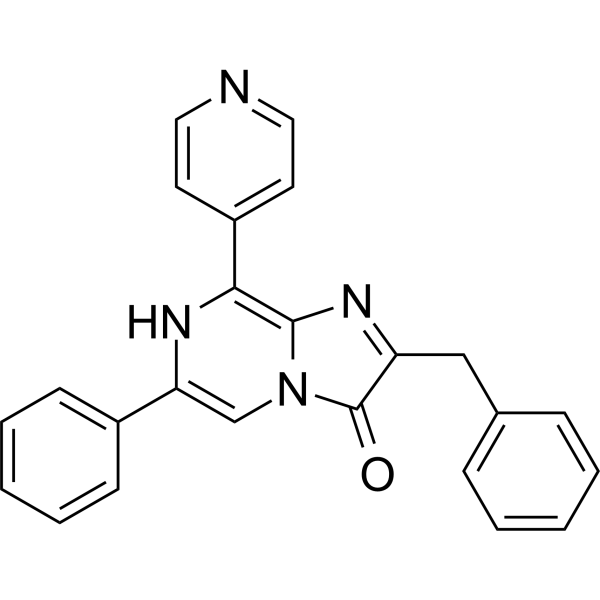
8pyDTZ is a pyridyl diphenylterazine (DTZ) analog and an ATP-independent pyridyl substrate of LumiLuc luciferase. 8pyDTZ exhibits spectrally shifted emission. 8pyDTZ has excellent biocompatibility and superior in vivo sensitivity. 8pyDTZ can be used for in vivo luminescence imaging .
|
-
-
- HY-122607
-
|
|
Mitochondrial Metabolism
TSPO
|
Inflammation/Immunology
Cancer
|
|
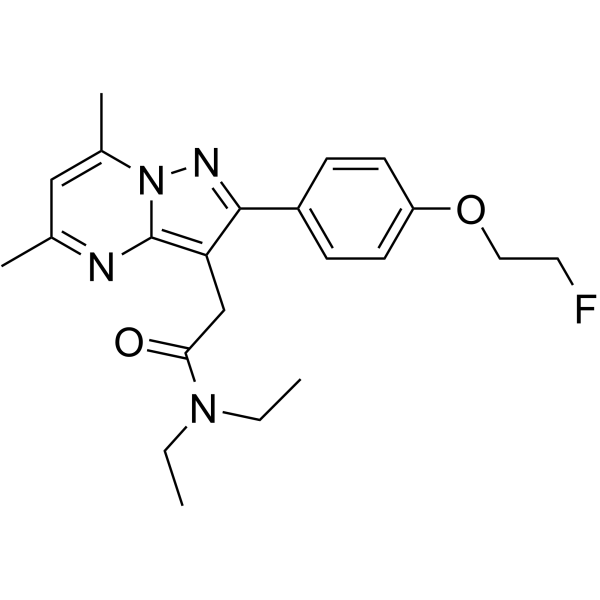
DPA-714 is a high affinity translocator protein (TSPO) ligand (Ki=7 nM), which is designed with a fluorine atom in its structure, allowing labelling with fluorine -18 and in vivo imaging using positron emission tomography. 18FDPA-714 successfully evaluates for the specific imaging of inflammation in various models of neuroinflammation and in a brain tumor model .
|
-
-
- HY-D1707
-
|
|
Fluorescent Dye
|
Others
|
|
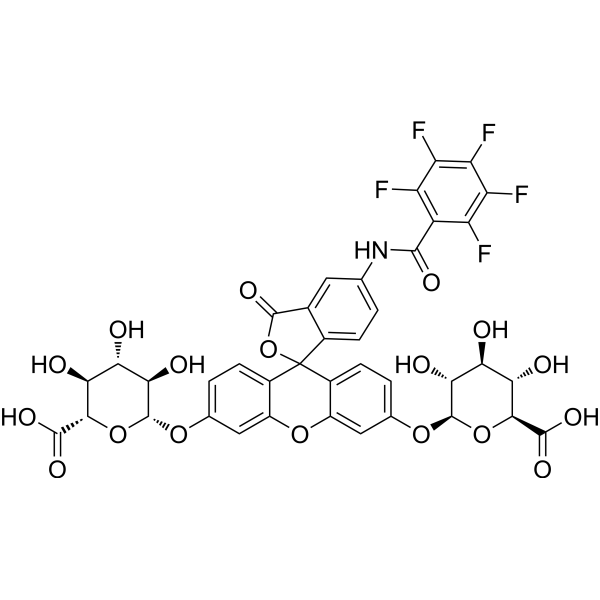
FDGlcU can be used as a fluorescent probe for non-invasively image with a high level of fluorescent activity. FDGlcU is non-fluorescent when the fluorescein is conjugated with two mono-glucuronides (Ex/Em=480/514 nm) .
|
-
-
- HY-101183
-
-
-
- HY-B0594S
-
|
|
Isotope-Labeled Compounds
Autophagy
Mitophagy
|
Cancer
|
|
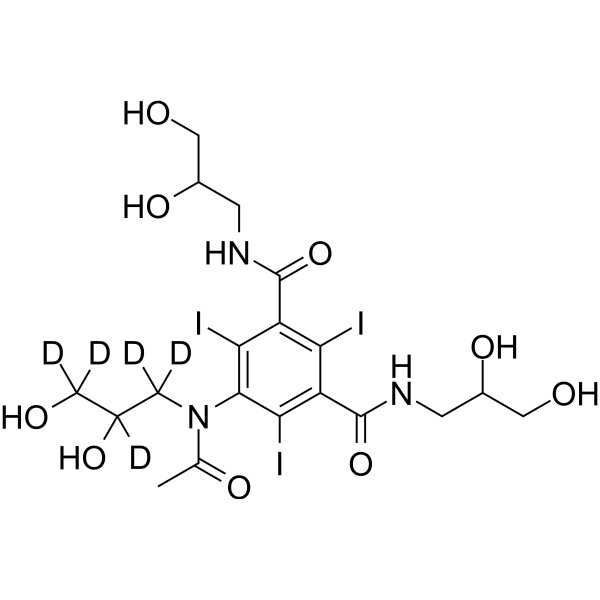
Iohexol-d5 is deuterium labeled Iohexol. Iohexol is a radiographic contrast agent and can be applied for myelography, computerized tomography?(cisternography, ventriculography) and MicroCT imaging in vivo .
|
-
-
- HY-P11057
-
|
|
Fluorescent Dye
|
Others
|
|
FGGH is a water-soluble peptide-based probe. FGGH performs the sequential detection of Cu 2+ and S 2- by fluorescence and colorimetry with high sensitivity (LOD: 1.42 and 22.2 nM for Cu 2+ and S 2-, respectively) (Ex=488 nm, Em=525 nm), and images both two ions in living cells and zebrafish models with low cytotoxicity. FGGH can be used for in vivo imaging and environmental pollution monitoring research .
|
-
-
- HY-D2062
-
|
|
Fluorescent Dye
Integrin
|
Cancer
|
|
ATTO 740 NHS ester is a near-infrared fluorescent dye and a multimodal fluorescence/photoacoustic contrast agent with excellent near-infrared emission properties and extremely high photostability. The photoacoustic signal of ATTO 740 NHS ester shows no significant decrease after continuous irradiation with a 750 nm laser for 30 min, making it suitable for in vivo fluorescence imaging and photoacoustic contrast imaging. When conjugated with the cystine knot peptide R01, ATTO 740 NHS ester enables precise detection of integrin αvβ6-positive cells and tumors in nude mouse xenograft models .
|
-
-
- HY-D2640
-
|
|
Fluorescent Dye
|
Others
|
|
Cy5 HA (MW 5000) is a hyaluronic acid labeled with CY5 (HY-D0821). Cy5 HA (MW 5000) is widely used for cell imaging and in vivo imaging of shallow tissue (Ex/Em = 633/670 nm).
|
-
-
- HY-160092A
-
|
|
HDAC
|
Neurological Disease
|
|
Martinostat hydrochloride is a HDAC inhibitor and can be labeled with radionuclides for quantitative imaging of HDACs in vivo in the central nervous system and major peripheral organs .
|
-
-
- HY-DY1072
-
|
ICG-OSu (solution)
|
Fluorescent Dye
|
Cancer
|
ICG NHS ester (ICG-OSu) (solution) is a near-infrared fluorescent agent ICG derivative. ICG NHS ester is amine-reactive and has been widely used to design in vivo imaging probes . Solvent and concentration: DMSO: 10 mM
|
-
-
- HY-D1557
-
|
|
Fluorescent Dye
|
Others
|
|
Cyanine5.5 tetrazine is a far-infrared luminescent dye. Cyanine5.5 tetrazine is a Cyanine5.5 (HY-D0925A) derivative contains a tetrazine moiety. Cyanine5.5 tetrazine can be used for in vivo imaging and low background applications. Cyanine5.5 tetrazine is a click chemistry reagent, it contains a Tetrazine group that can undergo an inverse electron demand Diels-Alder reaction (iEDDA) with molecules containing TCO groups.
|
-
-
- HY-D1464A
-
|
|
Fluorescent Dye
|
Cancer
|
|
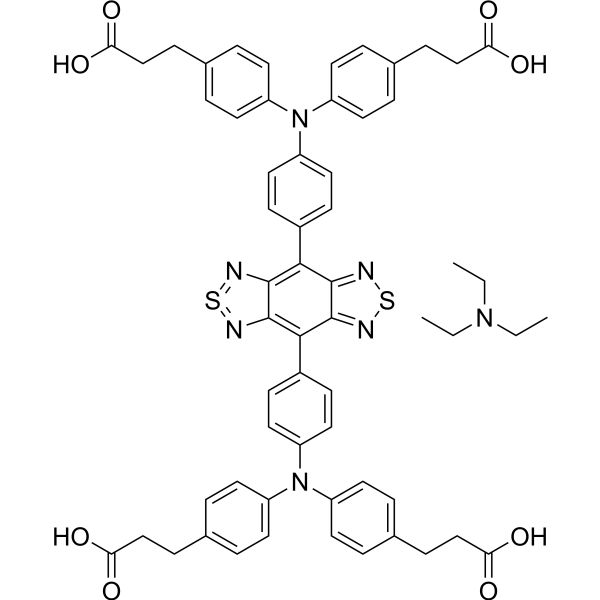
CH1055 triethylamine is a near-infrared II (NIR-II) fluorescent dye that can be used as a fluorescent probe for in vivo imaging. CH1055 triethylamine can be conjugated with antibodies or ligands for specific imaging (for example the tumor imaging) .
|
-
-
- HY-D2647
-
|
|
Fluorescent Dye
|
Others
|
|
Cy5 HA (MW 500000) is a hyaluronic acid labeled with CY5 (HY-D0821). Cy5 HA (MW 500000) is widely used for cell imaging and in vivo imaging of shallow tissue (Ex/Em = 633/670 nm).
|
-
-
- HY-155002
-
|
|
Cytochrome P450
|
Metabolic Disease
|
|
hCYP3A4 Fluorogenic substrate 1 is a potrnt hCYP3A4 fluorogenic substrate with an Km value of 0.36 μM. hCYP3A4 Fluorogenic substrate 1 can be used for cell and in vivo imaging .
|
-
-
- HY-100723
-
|
|
Amyloid-β
|
Neurological Disease
|
|
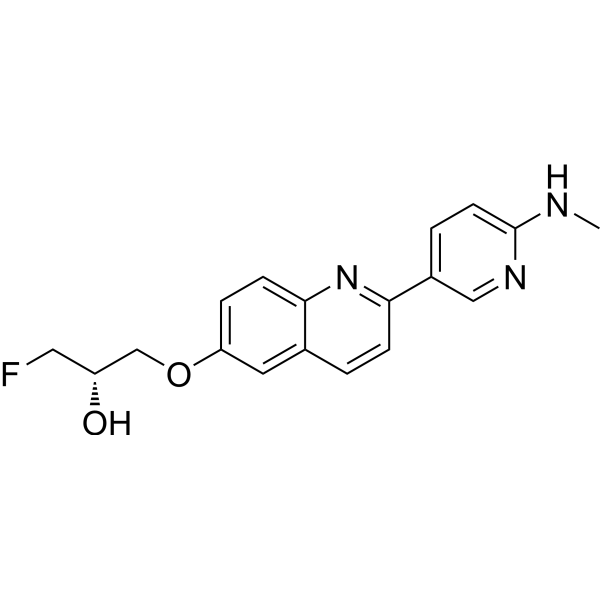
THK-523 has demonstrated its high affinity and selectivity for tau pathology both in vitro and in vivo. 18F-THK523 is a potent tau imaging radiotracer. 18F-THK523 is a potent in vivo tau imaging ligand for Alzheimer's disease .
|
-
-
- HY-D2645
-
|
|
Fluorescent Dye
|
Others
|
|
Cy5 HA (MW 100000) is a hyaluronic acid labeled with CY5 (HY-D0821). Cy5 HA (MW 100000) is widely used for cell imaging and in vivo imaging of shallow tissue (Ex/Em = 633/670 nm).
|
-
-
- HY-D2638
-
|
|
Fluorescent Dye
|
Others
|
|
Cy5 HA (MW 3000) is a hyaluronic acid labeled with CY5 (HY-D0821). Cy5 HA (MW 3000) is widely used for cell imaging and in vivo imaging of shallow tissue (Ex/Em = 633/670 nm).
|
-
-
- HY-147507
-
|
|
Fluorescent Dye
|
Others
|
|
SBP-1 is a sulfite bioluminescent probe (SBP). SBP-1 exhibits the excellent responsivity, selectivity and sensitivity towards sulfite. The recognition of SBP-1 towards sulfite is based on the mechanism of a sulfite-mediated intramolecular cleavage reaction. SBP-1 can be used for detection of exogenous and endogenous sulfite in living animal. SBP-1 also possesses a capability for quantitatively detecting sulfite within a certain concentration range in solution .
|
-
-
- HY-D2642
-
|
|
Fluorescent Dye
|
Others
|
|
Cy5 HA (MW 10000) is a hyaluronic acid labeled with CY5 (HY-D0821). Cy5 HA (MW 10000) is widely used for cell imaging and in vivo imaging of shallow tissue (Ex/Em = 633/670 nm).
|
-
-
- HY-D2624
-
|
|
Fluorescent Dye
|
Others
|
|
Cy3 HA (MW 10000) is a hyaluronic acid labeled with CY3 (HY-D0822). Cy3 HA (MW 10000) is widely used for cell imaging and in vivo imaging of shallow tissue (Ex/Em = 550/570 nm).
|
-
-
- HY-D2625
-
|
|
Fluorescent Dye
|
Others
|
|
Cy3 HA (MW 50000) is a hyaluronic acid labeled with CY3 (HY-D0822). Cy3 HA (MW 50000) is widely used for cell imaging and in vivo imaging of shallow tissue (Ex/Em = 550/570 nm).
|
-
-
- HY-D2646
-
|
|
Fluorescent Dye
|
Others
|
|
Cy5 HA (MW 200000) is a hyaluronic acid labeled with CY5 (HY-D0821). Cy5 HA (MW 200000) is widely used for cell imaging and in vivo imaging of shallow tissue (Ex/Em = 633/670 nm).
|
-
-
- HY-D2676
-
|
|
Fluorescent Dye
|
Others
|
|
Cy7 HA (MW 3000) is a hyaluronic acid labeled with CY7 (HY-D0825). Cy7 HA (MW 3000) is widely used for cell imaging and in vivo imaging of shallow tissue (Ex/Em = 740/770 nm).
|
-
-
- HY-D2653
-
|
|
Fluorescent Dye
|
Others
|
|
Cy5 HA biotin 3000 is a biotinylated hyaluronic acid labeled with CY5 (HY-D0821). Cy5 HA biotin 3000 is widely used for cell imaging and in vivo imaging of shallow tissues (Ex/Em = 633/670 nm).
|
-
-
- HY-149298
-
|
|
PSMA
|
Cancer
|
|
PSMA-IN-2 is an inhibitor of PSMA with a Ki value of 1.07 nM. PSMA-IN-2 displays favorable in vivo NIR imaging (λEM = 1088 nm, λex = 808 nm), and can be used for NIRII image-guided tumor resection surgery in PSMA-positive tumor-bearing mice .
|
-
-
- HY-141646
-
|
|
Fluorescent Dye
|
Others
|
|
MIT-PZR is a mitochondria-targeted,? low cytotoxicity fluorescent probe that can be used in live cells and in vivo imaging. Ex / Em = 485 / 705 nm
|
-
-
- HY-160092
-
|
|
HDAC
|
Neurological Disease
|
|
Martinostat is a HDAC inhibitor and can be labeled with radionuclides for quantitative imaging of HDACs in vivo in the central nervous system and major peripheral organs .
|
-
-
- HY-D2663
-
|
|
Fluorescent Dye
|
Others
|
|
Cy5.5 HA (MW 500000) is a hyaluronic acid labeled with CY5.5 (HY-D0924). Cy5.5 HA (MW 200000) is widely used for cell imaging and in vivo imaging of shallow tissue (Ex/Em = 680/710 nm).
|
-
-
- HY-D2671
-
|
|
Fluorescent Dye
|
Others
|
|
Cy5.5 HA biotin 10000 is a biotinylated hyaluronic acid labeled with CY5.5 (HY-D0924). Cy5.5 HA biotin 10000 is widely used for cell imaging and in vivo imaging of shallow tissues (Ex/Em = 680/710 nm).
|
-
-
- HY-D1391
-
|
PbS/CdSe QD
|
Fluorescent Dye
|
Others
|
|
PbS/CdS QDs (PbS/CdSe QD) is a fluorescent probe that can be used for in vivo fluorescence imaging in the second near-infrared window .
|
-
-
- HY-145128
-
-
-
- HY-D2217
-
-
-
- HY-160276
-
|
|
Liposome
|
Others
|
|
DOPE-PEG5000-Fluor 555 is consist of a DOPE phospholipid which is an unsaturated phospholipid and a Fluor 555 dye which is a bright orange cyanine dye that can be used in fluorescence microscopy, FRET and other in vivo imaging techniques.
|
-
-
- HY-168571
-
-
-
- HY-D2621
-
|
|
Fluorescent Dye
|
Others
|
|
Cy3 HA (MW 5000) is a hyaluronic acid labeled with CY3 (HY-D0822). Cy3 HA (MW 5000) is widely used for cell imaging and in vivo imaging of shallow tissue (Ex/Em = 550/570 nm).
|
-
-
- HY-D2641
-
|
|
Fluorescent Dye
|
Others
|
|
Cy5 HA (MW 7000) is a hyaluronic acid labeled with CY5 (HY-D0821). Cy5 HA (MW 7000) is widely used for cell imaging and in vivo imaging of shallow tissue (Ex/Em = 633/670 nm).
|
-
-
- HY-D2677
-
|
|
Fluorescent Dye
|
Others
|
|
Cy7 HA (MW 100000) is a hyaluronic acid labeled with CY7 (HY-D0825). Cy7 HA (MW 100000) is widely used for cell imaging and in vivo imaging of shallow tissue (Ex/Em = 740/770 nm).
|
-
-
- HY-D2675
-
|
|
Fluorescent Dye
|
Others
|
|
Cy7 HA (MW 10000) is a hyaluronic acid labeled with CY7 (HY-D0825). Cy7 HA (MW 10000) is widely used for cell imaging and in vivo imaging of shallow tissue (Ex/Em = 740/770 nm).
|
-
-
- HY-D2643
-
|
|
Fluorescent Dye
|
Others
|
|
Cy5 HA (MW 50000) is a hyaluronic acid labeled with CY5 (HY-D0821). Cy5 HA (MW 50000) is widely used for cell imaging and in vivo imaging of shallow tissue (Ex/Em = 633/670 nm).
|
-
-
- HY-D2674
-
|
|
Fluorescent Dye
|
Others
|
|
Cy7 HA (MW 7000) is a hyaluronic acid labeled with CY7 (HY-D0825). Cy7 HA (MW 7000) is widely used for cell imaging and in vivo imaging of shallow tissue (Ex/Em = 740/770 nm).
|
-
-
- HY-D2622
-
|
|
Fluorescent Dye
|
Others
|
|
Cy3 HA (MW 3000) is a hyaluronic acid labeled with CY3 (HY-D0822). Cy3 HA (MW 3000) is widely used for cell imaging and in vivo imaging of shallow tissue (Ex/Em = 550/570 nm).
|
-
- HY-D2626
-
|
|
Fluorescent Dye
|
Others
|
|
Cy3 HA (MW 100000) is a hyaluronic acid labeled with CY3 (HY-D0822). Cy3 HA (MW 100000) is widely used for cell imaging and in vivo imaging of shallow tissue (Ex/Em = 550/570 nm).
|
-
- HY-D2672
-
|
|
Fluorescent Dye
|
Others
|
|
Cy7 HA (MW 3000) is a hyaluronic acid labeled with CY7 (HY-D0825). Cy7 HA (MW 3000) is widely used for cell imaging and in vivo imaging of shallow tissue (Ex/Em = 740/770 nm).
|
-
- HY-D2628
-
|
|
Fluorescent Dye
|
Others
|
|
Cy3 HA (MW 500000) is a hyaluronic acid labeled with CY3 (HY-D0822). Cy3 HA (MW 500000) is widely used for cell imaging and in vivo imaging of shallow tissue (Ex/Em = 550/570 nm).
|
-
- HY-D2623
-
|
|
Fluorescent Dye
|
Others
|
|
Cy3 HA (MW 7000) is a hyaluronic acid labeled with CY3 (HY-D0822). Cy3 HA (MW 7000) is widely used for cell imaging and in vivo imaging of shallow tissue (Ex/Em = 550/570 nm).
|
-
- HY-D2636
-
|
|
Fluorescent Dye
|
Others
|
|
Cy3 HA biotin 5000 is a biotinylated hyaluronic acid labeled with CY3 (HY-D0822). Cy3 HA biotin 5000 is widely used for cell imaging and in vivo imaging of shallow tissues (Ex/Em = 550/570 nm).
|
-
- HY-D2637
-
|
|
Fluorescent Dye
|
Others
|
|
Cy3 HA biotin 10000 is a biotinylated hyaluronic acid labeled with CY3 (HY-D0822). Cy3 HA biotin 10000 is widely used for cell imaging and in vivo imaging of shallow tissues (Ex/Em = 550/570 nm).
|
-
- HY-D2655
-
|
|
Fluorescent Dye
|
Others
|
|
Cy5 HA biotin 10000 is a biotinylated hyaluronic acid labeled with CY5 (HY-D0821). Cy5 HA biotin 10000 is widely used for cell imaging and in vivo imaging of shallow tissues (Ex/Em = 633/670 nm).
|
-
- HY-D2687
-
|
|
Fluorescent Dye
|
Others
|
|
Cy7 HA biotin 5000 is a biotinylated hyaluronic acid labeled with CY7 (HY-D0825). Cy7 HA biotin 5000 is widely used for cell imaging and in vivo imaging of shallow tissues (Ex/Em = 740/770 nm).
|
-
- HY-D2654
-
|
|
Fluorescent Dye
|
Others
|
|
Cy5 HA biotin 5000 is a biotinylated hyaluronic acid labeled with CY5 (HY-D0821). Cy5 HA biotin 5000 is widely used for cell imaging and in vivo imaging of shallow tissues (Ex/Em = 633/670 nm).
|
-
- HY-D2688
-
|
|
Fluorescent Dye
|
Others
|
|
Cy7 HA biotin 10000 is a biotinylated hyaluronic acid labeled with CY7 (HY-D0825). Cy7 HA biotin 10000 is widely used for cell imaging and in vivo imaging of shallow tissues (Ex/Em = 740/770 nm).
|
-
- HY-D2635
-
|
|
Fluorescent Dye
|
Others
|
|
Cy3 HA biotin 3000 is a biotinylated hyaluronic acid labeled with CY3 (HY-D0822). Cy3 HA biotin 3000 is widely used for cell imaging and in vivo imaging of shallow tissues (Ex/Em = 550/570 nm).
|
-
- HY-D2414
-
-
- HY-D2661
-
|
|
Fluorescent Dye
|
Others
|
|
Cy5.5 HA (MW 100000) is a hyaluronic acid labeled with CY5.5 (HY-D0924). Cy5.5 HA (MW 100000) is widely used for cell imaging and in vivo imaging of shallow tissue (Ex/Em = 680/710 nm).
|
-
- HY-D2689
-
|
|
Fluorescent Dye
|
Others
|
|
Cy7.5 HA (MW 3000) is a hyaluronic acid labeled with CY7.5 (HY-D0926). Cy7.5 HA (MW 3000) is widely used for cell imaging and in vivo imaging of shallow tissue (Ex/Em = 770/820 nm).
|
-
- HY-D2691
-
|
|
Fluorescent Dye
|
Others
|
|
Cy7.5 HA (MW 7000) is a hyaluronic acid labeled with CY7.5 (HY-D0926). Cy7.5 HA (MW 7000) is widely used for cell imaging and in vivo imaging of shallow tissue (Ex/Em = 770/820 nm).
|
-
- HY-D2692
-
|
|
Fluorescent Dye
|
Others
|
|
Cy7.5 HA (MW 10000) is a hyaluronic acid labeled with CY7.5 (HY-D0926). Cy7.5 HA (MW 10000) is widely used for cell imaging and in vivo imaging of shallow tissue (Ex/Em = 770/820 nm).
|
-
- HY-D2656
-
|
|
Fluorescent Dye
|
Others
|
|
Cy5.5 HA (MW 3000) is a hyaluronic acid labeled with CY5.5 (HY-D0924). Cy5.5 HA (MW 3000) is widely used for cell imaging and in vivo imaging of shallow tissue (Ex/Em = 680/710 nm).
|
-
- HY-D2660
-
|
|
Fluorescent Dye
|
Others
|
|
Cy5.5 HA (MW 50000) is a hyaluronic acid labeled with CY5.5 (HY-D0924). Cy5.5 HA (MW 50000) is widely used for cell imaging and in vivo imaging of shallow tissue (Ex/Em = 680/710 nm).
|
-
- HY-D2693
-
|
|
Fluorescent Dye
|
Others
|
|
Cy7.5 HA (MW 50000) is a hyaluronic acid labeled with CY7.5 (HY-D0926). Cy7.5 HA (MW 50000) is widely used for cell imaging and in vivo imaging of shallow tissue (Ex/Em = 770/820 nm).
|
-
- HY-D2657
-
|
|
Fluorescent Dye
|
Others
|
|
Cy5.5 HA (MW 5000) is a hyaluronic acid labeled with CY5.5 (HY-D0924). Cy5.5 HA (MW 5000) is widely used for cell imaging and in vivo imaging of shallow tissue (Ex/Em = 680/710 nm).
|
-
- HY-D2662
-
|
|
Fluorescent Dye
|
Others
|
|
Cy5.5 HA (MW 200000) is a hyaluronic acid labeled with CY5.5 (HY-D0924). Cy5.5 HA (MW 200000) is widely used for cell imaging and in vivo imaging of shallow tissue (Ex/Em = 680/710 nm).
|
-
- HY-D2695
-
|
|
Fluorescent Dye
|
Others
|
|
Cy7.5 HA (MW 200000) is a hyaluronic acid labeled with CY7.5 (HY-D0926). Cy7.5 HA (MW 200000) is widely used for cell imaging and in vivo imaging of shallow tissue (Ex/Em = 770/820 nm).
|
-
- HY-D2690
-
|
|
Fluorescent Dye
|
Others
|
|
Cy7.5 HA (MW 5000) is a hyaluronic acid labeled with CY7.5 (HY-D0926). Cy7.5 HA (MW 5000) is widely used for cell imaging and in vivo imaging of shallow tissue (Ex/Em = 770/820 nm).
|
-
- HY-D2670
-
|
|
Fluorescent Dye
|
Others
|
|
Cy5.5 HA biotin 5000 is a biotinylated hyaluronic acid labeled with CY5.5 (HY-D0924). Cy5.5 HA biotin 5000 is widely used for cell imaging and in vivo imaging of shallow tissues (Ex/Em = 680/710 nm).
|
-
- HY-D2704
-
|
|
Fluorescent Dye
|
Others
|
|
Cy7.5 HA biotin (MW 10000) is a biotinylated hyaluronic acid labeled with CY7.5 (HY-D0926). Cy7.5 HA biotin (MW 10000) is widely used for cell imaging and in vivo imaging of shallow tissues (Ex/Em = 770/820 nm).
|
-
- HY-D2703
-
|
|
Fluorescent Dye
|
Others
|
|
Cy7.5 HA biotin (MW 5000) is a biotinylated hyaluronic acid labeled with CY7.5 (HY-D0926). Cy7.5 HA biotin (MW 5000) is widely used for cell imaging and in vivo imaging of shallow tissues (Ex/Em = 770/820 nm).
|
-
- HY-D2702
-
|
|
Fluorescent Dye
|
Others
|
|
Cy7.5 HA biotin (MW 3000) is a biotinylated hyaluronic acid labeled with CY7.5 (HY-D0926). Cy7.5 HA biotin (MW 3000) is widely used for cell imaging and in vivo imaging of shallow tissues (Ex/Em = 770/820 nm).
|
-
- HY-136404
-
|
|
Fluorescent Dye
|
Cancer
|
|
Melanin probe-1 is an 18F-picolinamides based PET probe. Melanin probe-1 can be used for PET imaging of malignant melanoma. Melanin probe-1 exhibits high tumor targeting efficiency, excellent tumor imaging contrasts, desirable biodistribution patterns, and good in vivo stability .
|
-
- HY-D2597
-
|
|
Fluorescent Dye
|
Others
|
|
Cy7.5-PEG2000-biotin is a biotinylated hyaluronic acid labeled with CY7.5 (HY-D0926). Cy7.5-PEG2000-biotin is widely used for cell imaging and in vivo imaging of shallow tissues (Ex/Em=770/820 nm).
|
-
- HY-D2598
-
|
|
Fluorescent Dye
|
Others
|
|
Cy7.5-PEG5000-biotin is a biotinylated hyaluronic acid labeled with CY7.5 (HY-D0926). Cy7.5-PEG5000-biotin is widely used for cell imaging and in vivo imaging of shallow tissues (Ex/Em=770/820 nm).
|
-
- HY-152102
-
|
|
Fluorescent Dye
|
Cancer
|
|
BTCy is a near-infrared (NIR) fluorescence probe with polarity-responsive and cell plasma membrane-targeting properties. BTCy can be used for in vivo imaging of tumor tissue (λex = 561 nm, λem = 600-700 nm) .
|
-
- HY-D2334
-
|
|
Radionuclide-Drug Conjugates (RDCs)
HSP
|
Cancer
|
|
AlF-NOTA-c-d-VAP is a peptide positron emission tomography (PET) probe that used for targeted tumor imaging of GRP78. AlF-NOTA-c-d-VAP demonstrates high stability in vitro and in vivo .
|
-
- HY-D3214
-
|
|
Fluorescent Dye
|
Others
|
|
NIR-Cu (Ⅱ) is a near-infrared fluorescent Cu 2+ probe. NIR-Cu (Ⅱ) enables fluorescence imaging of Cu 2+ in living mice. NIR-Cu (Ⅱ) reduces self-absorption and exhibits minimal photobleaching, thus supporting in vivo imaging applications .
|
-
- HY-D3242
-
|
FD-1080-MAL
|
Fluorescent Dye
|
Others
|
|
FD-1080 Maleimide (FD-1080-MAL) is a fluorophore with both excitation and emission in the NIR-II region (Ex=1064 nm, Em=1080 nm). FD-1080 can be used for in vivo imaging .
|
-
- HY-D3152
-
|
|
Fluorescent Dye
|
Others
|
|
NRh-Cu is a highly sensitive near-infrared fluorescence turn-on indicator and Cu 2+-selective probe (λex=680 nm, λem=740 nm). When NRh-Cu interacts with Cu 2+, it undergoes a structural transition from a non-fluorescent spirocyclic state to a fluorescent ring-opened state, which drives the enhancement of fluorescence emission. NRh-Cu can be used for Cu 2+ imaging in live cells and in vivo .
|
-
- HY-D2680
-
|
|
Fluorescent Dye
|
Others
|
|
Cy7 HA (MW 200000) is a hyaluronic acid labeled with CY7 (HY-D0825). Cy7 HA (MW 200000) is widely used for cell imaging and in vivo imaging of shallow tissue (Ex/Em = 740/770 nm).
|
-
- HY-D2678
-
|
|
Fluorescent Dye
|
Others
|
|
Cy7 HA (MW 500000) is a hyaluronic acid labeled with CY7 (HY-D0825). Cy7 HA (MW 500000) is widely used for cell imaging and in vivo imaging of shallow tissue (Ex/Em = 740/770 nm).
|
-
- HY-D2627
-
|
|
Fluorescent Dye
|
Others
|
|
Cy3 HA (MW 200000) is a hyaluronic acid labeled with CY3 (HY-D0822). Cy3 HA (MW 200000) is widely used for cell imaging and in vivo imaging of shallow tissue (Ex/Em = 550/570 nm).
|
-
- HY-D2673
-
|
|
Fluorescent Dye
|
Others
|
|
Cy7 HA (MW 55000) is a hyaluronic acid labeled with CY7 (HY-D0825). Cy7 HA (MW 5000) is widely used for cell imaging and in vivo imaging of shallow tissue (Ex/Em = 740/770 nm).
|
-
- HY-D2686
-
|
|
Fluorescent Dye
|
Others
|
|
Cy7 HA biotin 3000 is a biotinylated hyaluronic acid labeled with CY7 (HY-D0825). Cy7 HA biotin 3000 is widely used for cell imaging and in vivo imaging of shallow tissues (Ex/Em = 740/770 nm).
|
-
- HY-D3064
-
|
|
Biochemical Assay Reagents
|
Others
|
|
510 Calibration probe is a chemiluminescent group that can be used as a probe for in vivo imaging studies, with an emission maximum around 520 nm .
|
-
- HY-D2962
-
|
|
Fluorescent Dye
|
Neurological Disease
|
CAQ is a near-infrared fluorescent probe based on a curcumin scaffold (Ex/Em = 565/635). CAQ exhibits high affinity for Aβ1-42 aggregates (Kd = 78.89 nM) and excellent selectivity toward common biomolecules. CAQ’s emission wavelength shows significant solvent dependence. CAQ, by incorporating intramolecular rotation donors and quinoline functional groups, can be used for the specific detection and imaging of Aβ aggregates in Alzheimer's disease .
|
-
- HY-D2659
-
|
|
Fluorescent Dye
|
Others
|
|
Cy5.5 HA (MW 10000) is a hyaluronic acid labeled with CY5.5 (HY-D0924). Cy5.5 HA (MW 10000) is widely used for cell imaging and in vivo imaging of shallow tissue (Ex/Em = 680/710 nm).
|
-
- HY-D2658
-
|
|
Fluorescent Dye
|
Others
|
|
Cy5.5 HA (MW 7000) is a hyaluronic acid labeled with CY5.5 (HY-D0924). Cy5.5 HA (MW 7000) is widely used for cell imaging and in vivo imaging of shallow tissue (Ex/Em = 680/710 nm).
|
-
- HY-D2694
-
|
|
Fluorescent Dye
|
Others
|
|
Cy7.5 HA (MW 100000) is a hyaluronic acid labeled with CY7.5 (HY-D0926). Cy7.5 HA (MW 100000) is widely used for cell imaging and in vivo imaging of shallow tissue (Ex/Em = 770/820 nm).
|
-
- HY-D2696
-
|
|
Fluorescent Dye
|
Others
|
|
Cy7.5 HA (MW 500000) is a hyaluronic acid labeled with CY7.5 (HY-D0926). Cy7.5 HA (MW 500000) is widely used for cell imaging and in vivo imaging of shallow tissue (Ex/Em = 770/820 nm).
|
-
- HY-D2669
-
|
|
Fluorescent Dye
|
Others
|
|
Cy5.5 HA biotin 3000 is a biotinylated hyaluronic acid labeled with CY5.5 (HY-D0924). Cy5.5 HA biotin 3000 is widely used for cell imaging and in vivo imaging of shallow tissues (Ex/Em = 680/710 nm).
|
-
- HY-101183R
-
|
|
Tau Protein
Reference Standards
|
Neurological Disease
|
|
THK5351 (Standard) is the analytical standard of THK5351 (HY-101183). This product is intended for research and analytical applications. THK5351 can be radiolabeled and used as a radiotracer for in vivo imaging of tau pathology in the brain.
|
-
- HY-D3004
-
|
|
Fluorescent Dye
|
Others
|
|
GSH Tracker Probe (CPDSA) is a cyanine-based fluorescent probe with a NIR emission that is specific for GSH (excitation: 635 nm; emission: 655-755 nm). CPDSA can monitor and image GSH levels in live cells and in vivo .
|
-
- HY-D2970
-
|
|
Fluorescent Dye
|
Neurological Disease
|
|
Golgi-P is a near-infrared Golgi-targeted fluorescent probe specifically used for the detection of Golgi polarity in living cells and living tissues. Golgi-P exhibits a significant polarity-dependent spectral behavior, with its emission wavelength shifting redward with polarity (Ex/Em: 700 nm/780-825 nm). Golgi-P achieves near-infrared fluorescence imaging directly in the brain tissue of depressed mice. Golgi-P combines polarity sensing with Golgi-targeting functionality, providing a new tool for the molecular diagnosis of depression .
|
-
- HY-D1724
-
|
|
Fluorescent Dye
|
Cancer
|
|
IR-806 is a near-infrared cyanine liquid crystal dye. IR-806 can be used as a molecular antenna to synthesized nanoprobes (NPs). IR-806 can be used for in vivo imaging studies .
|
-
- HY-P10943
-
|
|
Fluorescent Dye
|
Inflammation/Immunology
Cancer
|
|
APO-15 is a phosphatidylserine-binding fluorescent probe and apoptosis imaging reagent. APO-15 exhibits high chemical stability under proteolytic and oxidative conditions, enables quantification and imaging of drug-induced apoptosis in preclinical mouse models, and is applicable to fixed tissue samples and multiple in vivo administration routes (Ex = 488 nm; Em = 525 nm). APO-15 can be used in studies related to acute lung injury and breast cancer .
|
-
- HY-122607S
-
|
|
Isotope-Labeled Compounds
Mitochondrial Metabolism
TSPO
|
Inflammation/Immunology
Cancer
|
|
DPA-714-d10 is the deuterium labeled DPA-714 (HY-122607). DPA-714 is a high affinity translocator protein (TSPO) ligand (Ki=7 nM), which is designed with a fluorine atom in its structure, allowing labelling with fluorine -18 and in vivo imaging using positron emission tomography. 18FDPA-714 successfully evaluates for the specific imaging of inflammation in various models of neuroinflammation and in a brain tumor model.
|
-
- HY-D3353
-
|
|
PSMA
|
Cancer
|
|
PSMA-SulfoCy7 is a high-affinity imaging agent targeting PSMA/GCPII (with a Ki of 18.1 nM for human PSMA). PSMA-SulfoCy7 regulates PSMA-dependent NAAG hydrolysis. PSMA-SulfoCy7 exhibits excellent in vivo imaging capability, enabling clear visualization of PSMA-expressing tumors in xenograft models, with no obvious toxicity even at a dose of 87.9 mg/kg. PSMA-SulfoCy7 is widely used in prostate cancer-related studies .
|
-
- HY-D1254
-
|
NBL-SS perchlorate
|
Fluorescent Dye
|
Others
|
|
Trx-red (NBL-SS perchlorate) is a red-emitting fluorescent probe derivatized from the nile blue fluorophore. Trx-red is used for selectively imaging thioredoxin (Trx) in live cells and in vivo (λex=615 nm, λem=661 nm) .
|
-
- HY-122607R
-
|
|
Mitochondrial Metabolism
|
Inflammation/Immunology
Cancer
|
|
DPA-714 (Standard) is the analytical standard of DPA-714. This product is intended for research and analytical applications. DPA-714 is a high affinity translocator protein (TSPO) ligand (Ki=7 nM), which is designed with a fluorine atom in its structure, allowing labelling with fluorine -18 and in vivo imaging using positron emission tomography. 18FDPA-714 successfully evaluates for the specific imaging of inflammation in various models of neuroinflammation and in a brain tumor model .
|
-
- HY-D1389
-
|
Sulfo-Cyanine5.5 NHS ester tripotassium
|
Fluorescent Dye
|
Others
|
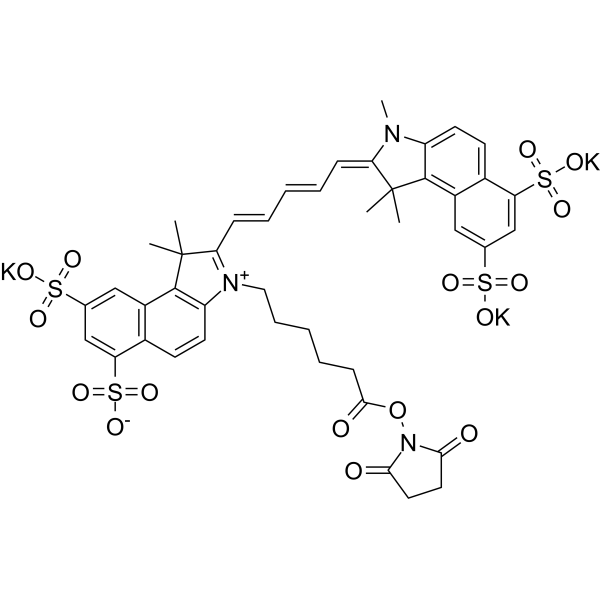
Sulfo-CY-5.5 NHS ester (Sulfo-Cyanine5.5 NHS ester) tripotassium is an amine-reactive ester of sulfonated far-red Cyanine5.5 fluorophore, which can be used to label antibodies, proteins, etc., as well as for in vivo NIR imaging .
|
-
- HY-D1260
-
|
PSH-red
|
Fluorescent Dye
|
Neurological Disease
|
|
FM-red (PSH-red) is a red-emitting and environment-sensitive probe for selectively detecting and labeling protein thiols. FM-red can be used to image protein sulfhydryl groups in live cells and in vivo. FM-red also could be used to measure of the redox states of thioredoxin (Trx) .
|
-
- HY-155486
-
|
|
Fluorescent Dye
|
Cancer
|
|
HCy-AAN-Bio is a tumor-targeted hemicyanine (HCy) probe for Fluorescent/photoacoustic (FL/PA) imaging of legumain in vivo. Legumain can specifically cleave HCy-AAN-Bio with the generation of FL/PA signal. HCy-AAN-Bio is a powerful tool for early diagnosis of associated cancer .
|
-
- HY-D3199
-
|
|
Fluorescent Dye
GLUT
|
Metabolic Disease
|
|
NIR-fluorescent glucose is a functional glucose-based fluorescent imaging agent. Conjugated with the nitrobenzoselenadiazole-based SCOTfluor (compound 9), NIR-fluorescent glucose acts as a substrate for GLUT4 and GLUT2 transporters. NIR-fluorescent glucose enables the visualization of glucose uptake in live cells and in vivo .
|
-
- HY-D1883B
-
|
|
Fluorescent Dye
|
Others
|
|
Cy7.5-COOH bromide, a cyanine dye, is a highly fluorescent compound (Abs/Em = 781/808 nm). Cy7.5-COOH bromide can be used as a fluorescent probe in a wide-range of applications such as DNA sequencing, flow cytometry and in vivo imaging .
|
-
- HY-171493
-
|
|
Biochemical Assay Reagents
|
Others
|
|
mCherry mRNA(N1-Me-Pseudo UTP) is a reporter mRNA encoding a red fluorescent protein, suitable for gene expression analysis, cell viability assays, and in vivo imaging. mCherry, derived from mushroom coral, is a widely used red fluorescent protein tracer in biotechnology applications.
|
-
- HY-D1883
-
|
|
Fluorescent Dye
|
Others
|
|
Cy7.5-COOH (compound 8f), a cyanine dye, is a highly fluorescent compound (Abs/Em = 781/808 nm). Cy7.5-COOH can be used as a fluorescent probe in a wide-range of applications such as DNA sequencing, flow cytometry and in vivo imaging .
|
-
- HY-130015
-
|
|
Reactive Oxygen Species (ROS)
|
Others
|
|
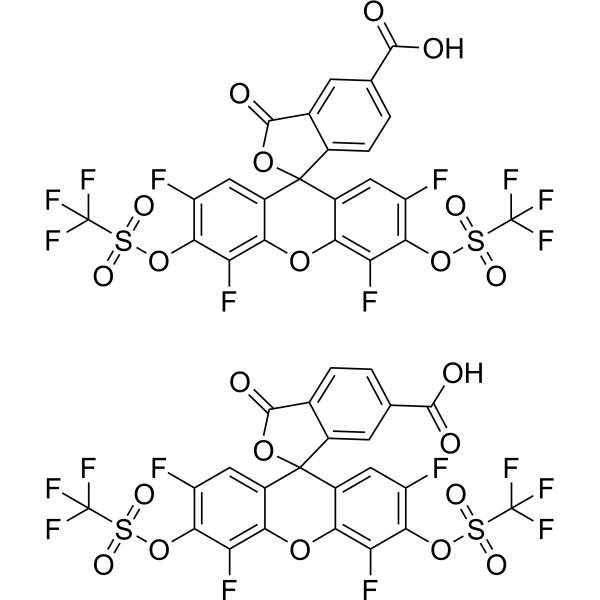
HKSOX-1 (5/6-mixture) is a fluorescent probe which is used for imaging and detection of endogenous superoxide in live cells and in vivo. HKSOX-1 (5/6-mixture) exhibits excellent selectivity and sensitivity towards superoxide anion radical (Ex/Em = 509/534 nm) .
|
-
- HY-130017
-
|
|
Reactive Oxygen Species (ROS)
|
Others
|
|
HKSOX-1r (5/6-mixture) is a fluorescent probe which is used for imaging and detection of endogenous superoxide in live cells and in vivo. HKSOX-1r (5/6-mixture) exhibits excellent selectivity and sensitivity towards superoxide anion radical .
|
-
- HY-D1883A
-
|
|
Fluorescent Dye
|
Others
|
|
Cy7.5-COOH TEA (compound 8f), a cyanine dye, is a highly fluorescent compound (Abs/Em = 781/808 nm). Cy7.5-COOH TEA can be used as a fluorescent probe in a wide-range of applications such as DNA sequencing, flow cytometry and in vivo imaging .
|
-
- HY-118667
-
|
|
Liposome
|
Others
|
|
Dehydroergosterolis a naturally occurring fluorescent sterol analog (Ex/Em=325/375 nm), which mimics the properties of cholesterol in cell membranes. DehydroergosterolEasily conjugated by cholesterol-binding proteins for real-time imaging in live cells. DehydroergosterolThe sterol environment and intracellular sterol transport in vivo can be probed/elucidated in real time .
|
-
- HY-D3227
-
|
|
Fluorescent Dye
|
Inflammation/Immunology
Cancer
|
|
HOTN is a hypochlorous acid (HClO) Fluorescent indicator. HOTN is oxidized by HClO, causing cleavage of its Py +-N + moiety and a change in hydrophobicity, which in turn triggers aggregation-induced emission to generate a strong fluorescent signal. HOTN is used for in vivo imaging of inflammation and hepatocellular carcinoma, as these diseases typically result in high levels of HClO .
|
-
- HY-152152
-
|
|
MAGL
|
Neurological Disease
|
|
JZP-MA-13 is a selective α/β-hydrolase domain 6 (ABHD6) inhibitor with an IC50 of 392 nM. JZP-MA-13 shows no inhibition of MAGL, ABHD12, FAAH, or other serine hydrolases. JZP-MA-13 is a positron emission tomography (PET) ligand for in vivo imaging of the ABHD6 .
|
-
- HY-124473
-
|
Naphthafluorescein
|
HIF/HIF Prolyl-Hydroxylase
|
Cancer
|
|
Naphthofluorescein inhibits the interaction between HIF-1 and Mint3.
Naphthofluorescein suppresses Mint3-dependent HIF-1 activity and glycolysis in cancer cells and macrophages without cytotoxicity in vitro and adverse effect in vivo . Naphthofluorescein is also a fluorescent pH-sensitive probe that can be used for functional Cerenkov imaging .
|
-
- HY-W440913
-
|
|
Liposome
Fluorescent Dye
|
Cancer
|
|
DSPE-PEG-Cy5, MW 5000 is a fluorescently labeled PEGylated phospholipid with a molecular weight of 5000 Da. After intravenous injection, DSPE-PEG-Cy5, MW 5000 shows only extremely low fluorescence accumulation at tumor sites in orthotopic tumor-bearing mice, and can be used as a negative control for evaluating tumor accumulation of nanoparticles. DSPE-PEG-Cy5, MW 5000 can serve as a fluorescent marker to prepare Cy5-labeled NPs-DPPA and NPs-DPPA (C3F8) for pharmacokinetic and biodistribution studies in mice. DSPE-PEG-Cy5, MW 5000 is widely applicable to research in fields related to triple-negative breast cancer, hepatocellular carcinoma and so on .
|
-
- HY-W015050
-
|
1-Aminoanthracene
|
GABA Receptor
Chloride Channel
Fluorescent Dye
|
Neurological Disease
|
|
1-Anthramine (1-aminoanthracene) is a fluorescent general anesthetic. potentiates GABAergic transmission with Kd = 0.1 mM, for binding to the general anesthetic site in horse spleen apoferritin (HSAF). 1-Anthramine fluorescence is enhanced when bound to HSAF. 1-Anthramine potentiates chloride currents elicited by GABA. 1-Anthramine can reversibly inhibit the movement of Xenopus laevis, with an EC50 value of 16 μM .
|
-
- HY-P2336A
-
|
|
Melanocortin Receptor
|
Cancer
|
|
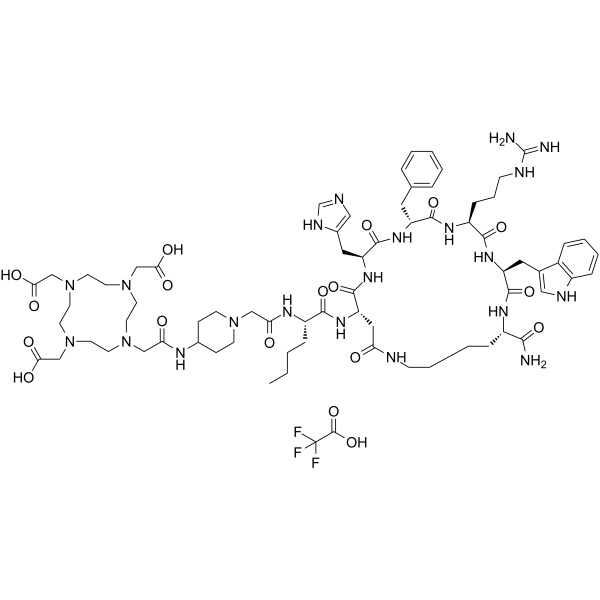
CCZ01048 TFA, a α-MSH analogue, exhibits high binding affinity to melanocortin 1 receptor (MC1R) with a Ki of 0.31 nM. CCZ01048 TFA shows rapid internalization into B16F10 melanoma cells and high in vivo stability. CCZ01048 TFA is a promising candidate for PET imaging of malignant melanoma .
|
-
- HY-176913
-
|
|
Fluorescent Dye
|
Others
|
|
TA is an anthracene derivative with ultrasound-activated luminescence properties. TA can be activated by ultrasound and emit fluorescence. TA is generally not used directly but can be used to construct TA-NP nanoparticles. The ultrasound-activated luminescence of TA-NPs is mainly concentrated in the wavelength range of 600~650 nm, exhibiting good penetration ability into biological tissues, making it suitable for in vivo imaging .
|
-
- HY-W728451
-
|
|
FAAH
|
Cardiovascular Disease
Neurological Disease
|
|
URB694 is a carbamate FAAH inhibitor that irreversibly carbamoylate the nucleophile catalytic serine in FAAH active site. URB694 exhibits antidepressant-like activity and cardioprotective effects. URB694 can be used to prepare 11C-Carbonyl-URB694 for in vivo positron emission tomography (PET) imaging studies of the brain FAAH .
|
-
- HY-P5114
-
|
|
Calcium Channel
|
Others
|
|
Maurocalcine is an agonist of ryanodine receptor (RyR) channel types 1, 2 and 3 with cellular permeability. Maurocalcine induces [ 3H]ryanodine binding on RyR1 with an EC50 value of 2558 nM. Maurocalcine exhibits a apparent affinity of 14 nM for RyR2. Maurocalcine can be applied to in vivo cell tracking or other cell imaging techniques .
|
-
- HY-P2336
-
|
|
Melanocortin Receptor
|
Cancer
|
|
CCZ01048, a α-melanocyte-stimulating hormone (α-MSH) analogue, exhibits high binding affinity to melanocortin 1 receptor (MC1R) with a Ki of 0.31 nM. CCZ01048 shows rapid internalization into B16F10 melanoma cells and high in vivo stability. CCZ01048 is a promising candidate for PET imaging of malignant melanoma .
|
-
- HY-152073
-
|
|
Fluorescent Dye
|
Others
|
|
BETA-1 is the first twisted intramolecular charge transfer (TICT)-aggregation-induced emission (AIE) integration molecule. BETA-1 emits cyan fluorescence in lipid droplets (LDs) and red fluorescence in mitochondria. BETA-1 can be used for the simultaneous and dual-color imaging of LDs and mitochondria in vivo and in vitro .
|
-
- HY-W440911
-
|
|
Liposome
Fluorescent Dye
|
Cancer
|
|
DSPE-PEG2000-Cy5 is a Cy5 (HY-D0821) fluorophore-labeled conjugate of distearoylphosphatidylethanolamine and polyethylene glycol, as well as a liposome component. The Cy5 fluorophore is commonly used for labeling proteins and nucleic acids in imaging, flow cytometry and genomic applications. DSPE-PEG2000-Cy5 supports cell membrane modification, in vivo tumor targeting research and long-term in vivo circulation of its liposomal formulations (Ex/Em=633/670 nm) .
|
-
- HY-P5114A
-
|
|
Calcium Channel
|
Others
|
|
Maurocalcine TFA is an agonist of ryanodine receptor (RyR) channel types 1, 2 and 3 with cellular permeability. Maurocalcine TFA induces [ 3H]ryanodine binding on RyR1 with an EC50 value of 2558 nM. Maurocalcine TFA exhibits a apparent affinity of 14 nM for RyR2. Maurocalcine TFA can be applied to in vivo cell tracking or other cell imaging techniques .
|
-
- HY-P11263
-
|
|
iGluR
|
Neurological Disease
|
|
AVLX-144 is a highly potent inhibitor of postsynaptic density protein 95 (PSD-95). AVLX-144 can be used as a template to develop imaging probes for postsynaptic density (PSD) molecules, and can be labeled with fluorine-18 (¹⁸F) or tritium (³H) to visualize PSD-95 in vivo. AVLX-144 can be utilized for the study of Parkinson's disease .
|
-
- HY-D2343
-
|
|
Biochemical Assay Reagents
|
Neurological Disease
|
|
PB0822 can be used for in vivo PET imaging when labeled with [ 18F]fluoride. [ 18F]PB0822 is a PET radioligand. [ 18F]PB0822 has a cLogP value of 1.54, which is a good predictive index for BBB penetration. [ 18F]PB0822 can be used for Alzheimer’s Disease research .
|
-
- HY-177435
-
|
|
FAP
|
Inflammation/Immunology
|
|
FAPI-800CW is a near-infrared (NIR) fluorescent-labeled fibroblast activation protein (FAP) inhibitor. FAPI-800CW shows specific uptake in inflamed paws in collagen-induced arthritis (CIA) model mice. FAPI-800CW can be used for in vivo molecular imaging of FAP expression in inflammatory diseases such as rheumatoid arthritis (RA) to monitor joint inflammation and disease activity .
|
-
- HY-176513
-
|
|
Fluorescent Dye
|
Others
|
|
Cy-OH-LP is a turn-on fluorescent and photoacoustic probe that can detect lipid-associated hydroxyl radicals. Cy-OH-LP can be oxidized to Cy7 in the presence of hydroxyl radicals, which displays weak fluorescent and photoacoustic signals in water-soluble environments and strong fluorescent and photoacoustic signals in lipid-rich environments due to its lipid solubility. Cy-OH-LP can be used for in vivo photoacoustic imaging of hydroxyl radicals .
|
-
- HY-173138
-
|
|
Monoamine Oxidase
|
Neurological Disease
|
|
FCOB02 is a monoamine oxidase B (MAO-B) ligand. FCOB02 can be labeled as [18F]FCOB02, a 4-methylcoumarin-like targeting probe. [18F]FCOB02 has a high affinity for MAO-B with an IC50 of 10.68 nM. [18F]FCOB02 can be used in specific MAO-B imaging as well as quantitative analysis in vivo .
|
-
- HY-P991577
-
|
DS-8895A
|
Ephrin Receptor
|
Cancer
|
|
DS-8895(DS-8895A) is an anti-EphA2 monoclonal antibody with specific binding to EphA2 receptors and EphA2-expressing cells. DS-8895, when conjugated with 89Zr, 111In, or 125I, supports molecular imaging of EphA2 expression in xenograft models. DS-8895 allows noninvasive measurement of EphA2 expresssion in tumors in vivo. .
|
-
- HY-D1439
-
|
|
Fluorescent Dye
|
Neurological Disease
|
|
RH 795 is a lipophilic potentiometric styryl fluorescent dye (Ex/Em = 530 nm/712 nm). RH 795 stains the cell membranes of sensory cells and nerve fibers in living cells that maintain membrane potential, while it shows weak staining effect on supporting cells. RH 795 supports in vivo and in vitro confocal microscopy imaging of intact living inner ear cells and neuronal components. RH 795 can be used in studies related to hearing loss .
|
-
- HY-D0827
-
|
Cyanine2
|
Fluorescent Dye
|
Others
|
|
Cyanines are formally compounds with two nitrogen atoms linked by an odd number of methene units. 26 28 The nitrogen atoms are parts of the heterocyclic units (such as indole, benzoxazol, or benzothiazol) . The structures and optical properties of representative cyanine dyes used for in vivo imaging are presented . Cyanines are characterized by long wavelength, tunable absorption and emission, very high extinction coefficient (up to 300,000 M 1 cm 1), good water solubility, and relatively straightforward synthesis .
|
-
- HY-165424
-
|
|
Fluorescent Dye
Glycosidase
|
Cardiovascular Disease
Cancer
|
|
NIR-BG2 is a near-infrared fluorescent probe targeting senescence-associated β-galactosidase (SA-β-Gal). NIR-BG2 is activated by SA-β-Gal and undergoes hydrolysis to release electrophilic quinone methide that covalently binds to surrounding proteins for in situ labeling, with a 16-fold enhancement of fluorescence signal at 709 nm . NIR-BG2 is promising for research of vivo imaging of cellular senescence .
|
-
- HY-D2489
-
|
|
Fluorescent Dye
|
Others
|
|
Cy5-tetrazine is a fluorescent dye. Cy5-tetrazine is a CY5 (HY-D0821) derivative contains a tetrazine moiety. Cyanine5.5 tetrazine can be used for in vivo imaging and low background applications. Cy5-tetrazine is a click chemistry reagent, it contains a Tetrazine group that can undergo an inverse electron demand Diels-Alder reaction (iEDDA) with molecules containing TCO groups .
|
-
- HY-D1376A
-
|
|
Fluorescent Dye
|
Others
|
|
Sulfo-Cyanine5.5 amine consists of four sulfonate groups and has highly hydrophilic. Sulfo-Cyanine5.5 amine is an amine-containing fluorescent dye, the aliphatic primary amine group can be coupled with various electrophiles (activated esters, epoxides, etc). Sulfo-Cyanine5.5 amine can be used for the research of far red/NIR applications (such as in vivo imaging) and also can be used for enzymatic transamination labeling .
|
-
- HY-13443F2
-
|
Exendin-4-Cys(Cy5)
|
Fluorescent Dye
|
Metabolic Disease
|
|
Exendin-4, Cy5-labeled (Exendin-4-Cys(Cy5)) is a covalently linked Cy5 fluorescent group to Exendin-4 (HY-13443), a GLP-1 receptor agonist. Exendin-4, Cy5-labeled enables the visualization imaging of β cells in vivo, especially for evaluating the expression dynamics of GLP-1R in type 2 diabetes models .
|
-
- HY-P4154
-
|
ALM-488
|
Fluorescent Dye
|
Neurological Disease
Cancer
|
|
Bevonescein (ALM-488) is a fluorescein-conjugated peptide that facilitates the targeted delivery of a fluorescent moiety (5-FAM (HY-66022)) to nerves after intravenous (IV) administration. Bevonescein binds nerve-associated connective tissue, labels peripheral nerves under real-time fluorescence imaging (FL) in living mice and human ex vivo nerve tissue. Bevonescein is a peptide-linked tracer which fluorescently labeled both intact and degenerated nerves (Ex/Em = 480/530 nm) .
|
-
- HY-D3224
-
|
|
Fluorescent Dye
|
Neurological Disease
|
|
HCP is a two-photon fluorescent probe capable of crossing the blood-brain barrier, which is specifically designed for real-time detection of hypochlorous acid (HClO/ClO -) produced by myeloperoxidase (MPO). Chlorination of the quinoline skeleton of HCP generates HCP-Cl, which eliminates intramolecular charge transfer (ICT) quenching and thereby produces fluorescence. HCP is suitable for in vivo dynamic imaging of HClO in the brains of epileptic mice and high-throughput screening of antiepileptic drugs (HCP-Cl: Ex/Em = 800 nm/495 nm) .
|
-
- HY-W800838
-
|
|
Fluorescent Dye
|
Cancer
|
|
BP Fluor 488 Tetrazine is a bright, green-fluorescent probe used for detection TCO-tagged biopolymers. BP Fluor 488 Tetrazine demonstrates exceptionally fast cycloaddition kinetics (up to 30 000 M-1 s-1) with trans-cyclooctenes (TCO) as the dienophile, the fastest kinetics ever reported for any bioorthogonal reaction. In applications such as in vivo cancer imaging or pre?targeted cell labeling studies where rapid reaction kinetics is a must BP Fluor 488 Tetrazine probe would of great value.
|
-
- HY-D1063
-
IR-780
Maximum Cited Publications
6 Publications Verification
|
Fluorescent Dye
Apoptosis
Reactive Oxygen Species (ROS)
|
Cancer
|
|
IR-780 is a near-infrared fluorescent probe for in vivo imaging of tumor cells. IR-780 is transported into tumor cells via OATPs and ABCB10, with uptake dependent on glycolytic activity and plasma membrane potential. IR-780 preferentially accumulates in tumor cell mitochondria, including those of drug-resistant cancer cells, without chemical conjugation. IR-780 generates reactive oxygen species (ROS), induces hyperthermia and apoptosis, inhibits tumor growth and recurrence, and modulates HSP70 expression upon ultrasound or 808 nm laser exposure. IR-780 acts as a sonosensitizer, photodynamic and photothermal agent, and drug delivery carrier, with low acute imaging-dose toxicity and rapid vital organ clearance. IR-780 can be used for the research of cancer, such as breast cancer, lung cancer, and non-small cell lung cancer (NSCLC) .
|
-
- HY-D1583
-
|
DBCO-Cy5 hexafluorophosphate; Cyanine5 dibenzocyclooctyne hexafluorophosphate
|
Fluorescent Dye
|
Others
|
|
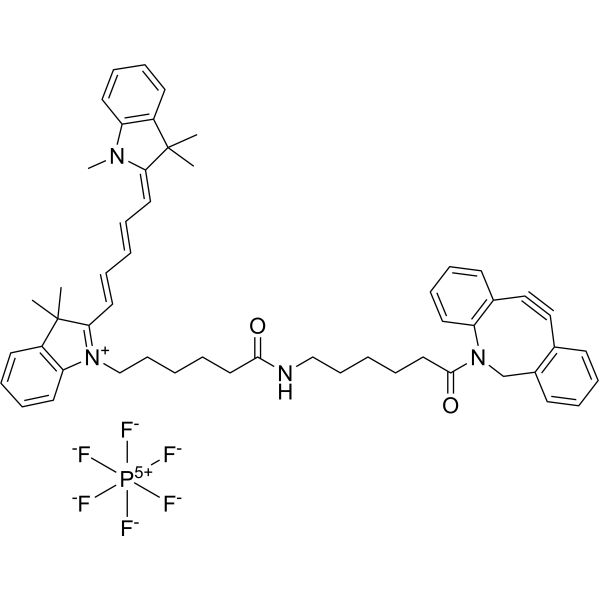
Cyanine5 DBCO (DBCO-Cy5) hexafluorophosphate is a low-toxicity azide reactive probe (NIR fluorescent dye), for imaging azide-labeled biomolecules via a copper-free "click-through" reaction. Cyanine5 DBCO hexafluorophosphate has no apparent cytotoxicity or animal toxicity and shows no damage to the physiological functions of cells other than the target cells (azide-labeled cells). Cyanine5 DBCO hexafluorophosphate can be used to label and track cells in vitro and in vivo (Ex=635 nm, Em=650-700 nm) .
|
-
- HY-149203
-
|
|
Fluorescent Dye
|
Others
|
|
MQA-P is a multifunctional near-infrared (NIR) fluorescent probe for simultaneously detecting ONOO -, viscosity, and polarity within mitochondria. MQA-P exhibits a remarkable turn-on response to ONOO - (λem=645 nm) and is highly sensitive to viscosity/polarity in the NIR channel with λem>704 nm. MQA-P exhibits excited-state intramolecular charge transfer (ESICT) feature that is highly polarity-sensitive by engineering N,N-dimethylamino as the electron donor and a quinoline cationic unit as the electron acceptor. MQA-P is used for ferroptosis or cancer diagnosis in vitro and in vivo via dual-channel images .
|
-
- HY-D2907
-
|
DBCO-Cy5; Cyanine5 dibenzocyclooctyne
|
Fluorescent Dye
|
Others
|
|
Cyanine5 DBCO (DBCO-Cy5) is a low-toxicity azide reactive probe (NIR fluorescent dye), for imaging azide-labeled biomolecules via a copper-free "click-through" reaction. Cyanine5 DBCO has no apparent cytotoxicity or animal toxicity and shows no damage to the physiological functions of cells other than the target cells (azide-labeled cells). Cyanine5 DBCO can be used to label and track cells in vitro and in vivo (Ex=635 nm, Em=650-700 nm) .
|
-
- HY-116450
-
|
|
Dopamine Receptor
|
Neurological Disease
|
|
TISCH is a potent and selective iodinated ligand with high affinity and selectivity for CNS D1 dopamine receptors. TISCH showed a Kd value of 0.205 nM in rat striatal tissue, indicating its effectiveness in biological activity. TISCH is able to easily cross the blood-brain barrier and show distribution in specific areas with D1 receptor density. TISCH is considered to be useful as a pharmacological tool for characterizing D1 dopamine receptors. When labeled with I-123, TISCH has the potential to be used as an in vivo imaging agent for CNS D1 dopamine receptors .
|
-
- HY-156124
-
|
|
Sigma Receptor
|
Cancer
|
|
Sigma-2 Radioligand 1 (compound 1) is a Sigma-2 selective ligand. Sigma-2 Radioligand 1 has good biodistribution in mice and good in vivo activity in rats. [18F] Modified Sigma-2 Radioligand 1 for visualization of tumors in micro-PET/CT imaging, exhibiting high tumor uptake and tumor-to-background ratio. Experiments show that Sigma-2 Radioligand 1 binds highly specifically in U87MG glioma xenografts .
|
-
- HY-186183
-
|
|
iGluR
|
Cardiovascular Disease
Neurological Disease
Inflammation/Immunology
|
|
Normethyl-ZCAN262 (Normethyl-262) is a blood-brain barrier-permeable selective GluR2/AMPAR receptor modulator. Normethyl-ZCAN262 inhibits AMPA-mediated neurotoxicity, the formation of the GAPDH-GluR2 complex, and GluR2/AMPAR neurotoxicity. Normethyl-ZCAN262 enables in vivo imaging of brain AMPA receptors and is used in research related to multiple sclerosis, amyotrophic lateral sclerosis, neuroinflammation, stroke, epilepsy, Parkinson's disease, Alzheimer's disease, dementia, and Huntington's disease .
|
-
- HY-149203A
-
|
|
Fluorescent Dye
|
Others
|
|
MQA-P is a multifunctional near-infrared (NIR) fluorescent probe that simultaneously detects ONOO -, viscosity, and polarity within mitochondria. MQA-P exhibits significant response to ONOO -, λem=645 nm; and NIR channel at λem>704 nm Medium is highly sensitive to viscosity/polarity. MQA-P possesses excited-state intramolecular charge transfer (ESICT) properties that are highly sensitive to polarity by designing the N,N-dimethylamino group as the electron donor and the quinoline cation unit as the electron acceptor. MQA-P is used for ferroptosis or cancer diagnosis in vitro and in vivo via dual-channel images .
|
-
- HY-D1376
-
|
|
Fluorescent Dye
|
|
|
Sulfo-Cyanine5.5 amine potassium is a water-soluble cyanine dye suitable for far-red/near-infrared applications such as in vivo imaging. The dye has four sulfonate groups, making it highly hydrophilic and water-soluble. Like other cyanines, sulfo-Cyanine5.5 has an excellent extinction coefficient, making it a bright fluorescent marker in the far-red region. This is an amine-containing fluorescent dye. The amine group is separated from the fluorophore by a relatively long linker that facilitates conjugation. Aliphatic primary amine groups can be coupled with various electrophiles (activated esters, epoxides, etc.) and can also be used for enzymatic transamination labeling.
|
-
- HY-DY1068
-
|
|
Fluorescent Dye
|
Others
|
Cyanine5 DBCO (DBCO-Cy5) hexafluorophosphate (solution) is a low-toxicity azide reactive probe (NIR fluorescent dye) , for imaging azide-labeled biomolecules via a copper-free "click-through" reaction. Cyanine5 DBCO hexafluorophosphate has no apparent cytotoxicity or animal toxicity and shows no damage to the physiological functions of cells other than the target cells (azide-labeled cells). Cyanine5 DBCO hexafluorophosphate can be used to label and track cells in vitro and in vivo (Ex=635 nm, Em=650-700 nm) . Solvent and concentration: DMSO: 10 mM
|
-
- HY-D3221
-
|
|
Fluorescent Dye
Monoamine Oxidase
Amyloid-β
|
Neurological Disease
|
|
MAO Probe 1 is a reactive two-photon fluorescent probe capable of crossing the blood-brain barrier, which is used to detect the activity of monoamine oxidases (MAO-A/MAO-B), with Km values of 70 μM (MAO-A) and 75 μM (MAO-B), respectively. IBC 2 (benzo[g]imino-coumarin 2), the enzymatic product of MAO Probe 1, can further specifically bind to and image Aβ plaques, enabling in vivo two-photon co-monitoring of MAO activity and Aβ plaques. MAO Probe 1 can be used in Alzheimer's disease research (IBC 2: Ex/Em = 850 nm/570-620 nm) .
|
-
- HY-P992367
-
|
|
TROP2
|
Cancer
|
|
hIMB1636 is a humanized monoclonal antibody targeting Trop2. By binding to the conformational Trop2 epitope, hIMB1636 regulates related signaling pathways, triggers lysosomal endocytosis, and further induces apoptosis, cell cycle arrest, and antibody-dependent cellular cytotoxicity. hIMB1636 effectively inhibits tumor cell proliferation, migration and in vivo tumor growth, and also exerts bystander killing effect and mediates long-term retention. hIMB1636 can be conjugated with NOTA/DOTA for radiolabeling to enable immuno-PET imaging, or prepared as hIMB1636-LDP-AE to significantly inhibit the growth of breast cancer and lung cancer xenografts .
|
-
- HY-180526
-
|
|
Phosphodiesterase (PDE)
|
Neurological Disease
|
|
PDE2A-IN-2 is a selective and brain-penetrant PDE2A inhibitor (Ki = 5.49 nM and 100 > fold selectivity over other PDE isoforms). The 11C-labeled PDE2A-IN-2 serves as a positron emission tomography (PET) tracer for brain imaging in patients with neurodegenerative diseases. PDE2A-IN-2 educes the radiotracer signal in PDE2A-rich regions in vitro. PDE2A-IN-2 exhibits low binding affinity in vivo. PDE2A-IN-2 can be used for neurodegenerative diseases .
|
-
- HY-D3192
-
|
|
Fluorescent Dye
Bacterial
Amyloid-β
|
Infection
|
|
CDy11 is a fluorescent probe and amyloid-binding dye (λex=590 nm; λem=612 nm), with a Ka of 29 μM for Pseudomonas aeruginosa Fap. CDy11 specifically recognizes amyloid fibrils in bacterial biofilms and exhibits significantly enhanced fluorescence upon binding to the target. CDy11 shows no staining effect on amyloid-deficient mutant strains, planktonic cells or protein monomers. CDy11 supports in vivo imaging of Pseudomonas aeruginosa biofilms in mouse implant and corneal infection models. CDy11 is widely used in studies of Staphylococcus aureus biofilm infections, dental caries, and Pseudomonas aeruginosa-associated implant and corneal infections .
|
-
- HY-P5520
-
|
|
Bombesin Receptor
Radionuclide-Drug Conjugates (RDCs)
|
Cancer
|
|
GB-6 is a short linear peptide that targets the gastrin releasing peptide receptor (GRPR). GRPR is overexpressed in pancreatic cancer. Based on the tumor selectivity and tumor-specific accumulation properties of GB-6, GB-6 labeled with near infrared (NIR) fluorescent dyes or radionuclide netium-99m (99mTc) can be used as a high-contrast imaging probe. GB-6 has excellent in vivo stability, with tumor to pancreatic and intestinal fluorescence signal ratios of 5.2 and 6.3, respectively, in SW199 0 subcutaneous xenograft models. GB-6 can rapidly target tumors and accurately delineate tumor boundaries, which has broad application prospects .
|
-
- HY-160184
-
|
|
COX
|
Neurological Disease
Inflammation/Immunology
|
|
COX-1-IN-5 (example 13, compound PS13) is a potent and selective COX-1 inhibitor (COX-1 IC50 = 1 nM, COX-2 IC50 > 0.1 μM) exhibiting >1000-fold selectivity over COX-2. COX-1-IN-5 possesses strong anti-inflammatory, antipyretic, analgesic, antithrombotic, anti-cancer activities. COX-1-IN-5 can be used for COX-mediated diseases research, such as inflammatory conditions and pain. COX-1-IN-5 radiolabeled with 11C can be used as a selective PET tracer for whole‑body imaging of COX‑1 distribution and target engagement in vivo .
|
-
- HY-115853
-
|
|
Biochemical Assay Reagents
|
Others
|
|
Pyclen forms kinetically and thermodynamically stable nine-coordinate Ln (III) complexes, as well as Mn (II)-based MRI contrast agents. Pyclen-Based Mn(II) Complexes can be used for liver-specific MRI .
|
-
- HY-D3186
-
|
|
Fluorescent Dye
Glycosidase
|
Cancer
|
|
HMRef-βGal is a fluorescent probe and a substrate responsive to β-galactosidase (β-galactosidase) (Ex/Em=498 nm/505-600 nm). After being cleaved by β-galactosidase, HMRef-βGal triggers significant fluorescence enhancement via intramolecular spirocyclic function regulation. HMRef-βGal generates bright fluorescence in cancer cells with elevated β-galactosidase activity, enabling visualization of tiny peritoneal metastases in mouse models. HMRef-βGal exhibits low in vitro cytotoxicity and low acute in vivo toxicity in mice. HMRef-βGal can be used for preclinical fluorescence-guided diagnosis and cytoreductive surgery of peritoneal metastases, including compatibility with real-time naked-eye detection and endoscopic imaging, as well as for studies related to peritoneal metastases of ovarian cancer .
|
-
| Cat. No. |
Product Name |
Type |
-
- HY-D1041
-
|
ICG-OSu
|
Fluorescent Dyes
|
|
ICG NHS ester (ICG-OSu) is a near-infrared fluorescent agent ICG derivative. ICG NHS ester is amine-reactive and has been widely used to design in vivo imaging probes .
|
-
- HY-D1063
-
IR-780
Maximum Cited Publications
6 Publications Verification
|
Fluorescent Dyes
|
|
IR-780 is a near-infrared fluorescent probe for in vivo imaging of tumor cells. IR-780 is transported into tumor cells via OATPs and ABCB10, with uptake dependent on glycolytic activity and plasma membrane potential. IR-780 preferentially accumulates in tumor cell mitochondria, including those of drug-resistant cancer cells, without chemical conjugation. IR-780 generates reactive oxygen species (ROS), induces hyperthermia and apoptosis, inhibits tumor growth and recurrence, and modulates HSP70 expression upon ultrasound or 808 nm laser exposure. IR-780 acts as a sonosensitizer, photodynamic and photothermal agent, and drug delivery carrier, with low acute imaging-dose toxicity and rapid vital organ clearance. IR-780 can be used for the research of cancer, such as breast cancer, lung cancer, and non-small cell lung cancer (NSCLC) .
|
-
- HY-111653
-
CycLuc1
2 Publications Verification
|
Fluorescent Dyes
|
|
CycLuc1 is a blood-brain barrier permeable luciferase substrate that displays near-infrared (NIR) emission with a peak luminescence wavelength of 599 nm. CycLuc1 can be used for in vivo bioluminescence imaging .
|
-
- HY-D1389
-
|
Sulfo-Cyanine5.5 NHS ester tripotassium
|
Fluorescent Dyes
|
Sulfo-CY-5.5 NHS ester (Sulfo-Cyanine5.5 NHS ester) tripotassium is an amine-reactive ester of sulfonated far-red Cyanine5.5 fluorophore, which can be used to label antibodies, proteins, etc., as well as for in vivo NIR imaging .
|
-
- HY-133852
-
FD-1080
1 Publications Verification
|
Fluorescent Dyes
|
|
FD-1080 is a fluorophore with both excitation and emission in the NIR-II region (Ex=1064 nm, Em=1080 nm). FD-1080 can be used for in vivo imaging .
|
-
- HY-D1583
-
|
DBCO-Cy5 hexafluorophosphate; Cyanine5 dibenzocyclooctyne hexafluorophosphate
|
Fluorescent Dyes
|
|
Cyanine5 DBCO (DBCO-Cy5) hexafluorophosphate is a low-toxicity azide reactive probe (NIR fluorescent dye), for imaging azide-labeled biomolecules via a copper-free "click-through" reaction. Cyanine5 DBCO hexafluorophosphate has no apparent cytotoxicity or animal toxicity and shows no damage to the physiological functions of cells other than the target cells (azide-labeled cells). Cyanine5 DBCO hexafluorophosphate can be used to label and track cells in vitro and in vivo (Ex=635 nm, Em=650-700 nm) .
|
-
- HY-D1464
-
CH1055
1 Publications Verification
|
Fluorescent Dyes
|
|
CH1055 is a near-infrared II (NIR-II) fluorescent dye that can be used as a fluorescent probe for in vivo imaging. CH1055 can be conjugated with antibodies or ligands for specific imaging (for example the tumor imaging) .
|
-
- HY-D0827
-
|
Cyanine2
|
Fluorescent Dyes
|
|
Cyanines are formally compounds with two nitrogen atoms linked by an odd number of methene units. 26 28 The nitrogen atoms are parts of the heterocyclic units (such as indole, benzoxazol, or benzothiazol) . The structures and optical properties of representative cyanine dyes used for in vivo imaging are presented . Cyanines are characterized by long wavelength, tunable absorption and emission, very high extinction coefficient (up to 300,000 M 1 cm 1), good water solubility, and relatively straightforward synthesis .
|
-
- HY-D1873
-
|
|
Fluorescent Dyes
|
|
800CW acid is an orally active near-infrared (NIR) dye (excitation/emission 774/789 nm). 800CW acid can be used for intestinal permeability testing. 800CW acid can be used for in vivo imaging studies .
|
-
- HY-130015
-
|
|
Fluorescent Dyes
|
|
HKSOX-1 (5/6-mixture) is a fluorescent probe which is used for imaging and detection of endogenous superoxide in live cells and in vivo. HKSOX-1 (5/6-mixture) exhibits excellent selectivity and sensitivity towards superoxide anion radical (Ex/Em = 509/534 nm) .
|
-
- HY-130017
-
|
|
Fluorescent Dyes
|
|
HKSOX-1r (5/6-mixture) is a fluorescent probe which is used for imaging and detection of endogenous superoxide in live cells and in vivo. HKSOX-1r (5/6-mixture) exhibits excellent selectivity and sensitivity towards superoxide anion radical .
|
-
- HY-D1707
-
|
|
Fluorescent Dyes
|
|
FDGlcU can be used as a fluorescent probe for non-invasively image with a high level of fluorescent activity. FDGlcU is non-fluorescent when the fluorescein is conjugated with two mono-glucuronides (Ex/Em=480/514 nm) .
|
-
- HY-D2062
-
|
|
Fluorescent Dyes
|
|
ATTO 740 NHS ester is a near-infrared fluorescent dye and a multimodal fluorescence/photoacoustic contrast agent with excellent near-infrared emission properties and extremely high photostability. The photoacoustic signal of ATTO 740 NHS ester shows no significant decrease after continuous irradiation with a 750 nm laser for 30 min, making it suitable for in vivo fluorescence imaging and photoacoustic contrast imaging. When conjugated with the cystine knot peptide R01, ATTO 740 NHS ester enables precise detection of integrin αvβ6-positive cells and tumors in nude mouse xenograft models .
|
-
- HY-D2640
-
|
|
Fluorescent Dyes
|
|
Cy5 HA (MW 5000) is a hyaluronic acid labeled with CY5 (HY-D0821). Cy5 HA (MW 5000) is widely used for cell imaging and in vivo imaging of shallow tissue (Ex/Em = 633/670 nm).
|
-
- HY-DY1072
-
|
ICG-OSu (solution)
|
Fluorescent Dyes
|
ICG NHS ester (ICG-OSu) (solution) is a near-infrared fluorescent agent ICG derivative. ICG NHS ester is amine-reactive and has been widely used to design in vivo imaging probes . Solvent and concentration: DMSO: 10 mM
|
-
- HY-W923645
-
|
Diacryloyloxyfluorescein
|
Fluorescent Dyes
|
|
Fluorescein O,O′-diacrylate (Diacryloyloxyfluorescein) is a fluorescent compound with good biocompatibility and cell labeling ability. Fluorescein O,O′-diacrylate is often used in biological imaging and cell tracking research, and can effectively label cells and track their dynamic changes in vivo. Fluorescein O,O′-diacrylate is also used in compound delivery systems to improve the localization accuracy and inhibitory effect of compounds. Fluorescein O,O′-diacrylate is also used to prepare polymer materials to enhance their optical properties and biological interactions.
|
-
- HY-D1557
-
|
|
Fluorescent Dyes
|
|
Cyanine5.5 tetrazine is a far-infrared luminescent dye. Cyanine5.5 tetrazine is a Cyanine5.5 (HY-D0925A) derivative contains a tetrazine moiety. Cyanine5.5 tetrazine can be used for in vivo imaging and low background applications. Cyanine5.5 tetrazine is a click chemistry reagent, it contains a Tetrazine group that can undergo an inverse electron demand Diels-Alder reaction (iEDDA) with molecules containing TCO groups.
|
-
- HY-D1464A
-
|
|
Fluorescent Dyes
|
|
CH1055 triethylamine is a near-infrared II (NIR-II) fluorescent dye that can be used as a fluorescent probe for in vivo imaging. CH1055 triethylamine can be conjugated with antibodies or ligands for specific imaging (for example the tumor imaging) .
|
-
- HY-D2647
-
|
|
Fluorescent Dyes
|
|
Cy5 HA (MW 500000) is a hyaluronic acid labeled with CY5 (HY-D0821). Cy5 HA (MW 500000) is widely used for cell imaging and in vivo imaging of shallow tissue (Ex/Em = 633/670 nm).
|
-
- HY-D1254
-
|
NBL-SS perchlorate
|
Fluorescent Dyes
|
|
Trx-red (NBL-SS perchlorate) is a red-emitting fluorescent probe derivatized from the nile blue fluorophore. Trx-red is used for selectively imaging thioredoxin (Trx) in live cells and in vivo (λex=615 nm, λem=661 nm) .
|
-
- HY-D1260
-
|
PSH-red
|
Fluorescent Dyes
|
|
FM-red (PSH-red) is a red-emitting and environment-sensitive probe for selectively detecting and labeling protein thiols. FM-red can be used to image protein sulfhydryl groups in live cells and in vivo. FM-red also could be used to measure of the redox states of thioredoxin (Trx) .
|
-
- HY-D2489
-
|
|
Fluorescent Dyes
|
|
Cy5-tetrazine is a fluorescent dye. Cy5-tetrazine is a CY5 (HY-D0821) derivative contains a tetrazine moiety. Cyanine5.5 tetrazine can be used for in vivo imaging and low background applications. Cy5-tetrazine is a click chemistry reagent, it contains a Tetrazine group that can undergo an inverse electron demand Diels-Alder reaction (iEDDA) with molecules containing TCO groups .
|
-
- HY-D2645
-
|
|
Fluorescent Dyes
|
|
Cy5 HA (MW 100000) is a hyaluronic acid labeled with CY5 (HY-D0821). Cy5 HA (MW 100000) is widely used for cell imaging and in vivo imaging of shallow tissue (Ex/Em = 633/670 nm).
|
-
- HY-D2638
-
|
|
Fluorescent Dyes
|
|
Cy5 HA (MW 3000) is a hyaluronic acid labeled with CY5 (HY-D0821). Cy5 HA (MW 3000) is widely used for cell imaging and in vivo imaging of shallow tissue (Ex/Em = 633/670 nm).
|
-
- HY-D1883B
-
|
|
Fluorescent Dyes
|
|
Cy7.5-COOH bromide, a cyanine dye, is a highly fluorescent compound (Abs/Em = 781/808 nm). Cy7.5-COOH bromide can be used as a fluorescent probe in a wide-range of applications such as DNA sequencing, flow cytometry and in vivo imaging .
|
-
- HY-D1883
-
|
|
Fluorescent Dyes
|
|
Cy7.5-COOH (compound 8f), a cyanine dye, is a highly fluorescent compound (Abs/Em = 781/808 nm). Cy7.5-COOH can be used as a fluorescent probe in a wide-range of applications such as DNA sequencing, flow cytometry and in vivo imaging .
|
-
- HY-D1376A
-
|
|
Fluorescent Dyes
|
|
Sulfo-Cyanine5.5 amine consists of four sulfonate groups and has highly hydrophilic. Sulfo-Cyanine5.5 amine is an amine-containing fluorescent dye, the aliphatic primary amine group can be coupled with various electrophiles (activated esters, epoxides, etc). Sulfo-Cyanine5.5 amine can be used for the research of far red/NIR applications (such as in vivo imaging) and also can be used for enzymatic transamination labeling .
|
-
- HY-D2642
-
|
|
Fluorescent Dyes
|
|
Cy5 HA (MW 10000) is a hyaluronic acid labeled with CY5 (HY-D0821). Cy5 HA (MW 10000) is widely used for cell imaging and in vivo imaging of shallow tissue (Ex/Em = 633/670 nm).
|
-
- HY-D2624
-
|
|
Fluorescent Dyes
|
|
Cy3 HA (MW 10000) is a hyaluronic acid labeled with CY3 (HY-D0822). Cy3 HA (MW 10000) is widely used for cell imaging and in vivo imaging of shallow tissue (Ex/Em = 550/570 nm).
|
-
- HY-D2625
-
|
|
Fluorescent Dyes
|
|
Cy3 HA (MW 50000) is a hyaluronic acid labeled with CY3 (HY-D0822). Cy3 HA (MW 50000) is widely used for cell imaging and in vivo imaging of shallow tissue (Ex/Em = 550/570 nm).
|
-
- HY-D2646
-
|
|
Fluorescent Dyes
|
|
Cy5 HA (MW 200000) is a hyaluronic acid labeled with CY5 (HY-D0821). Cy5 HA (MW 200000) is widely used for cell imaging and in vivo imaging of shallow tissue (Ex/Em = 633/670 nm).
|
-
- HY-D2676
-
|
|
Fluorescent Dyes
|
|
Cy7 HA (MW 3000) is a hyaluronic acid labeled with CY7 (HY-D0825). Cy7 HA (MW 3000) is widely used for cell imaging and in vivo imaging of shallow tissue (Ex/Em = 740/770 nm).
|
-
- HY-D2653
-
|
|
Fluorescent Dyes
|
|
Cy5 HA biotin 3000 is a biotinylated hyaluronic acid labeled with CY5 (HY-D0821). Cy5 HA biotin 3000 is widely used for cell imaging and in vivo imaging of shallow tissues (Ex/Em = 633/670 nm).
|
-
- HY-141646
-
|
|
Fluorescent Dyes
|
|
MIT-PZR is a mitochondria-targeted,? low cytotoxicity fluorescent probe that can be used in live cells and in vivo imaging. Ex / Em = 485 / 705 nm
|
-
- HY-D2663
-
|
|
Fluorescent Dyes
|
|
Cy5.5 HA (MW 500000) is a hyaluronic acid labeled with CY5.5 (HY-D0924). Cy5.5 HA (MW 200000) is widely used for cell imaging and in vivo imaging of shallow tissue (Ex/Em = 680/710 nm).
|
-
- HY-D2671
-
|
|
Fluorescent Dyes
|
|
Cy5.5 HA biotin 10000 is a biotinylated hyaluronic acid labeled with CY5.5 (HY-D0924). Cy5.5 HA biotin 10000 is widely used for cell imaging and in vivo imaging of shallow tissues (Ex/Em = 680/710 nm).
|
-
- HY-D1391
-
|
PbS/CdSe QD
|
Fluorescent Dyes
|
|
PbS/CdS QDs (PbS/CdSe QD) is a fluorescent probe that can be used for in vivo fluorescence imaging in the second near-infrared window .
|
-
- HY-D2217
-
|
|
Fluorescent Dyes
|
|
Cy7 tetrazine is a near infrared dye that can be used for in vivo imaging .
|
-
- HY-D2621
-
|
|
Fluorescent Dyes
|
|
Cy3 HA (MW 5000) is a hyaluronic acid labeled with CY3 (HY-D0822). Cy3 HA (MW 5000) is widely used for cell imaging and in vivo imaging of shallow tissue (Ex/Em = 550/570 nm).
|
-
- HY-D2641
-
|
|
Fluorescent Dyes
|
|
Cy5 HA (MW 7000) is a hyaluronic acid labeled with CY5 (HY-D0821). Cy5 HA (MW 7000) is widely used for cell imaging and in vivo imaging of shallow tissue (Ex/Em = 633/670 nm).
|
-
- HY-D2677
-
|
|
Fluorescent Dyes
|
|
Cy7 HA (MW 100000) is a hyaluronic acid labeled with CY7 (HY-D0825). Cy7 HA (MW 100000) is widely used for cell imaging and in vivo imaging of shallow tissue (Ex/Em = 740/770 nm).
|
-
- HY-D2675
-
|
|
Fluorescent Dyes
|
|
Cy7 HA (MW 10000) is a hyaluronic acid labeled with CY7 (HY-D0825). Cy7 HA (MW 10000) is widely used for cell imaging and in vivo imaging of shallow tissue (Ex/Em = 740/770 nm).
|
-
- HY-D2643
-
|
|
Fluorescent Dyes
|
|
Cy5 HA (MW 50000) is a hyaluronic acid labeled with CY5 (HY-D0821). Cy5 HA (MW 50000) is widely used for cell imaging and in vivo imaging of shallow tissue (Ex/Em = 633/670 nm).
|
-
- HY-D2674
-
|
|
Fluorescent Dyes
|
|
Cy7 HA (MW 7000) is a hyaluronic acid labeled with CY7 (HY-D0825). Cy7 HA (MW 7000) is widely used for cell imaging and in vivo imaging of shallow tissue (Ex/Em = 740/770 nm).
|
-
- HY-D2622
-
|
|
Fluorescent Dyes
|
|
Cy3 HA (MW 3000) is a hyaluronic acid labeled with CY3 (HY-D0822). Cy3 HA (MW 3000) is widely used for cell imaging and in vivo imaging of shallow tissue (Ex/Em = 550/570 nm).
|
-
- HY-D2626
-
|
|
Fluorescent Dyes
|
|
Cy3 HA (MW 100000) is a hyaluronic acid labeled with CY3 (HY-D0822). Cy3 HA (MW 100000) is widely used for cell imaging and in vivo imaging of shallow tissue (Ex/Em = 550/570 nm).
|
-
- HY-D2672
-
|
|
Fluorescent Dyes
|
|
Cy7 HA (MW 3000) is a hyaluronic acid labeled with CY7 (HY-D0825). Cy7 HA (MW 3000) is widely used for cell imaging and in vivo imaging of shallow tissue (Ex/Em = 740/770 nm).
|
-
- HY-D2628
-
|
|
Fluorescent Dyes
|
|
Cy3 HA (MW 500000) is a hyaluronic acid labeled with CY3 (HY-D0822). Cy3 HA (MW 500000) is widely used for cell imaging and in vivo imaging of shallow tissue (Ex/Em = 550/570 nm).
|
-
- HY-D2623
-
|
|
Fluorescent Dyes
|
|
Cy3 HA (MW 7000) is a hyaluronic acid labeled with CY3 (HY-D0822). Cy3 HA (MW 7000) is widely used for cell imaging and in vivo imaging of shallow tissue (Ex/Em = 550/570 nm).
|
-
- HY-D2636
-
|
|
Fluorescent Dyes
|
|
Cy3 HA biotin 5000 is a biotinylated hyaluronic acid labeled with CY3 (HY-D0822). Cy3 HA biotin 5000 is widely used for cell imaging and in vivo imaging of shallow tissues (Ex/Em = 550/570 nm).
|
- HY-D2637
-
|
|
Fluorescent Dyes
|
|
Cy3 HA biotin 10000 is a biotinylated hyaluronic acid labeled with CY3 (HY-D0822). Cy3 HA biotin 10000 is widely used for cell imaging and in vivo imaging of shallow tissues (Ex/Em = 550/570 nm).
|
- HY-D2655
-
|
|
Fluorescent Dyes
|
|
Cy5 HA biotin 10000 is a biotinylated hyaluronic acid labeled with CY5 (HY-D0821). Cy5 HA biotin 10000 is widely used for cell imaging and in vivo imaging of shallow tissues (Ex/Em = 633/670 nm).
|
- HY-D2687
-
|
|
Fluorescent Dyes
|
|
Cy7 HA biotin 5000 is a biotinylated hyaluronic acid labeled with CY7 (HY-D0825). Cy7 HA biotin 5000 is widely used for cell imaging and in vivo imaging of shallow tissues (Ex/Em = 740/770 nm).
|
- HY-D2654
-
|
|
Fluorescent Dyes
|
|
Cy5 HA biotin 5000 is a biotinylated hyaluronic acid labeled with CY5 (HY-D0821). Cy5 HA biotin 5000 is widely used for cell imaging and in vivo imaging of shallow tissues (Ex/Em = 633/670 nm).
|
- HY-D2688
-
|
|
Fluorescent Dyes
|
|
Cy7 HA biotin 10000 is a biotinylated hyaluronic acid labeled with CY7 (HY-D0825). Cy7 HA biotin 10000 is widely used for cell imaging and in vivo imaging of shallow tissues (Ex/Em = 740/770 nm).
|
- HY-D2635
-
|
|
Fluorescent Dyes
|
|
Cy3 HA biotin 3000 is a biotinylated hyaluronic acid labeled with CY3 (HY-D0822). Cy3 HA biotin 3000 is widely used for cell imaging and in vivo imaging of shallow tissues (Ex/Em = 550/570 nm).
|
- HY-D2414
-
|
|
Fluorescent Dyes
|
|
SCOTfluor-89 is a small, conjugatable, orthogonal and multi-colored fluorophores for in vivo imaging of cell metabolism .
|
- HY-D2661
-
|
|
Fluorescent Dyes
|
|
Cy5.5 HA (MW 100000) is a hyaluronic acid labeled with CY5.5 (HY-D0924). Cy5.5 HA (MW 100000) is widely used for cell imaging and in vivo imaging of shallow tissue (Ex/Em = 680/710 nm).
|
- HY-D2689
-
|
|
Fluorescent Dyes
|
|
Cy7.5 HA (MW 3000) is a hyaluronic acid labeled with CY7.5 (HY-D0926). Cy7.5 HA (MW 3000) is widely used for cell imaging and in vivo imaging of shallow tissue (Ex/Em = 770/820 nm).
|
- HY-D2691
-
|
|
Fluorescent Dyes
|
|
Cy7.5 HA (MW 7000) is a hyaluronic acid labeled with CY7.5 (HY-D0926). Cy7.5 HA (MW 7000) is widely used for cell imaging and in vivo imaging of shallow tissue (Ex/Em = 770/820 nm).
|
- HY-D2692
-
|
|
Fluorescent Dyes
|
|
Cy7.5 HA (MW 10000) is a hyaluronic acid labeled with CY7.5 (HY-D0926). Cy7.5 HA (MW 10000) is widely used for cell imaging and in vivo imaging of shallow tissue (Ex/Em = 770/820 nm).
|
- HY-D2656
-
|
|
Fluorescent Dyes
|
|
Cy5.5 HA (MW 3000) is a hyaluronic acid labeled with CY5.5 (HY-D0924). Cy5.5 HA (MW 3000) is widely used for cell imaging and in vivo imaging of shallow tissue (Ex/Em = 680/710 nm).
|
- HY-D2660
-
|
|
Fluorescent Dyes
|
|
Cy5.5 HA (MW 50000) is a hyaluronic acid labeled with CY5.5 (HY-D0924). Cy5.5 HA (MW 50000) is widely used for cell imaging and in vivo imaging of shallow tissue (Ex/Em = 680/710 nm).
|
- HY-D2693
-
|
|
Fluorescent Dyes
|
|
Cy7.5 HA (MW 50000) is a hyaluronic acid labeled with CY7.5 (HY-D0926). Cy7.5 HA (MW 50000) is widely used for cell imaging and in vivo imaging of shallow tissue (Ex/Em = 770/820 nm).
|
- HY-D2657
-
|
|
Fluorescent Dyes
|
|
Cy5.5 HA (MW 5000) is a hyaluronic acid labeled with CY5.5 (HY-D0924). Cy5.5 HA (MW 5000) is widely used for cell imaging and in vivo imaging of shallow tissue (Ex/Em = 680/710 nm).
|
- HY-D2662
-
|
|
Fluorescent Dyes
|
|
Cy5.5 HA (MW 200000) is a hyaluronic acid labeled with CY5.5 (HY-D0924). Cy5.5 HA (MW 200000) is widely used for cell imaging and in vivo imaging of shallow tissue (Ex/Em = 680/710 nm).
|
- HY-D2695
-
|
|
Fluorescent Dyes
|
|
Cy7.5 HA (MW 200000) is a hyaluronic acid labeled with CY7.5 (HY-D0926). Cy7.5 HA (MW 200000) is widely used for cell imaging and in vivo imaging of shallow tissue (Ex/Em = 770/820 nm).
|
- HY-D2690
-
|
|
Fluorescent Dyes
|
|
Cy7.5 HA (MW 5000) is a hyaluronic acid labeled with CY7.5 (HY-D0926). Cy7.5 HA (MW 5000) is widely used for cell imaging and in vivo imaging of shallow tissue (Ex/Em = 770/820 nm).
|
- HY-D2670
-
|
|
Fluorescent Dyes
|
|
Cy5.5 HA biotin 5000 is a biotinylated hyaluronic acid labeled with CY5.5 (HY-D0924). Cy5.5 HA biotin 5000 is widely used for cell imaging and in vivo imaging of shallow tissues (Ex/Em = 680/710 nm).
|
- HY-D2704
-
|
|
Fluorescent Dyes
|
|
Cy7.5 HA biotin (MW 10000) is a biotinylated hyaluronic acid labeled with CY7.5 (HY-D0926). Cy7.5 HA biotin (MW 10000) is widely used for cell imaging and in vivo imaging of shallow tissues (Ex/Em = 770/820 nm).
|
- HY-D2703
-
|
|
Fluorescent Dyes
|
|
Cy7.5 HA biotin (MW 5000) is a biotinylated hyaluronic acid labeled with CY7.5 (HY-D0926). Cy7.5 HA biotin (MW 5000) is widely used for cell imaging and in vivo imaging of shallow tissues (Ex/Em = 770/820 nm).
|
- HY-D2702
-
|
|
Fluorescent Dyes
|
|
Cy7.5 HA biotin (MW 3000) is a biotinylated hyaluronic acid labeled with CY7.5 (HY-D0926). Cy7.5 HA biotin (MW 3000) is widely used for cell imaging and in vivo imaging of shallow tissues (Ex/Em = 770/820 nm).
|
- HY-D2597
-
|
|
Fluorescent Dyes
|
|
Cy7.5-PEG2000-biotin is a biotinylated hyaluronic acid labeled with CY7.5 (HY-D0926). Cy7.5-PEG2000-biotin is widely used for cell imaging and in vivo imaging of shallow tissues (Ex/Em=770/820 nm).
|
- HY-D2598
-
|
|
Fluorescent Dyes
|
|
Cy7.5-PEG5000-biotin is a biotinylated hyaluronic acid labeled with CY7.5 (HY-D0926). Cy7.5-PEG5000-biotin is widely used for cell imaging and in vivo imaging of shallow tissues (Ex/Em=770/820 nm).
|
- HY-D2334
-
|
|
Fluorescent Dyes
|
|
AlF-NOTA-c-d-VAP is a peptide positron emission tomography (PET) probe that used for targeted tumor imaging of GRP78. AlF-NOTA-c-d-VAP demonstrates high stability in vitro and in vivo .
|
- HY-D1883A
-
|
|
Fluorescent Dyes
|
|
Cy7.5-COOH TEA (compound 8f), a cyanine dye, is a highly fluorescent compound (Abs/Em = 781/808 nm). Cy7.5-COOH TEA can be used as a fluorescent probe in a wide-range of applications such as DNA sequencing, flow cytometry and in vivo imaging .
|
- HY-D2343
-
|
|
Fluorescent Dyes
|
|
PB0822 can be used for in vivo PET imaging when labeled with [ 18F]fluoride. [ 18F]PB0822 is a PET radioligand. [ 18F]PB0822 has a cLogP value of 1.54, which is a good predictive index for BBB penetration. [ 18F]PB0822 can be used for Alzheimer’s Disease research .
|
- HY-W800838
-
|
|
Fluorescent Dyes
|
|
BP Fluor 488 Tetrazine is a bright, green-fluorescent probe used for detection TCO-tagged biopolymers. BP Fluor 488 Tetrazine demonstrates exceptionally fast cycloaddition kinetics (up to 30 000 M-1 s-1) with trans-cyclooctenes (TCO) as the dienophile, the fastest kinetics ever reported for any bioorthogonal reaction. In applications such as in vivo cancer imaging or pre?targeted cell labeling studies where rapid reaction kinetics is a must BP Fluor 488 Tetrazine probe would of great value.
|
- HY-149203
-
|
|
Fluorescent Dyes
|
|
MQA-P is a multifunctional near-infrared (NIR) fluorescent probe for simultaneously detecting ONOO -, viscosity, and polarity within mitochondria. MQA-P exhibits a remarkable turn-on response to ONOO - (λem=645 nm) and is highly sensitive to viscosity/polarity in the NIR channel with λem>704 nm. MQA-P exhibits excited-state intramolecular charge transfer (ESICT) feature that is highly polarity-sensitive by engineering N,N-dimethylamino as the electron donor and a quinoline cationic unit as the electron acceptor. MQA-P is used for ferroptosis or cancer diagnosis in vitro and in vivo via dual-channel images .
|
- HY-D3214
-
|
|
Fluorescent Dyes
|
|
NIR-Cu (Ⅱ) is a near-infrared fluorescent Cu 2+ probe. NIR-Cu (Ⅱ) enables fluorescence imaging of Cu 2+ in living mice. NIR-Cu (Ⅱ) reduces self-absorption and exhibits minimal photobleaching, thus supporting in vivo imaging applications .
|
- HY-D3242
-
|
FD-1080-MAL
|
Fluorescent Dyes
|
|
FD-1080 Maleimide (FD-1080-MAL) is a fluorophore with both excitation and emission in the NIR-II region (Ex=1064 nm, Em=1080 nm). FD-1080 can be used for in vivo imaging .
|
- HY-D3152
-
|
|
Fluorescent Dyes
|
|
NRh-Cu is a highly sensitive near-infrared fluorescence turn-on indicator and Cu 2+-selective probe (λex=680 nm, λem=740 nm). When NRh-Cu interacts with Cu 2+, it undergoes a structural transition from a non-fluorescent spirocyclic state to a fluorescent ring-opened state, which drives the enhancement of fluorescence emission. NRh-Cu can be used for Cu 2+ imaging in live cells and in vivo .
|
- HY-D2680
-
|
|
Fluorescent Dyes
|
|
Cy7 HA (MW 200000) is a hyaluronic acid labeled with CY7 (HY-D0825). Cy7 HA (MW 200000) is widely used for cell imaging and in vivo imaging of shallow tissue (Ex/Em = 740/770 nm).
|
- HY-D2678
-
|
|
Fluorescent Dyes
|
|
Cy7 HA (MW 500000) is a hyaluronic acid labeled with CY7 (HY-D0825). Cy7 HA (MW 500000) is widely used for cell imaging and in vivo imaging of shallow tissue (Ex/Em = 740/770 nm).
|
- HY-D2627
-
|
|
Fluorescent Dyes
|
|
Cy3 HA (MW 200000) is a hyaluronic acid labeled with CY3 (HY-D0822). Cy3 HA (MW 200000) is widely used for cell imaging and in vivo imaging of shallow tissue (Ex/Em = 550/570 nm).
|
- HY-D2673
-
|
|
Fluorescent Dyes
|
|
Cy7 HA (MW 55000) is a hyaluronic acid labeled with CY7 (HY-D0825). Cy7 HA (MW 5000) is widely used for cell imaging and in vivo imaging of shallow tissue (Ex/Em = 740/770 nm).
|
- HY-D2686
-
|
|
Fluorescent Dyes
|
|
Cy7 HA biotin 3000 is a biotinylated hyaluronic acid labeled with CY7 (HY-D0825). Cy7 HA biotin 3000 is widely used for cell imaging and in vivo imaging of shallow tissues (Ex/Em = 740/770 nm).
|
- HY-D3064
-
|
|
Fluorescent Dyes
|
|
510 Calibration probe is a chemiluminescent group that can be used as a probe for in vivo imaging studies, with an emission maximum around 520 nm .
|
- HY-D2962
-
|
|
Fluorescent Dyes
|
CAQ is a near-infrared fluorescent probe based on a curcumin scaffold (Ex/Em = 565/635). CAQ exhibits high affinity for Aβ1-42 aggregates (Kd = 78.89 nM) and excellent selectivity toward common biomolecules. CAQ’s emission wavelength shows significant solvent dependence. CAQ, by incorporating intramolecular rotation donors and quinoline functional groups, can be used for the specific detection and imaging of Aβ aggregates in Alzheimer's disease .
|
- HY-D2659
-
|
|
Fluorescent Dyes
|
|
Cy5.5 HA (MW 10000) is a hyaluronic acid labeled with CY5.5 (HY-D0924). Cy5.5 HA (MW 10000) is widely used for cell imaging and in vivo imaging of shallow tissue (Ex/Em = 680/710 nm).
|
- HY-D2658
-
|
|
Fluorescent Dyes
|
|
Cy5.5 HA (MW 7000) is a hyaluronic acid labeled with CY5.5 (HY-D0924). Cy5.5 HA (MW 7000) is widely used for cell imaging and in vivo imaging of shallow tissue (Ex/Em = 680/710 nm).
|
- HY-D2694
-
|
|
Fluorescent Dyes
|
|
Cy7.5 HA (MW 100000) is a hyaluronic acid labeled with CY7.5 (HY-D0926). Cy7.5 HA (MW 100000) is widely used for cell imaging and in vivo imaging of shallow tissue (Ex/Em = 770/820 nm).
|
- HY-D2696
-
|
|
Fluorescent Dyes
|
|
Cy7.5 HA (MW 500000) is a hyaluronic acid labeled with CY7.5 (HY-D0926). Cy7.5 HA (MW 500000) is widely used for cell imaging and in vivo imaging of shallow tissue (Ex/Em = 770/820 nm).
|
- HY-D2669
-
|
|
Fluorescent Dyes
|
|
Cy5.5 HA biotin 3000 is a biotinylated hyaluronic acid labeled with CY5.5 (HY-D0924). Cy5.5 HA biotin 3000 is widely used for cell imaging and in vivo imaging of shallow tissues (Ex/Em = 680/710 nm).
|
- HY-D3004
-
|
|
Fluorescent Dyes
|
|
GSH Tracker Probe (CPDSA) is a cyanine-based fluorescent probe with a NIR emission that is specific for GSH (excitation: 635 nm; emission: 655-755 nm). CPDSA can monitor and image GSH levels in live cells and in vivo .
|
- HY-D2970
-
|
|
Fluorescent Dyes
|
|
Golgi-P is a near-infrared Golgi-targeted fluorescent probe specifically used for the detection of Golgi polarity in living cells and living tissues. Golgi-P exhibits a significant polarity-dependent spectral behavior, with its emission wavelength shifting redward with polarity (Ex/Em: 700 nm/780-825 nm). Golgi-P achieves near-infrared fluorescence imaging directly in the brain tissue of depressed mice. Golgi-P combines polarity sensing with Golgi-targeting functionality, providing a new tool for the molecular diagnosis of depression .
|
- HY-D3353
-
|
|
Fluorescent Dyes
|
|
PSMA-SulfoCy7 is a high-affinity imaging agent targeting PSMA/GCPII (with a Ki of 18.1 nM for human PSMA). PSMA-SulfoCy7 regulates PSMA-dependent NAAG hydrolysis. PSMA-SulfoCy7 exhibits excellent in vivo imaging capability, enabling clear visualization of PSMA-expressing tumors in xenograft models, with no obvious toxicity even at a dose of 87.9 mg/kg. PSMA-SulfoCy7 is widely used in prostate cancer-related studies .
|
- HY-D3199
-
|
|
Fluorescent Dyes
|
|
NIR-fluorescent glucose is a functional glucose-based fluorescent imaging agent. Conjugated with the nitrobenzoselenadiazole-based SCOTfluor (compound 9), NIR-fluorescent glucose acts as a substrate for GLUT4 and GLUT2 transporters. NIR-fluorescent glucose enables the visualization of glucose uptake in live cells and in vivo .
|
- HY-D3227
-
|
|
Fluorescent Dyes
|
|
HOTN is a hypochlorous acid (HClO) Fluorescent indicator. HOTN is oxidized by HClO, causing cleavage of its Py +-N + moiety and a change in hydrophobicity, which in turn triggers aggregation-induced emission to generate a strong fluorescent signal. HOTN is used for in vivo imaging of inflammation and hepatocellular carcinoma, as these diseases typically result in high levels of HClO .
|
- HY-D3224
-
|
|
Fluorescent Dyes
|
|
HCP is a two-photon fluorescent probe capable of crossing the blood-brain barrier, which is specifically designed for real-time detection of hypochlorous acid (HClO/ClO -) produced by myeloperoxidase (MPO). Chlorination of the quinoline skeleton of HCP generates HCP-Cl, which eliminates intramolecular charge transfer (ICT) quenching and thereby produces fluorescence. HCP is suitable for in vivo dynamic imaging of HClO in the brains of epileptic mice and high-throughput screening of antiepileptic drugs (HCP-Cl: Ex/Em = 800 nm/495 nm) .
|
- HY-D2907
-
|
DBCO-Cy5; Cyanine5 dibenzocyclooctyne
|
Fluorescent Dyes
|
|
Cyanine5 DBCO (DBCO-Cy5) is a low-toxicity azide reactive probe (NIR fluorescent dye), for imaging azide-labeled biomolecules via a copper-free "click-through" reaction. Cyanine5 DBCO has no apparent cytotoxicity or animal toxicity and shows no damage to the physiological functions of cells other than the target cells (azide-labeled cells). Cyanine5 DBCO can be used to label and track cells in vitro and in vivo (Ex=635 nm, Em=650-700 nm) .
|
- HY-D1376
-
|
|
Fluorescent Dyes
|
|
Sulfo-Cyanine5.5 amine potassium is a water-soluble cyanine dye suitable for far-red/near-infrared applications such as in vivo imaging. The dye has four sulfonate groups, making it highly hydrophilic and water-soluble. Like other cyanines, sulfo-Cyanine5.5 has an excellent extinction coefficient, making it a bright fluorescent marker in the far-red region. This is an amine-containing fluorescent dye. The amine group is separated from the fluorophore by a relatively long linker that facilitates conjugation. Aliphatic primary amine groups can be coupled with various electrophiles (activated esters, epoxides, etc.) and can also be used for enzymatic transamination labeling.
|
- HY-DY1068
-
|
|
Fluorescent Dyes
|
Cyanine5 DBCO (DBCO-Cy5) hexafluorophosphate (solution) is a low-toxicity azide reactive probe (NIR fluorescent dye) , for imaging azide-labeled biomolecules via a copper-free "click-through" reaction. Cyanine5 DBCO hexafluorophosphate has no apparent cytotoxicity or animal toxicity and shows no damage to the physiological functions of cells other than the target cells (azide-labeled cells). Cyanine5 DBCO hexafluorophosphate can be used to label and track cells in vitro and in vivo (Ex=635 nm, Em=650-700 nm) . Solvent and concentration: DMSO: 10 mM
|
- HY-D3221
-
|
|
Fluorescent Dyes
|
|
MAO Probe 1 is a reactive two-photon fluorescent probe capable of crossing the blood-brain barrier, which is used to detect the activity of monoamine oxidases (MAO-A/MAO-B), with Km values of 70 μM (MAO-A) and 75 μM (MAO-B), respectively. IBC 2 (benzo[g]imino-coumarin 2), the enzymatic product of MAO Probe 1, can further specifically bind to and image Aβ plaques, enabling in vivo two-photon co-monitoring of MAO activity and Aβ plaques. MAO Probe 1 can be used in Alzheimer's disease research (IBC 2: Ex/Em = 850 nm/570-620 nm) .
|
- HY-D3192
-
|
|
Fluorescent Dyes
|
|
CDy11 is a fluorescent probe and amyloid-binding dye (λex=590 nm; λem=612 nm), with a Ka of 29 μM for Pseudomonas aeruginosa Fap. CDy11 specifically recognizes amyloid fibrils in bacterial biofilms and exhibits significantly enhanced fluorescence upon binding to the target. CDy11 shows no staining effect on amyloid-deficient mutant strains, planktonic cells or protein monomers. CDy11 supports in vivo imaging of Pseudomonas aeruginosa biofilms in mouse implant and corneal infection models. CDy11 is widely used in studies of Staphylococcus aureus biofilm infections, dental caries, and Pseudomonas aeruginosa-associated implant and corneal infections .
|
- HY-D3186
-
|
|
Fluorescent Dyes
|
|
HMRef-βGal is a fluorescent probe and a substrate responsive to β-galactosidase (β-galactosidase) (Ex/Em=498 nm/505-600 nm). After being cleaved by β-galactosidase, HMRef-βGal triggers significant fluorescence enhancement via intramolecular spirocyclic function regulation. HMRef-βGal generates bright fluorescence in cancer cells with elevated β-galactosidase activity, enabling visualization of tiny peritoneal metastases in mouse models. HMRef-βGal exhibits low in vitro cytotoxicity and low acute in vivo toxicity in mice. HMRef-βGal can be used for preclinical fluorescence-guided diagnosis and cytoreductive surgery of peritoneal metastases, including compatibility with real-time naked-eye detection and endoscopic imaging, as well as for studies related to peritoneal metastases of ovarian cancer .
|
| Cat. No. |
Product Name |
Type |
-
- HY-W440911
-
|
|
Biochemical Assay Reagents
|
|
DSPE-PEG2000-Cy5 is a Cy5 (HY-D0821) fluorophore-labeled conjugate of distearoylphosphatidylethanolamine and polyethylene glycol, as well as a liposome component. The Cy5 fluorophore is commonly used for labeling proteins and nucleic acids in imaging, flow cytometry and genomic applications. DSPE-PEG2000-Cy5 supports cell membrane modification, in vivo tumor targeting research and long-term in vivo circulation of its liposomal formulations (Ex/Em=633/670 nm) .
|
-
- HY-101183
-
|
|
Biochemical Assay Reagents
|
|
THK5351 can be radiolabeled and used as a radiotracer for in vivo imaging of tau pathology in the brain.
|
-
- HY-W440913
-
|
|
Biochemical Assay Reagents
|
|
DSPE-PEG-Cy5, MW 5000 is a fluorescently labeled PEGylated phospholipid with a molecular weight of 5000 Da. After intravenous injection, DSPE-PEG-Cy5, MW 5000 shows only extremely low fluorescence accumulation at tumor sites in orthotopic tumor-bearing mice, and can be used as a negative control for evaluating tumor accumulation of nanoparticles. DSPE-PEG-Cy5, MW 5000 can serve as a fluorescent marker to prepare Cy5-labeled NPs-DPPA and NPs-DPPA (C3F8) for pharmacokinetic and biodistribution studies in mice. DSPE-PEG-Cy5, MW 5000 is widely applicable to research in fields related to triple-negative breast cancer, hepatocellular carcinoma and so on .
|
-
- HY-160276
-
|
|
Biochemical Assay Reagents
|
|
DOPE-PEG5000-Fluor 555 is consist of a DOPE phospholipid which is an unsaturated phospholipid and a Fluor 555 dye which is a bright orange cyanine dye that can be used in fluorescence microscopy, FRET and other in vivo imaging techniques.
|
-
- HY-101183R
-
|
|
Biochemical Assay Reagents
|
|
THK5351 (Standard) is the analytical standard of THK5351 (HY-101183). This product is intended for research and analytical applications. THK5351 can be radiolabeled and used as a radiotracer for in vivo imaging of tau pathology in the brain.
|
| Cat. No. |
Product Name |
Target |
Research Area |
-
- HY-P4154
-
|
ALM-488
|
Fluorescent Dye
|
Neurological Disease
Cancer
|
|
Bevonescein (ALM-488) is a fluorescein-conjugated peptide that facilitates the targeted delivery of a fluorescent moiety (5-FAM (HY-66022)) to nerves after intravenous (IV) administration. Bevonescein binds nerve-associated connective tissue, labels peripheral nerves under real-time fluorescence imaging (FL) in living mice and human ex vivo nerve tissue. Bevonescein is a peptide-linked tracer which fluorescently labeled both intact and degenerated nerves (Ex/Em = 480/530 nm) .
|
-
- HY-P10943
-
|
|
Fluorescent Dye
|
Inflammation/Immunology
Cancer
|
|
APO-15 is a phosphatidylserine-binding fluorescent probe and apoptosis imaging reagent. APO-15 exhibits high chemical stability under proteolytic and oxidative conditions, enables quantification and imaging of drug-induced apoptosis in preclinical mouse models, and is applicable to fixed tissue samples and multiple in vivo administration routes (Ex = 488 nm; Em = 525 nm). APO-15 can be used in studies related to acute lung injury and breast cancer .
|
-
- HY-P2336A
-
|
|
Melanocortin Receptor
|
Cancer
|
|
CCZ01048 TFA, a α-MSH analogue, exhibits high binding affinity to melanocortin 1 receptor (MC1R) with a Ki of 0.31 nM. CCZ01048 TFA shows rapid internalization into B16F10 melanoma cells and high in vivo stability. CCZ01048 TFA is a promising candidate for PET imaging of malignant melanoma .
|
-
- HY-P11057
-
|
|
Fluorescent Dye
|
Others
|
|
FGGH is a water-soluble peptide-based probe. FGGH performs the sequential detection of Cu 2+ and S 2- by fluorescence and colorimetry with high sensitivity (LOD: 1.42 and 22.2 nM for Cu 2+ and S 2-, respectively) (Ex=488 nm, Em=525 nm), and images both two ions in living cells and zebrafish models with low cytotoxicity. FGGH can be used for in vivo imaging and environmental pollution monitoring research .
|
-
- HY-P5114A
-
|
|
Calcium Channel
|
Others
|
|
Maurocalcine TFA is an agonist of ryanodine receptor (RyR) channel types 1, 2 and 3 with cellular permeability. Maurocalcine TFA induces [ 3H]ryanodine binding on RyR1 with an EC50 value of 2558 nM. Maurocalcine TFA exhibits a apparent affinity of 14 nM for RyR2. Maurocalcine TFA can be applied to in vivo cell tracking or other cell imaging techniques .
|
-
- HY-P2336
-
|
|
Melanocortin Receptor
|
Cancer
|
|
CCZ01048, a α-melanocyte-stimulating hormone (α-MSH) analogue, exhibits high binding affinity to melanocortin 1 receptor (MC1R) with a Ki of 0.31 nM. CCZ01048 shows rapid internalization into B16F10 melanoma cells and high in vivo stability. CCZ01048 is a promising candidate for PET imaging of malignant melanoma .
|
-
- HY-P11263
-
|
|
iGluR
|
Neurological Disease
|
|
AVLX-144 is a highly potent inhibitor of postsynaptic density protein 95 (PSD-95). AVLX-144 can be used as a template to develop imaging probes for postsynaptic density (PSD) molecules, and can be labeled with fluorine-18 (¹⁸F) or tritium (³H) to visualize PSD-95 in vivo. AVLX-144 can be utilized for the study of Parkinson's disease .
|
-
- HY-13443F2
-
|
Exendin-4-Cys(Cy5)
|
Fluorescent Dye
|
Metabolic Disease
|
|
Exendin-4, Cy5-labeled (Exendin-4-Cys(Cy5)) is a covalently linked Cy5 fluorescent group to Exendin-4 (HY-13443), a GLP-1 receptor agonist. Exendin-4, Cy5-labeled enables the visualization imaging of β cells in vivo, especially for evaluating the expression dynamics of GLP-1R in type 2 diabetes models .
|
-
- HY-P5520
-
|
|
Bombesin Receptor
Radionuclide-Drug Conjugates (RDCs)
|
Cancer
|
|
GB-6 is a short linear peptide that targets the gastrin releasing peptide receptor (GRPR). GRPR is overexpressed in pancreatic cancer. Based on the tumor selectivity and tumor-specific accumulation properties of GB-6, GB-6 labeled with near infrared (NIR) fluorescent dyes or radionuclide netium-99m (99mTc) can be used as a high-contrast imaging probe. GB-6 has excellent in vivo stability, with tumor to pancreatic and intestinal fluorescence signal ratios of 5.2 and 6.3, respectively, in SW199 0 subcutaneous xenograft models. GB-6 can rapidly target tumors and accurately delineate tumor boundaries, which has broad application prospects .
|
-
- HY-P5114
-
|
|
Calcium Channel
|
Others
|
|
Maurocalcine is an agonist of ryanodine receptor (RyR) channel types 1, 2 and 3 with cellular permeability. Maurocalcine induces [ 3H]ryanodine binding on RyR1 with an EC50 value of 2558 nM. Maurocalcine exhibits a apparent affinity of 14 nM for RyR2. Maurocalcine can be applied to in vivo cell tracking or other cell imaging techniques .
|
-
- HY-P10989
-
|
|
Peptides
|
Cancer
|
|
NG2 binding peptide is a short peptide that specifically recognizes NG2 proteoglycan and can be obtained by phage screening technology. NG2 binding peptide interacts with NG2 binding sites to achieve precise targeting of tumor angiogenesis in vitro and in vivo. NG2 binding peptide exhibits significant homing ability in wild-type tumor-bearing mice, but has no localization effect in NG2 knockout mice. Due to the tissue specificity of NG2 expression, NG2 binding peptide can be used in scenarios such as tumor targeted therapy, drug delivery, and molecular imaging diagnosis .
|
| Cat. No. |
Product Name |
Target |
Research Area |
Image |
-
- HY-P991577
-
|
DS-8895A
|
Ephrin Receptor
|
Cancer
|
|
DS-8895(DS-8895A) is an anti-EphA2 monoclonal antibody with specific binding to EphA2 receptors and EphA2-expressing cells. DS-8895, when conjugated with 89Zr, 111In, or 125I, supports molecular imaging of EphA2 expression in xenograft models. DS-8895 allows noninvasive measurement of EphA2 expresssion in tumors in vivo. .
|
-
(5)
-
- HY-P991319
-
|
|
Inhibitory Antibodies
|
Cancer
|
|
TAB-004 is a murine IgG1 monoclonal antibody that specifically binds to the tumor-associated hypoglycosylated mucin 1 (tMUC1), with high selectivity for human tMUC1. TAB-004 can be conjugated with Indocyanine green (ICG) (HY-D0711) for in vivo targeted imaging. TAB-004 can be used for the research of early detection, tumor progression monitoring and cancer stem cell targeting in breast cancer and pancreatic cancer.
|
-
(5)
-
- HY-P992367
-
|
|
TROP2
|
Cancer
|
|
hIMB1636 is a humanized monoclonal antibody targeting Trop2. By binding to the conformational Trop2 epitope, hIMB1636 regulates related signaling pathways, triggers lysosomal endocytosis, and further induces apoptosis, cell cycle arrest, and antibody-dependent cellular cytotoxicity. hIMB1636 effectively inhibits tumor cell proliferation, migration and in vivo tumor growth, and also exerts bystander killing effect and mediates long-term retention. hIMB1636 can be conjugated with NOTA/DOTA for radiolabeling to enable immuno-PET imaging, or prepared as hIMB1636-LDP-AE to significantly inhibit the growth of breast cancer and lung cancer xenografts .
|
-
(5)
| Cat. No. |
Product Name |
Category |
Target |
Chemical Structure |
| Cat. No. |
Product Name |
Chemical Structure |
-
- HY-B0594S
-
|
|
|
Iohexol-d5 is deuterium labeled Iohexol. Iohexol is a radiographic contrast agent and can be applied for myelography, computerized tomography?(cisternography, ventriculography) and MicroCT imaging in vivo .
|
-
-
- HY-122607S
-
|
|
|
DPA-714-d10 is the deuterium labeled DPA-714 (HY-122607). DPA-714 is a high affinity translocator protein (TSPO) ligand (Ki=7 nM), which is designed with a fluorine atom in its structure, allowing labelling with fluorine -18 and in vivo imaging using positron emission tomography. 18FDPA-714 successfully evaluates for the specific imaging of inflammation in various models of neuroinflammation and in a brain tumor model.
|
-
| Cat. No. |
Product Name |
|
Classification |
-
- HY-D1583
-
|
DBCO-Cy5 hexafluorophosphate; Cyanine5 dibenzocyclooctyne hexafluorophosphate
|
|
DBCO
|
|
Cyanine5 DBCO (DBCO-Cy5) hexafluorophosphate is a low-toxicity azide reactive probe (NIR fluorescent dye), for imaging azide-labeled biomolecules via a copper-free "click-through" reaction. Cyanine5 DBCO hexafluorophosphate has no apparent cytotoxicity or animal toxicity and shows no damage to the physiological functions of cells other than the target cells (azide-labeled cells). Cyanine5 DBCO hexafluorophosphate can be used to label and track cells in vitro and in vivo (Ex=635 nm, Em=650-700 nm) .
|
-
- HY-D1557
-
|
|
|
Labeling and Fluorescence Imaging
Tetrazine
|
|
Cyanine5.5 tetrazine is a far-infrared luminescent dye. Cyanine5.5 tetrazine is a Cyanine5.5 (HY-D0925A) derivative contains a tetrazine moiety. Cyanine5.5 tetrazine can be used for in vivo imaging and low background applications. Cyanine5.5 tetrazine is a click chemistry reagent, it contains a Tetrazine group that can undergo an inverse electron demand Diels-Alder reaction (iEDDA) with molecules containing TCO groups.
|
-
- HY-D2217
-
|
|
|
Tetrazine
|
|
Cy7 tetrazine is a near infrared dye that can be used for in vivo imaging .
|
| Cat. No. |
Product Name |
|
Classification |
-
- HY-W440911
-
|
|
|
Pegylated Lipids
Fluorescent Lipids
|
|
DSPE-PEG2000-Cy5 is a Cy5 (HY-D0821) fluorophore-labeled conjugate of distearoylphosphatidylethanolamine and polyethylene glycol, as well as a liposome component. The Cy5 fluorophore is commonly used for labeling proteins and nucleic acids in imaging, flow cytometry and genomic applications. DSPE-PEG2000-Cy5 supports cell membrane modification, in vivo tumor targeting research and long-term in vivo circulation of its liposomal formulations (Ex/Em=633/670 nm) .
|
-
- HY-171493
-
|
|
|
mRNA
|
|
mCherry mRNA(N1-Me-Pseudo UTP) is a reporter mRNA encoding a red fluorescent protein, suitable for gene expression analysis, cell viability assays, and in vivo imaging. mCherry, derived from mushroom coral, is a widely used red fluorescent protein tracer in biotechnology applications.
|
-
- HY-118667
-
|
|
|
Cholesterol
|
|
Dehydroergosterolis a naturally occurring fluorescent sterol analog (Ex/Em=325/375 nm), which mimics the properties of cholesterol in cell membranes. DehydroergosterolEasily conjugated by cholesterol-binding proteins for real-time imaging in live cells. DehydroergosterolThe sterol environment and intracellular sterol transport in vivo can be probed/elucidated in real time .
|
-
- HY-W440913
-
|
|
|
Pegylated Lipids
Fluorescent Lipids
|
|
DSPE-PEG-Cy5, MW 5000 is a fluorescently labeled PEGylated phospholipid with a molecular weight of 5000 Da. After intravenous injection, DSPE-PEG-Cy5, MW 5000 shows only extremely low fluorescence accumulation at tumor sites in orthotopic tumor-bearing mice, and can be used as a negative control for evaluating tumor accumulation of nanoparticles. DSPE-PEG-Cy5, MW 5000 can serve as a fluorescent marker to prepare Cy5-labeled NPs-DPPA and NPs-DPPA (C3F8) for pharmacokinetic and biodistribution studies in mice. DSPE-PEG-Cy5, MW 5000 is widely applicable to research in fields related to triple-negative breast cancer, hepatocellular carcinoma and so on .
|
-
- HY-160276
-
|
|
|
Pegylated Lipids
Fluorescent Lipids
|
|
DOPE-PEG5000-Fluor 555 is consist of a DOPE phospholipid which is an unsaturated phospholipid and a Fluor 555 dye which is a bright orange cyanine dye that can be used in fluorescence microscopy, FRET and other in vivo imaging techniques.
|
Your information is safe with us. * Required Fields.
Inquiry Information
- Product Name:
- Cat. No.:
- Quantity:
- MCE Japan Authorized Agent:

