


470 Results for "

zinc acetate

" in MedChemExpress (MCE) Product Catalog:
Products (470)

470 Results for "zinc acetate" in MCE Product Catalog:

192
192 Publications Verification
Cat. No.: HY-W008923
CAS No.: 17086-28-1
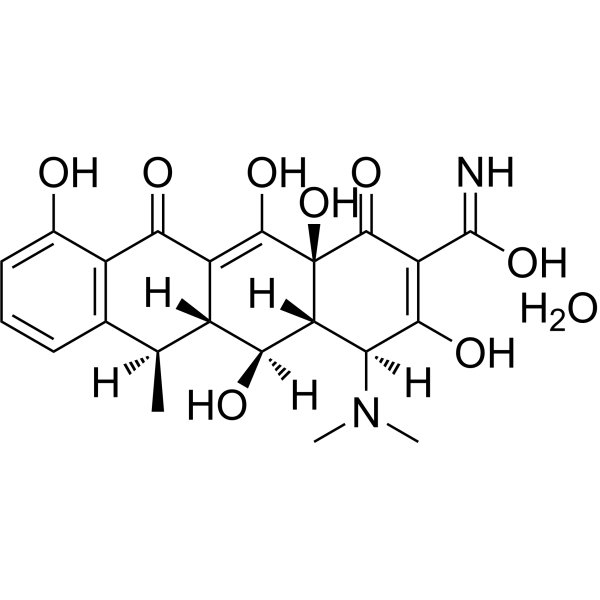
Doxycycline monohydrate is an orally active highly lipophilic, tissue-permeable MMP inhibitor with broad-spectrum antibacterial activity. Doxycycline monohydrate is also a semi-synthetic antibiotic with chelating properties, which blocks bacterial protein synthesis and inhibits extracellular matrix degradation through interactions with zinc and calcium atoms. Doxycycline monohydrate also inhibits mitochondrial biogenesis, translation, and the expression of respiratory chain proteins. Doxycycline monohydrate induces apoptosis, inhibits autophagy and EMT, downregulates stem cell markers, and activates the PI3K-AKT pathway, thereby effectively inhibiting the viability and proliferation of cancer cells such as breast cancer cells. Doxycycline monohydrate also promotes the survival and self-renewal of embryonic stem cells and neural stem cells, and reduces the frequency of medium changes in culture. Doxycycline monohydrate has been applied in studies related to breast cancer, prostate cancer, bladder cancer, and other cancers .
loading...
    loading...
69
69 Cited Publications
Cat. No.: HY-101193
CAS No.: 15442-64-5
Purity:  99.87%
Synonyms: Zn(II)-protoporphyrin IX; ZnPP; zinc Protoporphyrin-9
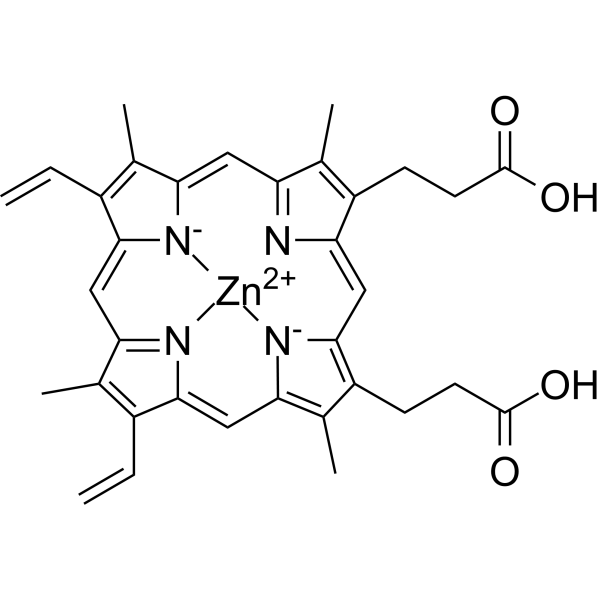
Zinc Protoporphyrin (Zn(II)-protoporphyrin IX) is an orally active and competitive heme oxygenase-1 (HO-1) inhibitor. Zinc Protoporphyrin regulates expression of HO-1 at the transcriptional level. The effect of Zinc Protoporphyrin on HO-1 expression is controversial.  It was shown to induce HO-1 expression in some cells, but suppress it in others. Zinc Protoporphyrin is used as a screening marker of iron deficiency in vivo. Zinc Protoporphyrin has anti-cancer activity .
loading...
    loading...
43
43 Cited Publications
Cat. No.: HY-D0942
CAS No.: 10127-02-3
Synonyms: Euchrysine 3RX
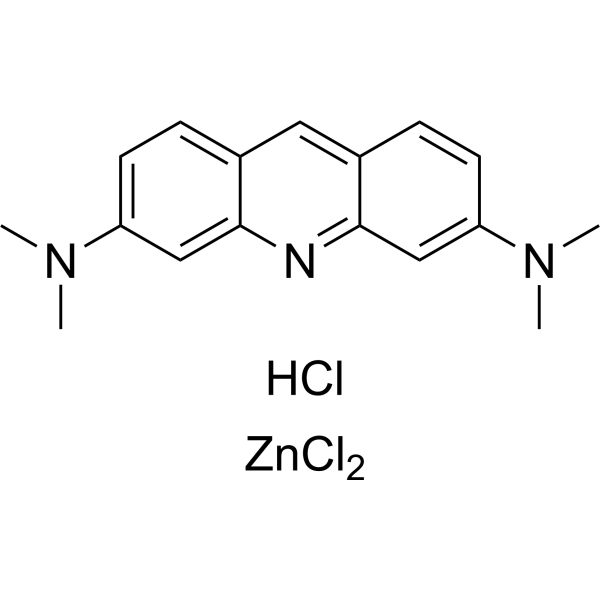
Acridine Orange (Euchrysine 3RX) zinc chloride salt is a cell-penetrable nucleic acid-selective fluorescent dye. Acridine Orange zinc chloride salt produces orange fluorescence when it binds to ssDNA or RNA, and green fluorescence when it binds to dsDNA (Ex: 488 nM; Em: green fluorescence at 530 nm, orange fluorescence at 640 nm) .
loading...
    loading...
27
27 Cited Publications
Cat. No.: HY-N0153
CAS No.: 10236-47-2
Synonyms: Naringoside
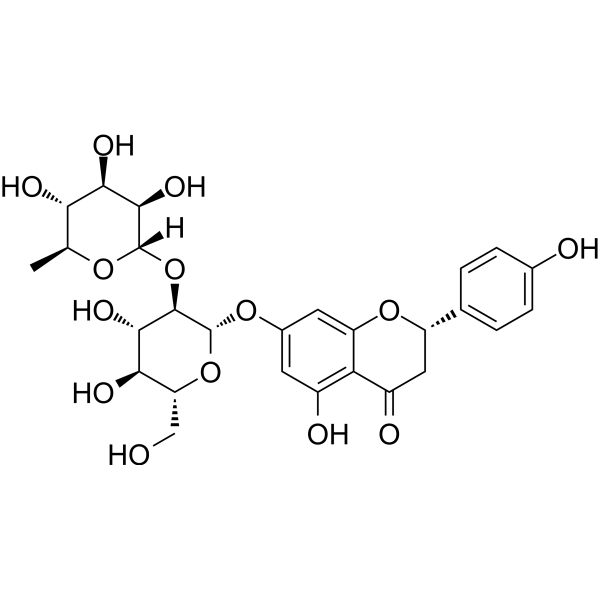
Naringin is a major flavanone glycoside obtained from tomatoes, grapefruits, and many other citrus fruits. Naringin exhibits biological properties such as antioxidant, anti-inflammatory, and antiapoptotic activities. Naringin also inhibits proliferation and invasion and induces apoptosis in human osteosarcoma cells by inhibiting zinc finger E-box binding homeobox 1 (Zeb1) .
loading...
    loading...
20
20 Cited Publications
Cat. No.: HY-E70005D
CAS No.: 9001-12-1
Synonyms: Collagenase, Type IV
Target:  

MMP

Research Areas:  

Others

Collagenase, Type IV (EC 3.4.24.3) is a microbially derived matrix metalloproteinases (MMPs) and zinc peptidase. Collagenase, Type IV degrades type IV collagen and type VII collagen, the main components of the basement membrane, and can also decompose basement matrix and elastin.

loading...
    loading...
19
19 Cited Publications
Cat. No.: HY-E70005A
CAS No.: 9001-12-1
Synonyms: EC 3.4.24.3
Target:  

MMP

Research Areas:  

Others

Collagenase, Type I is a microbially derived matrix metalloproteinases (MMPs) and zinc peptidase. Collagenase, Type I breaks down collagens 1, 3, 7, 8, 10, gelatin, proteoglycans, aggrecan .

loading...
    loading...
14
14 Cited Publications
Cat. No.: HY-E70005B
CAS No.: 9001-12-1
Target:  

MMP

Research Areas:  

Others

Collagenase, Type II is a microbially derived matrix metalloproteinases (MMPs) and zinc peptidase. Collagenase, Type II breaksdown collagens1, 3, 5, 7, 8, 10, fibronectin, gelatin, aggrecann .

loading...
    loading...
13
13 Cited Publications
Cat. No.: HY-14539
CAS No.: 5786-21-0
Purity:  99.84%
Synonyms: HF 1854; zinc000019796155
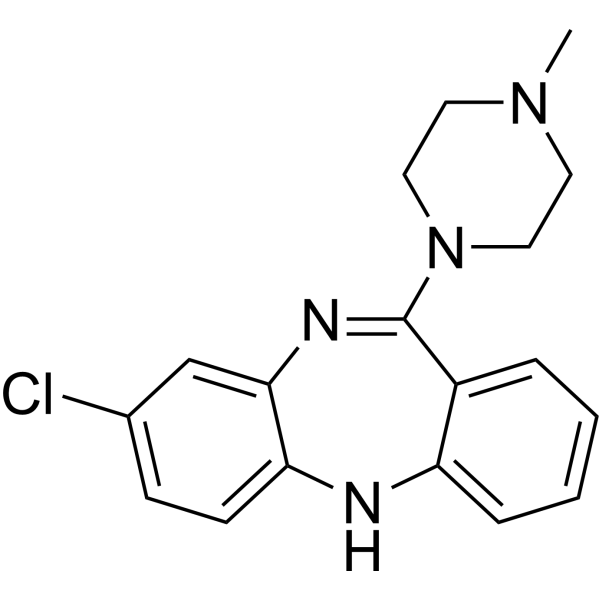
Clozapine (HF 1854) is an antipsychotic used for the research of schizophrenia. Clozapine has high affinity for a number of neuroreceptors. Clozapine is a potent antagonist of dopamine D2 with a Ki of 75 nM. Clozapine inhibits the muscarinic M1 receptor and serotonin 5HT2A receptor with Kis of 9.5 nM and 4 nM, respectively . Clozapine is also a potent and selective agonist at the muscarinic M4 receptor (EC50=11 nM) .
loading...
    loading...
13
13 Cited Publications
Cat. No.: HY-B0510
CAS No.: 738-70-5
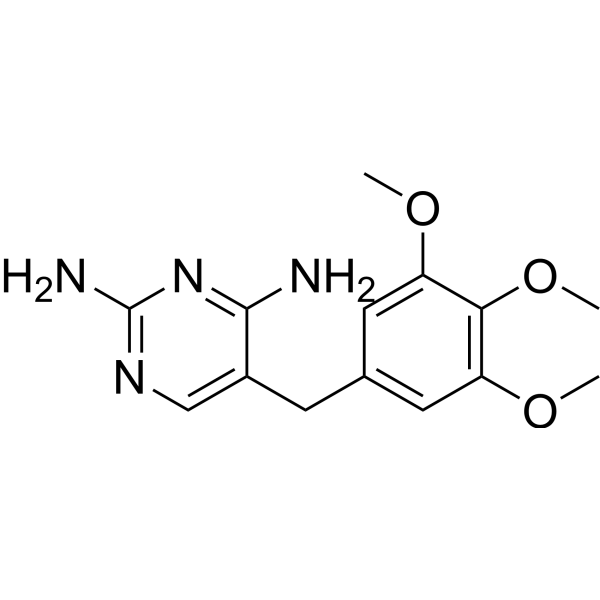
Trimethoprim is a bacteriostatic antibiotic and an orally active dihydrofolate reductase inhibitor. Trimethoprim is active against a wide range of Gram-positive and Gram-negative aerobic bacteria. Trimethoprim has the potential for the research of urinary tract infections, Shigellosis and Pneumocystis pneumonia. Trimethoprim can inhibit infection of Influenza A virus in chick embryo when combinated with zinc .
loading...
    loading...
13
13 Cited Publications
Cat. No.: HY-B0510B
CAS No.: 60834-30-2
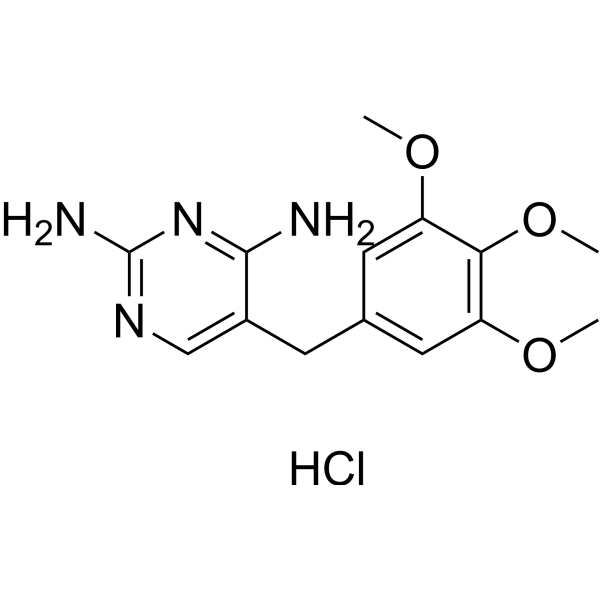
Trimethoprim hydrochloride is a bacteriostatic antibiotic and an orally active dihydrofolate reductase inhibitor. Trimethoprim hydrochloride is active against a wide range of Gram-positive and Gram-negative aerobic bacteria. Trimethoprim hydrochloride has the potential for the research of urinary tract infections, Shigellosis and Pneumocystis pneumonia. Trimethoprim hydrochloride can inhibit infection of Influenza A virus in chick embryo when combinated with zinc .
loading...
    loading...
13
13 Cited Publications
Cat. No.: HY-B0510C
CAS No.: 23256-42-0
Research Areas:  

Infection Cancer

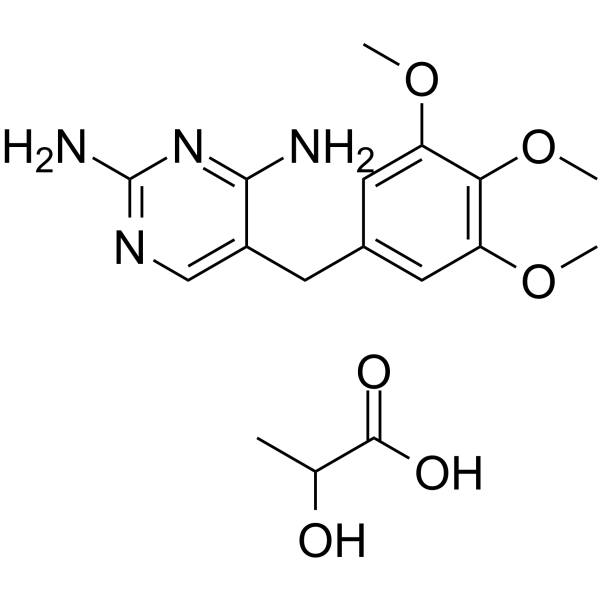
Trimethoprim lactate is a bacteriostatic antibiotic and an orally active dihydrofolate reductase inhibitor. Trimethoprim lactate is active against a wide range of Gram-positive and Gram-negative aerobic bacteria. Trimethoprim lactate has the potential for the research of urinary tract infections, Shigellosis and Pneumocystis pneumonia. Trimethoprim lactate can inhibit infection of Influenza A virus in chick embryo when combinated with zinc .
loading...
    loading...
12
12 Cited Publications
Cat. No.: HY-B0572
CAS No.: 13463-41-7
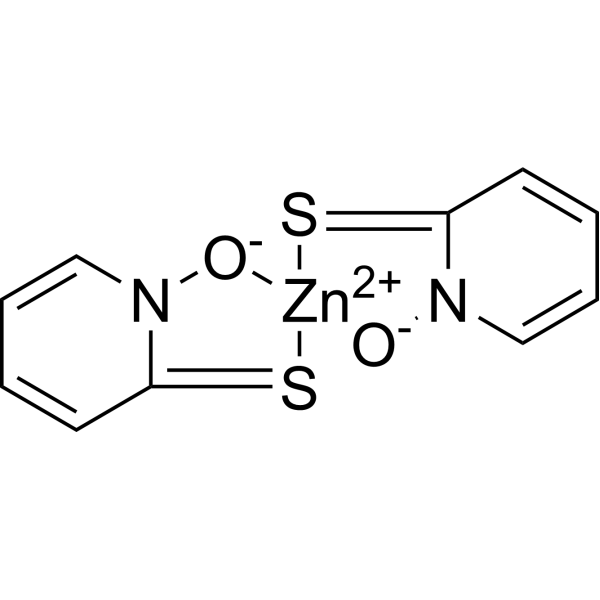
Zinc Pyrithione is an antifungal and antibacterial agent disrupting membrane transport by blocking the proton pump . Zinc Pyrithione is also a copper ionophore that delivers copper into cells and is a useful tool for studying cuproptosis .
loading...
    loading...
9
9 Cited Publications
Cat. No.: HY-Q45780
CAS No.: 667880-11-7
Target:  

Akt

Research Areas:  

Cancer

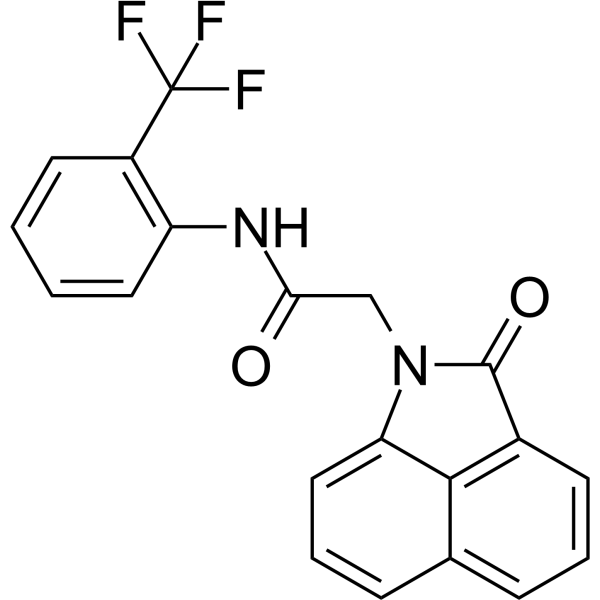
ZINC00640089 is a specific Lipocalin-2 (LCN2) inhibitor. ZINC00640089 inhibits cell proliferation, cell viability and reduces AKT phosphorylation levels in SUM149 cells. ZINC00640089 has good potential for research in inflammatory breast cancer (IBC) .
loading...
    loading...
9
9 Cited Publications
Cat. No.: HY-116788
CAS No.: 297180-15-5
Purity:  99.75%
Target:  

Bacterial

Research Areas:  

Infection

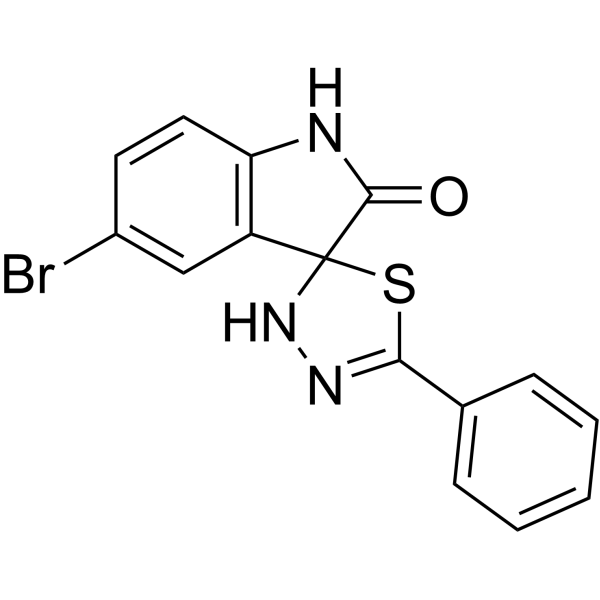
Lipofermata is a fatty acid transport protein 2 (FATP2) inhibitor. Lipofermata shows fatty acid transport inhibition with an IC50 of 4.84 μM in Caco-2 cells. Lipofermata, an analog of spiro-indoline-thadiazole, shows zinc-specific suppression of antibacterial activity. Lipofermata perturbs zinc homeostasis in E. coli K-12 with a MIC of 16 μM .
loading...
    loading...
9
9 Cited Publications
Cat. No.: HY-114395
CAS No.: 2349367-89-9
Purity:  98.85%
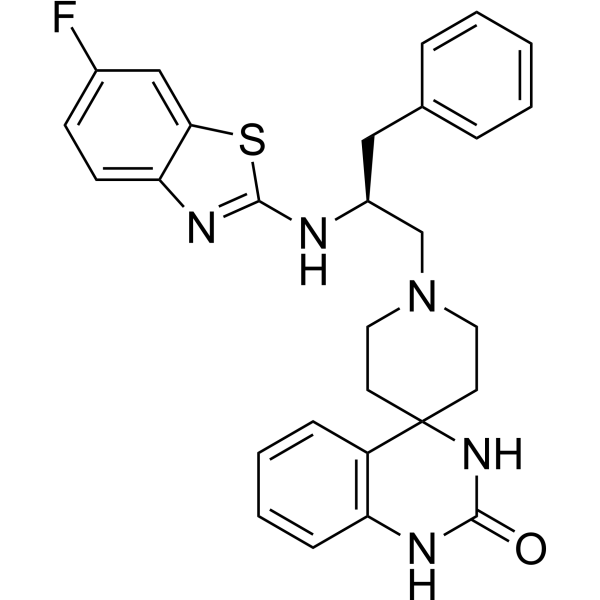
NVS-ZP7-4 is an inhibitor of the zinc transporter SLC39A7 (ZIP7) and indicates ER zinc levels. ZIP7 is an active molecular node in the Notch pathway and mediates ferroptosis. NVS-ZP7-4 induces ER stress and exerts a certain ferroptosis-inhibiting effect, reduces Erastin (HY-15763)-induced cell death .
loading...
    loading...
6
6 Cited Publications
Cat. No.: HY-119287
CAS No.: 109628-27-5
Purity:  99.50%
TSQ is a cytosolic zinc ion fluorescence probe that is membrane permeable and can be used for intracellular imaging of zinc proteins (λmax ~470 nm). TSQ can combine with Zn 2+ in the presence of Ca 2+ and Mg 2+ to produce blue fluorescence (Ex/Em = 334/495 nm) .
loading...
    loading...
5
5 Cited Publications
Cat. No.: HY-150086
CAS No.: 2365532-64-3
Purity:  98.44%
Synonyms: CF4
Copper Fluor-4 (CF4) is a Cu +-specific fluorescent probe based on a rhodol dye scaffold. Copper Fluor-4 has high copper selectivity with a Kd value of 2.9×10 −13 M, particularly over zinc and iron, as well as abundant cellular alkali and alkaline earth metals. Copper Fluor-4 is stable in a physiologically relevant pH regime between 6 and 8 (wavelengths of 415 nm for excitation and 660 nm for emission) .
loading...
    loading...
4
4 Cited Publications
Cat. No.: HY-134570
CAS No.: 1211825-25-0
Purity:  99.75%
Target:  

FAK

ZINC40099027 is a selective FAK activator. ZINC40099027 promotes FAK phosphorylation, without activating its paralogs Pyk2 and Src. ZINC40099027 promotes the wound closure of human intestinal epithelial monolayers and the healing of mouse ulcers by activating FAK. ZINC40099027 can be used for diseases related to gastrointestinal mucosal injury research .
loading...
    loading...
4
4 Cited Publications
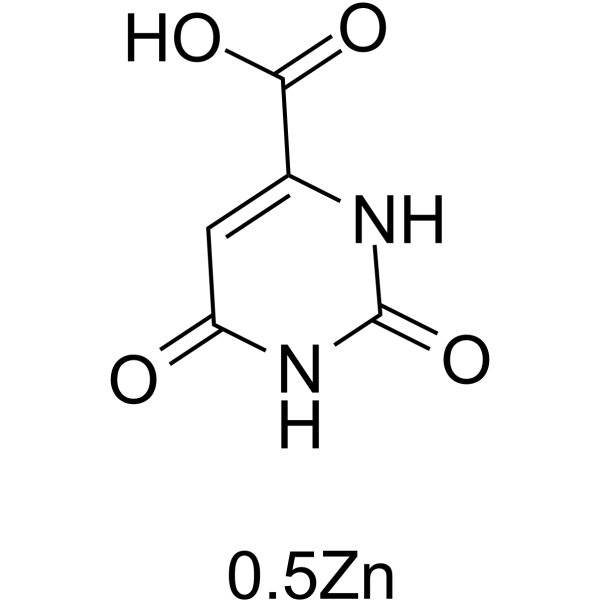
Cat. No.: HY-N0157A
CAS No.: 68399-76-8
Synonyms: 6-Carboxyuracil zinc; Vitamin B13 zinc
Orotic acid (zinc), a precursor in biosynthesis of pyrimidine nucleotides and RNA, is released from the mitochondrial dihydroorotate dehydrogenase (DHODH) for conversion to UMP by the cytoplasmic UMP synthase enzyme. Orotic acid (zinc) is a marker for measurement in routine newborn screening for urea cycle disorders. Orotic acid (zinc) can induce hepatic steatosis and hepatomegaly in rats .
loading...
    loading...
4
4 Cited Publications
Cat. No.: HY-D0155
CAS No.: 288574-78-7
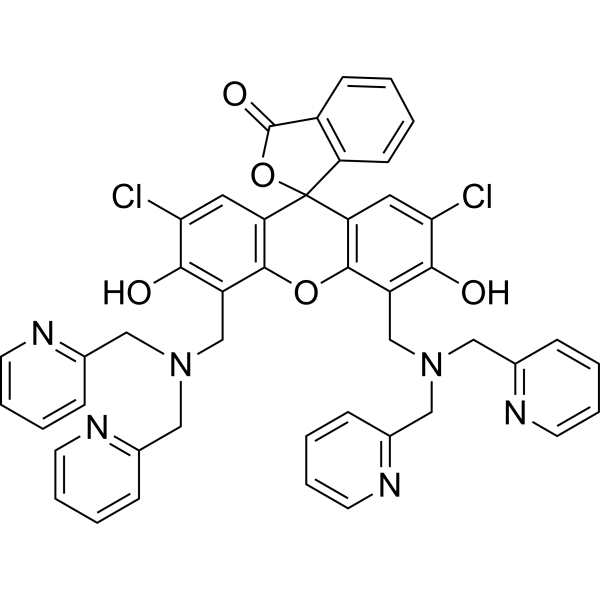
Zinpyr-1 is a zinc-responsive fluorescent indicator and a membrane-permeable metal-binding probe. Zinpyr-1 forms a complex with Mn 2+ ions and generates a fluorescence turn-on signal. Zinpyr-1 binds to free zinc ions in serum, enabling quantitative detection of free zinc concentration. Zinpyr-1 produces fluorescence signals reflecting the relative zinc concentration in plant root cells, localizes to specific layers of plant root cells, and can be used to support analyses related to plant zinc transporter mutations and homeostasis .
loading...
    loading...

