



PSB-12062
Based on 1 publication(s) in Google Scholar
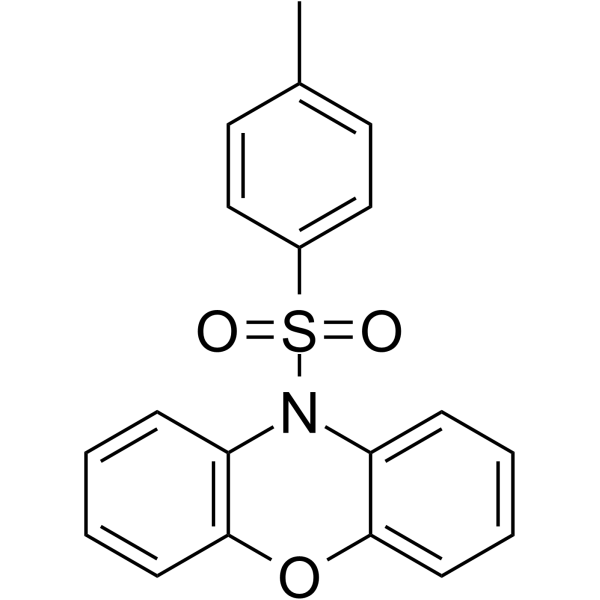
PSB-12062 is a potent and selective P2X4 antagonist with an IC50 of 1.38 μM for human P2X4.
For research use only. We do not sell to patients.
- Purity: 98.05%
- CAS No.: 55476-47-6
- Formula: C19H15NO3S
- Molecular Weight:337.39
-
Storage:Powder -20°C, 3 years , 4°C, 2 years ; In solvent -80°C, 2 years , -20°C, 1 year

To place orders, for customer services and technical support, please contact: MedChemExpress USA
Tel: 609-228-6898 E-mail: [email protected] [email protected]


-
 Biological Activity
-
Chemical Information
-
Solvent & Solubility
- Protocol
- Purity & Documentation
- References
-
 Help & FAQs


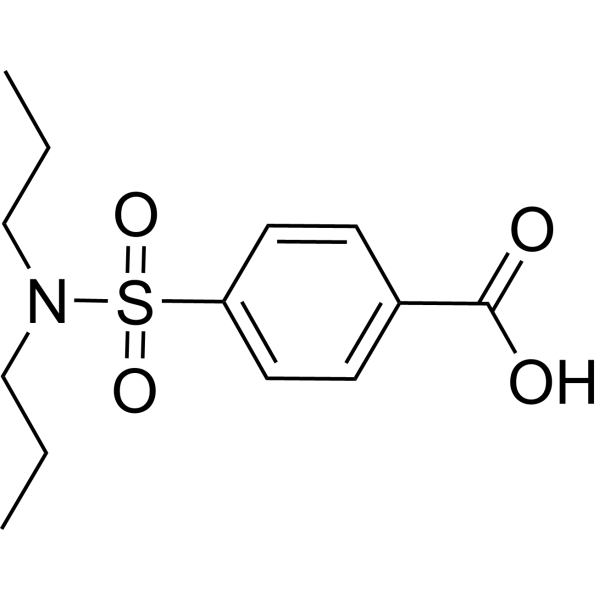
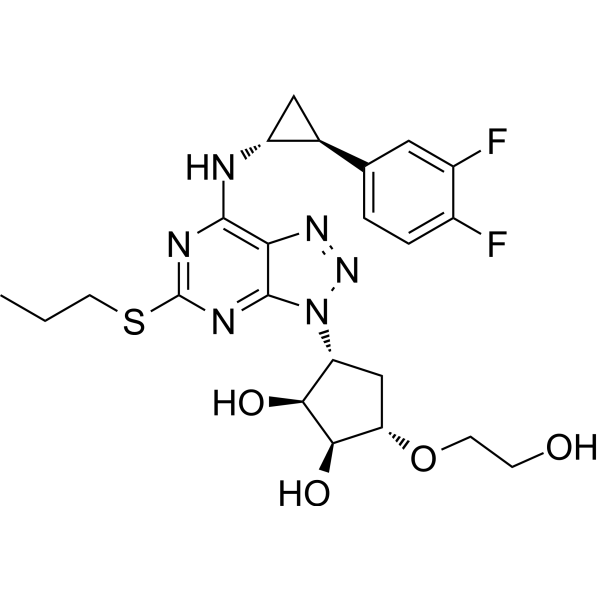
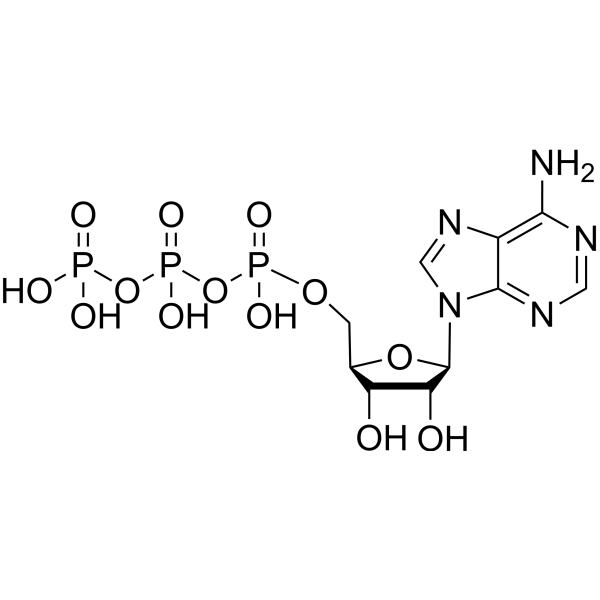
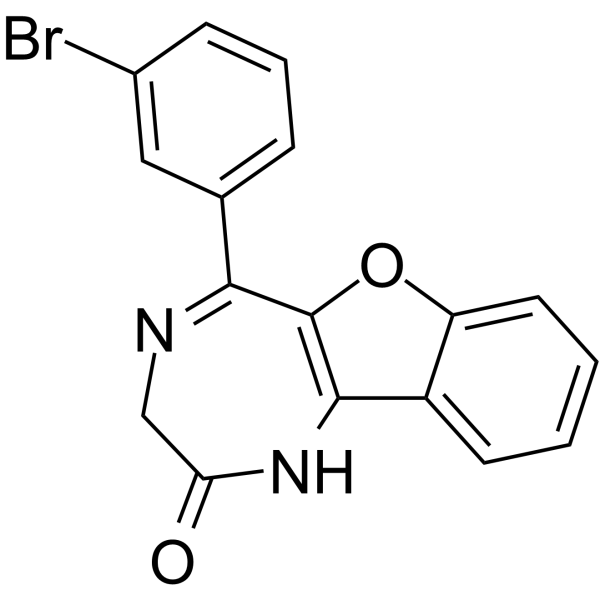
Publications Citing Use of MedChemExpress (MCE) PSB-12062
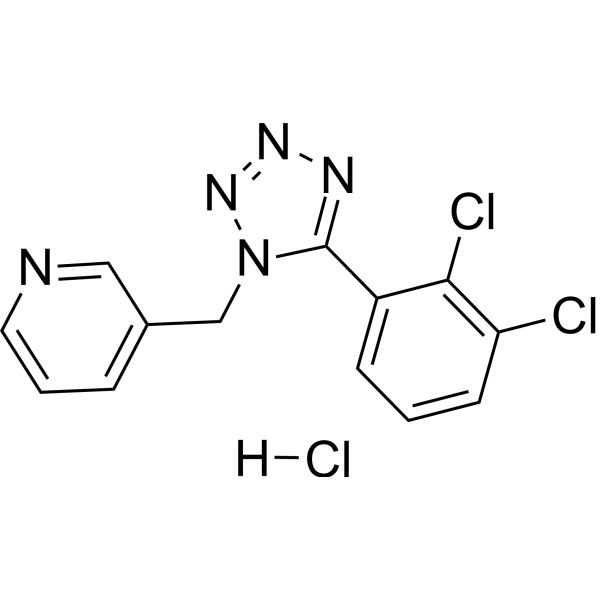
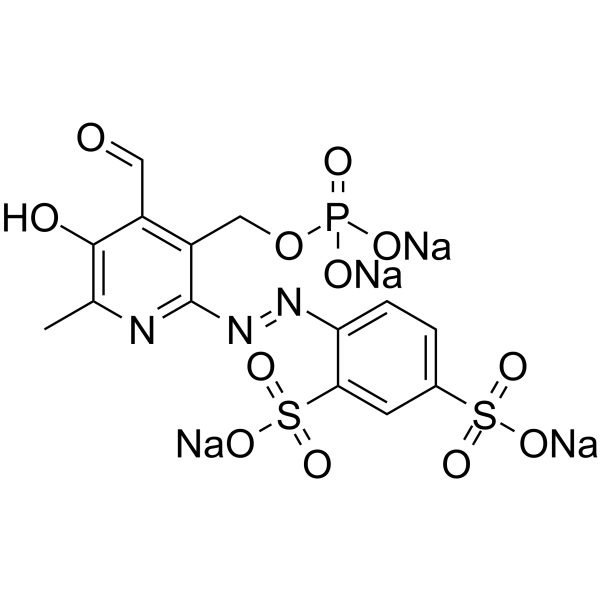
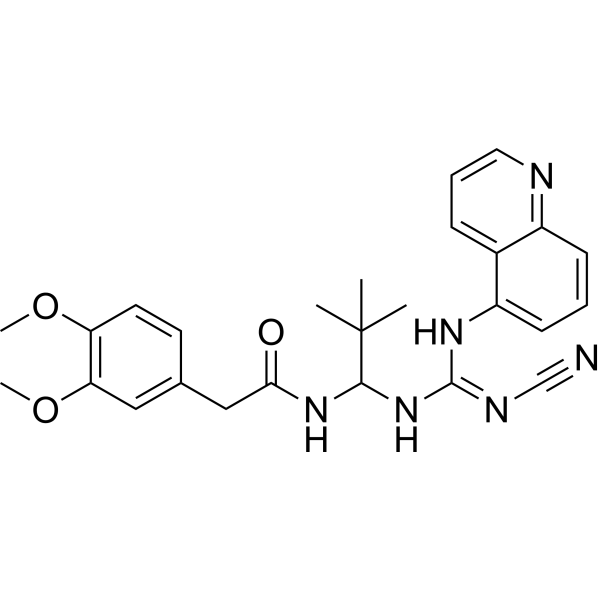
MoreAll P2X Receptor Isoforms
More

Biological Activity
Description
IC50 & Target
|
P2X4 Receptor |
Cellular Effect
|
Cell Line

|
Type | Value | Description | References |
|---|---|---|---|---|
| HEK293 | IC50 |
0.76 μM
Compound: PSB12062
|
Antagonist activity at human P2X4R transfected in HEK293 cells assessed as inhibition of ATP-mediated calcium influx measured after 10 mins by YOPRO-1 dye uptake assay
Antagonist activity at human P2X4R transfected in HEK293 cells assessed as inhibition of ATP-mediated calcium influx measured after 10 mins by YOPRO-1 dye uptake assay
|
[PMID: 31532206] |
| HEK293 | IC50 |
1.4 μM
Compound: PSB12062
|
Antagonist activity at human P2X4R transfected in HEK293 cells
Antagonist activity at human P2X4R transfected in HEK293 cells
|
[PMID: 31532206] |
In Vitro
PSB-12062 shows similar potency in human, rat, and mouse species. PSB-12062 shows to be allosteric in nature with a 35-fold selectivity toward P2X4 versus P2X1, P2X2, P2X3, and P2X7. However, PSB-12062 is unable to completely block ATP-induced P2X4-mediated calcium influx even when used at high concentrations (>30 μM)[1].
MedChemExpress (MCE) has not independently confirmed the accuracy of these methods. They are for reference only.


Chemical Information
-
CAS No. 55476-47-6
-
Appearance Solid
-
Molecular Weight 337.39
-
Formula C19H15NO3S
-
Color White to off-white
-
SMILES
O=S(N1C2=C(C=CC=C2)OC3=CC=CC=C13)(C4=CC=C(C)C=C4)=O
-
Synonyms
N-(p-Methylphenylsulfonyl)phenoxazine
-
Shipping
Room temperature in continental US; may vary elsewhere.
-
Storage
Powder -20°C 3 years 4°C 2 years In solvent -80°C 2 years -20°C 1 year


Publications (1)
-
Journal Impact Factor
-
Most Recent


Solvent & Solubility
In Vitro:
DMSO : 25 mg/mL (74.10 mM; Need ultrasonic; Hygroscopic DMSO has a significant impact on the solubility of product, please use newly opened DMSO)
Please refer to the solubility information to select the appropriate solvent. Once prepared, please aliquot and store the solution to prevent product inactivation from repeated freeze-thaw cycles.
Storage method and period of stock solution: -80°C, 2 years; -20°C, 1 year. When stored at -80°C, please use it within 2 years. When stored at -20°C, please use it within 1 year.
Please refer to the solubility information to select the appropriate solvent. Once prepared, please aliquot and store the solution to prevent product inactivation from repeated freeze-thaw cycles.
Storage method and period of stock solution: -80°C, 2 years; -20°C, 1 year. When stored at -80°C, please use it within 2 years. When stored at -20°C, please use it within 1 year.
Concentration (start) × Volume (start) = Concentration (final) × Volume (final)
In Vivo:
Select the appropriate dissolution method based on your experimental animal and administration route.
- For the following dissolution methods, please ensure to first prepare a clear stock solution using an In Vitro approach and then sequentially add co-solvents:
- To ensure reliable experimental results, the clarified stock solution can be appropriately stored based on storage conditions. As for the working solution for In Vivo experiments, it is recommended to prepare freshly and use it on the same day.
- The percentages shown for the solvents indicate their volumetric ratio in the final prepared solution. If precipitation or phase separation occurs during preparation, heat and/or sonication can be used to aid dissolution.
In Vivo Dissolution Calculator
Please enter the basic information of animal experiments:
-
-
-
-
Recommended: Prepare an additional quantity of animals to account for potential losses during experiments.
Please enter your animal formula composition:
-
%DMSO +
Recommended: Keep the proportion of DMSO in working solution below 2% if your animal is weak.
-
%+
-
+%Tween-80 + +
-
%Saline +
The co-solvents required include: DMSO, . All of co-solvents are available by MedChemExpress (MCE). , Tween 80. All of co-solvents are available by MedChemExpress (MCE).
Working solution concentration: 0.22 mg/mL
Method for preparing stock solution: mg drug dissolved in μL DMSO. Stock solution concentration: mg/mL.
1. Take μL DMSO stock solution;
2. Add μL .
μL , mix evenly;
3. Then add μL Tween 80, mix evenly;
4. Then add μL
Please ensure that the stock solution in the first step is dissolved to a clear state, and add co-solvents in sequence. You can use ultrasonic heating (ultrasonic cleaner, recommended frequency 20-40 kHz), vortexing, etc. to assist dissolution.

Protocol
Kinase Assay[1]
The competition binding studies are performed in assay buffer (50 mM Tris-HCl, pH 7.4) containing 1 mM EDTA and 0.2 nM [35S]ATPγS. The incubations are started by the addition of membranes (10-15 μg) and are performed in a 250 μL final assay volume. The reactions are terminated by vacuum filtration over GF/ B glass-fiber filters using a Brandell 48-well harvester. The filters are rinsed three times with ice-cold Tris-HCl buffer (50 mM, pH 7.4). The filters are punched out and transferred to 4 mL scintillation vials. Then 2.5 mL of Ultima Gold scintillation cocktail is added, and samples are counted after 6 h for 1 min each, using a liquid scintillation counter (LSC). Nonspecific binding of [35S]ATPγS is determined using 100 μM ATP[1].
MedChemExpress (MCE) has not independently confirmed the accuracy of these methods. They are for reference only.


Purity & Documentation
-
Data Sheet (278 KB)
-
SDS (392 KB)
- English - EN (392 KB)
- Français - FR (392 KB)
- Deutsch - DE (392 KB)
- Norwegian - NO (392 KB)
- Español - ES (392 KB)
- Swedish - SV (392 KB)
- Italian - IT (392 KB)
- Korean - KR (392 KB)
- Portuguese - PT (392 KB)
-
Handling Instructions (2659 KB)
References
[1]. Hernandez-Olmos V, et al. N-substituted phenoxazine and acridone derivatives: structure-activity relationships of potent P2X4 receptor antagonists. J Med Chem. 2012 Nov 26;55(22):9576-88. [Content Brief]
[2]. Stokes L, et al. P2X4 Receptor Function in the Nervous System and Current Breakthroughs in Pharmacology.Front Pharmacol. 2017 May 23;8:291. [Content Brief]


Complete Stock Solution Preparation Table
Please refer to the solubility information to select the appropriate solvent. Once prepared, please aliquot and store the solution to prevent product inactivation from repeated freeze-thaw cycles.
Storage method and period of stock solution: -80°C, 2 years; -20°C, 1 year. When stored at -80°C, please use it within 2 years. When stored at -20°C, please use it within 1 year.
| Optional Solvent | Concentration Solvent Mass | 1 mg | 5 mg | 10 mg | 25 mg |
|---|---|---|---|---|---|
| DMSO | 1 mM | 2.9639 mL | 14.8196 mL | 29.6393 mL | 74.0982 mL |
| 5 mM | 0.5928 mL | 2.9639 mL | 5.9279 mL | 14.8196 mL | |
| 10 mM | 0.2964 mL | 1.4820 mL | 2.9639 mL | 7.4098 mL | |
| 15 mM | 0.1976 mL | 0.9880 mL | 1.9760 mL | 4.9399 mL | |
| 20 mM | 0.1482 mL | 0.7410 mL | 1.4820 mL | 3.7049 mL | |
| 25 mM | 0.1186 mL | 0.5928 mL | 1.1856 mL | 2.9639 mL | |
| 30 mM | 0.0988 mL | 0.4940 mL | 0.9880 mL | 2.4699 mL | |
| 40 mM | 0.0741 mL | 0.3705 mL | 0.7410 mL | 1.8525 mL | |
| 50 mM | 0.0593 mL | 0.2964 mL | 0.5928 mL | 1.4820 mL | |
| 60 mM | 0.0494 mL | 0.2470 mL | 0.4940 mL | 1.2350 mL |


PSB-12062 Related Classifications
HY-101910 Related Classifications
 Powered by Bioz