



Fuchsine base monohydrochloride

Based on 1 Customer Validation
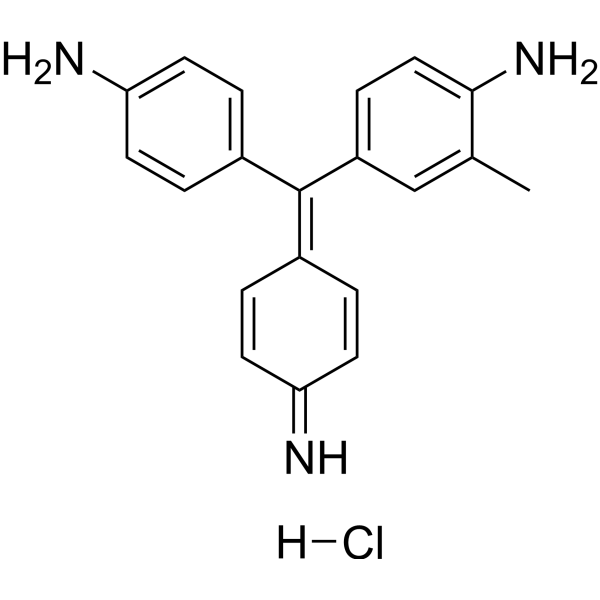
Fuchsine base (Magenta base; Basic Fuchsin) monohydrochloride is a triaminotriphenylmethane dye. Fuchsine base monohydrochloride has anesthetic, bactericidal and fungicidal properties. Fuchsine base monohydrochloride can be used for the staining of collagen, muscle, mitochondria and tuberculosis. Fuchsine base monohydrochloride is commonly used as a counterstain in Gram staining.
For research use only. We do not sell to patients.
- Purity : 99.53%
- CAS No.: 632-99-5
- Formula: C20H20ClN3
- Molecular Weight:337.85
-
Storage:
RT, sealed storage, away from moisture and light.
In solvent -80°C, 1 year , -20°C, 6 months

To place orders, for customer services and technical support, please contact: MedChemExpress USA
Tel: 609-228-6898 E-mail: [email protected] [email protected]


-
 Biological Activity
-
Chemical Information
-
Solvent & Solubility
- Protocols
- Purity & Documentation
- References
-
 Help & FAQs


-
HY-D0286
Fluorol Yellow 088Fluorescent Dye -
HY-B1359
Methylene blue trihydrateParasite Inhibitor -
HY-B1359A
Methylene blue indicatorBiochemical Assay Reagent -
HY-120601
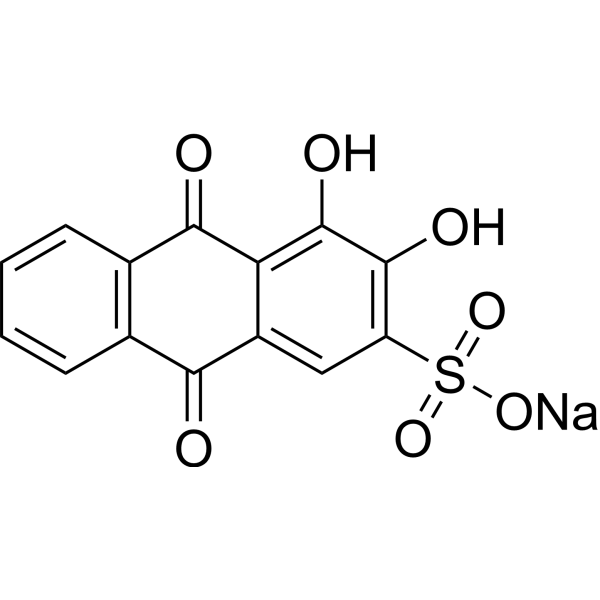
Alizarin Red S sodiumCalcium Deposits Dye -
HY-B0324A
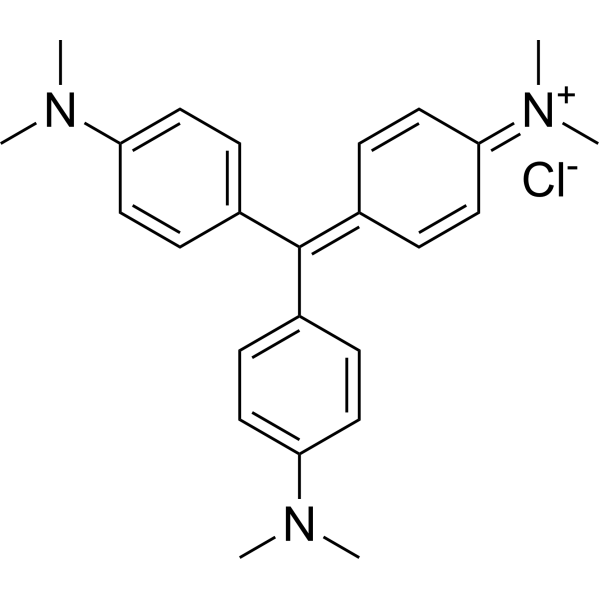
Crystal VioletFluorochrome -
HY-W110927
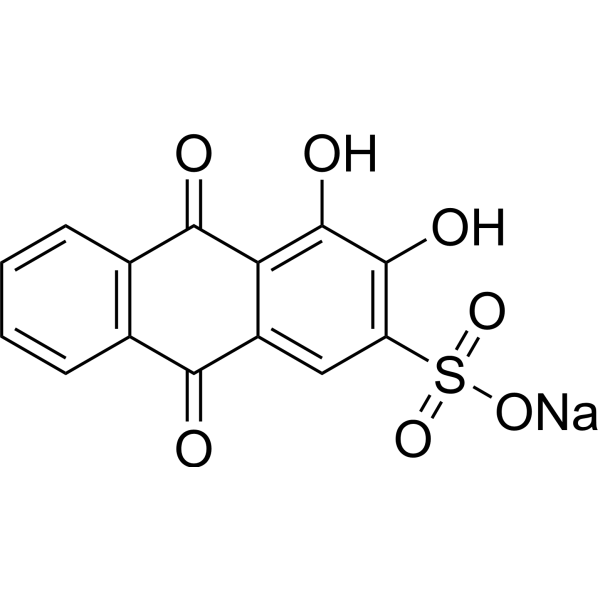
Alizarin Red S Indicator (4.3-6.3), INDMetal Ions Dye -
HY-118907
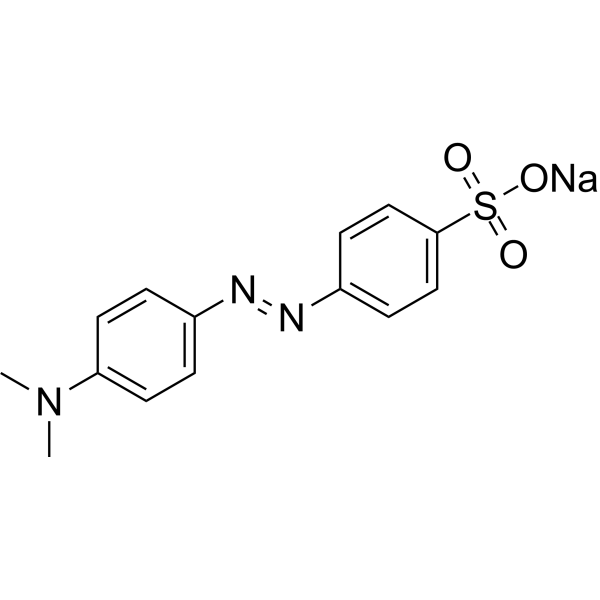
Methyl OrangeAzo Dye -

HY-DY2001
Crystal Violet (solution)Fluorochrome -
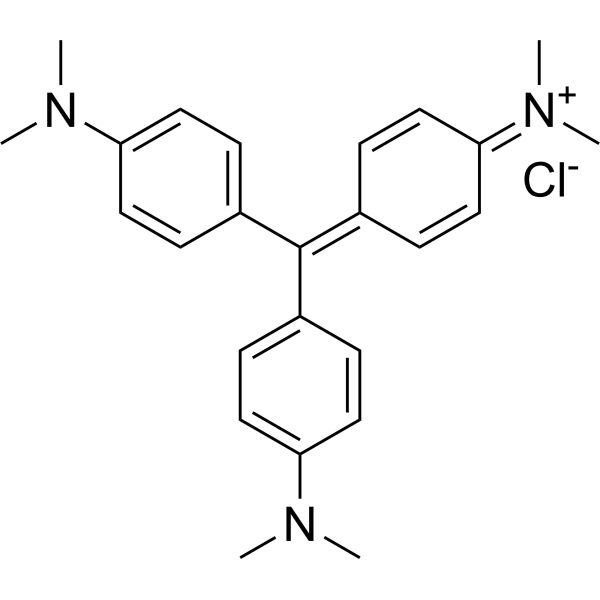
HY-W110794
Crystal violet, IND (0.0-2.0)Biochemical Assay Reagent -

HY-118907R
Methyl Orange (Standard)Azo Dye -
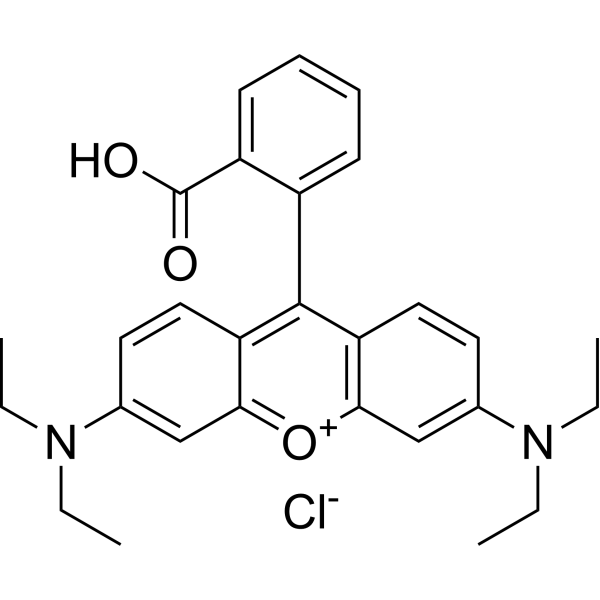
HY-Y0016
Rhodamine BFluorescent Dye -
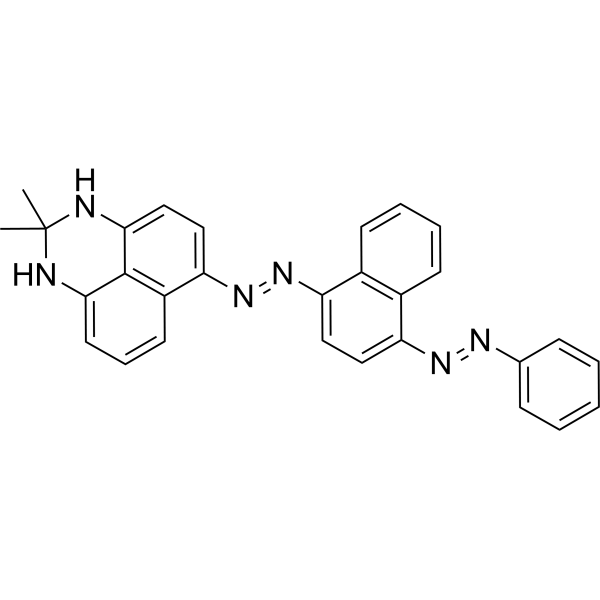
HY-D0213
Sudan Black BFat-soluble Diazo Dye


Biological Activity
Description
In Vitro
Protocol (The following introduces the method of using this product for cell (suspected bacterial infection)/bacteria staining through Gram staining as an example. This plan only provides a guideline and should be modified according to your specific needs.)
1.1 Sample Collection
Samples were collected strictly following aseptic operation techniques to obtain isolated bacteria/cell samples.
1.2 Required Reagents
Primary staining agent: Crystal violet (HY-B0324A)
Mordanting agent: Gram's iodine solution
Decolorizing agent: Acetone/ethanol (50:50 volume ratio)
Recoloring agent: 0.1% alkaline fuchsine solution (Fuchsine base monohydrochloride)
2. Bacterial Staining
2.1 Use a inoculation loop to transfer the suspension culture onto a microscope slide.
2.2 Add crystal violet staining agent to the fixed culture.
2.3 Iodine solution is applied to cover the smear for 10 to 60 seconds. After removing the iodine solution, rinse the slide with running water. Then, blot off the excess water on the surface.
2.4 Add a few drops of decolorizing agent to the slide. Then rinse the slide with clean water for 5 seconds. To prevent excessive decolorization of Gram-positive bacteria, if the slide no longer shows color when the solvent flows over it, stop adding the decolorizing agent immediately.
2.5 The smear is re-stained with an alkaline brilliant red solution for approximately 40 to 60 seconds. Then, the brilliant red solution is washed off with clean water, and the excess moisture is absorbed using paper towels. Alternatively, the slide can be left to air dry naturally after removing the excess moisture.
3. Microscope Observation
3.1 Use the oil immersion method to observe the slide under the microscope. Initially, a 40× objective lens should be used to examine the slide to assess the distribution of the smear, and then a 100× oil immersion objective lens should be used for further inspection.
3.2 The staining of white blood cells and macrophages was Gram-negative.
3.3 The squamous epithelial cells show positive Gram staining.
Note: Organisms that appear purple-brown in color after primary staining under the microscope are Gram-positive bacteria, while those that do not absorb the primary staining agent and appear red under the microscope are Gram-negative bacteria.
MedChemExpress (MCE) has not independently confirmed the accuracy of these methods. They are for reference only. Further protocols information, click here.


Chemical Information
-
CAS No. 632-99-5
-
Appearance Solid
-
Molecular Weight 337.85
-
Formula C20H20ClN3
-
SMILES
NC1=CC=C(/C(C2=CC=C(N)C=C2)=C3C=CC(C=C\3)=N)C=C1C.[H]Cl
-
Synonyms
Magenta base monohydrochloride; Basic Fuchsin monohydrochloride; Rosaniline Base monohydrochloride
-
Shipping
Room temperature in continental US; may vary elsewhere.
-
Storage
RT, sealed storage, away from moisture and light
In solvent -80°C 1 year -20°C 6 months


Solvent & Solubility
In Vitro:
DMSO : 50 mg/mL (147.99 mM; Need ultrasonic; Hygroscopic DMSO has a significant impact on the solubility of product, please use newly opened DMSO)
Please refer to the solubility information to select the appropriate solvent. Once prepared, please aliquot and store the solution to prevent product inactivation from repeated freeze-thaw cycles.
Storage method and period of stock solution: -80°C, 1 year; -20°C, 6 months. When stored at -80°C, please use it within 1 year. When stored at -20°C, please use it within 6 months.
Please refer to the solubility information to select the appropriate solvent. Once prepared, please aliquot and store the solution to prevent product inactivation from repeated freeze-thaw cycles.
Storage method and period of stock solution: -80°C, 1 year; -20°C, 6 months. When stored at -80°C, please use it within 1 year. When stored at -20°C, please use it within 6 months.
Concentration (start) × Volume (start) = Concentration (final) × Volume (final)

Protocols
-
Gram Staining of Tissue Sections
Gram staining of tissue sections is a histochemical technique used to differentiate Gram-positive and Gram-negative bacteria within histological specimens based on differences in bacterial cell wall structure and dye retention, adapted from classical bacteriological Gram staining into tissue-compatible “histological Gram stain” variants. In tissue applications, modifications of the Brown-Hopps and Brown-Brenn methods are commonly used to improve differentiation of microorganisms embedded within host connective tissue and to reduce overstaining or loss of Gram-negative signal, which are known limitations of earlier approaches. The principle relies on crystal violet-iodine complex retention in Gram-positive organisms and subsequent decolorization and counterstaining steps that allow contrast visualization of Gram-negative organisms against tissue background.


Purity & Documentation
-
Data Sheet (274 KB)
-
SDS (622 KB)
- English - EN (622 KB)
- Français - FR (622 KB)
- Deutsch - DE (622 KB)
- Norwegian - NO (622 KB)
- Español - ES (622 KB)
- Swedish - SV (622 KB)
- Italian - IT (622 KB)
- Korean - KR (622 KB)
- Portuguese - PT (622 KB)
-
Handling Instructions (2659 KB)
References
[1]. Gupta VK, et al. Adsorption of basic fuchsin using waste materials--bottom ash and deoiled soya--as adsorbents. J Colloid Interface Sci. 2008 Mar 1;319(1):30-9. [Content Brief]
[2]. Tripathi N, et al. Gram Staining. 2025 Mar 28. In: StatPearls [Internet]. Treasure Island (FL): StatPearls Publishing; 2025 Jan–. [Content Brief]


Complete Stock Solution Preparation Table
Please refer to the solubility information to select the appropriate solvent. Once prepared, please aliquot and store the solution to prevent product inactivation from repeated freeze-thaw cycles.
Storage method and period of stock solution: -80°C, 1 year; -20°C, 6 months. When stored at -80°C, please use it within 1 year. When stored at -20°C, please use it within 6 months.
| Optional Solvent | Concentration Solvent Mass | 1 mg | 5 mg | 10 mg | 25 mg |
|---|---|---|---|---|---|
| DMSO | 1 mM | 2.9599 mL | 14.7995 mL | 29.5989 mL | 73.9973 mL |
| 5 mM | 0.5920 mL | 2.9599 mL | 5.9198 mL | 14.7995 mL | |
| 10 mM | 0.2960 mL | 1.4799 mL | 2.9599 mL | 7.3997 mL | |
| 15 mM | 0.1973 mL | 0.9866 mL | 1.9733 mL | 4.9332 mL | |
| 20 mM | 0.1480 mL | 0.7400 mL | 1.4799 mL | 3.6999 mL | |
| 25 mM | 0.1184 mL | 0.5920 mL | 1.1840 mL | 2.9599 mL | |
| 30 mM | 0.0987 mL | 0.4933 mL | 0.9866 mL | 2.4666 mL | |
| 40 mM | 0.0740 mL | 0.3700 mL | 0.7400 mL | 1.8499 mL | |
| 50 mM | 0.0592 mL | 0.2960 mL | 0.5920 mL | 1.4799 mL | |
| 60 mM | 0.0493 mL | 0.2467 mL | 0.4933 mL | 1.2333 mL | |
| 80 mM | 0.0370 mL | 0.1850 mL | 0.3700 mL | 0.9250 mL | |
| 100 mM | 0.0296 mL | 0.1480 mL | 0.2960 mL | 0.7400 mL |


Fuchsine base monohydrochloride Related Classifications
HY-B1539A Related Classifications
 Powered by Bioz