



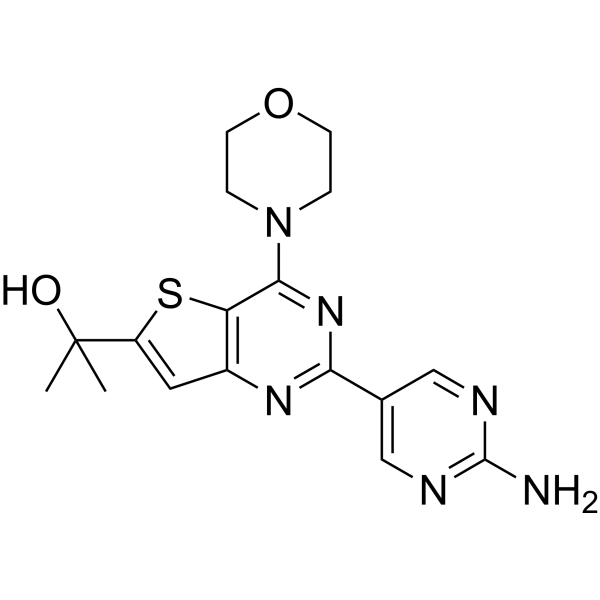
GNE-493
Based on 4 publication(s) in Google Scholar
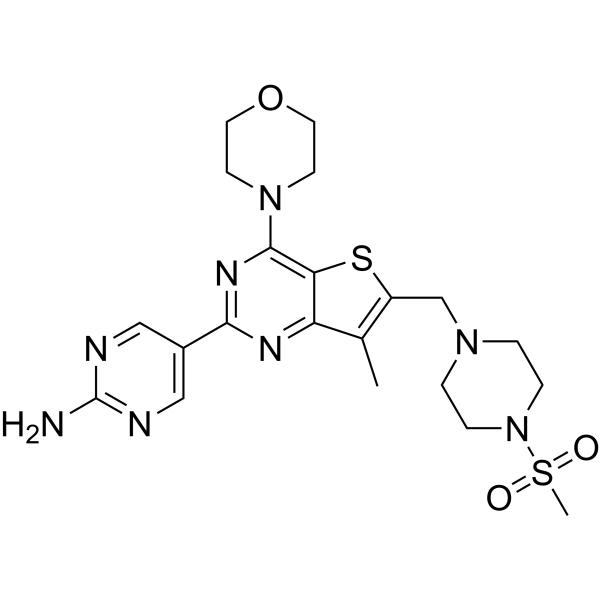
GNE-493 is a potent, selective, and orally available dual pan-PI3-kinase/mTOR inhibitor with IC50s of 3.4 nM, 12 nM, 16 nM, 16 nM and 32 nM for PI3Kα, PI3Kβ, PI3Kδ, PI3Kγ and mTOR.
연구목적의 판매만을 진행합니다. 환자를 대상으로 한 판매는 하지 않습니다.
- Purity : 99.81%
- CAS No.: 1033735-94-2
- 화학식: C17H20N6O2S
- 분자량:372.44
-
보관:Powder -20°C, 3 years , 4°C, 2 years ; In solvent -80°C, 2 years , -20°C, 1 year

To place orders, for customer services and technical support, please contact: MedChemExpress USA
Tel: 609-228-6898 E-mail: [email protected] [email protected]


-
 Biological Activity
-
Chemical Information
-
용액&용해도
- 순도&문서
- References
-
 Help & FAQs


-
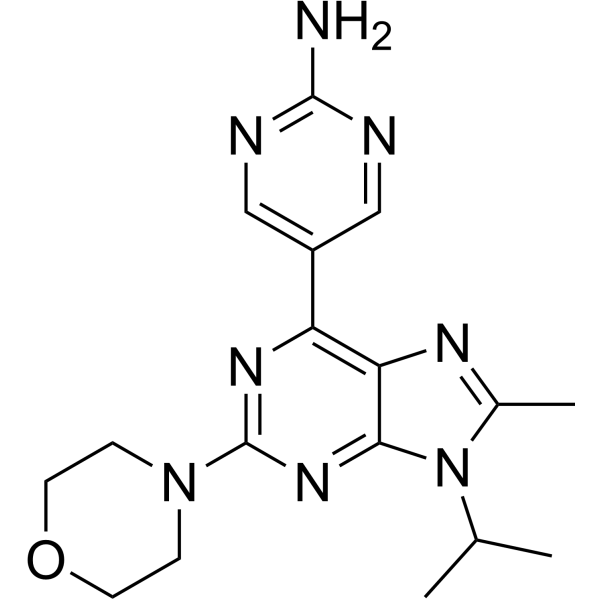
HY-16585
VS-5584PI3K/mTOR Inhibitor -
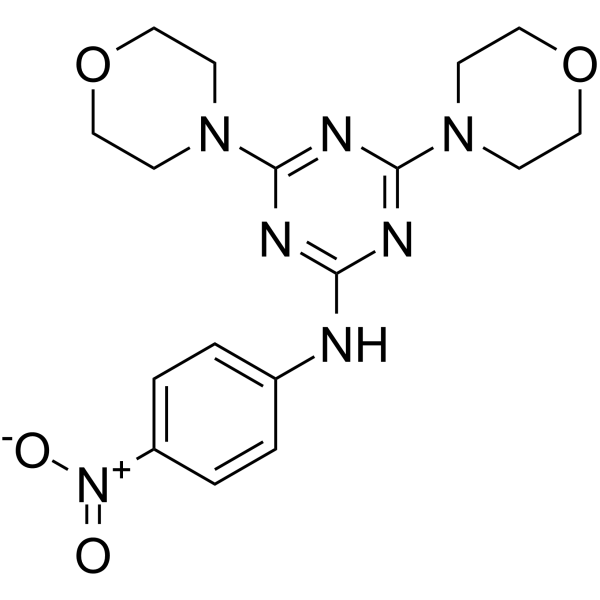
HY-B0795
MHY1485mTOR Activator -
HY-12763
GNE-317PI3K/mTOR Inhibitor -
HY-13328
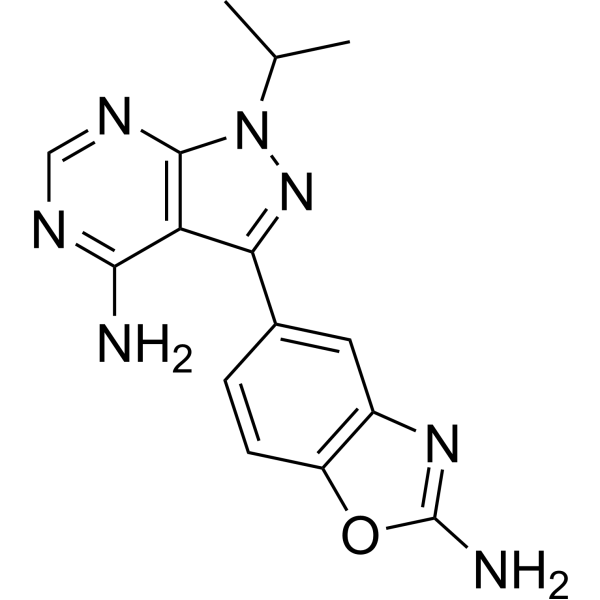
SapanisertibmTORC1/mTORC2 Inhibitor -
HY-10218
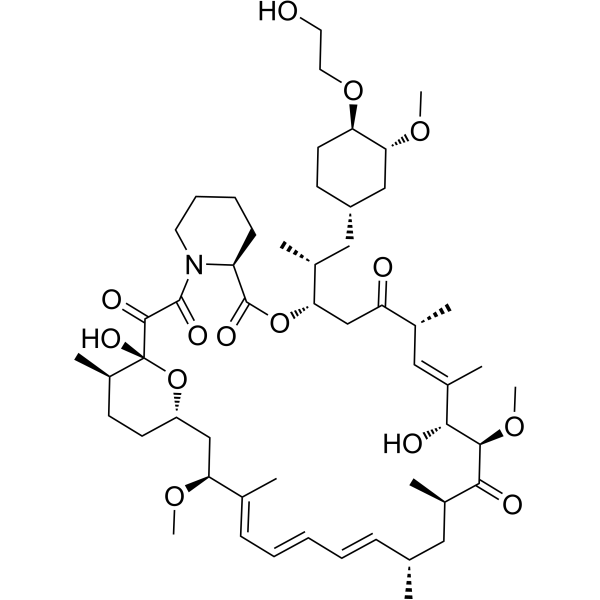
EverolimusmTORC Inhibitor -
HY-10297
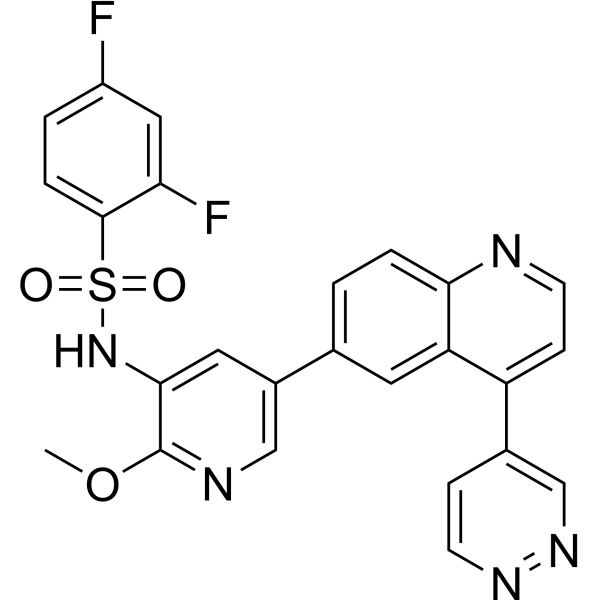
OmipalisibPI3K/mTOR Inhibitor -
HY-50673
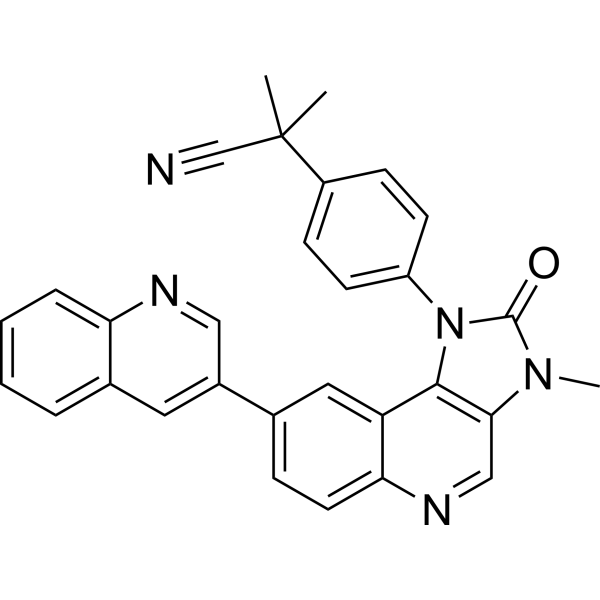
DactolisibPI3K/mTOR Inhibitor -
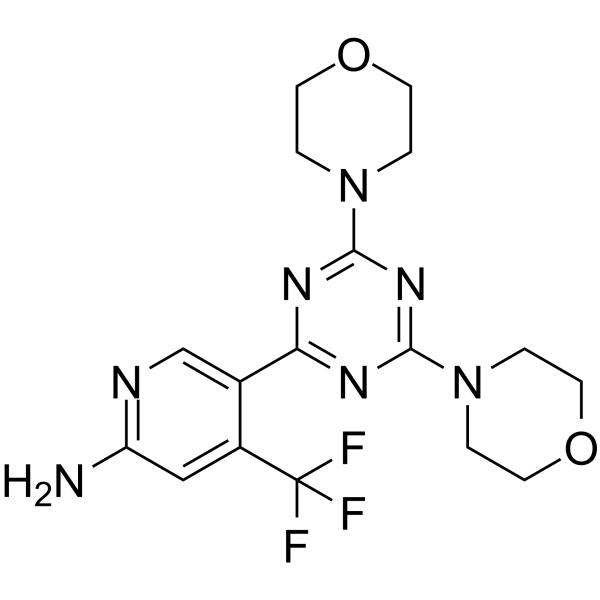
HY-12868
BimiralisibPI3K/mTOR Inhibitor -
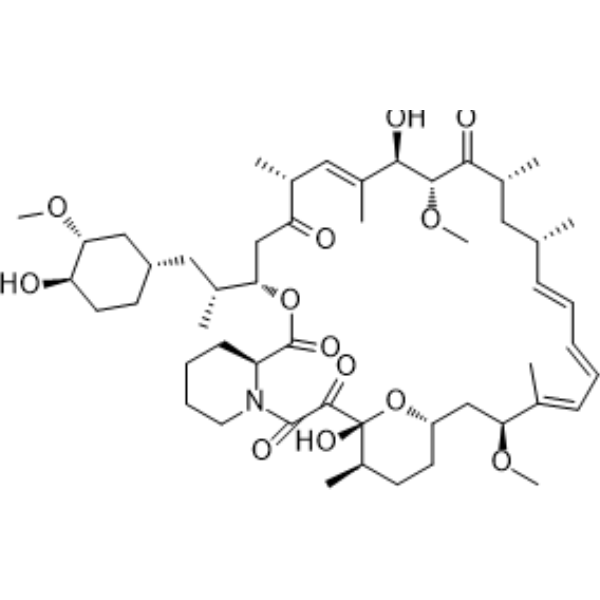
HY-10219
RapamycinmTOR Inhibitor -
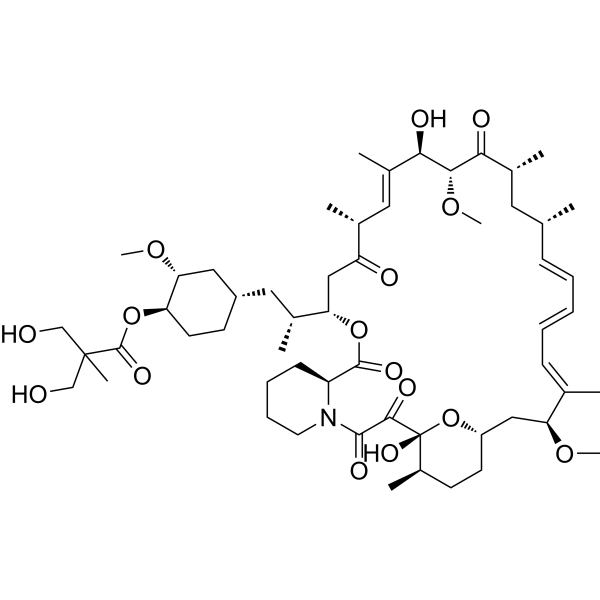
HY-50910
TemsirolimusmTOR Inhibitor -
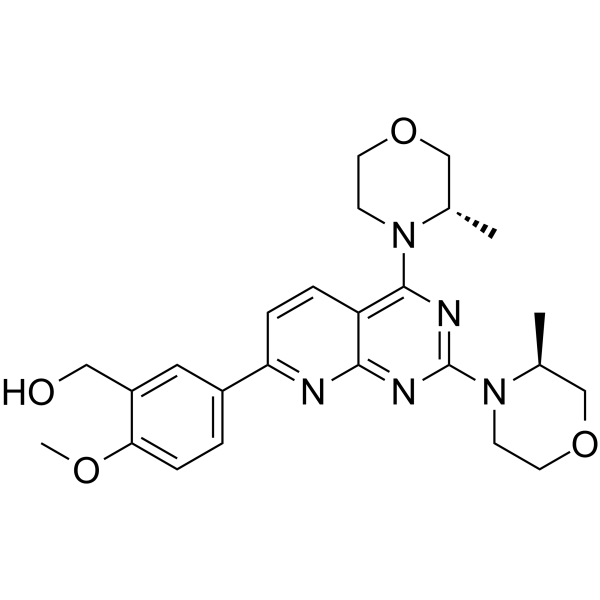
HY-10422
AZD-8055mTOR Inhibitor -
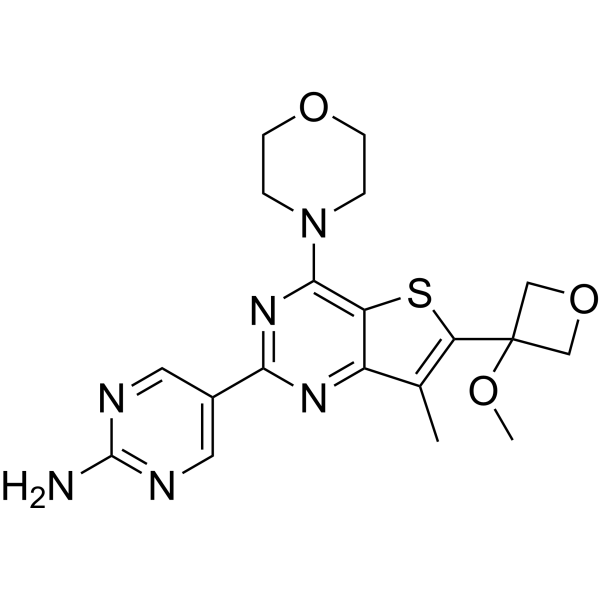
HY-11042
GNE-477PI3K Inhibitor
Publications Citing Use of MedChemExpress (MCE) GNE-493
More

Biological Activity
제품 설명
IC50 & Target
[1]|
PI3Kα 3.4 nM (IC50) |
PI3Kβ 12 nM (IC50) |
PI3Kδ 16 nM (IC50) |
PI3Kγ 16 nM (IC50) |
mTOR 30 nM (IC50) |
Cellular Effect
|
Cell Line

|
Type | Value | Description | References |
|---|---|---|---|---|
| PC-3 | IC50 |
0.33 μM
Compound: 5, GNE-493
|
Antiproliferative activity against human PC3 cells deficient in PTEN in after 3 to 4 days
Antiproliferative activity against human PC3 cells deficient in PTEN in after 3 to 4 days
|
[PMID: 20050669] |
In Vitro
GNE-493 is a low molecular weight, potent dual inhibitor of pan-PI3 kinases and mTOR. GNE-493 displays approximately equipotent inhibition of Class I PI3K isoforms, is submitted for screening in a 142 kinase panel provided by Invitrogen’s SelectScreen service. Of these kinases, only three are subject to greater than 50% inhibition by GNE-493, and none are inhibited greater than 80% when tested at 1 μM. Subsequently measured IC50s demonstrated that GNE-493 is more than 100-fold selective for PI3Kα over these three unrelated kinases (Aurora A IC50>10 μM, MLK1 IC50=591 nM and SYK IC50=371 nM)[1].
MedChemExpress (MCE) has not independently confirmed the accuracy of these methods. They are for reference only.
In Vivo
MedChemExpress (MCE) has not independently confirmed the accuracy of these methods. They are for reference only.


Chemical Information
-
CAS No. 1033735-94-2
-
Appearance Solid
-
분자량 372.44
-
화학식 C17H20N6O2S
-
Color Off-white to yellow
-
SMILES
OC(C)(C)C1=CC2=C(S1)C(N3CCOCC3)=NC(C4=CN=C(N)N=C4)=N2
-
선적
Room temperature in continental US; may vary elsewhere.
-
보관
Powder -20°C 3 years 4°C 2 years In solvent -80°C 2 years -20°C 1 year


Publications (4)
-
Journal Impact Factor
-
Most Recent
-
-
Front Pharmacol
CC-223, NSC781406, and BGT226 Exerts a Cytotoxic Effect Against Pancreatic Cancer Cells via mTOR Signaling. [Abstract]2020 Nov 11:11:580407. PMID: 33343350 -
Molecules
2026 Jan 23;31(3):397. PMID: 41683377 -
Sci Rep
QSAR analysis on a large and diverse set of potent phosphoinositide 3-kinase gamma (PI3Kγ) inhibitors using MLR and ANN methods. [Abstract]2022 Apr 12;12(1):6090. PMID: 35414065


용액&용해도
In Vitro:
DMSO : 36.36 mg/mL (97.63 mM; ultrasonic and warming and heat to 60°C; Hygroscopic DMSO has a significant impact on the solubility of product, please use newly opened DMSO)
Please refer to the solubility information to select the appropriate solvent. Once prepared, please aliquot and store the solution to prevent product inactivation from repeated freeze-thaw cycles.
Storage method and period of stock solution: -80°C, 2 years; -20°C, 1 year. When stored at -80°C, please use it within 2 years. When stored at -20°C, please use it within 1 year.
Please refer to the solubility information to select the appropriate solvent. Once prepared, please aliquot and store the solution to prevent product inactivation from repeated freeze-thaw cycles.
Storage method and period of stock solution: -80°C, 2 years; -20°C, 1 year. When stored at -80°C, please use it within 2 years. When stored at -20°C, please use it within 1 year.
Concentration (start) × Volume (start) = Concentration (final) × Volume (final)


순도&문서
-
Data Sheet (280 KB)
-
SDS (393 KB)
- English - EN (393 KB)
- Français - FR (393 KB)
- Deutsch - DE (393 KB)
- Norwegian - NO (393 KB)
- Español - ES (393 KB)
- Swedish - SV (393 KB)
- Italian - IT (393 KB)
- Korean - KR (393 KB)
- Portuguese - PT (393 KB)
-
Handling Instructions (2659 KB)
References


Complete Stock Solution Preparation Table
Please refer to the solubility information to select the appropriate solvent. Once prepared, please aliquot and store the solution to prevent product inactivation from repeated freeze-thaw cycles.
Storage method and period of stock solution: -80°C, 2 years; -20°C, 1 year. When stored at -80°C, please use it within 2 years. When stored at -20°C, please use it within 1 year.
| Optional Solvent | Concentration Solvent Mass | 1 mg | 5 mg | 10 mg | 25 mg |
|---|---|---|---|---|---|
| DMSO | 1 mM | 2.6850 mL | 13.4250 mL | 26.8500 mL | 67.1249 mL |
| 5 mM | 0.5370 mL | 2.6850 mL | 5.3700 mL | 13.4250 mL | |
| 10 mM | 0.2685 mL | 1.3425 mL | 2.6850 mL | 6.7125 mL | |
| 15 mM | 0.1790 mL | 0.8950 mL | 1.7900 mL | 4.4750 mL | |
| 20 mM | 0.1342 mL | 0.6712 mL | 1.3425 mL | 3.3562 mL | |
| 25 mM | 0.1074 mL | 0.5370 mL | 1.0740 mL | 2.6850 mL | |
| 30 mM | 0.0895 mL | 0.4475 mL | 0.8950 mL | 2.2375 mL | |
| 40 mM | 0.0671 mL | 0.3356 mL | 0.6712 mL | 1.6781 mL | |
| 50 mM | 0.0537 mL | 0.2685 mL | 0.5370 mL | 1.3425 mL | |
| 60 mM | 0.0447 mL | 0.2237 mL | 0.4475 mL | 1.1187 mL | |
| 80 mM | 0.0336 mL | 0.1678 mL | 0.3356 mL | 0.8391 mL |


GNE-493 Related Classifications
HY-10811 Related Classifications
 Powered by Bioz