



Mitochonic acid 5
Based on 5 publication(s) in Google Scholar
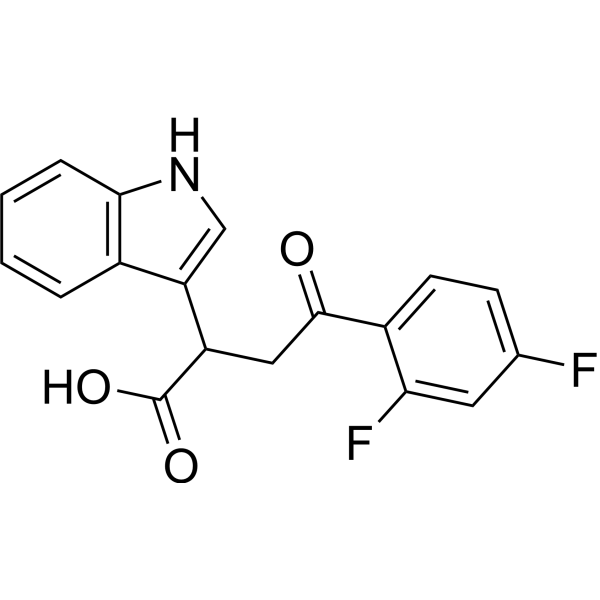
Mitochonic acid 5 binds mitochondria and ameliorates renal tubular and cardiac myocyte damage. Mitochonic acid 5 modulates mitochondrial ATP synthesis.
Nos produits utilisent uniquement pour la recherche. Nous ne vendons pas aux patients.
- Pureté : 99.60%
- CAS No.: 1354707-41-7
- Formule: C18H13F2NO3
- Masse moléculaire:329.30
-
Stockage:Powder -20°C, 3 years , 4°C, 2 years ; In solvent -80°C, 2 years , -20°C, 1 year

To place orders, for customer services and technical support, please contact: MedChemExpress USA
Tel: 609-228-6898 E-mail: [email protected] [email protected]


-
 Activité biologique
-
Chemical Information
-
Solvant et solubilité
- Pureté et documentation
- Références
-
 Help & FAQs


-
HY-13259
MG-132Proteasome Inhibitor -
HY-100579
Ferrostatin-1Ferroptosis Inhibitor -
![[6]-Gingerol](https://file.medchemexpress.com/product_pic/hy-14615.gif)
HY-14615
[6]-GingerolApoptosis Inducer -
HY-131042
NNMTiNNMT Inhibitor -
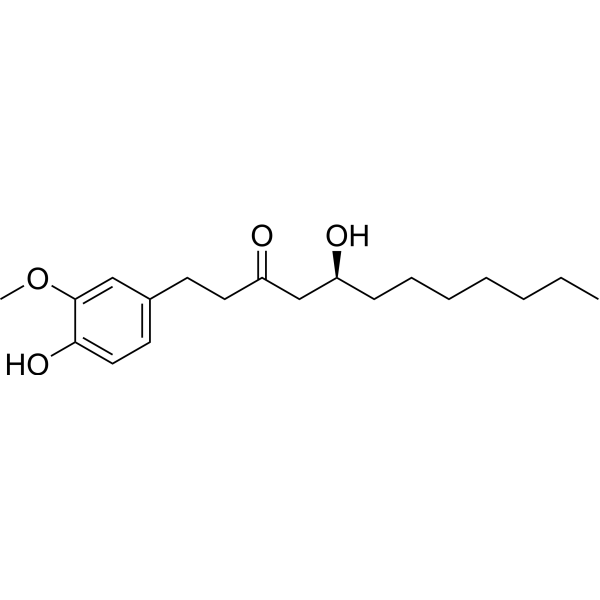
HY-N0447
8-GingerolBacterial Inhibitor -
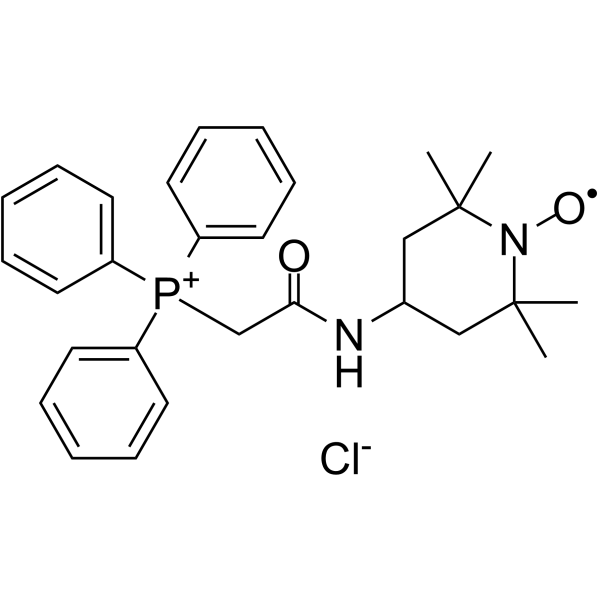
HY-112879
Mito-TEMPOAntioxidant -
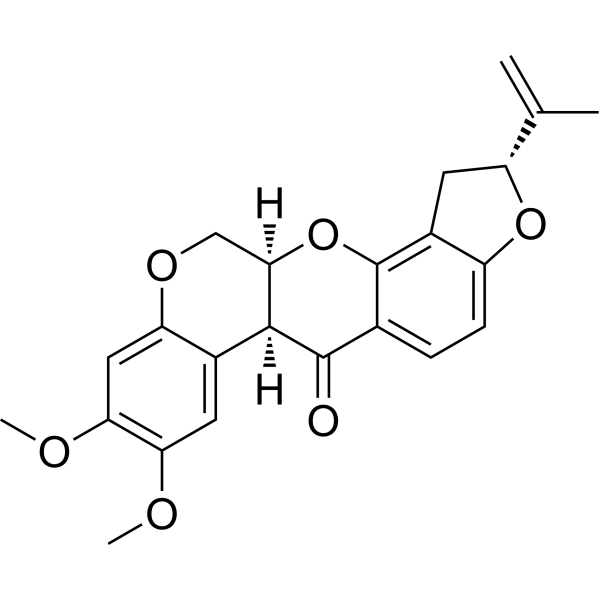
HY-B1756
RotenoneMitochondrial Complex I Inhibitor -
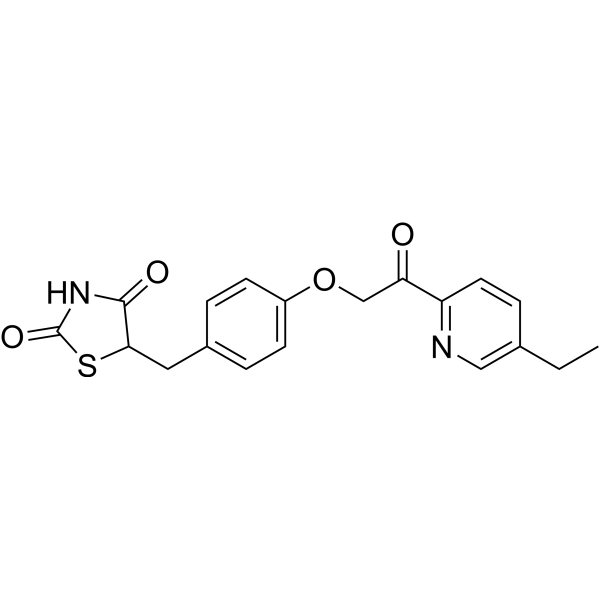
HY-100550
MSDC 0160Insulin Sensitizer -

HY-B1756R
Rotenone (Standard)Mitochondrial Complex I Inhibitor -
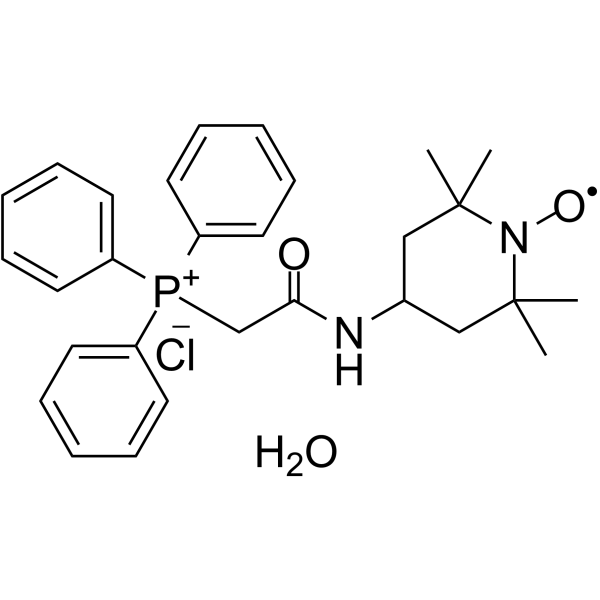
HY-125944
MitoTEMPO hydrateAntioxidant -
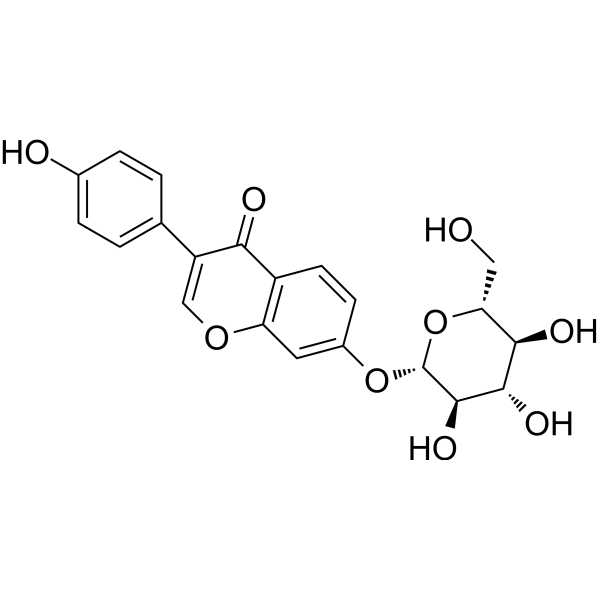
HY-N0018
DaidzinReverse Transcriptase Inhibitor -
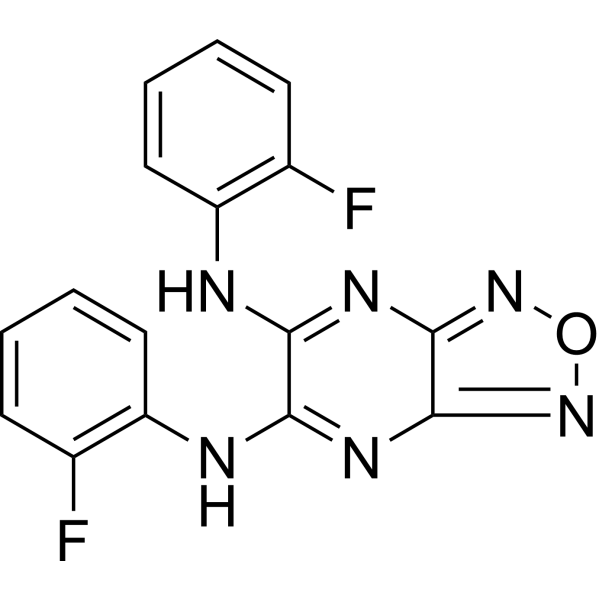
HY-110284
BAM 15OXPHOS Uncoupler
Publications Citing Use of MedChemExpress (MCE) Mitochonic acid 5
More

Activité biologique
Description
IC50 & Target
Mitochondrial Metabolism[1]
In Vitro
Mitochonic acid 5 (MA-5) modulates mitochondrial ATP synthesis independently of oxidative phosphorylation and the electron transport chain. Mitochondrial dysfunction causes increased oxidative stress and depletion of ATP, which are involved in the etiology of a variety of renal diseases[1]. Mitochonic acid 5 (MA-5), which is derived from the plant growth hormone indole-3-acetic acid, can protect mitochondrial function by regulating energy metabolism and reducing mitochondrial oxidative stress. To observe the protective role of Mitochonic acid 5 in microglia under inflammatory conditions, TNFα is applied. Subsequently, the MTT assay is used to evaluate cell viability. In response to the TNFα treatment, cell viability significantly decreases. However, this effect is dose-dependently inhibited by Mitochonic acid 5 treatment[2].
MedChemExpress (MCE) has not independently confirmed the accuracy of these methods. They are for reference only.
In Vivo
MedChemExpress (MCE) has not independently confirmed the accuracy of these methods. They are for reference only.


Chemical Information
-
CAS No. 1354707-41-7
-
Appearance Solid
-
Masse moléculaire 329.30
-
Formule C18H13F2NO3
-
Color Light yellow to yellow
-
SMILES
O=C(O)C(CC(C1=CC=C(F)C=C1F)=O)C2=CNC3=C2C=CC=C3
-
Synonyms
MA-5
-
Livraison
Room temperature in continental US; may vary elsewhere.
-
Stockage
Powder -20°C 3 years 4°C 2 years In solvent -80°C 2 years -20°C 1 year


Publications (5)
-
Journal Impact Factor
-
Most Recent
-
-
Biomaterials
Sequential-targeting nanomedicine protects against acute kidney injury by modulating calcium influx and scavenging reactive oxygen species. [Abstract]2026 Jun:329:123933. PMID: 41435454 -
Cell Death Dis
Co-loaded lapatinib/PAB by ferritin nanoparticles eliminated ECM-detached cluster cells via modulating EGFR in triple-negative breast cancer. [Abstract]2022 Jun 20;13(6):557. PMID: 35725558 -
Small
2023 Apr;19(16):e2207194. PMID: 36634971 -
Life Sci
Auto- and paracrine rewiring of NIX-mediated mitophagy by insulin-like growth factor-binding protein 7 in septic AKI escalates inflammation-coupling tubular damage. [Abstract]2023 Jun 1:322:121653. PMID: 37011875


Solvant et solubilité
In Vitro:
DMSO : ≥ 100 mg/mL (303.67 mM; Hygroscopic DMSO has a significant impact on the solubility of product, please use newly opened DMSO)
H2O : < 0.1 mg/mL (insoluble)
* "≥" means soluble, but saturation unknown.
Please refer to the solubility information to select the appropriate solvent. Once prepared, please aliquot and store the solution to prevent product inactivation from repeated freeze-thaw cycles.
Storage method and period of stock solution: -80°C, 2 years; -20°C, 1 year. When stored at -80°C, please use it within 2 years. When stored at -20°C, please use it within 1 year.
Please refer to the solubility information to select the appropriate solvent. Once prepared, please aliquot and store the solution to prevent product inactivation from repeated freeze-thaw cycles.
Storage method and period of stock solution: -80°C, 2 years; -20°C, 1 year. When stored at -80°C, please use it within 2 years. When stored at -20°C, please use it within 1 year.
Concentration (start) × Volume (start) = Concentration (final) × Volume (final)
In Vivo:
Select the appropriate dissolution method based on your experimental animal and administration route.
- For the following dissolution methods, please ensure to first prepare a clear stock solution using an In Vitro approach and then sequentially add co-solvents:
- To ensure reliable experimental results, the clarified stock solution can be appropriately stored based on storage conditions. As for the working solution for In Vivo experiments, it is recommended to prepare freshly and use it on the same day.
- The percentages shown for the solvents indicate their volumetric ratio in the final prepared solution. If precipitation or phase separation occurs during preparation, heat and/or sonication can be used to aid dissolution.
Add each solvent one by one: 10% DMSO 40% PEG300 5% Tween-80 45% Saline
Solubility: ≥ 2.5 mg/mL (7.59 mM); Clear solution
This protocol yields a clear solution of ≥ 2.5 mg/mL (saturation unknown).
Taking 1 mL working solution as an example, add 100 μL DMSO stock solution (25.0 mg/mL) to 400 μL PEG300, and mix evenly; then add 50 μL Tween-80 and mix evenly; then add 450 μL Saline to adjust the volume to 1 mL.
Preparation of Saline: Dissolve 0.9 g sodium chloride in ddH₂O and dilute to 100 mL to obtain a clear Saline solution.
Add each solvent one by one: 10% DMSO 90% (20% SBE-β-CD in Saline)
Solubility: ≥ 2.5 mg/mL (7.59 mM); Clear solution
This protocol yields a clear solution of ≥ 2.5 mg/mL (saturation unknown).
Taking 1 mL working solution as an example, add 100 μL DMSO stock solution (25.0 mg/mL) to 900 μL 20% SBE-β-CD in Saline, and mix evenly.
Preparation of 20% SBE-β-CD in Saline (4°C, storage for one week): 2 g SBE-β-CD powder is dissolved in 10 mL Saline, completely dissolve until clear.
In Vivo Dissolution Calculator
Please enter the basic information of animal experiments:
-
-
-
-
Recommended: Prepare an additional quantity of animals to account for potential losses during experiments.
Please enter your animal formula composition:
-
%DMSO +
Recommended: Keep the proportion of DMSO in working solution below 2% if your animal is weak.
-
%+
-
+%Tween-80 + +
-
%Saline +
The co-solvents required include: DMSO, . All of co-solvents are available by MedChemExpress (MCE). , Tween 80. All of co-solvents are available by MedChemExpress (MCE).
Working solution concentration: 0.22 mg/mL
Method for preparing stock solution: mg drug dissolved in μL DMSO. Stock solution concentration: mg/mL.
1. Take μL DMSO stock solution;
2. Add μL .
μL , mix evenly;
3. Then add μL Tween 80, mix evenly;
4. Then add μL
Please ensure that the stock solution in the first step is dissolved to a clear state, and add co-solvents in sequence. You can use ultrasonic heating (ultrasonic cleaner, recommended frequency 20-40 kHz), vortexing, etc. to assist dissolution.


Pureté et documentation
-
Fiche technique (282 KB)
-
SDS (393 KB)
- English - EN (393 KB)
- Français - FR (393 KB)
- Deutsch - DE (393 KB)
- Norwegian - NO (393 KB)
- Español - ES (393 KB)
- Swedish - SV (393 KB)
- Italian - IT (393 KB)
- Korean - KR (393 KB)
- Portuguese - PT (393 KB)
-
Instruction de manipulation (2659 KB)
Références
[1]. Suzuki T, et al. Mitochonic Acid 5 Binds Mitochondria and Ameliorates Renal Tubular and Cardiac Myocyte Damage. J Am Soc Nephrol. 2016 Jul;27(7):1925-32. [Content Brief]
[2]. Lei Q, et al. Mitochonic acid 5 activates the MAPK-ERK-yap signaling pathways to protect mouse microglial BV-2 cells against TNFα-induced apoptosis via increased Bnip3-related mitophagy. Cell Mol Biol Lett. 2018 Apr 5;23:14. [Content Brief]


Complete Stock Solution Preparation Table
Please refer to the solubility information to select the appropriate solvent. Once prepared, please aliquot and store the solution to prevent product inactivation from repeated freeze-thaw cycles.
Storage method and period of stock solution: -80°C, 2 years; -20°C, 1 year. When stored at -80°C, please use it within 2 years. When stored at -20°C, please use it within 1 year.
| Optional Solvent | Concentration Solvent Mass | 1 mg | 5 mg | 10 mg | 25 mg |
|---|---|---|---|---|---|
| DMSO | 1 mM | 3.0367 mL | 15.1837 mL | 30.3674 mL | 75.9186 mL |
| 5 mM | 0.6073 mL | 3.0367 mL | 6.0735 mL | 15.1837 mL | |
| 10 mM | 0.3037 mL | 1.5184 mL | 3.0367 mL | 7.5919 mL | |
| 15 mM | 0.2024 mL | 1.0122 mL | 2.0245 mL | 5.0612 mL | |
| 20 mM | 0.1518 mL | 0.7592 mL | 1.5184 mL | 3.7959 mL | |
| 25 mM | 0.1215 mL | 0.6073 mL | 1.2147 mL | 3.0367 mL | |
| 30 mM | 0.1012 mL | 0.5061 mL | 1.0122 mL | 2.5306 mL | |
| 40 mM | 0.0759 mL | 0.3796 mL | 0.7592 mL | 1.8980 mL | |
| 50 mM | 0.0607 mL | 0.3037 mL | 0.6073 mL | 1.5184 mL | |
| 60 mM | 0.0506 mL | 0.2531 mL | 0.5061 mL | 1.2653 mL | |
| 80 mM | 0.0380 mL | 0.1898 mL | 0.3796 mL | 0.9490 mL | |
| 100 mM | 0.0304 mL | 0.1518 mL | 0.3037 mL | 0.7592 mL |


Mitochonic acid 5 Related Classifications
HY-111536 Related Classifications
 Powered by Bioz