



Akt
PKB; Protein kinase B
Akt/PKB (Protein kinase B), a serine/threonine protein kinase with antiapoptotic activity, is one of the major downstream targets of PtdIns(3,4,5)P3 signaling pathway. It contains a pleckstrin homology domain (PH domain) that specifically binds PtdIns(3,4,5)P3 on the plasma membrane. Akt phosphorylation and activation are directly determined by the level of PtdIns(3,4,5)P3 on the plasma membrane, which is regulated by PI3K.
Akt consists of three isoforms: PKBα/Akt1, PKBβ/Akt2 and PKBγ/Akt3. Akt isoforms have an N-terminal PH (pleckstrin homology) domain and a kinase domain, which are separated by a 39-amino-acid hinge region. Catalytically active Akt regulates the function of numerous substrates involved in cell survival, growth, proliferation, metabolism and protein synthesis.
Akt is a crucial mediator of cell survival and its deactivation is implicated in various stress-induced pathological cell death and degenerative diseases.
Akt Isoform Specific Products
All Product Categories
-
Akt Inhibitors
(952)
View all products
-
Akt Agonists
(7)
View all products
-
Akt Activators
(281)
View all products
-
Akt Modulators
(23)
View all products
-
Akt Chemical
(1)
View all products
-
Akt Inducers
(9)
View all products
-
Akt Degraders
(9)
View all products
-
Akt Control
(1)
View all products
-
Akt Ligands
(6)
View all products
-
AKT Serine/Threonine Kinase 2 (AKT2) Proteins
(5)
View all products
-
AKT Serine/Threonine Kinase 3 (AKT3) Proteins
(6)
View all products
-
Akt Related Products (1398)
Related Products (1398)

-
Recombinant Proteins (11)
-
Antibodies (11)
-
Akt Isoform Comparison
-
Zandelisib hydrochloride
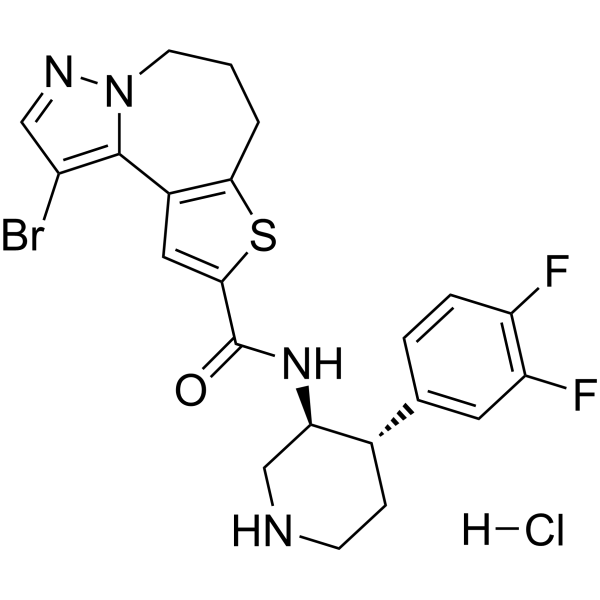
 0 ImagesCat. No.: HY-109198ACAS No.: 2839515-65-8Synonyms: ME-401 hydrochloride; PWT-143 hydrochlorideZandelisib (ME-401) hydrochloride is a selective, orally active, non-covalent inhibitor of PI3Kδ. Zandelisib hydrochloride can sustainably inhibit AKT phosphorylation and downstream signaling pathways. Zandelisib hydrochloride can be used in the study of malignancies such as relapsed/refractory B-cell lymphoma.
-
EGFR-IN-154
 0 ImagesCat. No.: HY-173188EGFR-IN-154 (compound 4c) is an EGFR inhibitor with EC50 values of 0.16 μM, 21.73 μM and 41.56 μM against EGFR Del19, EGFR WT and EGFR L858R, respectively. EGFR-IN-154 shows anticancer activity on various cance cell lines. EGFR-IN-154 induces mitochondrial apoptosis, and decreases pERK1/2 and pAkt levels, but increases pJNK and pp38 levels.
-
(Rac)-Lonafarnib
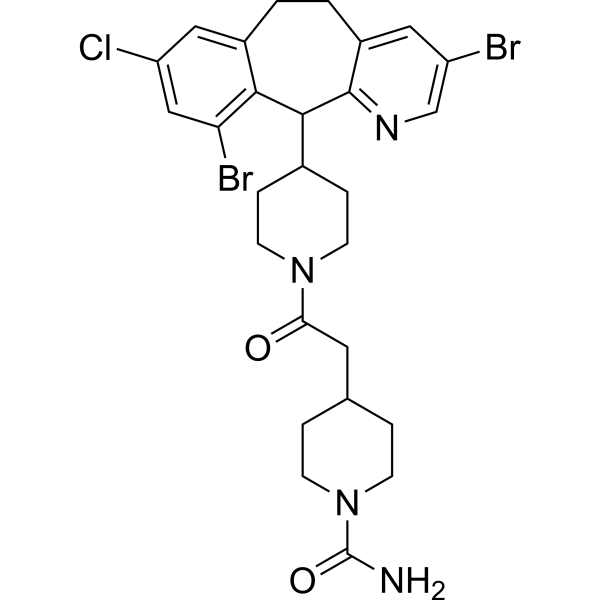 0 ImagesCat. No.: HY-15136BCAS No.: 193275-86-4Synonyms: Sch66336 racemate(Rac)-Lonafarnib (Sch66336 racemate) is an isomer of Lonafarnib (HY-15136). Lonafarnib (Sch66336) is an orally active, blood-brain barrier penetrant farnesyltransferase (FPTase) inhibitor. Lonafarnib increases the phosphorylation levels of Akt, CaMKII and CREB, upregulates BDNF expression in the hippocampus, elevates the content of α7nAChR on cell membranes, and blocks the isoprenylation of H-Ras. Lonafarnib repairs synapses and reverses spatial memory deficits in Aβ1-42 model mice. Lonafarnib inhibits RSV fusion and replication, and alleviates virus-induced lung injury. Lonafarnib activates the lysosomal and autophagic pathways, and reduces the phosphorylation and aggregation of tau. Lonafarnib acts synergistically with Sorafenib (HY-10201) to promote apoptosis, and inhibits the proliferation and invasion of melanoma cells. Lonafarnib inhibits the farnesylation of progerin, repairs nuclear membrane defects, and activates the cGAS-STING-STAT1 signaling pathway. Lonafarnib can be used in research related to diseases including Alzheimer's disease, viral infections, melanoma, and progeria.
-
DZX19
 0 ImagesCat. No.: HY-181871DZX19 (Compound C02) is an orally active, selective TRK inhibitor with a TRKA IC50 value of 1.32 nM, a TRKB IC50 of 2.28 nM, and a TRKC IC50 of 4.05 nM. DZX19 inhibits the kinase activities of wild-type TRKA, TRKA mutants (G595R, F589L, G667C), wild-type TRKB, and wild-type TRKC, and suppresses the phosphorylation of TRKA as well as its downstream AKT and ERK signaling pathways. DZX19 induces apoptosis. DZX19 inhibits tumor growth in a colorectal cancer xenograft mouse model. DZX19 is applicable for the research of colorectal cancer.
-
PI3K/AKT-IN-5
 0 ImagesCat. No.: HY-178993CAS No.: 3093148-10-5PI3K/AKT-IN-5 (Compound 3h) is a PI3K/AKT inhibitor. PI3K/AKT-IN-5 exhibits outstanding broad-spectrum anti-cancer activity, especially being sensitive to colorectal cancer. PI3K/AKT-IN-5 significantly reduces cell colony formation, induces G2/M phase cell cycle arrest and cell apoptosis. PI3K/AKT-IN-5 can be used for research on colorectal cancer.
-
KRAS IN-44
 0 ImagesCat. No.: HY-174379KRAS IN-44 (Compound S2C2M2) is a PDE6D degrader. KRAS IN-44 inhibits PDE6D-dependent KRAS trafficking and KRAS downstream signaling pathways. KRAS IN-44 down-regulates EGF-induced the phosphorylation of PI3K, AKT, and mTOR. KRAS IN-44 increases Apoptosis. KRAS IN-44 has antitumor activity against hepatoblastoma.
-
BSI-001
 0 ImagesCat. No.: HY-P991977Synonyms: 5G9BSI-001 (5G9) is a HER2-targeting antibody. BSI-001 inhibits cell proliferation and migration, induces apoptosis and PARP cleavage, and suppresses HER2-mediated downstream signaling pathways (including the phosphorylation of EGFR, HER3, AKT and ERK) when combined with Trastuzumab (HY-P9907) in HER2-positive cancer cells. BSI-001 exhibits synergistic anti-tumor efficacy in animal models of gastric cancer and breast cancer when combined with Trastuzumab. BSI-001 can be used for the research of HER2-positive breast cancer and HER2-overexpressing gastric cancer.
-
PI3Kδ-IN-28
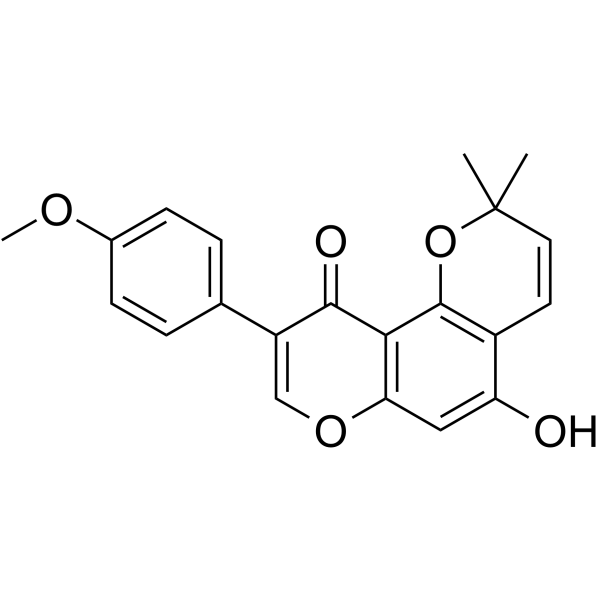
 0 ImagesCat. No.: HY-184125PI3Kδ-IN-28 is an orally active and selective PI3Kδ inhibitor with an IC50 of 6.1 nM. PI3Kδ-IN-28 inhibits pro-inflammatory M1 macrophage polarization, promotes anti-inflammatory M2 phenotype, and alleviates pulmonary edema and inflammatory infiltration. PI3Kδ-IN-28 is applicable to research related to acute lung injury.
-
Deltafluorine
 0 ImagesCat. No.: HY-181020Deltafluorine is a phosphodiesterase delta (PDEδ) inhibitor with an IC50 of 27 nM, a KD of 148 nM. Deltafluorine covalently modifies the specific glutamate residue p.E88 in the ligand binding site of PDEδ, interfering with its chaperone function. Deltafluorine inhibits signaling through the MAPK and Akt-mTOR pathway, reduces ERK1/2 expression. Deltafluorine reduces tumor volume in an autochthonous mouse model of Kras-driven lung adenocarcinoma. Deltafluorine can be used for the research of lung adenocarcinoma.

-
Kuwanon H (Standard)
 0 ImagesCat. No.: HY-N2600RCAS No.: 76472-87-2Kuwanon H (Standard) is the analytical standard of Kuwanon H. This product is intended for research and analytical applications. Kuwanon H is a selective non-peptide bombesin receptor antagonist and platelet activation inhibitor. Kuwanon H also acts as a specific antagonist of GRP-preferring receptors, with a Ki value of 290 nM for mouse GRP-R and 6500 nM for rat NMB-R. Kuwanon H inhibits the phosphorylation of AKT, mTOR, ERK, cPLA2 and p38, and upregulates TRIB3. It induces endoplasmic reticulum stress, apoptosis and autophagosome formation. Kuwanon H blocks calcium mobilization, mitogenic signaling, DNA synthesis, dense granule secretion, thromboxane A2 generation and integrin αIIb/β3 activity. It inhibits collagen-induced platelet aggregation and fibronectin adhesion, and delays clot retraction. Kuwanon H inhibits melanoma cell growth in vitro and in vivo, and enhances the sensitivity of melanoma cells to CDDP. It can be used in research related to melanoma, small cell lung cancer and thrombosis.
-
Lw13
 0 ImagesCat. No.: HY-162589Lw13 is a Hsp90 PROTAC degrader. Lw13 induces Hsp90 degradation via the ubiquitin-proteasome system, destabilizes client proteins HER2 and AKT, and blocks the activation of the HER2/AKT/mTOR signaling pathway. Lw13 inhibits the metastasis of cervical cancer cells, induces cell cycle arrest and apoptosis (apoptosis). Lw13 exerts synergistic anti-tumor activity with Cisplatin (HY-17394). Lw13 is applicable to cervical cancer-related research.
-
MJ33
 0 ImagesCat. No.: HY-136271CAS No.: 137300-78-8MJ-33 is a competitive phospholipase A₂ (PLA₂) inhibitor with an IC50 of 0.3 μM. MJ-33 inhibits the activation of NOX2 by blocking the PLA₂ activity of Prdx6, thereby reducing the production of ROS. MJ-33 effectively inhibits the activity of acidic PLA₂ (pH 4.0), reduces the degradation of pulmonary surfactant phosphatidylcholine (PC), but has no effect on alkaline PLA₂ (pH 8.5). MJ-33 significantly alleviates lung oxidative damage induced by ischemia-reperfusion (I/R). MJ-33 significantly inhibits the invasive, migratory and adhesive abilities of prostate cancer cells by suppressing the MAPK, AKT, NF-κB and AP-1 signaling pathways. MJ-33 can be used to study ROS-related diseases and prostate cancer.
-
Myrislignan-13C,d2
 0 ImagesCat. No.: HY-N0608SMyrislignan-13C,d2 is the 13C, d2 deuterated-labeled Myrislignan (HY-N0608). Myrislignan is a PI3K/AKT/NF-κB inhibitor that can cross the blood-brain barrier. Myrislignan exerts anticancer activity by inducing apoptosis and ferroptosis. Myrislignan inhibits the replication and invasion of Toxoplasma gondii; it induces reactive oxygen species (ROS) imbalance, autophagy, and the death of Toxoplasma gondii tachyzoites. Myrislignan inhibits mitochondrial function and ERK1/2 phosphorylation to improve ovariectomy-induced osteoporosis. Myrislignan can be used in studies related to gastric cancer, glioblastoma, osteoporosis, and toxoplasmosis.
-
BPH-628
 0 ImagesCat. No.: HY-113869CAS No.: 1059677-40-5BPH-628 is an aromatic geranylgeranyl diphosphate synthase (GGPPS) inhibitor, with a pIC50 of 6.1.
-
Apoptosis inducer 35
 0 ImagesCat. No.: HY-172110CAS No.: 3116928-59-4Apoptosis inducer 35 (Compound 6) is a multi-targeted inhibitor, that reduces the expressions of EGFR, AKT, ERK and P38-MAPKα. Apoptosis inducer 35 inhibits the proliferation of cancer cell A549 and Jurkat, arrests the cell cycle at S phase, and induces apoptosis.
-
Wortmannin-Rapamycin Conjugate 1
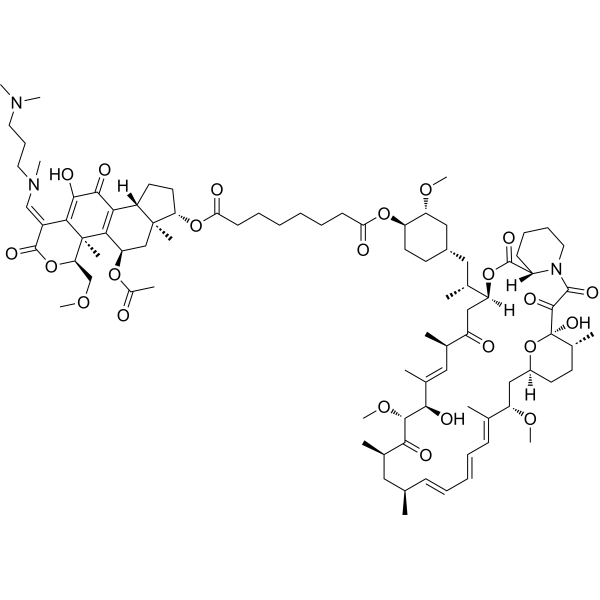 0 ImagesCat. No.: HY-132003CAS No.: 1067892-47-0
-
Anti-CD146 Antibody (AA98)
 0 ImagesCat. No.: HY-P992200Anti-CD146 Antibody (AA98) is an antibody targeting CD146 and an angiogenesis inhibitor. Anti-CD146 Antibody (AA98) blocks the dimerization of CD146 as well as its downstream PI3K/AKT, p38 MAPK and NF-κB signaling pathways; it inhibits the expression of MMP9 and ICAM1, epithelial-mesenchymal transition (EMT), and the proliferation, migration and tube formation of endothelial cells. Anti-CD146 Antibody (AA98) enhances radiation-induced cancer cell apoptosis and survival inhibition, reduces tumor microvessel density, and suppresses tumor growth, invasion and vasculogenic mimicry. Anti-CD146 Antibody (AA98) can be used in research related to cervical cancer, liver cancer, malignant phyllodes tumor of the breast, uveal melanoma, leiomyosarcoma, pancreatic cancer, other tumors and angiogenesis.




