



P-glycoprotein
P-gp; Pgp; Multidrug resistance protein 1; MDR1; ATP-binding cassette sub-family B member 1; ABCB1; Cluster of differentiation 243; CD243
P-glycoprotein (P-gp) also known as multidrug resistance protein 1 (MDR1) is an important protein of the cell membrane that pumps many foreign substances out of cells. More formally, it is an ATP-dependent efflux pump with broad substrate specificity. P-gp is extensively distributed and expressed in the intestinal epithelium where it pumps xenobiotics (such as toxins or drugs) back into the intestinal lumen, in liver cells where it pumps them into bile ducts, in the cells of the proximal tubular of the kidney where it pumps them into urine-conducting ducts, and in the capillary endothelial cells comprising the blood–brain barrier and blood-testis barrier, where it pumps them back into the capillaries. Some cancer cells also express large amounts of P-gp, which renders these cancers multi-drug resistant. P-gp is an ATP-dependent drug efflux pump for xenobiotic compounds with broad substrate specificity. It is responsible for decreased drug accumulation in multidrug-resistant cells and often mediates the development of resistance to anticancer drugs. This protein also functions as a transporter in the blood–brain barrier.
All Product Categories
-
P-glycoprotein Inhibitors
(275)
View all products
-
P-glycoprotein Agonists
(2)
View all products
-
P-glycoprotein Antagonist
(1)
View all products
-
P-glycoprotein Activators
(3)
View all products
-
P-glycoprotein Modulators
(24)
View all products
-
P-glycoprotein Inducer
(1)
View all products
-
P-glycoprotein Controls
(3)
View all products
-
P-glycoprotein Substrates
(22)
View all products
-
P-glycoprotein Ligand
(1)
View all products
-
P-glycoprotein Related Products (373)
Related Products (373)

-
Antibodies (3)
-
CPI1
 0 ImagesCPI1 is a multidrug resistance protein 1 (MRP1) inhibitor with a Ki value of 100 nM. CPI1 binds to the same substrate-binding site as leukotriene C4, stabilizes MRP1 in an apo-like inward-facing conformation, blocks the conformational changes required for ATP hydrolysis and substrate transport, and inhibits the ATPase activity of human and bovine MRP1. CPI1 serves as a tool for investigating the substrate transport mechanism of MRP1. CPI1 is applicable to research related to cancer multidrug resistance.
-
GPV0057
 0 ImagesGPV0057 (Compound 5d) is a selective and potent P-glycoprotein (P-gp) inhibitor. GPV0057 is also a selective potassium channel Kir2.1 activator. GPV0057 competitively binds to the substrate-binding site of P-gp, inhibiting ATP-dependent drug efflux to reverse multidrug resistance in tumor cells. GPV0057 can also stabilizes the open state of Kir2.1 and promotes potassium ion influx. GPV0057 is promising for research of tumors with high P-gp expression, Kir2.1-deficient diseases such as heart failure and Andersen-Tawil Syndrome.
-
Dexloxiglumide
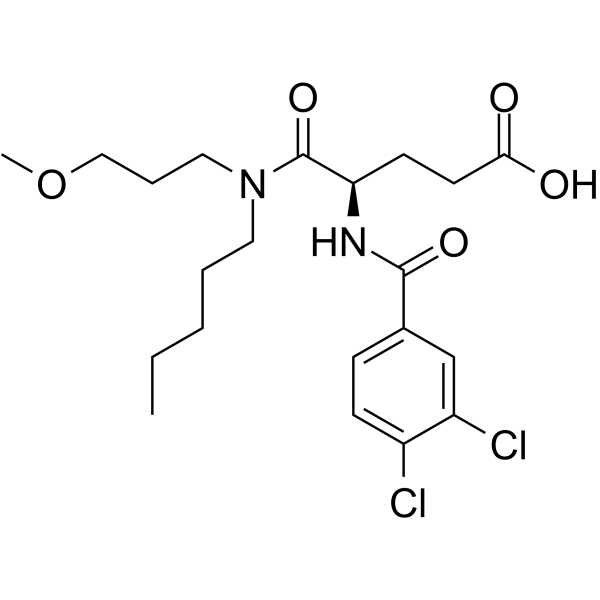 0 ImagesDexloxiglumide is an orally active and selective cholecystokinin type A (CCKA) receptor antagonist. Dexloxiglumide is the active enantiomer of Loxiglumide, inhibits smooth muscle cell contractions induced by cholecystokinin-octapeptide (CCK-8). Dexloxiglumide exhibits moderate Caco-2 permeability that is polarized, concentration dependent, and pH dependent. Dexloxiglumide increases MRP1-substrate fluorescein uptake. Dexloxiglumide can be studied in research for gastrointestinal diseases and tumors.
-
Reversin 121
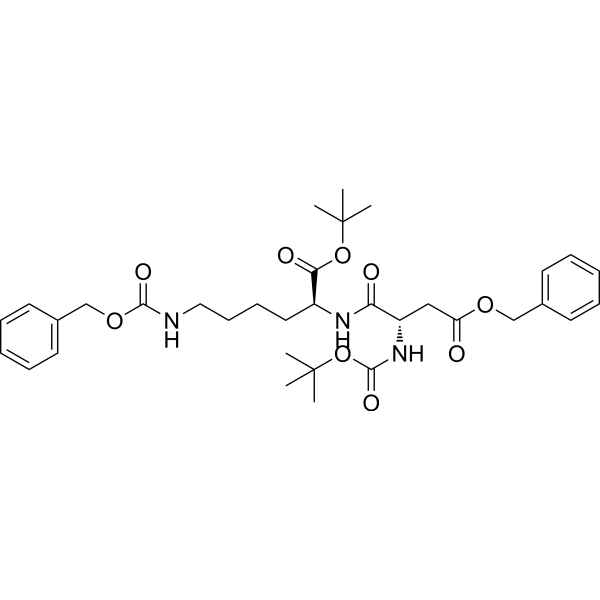 0 ImagesReversin 121 is a P-glycoprotein inhibitor. Reversin 121 increases the ATPase activity of MDR1. Reversin 121 reverses P-glycoprotein-mediated multidrug resistance. Reversin 121 can be used in the research of cancers.
-
Levomilnacipran hydrochloride
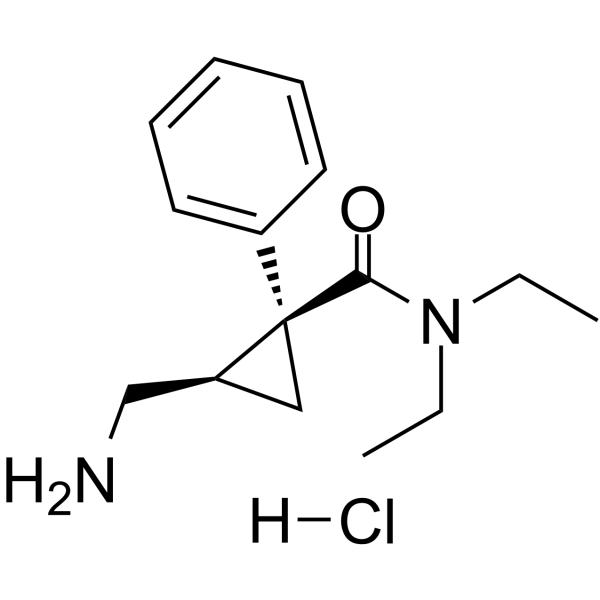 0 ImagesSynonyms: (1S,2R)-Milnacipran hydrochloride; F-2695 hydrochlorideLevomilnacipran ((1S,2R)-Milnacipran) hydrochloride is the enantiomer of Milnacipran (HY-B0168) and a strong substrate of P-gp that can cross the blood-brain barrier. Levomilnacipran hydrochloride is a serotonin and norepinephrine reuptake inhibitor, with IC50 values of 10.5 nM and 19.0 nM, and Ki values of 92.2 nM and 1.2 nM for human norepinephrine transporter (NET) and serotonin transporter (SERT), respectively. Levomilnacipran hydrochloride has antidepressant and anxiolytic activities. Levomilnacipran hydrochloride can be used for the research of depression.
-
Verapamil hydrochloride (Standard)
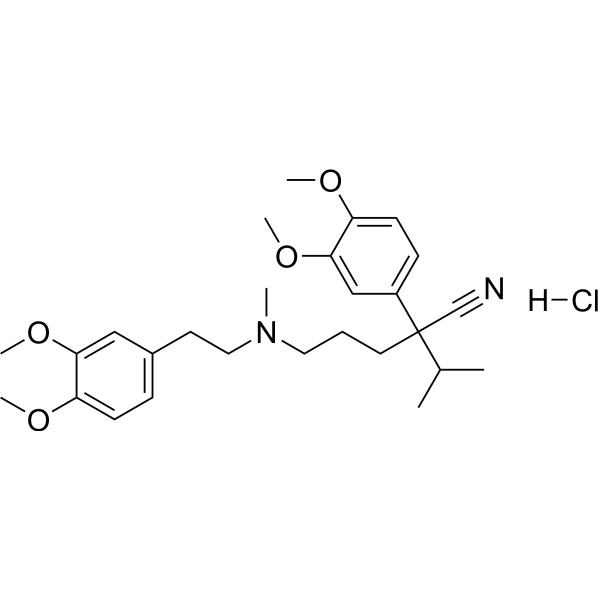 0 ImagesSynonyms: (±)-Verapamil hydrochloride (Standard); CP-16533-1 hydrochloride (Standard)Verapamil (hydrochloride) (Standard) is the analytical standard of Verapamil (hydrochloride). This product is intended for research and analytical applications. Verapamil hydrochloride ((±)-Verapamil hydrochloride) is a calcium channel blocker and a potent and orally active first-generation P-glycoprotein (P-gp) inhibitor. Verapamil hydrochloride also inhibits CYP3A4. Verapamil hydrochloride has the potential for high blood pressure, heart arrhythmias and angina research.
-
Chrysosplenetin
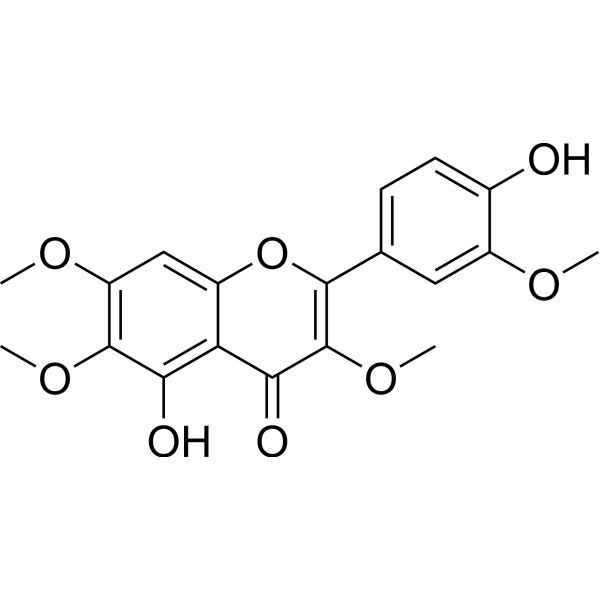 0 ImagesChrysosplenetin is an orally active polymethoxyflavone. Chrysosplenetin exerts anticancer effects by inhibiting topoisomerase, protecting DNA and inducing apoptosis. Chrysosplenetin acts as an antimalarial sensitizer, reverses Artemisinin (HY-B0094) resistance by inhibiting and downregulating P-glycoprotein, and enhances the efficacy of Artemisinin. Chrysosplenetin promotes bone formation by activating the Wnt/β-catenin pathway and exerts anti-osteoporotic effects.
-
Anti-Monkey/Human MDR-1/CD243 Antibody (UIC2)
 0 ImagesCat. No.: HY-P990196Anti-Monkey/Human MDR-1/CD243 Antibody (UIC2) is an anti-monkey/human MDR-1/CD243 IgG2a monoclonal antibody. Anti-Monkey/Human MDR-1/CD243 Antibody (UIC2) can efficiently inhibit P-glycoprotein. Anti-Monkey/Human MDR-1/CD243 Antibody (UIC2) enhances the inhibitory effect on multidrug resistance (MDR) by suppressing drug efflux. Anti-Monkey/Human MDR-1/CD243 Antibody (UIC2) can be used for research on cancer.
-
Laniquidar
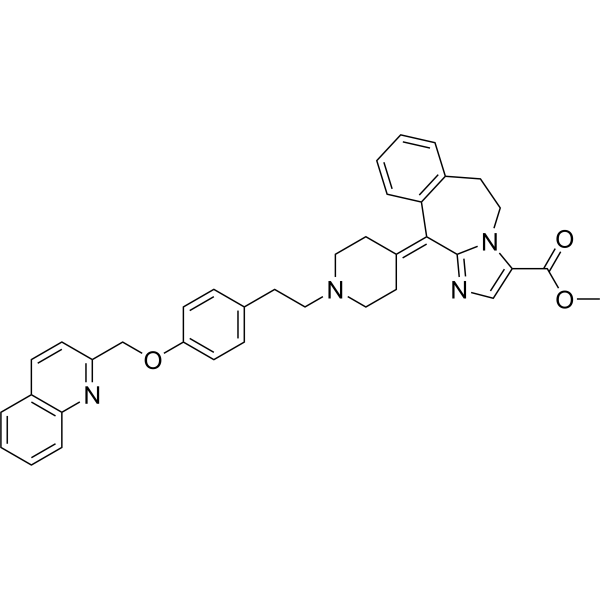 0 ImagesLaniquidar is a non-competitive P-gp inhibitor with an IC50 of 0.51 μM. Laniquidar binds to the P-gp transporter with high affinity and exhibits low activity as a substrate. Laniquidar is applicable to epilepsy-related research.
-
Poloxamer 181 (L61)
 0 ImagesCat. No.: HY-D1005A8CAS No.: 9003-11-6Synonyms: PEG-PPG-PEG, 2000 (Average)Poloxamer 181 L61 is a block polymer of polyethylene oxide and polypropylene oxide with an average molecular weight of 2000. Poloxamer has the ability to inhibit P-gp. Poloxamer 181 has antimicrobial activity and can inhibit Mycobacterium avium. Poloxamer 181 can form a thermally reversible hydrogel and is used as a food additive, and as an agent delivery carrier in cosmetics, pharmaceuticals and tissue engineering.
-
Poloxamer 401 (L121)
 0 ImagesCat. No.: HY-D1005A23CAS No.: 9003-11-6Synonyms: PEG-PPG-PEG, 4400 (Average)Poloxamer 401 L121 is a block copolymer of polyethylene oxide and polypropylene oxide with an average molecular weight of 4400. Poloxamer has the ability to inhibit P-gp. Poloxamer 401 inhibits multiagent resistance and adjuvant activity. Poloxamer 401 can be used as a cosmetic ingredient. Poloxamer 401 can be used in nanoparticle engineering (lymphatic targeting particles) research.
-
Piperine (Standard)
 0 ImagesSynonyms: Bioperine (Standard); 1-Piperoylpiperidine (Standard)Piperine (Standard) is the analytical standard of Piperine. This product is intended for research and analytical applications. Piperine is an alkaloid, can be isolated from pepper. Piperine can inhibit the activity of P-glycoprotein and CYP3A4. Piperine inhibits HeLa cells with an IC50 of 61.94±0.054 μg/mL.
-
Bacopasaponin C
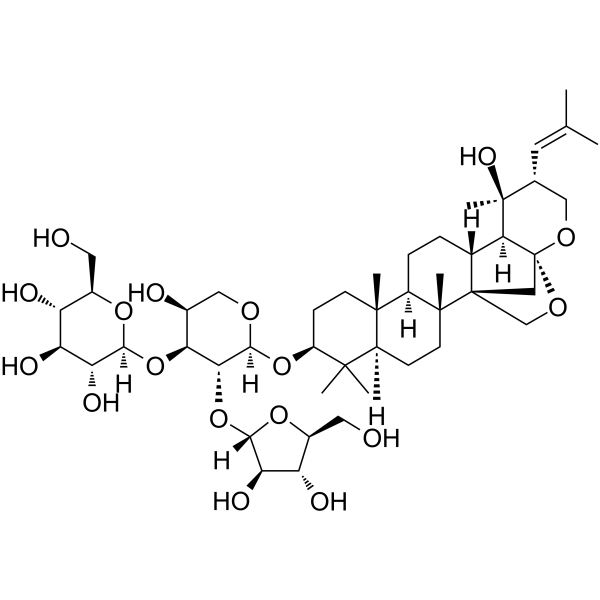 0 ImagesBacopasaponin C is an orally active natural glycoside. Bacopasaponin C can be isolated from Bacopa monniera. Bacopasaponin C inhibits Verapamil (HY-14275)-stimulated P-gp ATPase activity with an IC50 of 57.83 μg/mL. Bacopasaponin C has antitumor activity against sarcomas. Bacopasaponin C has antiparasitic activity against Leishmania donovani.
-
Moxidectin-d3
 0 ImagesCat. No.: HY-B0777SSynonyms: CL-301423-d3Moxidectin-d3 (CL-301423-d3) is deuterium labeled Moxidectin. Moxidectin (CL301423) is an orally active macrolide (ML) anthelmintic for the prevention and control of heartworms and roundworms. Moxidectin is also a substrate of BCRP and P-glycoprotein (P-gp) in vivo, and is secreted into breast milk and effluxed from the host and parasite mediated by Bcrp1 and P-gp. This may be related to the presence of chemical residues in milk.
-
N-Desmethyl imatinib-d8
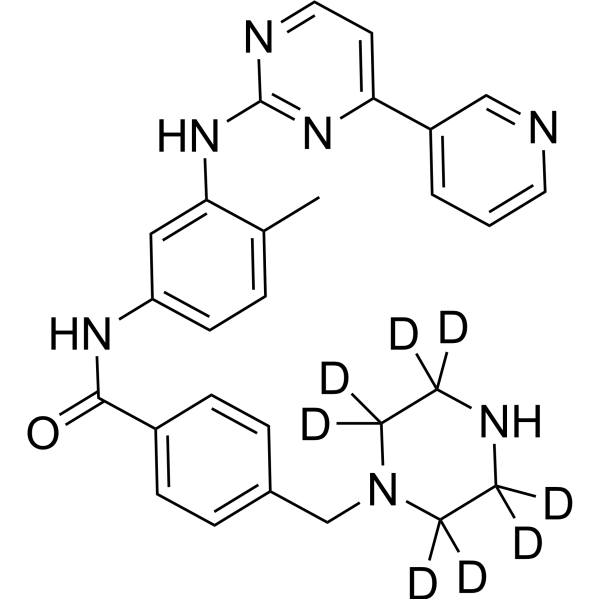 0 ImagesSynonyms: Norimatinib-d8; Imatinib metabolite N-Desmethyl imatinib-d8; CGP 74588-d8N-Desmethyl imatinib-d8 is a deuterium labeled Imatinib metabolite N-Desmethyl Imatinib (HY-G0017). N‑Desmethyl imatinib (Norimatinib) is an active metabolite of Imatinib (HY-15463), a selective c‑Abl inhibitor, and a substrate of P‑glycoprotein. N-Desmethyl imatinib binds to the c-Abl catalytic domain to prevent substrate phosphorylation, inhibits c-Abl-mediated α-synuclein activation and downstream inflammatory signaling pathways. N-Desmethyl imatinib induces apoptosis in K562 human leukemia cells. N-Desmethyl imatinib exhibits significantly elevated plasma levels in gastrointestinal stromal tumor (GIST) settings following mild SARS CoV 2 infection. N-Desmethyl imatinib can be used for the research of Parkinson’s disease, gastrointestinal stromal tumor, and chronic myeloid leukemia.
-
SGK1-IN-3 hydrochloride
 0 ImagesCat. No.: HY-142686APurity: 98.99%SGK1-IN-3 hydrochloride (Compound 3a) is an ATP-competitive SGK1 inhibitor with an IC50 of <1 nM against hSGK1. SGK1-IN-3 hydrochloride blocks the activity of CDK family members. SGK1-IN-3 hydrochloride serves as a P-glycoprotein substrate. SGK1-IN-3 can be used for the research of osteoarthritis.
-
Boeravinone B
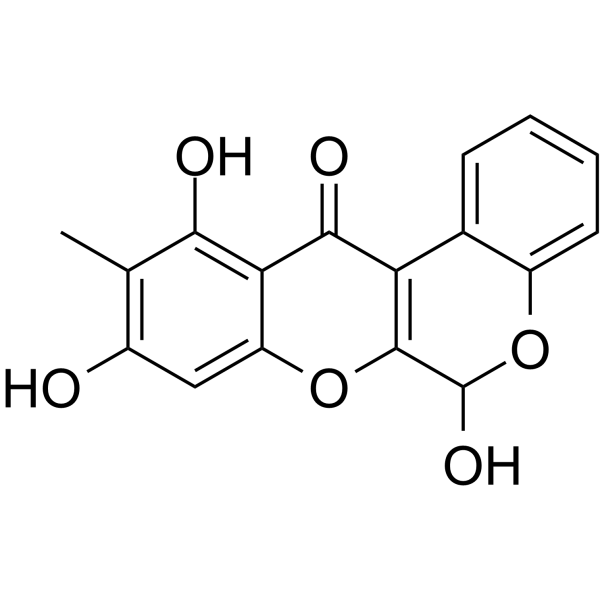 0 ImagesCat. No.: HY-N2947CAS No.: 114567-34-9Boeravinone B, a dual inhibitor of NorA bacterial efflux pump of Staphylococcus aureus and human P-Glycoprotein, reduces the biofilm formation and intracellular invasion of bacteria. Boeravinone B act as anti-aging and anti-apoptosis phyto-molecules during oxidative stress.
-
Sulfanitran
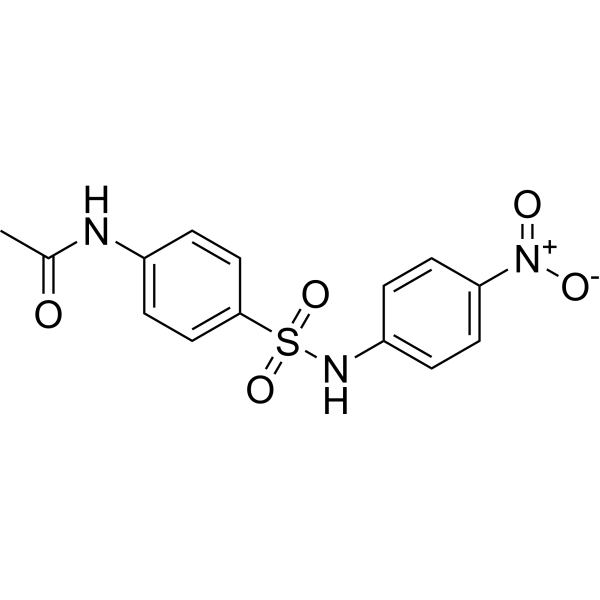 0 ImagesSulfanitran is an antibacterial and anticoccidial agent used in poultry feeds. Sulfanitran also is a multidrug resistance protein 2 (MRP2) stimulator that can increase the affinity of MRP2 for estradiol-17-β-D-glucuronide (E217βG).
-
ONT-093
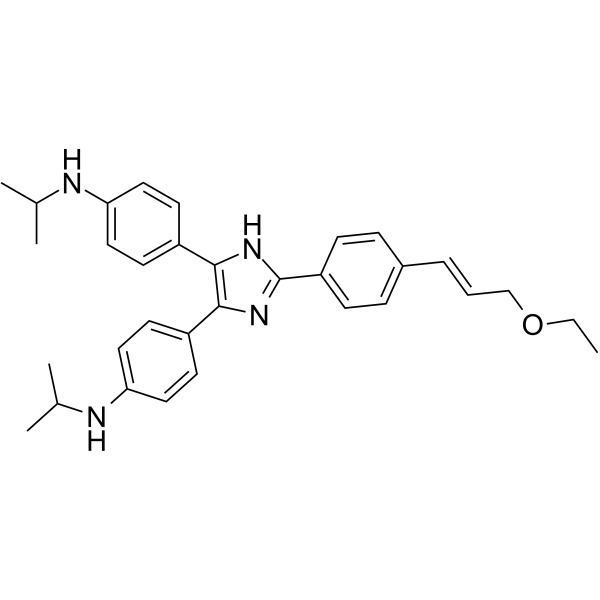 0 ImagesSynonyms: OC 144-093; OC 144093ONT-093 (OC 144-093) is a potent and orally active inhibitor of P-glycoprotein pump. ONT-093 inhibits P-gp-mediated ATPase activity with an IC50 of 0.16 μM. ONT-093 can inhibit drug efflux and increase bioavailability. ONT-093 reverses cancer cells multidrug resistance to chemotherapeutic drugs. ONT-093 can be used for the researches of cancer and infection, such as colon cancer and malarial .




