



PARP1
PARP1 (poly(ADP-ribose) polymerase 1) is a nuclear ADP-ribosyltransferase that functions as an early sensor of DNA strand breaks and catalyzes poly(ADP-ribosyl)ation to recruit DNA repair factors and coordinate chromatin remodeling at sites of genomic damage[1][2]. Mechanistically, PARP1 is a central component of the DNA damage response and plays critical roles in single-strand break repair and base excision repair through the recruitment of repair proteins such as XRCC1 and associated repair complexes[1][3]. Beyond local DNA repair, PARP1 contributes to genome surveillance by transmitting damage signals that influence repair pathway selection, replication stress responses, and maintenance of genomic stability[1][4]. In disease contexts, impaired PARP1-regulated repair can promote genomic instability, whereas elevated dependence on PARP1-mediated repair is a characteristic feature of multiple cancer models, particularly tumors with homologous recombination defects[4][5]. Compared with the related isoform PARP2, PARP1 accounts for the majority of DNA damage-induced poly(ADP-ribose) synthesis and displays distinct DNA-binding properties, including efficient recognition of single-strand DNA breaks, while PARP2 preferentially recognizes repair intermediates such as DNA gaps and flaps[3][6]. These functional distinctions support nonredundant contributions of PARP1 and PARP2 to the spatial and temporal organization of DNA repair pathways[3]. For experimental applications, PARP inhibitors have become widely used tools for investigating DNA damage responses and synthetic lethality, particularly in BRCA1/2-deficient tumor models, where suppression of PARP1-dependent repair enhances the accumulation of unrepaired DNA lesions and promotes selective cancer cell death[5][7].
References:
- [1]. Wang F, et al. PARPs and PARP inhibitors: molecular mechanisms and clinical applications. Mol Biomed. 2025 Dec 29;6(1):152. [Content Brief]
- [2]. Sciencedirect.topics.
- [3]. Yelamos J, et al. PARP-1 and PARP-2: New players in tumour development. Am J Cancer Res. 2011;1(3):328-346. Epub 2011 Jan 8. PMID: 21968702; PMCID: PMC3180065. [Content Brief]
- [4]. Petropoulos M, et al. Transcription-replication conflicts underlie sensitivity to PARP inhibitors. Nature. 2024 Apr;628(8007):433-441. [Content Brief]
- [5]. Rose M, et al. PARP Inhibitors: Clinical Relevance, Mechanisms of Action and Tumor Resistance. Front Cell Dev Biol. 2020 Sep 9;8:564601. [Content Brief]
- [6]. Szántó M, et al. Specific and shared biological functions of PARP2 - is PARP2 really a lil' brother of PARP1? Expert Rev Mol Med. 2024;26:e13.
- [7]. Underhill C, et al. A review of PARP inhibitors: from bench to bedside. Ann Oncol. 2011 Feb;22(2):268-79. [Content Brief]
-
PARP1 Related Products (204)
Related Products (204)

-
Antibodies (2)
-
PARP1/2/TNKS1/2-IN-1
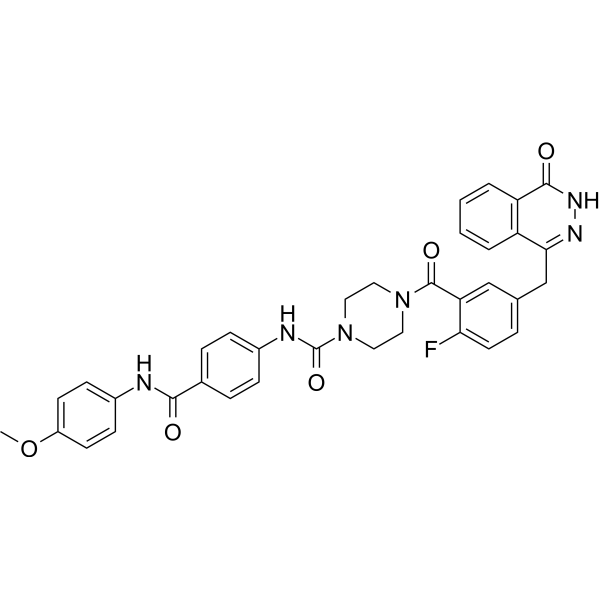 0 ImagesPARP1/2/TNKS1/2-IN-1 is a potent and selective dual PARP-1/2 and TNKS1/2 inhibitor with IC50 values of 0.25 nM, 1.2 nM, 13.5 nM and 4.15 nM for PARP-1, PARP-2, TNKS1 and TNKS2, respectively. PARP1/2/TNKS1/2-IN-1 suppresses Wnt/β-catenin signaling, decreases pADPr and BRCA1 expression, induces DNA damage, promotes apoptosis, and arrests the cell cycle at the G2/M phase. PARP1/2/TNKS1/2-IN-1 can be used for the study of on colorectal cancer and triple-negative breast cancer.
-
KWZY-11
 0 ImagesCat. No.: HY-176713CAS No.: 3077131-44-0KWZY-11 (Compound 11) is a potent PARP/CDK6 dual inhibitor with IC50 values of 156.8, 197.3, and 13.3 nM for PARP1, PARP2, and CDK6, respectively. KWZY-11 inhibits tumor cell proliferation by regulating the Wnt/β-catenin signaling pathway. KWZY-11 induces excessive DNA damage and apoptosis in MDA-MB-231 breast cancer cells.
-
DDO3602
 0 ImagesCat. No.: HY-178496DDO3602 is a PARP1 HSPTAC (HSP90-mediated proteolysis-targeting chimera) degrader, with a DC50 of 490.3 nM against PARP1; its Kd values for PARP1 and HSP90 are 66.5 nM and 1.64 nM, respectively. DDO3602 induces the formation of an unnatural PARP1-HSP90 ternary complex, recruits E3 ubiquitin ligase, and promotes PARP1 degradation via the ubiquitin-proteasome pathway. DDO3602 induces G2/M cell cycle arrest, DNA damage, inhibits cell migration, and exhibits antiproliferative activity in breast cancer cells. DDO3602 can be used in breast cancer-related research.
-
KU-0058684
 0 ImagesKU-0058684 is a potent PARP inhibitor, with an IC50 of 3.2 nM for PARP-1. KU-0058684 significantly reduces DNA double strand break (DSB) repair.
-
Rucaparib tartrate
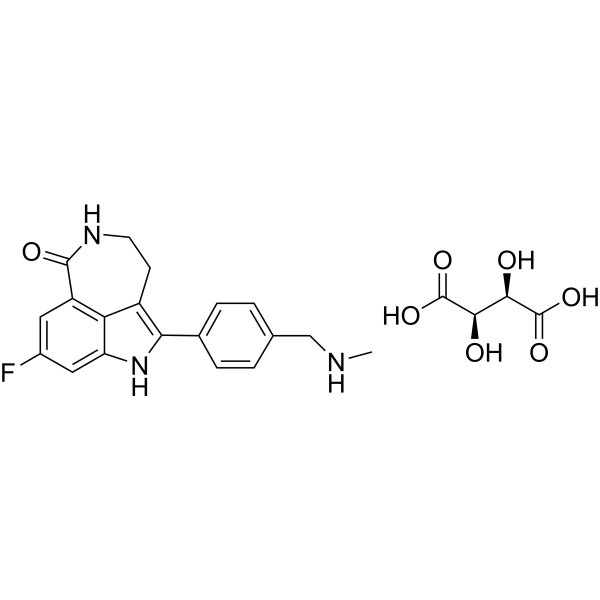 0 ImagesCat. No.: HY-10617CCAS No.: 773059-22-6Synonyms: AG-014699 tartrate; PF-01367338 tartrateRucaparib (AG014699) tartrate is an orally active, potent inhibitor of PARP proteins (PARP-1, PARP-2 and PARP-3) with a Ki of 1.4 nM for PARP1. Rucaparib tartrate is a modest hexose-6-phosphate dehydrogenase (H6PD) inhibitor. Rucaparib tartrate has the potential for castration-resistant prostate cancer (CRPC) research.
-
Rucaparib camsylate
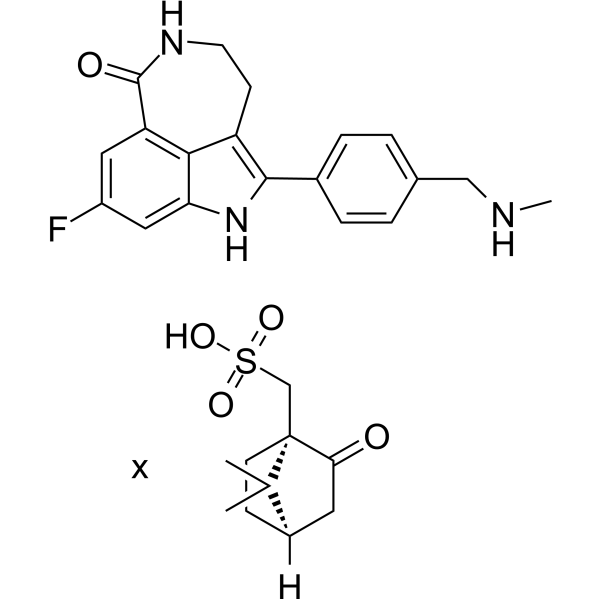 0 ImagesCat. No.: HY-102003ACAS No.: 1327258-57-0Synonyms: AG014699 camsylate; PF-01367338 camsylateRucaparib (AG014699) camsylate is an orally active, potent inhibitor of PARP proteins (PARP-1, PARP-2 and PARP-3) with a Ki of 1.4 nM for PARP1. Rucaparib camsylate is a modest hexose-6-phosphate dehydrogenase (H6PD) inhibitor. Rucaparib camsylate has the potential for castration-resistant prostate cancer (CRPC) research.
-
PARP1-IN-5
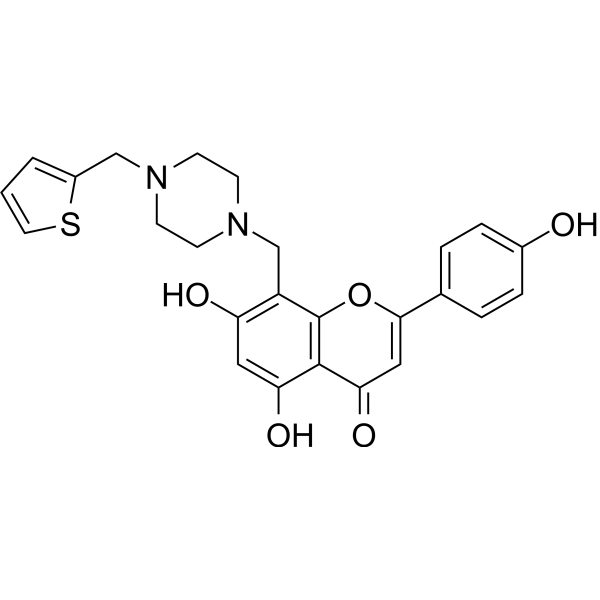 0 ImagesCat. No.: HY-132297CAS No.: 2735645-53-9PARP1-IN-5 is a low toxicity, orally active, potent and selective PARP-1 inhibitor (IC50 =14.7 nM). PARP1-IN-5 can be used for the research of cancer.
-
Venadaparib hydrochloride
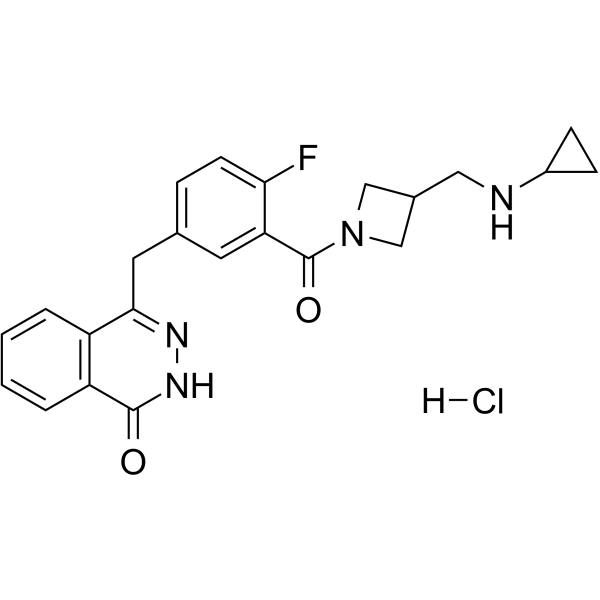 0 ImagesCat. No.: HY-137457ACAS No.: 1681020-60-9Synonyms: IDX-1197 hydrochlorideVenadaparib (IDX-1197) hydrochloride is a potent and selective PARP inhibitor with anticancer activities. Venadaparib hydrochloride can be used for solid tumors research.
-
Rucaparib acetate
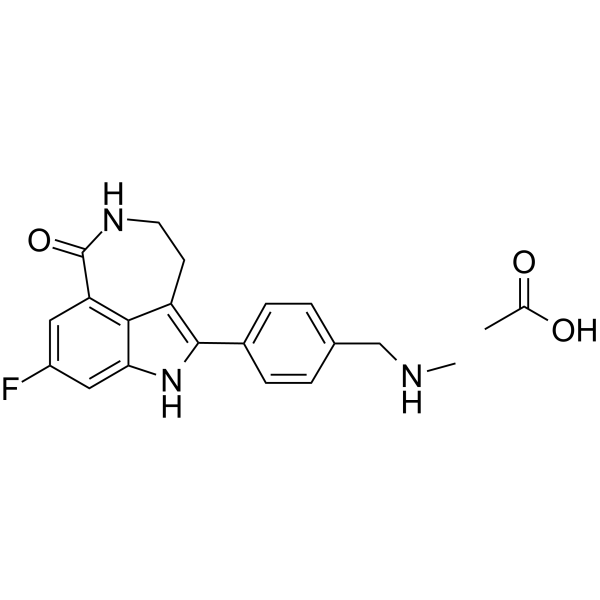 0 ImagesCat. No.: HY-10617DCAS No.: 773059-23-7Synonyms: AG014699 acetate; PF-01367338 acetateRucaparib (AG014699) acetate is an orally active, potent inhibitor of PARP proteins (PARP-1, PARP-2 and PARP-3) with a Ki of 1.4 nM for PARP1. Rucaparib acetate is a modest hexose-6-phosphate dehydrogenase (H6PD) inhibitor. Rucaparib acetate has the potential for castration-resistant prostate cancer (CRPC) research.
-
Rucaparib hydrochloride
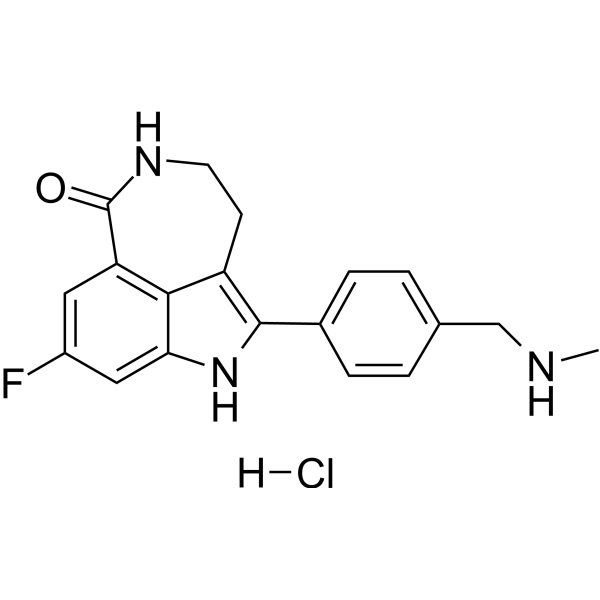 0 ImagesCat. No.: HY-10617BCAS No.: 773059-19-1Synonyms: AG014699 hydrochloride; PF-01367338 hydrochlorideRucaparib (AG014699) hydrochloride is an orally active, potent inhibitor of PARP proteins (PARP-1, PARP-2 and PARP-3) with a Ki of 1.4 nM for PARP1. Rucaparib hydrochloride is a modest hexose-6-phosphate dehydrogenase (H6PD) inhibitor. Rucaparib hydrochloride has the potential for castration-resistant prostate cancer (CRPC) research.
-
PARP/VEGFR3-IN-1
 0 ImagesCat. No.: HY-179020PARP/VEGFR3-IN-1 (Compound 18) is a dual PARP-VEGFR3 target inhibitor. Its IC50 values for PARP1, PARP2, and VEGFR3 are 0.0763, 0.0366, and 4.25 nM respectively. PARP/VEGFR3-IN-1 has no inhibitory effect on VEGFR1/2 and shows subtype selectivity. PARP/VEGFR3-IN-1 exhibits significant anti-proliferative activity in various cancer cells (leukemia, lung cancer, and triple-negative breast cancer). PARP/VEGFR3-IN-1 induces DNA damage and cell cycle arrest. PARP/VEGFR3-IN-1 triggers various forms of cell death by inducing apoptosis and autophagy. PARP/VEGFR3-IN-1 can be formulated into nanodelivery systems, significantly enhancing tumor targeting and therapeutic window.
-
2H-Indazole-7-carboxamide
 0 ImagesCat. No.: HY-W973851CAS No.: 952479-70-8
-
PARP1-IN-9
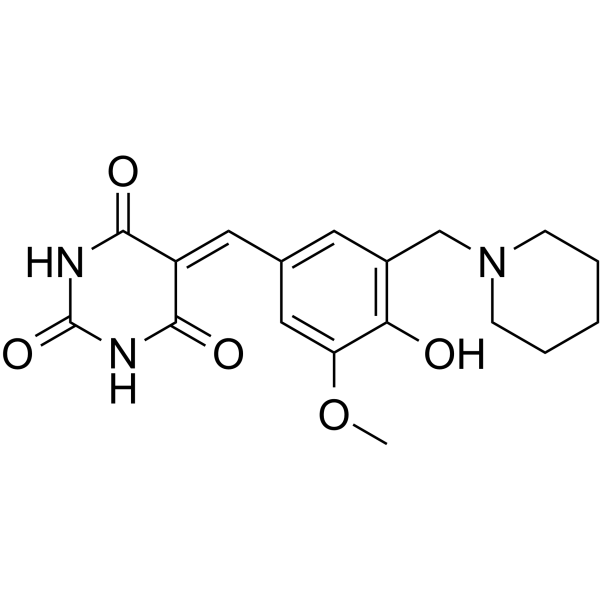 0 ImagesCat. No.: HY-149001CAS No.: 2494000-71-2PARP1-IN-9 (Compound 5c) is a PARP1 inhibitor with an IC50 of 30.51 nM. PARP1-IN-9 induces cell apoptosis and shows anticancer activity. PARP1-IN-9 has higher potency than Olaparib (HY-10162) .
-
PARP1-IN-49
 0 ImagesCat. No.: HY-179406PARP1-IN-49 is a selective PARP1 inhibitor with an IC50 of 23.56 nM and a Kd of 17.78 nM. PARP1-IN-49 shows a selectivity for PARP1 over PARP2. PARP1-IN-49 leads to the induction of DNA damage, cell cycle arrest, and apoptosis. PARP1-IN-49 also increases intracellular ROS levels and inhibits cell migration. PARP1-IN-49 can be used for the research of breast cancer and ovarian cancer.
-
PARP1-IN-42
 0 ImagesCat. No.: HY-175471CAS No.: 3066444-12-7
-
PARP1/PKM2-IN-1
 0 ImagesCat. No.: HY-183765PARP1/PKM2-IN-1 is a dual PARP1/PKM2 inhibitor, with an IC50 of 39.5 nM against PARP1, and IC50 values of 261 nM (recombinant PKM2) and 50 nM (dimeric PKM2) against PKM2. PARP1/PKM2-IN-1 reduces the dimerization of PKM2 and decreases its nuclear accumulation level. PARP1/PKM2-IN-1 also selectively downregulates PKM2 mRNA and impairs poly (ADP-ribose)-mediated nuclear retention of PKM2. PARP1/PKM2-IN-1 exhibits antiproliferative activity and inhibits the formation of 3D cancer spheroids. PARP1/PKM2-IN-1 can be used in research related to mammary adenocarcinoma, triple-negative breast cancer, BRCA1-mutant triple-negative breast cancer, and prostate adenocarcinoma.
-
TOPOI/PARP-1-IN-2
 0 ImagesCat. No.: HY-169299TOPOI/PARP-1-IN-2 (compound 6c) is a dual PARP-1 and topoisomerase 1 (TOPO-1) inhibitor with IC50s of 32.2 nM and 46.2 nM, respectively. TOPOI/PARP-1-IN-2 shows a selectivity for PARP-1 over PARP-2. TOPOI/PARP-1-IN-2 disrupts the cell cycle at the S phase and induces apoptosis in NCI-60 cancer cell lines.
-
iRucaparib-TP3
 0 ImagesCat. No.: HY-130645CAS No.: 2410557-01-4iRucaparib-TP3 is a selective PARP1 degrader (DC50=36 nM). iRucaparib-TP3 is promising for research of oncology (e.g., BRCA-mutated cancers) and neurodegenerative diseases.
-
PARP1/c-Met-IN-3
 0 ImagesCat. No.: HY-181928CAS No.: 3123529-62-1PARP1/c-Met-IN-3 (Compound L19) is a selective c-Met and PARP1 inhibitor, with an IC50 of 5.4 nM against c-Met and an IC50 of 3.7 nM against PARP1. PARP1/c-Met-IN-3 inhibits PARP2 enzymatic activity with an IC50 of 4.52 nM, and shows no specificity for PARP1 and PARP2. PARP1/c-Met-IN-3 induces cell cycle arrest and apoptosis. PARP1/c-Met-IN-3 exhibits anti-tumor activity against triple-negative breast cancer.
-
PARP1-IN-44
 0 ImagesCat. No.: HY-178032PARP1-IN-44, an Olaparib (HY-10162) derivative, is an orally active PARP1 inhibitor (IC50 = 0.6 nM), and also inhibits PARP2 (IC50 = 1.0 nM) and PARP7 (IC50 = 7.5 nM). PARP1-IN-44 has selective antiproliferative activity against BRCA-deficient cancer cells with minimal toxicity to normal cells. PARP1-IN-44 induces G2/M phase arrest, promotes apoptosis, elevates ROS levels, disrupts mitochondrial membrane potential. PARP1-IN-44 suppresses PARylation while increasing γH2AX accumulation. PARP1-IN-44 activates the cGAS-STING pathway, upregulating IFN-β and CXCL10 expression. PARP1-IN-44 enhancing CD8+ T cell infiltration in a CT26 tumor mouse model, demonstrating robust in vivo antitumor efficacy.




