



Phospholipase
Phospholipase is a member of a very complex group of enzymes that break down phospholipids into fatty acids and other compounds. Phospholipases are defined by the enzymatic reaction they catalyze. The classes are phospholipase A, which has members A1 and A2; phospholipase B, which can carry out the reactions of both A1 and A2; phospholipase C; and phospholipase D.
Phospholipase A2 (PLA2) catalyses the hydrolysis of the sn-2 position of glycerophospholipids to yield fatty acids and lysophospholipids. Phospholipase C (PLC) converts phosphatidylinositol 4,5-bisphosphate (PIP2) to inositol 1,4,5-trisphosphate (IP3) and diacylglycerol (DAG). DAG and IP3 each control diverse cellular processes and are also substrates for synthesis of other important signaling molecules. PLC is thus central to many important interlocking regulatory networks. Phospholipase D (PLD) is an essential enzyme responsible for the production of the lipid second messenger phosphatidic acid (PA), which is involved in fundamental cellular processes, including membrane trafficking, actin cytoskeleton remodeling, cell proliferation and cell survival.
Phospholipase Isoform Specific Products
All Product Categories
-
Phospholipase Related Products (326)
Related Products (326)

-
Antibodies (9)
-
Phospholipase Isoform Comparison
-
sPLA2-X Inhibitor 31
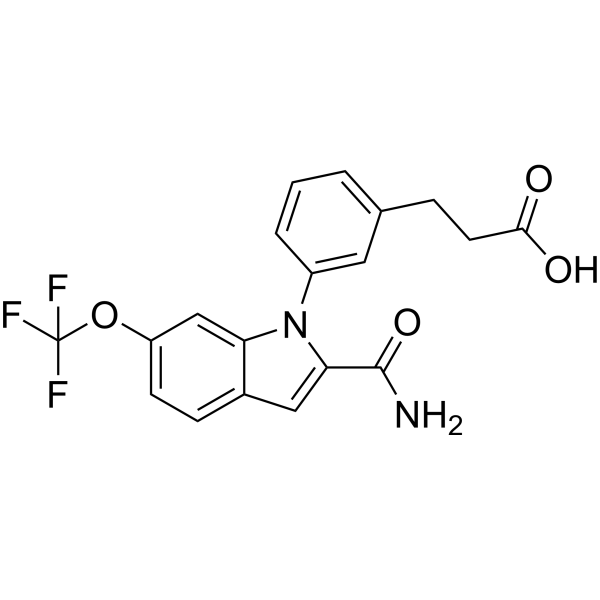 0 ImagesCat. No.: HY-112605CAS No.: 2241025-50-1sPLA2-X Inhibitor 31 is a selective secreted phospholipase A2 type X (sPLA2-X) inhibitor with IC50s of 26 nM, 310 nM, and 2230 nM for sPLA2-X, sPLA2-IIa, and sPLA2-V, respectively.
-
PF-04217903 phenolsulfonate
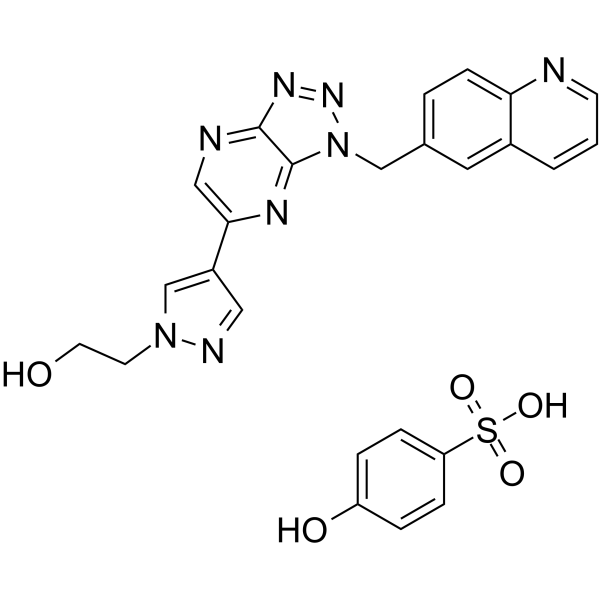 0 ImagesCat. No.: HY-12017BCAS No.: 1159490-85-3PF-04217903 phenolsulfonate is an orally active, highly selective ATP-competitive c-Met kinase inhibitor with a Ki value of 4.8 nM and a Kd value of 4.5 nM. PF-04217903 phenolsulfonate blocks c-Met and HGF signaling pathways, inhibits MET phosphorylation, and blocks downstream MAPK, PI3K/AKT and PLCγ1 pathways. PF-04217903 phenolsulfonate suppresses tumor proliferation, survival, migration, invasion, angiogenesis and metastasis, induces apoptosis, and enhances efferocytosis, Annexin A1 expression and resolution of inflammation. PF-04217903 phenolsulfonate retains activity against several c-Met mutants (M1131T, V1220I, H1094R). PF-04217903 phenolsulfonate increases the incidence of subarachnoid hemorrhage and reduces survival rate without altering aneurysm formation, and also prevents lymph node metastasis induced by VEGF inhibition. PF-04217903 phenolsulfonate is applicable to research related to tumors (pancreas, stomach, lung, brain, colon, breast, kidney, melanoma, etc.), intracranial aneurysms and inflammatory diseases (gouty arthritis, neutrophilic pleuritis).
-
FIPI hydrochloride
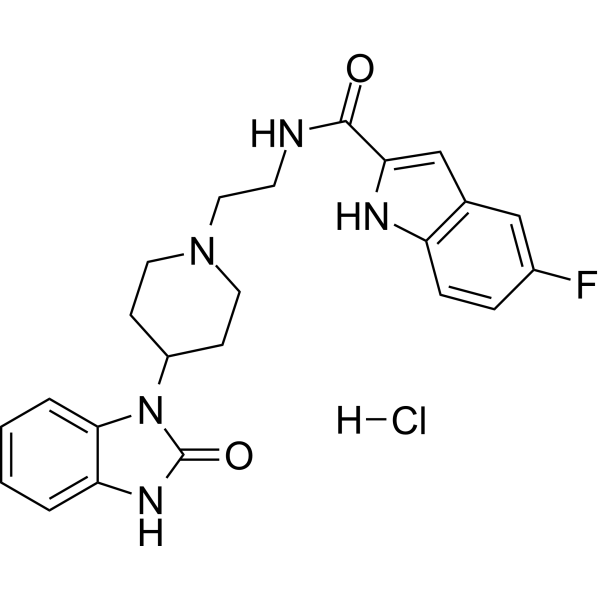 0 ImagesCat. No.: HY-12807ACAS No.: 1781834-93-2Synonyms: 5-Fluoro-2-indolyl deschlorohalopemide hydrochlorideFIPI hydrochloride is a phospholipase D (PLD) inhibitor with an IC50 for PLD1 and PLD2 of about 25 nM. FIPI hydrochloride regulates cytoskeletal recombination, cell diffusion and chemotaxis. FIPI hydrochloride can be used in cancer research. In addition, FIPI hydrochloride can enhance the secretion and aggregation of platelet dense particles, inhibit thrombosis, reduce ischemic stroke infarct volume and improve nerve function.
-
Lp-PLA2-IN-2
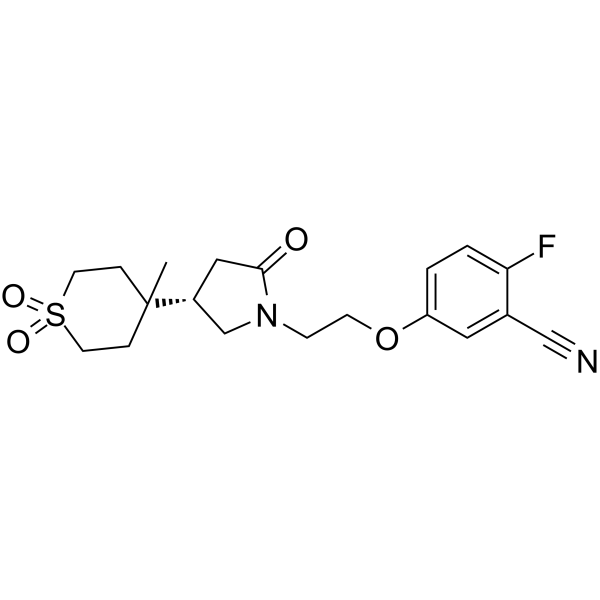 0 ImagesCat. No.: HY-133148CAS No.: 2071636-15-0Lp-PLA2-IN-2 is a potent and selective lipoprotein-associated phospholipase A2 (Lp-PLA2) inhibitor, with an IC50 0f 120 nM for recombinant human Lp-PLA2.
-
Lp-PLA2-IN-5
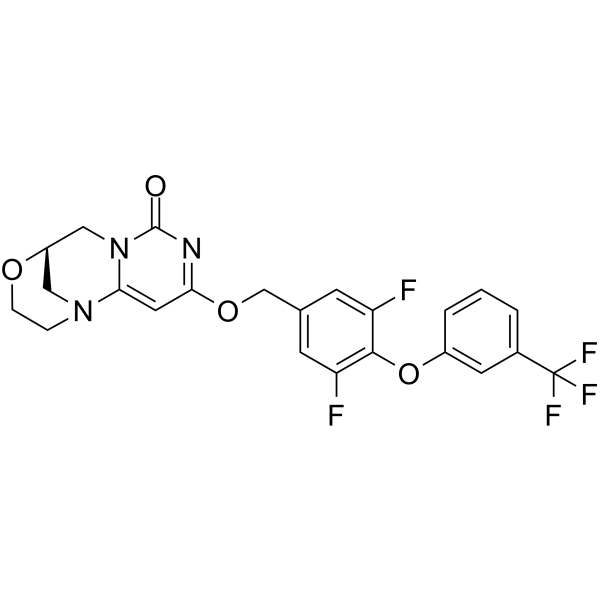 0 ImagesCat. No.: HY-142670CAS No.: 2738877-85-3Lp-PLA2-IN-5 is a potent inhibitor of lipoprotein-associated phospholipase A2 (Lp-PLA2). Lp-PLA2 previously known as platelet- activating factor acetylhydrolase (PAF-AH), is a phospholipase A2 enzyme involved in hydrolysis of lipoprotein lipids or phospholipids. Lp-PLA2-IN-5 has the potential for the research of diseases associated with the activity of Lp-PLA2, for example atherosclerosis, Alzheimer's disease (extracted from patent WO2021228159A1, compound 32).
-
Aristolochic acid C (Standard)
 0 ImagesAristolochic acid C (Standard) is the analytical standard of Aristolochic acid C. This product is intended for research and analytical applications. Aristolochic acid C is a derivative of Aristolochic acid. Aristolochic acid is a phospholipase A2 (PLA2) inhibitor, which disrupts cortical microtubule arrays and root growth in Arabidopsis.
-
Phospholipase A2, Streptomyces violaceoruber
 0 ImagesCat. No.: HY-P3029BPhospholipase A2, Streptomyces violaceoruber (EC 3.1.1.4) hydrolyzes the β-ester bond of zwitterionic glycerophospholipids. Preferred substrates are phosphatidylcholine, phosphatidylethanolamine, and their plasmalogen analogues. Phosphatidylinositol and phosphatidylserine are also hydrolyzed. Phospholipase A2specifically recognizes the sn-2 acyl bond of phospholipids and catalytically hydrolyzes the bond releasing arachidonic acid and lysophospholipids.
-
Lp-PLA2-IN-4
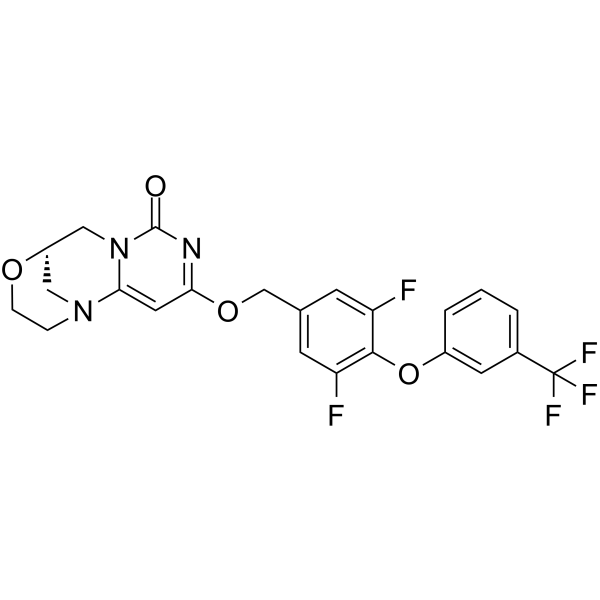 0 ImagesCat. No.: HY-142669CAS No.: 2738877-91-1Lp-PLA2-IN-4 is a potent inhibitor of lipoprotein-associated phospholipase A2 (Lp-PLA2). Lp-PLA2 previously known as platelet- activating factor acetylhydrolase (PAF-AH), is a phospholipase A2 enzyme involved in hydrolysis of lipoprotein lipids or phospholipids. Lp-PLA2-IN-4 has the potential for the research of diseases associated with the activity of Lp-PLA2, for example atherosclerosis, Alzheimer's disease (extracted from patent WO2021228159A1, compound 38).
-
trans-Benzylideneacetone (Standard)
 0 ImagesSynonyms: trans-Benzalacetone (Standard)trans-Benzylideneacetone (Standard) is the analytical standard of trans-Benzylideneacetone. This product is intended for research and analytical applications. trans-Benzylideneacetone (trans-Benzalacetone), a metabolite of gram-negative entomopathogenic bacterium Xenorhabdus nematophila, is an enzyme inhibitor against phospholipase A2 (PLA2). trans-Benzylideneacetone is an immunosuppressant[1].
-
1,2-Bis(heptanoylthio)-sn-glycero-3-PG sodium
 0 ImagesCat. No.: HY-173587Synonyms: 1,2-Bis(heptanoylthio) glycerophosphatidylglycerol sodium1,2-Bis(heptanoylthio)-sn-glycero-3-PG (1,2-Bis(heptanoylthio) glycerophosphatidylglycerol) sodium is a fatty acylthioesterified phosphatidylglycerol derivative that can be used to mimic the action of phospholipases or as a probe molecule for membrane fusion studies.
-
Plipastatin A1
 0 ImagesCat. No.: HY-P10447CAS No.: 103651-09-8Synonyms: Fengycin IX; SNA-60-367-3Plipastatin A1 (Fengycin IX; SNA-60-367-3) is a lipopeptide with phospholipase A2 inhibitory activity. Plipastatin A1 inhibits conidial germination of Botrytis cinerea in vitro and reduces the incidence of gray mold on tomato leaves. Plipastatin A1 is applicable to research related to gray mold[1][2].
-
RK-682 hemicalcium
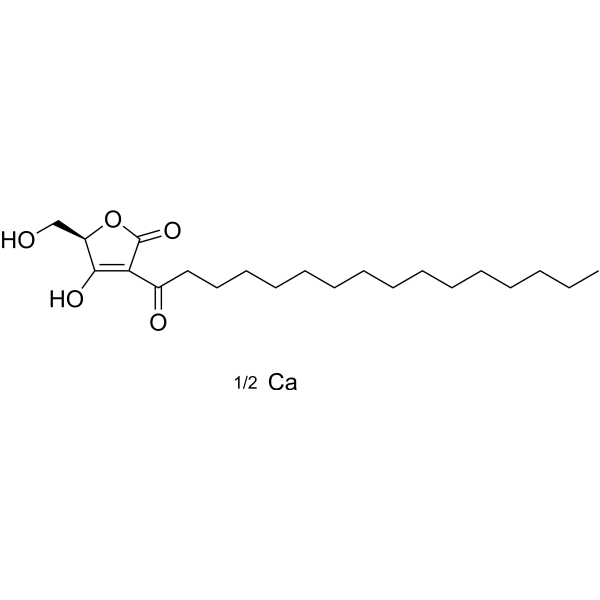 0 ImagesCat. No.: HY-135564CAS No.: 332131-32-5RK-682 hemicalcium is the hemicalcium salt form of RK-682 (HY-135564A). RK-682 hemicalcium is the inhibitor for protein tyrosine phosphatase (PTPase), heparanase, phospholipase A2 and HIV-1 protease. RK-682 hemicalcium inhibits the dephosphorylation of CD45 (IC50 is 54 μM) and VHR (IC50 is 2.0 μM), and thereby inhibits the ERK signaling pathway. RK-682 hemicalcium inhibits the cell viability of cancer cell MGH-U3, T24 and UROtsa with IC50s of 78.2, 43.2 and 145 nM, respectively, arrests the cell cycle at G1/S phase, inhibits the cell migration and autophagy in MGH-U3 and T24[2].
-
ZPL-5212372
 0 ImagesCat. No.: HY-124852CAS No.: 916136-25-9Synonyms: PF 5212372ZPL-5212372 (PF 5212372) is a cPLA2α inhibitor (IC50 = 7 nM). ZPL-5212372 inhibits the release of prostaglandin D2 (PGD2), cysteyl leukotrienes, leukotriene B4, thromboxane A2, and PGD2 from human lung cells. ZPL-5212372 inhibits delayed bronchoconstriction and airway hyperresponsiveness in a sheep allergic inflammation model. ZPL-5212372 may be used in asthma research.

-
MJ33
 0 ImagesCat. No.: HY-136271CAS No.: 137300-78-8MJ-33 is a competitive phospholipase A₂ (PLA₂) inhibitor with an IC50 of 0.3 μM. MJ-33 inhibits the activation of NOX2 by blocking the PLA₂ activity of Prdx6, thereby reducing the production of ROS. MJ-33 effectively inhibits the activity of acidic PLA₂ (pH 4.0), reduces the degradation of pulmonary surfactant phosphatidylcholine (PC), but has no effect on alkaline PLA₂ (pH 8.5). MJ-33 significantly alleviates lung oxidative damage induced by ischemia-reperfusion (I/R). MJ-33 significantly inhibits the invasive, migratory and adhesive abilities of prostate cancer cells by suppressing the MAPK, AKT, NF-κB and AP-1 signaling pathways. MJ-33 can be used to study ROS-related diseases and prostate cancer.
-
VI-60
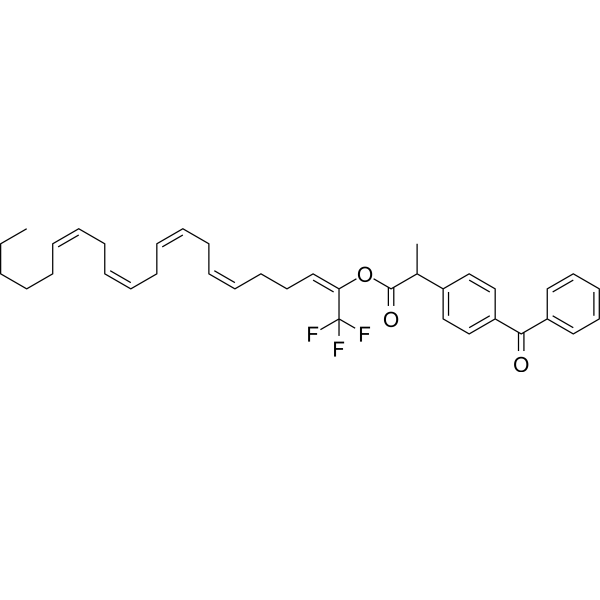 0 ImagesCat. No.: HY-162228CAS No.: 3050874-42-2VI-60 is a dual, orally active inhibitor of cPLA2 and COX-2, which reveals an anti-inflammtory efficacy through the inhibition of p38 MAPK/cPLA2/COX-2/PGE2 pathway.
-
2-Methoxybenzoic acid-d3
 0 ImagesCat. No.: HY-N1393S1CAS No.: 96739-36-5Synonyms: NSC 3778-d3; O-Methylsalicylic acid-d3; Salicylic acid methyl ether-d32-Methoxybenzoic acid (NSC 3778; O-Methylsalicylic acid; Salicylic acid methyl ether)-d3 is deuterium-labeled 2-Methoxybenzoic acid (HY-N1393). 2-Methoxybenzoic acid is a natural compound with potential salicylate-like effect. 2-Methoxybenzoic acid inhibits carbonic anhydrase activity, elevates intraplatelet cyclic guanosine monophosphate level, and suppresses cytosolic phospholipase A2 phosphorylation. 2-Methoxybenzoic acid suppresses platelet reactivity, including decreased spreading, retraction, and aggregation in platelets. 2-Methoxybenzoic acid ameliorates arterial thrombosis in a dose-dependent manner without affecting normal hemostasis in mice. 2-Methoxybenzoic acid can be used for the research of arterial thrombosis.
-
LY256548
 0 ImagesCat. No.: HY-114873CAS No.: 107889-31-6Synonyms: LY25684LY256548 (LY25648) is an orally available anti-ischemic and anti-inflammatory compound with central nervous system activity. LY256548 is an inhibitor of phospholipase A2, 5-lipoxygenase (5-LOX), and COX, and inhibits A23187 (HY-N6687)-stimulated leukotriene B4 production. LY256548 inhibits bone damage and paw swelling in the rat Freund's complete adjuvant-induced arthritis (FCA) model.
-
PTAD-ergosta-3-one
 0 ImagesCat. No.: HY-187095PTAD-ergosta-3-one is a snake venom enzyme inhibitor. PTAD-ergosta-3-one inhibits the procoagulant activity of citrated plasma mediated by serine protease (SVSP) from Bothrops asper venom. PTAD-ergosta-3-one inhibits the esterase activity of PLA2 from Bothrops asper venom. PTAD-ergosta-3-one can be used in the research of snakebite envenoming.
-
Lansoprazole (Standard)
 0 ImagesSynonyms: AG-1749 (Standard)Lansoprazole (Standard) is the analytical standard of Lansoprazole. This product is intended for research and analytical applications. Lansoprazole (AG 1749) is an orally active proton pump inhibitor which prevents the stomach from producing acid. Lansoprazole (AG 1749) is a potent brain penetrant neutral sphingomyelinase (N-SMase) inhibitor (exosome inhibitor).




