



Fluorescent Dye
Fluorescence is a phenomenon of photoluminescence in luminescence. When an atom is irradiated by light, some electrons around the nucleus jump from their original orbitals to higher energy orbitals under the influence of light energy, i.e., from the ground state to the first or second excited single-line state, etc. Due to the instability of the first or second excited singlet state, the electron returns from the excited singlet state to the ground state accompanied by released energy, resulting in fluorescence.
Fluorescent dyes can be covalently bound or physically adsorbed in the structure of the substance. The fluorescence properties allow for the characterization, localization and quantitative analysis of the labeled object. Fluorescent dyes have shown great potential for the detection of proteins, nucleic acids, cells, and immunoassays, attributed to the advantages in non-radioactive contamination, simple experimental operation and easy observation.
Fluorescent dyes have penetrated many fields such as pharmacology, physiology, environmental science, and information science, as well as functional studies of proteins and drug screening.
All Product Categories
-
Fluorescent Dye Related Products (4852)
Related Products (4852)

-
Antibodies (4)
-
Sulfo-Cyanine7 NHS ester potassium
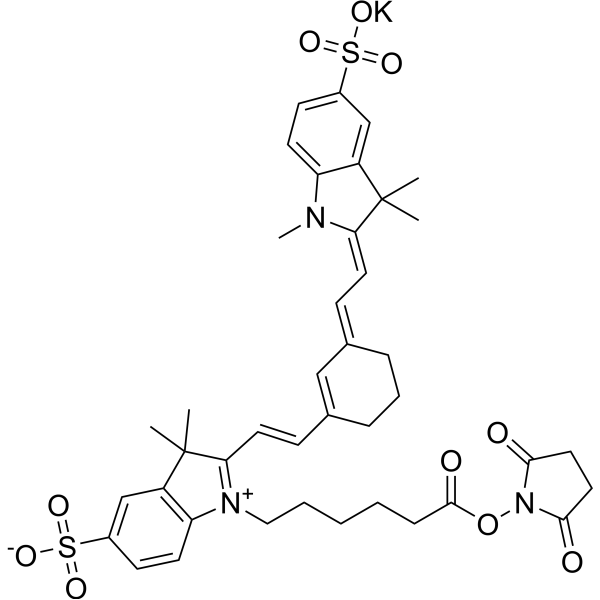 0 ImagesCat. No.: HY-D1352CAS No.: 1603861-95-5Sulfo-Cyanine7 NHS ester potassium is an amine-reactive succinimide ester. Sulfo-Cyanine7 NHS ester reagent allows to prepare sulfo-Cyanine7-labeled biomolecules, such as proteins, with ease. Dye labeled molecules can be subsequently used for various research and agent design related experiments.
-
Sambucus Nigra Lectin-Rhodamine
 0 ImagesCat. No.: HY-NP080KSynonyms: SNA-RhodamineSambucus Nigra Lectin-Rhodamine (SNA-Rhodamine) is a phytohemagglutinin labeled with Rhodamine, which can be used as a probe to specifically bind to biomolecules (such as polysaccharides and peptides). Sambucus Nigra Lectin-Rhodamine precisely locates the distribution of glycan chains on the cell surface through stable fluorescence signals, and can be used for glycobiology research (Ex/Em = 544/576 nm).
-
RB-PEG10000-NH2
 0 ImagesCat. No.: HY-D2895HSynonyms: Rhodamine B-PEG10000-NH2RB-PEG10000-NH2 (Rhodamine B-PEG10000-NH2) is a fluorescent dye composed of Rhodamine B (HY-Y0016), PEG and an amino group. The reactive primary amine or NH2 groups can react rapidly with activated carboxylic acids such as NHS esters to form stable amide bonds (Ex/Em=546/610 nm).
-
FITC-DEAE-Polysucrose 400
 0 ImagesCat. No.: HY-179080AFITC-DEAE-Polysucrose 400 is FITC-labeled DEAE-Polysucrose 400. FITC-DEAE-Polysucrose 400 is mainly used for permeability and microcirculation studies (Ex/Em = 488/525 nm).
-
NIR-RED ATP Probe
 0 ImagesCat. No.: HY-D2999CAS No.: 2996066-33-0NIR-RED ATP Probe is a NIR-II fluorescent probe. NIR-RED ATP Probe exhibits high affinity and selectivity for ATP and can non-invasively and with high contrast detect changes in ATP concentration at the cellular level, with minimal interference to the abundant biomolecules within the cells. NIR-RED ATP Probe can be used as a biomarker detection tool for drug-induced liver injury (DILI).
-
Gol-SiRhoNox
 0 ImagesCat. No.: HY-D3124Gol-SiRhoNox is a Golgi apparatus-targeted fluorescent probe with high selectivity for Fe (II), with a limit of detection of 50 nM. Gol-SiRhoNox integrates a myristoyl motif for Golgi apparatus targeting and a silicon-fused rhodamine N-oxide as the Fe (II)-sensitive moiety. Gol-SiRhoNox is non-fluorescent in its native state; Fe (II)-mediated deoxygenation of the N-oxide triggers fluorescence recovery. Its fluorescent product, Gol-SiR, has excitation/emission wavelengths of 630/665 nm and a maximum absorption wavelength of 655 nm.
-
CDg13
 0 ImagesCat. No.: HY-D3179CAS No.: 1451048-96-6CDg13 is a fluorescent probe that specifically detects living neural stem/progenitor cells. CDg13 localizes to the endoplasmic reticulum via its dihexyl moiety, with no interaction with endoplasmic reticulum biomolecules. CDg13 undergoes selective efflux by active ABCG2 transporters, with increased intracellular accumulation following ABCG2 inhibition or knockdown. CDg13 isolates and enriches self-renewable neural stem/progenitor cells from embryonic mouse brain tissue, stains neural stem/progenitor cells brightly, and sorts ABCG2low cell populations from heterogeneous populations. (Ex/Em = 520/553 nm)
-
Dde Biotin-PEG4-TAMRA-PEG4 Alkyne
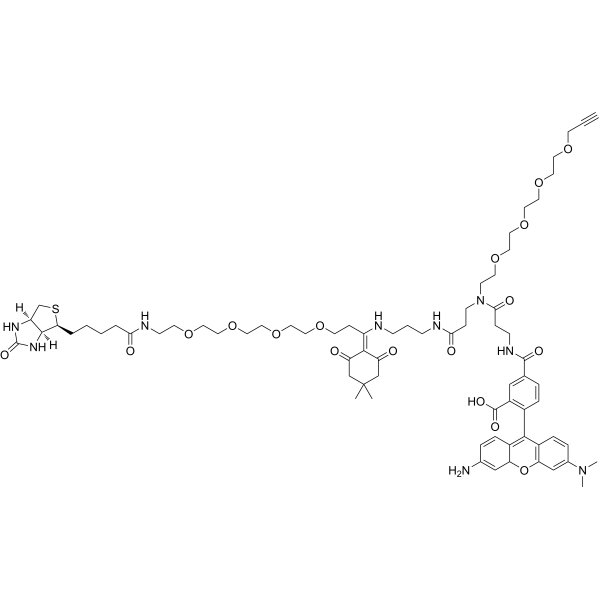 0 ImagesCat. No.: HY-140877CAS No.: 2353409-55-7Dde Biotin-PEG4-TAMRA-PEG4 Alkyne is a dye derivative of TAMRA (HY-135640) modified with a cleavable biotin group. Dde Biotin-PEG4-TAMRA-PEG4 Alkyne contains Alkyne groups that can undergo copper-catalyzed azide-alkyne cycloaddition (CuAAc) with molecules containing Azide groups.
-
Kdn probe-1
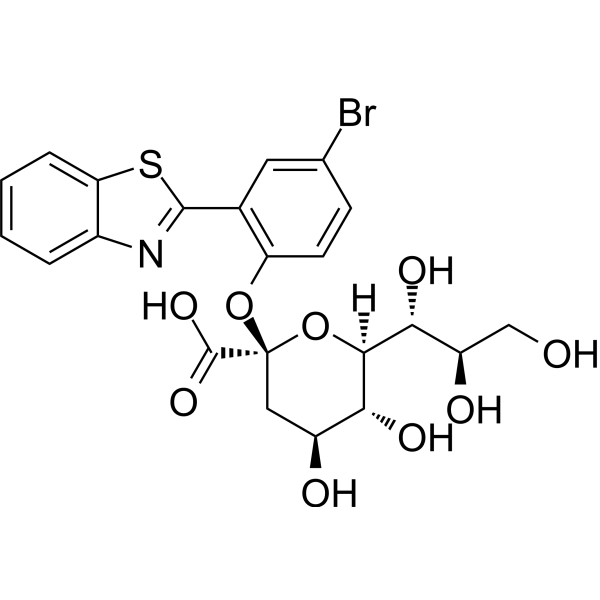 0 ImagesCat. No.: HY-D1399CAS No.: 2857099-16-0Kdn probe-1 is a fluorescent Kdn probe and reveals the localization of AfS in vesicles at the cell surface.
-
RH 421
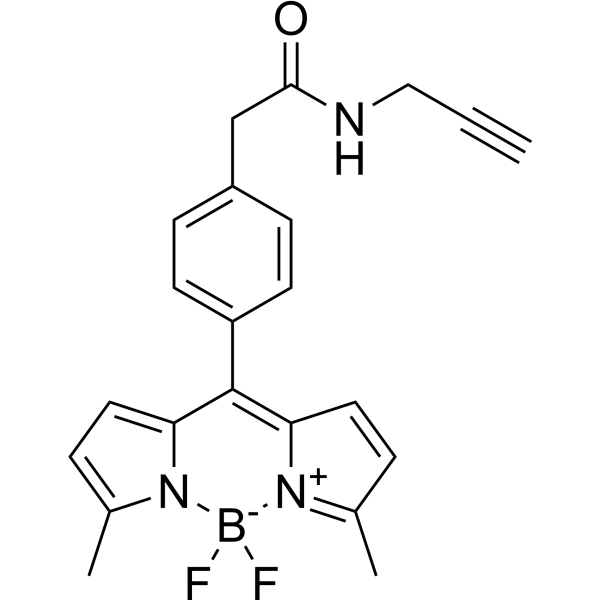
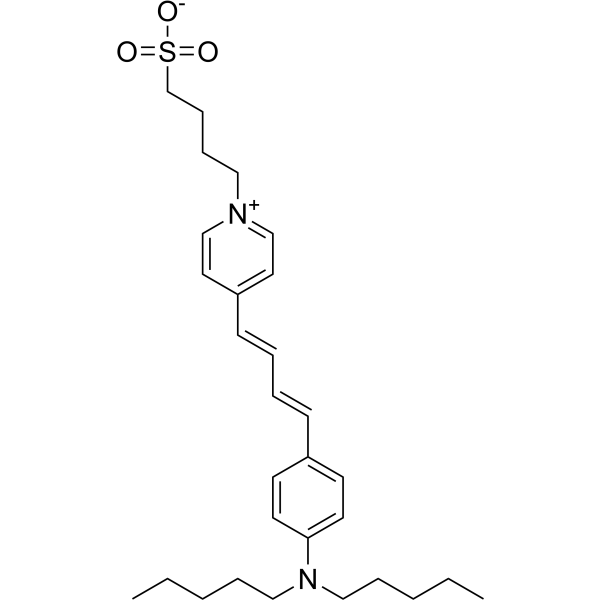 0 ImagesCat. No.: HY-114958CAS No.: 107610-19-5RH 421 is a voltage-sensitive styryl dye that can penetrate through the lipid bilayers. RH 421 is a chromogenic substrate for β-galactosidase.
-
Alexa 532
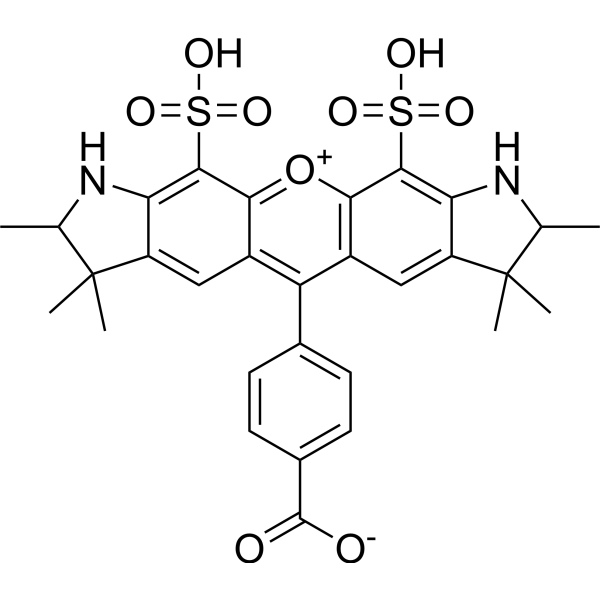 0 ImagesCat. No.: HY-D1465CAS No.: 222159-92-4Alexa 532 is a multifunctional dye. Dyes are important tools in biological experiments. They can help researchers observe and analyze cell structures, track biomolecules, evaluate cell functions, distinguish cell types, detect biomolecules, study tissue pathology and monitor microorganisms. Their applications range from basic scientific research to clinical A wide range of diagnostics. Dyes are also widely used in traditional fields such as textile dyeing, as well as in emerging fields such as functional textile processing, food pigments and dye-sensitized solar cells.
-
Di-12-ANEPPQ
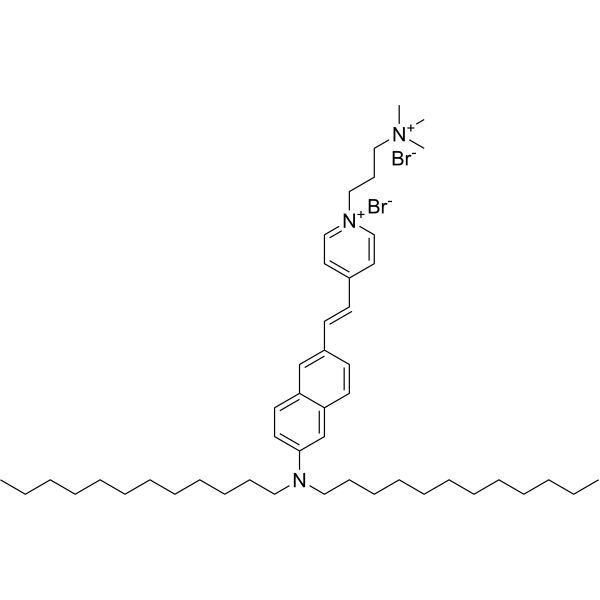 0 ImagesCat. No.: HY-D1426CAS No.: 217176-86-8Di-12-ANEPPQ is a fast-responding membrane potential dye. Di-12-ANEPPQ, the lipophilic dye, shows cell-specific loading and Golgi-like staining patterns with minimal background fluorescence in the slices of neocortex and hippocampus.
-
(E)-Cyanine 3.5 chloride
 0 ImagesCat. No.: HY-D1596BCAS No.: 3077081-67-2Synonyms: (E)-Cy3.5 NHS ester chloride; (E)-Cy 3.5 chloride(E)-Cyanine 3.5 ((E)-Cy3.5 NHS ester) chloride is a cyanine dye functionalized with a N-hydroxysuccinimide (NHS) group. (E)-Cyanine 3.5 chloride contains NHS groups that react with ammonia to form ester bonds (Ex/Em = 586/612 nm).
-
FAM labled Diranersen sodium
 0 ImagesCat. No.: HY-177626CFAM labled Diranersen sodiumis a FAM labled Diranersen sodium.
-
FITC-HA (MW 3000)
 0 ImagesCat. No.: HY-D2836JSynonyms: FITC-Hyaluronate (MW 3000)FITC-HA (MW 3000) is hyaluronic acid (HA) (HY-B0633A) labeled with FITC (HY-66019). FITC-HA retains the ability of HA to bind to receptors (such as CD44) and form extracellular matrices, while it can be detected by fluorescence microscopy or flow cytometry for tracing the localization, binding, internalization and metabolic pathways of HA in cells, tissues or living organisms (Ex/Em ≈ 490/520 nM).
-
Cy3-PEG2-Azide
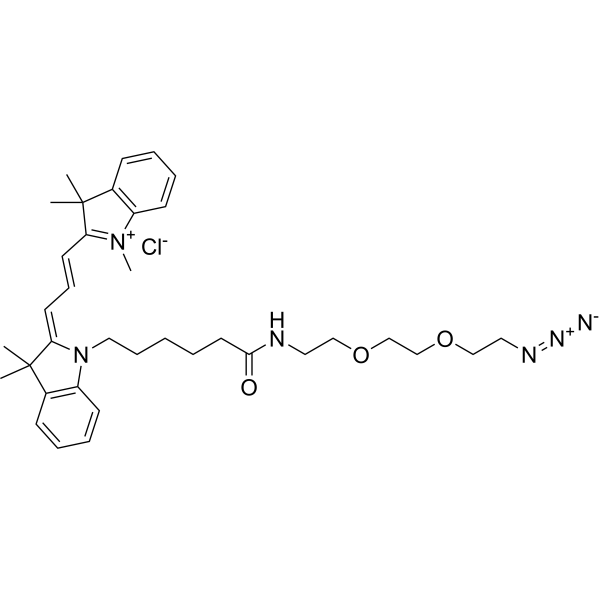 0 ImagesCat. No.: HY-D2136Cy3-PEG2-Azide is a Cyanine 3 (Cy3) (HY-D0822) dye derivative containing 2 PEG units. Cy3-PEG2-Azide contains an azide group and can undergo copper-catalyzed azide-alkyne cycloaddition (CuAAc) with molecules containing alkyne groups. It can also undergo ring strain-promoted alkyne-azide cycloaddition (SPAAC) with molecules containing DBCO or BCN groups.
-
ER-Fluidity
 0 ImagesCat. No.: HY-D3107CAS No.: 1826900-73-5ER-Fluidity is a fluorescent probe used to detect the membrane fluidity of the endoplasmic reticulum (ER). ER-Fluidity consists of BODIPY, Coumarin (HY-N0709) moieties and a long-chain n-octadecyl group (n-C18). The excitation/emission wavelengths of the Coumarin moiety of ER-Fluidity are Ex/Em = 350/439 nm, while those of the BODIPY moiety are Ex/Em = 500/518 nm. In cell experiments, 488 nm is additionally used as an excitation wavelength for the BODIPY moiety.




