



Fluorescent Dye
Fluorescence is a phenomenon of photoluminescence in luminescence. When an atom is irradiated by light, some electrons around the nucleus jump from their original orbitals to higher energy orbitals under the influence of light energy, i.e., from the ground state to the first or second excited single-line state, etc. Due to the instability of the first or second excited singlet state, the electron returns from the excited singlet state to the ground state accompanied by released energy, resulting in fluorescence.
Fluorescent dyes can be covalently bound or physically adsorbed in the structure of the substance. The fluorescence properties allow for the characterization, localization and quantitative analysis of the labeled object. Fluorescent dyes have shown great potential for the detection of proteins, nucleic acids, cells, and immunoassays, attributed to the advantages in non-radioactive contamination, simple experimental operation and easy observation.
Fluorescent dyes have penetrated many fields such as pharmacology, physiology, environmental science, and information science, as well as functional studies of proteins and drug screening.
All Product Categories
-
Fluorescent Dye Related Products (4891)
Related Products (4891)

-
Antibodies (4)
-
ATTO 532 iodacetamid
 0 ImagesCat. No.: HY-D2052ATTO 532 iodacetamid is a new fluorescent marker based on the Rhodamine structure. It has strong absorption, high fluorescence quantum yield, high thermal stability and photochemical stability, and is suitable for single molecule detection and high-resolution microscopy. ATTO 532 iodacetamid is an iodoacetamide derivative of ATTO 532, which can be used to label proteins or antibodies.
-
CDy14
 0 ImagesCat. No.: HY-D3194CAS No.: 2028316-14-3CDy14 is a fluorescent probe targeting the extracellular polysaccharide Psl. CDy14 enables the detection of biofilms. CDy14 can be used for research on chronic bacterial infections.
-
Lana yellow 4G
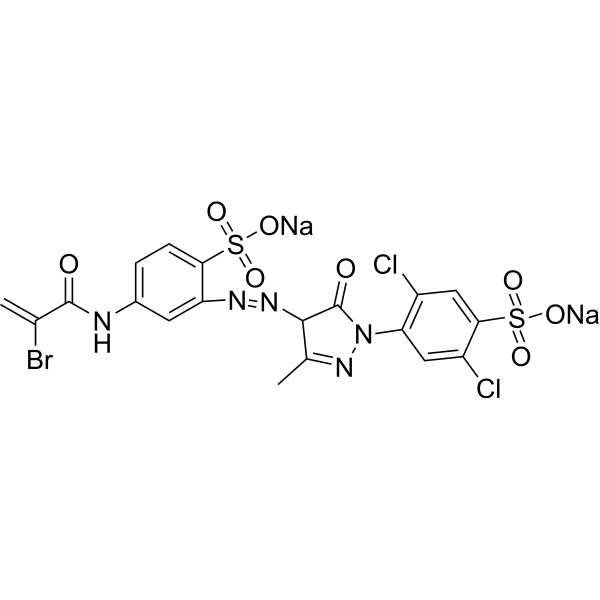 0 ImagesCat. No.: HY-D0665CAS No.: 70247-70-0Lana yellow 4G is a multifunctional dye. Dyes are important tools in biological experiments. They can help researchers observe and analyze cell structures, track biomolecules, evaluate cell functions, distinguish cell types, detect biomolecules, study tissue pathology and monitor microorganisms. Their applications range from basic scientific research to clinical A wide range of diagnostics. Dyes are also widely used in traditional fields such as textile dyeing, as well as in emerging fields such as functional textile processing, food pigments and dye-sensitized solar cells.
-
3,3'-Diheptylthiacarbocyanine iodide
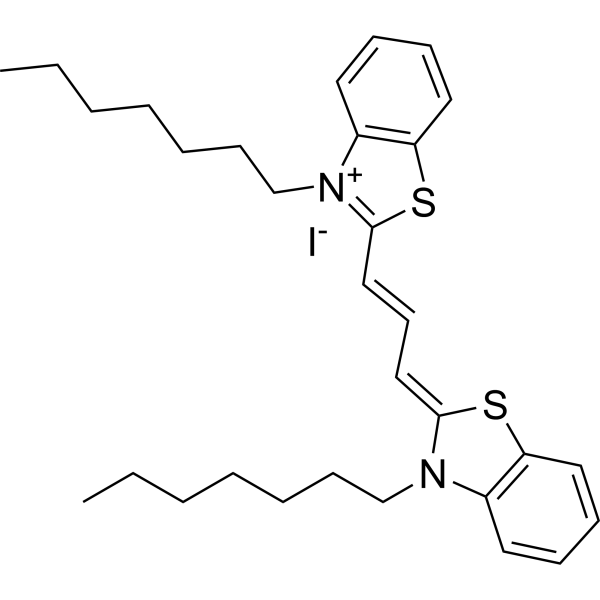 0 ImagesCat. No.: HY-D1624CAS No.: 53213-88-03,3′-Diheptylthiacarbocyanine iodide is a cyanine dye for measuring membrane potential. (λex=562 nm,λem=575 nm).
-
NC-174
 0 ImagesCat. No.: HY-117868CAS No.: 138460-25-0Synonyms: CP-Dpm-GANC-174 is a super-strong guanidine compound that is sweeter than sucrose. NC-174 is more than 300,000 times sweeter than sucrose and has the potential to be a probe for sweet taste receptors.
-
TFAX 594,SE
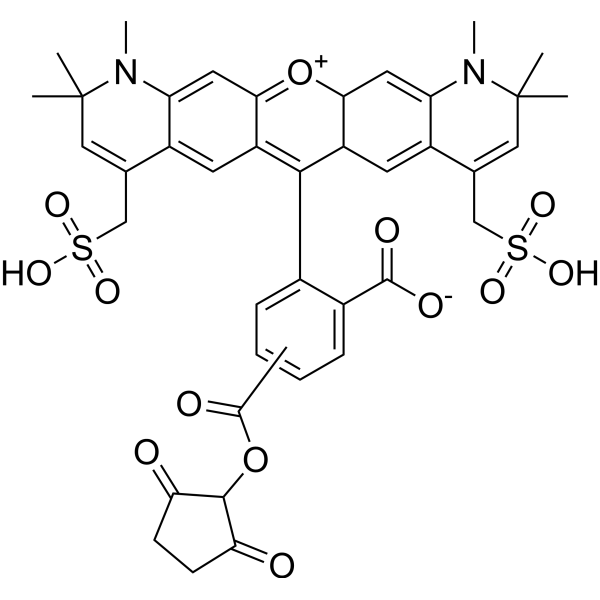 0 ImagesCat. No.: HY-D1110CAS No.: 295348-87-7TFAX 594,SE is a red fluorescent dye and exhibits pH-insensitivity over a very broad range (pH in the 4-10). TFAX 594,SE yields exceptionally bright, photostable conjugates with proteins or antibodies (such as goat anti-mouse IgG).
-
N-(4-Methylumbelliferyl)-maleinimid
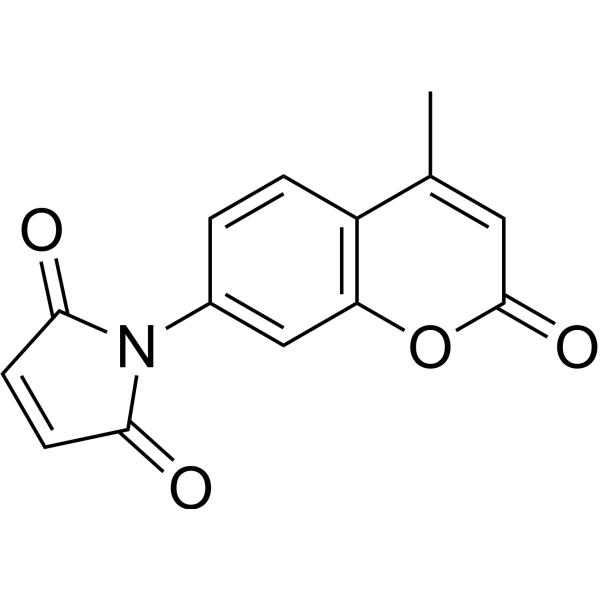 0 ImagesCat. No.: HY-D0132CAS No.: 211565-47-8N-(4-Methylumbelliferyl)-maleinimid is a multifunctional dye. Dyes are important tools in biological experiments. They can help researchers observe and analyze cell structures, track biomolecules, evaluate cell functions, distinguish cell types, detect biomolecules, study tissue pathology and monitor microorganisms. Their applications range from basic scientific research to clinical A wide range of diagnostics. Dyes are also widely used in traditional fields such as textile dyeing, as well as in emerging fields such as functional textile processing, food pigments and dye-sensitized solar cells.
-
Zinquin (solution)
 0 ImagesCat. No.: HY-DY1083CAS No.: 151606-29-0Zinquin (solution) is a cell-impermeant fluorescent sensor and used to observe reactive Zn2+. λex/λem=368/490 nm.
Solvent and concentration: DMSO: 5 mM
-
RB-PEG400-Biotin
 0 ImagesCat. No.: HY-D2889Synonyms: Rhodamine B-PEG400-BiotinRB-PEG400-Biotin (Rhodamine B-PEG400-Biotin) is a fluorescent dye composed of Rhodamine B (HY-Y0016), PEG and a Biotin. Biotin can bind with high affinity to streptavidin or avidin. RB-PEG400-Biotin plays an important role in the specific capture and detection of biomolecules (Ex/Em=546/610 nm).
-
CN-N2
 0 ImagesCat. No.: HY-D2976CAS No.: 51347-92-3CN-N2 is a visible light fluorescent probe. CN-N2 has high selectivity, rapid penetration, good biocompatibility, and imaging effects. CN-N2 is suitable for intraoperative rapid imaging of atherosclerotic plaque.

-
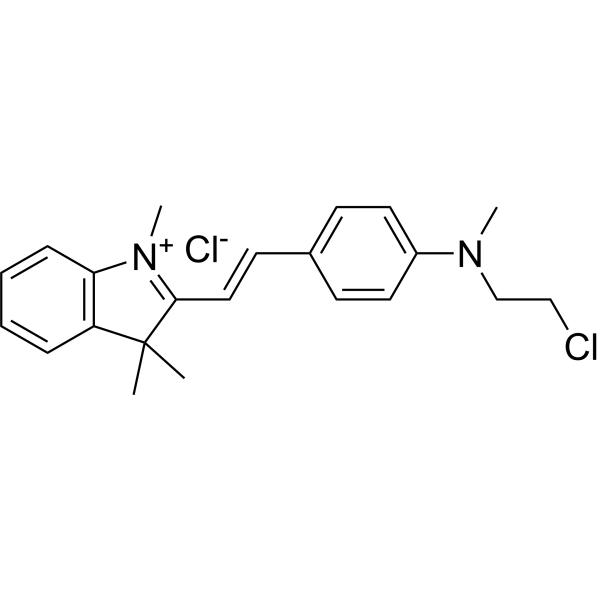
FAPα/DPP4 flurogenic substrate-1
 0 ImagesCat. No.: HY-P11823FAPα/DPP4 fluorogenic substrate-1 is a fluorogenic macrocyclic peptide substrate that can be cleaved by FAPα and DPP4. FAPα/DPP4 fluorogenic substrate-1 can be used in the research of cancer and type 2 diabetes.
-
Chol-PEG1000 fluorescein
 0 ImagesCat. No.: HY-N16234Chol-PEG1000 fluorescein is a fluorescent lipid that consists of a cholesterol-PEG1000 unit conjugated to fluorescein. Chol-PEG1000 fluorescein can be used to prepare lipid nanoparticles for drug delivery research (Ex/Em = 480/520 nm).

-
FAM labled IONIS PTP1BRx sodium
 0 ImagesCat. No.: HY-159694CFAM labled IONIS PTP1BRx sodiumis a FAM labled IONIS PTP1BRx sodium.
-
Disperse Blue 60
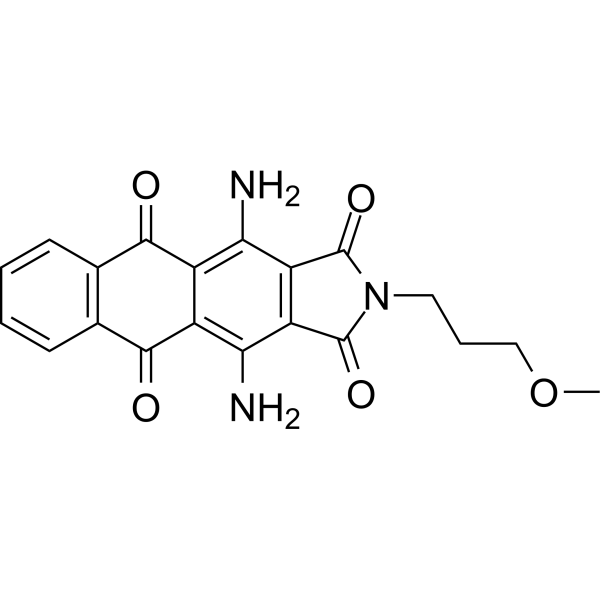 0 ImagesCat. No.: HY-D0479CAS No.: 12217-80-0Disperse Blue 60 is a textile anthraquinone dye.
-
RB-PEG400-SH
 0 ImagesCat. No.: HY-D2883Synonyms: Rhodamine B-PEG400-SHRB-PEG400-SH (Rhodamine B-PEG400-SH) is a fluorescent dye composed of Rhodamine B (HY-Y0016), PEG and sulfhydryl (SH). SH is highly reactive and can react with a variety of functional groups (such as maleimide) to form stable thioether bonds (Ex/Em=546/610 nm).
-
Griffonia Simplicifolia Lectin I Isolectin B4 (Biotinylated)
 0 ImagesCat. No.: HY-NP0178Synonyms: GSL I-B4 (Biotinylated)Griffonia Simplicifolia Lectin I Isolectin B4 (GSL I-B4) Biotinylated is a plant lectin that can be used as a probe to specifically bind biomolecules (such as polysaccharides, peptides, etc.).Griffonia Simplicifolia Lectin I Isolectin B4 (GSL I-B4) Biotinylated is a biological material or organic compound that can be used in life science research.
-
Golgi-laurdan
 0 ImagesCat. No.: HY-N16325CAS No.: 3091879-76-1




