



Glutaminase
Glutaminase is the initial enzyme in glutamine metabolism, which catalyzes the hydrolysis of glutamine to glutamate in cells. Glutaminase plays a key role in cancer cell metabolism, growth, and proliferation. In mammalian cells, there are two paralogous GLS genes, GLS1 (or GLS) and GLS2. GLS1 encodes two alternatively spliced isozymes: kidney glutaminase (KGA) and glutaminase C (GAC). GLS2 also encodes two isozymes: liver glutaminase (LGA) and glutaminase B.
GLS1 is ubiquitously expressed in various tissues, and its expression can be induced by the oncogene MYC. GLS1 is frequently activated and/or overexpressed in various types of cancer, including hepatocellular carcinoma (HCC). GLS1 has been reported to promote tumorigenesis in different types of cancer, including HCC, which is mainly attributable to its glutaminase activity and role in promoting glutamine metabolism. GLS has emerged as a critical enzyme in a number of cancer types. Elevated GLS2 enzymatic activity has also been correlated with tumor cell growth in vitro and in vivo. N-Myc activates GLS2 to promote conversion of glutamine to glutamate in MYCN-amplified neuroblastoma cells. Abrogation of GLS2 function profoundly inhibits glutaminolysis and dramatically decreases cell proliferation and survival in vitro and in vivo. However, there is controversy over the role of GLS2 as a tumor suppressor. Enzymatic activity independent of GLS2 is up-regulated via p53 or p63 and plays a role of tumor suppressor.
All Product Categories
-
Glutaminase Related Products (73)
Related Products (73)

-
Antibodies (6)
-
Puzerinostat mesylate
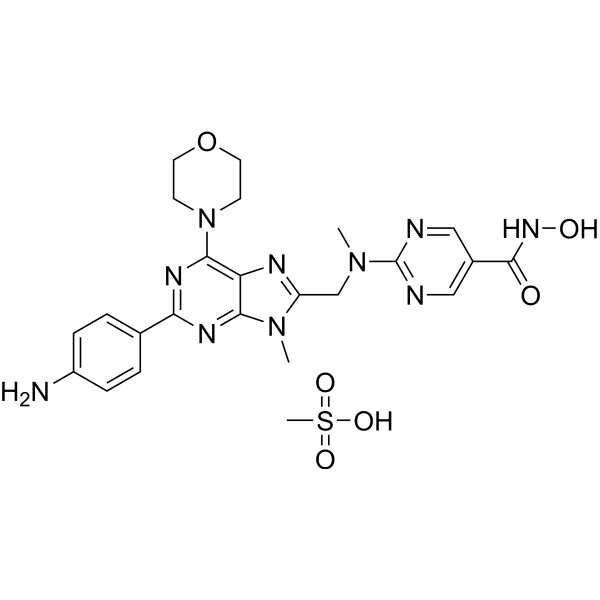 0 ImagesSynonyms: Purinostat mesylatePuzerinostat mesylate (Purinostat mesylate) is a highly selective class I/IIb histone deacetylase (HDAC) inhibitor, with IC50 values of 0.81 nM, 1.4 nM, 1.7 nM, 3.8 nM, 11.5 nM, and 1.1 nM against HDAC1, HDAC2, HDAC3, HDAC8, HDAC6, and HDAC10, respectively. Puzerinostat mesylate enhances glutamine metabolism by upregulating GLS1. Puzerinostat mesylate induces cell Apoptosis and downregulates the expression of BCR-ABL and c-MYC. Puzerinostat mesylate delays the progression of Ph+ B-cell acute lymphoblastic leukemia and prolongs the survival of relevant mouse models. Puzerinostat mesylate regulates the immune microenvironment. Puzerinostat mesylate can be used in research related to chronic myeloid leukemia, Philadelphia chromosome-positive B-cell acute lymphoblastic leukemia, relapsed/refractory multiple myeloma, relapsed/refractory lymphoma, diffuse large B-cell lymphoma, and double-expression lymphoma.
-
BJJF078
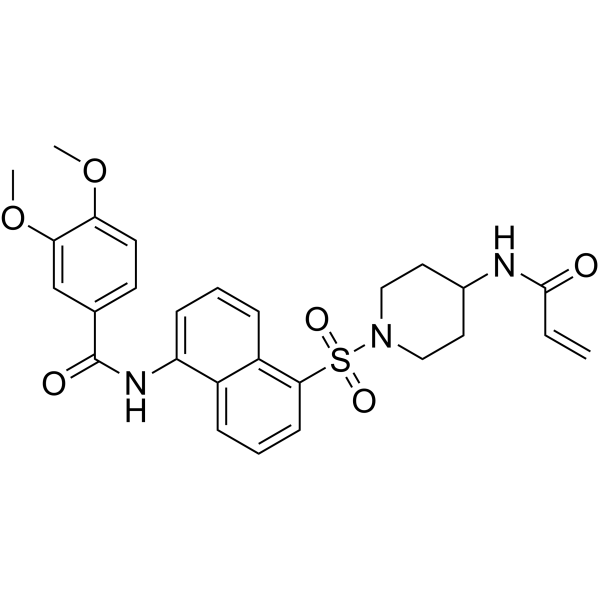 0 ImagesBJJF078 is an aminopiperidine derivative. BJJF078 is a potent inhibitor of recombinant human and mouse Transglutaminase enzyme (TG2) activity, IC50 values of 41 and 54 nM, respectively. BJJF078 also inhibits the close related enzyme TG1, with an IC50 of 0.16 μM. BJJF078 can be used for Multiple sclerosis (MS) research.
-
TG2 inhibitor VA4
 0 ImagesTG2 inhibitor VA4 (compound VA4) is an irreversible Type 2 transglutaminase (TG2) inhibitor. TG2 inhibitor VA4 reacts exclusively at the TG2 transamidase site, inhibits both transamidase and GTP-binding activities.
-
Puzerinostat
 0 ImagesSynonyms: PurinostatPuzerinostat (Purinostat) is a highly selective class I/IIb histone deacetylase (HDAC) inhibitor, with IC50 values of 0.81 nM, 1.4 nM, 1.7 nM, 3.8 nM, 11.5 nM, and 1.1 nM against HDAC1, HDAC2, HDAC3, HDAC8, HDAC6, and HDAC10, respectively. Puzerinostat enhances glutamine metabolism by upregulating GLS1. Puzerinostat induces cell Apoptosis and downregulates the expression of BCR-ABL and c-MYC. Puzerinostat delays the progression of Ph+ B-cell acute lymphoblastic leukemia and prolongs the survival of relevant mouse models. Puzerinostat regulates the immune microenvironment. Puzerinostat can be used in research related to chronic myeloid leukemia, Philadelphia chromosome-positive B-cell acute lymphoblastic leukemia, relapsed/refractory multiple myeloma, relapsed/refractory lymphoma, diffuse large B-cell lymphoma, and double-expression lymphoma.
-
IPN60090
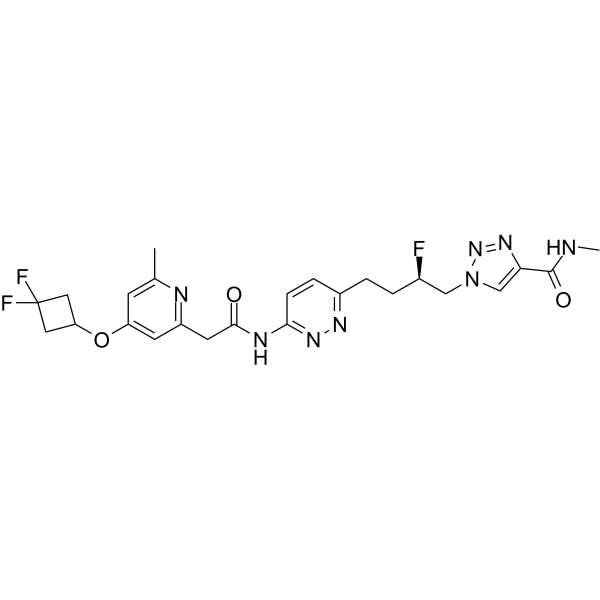 0 ImagesIPN-60090 is an orally active and highly selective inhibitor of glutaminase 1 (GLS1; IC50=31 nM), with no activity observed against GLS-2. IPN-60090 exhibits excellent physicochemical and pharmacokinetic properties in vivo. IPN-60090 can be used for solid tumors research, such as lung and ovarian cancers.
-
Glutaminase-IN-3
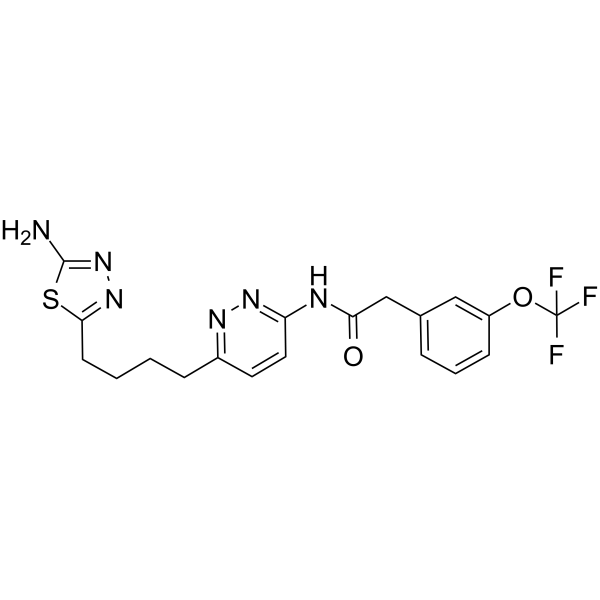 0 ImagesGlutaminase-IN-3 (compound 657) is a potent glutaminase inhibitor with an IC50 of 0.24 μM for Glutaminase 1 (GLS1). Glutaminase-IN-3 is extracted from patent WO2014089048A1, compound 657.
-
GLS1 Inhibitor-1
 0 ImagesGLS1 Inhibitor-1 (Compound 27) is an orally active inhibitor for glutaminase 1 (GLS1) with an IC50 of 0.021 μM. GLS1 Inhibitor-1 inhibits the proliferation of PC-3 with an IC50 of 0.3 nM. GLS1 Inhibitor-1 exhibits antitumor efficacy against NCI-H1703 with GI50 of 0.011 μM. GLS1 Inhibitor-1 exhibits moderate pharmacokinetic characteristics.
-
UPGL00004
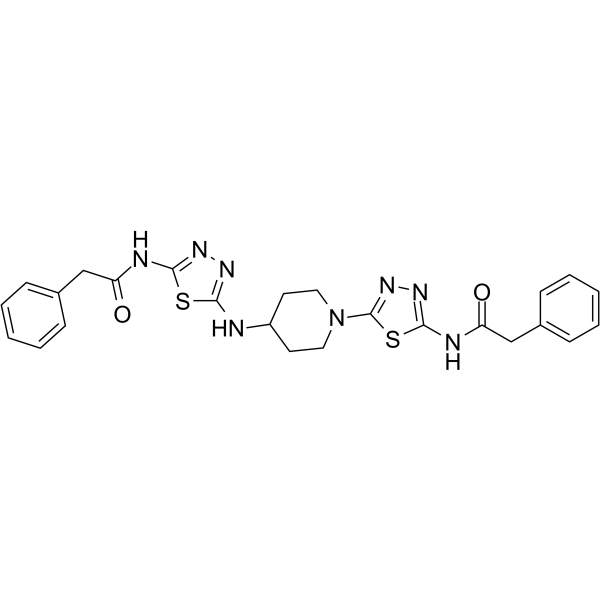 0 ImagesUPGL00004 is a potent allosteric glutaminase C (GAC) inhibitor (IC50=29 nM; Kd=27 nM). UPGL00004 strongly inhibits the proliferation of highly aggressive triple-negative breast cancer cell lines.
-
Glutaminase-IN-1
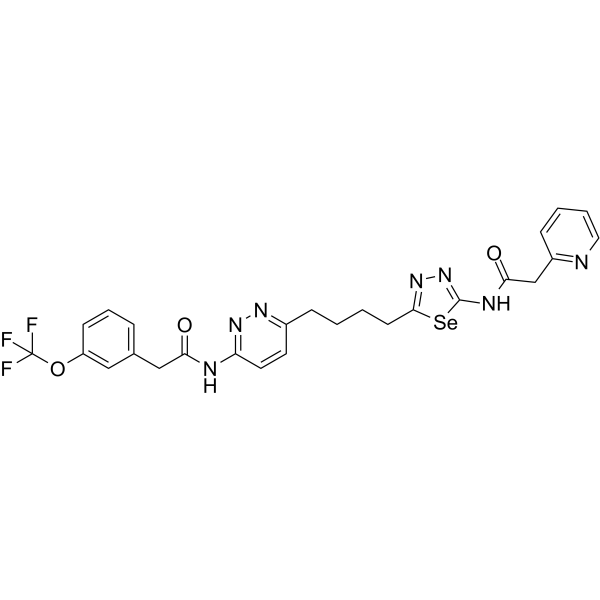 0 ImagesSynonyms: CB839 derivativeGlutaminase-IN-1 (CB839 derivative), a CB839 derivative, is an allosteric inhibitor of 1,3,4-selenadiazole-containing kidney-type glutaminase (KGA), with an IC50 of 1 nM. Glutaminase-IN-1 (CB839 derivative) shows improved cellular uptake and antitumor activity.
-
TG53
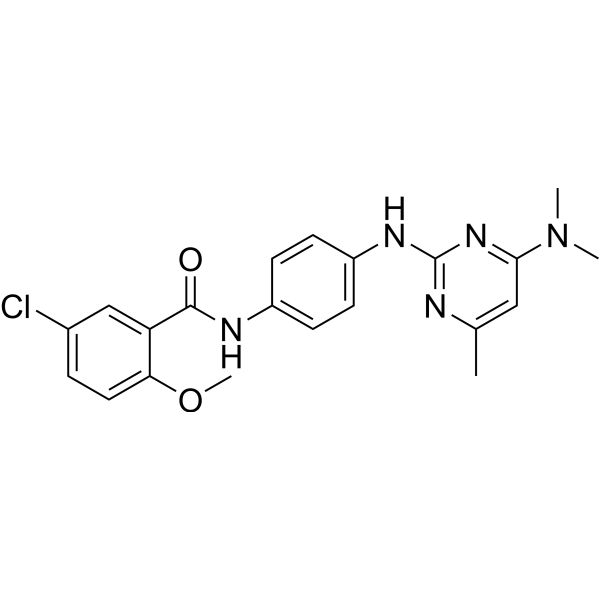 0 ImagesTG53 is a potent inhibitor of tissue transglutaminase (TG2) and fibronectin (FN) protein-protein interaction. TG53 inhibits formation of a complex with integrin β1 and activation of FAK and c-Src during SKOV3 cell attachment onto FN. TG53 can be used for ovarian cancer research.
-
2-Amino-2-(p-tolyl)acetic acid
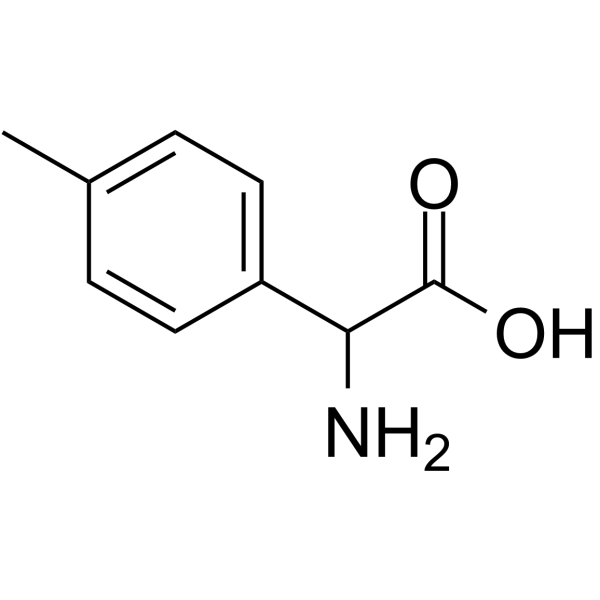 0 ImagesCat. No.: HY-W006187CAS No.: 13227-01-5Synonyms: (Rac)-H-Phg(4-Me)-OH2-Amino-2-(p-tolyl)acetic acid is used for optimizing azide skeleton, and is the intermediate in the synthesis of 1,3, 4-thiadiazole compounds. 1,3,4-thiadiazole compounds exhibit potential anti-cancer activity, and inhibit glutaminase (GLSI).
-
MD102
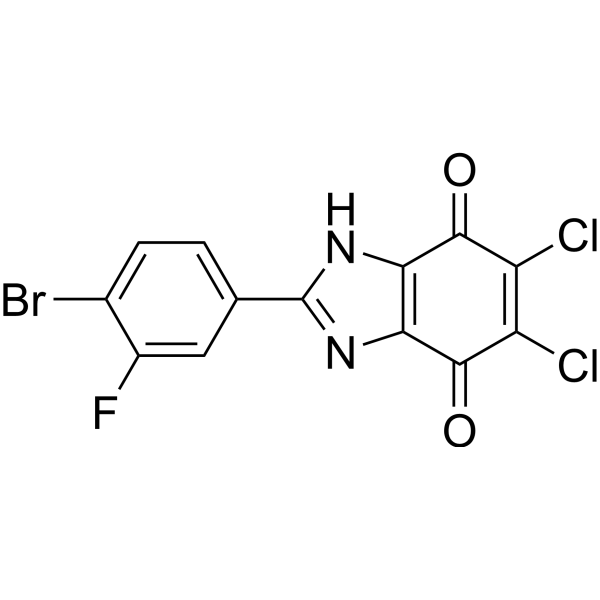 0 ImagesMD102 is an orally active transglutaminase 2 (TG2) inhibitor with an IC50 of 0.35 μM. MD102 binds to the β-sandwich domain of TG2, disrupts the interaction between TG2 and p53, stabilizes p53, and reduces the activity of p-AKT and p-mTOR signaling pathways. MD102 induces cell apoptosis and inhibits tumor growth. MD102 can be used for the research of renal cell carcinoma.
-
Telaglenastat hydrochloride
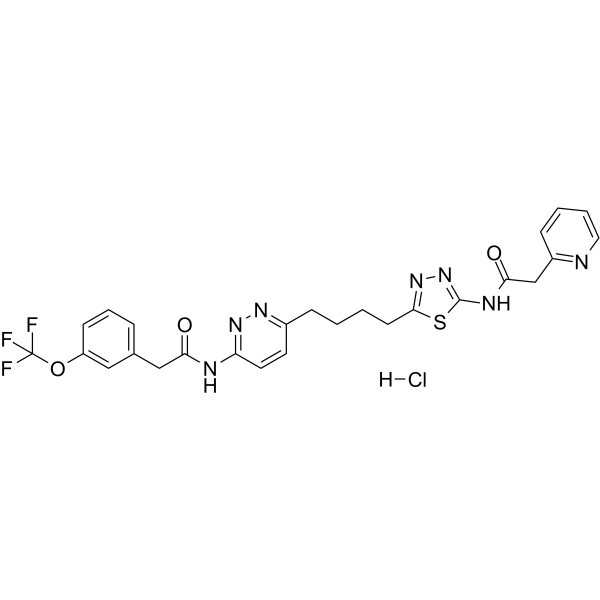 0 ImagesSynonyms: CB-839 hydrochlorideTelaglenastat (CB-839) hydrochloride is a first-in-class, selective, reversible and orally active glutaminase 1 (GLS1) inhibitor. Telaglenastat hydrochloride selectively inhibits GLS1 splice variants KGA (kidney-type glutaminase) and GAC (glutaminase C) compared to GLS2. The IC50s are 23 nM and 28 nM for endogenous glutaminase in mouse kidney and brain, respectively. Telaglenastat hydrochloride inudces autophagy and has antitumor activity.
-
IPN60090 dihydrochloride
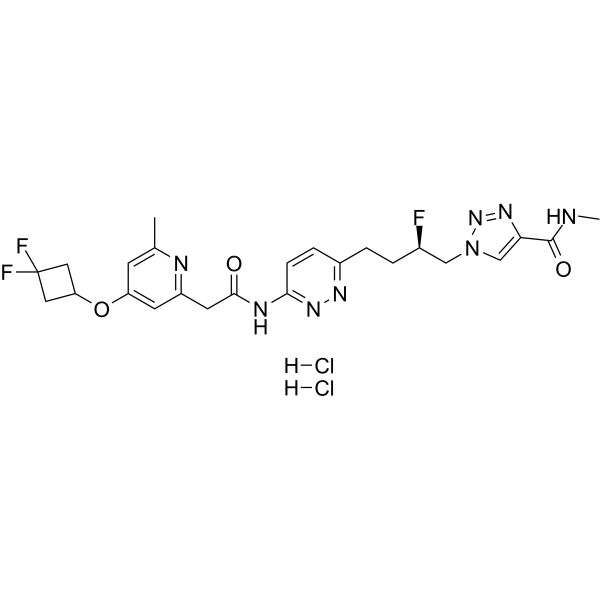 0 ImagesIPN-60090 dihydrochloride is an orally active and highly selective inhibitor of glutaminase 1 (GLS1; IC50=31 nM), with no activity observed against GLS-2. IPN-60090 dihydrochloride exhibits excellent physicochemical and pharmacokinetic properties in vivo. IPN-60090 dihydrochloride can be used for solid tumors research, such as lung and ovarian cancers.
-
Duazomycin
 0 ImagesDuazomycin A is a glutamine antagonist. Duazomycin A can significantly enhance the effectiveness of 6-Mercaptopurine (6-MP) (HY-13677) in experimental allergic encephalomyelitis (EAE) without increasing toxicity.
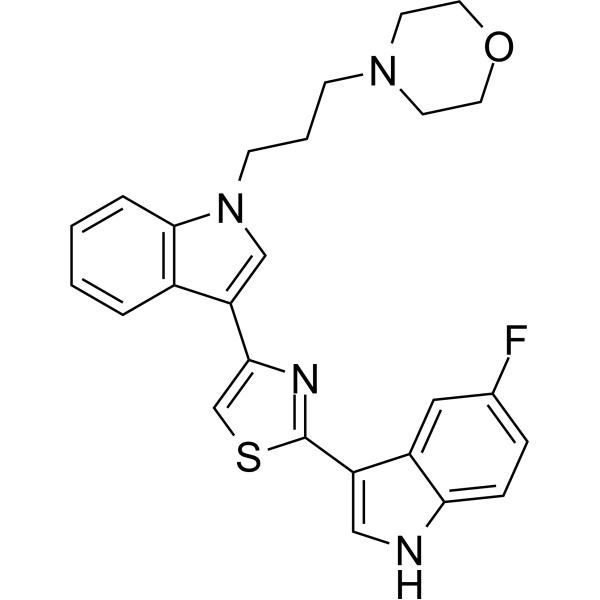
-
Glutaminase
 0 ImagesGlutaminase is a metabolic enzyme. Glutaminase catalyzes the hydrolysis of glutamine to glutamate. Glutaminase isoenzymes are encoded by Gls and Gls2 genes. Proteins GLS and GLS2 have different kinetic, immunologic, and molecular characteristics. Glutaminase can be used in the research of cancer.
-
Decanoic acid-13C
 0 ImagesDecanoic acid-13C is the 13C-labeled Decanoic acid (HY-W015309). Decanoic acid is a key component of the medium-chain triglyceride (MCT) found in coconut oil. Decanoic acid is a brain-penetrant and non-competitive inhibitor of AMPA receptor showing antiseizure activity in rats. Decanoic acid reduces tyrosinase activity and inhibits melanosome maturation. Decanoic acid suppresses the phosphorylation of c-Met and induced apoptosis in hepatocellular carcinoma (HCC) cells by inhibiting the expression of various oncogenic proteins, which is promising for research in the field of mTORC1 signaling, HCC and epilepsy.
-
Duazomycin sodium
 0 ImagesSynonyms: Duazomycin A sodiumDuazomycin (Duazomycin A) sodium is a glutamine antagonist. Duazomycin sodium can significantly enhance the effectiveness of 6-Mercaptopurine (6-MP) (HY-13677) in experimental allergic encephalomyelitis (EAE) without increasing toxicity.




