mAChR
Muscarinic acetylcholine receptor
mAChRs (muscarinic acetylcholine receptors) are acetylcholine receptors that form G protein-receptor complexes in the cell membranes of certainneurons and other cells. They play several roles, including acting as the main end-receptor stimulated by acetylcholine released from postganglionic fibersin the parasympathetic nervous system. mAChRs are named as such because they are more sensitive to muscarine than to nicotine. Their counterparts are nicotinic acetylcholine receptors (nAChRs), receptor ion channels that are also important in the autonomic nervous system. Many drugs and other substances (for example pilocarpineand scopolamine) manipulate these two distinct receptors by acting as selective agonists or antagonists. Acetylcholine (ACh) is a neurotransmitter found extensively in the brain and the autonomic ganglia.
mAChR Isoform Specific Products
All Product Categories
-
mAChR Inhibitors
(115)
View all products
-
mAChR Agonists
(151)
View all products
-
mAChR Antagonists
(325)
View all products
-
mAChR Activators
(20)
View all products
-
mAChR Modulators
(48)
View all products
-
mAChR Inducer
(1)
View all products
-
mAChR Controls
(9)
View all products
-
mAChR Ligands
(10)
View all products
-
mAChR Related Products (731)
Related Products (731)

-
Antibodies (2)
-
mAChR Isoform Comparison
-
N-Desmethylclozapine-d8 hydrochloride
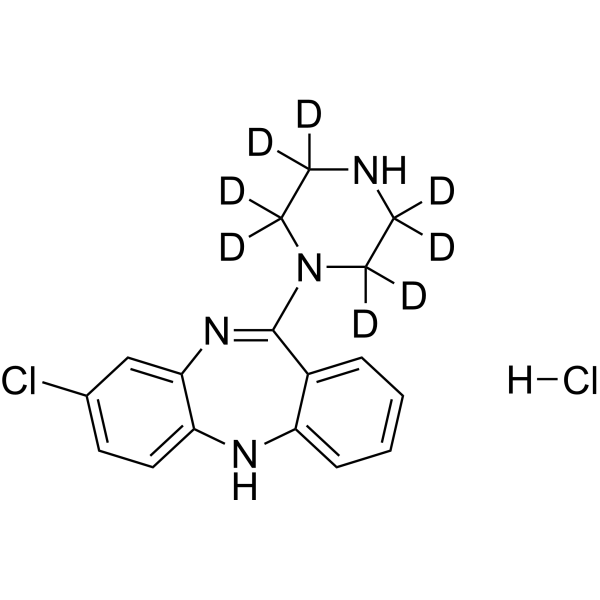 0 ImagesSynonyms: Norclozapine-d8 hydrochloride; Desmethylclozapine-d8 hydrochloride; Normethylclozapine-d8 hydrochlorideN-Desmethylclozapine-d8 (hydrochloride) is the deuterium labeled N-Desmethylclozapine hydrochloride. N-Desmethylclozapine hydrochloride is a major active metabolite of the atypical antipsychotic agent Clozapine. N-Desmethylclozapine hydrochloride is a potent, allosteric and partial M1 receptors agonist (EC50=115 nM) and is able to potentiate hippocampal N-methyl-d-aspartate (NMDA) receptor currents through M1 receptor activation. N-Desmethylclozapine hydrochloride is also a δ-opioid agonist.
-
Peimisine hydrochloride
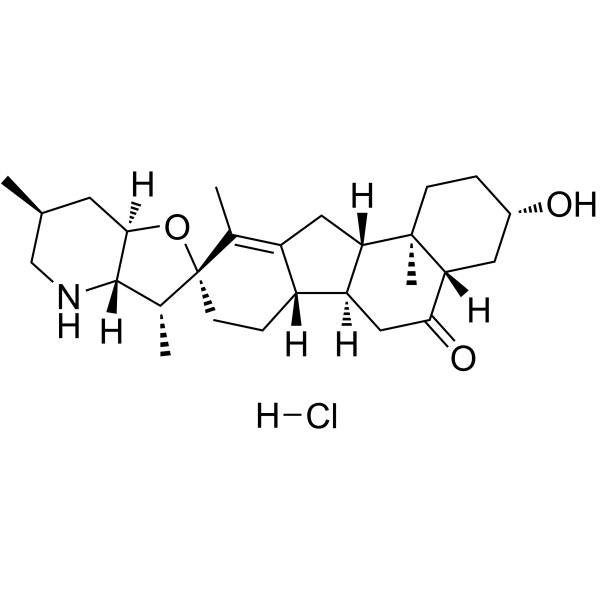 0 ImagesSynonyms: Ebeiensine hydrochloride

-
Procyclidine hydrochloride (Standard)
 0 ImagesSynonyms: Tricyclamol hydrochloride (Standard); (±)-Procyclidine hydrochloride (Standard)Procyclidine (hydrochloride) (Standard) is the analytical standard of Procyclidine (hydrochloride). This product is intended for research and analytical applications. Procyclidine (Tricyclamol, (±)-Procyclidine) hydrochloride , an anticholinergic agent, is a muscarinic receptor antagonist that also has the properties of an N-methyl-D-aspartate (NMDA) antagonist. Procyclidine hydrochloride can be used in studies of Parkinson's disease and related psychiatric disorders such as Soman-induced epilepsy.
-
Terodiline hydrochloride
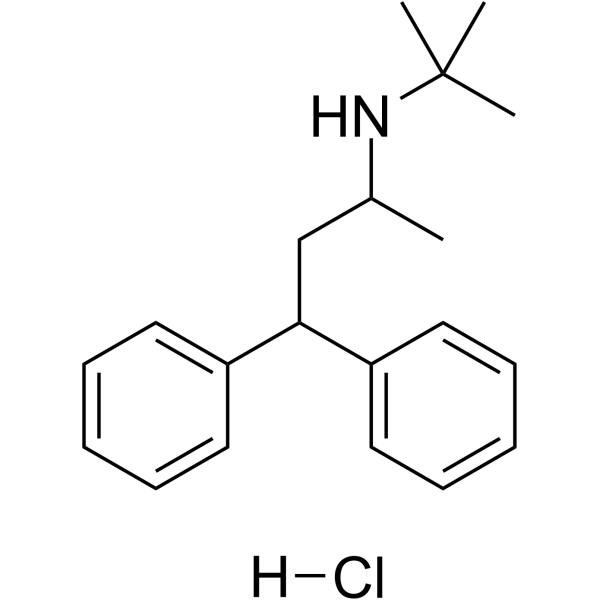 0 ImagesTerodiline hydrochloride is an M1-selective muscarinic receptor (mAChR) antagonist with Kbs of 15, 160, 280, and 198 nM in rabbit vas deferens (M1), atria (M2), bladder (M3) and ileal muscle (M3), respectively. Terodiline hydrochloride also is a Ca2+ blocker. Terodiline hydrochloride acts as a treatment for urinary frequency and urge incontinence.
-
Alofropodect
 0 ImagesSynonyms: CPL500036Alofropodect is an orally active, blood-brain barrier permeable phosphodiesterase 10A (PDE10A) inhibitor with IC50 values of 1 nM (Reference 1) and 35 nM (Reference 2). Alofropodect acts as a negative allosteric modulator of the M2 muscarinic receptor with an IC50 of 9.2 μM. Alofropodect alters cyclic nucleotide levels in basal ganglia circuits, inhibits the hydrolysis of cAMP and cGMP, and suppresses hERG potassium channel tail currents. Alofropodect induces catalepsy in rats and reverses injury-induced contralateral forelimb use impairment. Alofropodect can be used in research related to schizophrenia, Parkinson's disease, and levodopa-induced dyskinesia.
-
VU10010
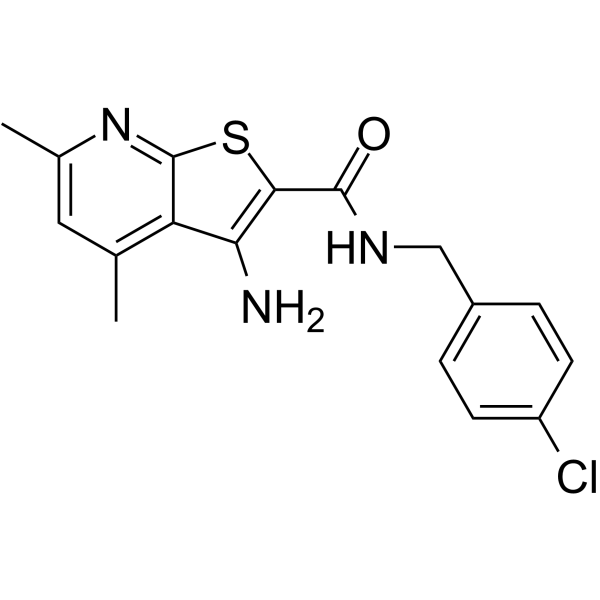 0 ImagesVU10010 is a potent, highly selective and allosteric M4 mAChR potentiator with an EC50 of 400 nM. VU10010 binds to an allosteric site on M4 mAChR and increases affinity for acetylcholine and coupling to G proteins. VU10010 increases carbachol-induced depression of transmission at excitatory but not inhibitory synapses in the hippocampus.
-
p-F-HHSiD hydrochloride
 0 ImagesSynonyms: p-Fluorohexahydrosiladifenidol hydrochloridep-F-HHSiD (p-Fluorohexahydrosiladifenidol) hydrochloride is a potent and selective M3 mAChR antagonist. p-F-HHSiD hydrochloride has antagonistic effects on other subtypes of the M receptor and the alpha1-adrenoceptor. p-F-HHSiD hydrochloride can be used for the researches of cancer, metabolic, neurological and cardiovascular disease such as, colon cancer, Alzheimer’s disease and diabetes.
-
PDE4-IN-4
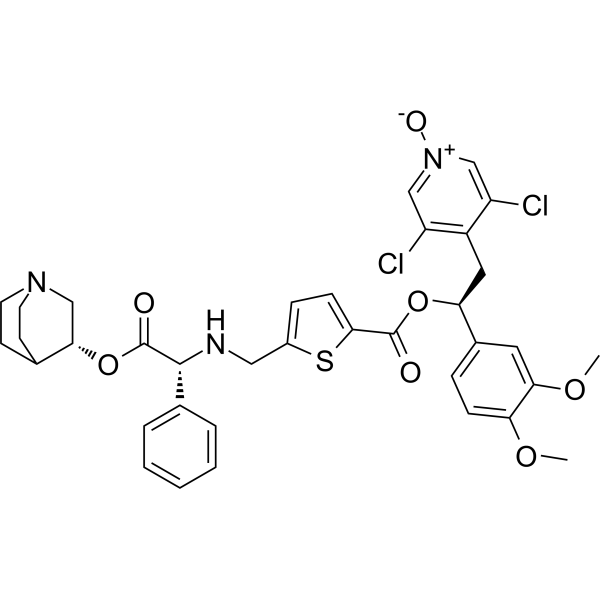 0 ImagesCat. No.: HY-115871CAS No.: 1793069-00-7PDE4-IN-4 is a dual M3 (pIC50 = 10.2) antagonist-PDE4 (pIC50 = 8.8) inhibitor for the inhaled research of pulmonary diseases.
-
Levetimide
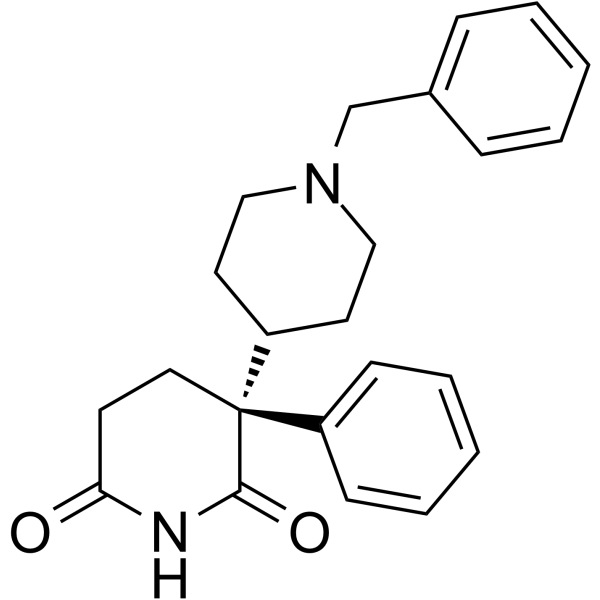 0 ImagesLevetimide is a potent and stereoselective inhibitor of [3H](+)pentazocine binding, with a Ki of 2.2 nM.
-
G-Protein antagonist peptide TFA
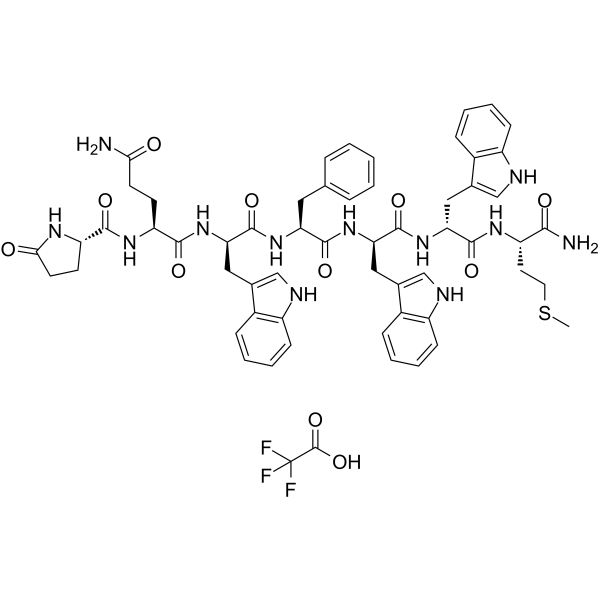 0 ImagesCat. No.: HY-P1376AG-Protein antagonist peptide TFA is a truncated substance P-related peptide, competes with receptor for G protein binding. G-Protein antagonist peptide TFA inhibits the activation of Gi or Go by M2 muscarinic cholinergic receptor (M2 mAChR) or of Gs by beta-adrenergic receptor in the reconstituted phospholipid vesicles, assayed by receptor-promoted GTP hydrolysis.
-
Beperidium iodide
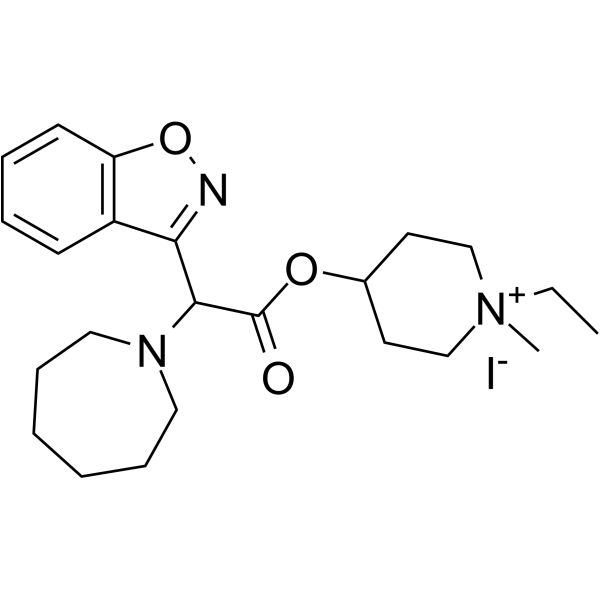 0 ImagesSynonyms: SX 810Beperidium iodide shows a competitive antagonistic effect against acetylcholine receptor with a pA2 of 7.93.
-
Trihexyphenidyl hydrochloride (Standard)
 0 ImagesTrihexyphenidyl hydrochloride (Standard) is the analytical standard of Trihexyphenidyl hydrochloride (HY-B1277). This product is intended for research and analytical applications. Trihexyphenidyl is a selective and orally active M1 muscarinic receptor antagonist with an IC50 of 3.7 nM for rat cerebral cortex M1 muscarinic receptors. Trihexyphenidyl modulates cholinergic activity, countering acetylcholine supersensitivity in neural pathways. Trihexyphenidyl improves movement disorder, inhibits McN-A-343 (HY-107648)-induced pressor responses, vagally-induced bradycardia and vasodilatation. Trihexyphenidyl can be used for the research of Parkinson's disease..
-
5-Hydroxy tryptophol β-D-glucuronide-d4
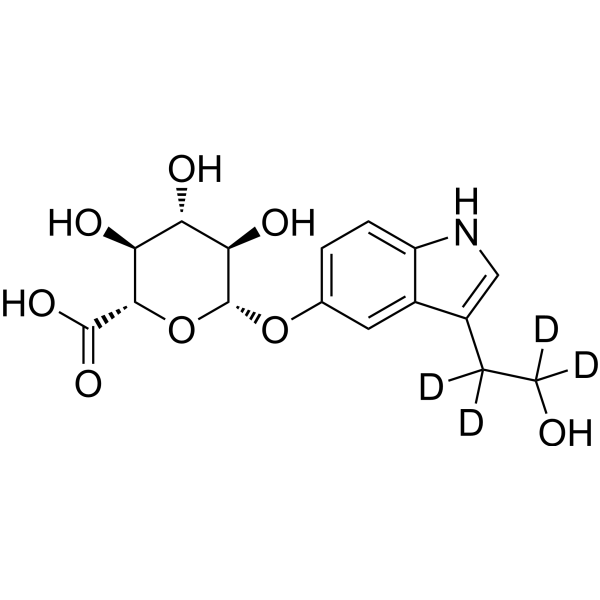 0 ImagesCat. No.: HY-142119SPurity: 98.0%5-Hydroxy tryptophol β-D-glucuronide-d4 is the deuterium labeled 5-Hydroxy tryptophol β-D-glucuronide.
-
Tropicamide-d3
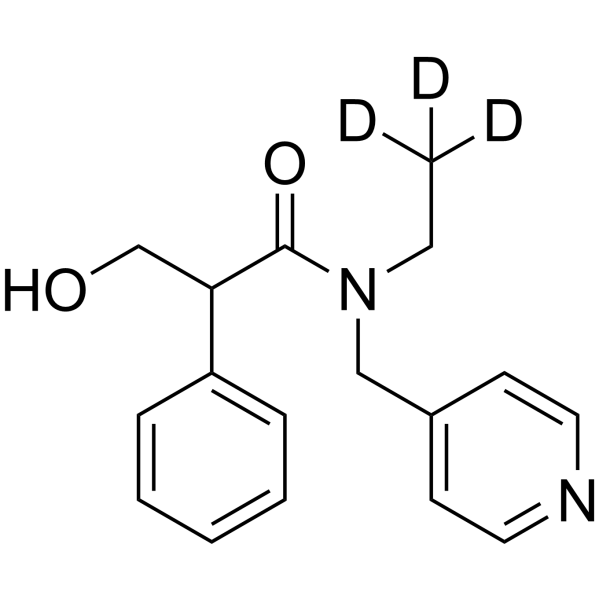 0 ImagesSynonyms: Ro 1-7683-d3Tropicamide-d3 is the deuterium labeled Tropicamide. Tropicamide (Ro 1-7683) is a selective M4 muscarinic acetylcholine receptor antagonist. Tropicamide produces short acting mydriasis (dilation of the pupil) and cycloplegia when applied as eye drops.
-
(E)-10-Hydroxynortriptyline-d3
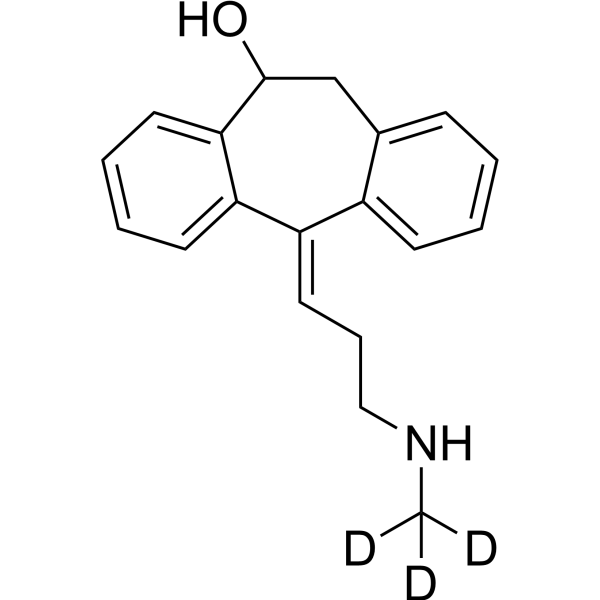 0 ImagesCat. No.: HY-U00050SPurity: 99.65%Synonyms: E-10-OH-NT-d3(E)-10-Hydroxynortriptyline-d3 (E-10-OH-NT-d3) is the deuterated-labeled (E)-10-Hydroxynortriptyline (HY-U00050). (E)-10-Hydroxynortriptyline (E-10-OH-NT) is a blood-brain barrier-permeable norepinephrine uptake inhibitor. (E)-10-Hydroxynortriptyline effectively promotes central norepinephrine neuronal transmission, with little interindividual variation in in vivo potency. (E)-10-Hydroxynortriptyline has low affinity for muscarinic receptors, exhibits only extremely weak anticholinergic activity, and does not inhibit salivary secretion. (E)-10-Hydroxynortriptyline can be used in studies related to depression.