



Trilaciclib
Based on 1 publication(s) in Google Scholar
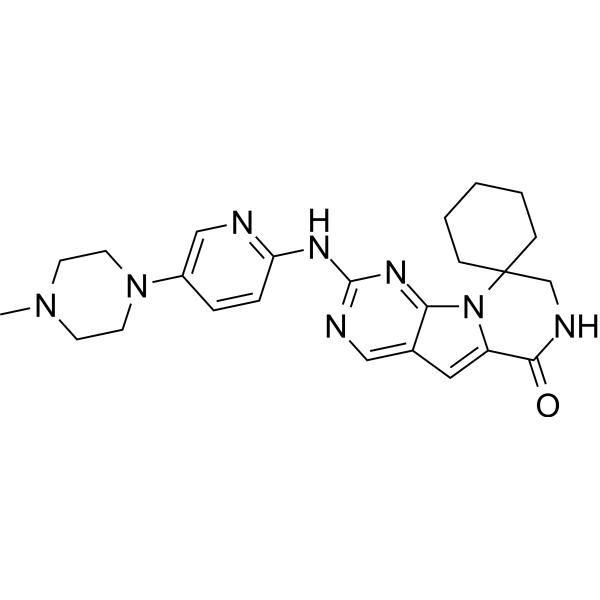
Trilaciclib (G1T28) is an orally active CDK4/6 inhibitor with IC50 values of 1 nM and 4 nM for CDK4 and CDK6, respectively. . Trilaciclib can effectively inhibit tumor cell proliferation and reduce the hematological toxicity caused by chemotherapy. Trilaciclib attenuates apoptosis and myelosuppression induced by 5FU (HY-90006) chemotherapy.
For research use only. We do not sell to patients.
- Purity : 99.79%
- CAS No.: 1374743-00-6
- Formula: C24H30N8O
- Molecular Weight:446.55
-
Storage:Powder -20°C, 3 years , 4°C, 2 years ; In solvent -80°C, 6 months , -20°C, 1 month

To place orders, for customer services and technical support, please contact: MedChemExpress USA
Tel: 609-228-6898 E-mail: [email protected] [email protected]


-
 Biological Activity
-
Chemical Information
-
Solvent & Solubility
- Protocols
- Purity & Documentation
- References
-
 Help & FAQs


-
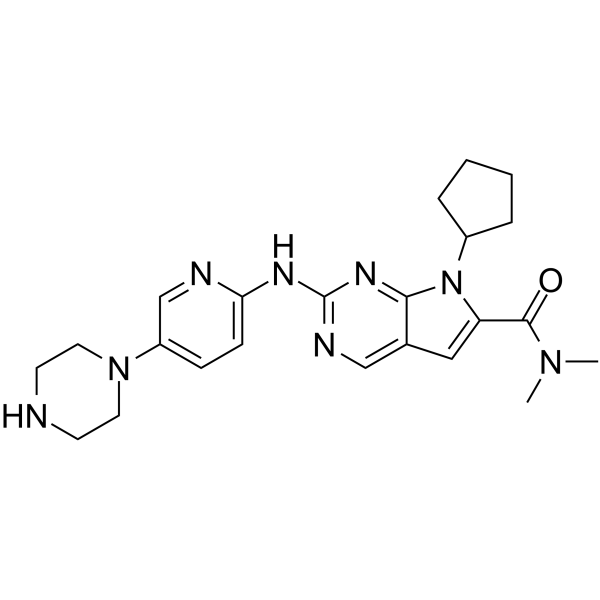
HY-15777
RibociclibCDK4/6 Inhibitor -
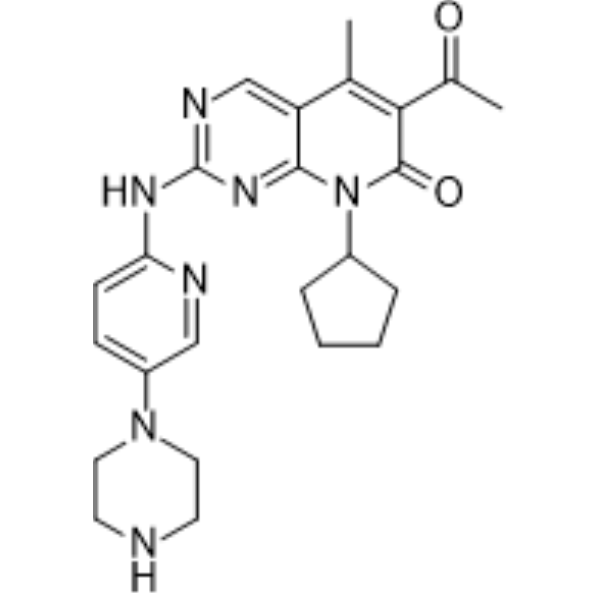
HY-50767
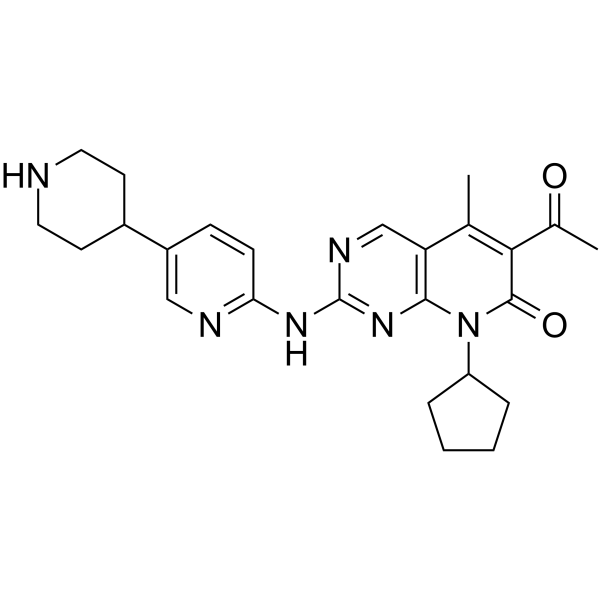
PalbociclibCDK4/6 Inhibitor -
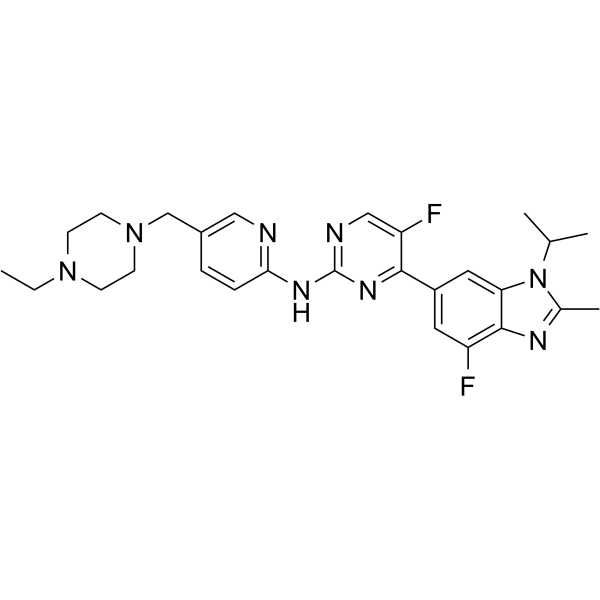
HY-16297A
AbemaciclibCDK4/6 Inhibitor -
HY-114338
DalpiciclibCDK4/6 Inhibitor -

HY-16297AR
Abemaciclib (Standard)CDK4/6 Inhibitor -
HY-10181
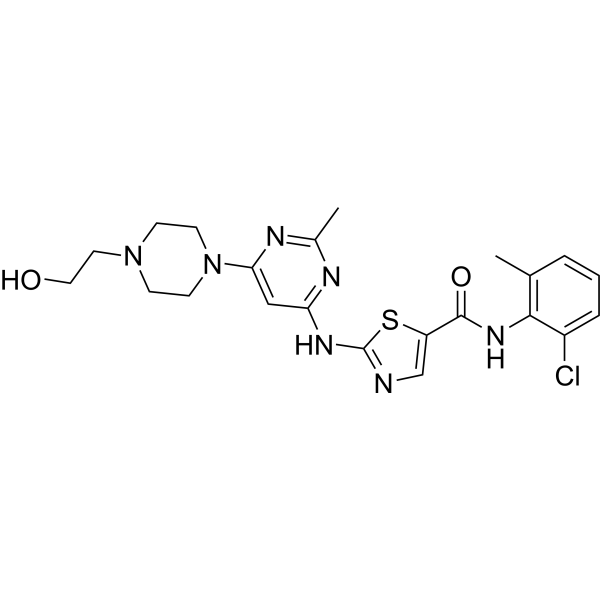
DasatinibSrc/Bcr-Abl Inhibitor -
HY-10008
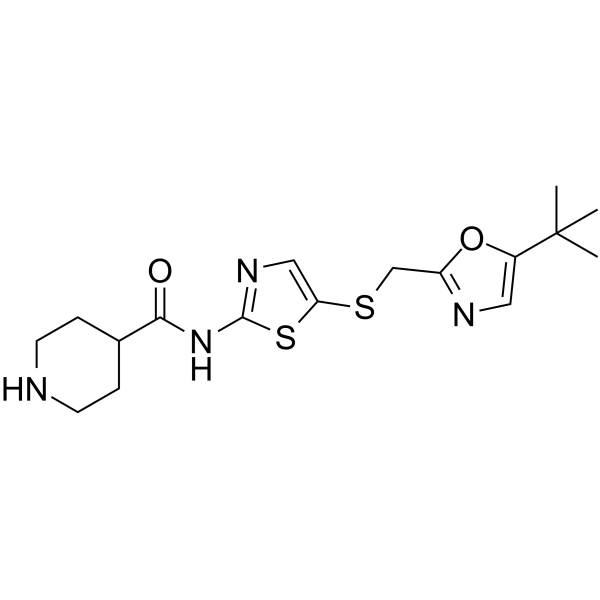
SNS-032CDK Inhibitor -

HY-13443
Exendin-4GLP-1 Receptor Agonist -
HY-130149
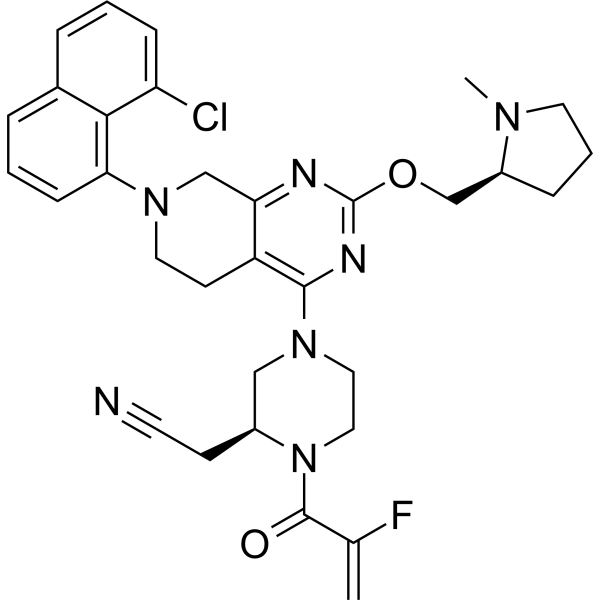
AdagrasibKRAS G12C Inhibitor -
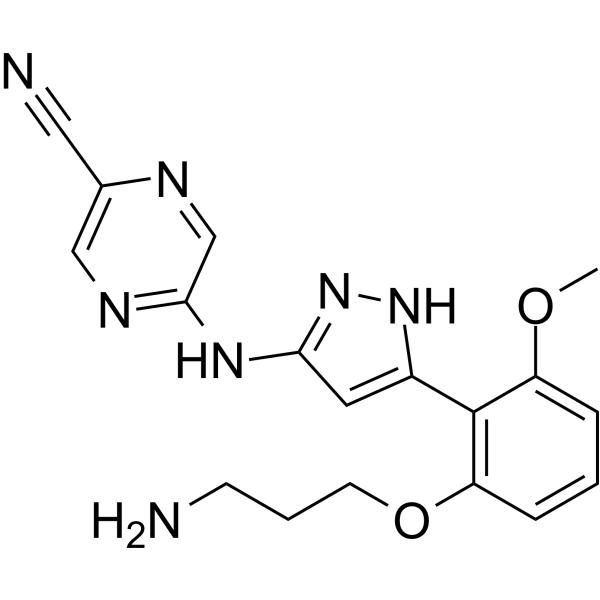
HY-18174
PrexasertibCHK1 Inhibitor -
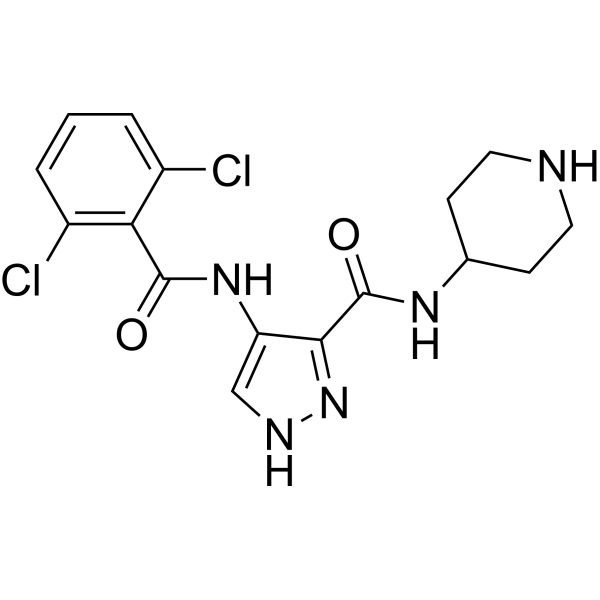
HY-50940
AT7519CDK Inhibitor -
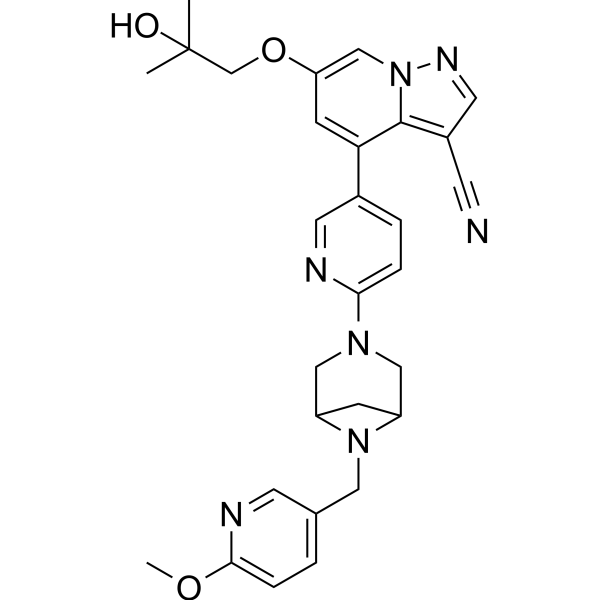
HY-114370
SelpercatinibRET Kinase Inhibitor
Publications Citing Use of MedChemExpress (MCE) Trilaciclib
More

Biological Activity
Description
IC50 & Target
IC50: 1 nM (CDK4), 4 nM (CDK6)[1]
Cellular Effect
|
Cell Line

|
Type | Value | Description | References |
|---|---|---|---|---|
| Hs 683 | IC50 |
30 nM
Compound: G1T28
|
Antiproliferative activity against human Hs683 cells
Antiproliferative activity against human Hs683 cells
|
[PMID: 31477350] |
In Vitro
Trilaciclib (10-1000 nM; 24 h) reversibly modulates the proliferation of mouse and canine bone marrow hematopoietic stem and progenitor cells[1].
Trilaciclib (10-1000 nM; 24 h) can arrest the cell cycle of CDK4/6-dependent cells in the G1 phase, with an EC50 of 30 nM for HS68[1].
Trilaciclib (300 nM; 16 or 48 h) protects CDK4/6 dependent cells (HS68, WM2664) from chemotherapy-induced damage, and attenuates chemotherapy-induced-apoptosis[1].
MedChemExpress (MCE) has not independently confirmed the accuracy of these methods. They are for reference only.
-
Cell Line:HS68, WM2664 cells
-
Concentration:300 nM
-
Incubation Time:8h for measure γH2AX foci (DNA damage); 48 hours to measure caspase 3/7 activity (apoptosis).
-
Result:Produced a strong dose-dependent inhibition of HSPC proliferation within 12 hours.
Elicited a robust dose-dependent decrease in caspase 3/7 activation suggesting an attenuation of apoptosis.
Resulted a dose-dependent decrease in γH2AX foci in all DNA damaging chemotherapies tested (carboplatin, doxorubicin, etoposide, camptothecin).
-
Cell Line:HS68, WM2664 cells
-
Concentration:10, 30, 100, 300, 1000 nM
-
Incubation Time:16 h
-
Result:Blocked RB phosphorylation in the RB dependent cell lines by 16 hours post exposure, while the CDK4/6-independent cell line (A2058) exhibits no RB or pRB expression. Suggesting an attenuation of chemotherapy-induced DNA damag
-
Cell Line:HS68, WM2664 cells
-
Concentration:300 nM
-
Incubation Time:24 h
-
Result:Inhibited only CDK4/6-dependent cells, with EC50 of 30 nM for HS68 cell.
Singnificantly decreased the S phase cell numbers, increased the G1 phase cell numbers.
In Vivo
MedChemExpress (MCE) has not independently confirmed the accuracy of these methods. They are for reference only.
-
Animal Model:FVB/n female C57Bl6 mice[1]
-
Dosage:50, 100, 150 mg/kg
-
Administration:Po; single dose; treated followed 11 or 23 hours later by a single injection of EdU (HY-118411) (100 μg; ip); mouse were euthanized 1 hour after EdU injection.
-
Result:Showed a dose-dependent decrease in caspase 3/7 activation.
Attenuated chemotherapy-induced myelosuppression in mice.
- Annexin V plus membrane-impermeant dye apoptosis staining
- BrdU Incorporation Assay
- Somatic Cell Culture
- CFSE Dye Dilution Proliferation Assay
- Dye-dilution cell tracking and proliferation staining
- CCK-8/WST-8 Cell Proliferation Assay
- Protocol for Cell Cycle
- Cell Counting-Based Growth Curve Assay
- Colony Formation (Clonogenic) Assay
- Cell Viability Determination by MTT Colorimetric Assay
- EdU Incorporation Assay (Click Chemistry-Based DNA Synthesis Measurement)
- Ki-67 Immunostaining Proliferation Assay
- Detection of Apoptosis
- TUNEL staining for apoptotic DNA fragmentation
- PCNA Immunodetection Proliferation Assay
- Protocol for Cell Counting and Cell Density Analysis
- Apoptosis Solutions
- MTT Cell Proliferation Assay
Clinical Trial
| NCT Number | Sponsor | Condition | Start Date |
Phase
|
|---|---|---|---|---|
| NCT01329991 | Plexxikon| | 2011-05 | PHASE1 |


Chemical Information
-
CAS No. 1374743-00-6
-
Appearance Solid
-
Molecular Weight 446.55
-
Formula C24H30N8O
-
Color White to yellow
-
SMILES
O=C1NCC2(N3C1=CC4=CN=C(NC5=NC=C(N6CCN(C)CC6)C=C5)N=C43)CCCCC2
-
Synonyms
G1T28
-
Shipping
Room temperature in continental US; may vary elsewhere.
-
Storage
Powder -20°C 3 years 4°C 2 years In solvent -80°C 6 months -20°C 1 month


Publications (1)
-
Journal Impact Factor
-
Most Recent


Solvent & Solubility
In Vitro:
DMSO : 6.73 mg/mL (15.07 mM; ultrasonic and warming and adjust pH to 5 with 1 M HCl and heat to 60°C; Hygroscopic DMSO has a significant impact on the solubility of product, please use newly opened DMSO)
Please refer to the solubility information to select the appropriate solvent. Once prepared, please aliquot and store the solution to prevent product inactivation from repeated freeze-thaw cycles.
Storage method and period of stock solution: -80°C, 6 months; -20°C, 1 month. When stored at -80°C, please use it within 6 months. When stored at -20°C, please use it within 1 month.
Please refer to the solubility information to select the appropriate solvent. Once prepared, please aliquot and store the solution to prevent product inactivation from repeated freeze-thaw cycles.
Storage method and period of stock solution: -80°C, 6 months; -20°C, 1 month. When stored at -80°C, please use it within 6 months. When stored at -20°C, please use it within 1 month.
Concentration (start) × Volume (start) = Concentration (final) × Volume (final)
In Vivo:
For the following dissolution methods, please prepare the working solution directly:
It is recommended to prepare fresh solutions and use them promptly within a short period of time.
The percentages shown for the solvents indicate their volumetric ratio in the final prepared solution. If precipitation or phase separation occurs during preparation, heat and/or sonication can be used to aid dissolution.


Purity & Documentation
-
Data Sheet (279 KB)
-
SDS (394 KB)
- English - EN (394 KB)
- Français - FR (394 KB)
- Deutsch - DE (394 KB)
- Norwegian - NO (394 KB)
- Español - ES (394 KB)
- Swedish - SV (394 KB)
- Italian - IT (394 KB)
- Korean - KR (394 KB)
- Portuguese - PT (394 KB)
-
Handling Instructions (2659 KB)
References


Complete Stock Solution Preparation Table
Please refer to the solubility information to select the appropriate solvent. Once prepared, please aliquot and store the solution to prevent product inactivation from repeated freeze-thaw cycles.
Storage method and period of stock solution: -80°C, 6 months; -20°C, 1 month. When stored at -80°C, please use it within 6 months. When stored at -20°C, please use it within 1 month.
| Optional Solvent | Concentration Solvent Mass | 1 mg | 5 mg | 10 mg | 25 mg |
|---|---|---|---|---|---|
| DMSO | 1 mM | 2.2394 mL | 11.1970 mL | 22.3939 mL | 55.9848 mL |
| 5 mM | 0.4479 mL | 2.2394 mL | 4.4788 mL | 11.1970 mL | |
| 10 mM | 0.2239 mL | 1.1197 mL | 2.2394 mL | 5.5985 mL | |
| 15 mM | 0.1493 mL | 0.7465 mL | 1.4929 mL | 3.7323 mL |


Trilaciclib Related Classifications
HY-101467 Related Classifications
 Powered by Bioz