



WNK1 Antibody (YA2213)
(Synonyms: WNK1; HSN2; KDP; KIAA0344; PRKWNK1; Serine/threonine-protein kinase WNK1; Erythrocyte 65 kDa protein; p65; Kinase deficient protein; Protein kinase lysine-deficient 1; Protein kinase with no lysine 1; hWNK1)
Based on 1 Customer Validation
WNK1 Antibody (YA2213) is a Rabbit-derived and non-conjugated IgG monoclonal antibody, targeting to WNK1.
-
Host:
Rabbit
-
Isotype:
IgG
-
Application:
WB, IHC-P
-
Reactivity :
Human, Mouse, Rat
-
Formulation:
Supplied in rabbit IgG in 50mM Tris-Glycine(pH 7.4), 0.15M NaCl, 40%Glycerol, 0.01% sodium azide and 0.05% BSA.
-
Conjugation:
Non-conjugated


To place orders, for customer services and technical support, please contact: MedChemExpress USA
Tel: 609-228-6898 E-mail: [email protected] [email protected]





Applications
| Application |
WB

WB: Western Blot
|
IHC-P
IHC-P: Immunohistochemistry-Paraffin
|
|---|---|---|
| Dilution Ratio | 1:1000-1:2000 | 1:50-1:100 |


Product Details
WNK1 Antibody (YA2213) is a Rabbit-derived and non-conjugated IgG monoclonal antibody, targeting to WNK1.
-
Host Rabbit

-
Clonality Recombinant,Monoclonal

-
Species ReactivityHuman, Mouse, Rat
-
Observed Molecular WeightObserved band size: 251 kDa
Note: Due to possible protein modifications or aggregation, the molecular weight should be confirmed by actual measurement, and the predicted value is for reference only.

-
Calculated Molecular Weight Predicted band size: 251 kDa

Entrez Gene: 65125 Human ; 232341 Mouse ; 116477 Rat
SwissProt: Q9H4A3 Human ; P83741 Mouse ; Q9JIH7 Rat
OMIM: 614492 Human
A synthesized peptide derived from human WNK1 aa50-100/2382.
Endogenous
Affinity Chromatography
Non-conjugated
Unmodified
IgG


Product Properties
-
Appearance
Solution
-
Formulation
Supplied in rabbit IgG in 50mM Tris-Glycine(pH 7.4), 0.15M NaCl, 40%Glycerol, 0.01% sodium azide and 0.05% BSA.
-
Concentration
Batch-dependent, Please check the COA for the concentration of each lot. Check Lot Concentration
-
Storage & Stability
Stored at -20°C for 1 year. Avoid repeated freeze / thaw cycles.
-
Shipping
Shipping with blue ice.


Verification Images
-
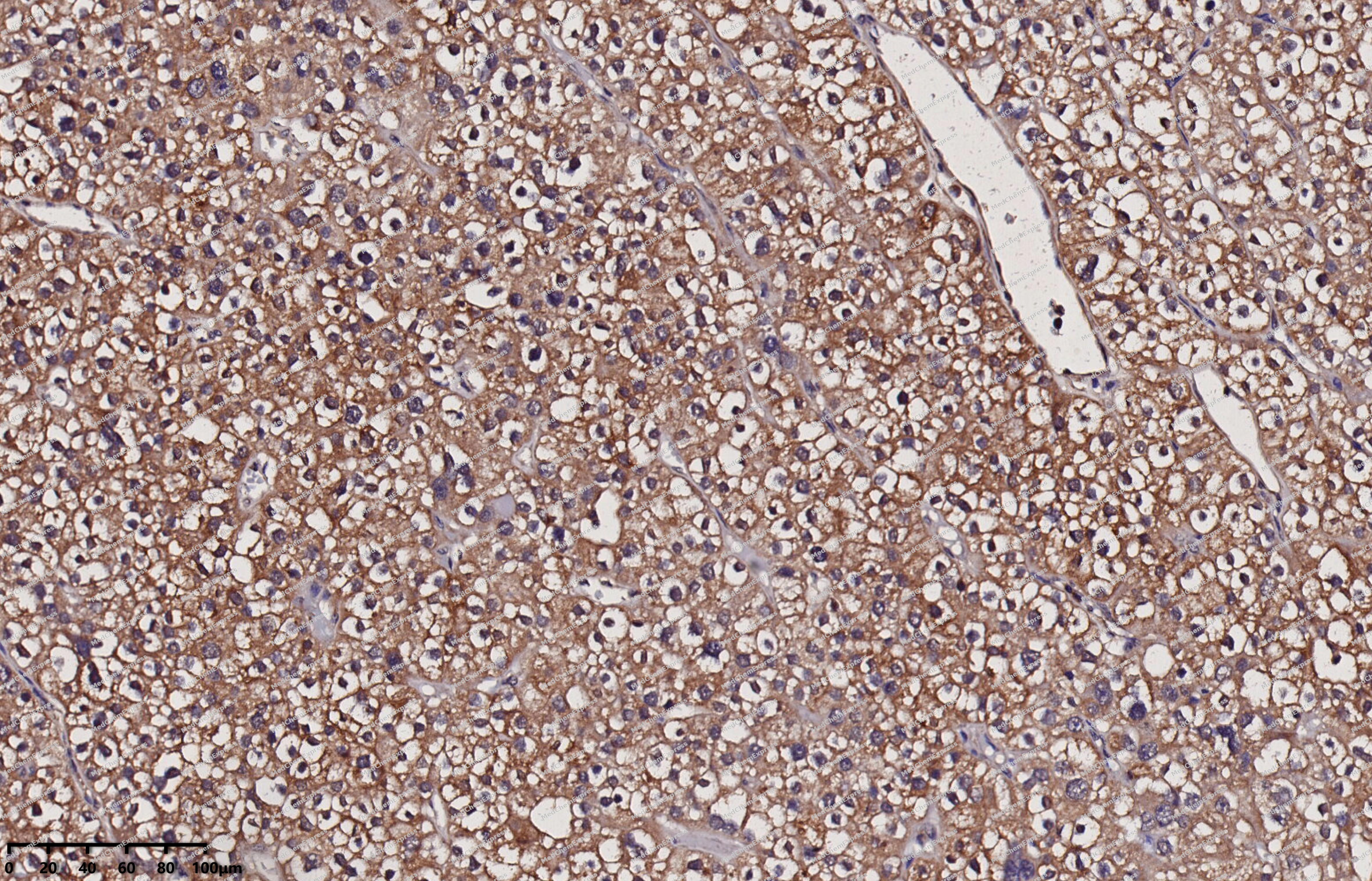 Immunohistochemical analysis of paraffin-embedded human thyroid cancer using WNK1 antibody. The section was pre-treated using heat mediated antigen retrieval with EDTA (pH 9.0) for 14 minutes. The tissues were blocked in 5% BSA for 30 minutes at room temperature, washed with TBST, and then probed with the primary antibody (HY-P82468, 1/100) for 30 minutes at room temperature. The detection was performed using Polymer HRP-conjugated Goat Anti-Mouse/Rabbit lgG(H&L) secondary antibody (HY-P83652). DAB was used as the chromogen. Tissues were counterstained with hematoxylin and mounted with DPX.
 -
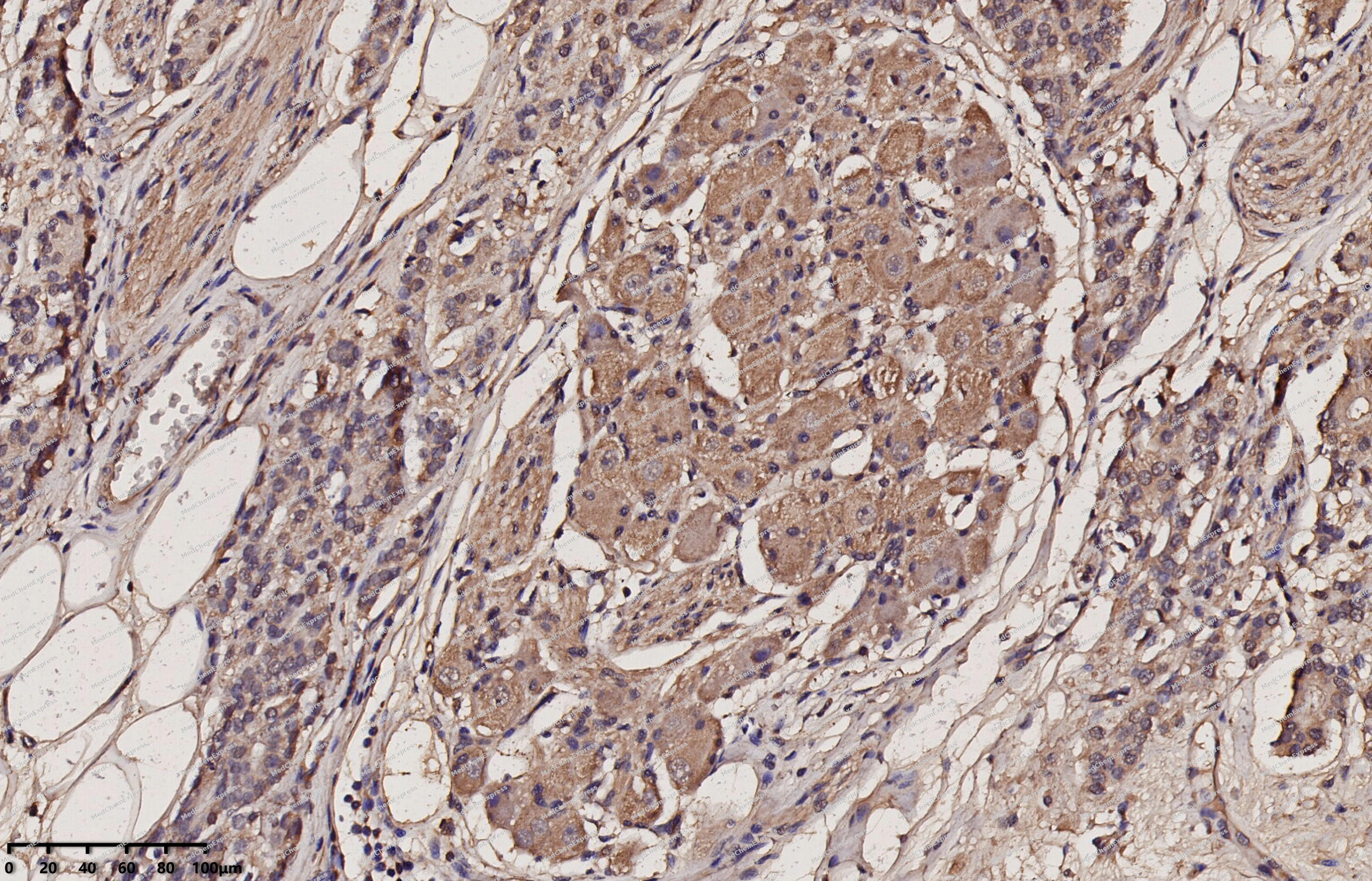 Immunohistochemical analysis of paraffin-embedded human prostate cancer using WNK1 antibody. The section was pre-treated using heat mediated antigen retrieval with EDTA (pH 9.0) for 14 minutes. The tissues were blocked in 5% BSA for 30 minutes at room temperature, washed with TBST, and then probed with the primary antibody (HY-P82468, 1/100) for 30 minutes at room temperature. The detection was performed using Polymer HRP-conjugated Goat Anti-Mouse/Rabbit lgG(H&L) secondary antibody (HY-P83652). DAB was used as the chromogen. Tissues were counterstained with hematoxylin and mounted with DPX.
 -
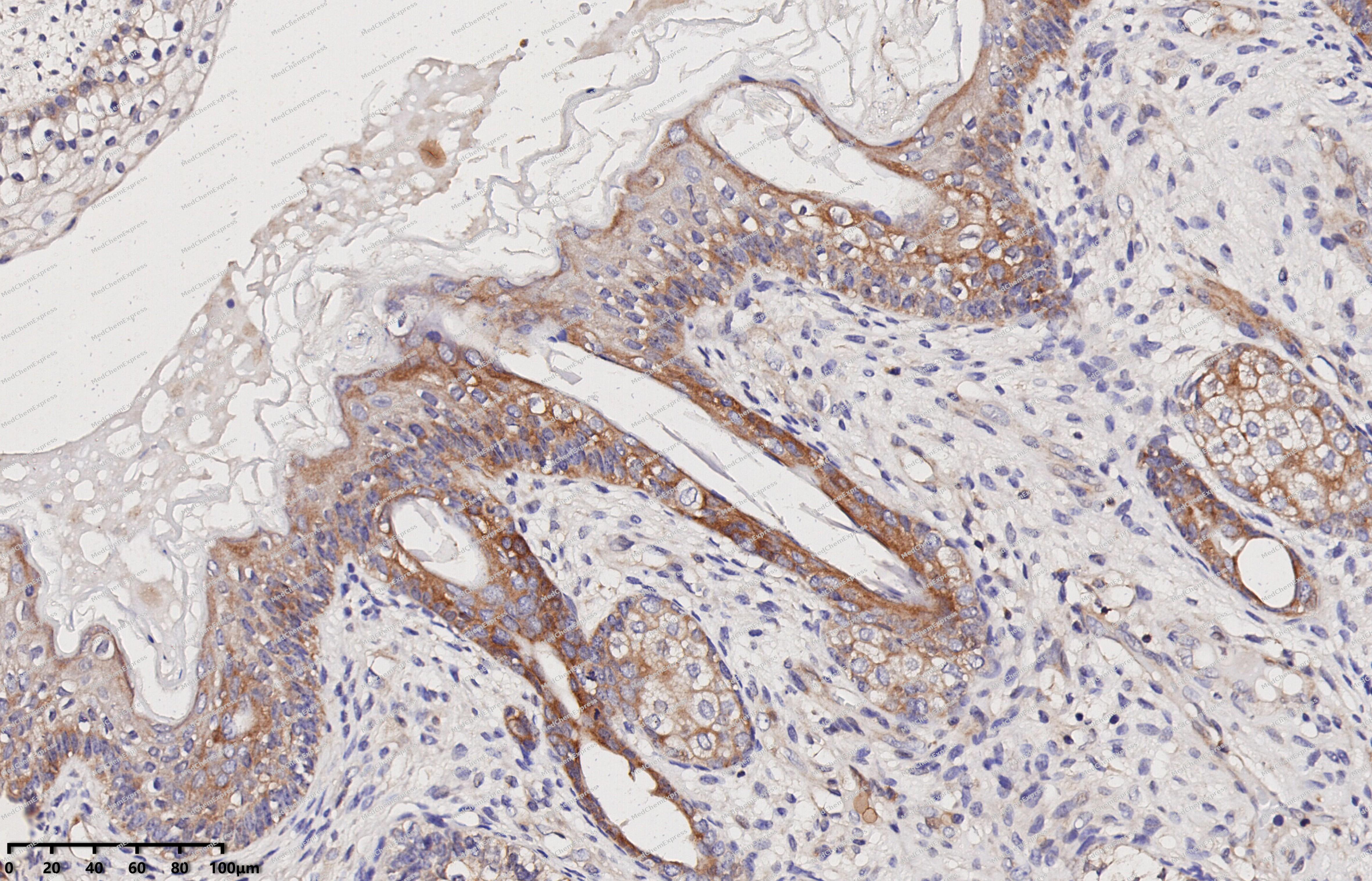 Immunohistochemical analysis of paraffin-embedded human ovarian cancer using WNK1 antibody. The section was pre-treated using heat mediated antigen retrieval with EDTA (pH 9.0) for 14 minutes. The tissues were blocked in 5% BSA for 30 minutes at room temperature, washed with TBST, and then probed with the primary antibody (HY-P82468, 1/100) for 30 minutes at room temperature. The detection was performed using Polymer HRP-conjugated Goat Anti-Mouse/Rabbit lgG(H&L) secondary antibody (HY-P83652). DAB was used as the chromogen. Tissues were counterstained with hematoxylin and mounted with DPX.
 -
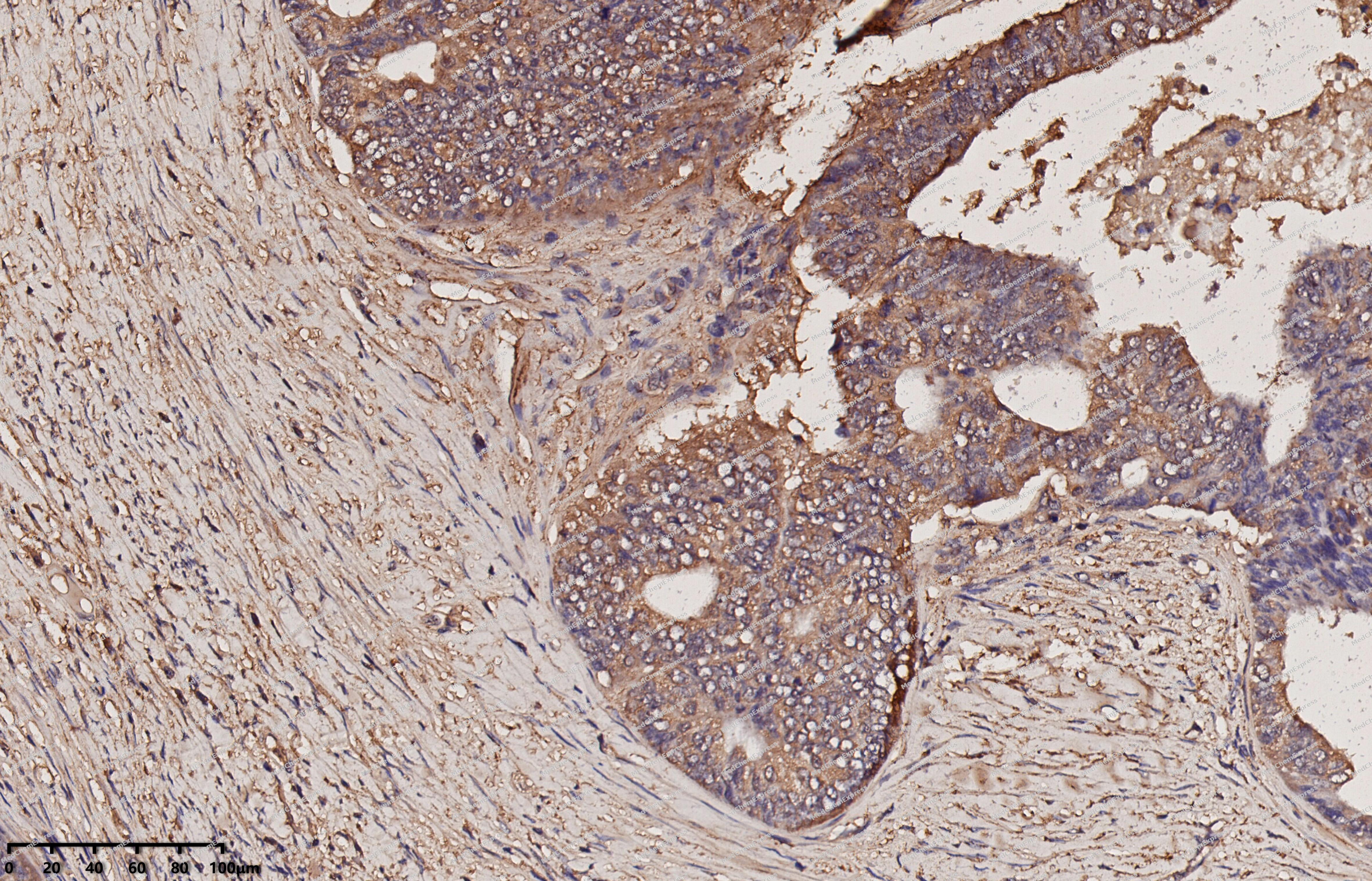 Immunohistochemical analysis of paraffin-embedded human cervical cancer using WNK1 antibody. The section was pre-treated using heat mediated antigen retrieval with EDTA (pH 9.0) for 14 minutes. The tissues were blocked in 5% BSA for 30 minutes at room temperature, washed with TBST, and then probed with the primary antibody (HY-P82468, 1/100) for 30 minutes at room temperature. The detection was performed using Polymer HRP-conjugated Goat Anti-Mouse/Rabbit lgG(H&L) secondary antibody (HY-P83652). DAB was used as the chromogen. Tissues were counterstained with hematoxylin and mounted with DPX.
 -
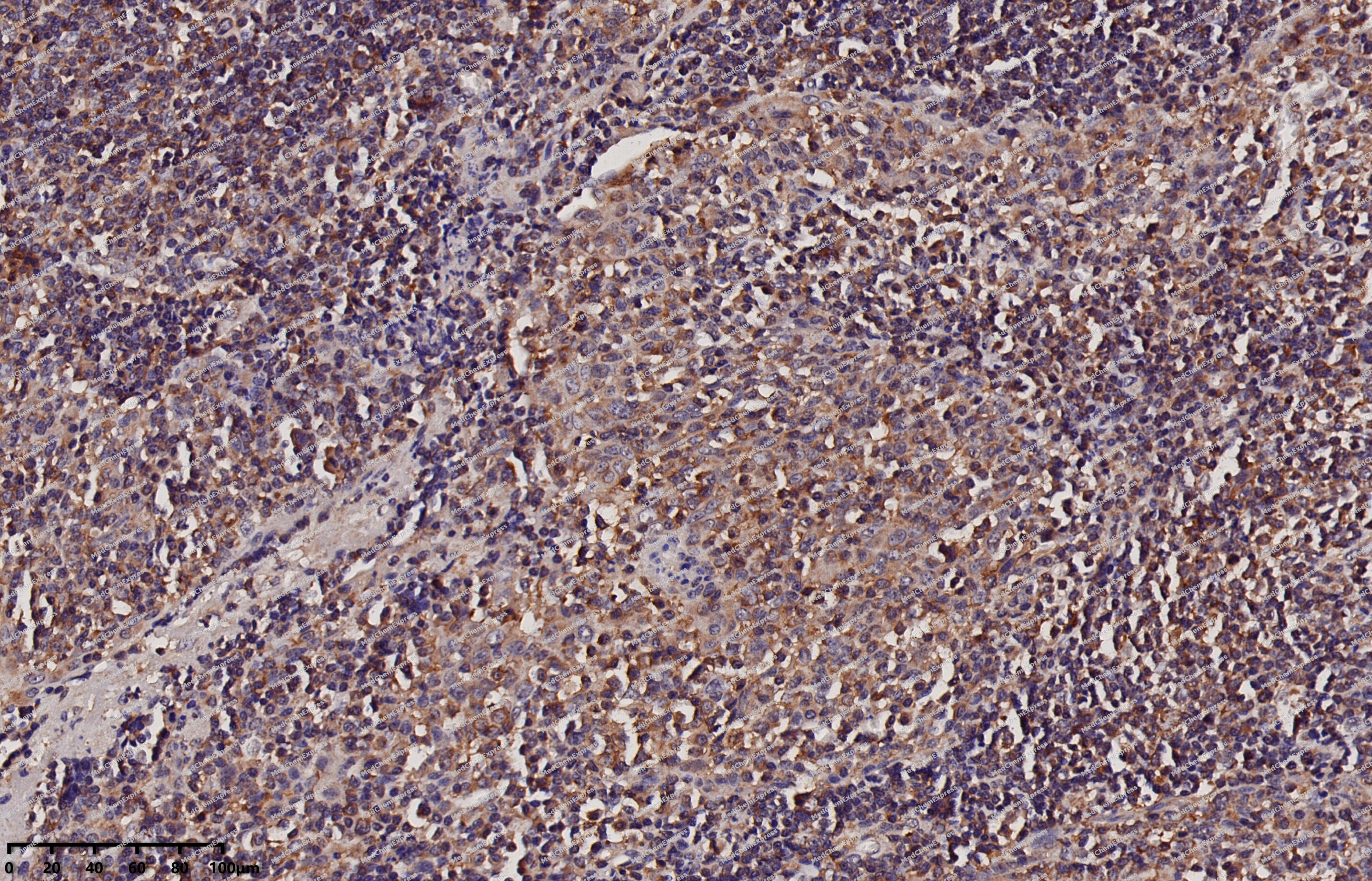 Immunohistochemical analysis of paraffin-embedded human tonsil using WNK1 antibody. The section was pre-treated using heat mediated antigen retrieval with EDTA (pH 9.0) for 14 minutes. The tissues were blocked in 5% BSA for 30 minutes at room temperature, washed with TBST, and then probed with the primary antibody (HY-P82468, 1/100) for 30 minutes at room temperature. The detection was performed using Polymer HRP-conjugated Goat Anti-Mouse/Rabbit lgG(H&L) secondary antibody (HY-P83652). DAB was used as the chromogen. Tissues were counterstained with hematoxylin and mounted with DPX.
 -
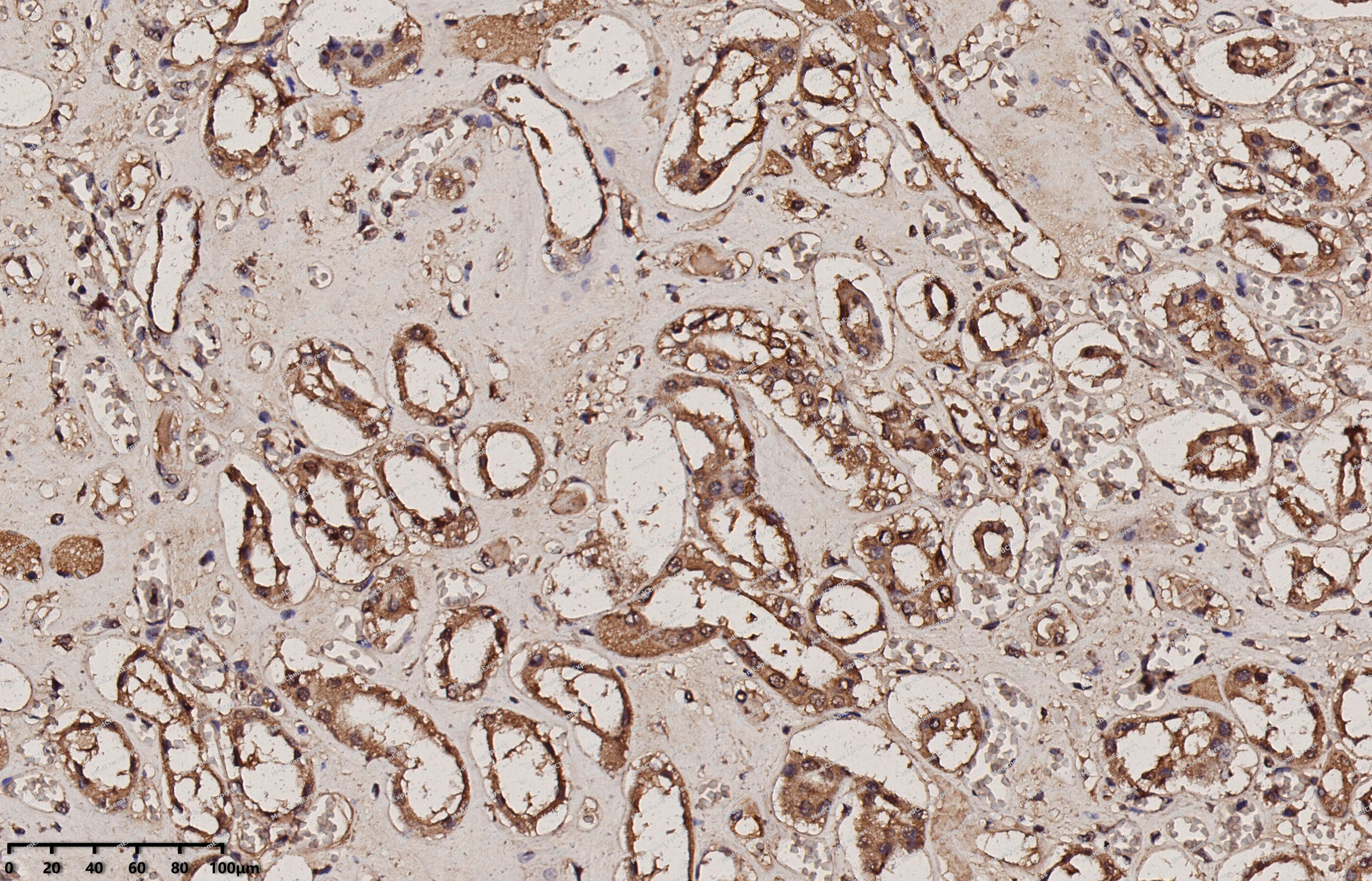 Immunohistochemical analysis of paraffin-embedded human kidney using WNK1 antibody. The section was pre-treated using heat mediated antigen retrieval with EDTA (pH 9.0) for 14 minutes. The tissues were blocked in 5% BSA for 30 minutes at room temperature, washed with TBST, and then probed with the primary antibody (HY-P82468, 1/100) for 30 minutes at room temperature. The detection was performed using Polymer HRP-conjugated Goat Anti-Mouse/Rabbit lgG(H&L) secondary antibody (HY-P83652). DAB was used as the chromogen. Tissues were counterstained with hematoxylin and mounted with DPX.


Background
-
Function
WNK1 is a serine/threonine kinase that regulates ion balance by activating SPAK/OSR1 signaling, which phosphorylates cation-chloride cotransporters including NKCC1, NKCC2, and NCC[1]. Mechanistically, WNK1 and WNK4 phosphorylate and activate SPAK/OSR1, placing WNK1 within a conserved WNK-SPAK/OSR1 transporter-control pathway[2]. In disease models, WNK1 or WNK4 mutations cause pseudohypoaldosteronism type II/familial hyperkalemic hypertension, linking pathway activation to renal salt handling, hyperkalemia, and hypertension[3]. Compared with WNK4, WNK1-driven familial hyperkalemic hypertension remains SPAK-dependent but shows different distal-nephron effects on NCC abundance and phosphorylation[4]. For experimental applications, WNK463 provides a pan-WNK inhibitor tool that affects cardiovascular, renal, blood-pressure, fluid, and electrolyte phenotypes in rodent hypertension models[5].
-
Subcellular Localization
Cytoplasm; Nucleus; Cytoplasm, cytoskeleton, spindle
-
Expression
Tissue_specificity:Widely expressed, with highest levels observed in the testis, heart, kidney and skeletal muscle; Strong expression in dorsal root ganglia and spinal cord; This isoform is kidney-specific and specifically expressed in the distal convoluted tubule (DCT) and connecting tubule (CNT) of the nephron -
Isoforms & Post-Translational Modification
Q9H4A3 has 6 isomers: Q9H4A3-1: 250794 Da (predicted); Q9H4A3-2: 225560 Da (predicted); Q9H4A3-4: 206646 Da (predicted); Q9H4A3-5: 279538 Da (predicted); Q9H4A3-6: 279713 Da (predicted); Q9H4A3-7: 299725 Da (predicted).
Autophosphorylated at Ser-378 and Ser-382, promoting its activity (PubMed:15883153, PubMed:16263722, PubMed:16832045, PubMed:17190791, PubMed:31656913, PubMed:34289367). Autophosphorylation at Ser-382 is inhibited by intracellular calcium (By similarity). Phosphorylation at Thr-60 increases ability to activate SGK1 (By similarity);Ubiquitinated by the BCR(KLHL3) complex, leading to its degradation (PubMed:23387299, PubMed:23576762). Also ubiquitinated by the BCR(KLHL2) complex (PubMed:23838290);May be O-glycosylated -
Subunit
Interacts with WNK3 (By similarity). Interacts with WNK4; inhibiting the activity of WNK4 (By similarity). Interacts with SGK1; promoting its activation (PubMed:36373794). Associates with the mTORC2 complex (PubMed:36373794). Interacts with UVRAG (PubMed:27911840). Interacts (via amphipathic alpha-helix region) with EMC2; promoting the ER membrane protein complex assembly (PubMed:33964204)
-
SwissProt ID
-
Synonyms
WNK1; HSN2; KDP; KIAA0344; PRKWNK1; Serine/threonine-protein kinase WNK1; Erythrocyte 65 kDa protein; p65; Kinase deficient protein; Protein kinase lysine-deficient 1; Protein kinase with no lysine 1; hWNK1
-
Research Field
Signal Transduction


Documentation
-
Data Sheet (261 KB)
-
SDS (251 KB)
- English - EN (251 KB)
- Français - FR (251 KB)
- Deutsch - DE (251 KB)
- Norwegian - NO (251 KB)
- Español - ES (251 KB)
- Swedish - SV (251 KB)
- Italian - IT (251 KB)
- Korean - KR (251 KB)
- Portuguese - PT (251 KB)
-
User Guide for Antibodies (1077 KB)
References
[1]. Moriguchi T, et al. WNK1 regulates phosphorylation of cation-chloride-coupled cotransporters via the STE20-related kinases, SPAK and OSR1. J Biol Chem. 2005 Dec 30;280(52):42685-93. [Content Brief]
[2]. Vitari AC, et al. The WNK1 and WNK4 protein kinases that are mutated in Gordon's hypertension syndrome phosphorylate and activate SPAK and OSR1 protein kinases. Biochem J. 2005 Oct 1;391(Pt 1):17-24. [Content Brief]
[3]. Wilson FH, et al. Human hypertension caused by mutations in WNK kinases. Science. 2001 Aug 10;293(5532):1107-12. [Content Brief]
[4]. Rafael C, et al. Consequences of SPAK inactivation on Hyperkalemic Hypertension caused by WNK1 mutations: evidence for differential roles of WNK1 and WNK4. Sci Rep. 2018 Feb 19;8(1):3249. [Content Brief]
[5]. Yamada K, et al. Small-molecule WNK inhibition regulates cardiovascular and renal function. Nat Chem Biol. 2016 Nov;12(11):896-898. [Content Brief]

 Powered by Bioz
