116 Results for "

bone tissue

" in MedChemExpress (MCE) Product Catalog:
Products (116)

116 Results for "bone tissue" in MCE Product Catalog:

Art. -Nr.: HY-158203
CAS. Nr.: 1438900-88-9
Reinheit:  99.26%
Target:  

TGF-β Receptor

Forschungsgebiete:  

Others

BMP agonist 2 (derivative I-9) is a potent bone-inducing cytokine. BMP agonist 2 promotes bone tissue production by increasing the proportion and activity of osteoblasts. BMP agonist 2 promotes osteoblast proliferation and differentiation through the BMP2-ATF4 signaling axis, in which ATF4 is a transcription factor closely related to osteoblast differentiation and bone formation. BMP agonist 2 can be used in the study of senile osteoporosis (SOP) .
loading...
    loading...
Art. -Nr.: HY-D1537
CAS. Nr.: 2643308-61-4
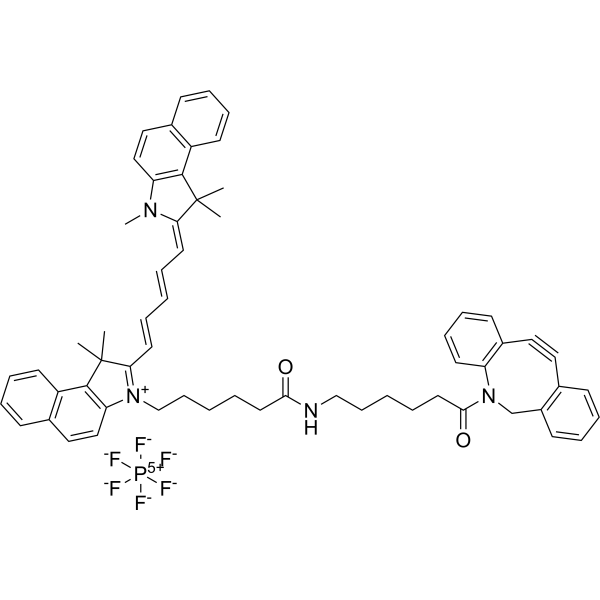
Synonyms: DBCO-Cy5.5; Cyanine5.5 DBCO
Dibenzocyclooctyne-Cy5.5 (DBCO-Cy5.5) is a fluorescent dye. Dibenzocyclooctyne-Cy5.5 can be used to syntheses calcium-binding near-infrared fluorescent nanoprobe for bone tissue imaging .
loading...
    loading...
Art. -Nr.: HY-13738AR
CAS. Nr.: 82640-04-8
Reinheit:  99.84%
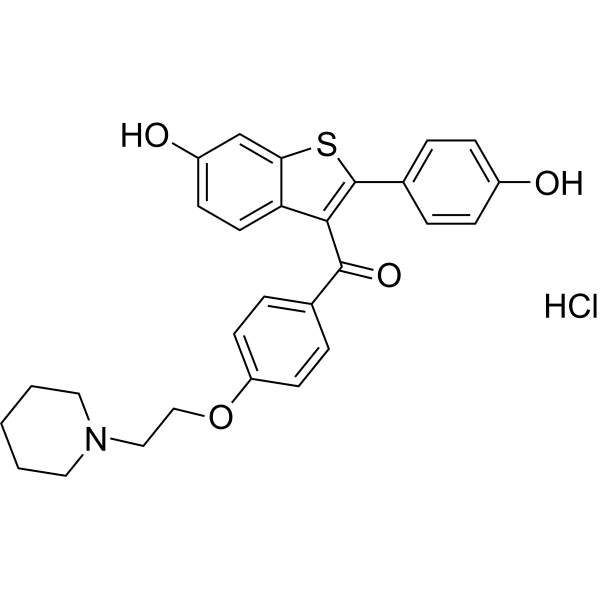
Synonyms: Keoxifene hydrochloride(Standard); LY156758(Standard); LY139481 hydrochloride (Standard)
Raloxifene (hydrochloride) (Standard) is the analytical standard of Raloxifene (hydrochloride). This product is intended for research and analytical applications. Raloxifene hydrochloride (Keoxifene hydrochloride) is a second generation selective and orally active estrogen receptor modulator. Raloxifene hydrochloride produces estrogen-agonistic effects on bone and lipid metabolism and estrogen-antagonistic effects on uterine endometrium and breast tissue .
loading...
    loading...
Art. -Nr.: HY-158218
Synonyms: Gelatin Methacryloyl, 30% methacrylation, Red Fluorescent
Red Fluorescent Gelatin Methacryloyl (Red Fluorescent GelMA) is methacryloyl gelatin (GelMA) with red fluorescence, which is obtained by "grafting" fluorescent molecules on GelMA. Red Fluorescent Gelatin Methacryloyl acts as a scaffold and can be used to engineer tissue analogs from the vasculature to cartilage and bone, allowing cells to proliferate and spread . GelMA, 30% methacrylation, Red Fluorescent needs to self-assemble into fibrous hydrogel under the action of photoinitiator LAP (HY-44076), and target bioactive adhesion sites, play an inherent supporting role for tissue cells and biodegradable activity.
Application: cell culture, biological 3D printing, tissue engineering, etc.
loading...
    loading...
Art. -Nr.: HY-Y0850U
CAS. Nr.: 9002-89-5
Synonyms: Polyvinyl alcohol (Mw 31000, 87-89% hydrolyzed, ~630 polymerization); Poly(Ethenol) (Mw 31000, 87-89% hydrolyzed, ~630 polymerization)
Forschungsgebiete:  

Others

PVA (Polyvinyl alcohol; Poly(Ethenol)) (Mw 31000, 87-89% hydrolyzed, ~630 polymerization) is a biocompatible, biodegradable, nontoxic and hydrophilic synthetic polymer. PVA (Mw 31000, 87-89% hydrolyzed, ~630 polymerization) can be used to produce bone tissue engineering scaffold [1]
loading...
    loading...
Art. -Nr.: HY-112499R
CAS. Nr.: 2124-57-4
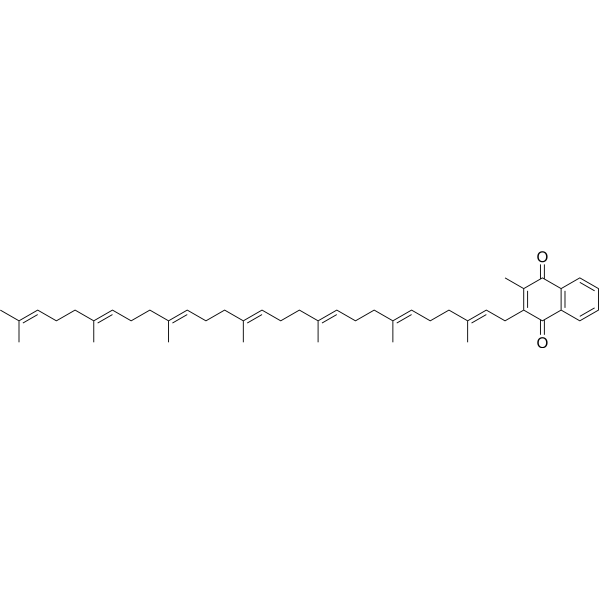
Synonyms: Vitamin K2-7(Standard); Vitamin K2(35)(Standard); Vitamin MK-7 (Standard)
Menaquinone-7 (Standard) is the analytical standard of Menaquinone-7. This product is intended for research and analytical applications. Menaquinone-7 (Vitamin K2-7), belongs to a class of K2-vitamin homologs (orally active), is originally discovered as the anti-hemorrhagic factors. Menaquinone-7 inhibits osteoclast bone resorption in vitro and stimulates bone formation in femoral tissue of aged female rats. Menaquinone-7 has a well-researched potential in the prevention of aging-induced bone degeneration. Menaquinone-7 is also a pharmacological option for activating Gla matrix protein and intervening in the progression of calcific aortic stenosis (CAVS) .
loading...
    loading...
Art. -Nr.: HY-29347
CAS. Nr.: 6701-17-3
Forschungsgebiete:  

Cardiovascular Disease

Ocrylate is a tissue adhesive that contains an 8-carbon alkyl cyanoacrylate in its structure. Ocrylate can be used in research on gastric fundal varices, bone and cartilage grafting, cerebrospinal fluid leakage repair, and skin closure. Additionally, the rapid polymerization property of Ocrylate makes it suitable for inhibiting vascular embolization .
loading...
    loading...
Art. -Nr.: HY-158217
Synonyms: Gelatin Methacryloyl, 30% methacrylation, Green Fluorescent
Green Fluorescent Gelatin Methacryloyl (Green Fluorescent GelMA) is methacryloyl gelatin (GelMA) with green fluorescence, which is obtained by "grafting" fluorescent molecules on GelMA. Green Fluorescent Gelatin Methacryloyl acts as a scaffold and can be used to engineer tissue analogs from the vasculature to cartilage and bone, allowing cells to proliferate and spread . GelMA, 30% methacrylation, Green Fluorescent needs to self-assemble into fibrous hydrogel under the action of photoinitiator LAP (HY-44076), and target bioactive adhesion sites, play an inherent supporting role for tissue cells and biodegradable activity.
Application: cell culture, biological 3D printing, tissue engineering, etc.
loading...
    loading...
Art. -Nr.: HY-158217A
Synonyms: Gelatin Methacryloyl, 60% methacrylation, Green Fluorescent
Green Fluorescent Gelatin Methacryloyl (Green Fluorescent GelMA) is methacryloyl gelatin (GelMA) with green fluorescence, which is obtained by "grafting" fluorescent molecules on GelMA. Green Fluorescent Gelatin Methacryloyl acts as a scaffold and can be used to engineer tissue analogs from the vasculature to cartilage and bone, allowing cells to proliferate and spread . GelMA, 60% methacrylation, Green Fluorescent needs to self-assemble into fibrous hydrogel under the action of photoinitiator LAP (HY-44076), and target bioactive adhesion sites, play an inherent supporting role for tissue cells and biodegradable activity.
Application: cell culture, biological 3D printing, tissue engineering, etc.
loading...
    loading...
Art. -Nr.: HY-158223
Synonyms: CMCSMA
Carboxymethyl chitosan Methacryloyl (CMCSMA) is methacrylated carboxymethyl chitosan with properties as a 3D printing ink. A composite hydrogel made of Carboxymethyl chitosan Methacryloyl can effectively accelerate bone healing in an infectious microenvironment after implantation in a rat model of Staphylococcus aureus-infected femoral defect . Carboxymethyl chitosan Methacryloyl needs to self-assemble into fibrous hydrogel under the action of photoinitiator LAP (HY-44076), and target bioactive adhesion sites, play an inherent supporting role for tissue cells and biodegradable activity.
Application: cell culture, biological 3D printing, tissue engineering, etc.
loading...
    loading...
Art. -Nr.: HY-135702
CAS. Nr.: 1258513-40-4
Reinheit:  99.20%
Target:  

NF-κB

Forschungsgebiete:  

Others

UBS109, as a curcumin analogue, can promote the differentiation and mineralization of osteoblasts. UBS109 shows to regulate bone cell function by activating Smad and inhibiting NF-kB. UBS109 can be used in bone tissue engineering and osteoporosis research .
loading...
    loading...
Art. -Nr.: HY-16968A
CAS. Nr.: 1714961-54-2
Target:  

15-PGDH

Forschungsgebiete:  

Others

(R)-SW033291 is the R-type enantiomer of SW033291 (HY-16968). (R)-SW033291 is a potent and high-affinity inhibitor of 15-PGDH. (R)-SW033291 increases prostaglandin PGE2 levels in bone marrow and other tissues. (R)-SW033291 also promotes tissue regeneration .
loading...
    loading...
Art. -Nr.: HY-158218A
Synonyms: Gelatin Methacryloyl, 60% methacrylation, red fluorescent
Forschungsgebiete:  

Others

Red Fluorescent Gelatin Methacryloyl (Red Fluorescent GelMA) is methacryloyl gelatin (GelMA) with red fluorescence, which is obtained by "grafting" fluorescent molecules on GelMA. Red Fluorescent Gelatin Methacryloyl acts as a scaffold and can be used to engineer tissue analogs from the vasculature to cartilage and bone, allowing cells to proliferate and spread . GelMA, 60% methacrylation, Red Fluorescent needs to self-assemble into fibrous hydrogel under the action of photoinitiator LAP (HY-44076), and target bioactive adhesion sites, play an inherent supporting role for tissue cells and biodegradable activity.
Application: cell culture, biological 3D printing, tissue engineering, etc.
loading...
    loading...
Art. -Nr.: HY-158218B
Synonyms: Gelatin Methacryloyl, 90% methacrylation, red fluorescent
Forschungsgebiete:  

Others

GelMA (Gelatin Methacryloyl), 90% methacrylation, red fluorescent (Gelatin Methacryloyl, 90% methacrylation, red fluorescent) is methacryloyl gelatin (GelMA) with red fluorescence, which is obtained by "grafting" fluorescent molecules on GelMA. Red Fluorescent Gelatin Methacryloyl acts as a scaffold and can be used to engineer tissue analogs from the vasculature to cartilage and bone, allowing cells to proliferate and spread . GelMA, 90% methacrylation, Red Fluorescent needs to self-assemble into fibrous hydrogel under the action of photoinitiator LAP (HY-44076), and target bioactive adhesion sites, play an inherent supporting role for tissue cells and biodegradable activity. Application: cell culture, biological 3D printing, tissue engineering, etc.
loading...
    loading...
Art. -Nr.: HY-P5522
CAS. Nr.: 877462-71-0
Synonyms: L-Ala-γ-D-Glu-meso-diaminopimelic acid
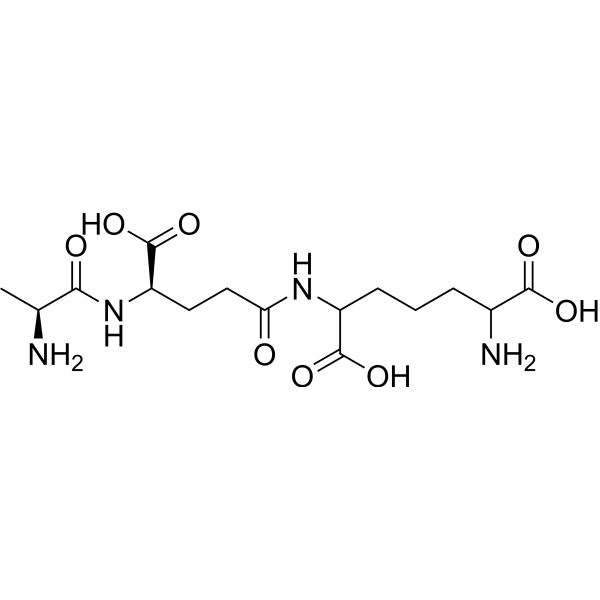
TriDAP (L-Ala-γ-D-Glu-meso-diaminopimelic acid) is a NOD1 agonist with a Kd value of 34.5 μM. TriDAP enhances the binding of NOD1-RICK, promotes RICK phosphorylation, and activates the NF-κB, TAK1, MEK/ERK, p38 and interferon response pathways. TriDAP downregulates Runx2 via increasing ubiquitination and reduces trabecular bone parameters. TriDAP decreases IκBα levels and increases p65 levels. TriDAP induces the secretion of proinflammatory mediators IL-8 and prostaglandins, triggers tissue inflammation and innate immune activation, and inhibits SARS-CoV-2 replication in lung epithelial cells. TriDAP increases the RANKL/OPG ratio in mice, reduces bone mass and enhances osteoclast activity, and inhibits new bone formation by decreasing the mineralization deposition rate in mice. TriDAP can be used in research related to pulpitis, chronic ulcerative colitis, Crohn's disease and SARS-CoV-2 infection .
loading...
    loading...
Art. -Nr.: HY-N0507R
CAS. Nr.: 84954-92-7
Rosavin (Standard) is the analytical standard of Rosavin. This product is intended for research and analytical applications. Rosavin, an orally bioactive phenylpropanoid from Rhodiola rosea L. (RRL), is an adaptogen that enhances the body’s response to environmental stress. Rosavin significantly influences bone tissue metabolism by inhibiting osteoclastogenesis and promoting osteoblast differentiation, also impacts various diseases, demonstrating antidepressant, adaptogenic, and anxiolytic effects in mouse models. Additionally, Rosavin improves survival, reducing intestinal damage in irradiated rats and Ischemia-reperfusion(I/R)-induced cerebral injury in vivo by regulating inflammation and oxidative stress, making it a promising candidate for research in radiation-induced intestinal injury, I/R-induced cerebral injury and osteoporosis .
loading...
    loading...
Art. -Nr.: HY-103578
CAS. Nr.: 404920-28-1
Target:  

Androgen Receptor

Forschungsgebiete:  

Metabolic Disease

S-40503 is a tissue-selective androgen receptor (AR) agonist with a Ki of 14.9 nM for rat AR. S-40503 binds to AR with high specificity, exerts full agonistic effects in bone and muscle, acts as a partial agonist in the prostate, and preferentially targets anabolic tissues rather than androgen-dependent tissues. S-40503 can be used in the research of osteoporosis .
loading...
    loading...
Art. -Nr.: HY-14360
CAS. Nr.: 919109-76-5
Target:  

Cathepsin

Forschungsgebiete:  

Metabolic Disease

MK 1256 is a highly selective and orally active inhibitor of tissue protease K (Cat K) with an IC50 of 0.62 nM. MK 1256 shows extremely high selectivity towards other tissue proteases (all > 1100 times), with only a slightly lower selectivity for tissue protease F (Cat F) (110 times). MK 1256 exhibits strong anti-bone resorption activity in the osteoporosis model of rhesus monkeys with ovariectomy. MK 1256 can be used for research on osteoporosis .
loading...
    loading...
Art. -Nr.: HY-W584165
CAS. Nr.: 13983-17-0
Wollastonite is a white, chain-structured pyroxene silicate mineral with biocompatibility, biodegradability, osteogenicity and antibacterial properties. Wollastonite induces transient pulmonary inflammatory responses, reversible alveolar macrophage responses, early inflammatory/proliferative mesothelial cell responses, ROS production, and mild chronic pulmonary interstitial inflammation in rats. Wollastonite induces osteogenic differentiation, promotes bone growth, supports angiogenesis, and facilitates the formation of hydroxycarbonate apatite on its surface. Wollastonite enhances the strength, bioactivity and biodegradability of hydroxyapatite scaffolds, and is used to construct porous bone tissue engineering scaffolds. Wollastonite is applied in research related to diseases such as bronchitis, decreased lung function and bone defects .
loading...
    loading...
Art. -Nr.: HY-N0546R
CAS. Nr.: 260413-62-5
Synonyms: Nuezhenoside (Standard)
Ligustroflavone (Standard) is the analytical standard of Ligustroflavone (HY-N0546). This product is intended for research and analytical applications. Ligustroflavone is an orally active flavonoid compound. Ligustroflavone can be extracted from Ligustrum lucidum. Ligustroflavone antagonizes the calcium-sensing receptor (CaSR), inhibits the RIPK1/RIPK3/MLKL pathway, and downregulates TGF-β/Smad signaling. Ligustroflavone regulates calcium metabolism, protects bone tissue, reduces cerebral ischemic injury, and inhibits liver fibrosis. Ligustroflavone can be used in the study of diabetic osteoporosis, ischemic stroke, and liver fibrosis .
loading...
    loading...

