



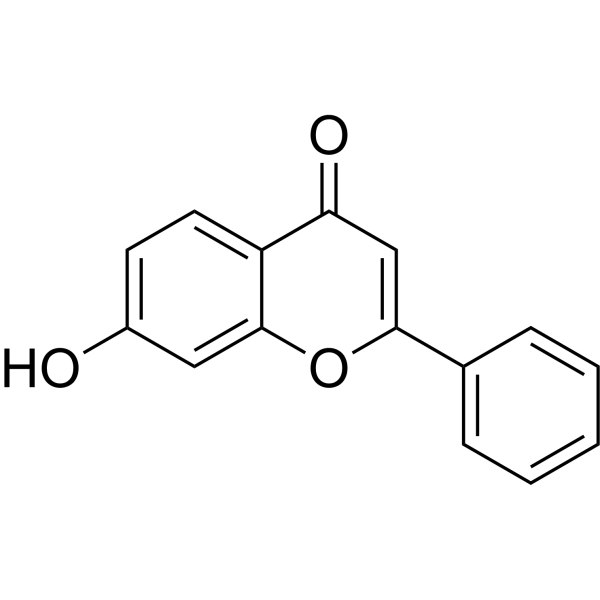
7-Hydroxyflavone
Based on 1 publication(s) in Google Scholar
7-Hydroxyflavone is a flavonoid isolated from Clerodendrum phlomidis, with anti-inflammatory activity. 7-Hydroxyflavone protects renal cells from nicotine (NIC)-associated cytotoxicity via the ERK/Nrf2/HO-1 pathway. 7-Hydroxyflavone inhibits PKM2 with an IC50 of 2.12 μM. 7-Hydroxyflavone inhibits COX-2 and 5-LOX with IC50 of 27 µg/mL and 33 µg/mL. 7-Hydroxyflavone is orally active.
For research use only. We do not sell to patients.
- Purity : 99.89%
- CAS No.: 6665-86-7
- Formula: C15H10O3
- Molecular Weight:238.24
-
Storage:Powder -20°C, 3 years , 4°C, 2 years ; In solvent -80°C, 6 months , -20°C, 1 month

To place orders, for customer services and technical support, please contact: MedChemExpress USA
Tel: 609-228-6898 E-mail: [email protected] [email protected]


-
 Biological Activity
-
Chemical Information
-
Solvent & Solubility
- Protocols
- Purity & Documentation
- References
-
 Help & FAQs


-
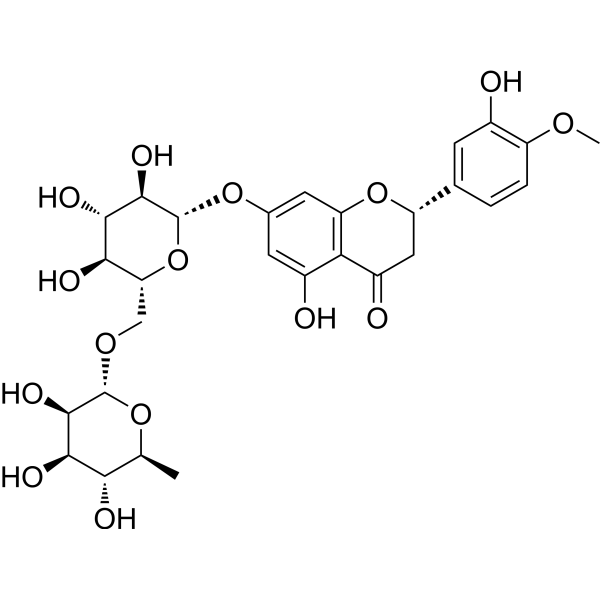
HY-15337
HesperidinAntioxidant -
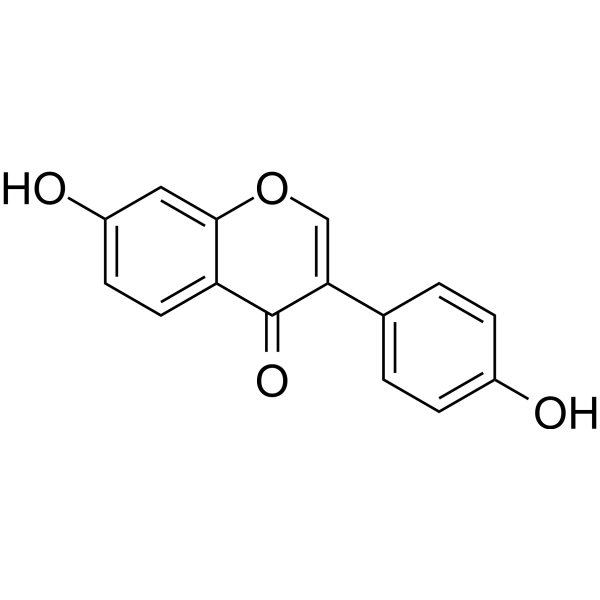
HY-N0019
DaidzeinEndogenous Metabolite -
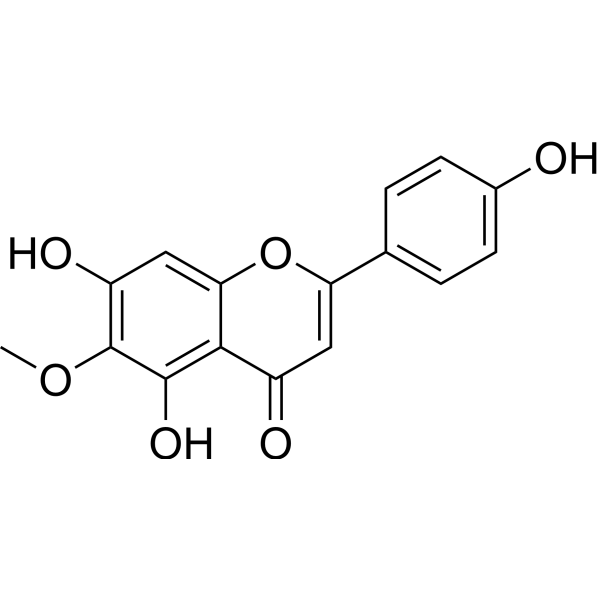
HY-N1950
HispidulinPim-1 Inhibitor -
HY-K0221
Affinity Chromatography Column -
HY-N0458
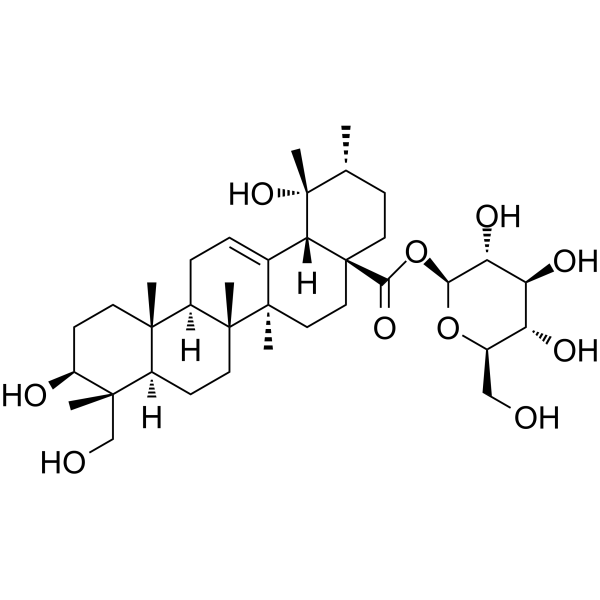
PedunculosideLipid-lowering Agent -
HY-N2229
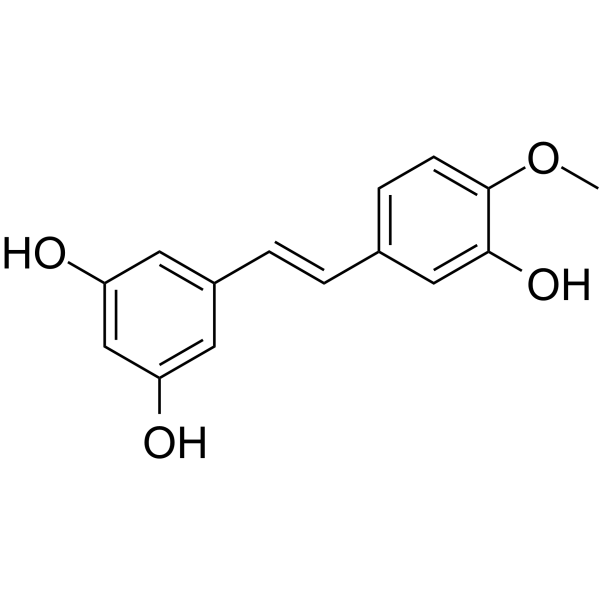
RhapontigeninCytochrome P450 1A1 Inactivator -
HY-W087008
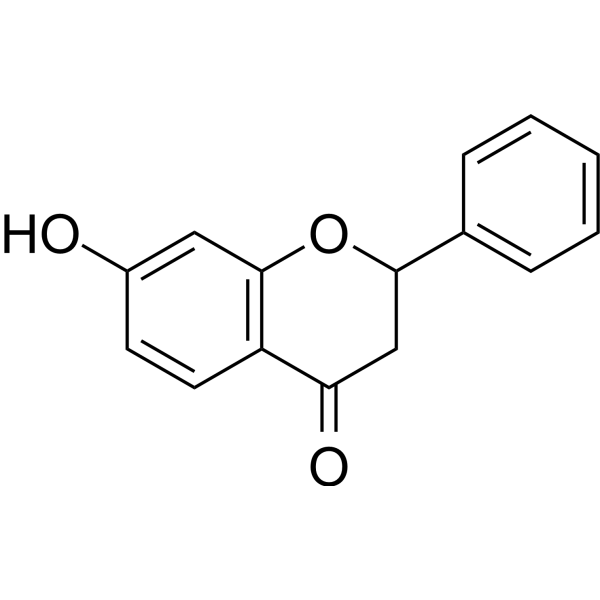
7-HydroxyflavanoneCYP19 Inhibitor -
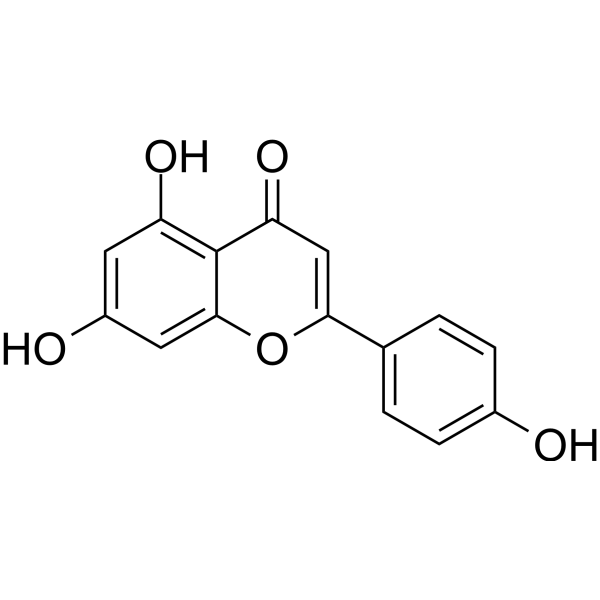
HY-N1201
ApigeninCytochrome P450 Inhibitor -
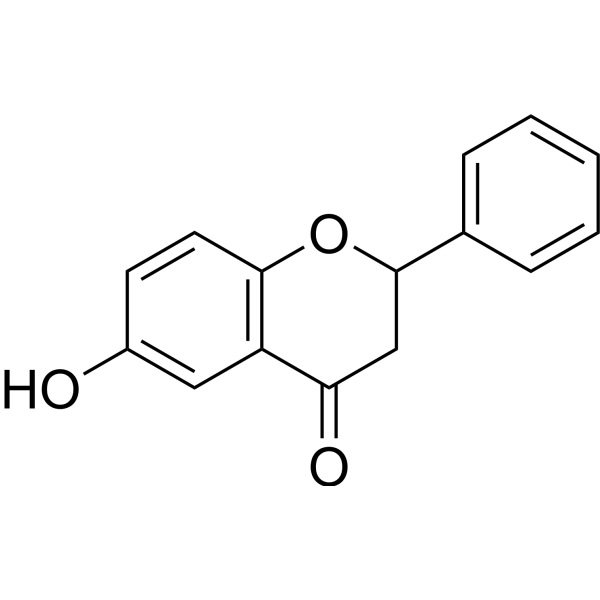
HY-W028263
6-HydroxyflavanoneNatural Product -

HY-N7108R
7-Hydroxyflavone (Standard)Anti-inflammatory Agent -
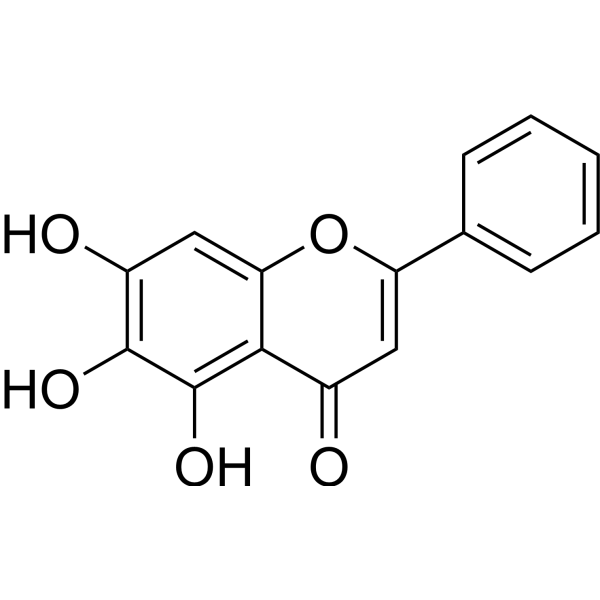
HY-N0196
BaicaleinXanthine Oxidase Inhibitor -
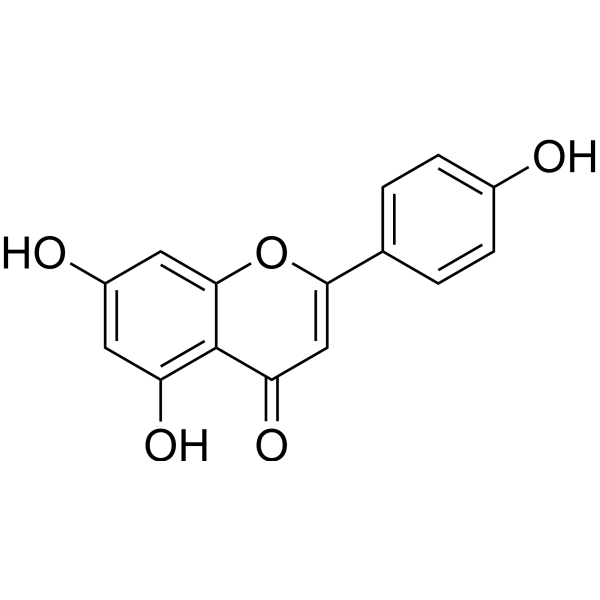
HY-N1201R
Apigenin (Standard)
Publications Citing Use of MedChemExpress (MCE) 7-Hydroxyflavone
More

Biological Activity
Description
Cellular Effect
|
Cell Line

|
Type | Value | Description | References |
|---|---|---|---|---|
| HCT-116 | EC50 |
>50 μM
Compound: 7-Hydroxyflavone
|
Cytotoxicity against human HCT116 cells assessed as cell viability after 72 hrs by MTT assay
Cytotoxicity against human HCT116 cells assessed as cell viability after 72 hrs by MTT assay
|
[PMID: 26529431] |
| HEK293 | IC50 |
>20 μM
Compound: 15
|
Inhibition of human recombinant 17beta-HSD2 expressed in HEK293 cell lysate assessed as conversion of radiolabeled estrone to estradiol
Inhibition of human recombinant 17beta-HSD2 expressed in HEK293 cell lysate assessed as conversion of radiolabeled estrone to estradiol
|
[PMID: 18533708] |
| HEK293 | IC50 |
5.25 μM
Compound: 15
|
Inhibition of human recombinant 17beta-HSD1 expressed in HEK293 cell lysate assessed as conversion of radiolabeled estrone to estradiol
Inhibition of human recombinant 17beta-HSD1 expressed in HEK293 cell lysate assessed as conversion of radiolabeled estrone to estradiol
|
[PMID: 18533708] |
| Neutrophil | IC50 |
33 μM
Compound: 3a
|
Inhibition of oxidative burst in PMA-stimulated human neutrophils assessed as inhibition of superoxide anion radical-induced lucigenin oxidation incubated for 5 mins prior to PMA challenge by chemiluminescence assay
Inhibition of oxidative burst in PMA-stimulated human neutrophils assessed as inhibition of superoxide anion radical-induced lucigenin oxidation incubated for 5 mins prior to PMA challenge by chemiluminescence assay
|
[PMID: 23871908] |
In Vitro
7-Hydroxyflavone (20 μM, 24 h) inhibits nicotine-induced cytotoxicity, reduces nicotine-induced ROS production, and exhibits antioxidant activity in rat renal proximal tubule cells NRK52E[2].
7-Hydroxyflavone (50 μM, 24 h) inhibits EV71 3C protease, blocks the viral replication, and inhibits the proliferation of enterovirus 71 (EV71) with an EC50 of 19.95 μM[3].
7-Hydroxyflavone (50 μM, 24 h) decreases malondialdehyde (MDA) and ROS levels, increases SOD and GSH levels, increases mitochondrial DNA content and ATP levels in HepG2 cells[7].
MedChemExpress (MCE) has not independently confirmed the accuracy of these methods. They are for reference only.
-
Cell Line:HepG2
-
Concentration:50 μM
-
Incubation Time:24 h
-
Result:Reduced the ROS level.
In Vivo
7-Hydroxyflavone (5-20 mg/kg, ip, once a day for 7-10 days) ameliorates Paclitaxel (HY-B0015) or Vinorelbine (HY-12053)-induced neuropathic pain in mice model[6].
7-Hydroxyflavone (50-100 mg/kg, po, once a day for 15 weeks) reduces fat accumulation, improves hepatic steatosis and oxidative stress, regulates blood glucose metabolism, and promotes energy metabolism in mouse NAFLD models[7].
MedChemExpress (MCE) has not independently confirmed the accuracy of these methods. They are for reference only.
-
Animal Model:Ischemia/reperfusion injury Sprague Dawley rat model[5]
-
Dosage:5-20 mg/kg
-
Administration:ip, once a day for 7 days
-
Result:Improved the cardiac functions, reduced the myocardial infarct size.
-
Animal Model:Paclitaxel (HY-B0015) or Vinorelbine (HY-12053)-induced hyperalgesia in mice model[6]
-
Dosage:5-20 mg/kg
-
Administration:ip, once a day for 7-10 days
-
Result:Ameliorated neuropathic pain.
-
Animal Model:C57BL/6 mouse NAFLD models[7]
-
Dosage:50-100 mg/kg
-
Administration:po, once a day for 15 weeks
-
Result:Improved high-fat diet-induced non-alcoholic fatty liver disease and improved obesity, oxidative stress, glucose metabolism disorders, and energy metabolism.


Chemical Information
-
CAS No. 6665-86-7
-
Appearance Solid
-
Molecular Weight 238.24
-
Formula C15H10O3
-
Color White to off-white
-
SMILES
O=C1C=C(C2=CC=CC=C2)OC3=CC(O)=CC=C13
-
Structure Classification
-
Initial Source
-
Shipping
Room temperature in continental US; may vary elsewhere.
-
Storage
Powder -20°C 3 years 4°C 2 years In solvent -80°C 6 months -20°C 1 month


Publications (1)
-
Journal Impact Factor
-
Most Recent
-
Biochem Pharmacol
Chemoproteomics-based profiling reveals the targeting molecular mechanism of reversal of cisplatin resistance by baicalin in head and neck squamous cell carcinoma. [Abstract]2025 Sep 21;242(Pt 3):117360. PMID: 40987408


Solvent & Solubility
In Vitro:
DMSO : 125 mg/mL (524.68 mM; Need ultrasonic; Hygroscopic DMSO has a significant impact on the solubility of product, please use newly opened DMSO)
Please refer to the solubility information to select the appropriate solvent. Once prepared, please aliquot and store the solution to prevent product inactivation from repeated freeze-thaw cycles.
Storage method and period of stock solution: -80°C, 6 months; -20°C, 1 month. When stored at -80°C, please use it within 6 months. When stored at -20°C, please use it within 1 month.
Please refer to the solubility information to select the appropriate solvent. Once prepared, please aliquot and store the solution to prevent product inactivation from repeated freeze-thaw cycles.
Storage method and period of stock solution: -80°C, 6 months; -20°C, 1 month. When stored at -80°C, please use it within 6 months. When stored at -20°C, please use it within 1 month.
Concentration (start) × Volume (start) = Concentration (final) × Volume (final)
In Vivo:
Select the appropriate dissolution method based on your experimental animal and administration route.
- For the following dissolution methods, please ensure to first prepare a clear stock solution using an In Vitro approach and then sequentially add co-solvents:
- To ensure reliable experimental results, the clarified stock solution can be appropriately stored based on storage conditions. As for the working solution for In Vivo experiments, it is recommended to prepare freshly and use it on the same day.
- The percentages shown for the solvents indicate their volumetric ratio in the final prepared solution. If precipitation or phase separation occurs during preparation, heat and/or sonication can be used to aid dissolution.
Add each solvent one by one: 10% DMSO 40% PEG300 5% Tween-80 45% Saline
Solubility: ≥ 2.08 mg/mL (8.73 mM); Clear solution
This protocol yields a clear solution of ≥ 2.08 mg/mL (saturation unknown).
Taking 1 mL working solution as an example, add 100 μL DMSO stock solution (20.8 mg/mL) to 400 μL PEG300, and mix evenly; then add 50 μL Tween-80 and mix evenly; then add 450 μL Saline to adjust the volume to 1 mL.
Preparation of Saline: Dissolve 0.9 g sodium chloride in ddH₂O and dilute to 100 mL to obtain a clear Saline solution.
Add each solvent one by one: 10% DMSO 90% (20% SBE-β-CD in Saline)
Solubility: 2.08 mg/mL (8.73 mM); Suspended solution; Need ultrasonic
This protocol yields a suspended solution of 2.08 mg/mL. Suspended solution can be used for oral and intraperitoneal injection.
Taking 1 mL working solution as an example, add 100 μL DMSO stock solution (20.8 mg/mL) to 900 μL 20% SBE-β-CD in Saline, and mix evenly.
Preparation of 20% SBE-β-CD in Saline (4°C, storage for one week): 2 g SBE-β-CD powder is dissolved in 10 mL Saline, completely dissolve until clear.
In Vivo Dissolution Calculator
Please enter the basic information of animal experiments:
-
-
-
-
Recommended: Prepare an additional quantity of animals to account for potential losses during experiments.
Please enter your animal formula composition:
-
%DMSO +
Recommended: Keep the proportion of DMSO in working solution below 2% if your animal is weak.
-
%+
-
+%Tween-80 + +
-
%Saline +
The co-solvents required include: DMSO, . All of co-solvents are available by MedChemExpress (MCE). , Tween 80. All of co-solvents are available by MedChemExpress (MCE).
Working solution concentration: 0.22 mg/mL
Method for preparing stock solution: mg drug dissolved in μL DMSO. Stock solution concentration: mg/mL.
1. Take μL DMSO stock solution;
2. Add μL .
μL , mix evenly;
3. Then add μL Tween 80, mix evenly;
4. Then add μL
Please ensure that the stock solution in the first step is dissolved to a clear state, and add co-solvents in sequence. You can use ultrasonic heating (ultrasonic cleaner, recommended frequency 20-40 kHz), vortexing, etc. to assist dissolution.


Purity & Documentation
-
Data Sheet (278 KB)
-
SDS (396 KB)
- English - EN (396 KB)
- Français - FR (396 KB)
- Deutsch - DE (396 KB)
- Norwegian - NO (396 KB)
- Español - ES (396 KB)
- Swedish - SV (396 KB)
- Italian - IT (396 KB)
- Korean - KR (396 KB)
- Portuguese - PT (396 KB)
-
Handling Instructions (2659 KB)
References
[1]. Vinutha K, et al. Aqueous extract from Madhuca indica bark protects cells from oxidative stress caused by electron beam radiation: in vitro, in vivo and in silico approach. Heliyon. 2019 May 30;5(5):e01749. [Content Brief]
[2]. Sengupta B, et al. Differential roles of 3-Hydroxyflavone and 7-Hydroxyflavone against nicotine-induced oxidative stress in rat renal proximal tubule cells. PLoS One. 2017 Jun 22;12(6):e0179777. [Content Brief]


Complete Stock Solution Preparation Table
Please refer to the solubility information to select the appropriate solvent. Once prepared, please aliquot and store the solution to prevent product inactivation from repeated freeze-thaw cycles.
Storage method and period of stock solution: -80°C, 6 months; -20°C, 1 month. When stored at -80°C, please use it within 6 months. When stored at -20°C, please use it within 1 month.
| Optional Solvent | Concentration Solvent Mass | 1 mg | 5 mg | 10 mg | 25 mg |
|---|---|---|---|---|---|
| DMSO | 1 mM | 4.1974 mL | 20.9872 mL | 41.9745 mL | 104.9362 mL |
| 5 mM | 0.8395 mL | 4.1974 mL | 8.3949 mL | 20.9872 mL | |
| 10 mM | 0.4197 mL | 2.0987 mL | 4.1974 mL | 10.4936 mL | |
| 15 mM | 0.2798 mL | 1.3991 mL | 2.7983 mL | 6.9957 mL | |
| 20 mM | 0.2099 mL | 1.0494 mL | 2.0987 mL | 5.2468 mL | |
| 25 mM | 0.1679 mL | 0.8395 mL | 1.6790 mL | 4.1974 mL | |
| 30 mM | 0.1399 mL | 0.6996 mL | 1.3991 mL | 3.4979 mL | |
| 40 mM | 0.1049 mL | 0.5247 mL | 1.0494 mL | 2.6234 mL | |
| 50 mM | 0.0839 mL | 0.4197 mL | 0.8395 mL | 2.0987 mL | |
| 60 mM | 0.0700 mL | 0.3498 mL | 0.6996 mL | 1.7489 mL | |
| 80 mM | 0.0525 mL | 0.2623 mL | 0.5247 mL | 1.3117 mL | |
| 100 mM | 0.0420 mL | 0.2099 mL | 0.4197 mL | 1.0494 mL |


7-Hydroxyflavone Related Classifications
HY-N7108 Related Classifications
 Powered by Bioz