



Gontivimab

Based on 1 Customer Validation
Gontivimab (ALX-0171; VR-465) is a poent anti-RSV prefusion F protein nanobody with a KD value of 0.113 nM. Gontivimab shows antiviral activity. Gontivimab reduces the RSV load in the nose and lung.
Nos produits utilisent uniquement pour la recherche. Nous ne vendons pas aux patients.
- Pureté : 95.11%
- CAS No.: 1257358-38-5
- Masse moléculaire:43.12 kDa
-
Stockage:
Please store the product under the recommended conditions in the Certificate of Analysis.


To place orders, for customer services and technical support, please contact: MedChemExpress USA
Tel: 609-228-6898 E-mail: [email protected] [email protected]


-
 Activité biologique
-
Chemical Information
- Protocole
- Pureté et documentation
- Références
-
 Help & FAQs





Activité biologique
Description
Isotype
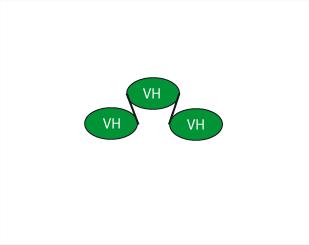
VH-VH-VH
Species Reactivity
Human
IC50 & Target
RSV-F
In Vitro
Gontivimab (0-100000 nM) shows antiviral activity with IC50s of 0.1, 0.4 nM for RSV-A, RSV-B 18537 strain, respectively[1].
Gontivimab binds to antigenic site II of F protein[1].
MedChemExpress (MCE) has not independently confirmed the accuracy of these methods. They are for reference only. Further protocols information, click here.
In Vivo
MedChemExpress (MCE) has not independently confirmed the accuracy of these methods. They are for reference only.
-
Animal Model:Rats (RSV Tracy)[1]
-
Dosage:1-68 mg/kg
-
Administration:Intranasal administration or nebulization; once (day 2 or day 3) or twice (day 2 and day 3)
-
Result:Resulted in significant viral load reductions in the lungs ranging.
Essai clinique
| NCT Number | Sponsor | Condition | Start Date |
Phase

|
|---|---|---|---|---|
| NCT01329991 | Plexxikon| | 2011-05 | PHASE1 |
Accession
A0A0X8XRK2
Conjugated
Unconjugated
Reconsititution
The product can be reconstituted/diluted with sterile PBS or saline.
Format
-
VH-VH-VH
Application
ELISA, FACS, Functional assay


Chemical Information
-
CAS No. 1257358-38-5
-
Appearance Liquid
-
Masse moléculaire 43.12 kDa
-
Color Colorless to light yellow
-
SMILES
[Gontivimab]
-
Synonyms
ALX-0171; VR-465
-
Livraison
Shipping with dry ice.
-
Formulation
Please refer to the lot-specific COA for specific buffer information.
-
Stockage
Please store the product under the recommended conditions in the Certificate of Analysis.

Protocole
-
Research Protocol for Infectious Diseases
Infectious-disease experiments test how pathogens interact with host barriers, innate immune receptors, inflammatory signaling, pathogen replication, and tissue injury; pattern-recognition receptors such as TLRs, RIG-I-like receptors, NOD-like receptors, and inflammasomes detect microbial molecules and activate NF-κB, interferon, and cytokine responses. The central hypothesis is that infection severity reflects the balance between pathogen burden and host response: protective inflammation restricts pathogen growth, whereas excessive or mislocalized inflammation contributes to tissue damage and disease phenotype. Unresolved questions include which host pathways are protective versus pathogenic, why some infection models fail to translate to human disease, and which combined readouts best predict clinically relevant infection outcomes.


Pureté et documentation
-
Fiche technique (257 KB)
-
SDS (252 KB)
- English - EN (252 KB)
- Français - FR (252 KB)
- Deutsch - DE (252 KB)
- Norwegian - NO (252 KB)
- Español - ES (252 KB)
- Swedish - SV (252 KB)
- Italian - IT (252 KB)
- Korean - KR (252 KB)
- Portuguese - PT (252 KB)
-
Inhibitory Antibodies User Guide (603 KB)
Références

Calculators
Concentration (start) × Volume (start) = Concentration (final) × Volume (final)


Gontivimab Related Classifications
HY-P99647 Related Classifications
 Powered by Bioz