



13-HPOT

Based on 1 Customer Validation
13-HPOT is a linolenic acid hydroperoxide and an antibacterial agent. 13-HPOT interacts with lipid representatives of bacterial inner membranes. 13-HPOT exerts dose-dependent in vitro antibacterial activity against Pectobacterium carotovorum, Pseudomonas syringae pv. syringae DC3000, and Xanthomonas translucens pv. translucens.
Nos produits utilisent uniquement pour la recherche. Nous ne vendons pas aux patients.
- Pureté : 99.3%
- CAS No.: 67597-26-6
- Formule: C18H30O4
- Masse moléculaire:310.43
-
Stockage:
-80°C

To place orders, for customer services and technical support, please contact: MedChemExpress USA
Tel: 609-228-6898 E-mail: [email protected] [email protected]


-
 Activité biologique
-
Chemical Information
- Protocole
- Pureté et documentation
- Références
-
 Help & FAQs


-

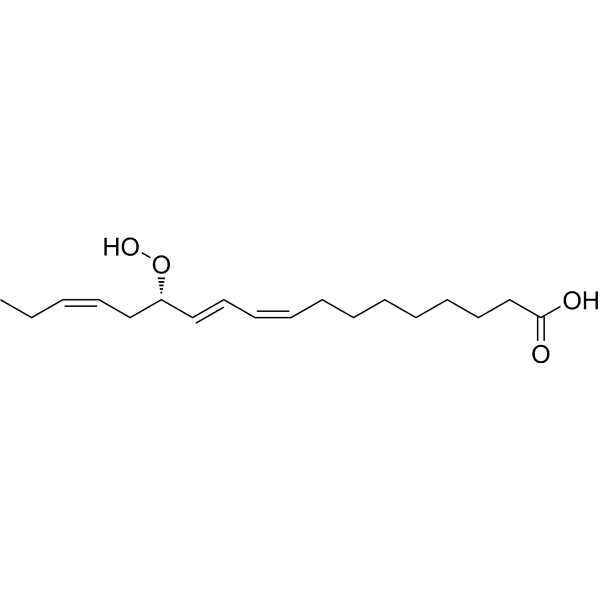
HY-118149
9(S)-HpODE -
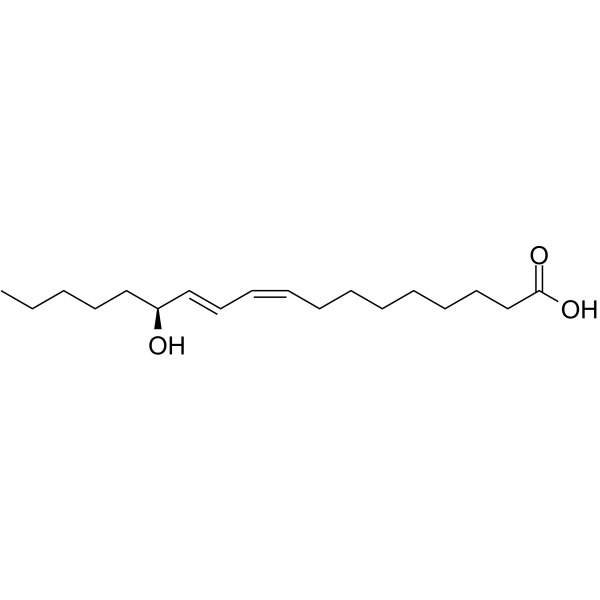
HY-113884B
(S)-Coriolic acidPPARγ Activator/Mitochondrial Dysfunction Inducer -

HY-110406
13(S)-HPODE -
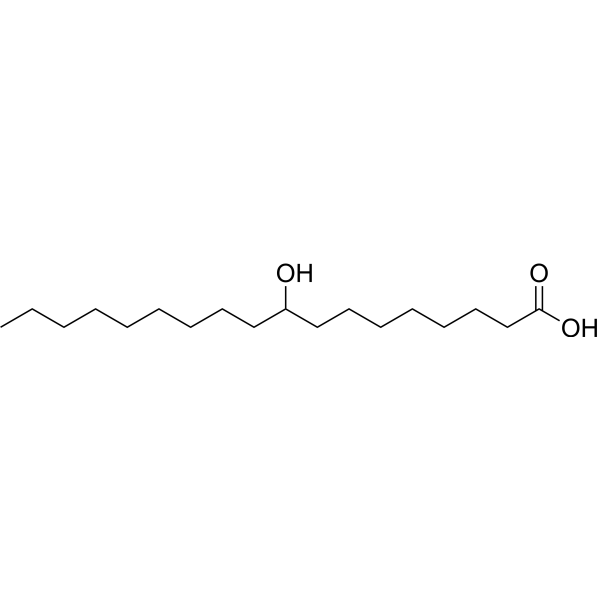
HY-N11692
9-Hydroxyoctadecanoic acidHDAC1 Inhibitor -

HY-113438
15(S)-HPETEProduct Of Arachidonic Acid -
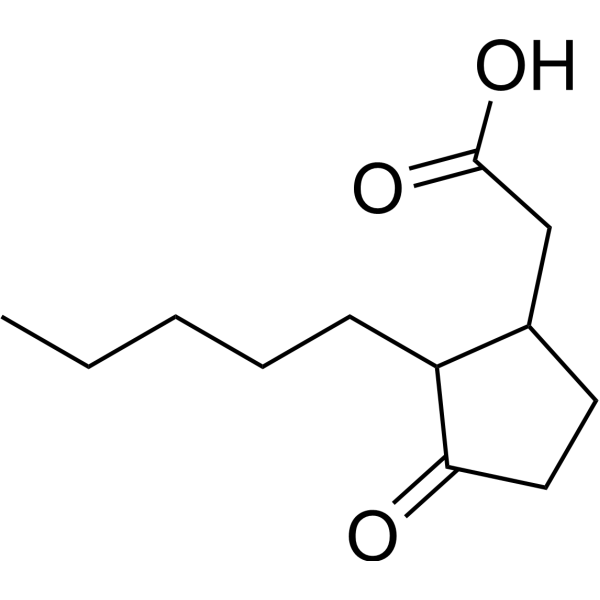
HY-131116
Dihydrojasmonic acidPlant Growth Regulator -
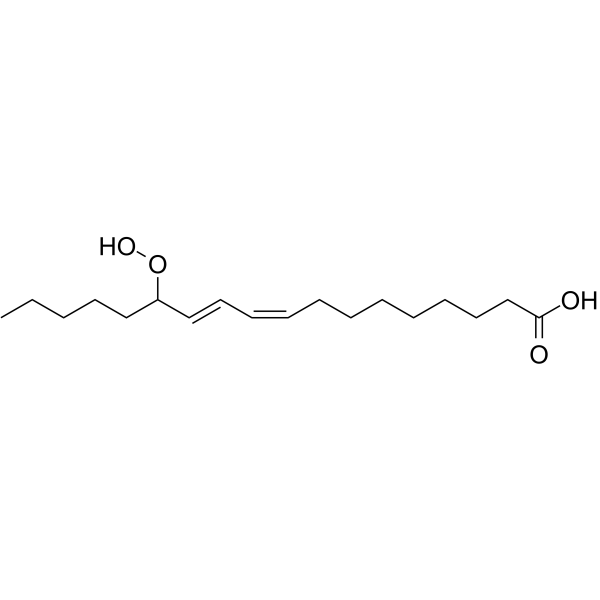
HY-110406A
(±)13-HpODEHydroperoxides Racemic -

HY-166010
15(S)-Hydroperoxy-11(Z),13(E)-eicosadienoic acidEster Product -

HY-145543
9(S)10(S)13(S)-TriHOMEEster Product -
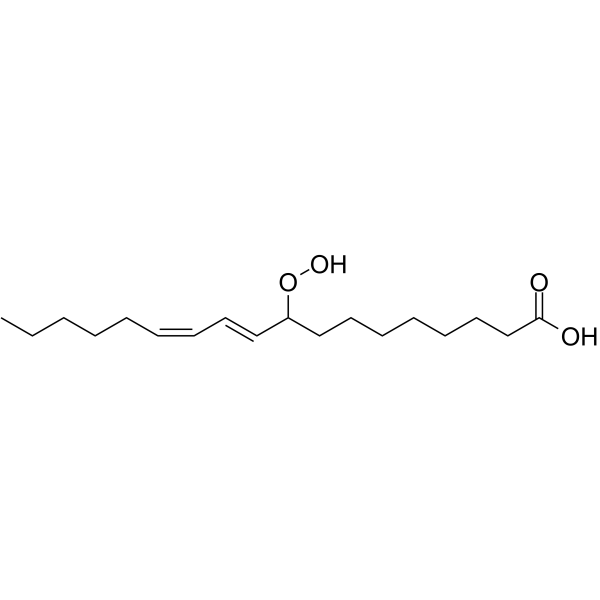
HY-118149A
(±)9-HpODEAntibacterial Agent -
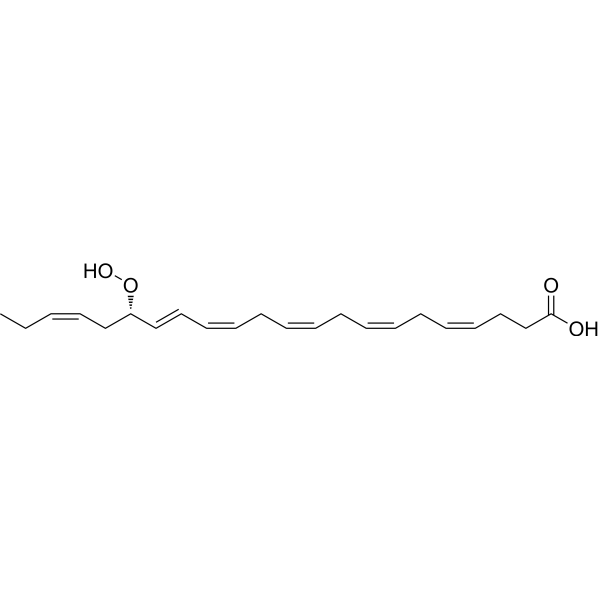
HY-116124
17(S)-HpDHAHydrolyzate -

HY-113490
15-KETE


Activité biologique
Description
In Vitro
13-HPOT (0.01-100 μM; 24 h) exerts dose-dependent in vitro antibacterial activity against Pectobacterium carotovorum, Pseudomonas syringae pv. syringae DC3000, and Xanthomonas translucens pv. translucens, with the strongest activity against Pseudomonas syringae at concentrations ≥10 μM after 24 h incubation[1].
MedChemExpress (MCE) has not independently confirmed the accuracy of these methods. They are for reference only. Further protocols information, click here.


Chemical Information
-
CAS No. 67597-26-6
-
Appearance Liquid
-
Masse moléculaire 310.43
-
Formule C18H30O4
-
Color Colorless to light yellow
-
SMILES
CC/C=C\C[C@H](OO)/C=C/C=C\CCCCCCCC(O)=O
-
Livraison
Shipping with dry ice.
-
Stockage
-80°C

Protocole
-
Research Protocol for Infectious Diseases
Infectious-disease experiments test how pathogens interact with host barriers, innate immune receptors, inflammatory signaling, pathogen replication, and tissue injury; pattern-recognition receptors such as TLRs, RIG-I-like receptors, NOD-like receptors, and inflammasomes detect microbial molecules and activate NF-κB, interferon, and cytokine responses. The central hypothesis is that infection severity reflects the balance between pathogen burden and host response: protective inflammation restricts pathogen growth, whereas excessive or mislocalized inflammation contributes to tissue damage and disease phenotype. Unresolved questions include which host pathways are protective versus pathogenic, why some infection models fail to translate to human disease, and which combined readouts best predict clinically relevant infection outcomes.
-
Bacterial live/dead nucleic-acid viability staining
The LIVE/DEAD bacterial viability staining method is based on differential permeability of nucleic-acid-binding fluorescent dyes, most commonly SYTO 9 and propidium iodide (PI), which enables discrimination of bacterial populations with intact versus compromised cytoplasmic membranes. SYTO 9 penetrates both intact and damaged bacterial membranes and binds nucleic acids to produce green fluorescence, whereas propidium iodide penetrates only cells with compromised membranes and fluoresces red while also reducing SYTO 9 signal through competitive binding and fluorescence interactions. The resulting fluorescence pattern is interpreted as a proxy for membrane integrity, which is widely used as an indicator of bacterial viability in microscopy, flow cytometry, and spectroscopic platforms. However, mechanistic studies show that SYTO 9 and PI interactions involve displacement and fluorescence resonance energy transfer effects, which can influence signal interpretation depending on dye ratios a


Pureté et documentation
-
Fiche technique (261 KB)
-
SDS (251 KB)
- English - EN (251 KB)
- Français - FR (251 KB)
- Deutsch - DE (251 KB)
- Norwegian - NO (251 KB)
- Español - ES (251 KB)
- Swedish - SV (251 KB)
- Italian - IT (251 KB)
- Korean - KR (251 KB)
- Portuguese - PT (251 KB)
-
Instruction de manipulation (2659 KB)
Références

Calculators
Concentration (start) × Volume (start) = Concentration (final) × Volume (final)


13-HPOT Related Classifications
HY-130323 Related Classifications
 Powered by Bioz