



Dihomo-γ-Linolenic acid methyl ester

Based on 1 Customer Validation
Dihomo-γ-Linolenic acid methyl ester is the methyl ester form of Dihomo-γ-Linolenic Acid (DGLA) (HY-A0143). Dihomo-γ-Linolenic acid is an n-6 polyunsaturated fatty acid that is metabolized mainly through the cyclooxygenase (COX) pathway to the anti-inflammatory eicosanoid prostaglandin (PG) E1. Dihomo-γ-Linolenic acid has anti-inflammatory and antiproliferation effects.
For research use only. We do not sell to patients.
- Purity: 98.00%
- CAS No.: 21061-10-9
- Formula: C21H36O2
- Molecular Weight:320.51
-
Storage:
Solution, -20°C, 2 years

To place orders, for customer services and technical support, please contact: MedChemExpress USA
Tel: 609-228-6898 E-mail: [email protected] [email protected]


-
 Biological Activity
-
Chemical Information
- Purity & Documentation
- References
-
 Help & FAQs


-
HY-W011311
Eicosapentaenoic acid methyl ester -
HY-W011297
Methyl arachidonate -
HY-21268
Methyl linolenate -

HY-167562
Mead acid methyl ester -

HY-141635
cis-11,14-Eicosadienoic acid methyl ester -
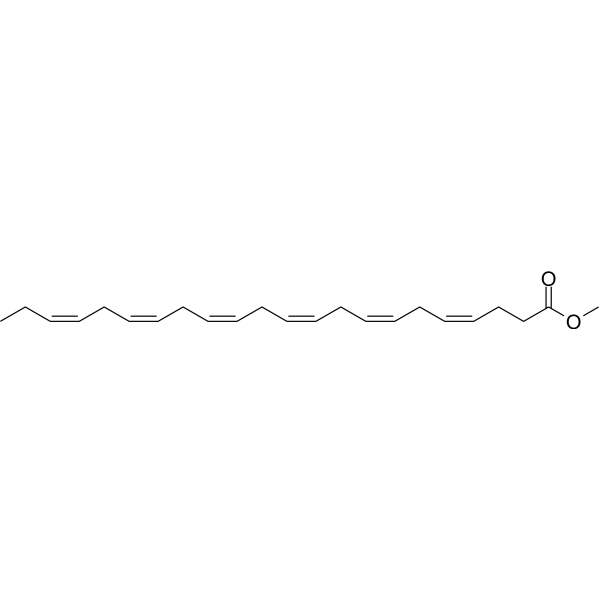
HY-101541
Docosahexaenoic acid methyl ester -

HY-W800821
cis-8,11,14-Eicosatrienoic acid ethyl ester -
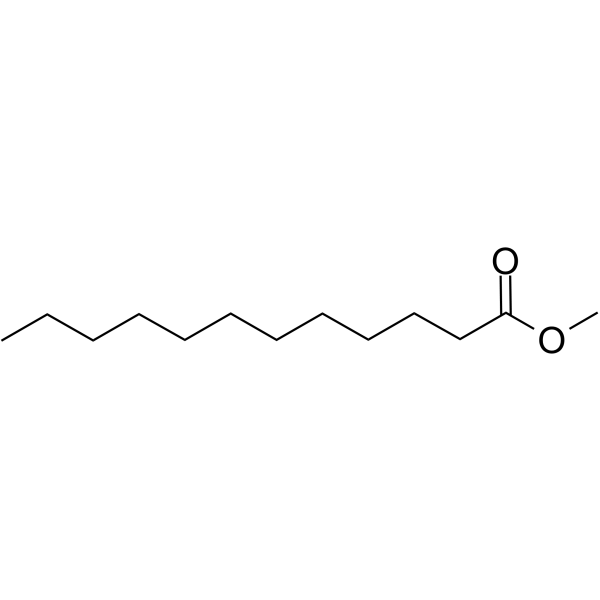
HY-W004286
Methyl laurate -
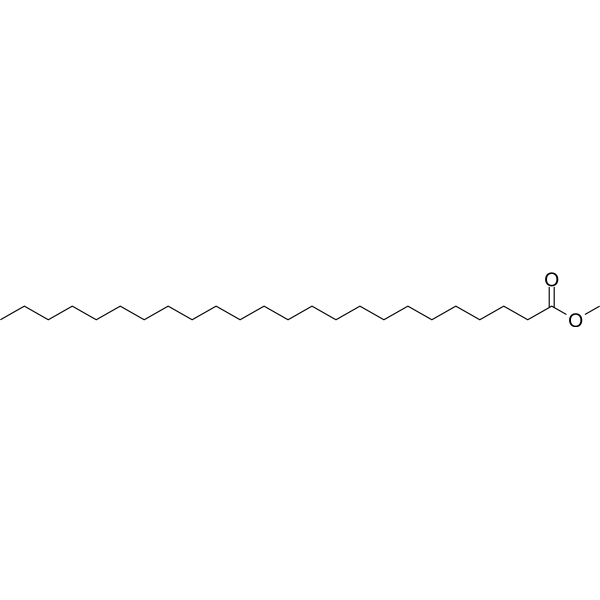
HY-N8438
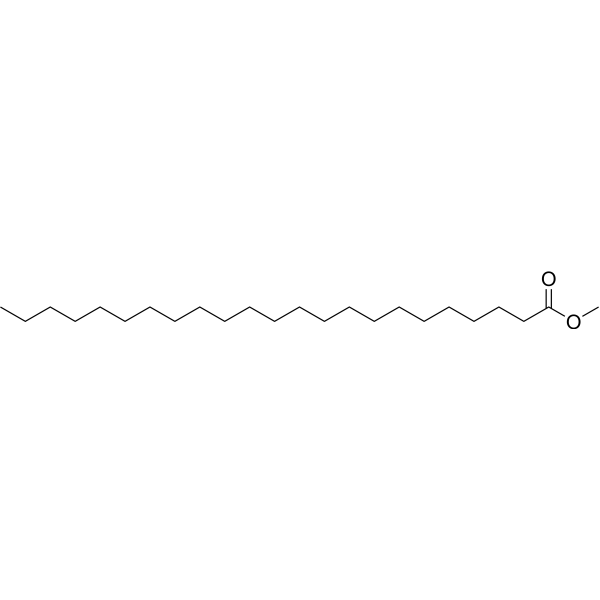
Methyl tetracosanoate -
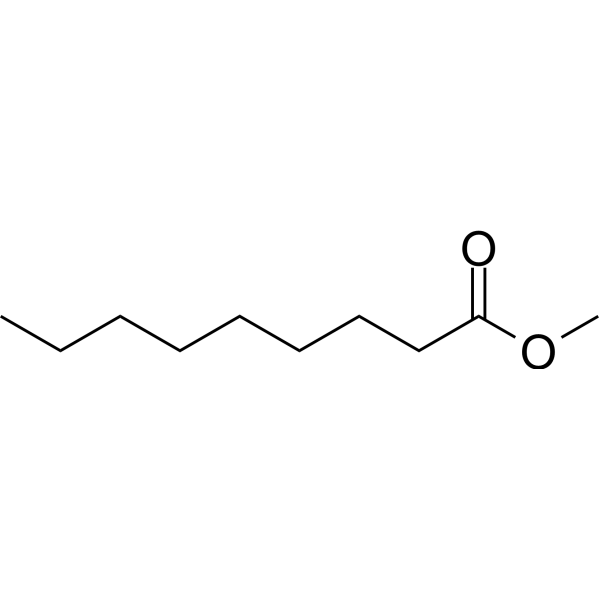
HY-W015308
Methyl nonanoate -
HY-N7868
Methyl tricosanoate -
HY-W011267
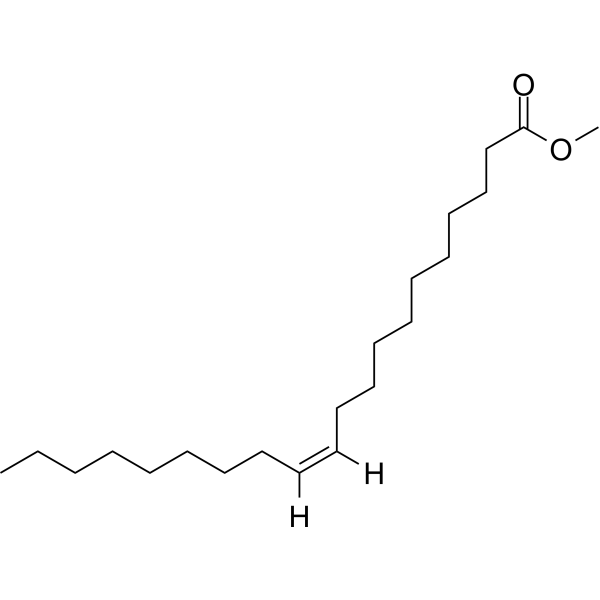
(Z)-Methyl icos-11-enoate
All Endogenous Metabolite Isoforms
More

Biological Activity
Description
In Vitro
Dihomo-γ-Linolenic acid methyl ester can be used for research of desaturase and elongase enzymes[2].
Dihomo-γ-Linolenic acid methyl ester can be used for research of the physical properties of cellular membranes, including fluidity and permeability[2].
MedChemExpress (MCE) has not independently confirmed the accuracy of these methods. They are for reference only.


Chemical Information
-
CAS No. 21061-10-9
-
Appearance Liquid
-
Molecular Weight 320.51
-
Formula C21H36O2
-
Color Colorless to light yellow
-
SMILES
CCCCC/C=C\C/C=C\C/C=C\CCCCCCC(OC)=O
-
Structure Classification
-
Initial Source
-
Shipping
Room temperature in continental US; may vary elsewhere.
-
Storage
Solution, -20°C, 2 years


Purity & Documentation
-
Data Sheet (261 KB)
-
SDS (604 KB)
- English - EN (604 KB)
- Français - FR (604 KB)
- Deutsch - DE (604 KB)
- Norwegian - NO (604 KB)
- Español - ES (604 KB)
- Swedish - SV (604 KB)
- Italian - IT (604 KB)
- Korean - KR (604 KB)
- Portuguese - PT (604 KB)
-
Handling Instructions (2659 KB)
References
[1]. Takai S, et al. Anti-atherosclerotic effects of dihomo-gamma-linolenic acid in ApoE-deficient mice. J Atheroscler Thromb. 2009;16(4):480-489. [Content Brief]
[2]. Chutrakul C, et al. Metabolic engineering of long chain-polyunsaturated fatty acid biosynthetic pathway in oleaginous fungus for dihomo-gamma linolenic acid production. J Biotechnol. 2016;218:85-93. [Content Brief]

Calculators
Concentration (start) × Volume (start) = Concentration (final) × Volume (final)


Dihomo-γ-Linolenic acid methyl ester Related Classifications
HY-116015 Related Classifications
 Powered by Bioz