



Glioblastoma Multiforme
-
Glioblastoma Multiforme (5)

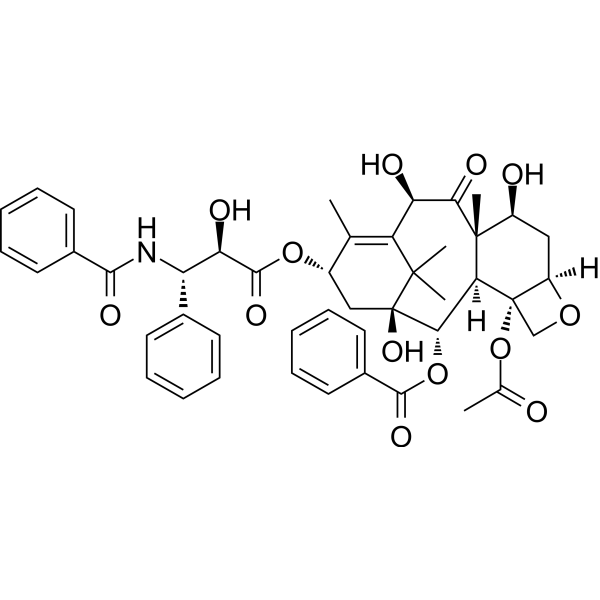
- Formula: C45H49NO13
- Molecular Weight: 811.87
10-Deacetyltaxol (10-Deacetylpaclitaxel) is a taxane derivative found in Taxus wallichiana Zucc. and exhibits cytotoxicity against human neurotumor cell lines. It shows a concentration-dependent cytotoxic effect on cancer cells and demonstrates activity in the mouse leukemia system. 10-Deacetyltaxol can be used for research on neuroblastoma, glioblastoma multiforme, and lymphocytic leukemia.

- Formula: C45H49NO13
- Molecular Weight: 811.87
10-Deacetyltaxol (Standard) (10-Deacetylpaclitaxel (Standard)) is the analytical standard of 10-Deacetyltaxol (HY-N1391). This product is intended for research and analytical applications. 10-Deacetyltaxol (10-Deacetylpaclitaxel) is a taxane derivative found in Taxus wallichiana Zucc. and exhibits cytotoxicity against human neurotumor cell lines. It shows a concentration-dependent cytotoxic effect on cancer cells and demonstrates activity in the mouse leukemia system. 10-Deacetyltaxol can be used for research on neuroblastoma, glioblastoma multiforme, and lymphocytic leukemia.

- Formula: C24H26FN3O2
- Molecular Weight: 407.48
M4K2163 is a ALK2 inhibitor that serves as a target protein ligand for the synthesis of PROTACs, such as M4K3250 (HY-183718). M4K2163 induces cytotoxic effects in glioblastoma cells. M4K2163 can be used in the research of diffuse intrinsic pontine glioma and glioblastoma.

- Formula: C14H12N6O6
- Molecular Weight: 360.28
Nitrovin (Difurazon) is a thioredoxin reductase 1 (TrxR1) inhibitor with both antibacterial and anticancer activities. Nitrovin interacts with TrxR1 to generate reactive oxygen species (ROS), which in turn induces cytoplasmic vacuolization, activates MAPK and inhibits Alix. Nitrovin induces paraptosis-like non-apoptotic cell death, thereby exerting significant cytotoxicity against cancer cells. Nitrovin can be used in the research of heart disease and glioblastoma multiforme.

- Formula: C20H23NO6
- Molecular Weight: 373.40
AS15 is a PDIA1 inhibitor with an IC50 value of 300 nM. AS15 interacts with the active-site cysteine of PDIA1, and this process is independent of the substrate-binding domain of PDIA1. AS15 acts as a synergistic cell growth inhibitor with buthionine sulfoximine (BSO) (HY-106376), a glutathione synthesis inhibitor. AS15 can be used in the research of glioblastoma.



