



Disuccinimidyl suberate Crosslinker
Based on 16 publication(s) in Google Scholar
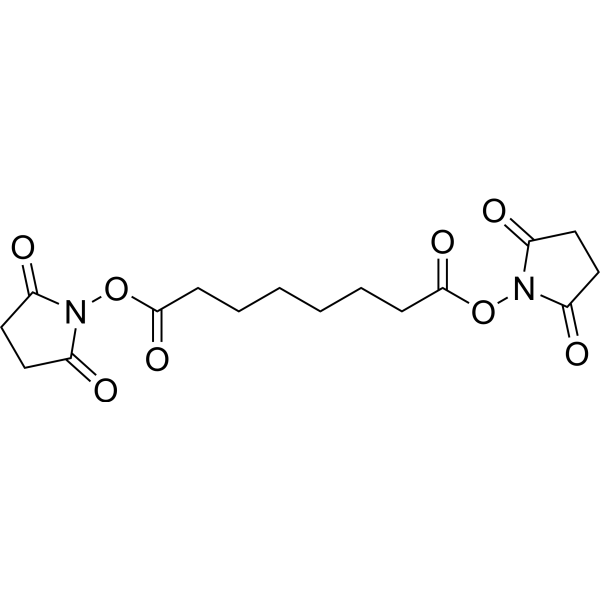
Disuccinimidyl suberate Crosslinker is an amine-reactive bifunctional protein crosslinker. Disuccinimidyl suberate Crosslinker enables stable protein-protein, peptide, and biomolecule conjugation.
Para uso exclusivo en investigación. No vendemos a pacientes.
- Pureza: 98.0%
- No. CAS: 68528-80-3
- Fòrmula: C16H20N2O8
- Peso molecular:368.34
-
Almacenamiento:Powder -20°C, 3 years , 4°C, 2 years ; In solvent -80°C, 6 months , -20°C, 1 month

To place orders, for customer services and technical support, please contact: MedChemExpress USA
Tel: 609-228-6898 E-mail: [email protected] [email protected]


-
 Actividad biológica
-
Chemical Information
-
Solvente y solubilidad
- Pureza y Documentación
-
 Help & FAQs


-
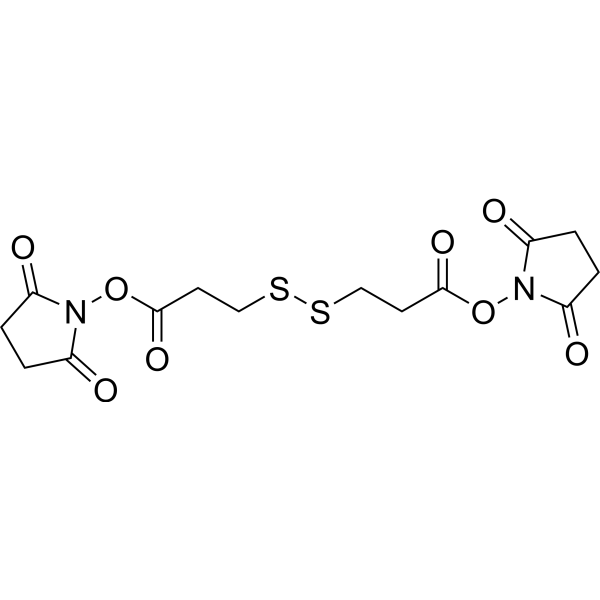
HY-118759
DSP Crosslinker -
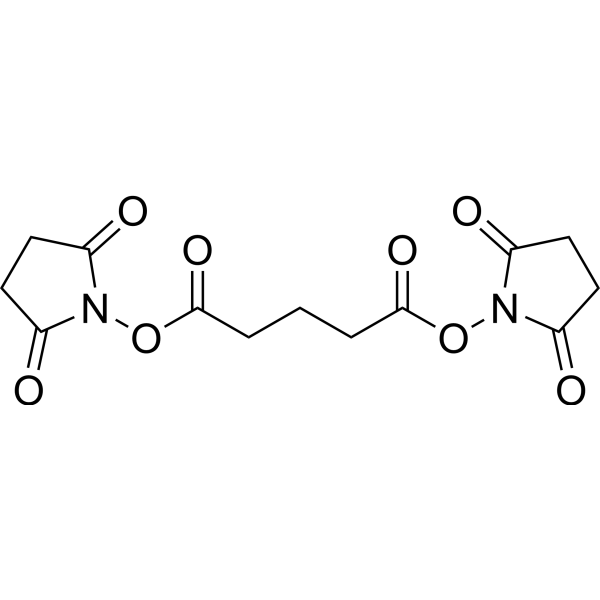
HY-114697
DSG Crosslinker -
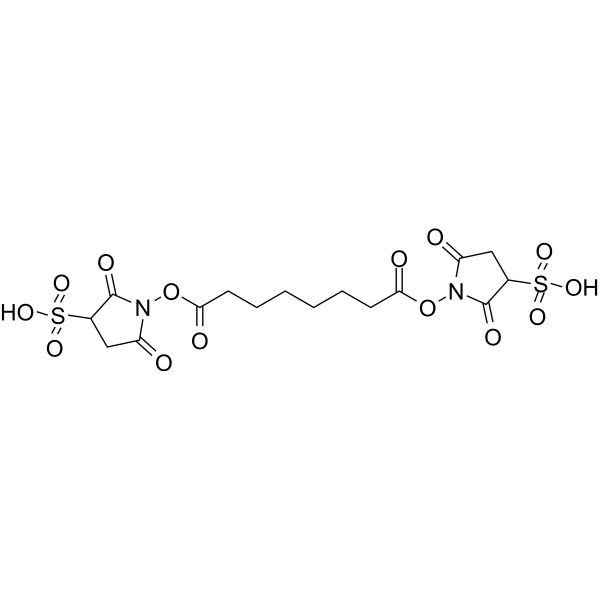
HY-124329
BS3 Crosslinker -
HY-13259
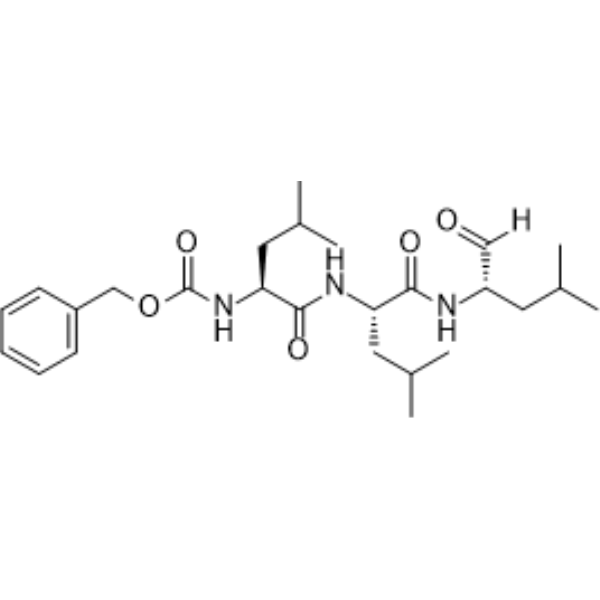
MG-132 -

HY-Y0320
Dimethyl sulfoxide, meets analytical specification of Ch.P. -
HY-K0202
Protein A/G Magnetic Beads -
HY-D0975
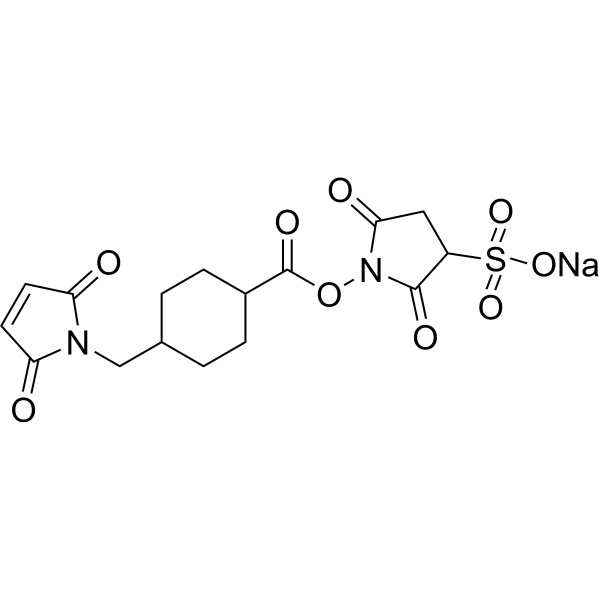
Sulfo-SMCC sodium -
HY-K0010
Protease Inhibitor Cocktail (EDTA-Free, 100× in DMSO) -
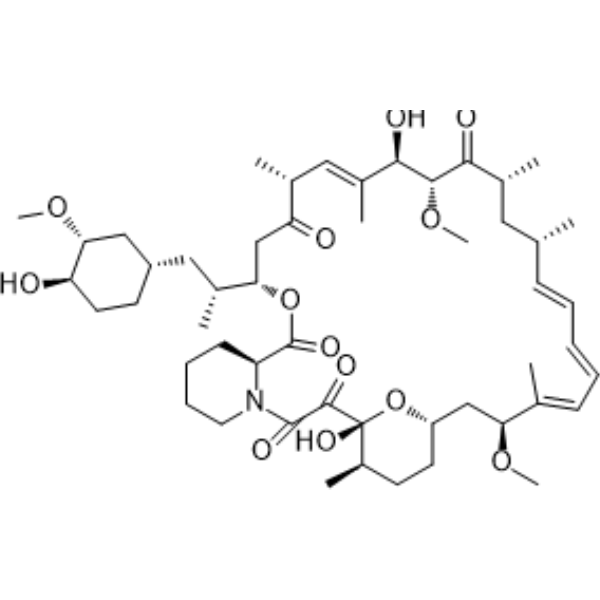
HY-10219
Rapamycin -
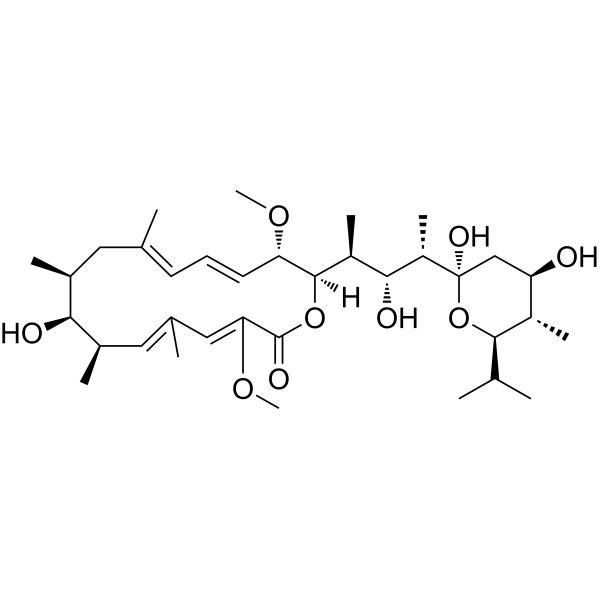
HY-100558
Bafilomycin A1 -
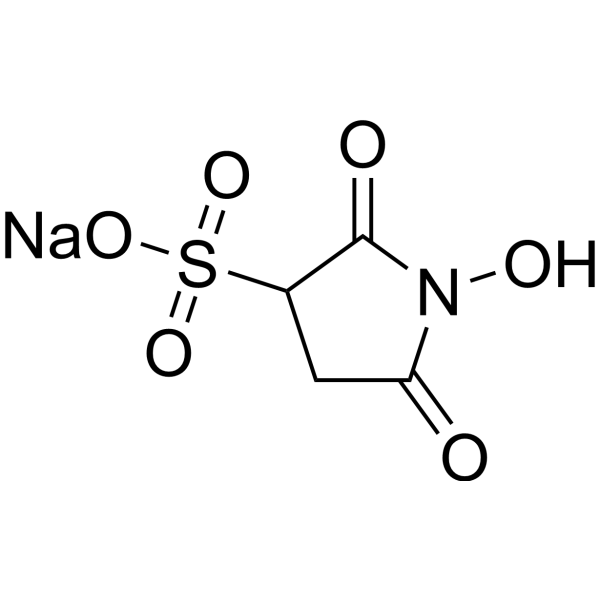
HY-W002213
N-Hydroxysulfosuccinimide sodium -
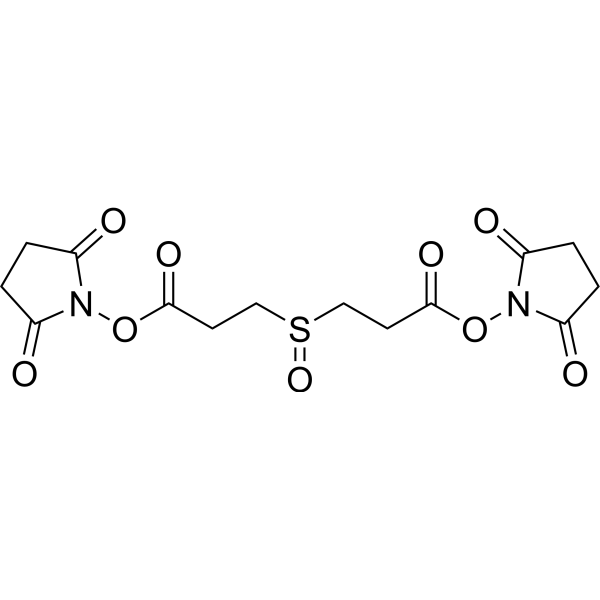
HY-123740
Disuccinimidyl sulfoxide
Publications Citing Use of MedChemExpress (MCE) Disuccinimidyl suberate Crosslinker
More- Cell. 2025 May 29;188(11):3013-3029.e19. [Abstract]
- Nat Commun. 2023 Apr 24;14(1):2342. [Abstract]
- Redox Biol. 2024 May:71:103114. [Abstract]
- Cancer Lett. 2026 Feb 28:639:218230. [Abstract]
- Cell Commun Signal. 2024 Jun 7;22(1):315. [Abstract]
- Mater Today Bio. 2025 May 10:32:101838. [Abstract]
- Acta Pharmacol Sin. 2025 Jun 11. [Abstract]
- Dev Cell. 2025 Sep 3:S1534-5807(25)00530-1. [Abstract]
- Mol Med. 2024 Dec 19;30(1):245. [Abstract]
- Free Radic Biol Med. 2026 Jun 15:254:181-195. [Abstract]
- J Mol Cell Biol. 2026 Apr 1:mjag004. [Abstract]
- PLoS Pathog. 2026 Feb 25;22(2):e1013874. [Abstract]
- Cell Signal. 2025 Nov:135:112003. [Abstract]
- J Inflamm Res. 2025 Aug 14:18:11095-11108. [Abstract]
- FASEB J. 2025 Jun 30;39(12):e70696. [Abstract]
- SSRN. 2023 Nov 8.
Ver todos los productos específicos de isoformas PROTAC Linkers
More

Actividad biológica
Descripciòn
In Vitro
NHS esters react with primary amines at pH 7-9 to form stable amide bonds, along with release of the N-hydroxysuccinimide leaving group. Proteins, including antibodies, generally have several primary amines in the side chain of lysine (K) residues and the N-terminus of each polypeptide that are available as targets for NHS-ester crosslinking reagents. Disuccinimidyl suberate Crosslinker is first dissolved in an organic solvent such as DMSO, then added to the aqueous crosslinking reaction.
MedChemExpress (MCE) has not independently confirmed the accuracy of these methods. They are for reference only.


Chemical Information
-
No. CAS 68528-80-3
-
Appearance Solid
-
Peso molecular 368.34
-
Fòrmula C16H20N2O8
-
Color White to light yellow
-
SMILES
O=C(ON1C(CCC1=O)=O)CCCCCCC(ON2C(CCC2=O)=O)=O
-
Envío
Room temperature in continental US; may vary elsewhere.
-
Almacenamiento
Powder -20°C 3 years 4°C 2 years In solvent -80°C 6 months -20°C 1 month


Publications (16)
-
Journal Impact Factor
-
Most Recent
-
Cell
2025 May 29;188(11):3013-3029.e19. PMID: 40252640 -
Nat Commun
TMEM25 inhibits monomeric EGFR-mediated STAT3 activation in basal state to suppress triple-negative breast cancer progression. [Abstract]2023 Apr 24;14(1):2342. PMID: 37095176 -
Redox Biol
Role of Selenoprotein W in participating in the progression of non-alcoholic fatty liver disease. [Abstract]2024 May:71:103114. PMID: 38460355 -
Cancer Lett
HNRNPC lactylation promotes pancreatic cancer progression through mediating the alternative splicing of PAK6. [Abstract]2026 Feb 28:639:218230. PMID: 41435694 -
Cell Commun Signal
2024 Jun 7;22(1):315. PMID: 38849890 -
Mater Today Bio
Nanotube topography inhibits NLRP3 inflammasome activation by reducing microtubule glutamylation. [Abstract]2025 May 10:32:101838. PMID: 40487178 -
Acta Pharmacol Sin
YOD1 mediates isoproterenol-induced cardiac remodeling by deubiquitinating PKM2 and reducing PKM2 tetramerization in cardiomyocytes. [Abstract]2025 Jun 11. PMID: 40500343 -
Dev Cell
A pathological role of O-GlcNAcylation-driven TR11B production and function in lung adenocarcinoma. [Abstract]2025 Sep 3:S1534-5807(25)00530-1. PMID: 40930100 -
Mol Med
Extinguishing the flames of inflammation: retardant effect of chlorquinaldol on NLRP3-driven diseases. [Abstract]2024 Dec 19;30(1):245. PMID: 39701924 -
Free Radic Biol Med
CAND1 drives intestinal ischemia/reperfusion injury via SCFFBXO6-PKM2-mediated mitochondrial fission and apoptosis. [Abstract]2026 Jun 15:254:181-195. PMID: 42297194 -
J Mol Cell Biol
2026 Apr 1:mjag004. PMID: 41921068 -
PLoS Pathog
African swine fever virus pEP364R acts as an important inflammatory-inducing factor to activate NLRP3 inflammasome-mediated pyroptosis by regulating DDX3X. [Abstract]2026 Feb 25;22(2):e1013874. PMID: 41739885 -
Cell Signal
Extracellular histone H3 induces macrophage inflammation in acute liver failure via HDAC2 activation and PKM2 subcellular relocalization. [Abstract]2025 Nov:135:112003. PMID: 40683326 -
J Inflamm Res
ALDH2 Ameliorates Acute Gouty Arthritis Through Inhibiting NLRP3 Inflammasome and Pyroptosis by Nrf2/ROS Pathway. [Abstract]2025 Aug 14:18:11095-11108. PMID: 40831518 -
FASEB J
Hypoxia Exposure Promotes Th17 Cell Differentiation Through Activin A-PKM2 Axis to Exacerbate Autoimmune and Autoinflammatory Diseases. [Abstract]2025 Jun 30;39(12):e70696. PMID: 40515525 -


Solvente y solubilidad
In Vitro:
DMSO : 100 mg/mL (271.49 mM; Need ultrasonic; Hygroscopic DMSO has a significant impact on the solubility of product, please use newly opened DMSO)
Please refer to the solubility information to select the appropriate solvent. Once prepared, please aliquot and store the solution to prevent product inactivation from repeated freeze-thaw cycles.
Storage method and period of stock solution: -80°C, 6 months; -20°C, 1 month. When stored at -80°C, please use it within 6 months. When stored at -20°C, please use it within 1 month.
Please refer to the solubility information to select the appropriate solvent. Once prepared, please aliquot and store the solution to prevent product inactivation from repeated freeze-thaw cycles.
Storage method and period of stock solution: -80°C, 6 months; -20°C, 1 month. When stored at -80°C, please use it within 6 months. When stored at -20°C, please use it within 1 month.
Concentration (start) × Volume (start) = Concentration (final) × Volume (final)
In Vivo:
Select the appropriate dissolution method based on your experimental animal and administration route.
- For the following dissolution methods, please ensure to first prepare a clear stock solution using an In Vitro approach and then sequentially add co-solvents:
- To ensure reliable experimental results, the clarified stock solution can be appropriately stored based on storage conditions. As for the working solution for In Vivo experiments, it is recommended to prepare freshly and use it on the same day.
- The percentages shown for the solvents indicate their volumetric ratio in the final prepared solution. If precipitation or phase separation occurs during preparation, heat and/or sonication can be used to aid dissolution.
In Vivo Dissolution Calculator
Please enter the basic information of animal experiments:
-
-
-
-
Recommended: Prepare an additional quantity of animals to account for potential losses during experiments.
Please enter your animal formula composition:
-
%DMSO +
Recommended: Keep the proportion of DMSO in working solution below 2% if your animal is weak.
-
%+
-
+%Tween-80 + +
-
%Saline +
The co-solvents required include: DMSO, . All of co-solvents are available by MedChemExpress (MCE). , Tween 80. All of co-solvents are available by MedChemExpress (MCE).
Working solution concentration: 0.22 mg/mL
Method for preparing stock solution: mg drug dissolved in μL DMSO. Stock solution concentration: mg/mL.
1. Take μL DMSO stock solution;
2. Add μL .
μL , mix evenly;
3. Then add μL Tween 80, mix evenly;
4. Then add μL
Please ensure that the stock solution in the first step is dissolved to a clear state, and add co-solvents in sequence. You can use ultrasonic heating (ultrasonic cleaner, recommended frequency 20-40 kHz), vortexing, etc. to assist dissolution.


Pureza y Documentación
-
Ficha de datos (254 KB)
-
SDS (393 KB)
- English - EN (393 KB)
- Français - FR (393 KB)
- Deutsch - DE (393 KB)
- Norwegian - NO (393 KB)
- Español - ES (393 KB)
- Swedish - SV (393 KB)
- Italian - IT (393 KB)
- Korean - KR (393 KB)
- Portuguese - PT (393 KB)
-
Instrucciones de manejo (2659 KB)


Complete Stock Solution Preparation Table
Please refer to the solubility information to select the appropriate solvent. Once prepared, please aliquot and store the solution to prevent product inactivation from repeated freeze-thaw cycles.
Storage method and period of stock solution: -80°C, 6 months; -20°C, 1 month. When stored at -80°C, please use it within 6 months. When stored at -20°C, please use it within 1 month.
| Optional Solvent | Concentration Solvent Mass | 1 mg | 5 mg | 10 mg | 25 mg |
|---|---|---|---|---|---|
| DMSO | 1 mM | 2.7149 mL | 13.5744 mL | 27.1488 mL | 67.8721 mL |
| 5 mM | 0.5430 mL | 2.7149 mL | 5.4298 mL | 13.5744 mL | |
| 10 mM | 0.2715 mL | 1.3574 mL | 2.7149 mL | 6.7872 mL | |
| 15 mM | 0.1810 mL | 0.9050 mL | 1.8099 mL | 4.5248 mL | |
| 20 mM | 0.1357 mL | 0.6787 mL | 1.3574 mL | 3.3936 mL | |
| 25 mM | 0.1086 mL | 0.5430 mL | 1.0860 mL | 2.7149 mL | |
| 30 mM | 0.0905 mL | 0.4525 mL | 0.9050 mL | 2.2624 mL | |
| 40 mM | 0.0679 mL | 0.3394 mL | 0.6787 mL | 1.6968 mL | |
| 50 mM | 0.0543 mL | 0.2715 mL | 0.5430 mL | 1.3574 mL | |
| 60 mM | 0.0452 mL | 0.2262 mL | 0.4525 mL | 1.1312 mL | |
| 80 mM | 0.0339 mL | 0.1697 mL | 0.3394 mL | 0.8484 mL | |
| 100 mM | 0.0271 mL | 0.1357 mL | 0.2715 mL | 0.6787 mL |


Disuccinimidyl suberate Crosslinker Related Classifications
HY-W019543 Related Classifications
 Powered by Bioz