



GS-6201 (Standard)
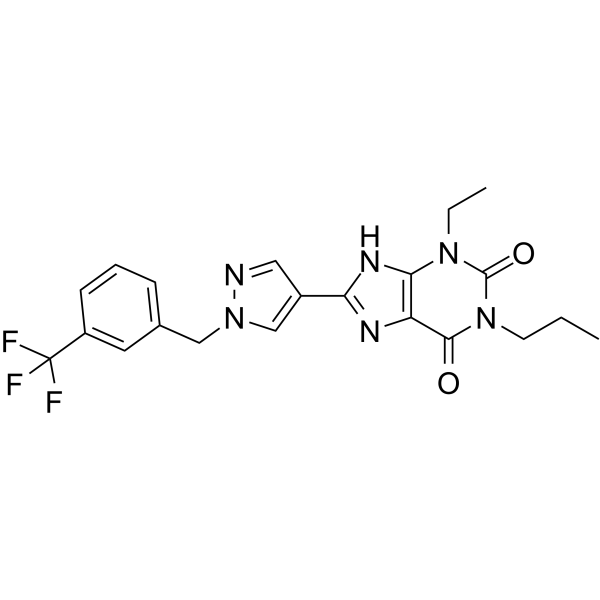
GS-6201 (Standard) is the analytical standard of GS-6201 (HY-10081). This product is intended for research and analytical applications. GS-6201 (CVT-6883) is a selective adenosine A2B receptor antagonist. GS-6201 displays high affinity and selectivity for the human adenosine A2B receptors (Ki=22 nM). GS-6201 reduces caspase-1 activity in the heart, and attenuates cardiac remodeling after acute myocardial infarction (AMI) in the mouse. GS-62013 attenuates the airway reactivity induced by NECA, AMP, or allergen in sensitized mice.
Nur für Forschungszwecke. Wir verkaufen nicht an Patienten.
- CAS. Nr.: 752222-83-6
- Formel: C21H21F3N6O2
- Molecular Weight:446.43
-
Speicherung:
Please store the product under the recommended conditions in the Certificate of Analysis.


To place orders, for customer services and technical support, please contact: MedChemExpress USA
Tel: 609-228-6898 E-mail: [email protected] [email protected]


-
 Product Information
-
Chemical Information
- Reinheit & Dokumentation
-
 Help & FAQs


-
HY-10081
GS-6201Adenosine A2B Receptor Antagonist -
HY-19532
ZM241385A2A Receptor Antagonist -
HY-10888
IstradefyllineAdenosine A2A Receptor Antagonist -
HY-13201A
CGS 21680 HydrochlorideAdenosine A2A Receptor Agonist -
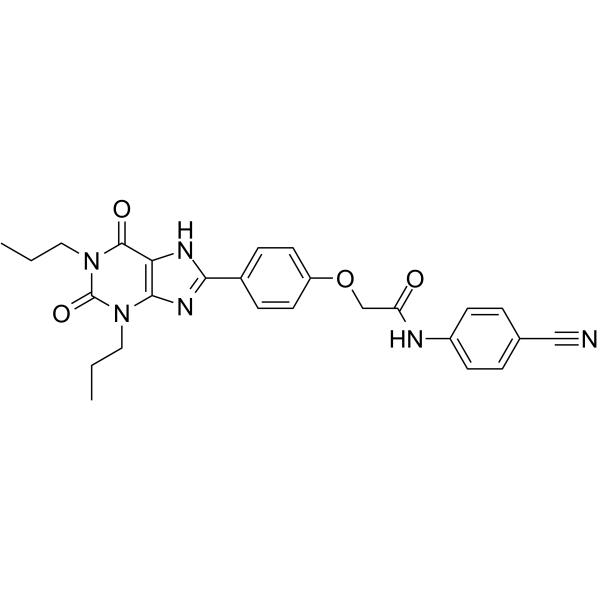
HY-14121
MRS 1754A2B Antagonist -
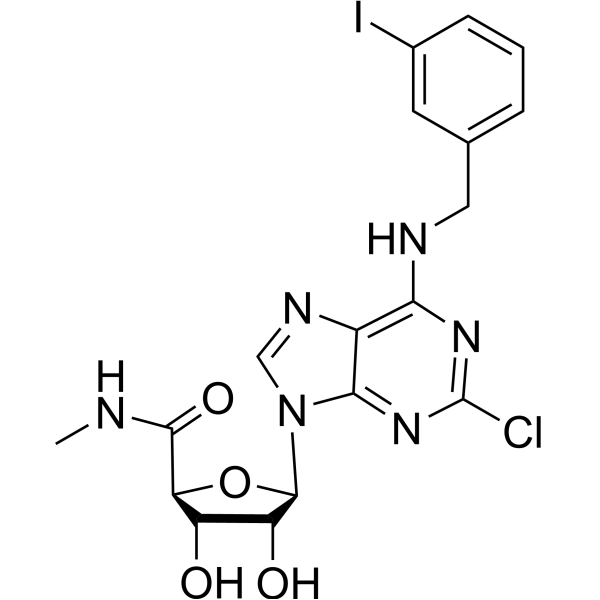
HY-12365
NamodenosonA3AR Agonist -
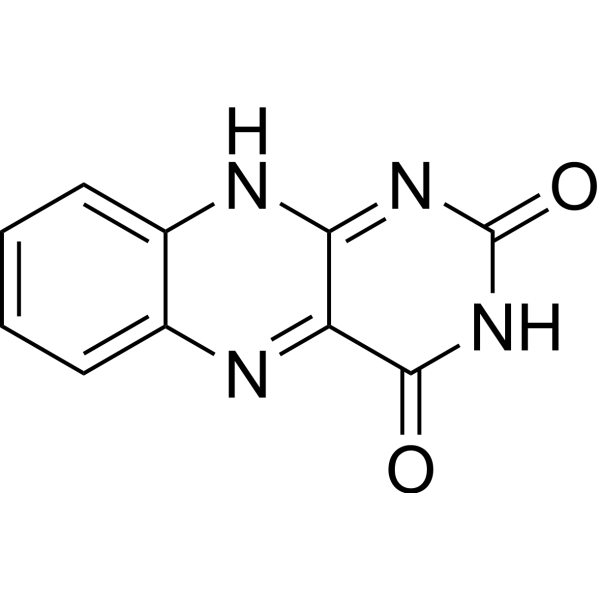
HY-123085
AlloxazineA2b Antagonist -
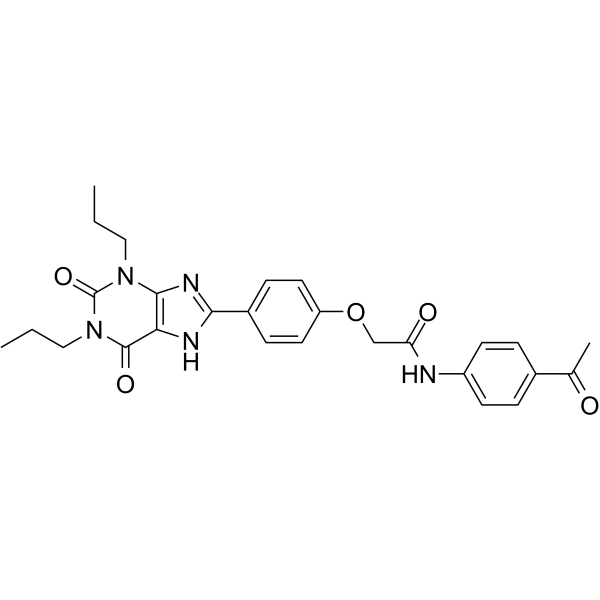
HY-103186
MRS-1706Adenosine A2B Inverse Agonist -
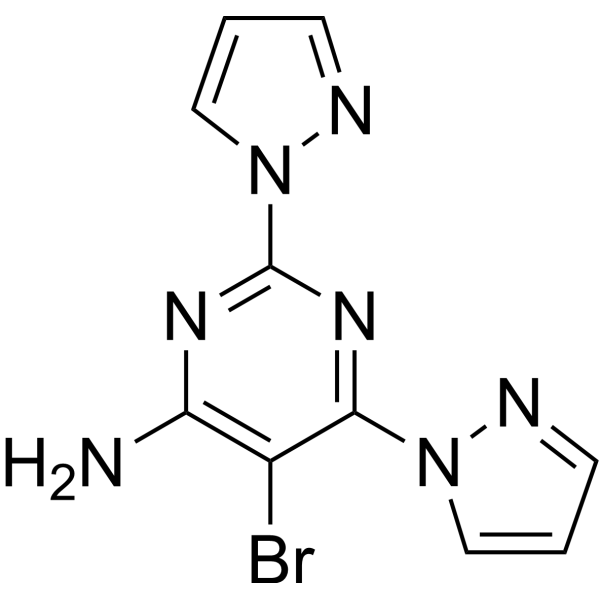
HY-109139
TaminadenantAdenosine Receptor Antagonist -

HY-10888R
Istradefylline (Standard)Adenosine A2A Receptor Antagonist -

HY-19532R
ZM241385 (Standard)A2A Receptor Antagonist -

HY-12365R
Namodenoson (Standard)A3AR Agonist


Product Information
Information
Anwendung
The compound is the grade of analytical standard, which is the reference standard supplied assay. It is commonly used in qualitative, quantitative and methodological research experiments in HPLC, GC and MS.


Chemical Information
-
CAS. Nr. 752222-83-6
-
Molecular Weight 446.43
-
Formel C21H21F3N6O2
-
SMILES
O=C(N1CCC)N(CC)C2=C(N=C(C3=CN(CC4=CC=CC(C(F)(F)F)=C4)N=C3)N2)C1=O
-
Synonyms
CVT-6883 (Standard)
-
Versand
Room temperature in continental US; may vary elsewhere.
-
Speicherung
Please store the product under the recommended conditions in the Certificate of Analysis.


Reinheit & Dokumentation
Verweise
[1]. Elzein E, et al. Discovery of a novel A2B adenosine receptor antagonist as a clinical candidate for chronic inflammatory airway diseases. J Med Chem. 2008 Apr 10;51(7):2267-78. [Content Brief]
[2]. Toldo S, et al. GS-6201, a selective blocker of the A2B adenosine receptor, attenuates cardiac remodeling after acute myocardial infarction in the mouse. J Pharmacol Exp Ther. 2012 Dec;343(3):587-95. [Content Brief]
[3]. Mustafa SJ, et al. Effect of a specific and selective A(2B) adenosine receptor antagonist on adenosine agonist AMP and allergen-induced airway responsiveness and cellular influx in a mouse model of asthma. J Pharmacol Exp Ther. 2007 Mar;320(3):1246-51. [Content Brief]

Calculators
Konzentration (Stammlösung) × Volumen (Stammlösung) = Konzentration (Ziellösung) × Volumen (Ziellösung)


GS-6201 (Standard) Related Classifications
HY-10081R Related Classifications
 Powered by Bioz