



MRS 1754
Based on 8 publication(s) in Google Scholar
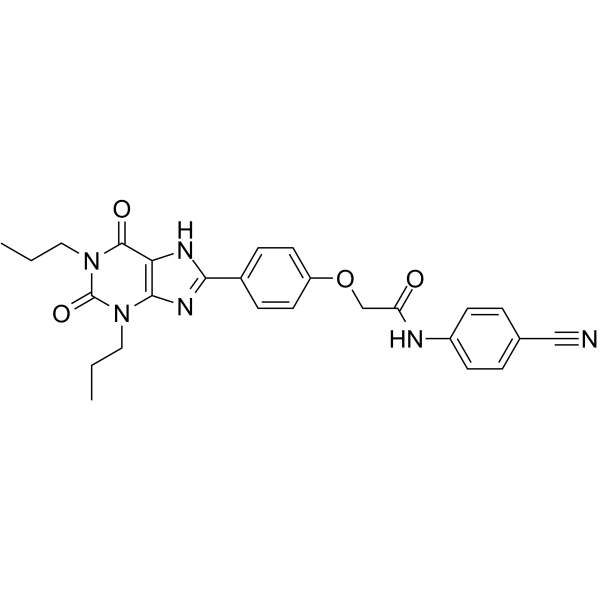
MRS 1754 is a selective antagonist radioligand for A2B adenosine receptor with very low affinity for A1 and A3 receptors of both humans and rats.
Nos produits utilisent uniquement pour la recherche. Nous ne vendons pas aux patients.
- Pureté : 98.31%
- CAS No.: 264622-58-4
- Formule: C26H26N6O4
- Masse moléculaire:486.52
-
Stockage:Powder -20°C, 3 years , 4°C, 2 years ; In solvent -80°C, 2 years , -20°C, 1 year

To place orders, for customer services and technical support, please contact: MedChemExpress USA
Tel: 609-228-6898 E-mail: [email protected] [email protected]


-
 Activité biologique
-
Chemical Information
-
Solvant et solubilité
- Pureté et documentation
- Références
-
 Help & FAQs


-
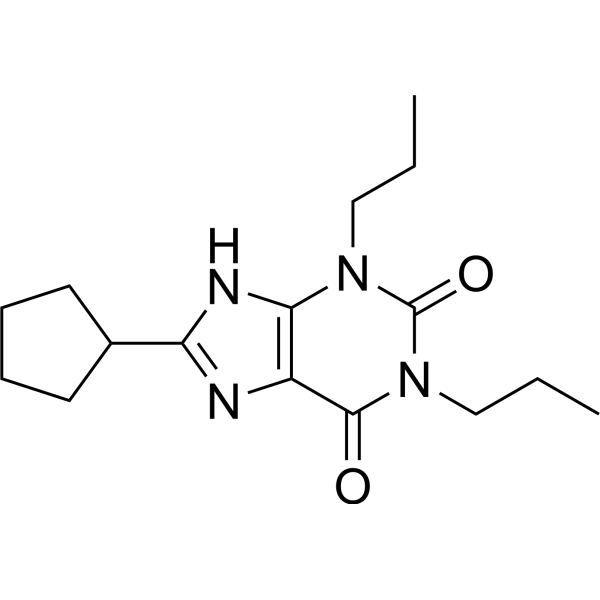
HY-100937
DPCPXA1 Receptor Antagonist -
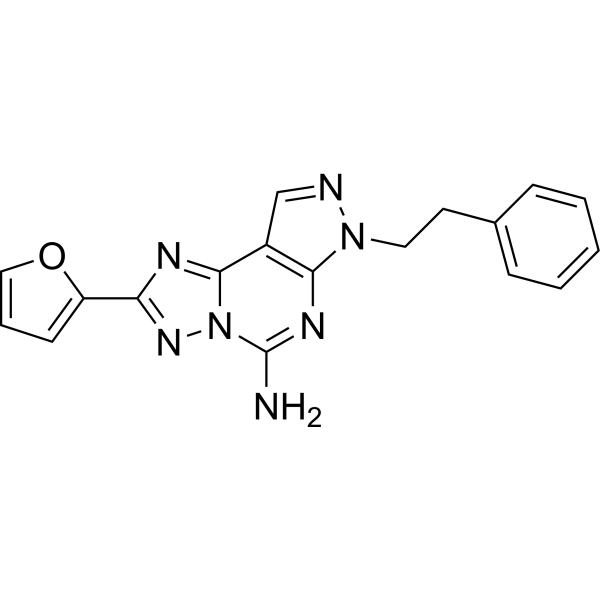
HY-19533
SCH 58261A2A Receptor Antagonist -
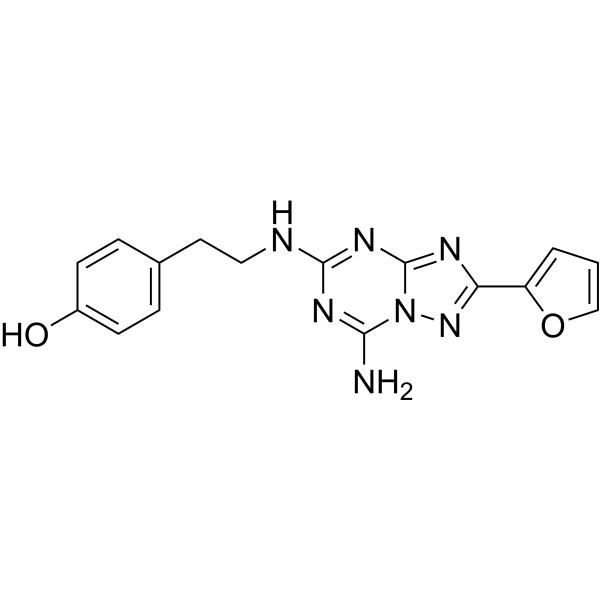
HY-19532
ZM241385A2A Receptor Antagonist -
HY-103171
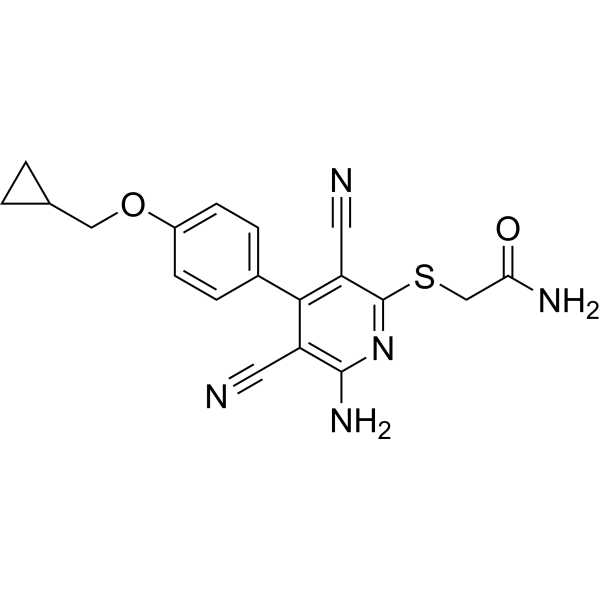
BAY 60-6583A2B Receptor Agonist -
HY-103166
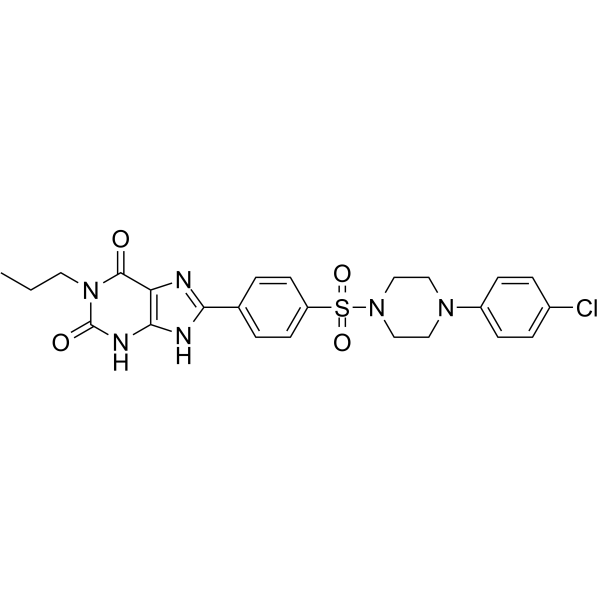
PSB-603A2B Receptor Antagonist -
HY-121119
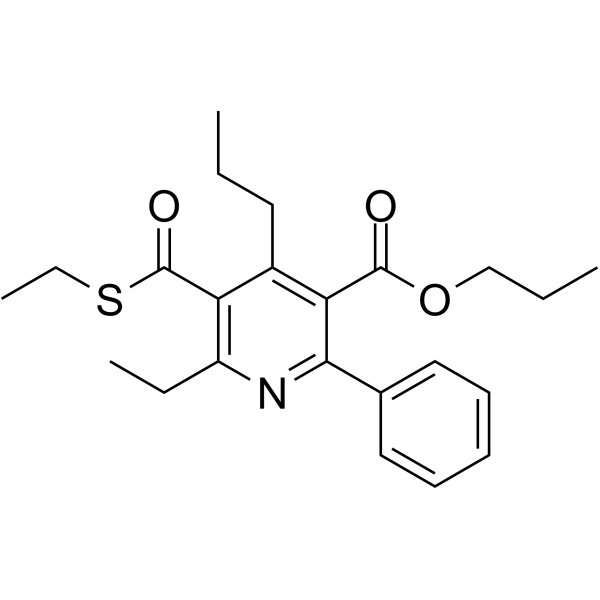
MRS 1523Adenosine A3 Receptor Antagonist -
HY-100678
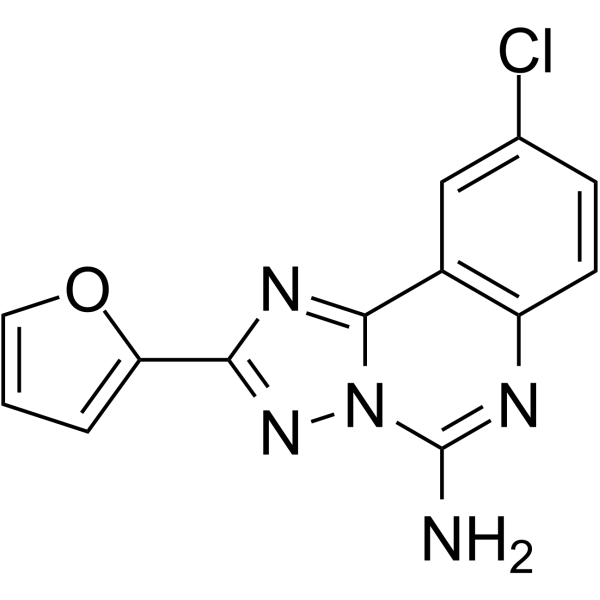
CGS 15943Adenosine Receptor Antagonist -
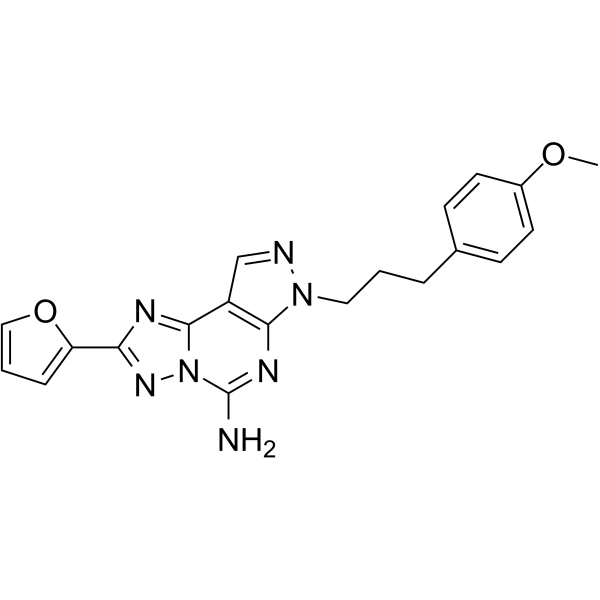
HY-103169
SCH442416A2AR Antagonist -
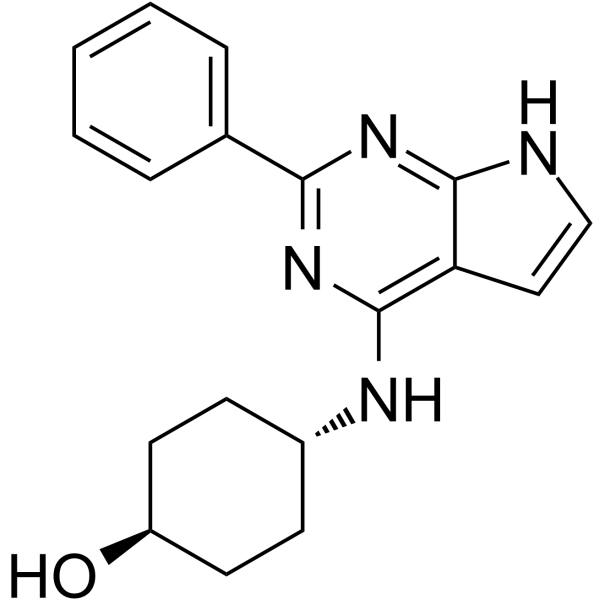
HY-14858
DerenofyllineA1 Receptor Antagonist -
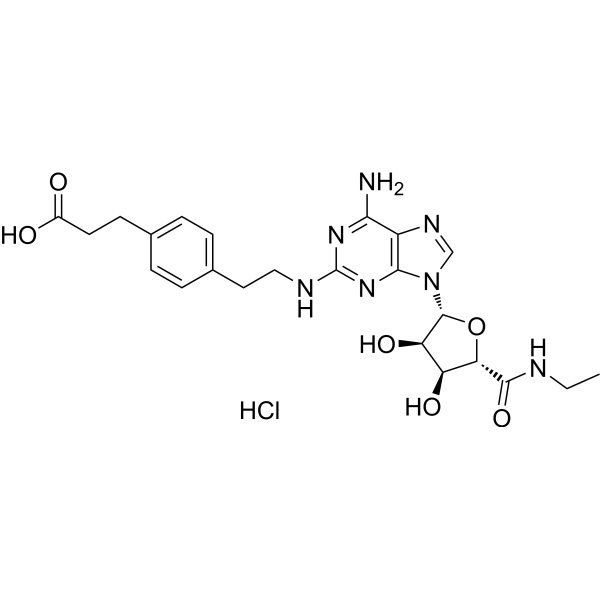
HY-13201A
CGS 21680 HydrochlorideAdenosine A2A Receptor Agonist -
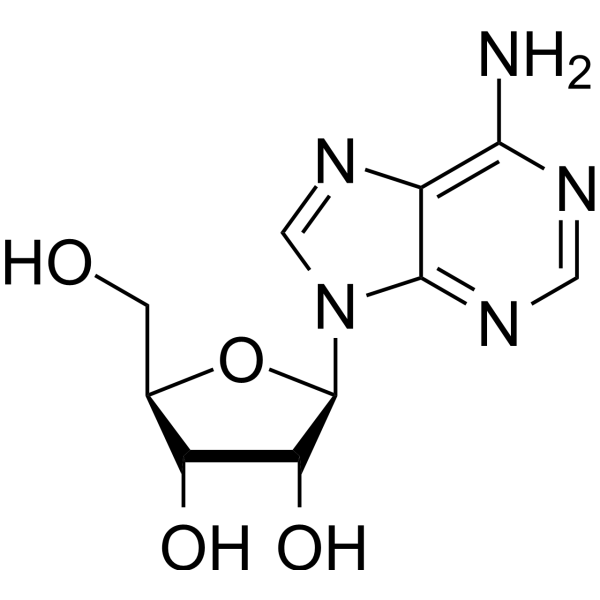
HY-B0228
AdenosineEndogenous Autacoid -
HY-A0168
RegadenosonVasodilator/A2A Adenosine Receptor Agonist
Publications Citing Use of MedChemExpress (MCE) MRS 1754
More- Biochem Pharmacol. 2025 Sep 20;242(Pt 2):117358. [Abstract]
- Reprod Biol Endocrinol. 2024 Nov 12;22(1):143. [Abstract]
- J Mol Cell Cardiol. 2023 Jan:174:88-100. [Abstract]
- J Cell Mol Med. 2021 Mar;25(6):2931-2943. [Abstract]
- Curr Issues Mol Biol. 2026 Jan 23;48(2):125. [Abstract]
- Mol Immunol. 2025 Feb 8:179:71-83. [Abstract]
- Purinergic Signal. 2022 Sep;18(3):317-343. [Abstract]
- bioRxiv. 2024 Jul 25.
Voir tous les produits spécifiques à Isoform Adenosine Receptor
More

Activité biologique
Description
IC50 & Target
A2B Adenosine Receptor[1]
In Vitro
The most potent displacer of [3H]MRS 1754 binding is MRS 1754. The Ki value for displacement of [3H]MRS 1754 binding to human A2B receptors expressed in HEK-293 cell membranes is 1.45±0.21 nM[1].
MedChemExpress (MCE) has not independently confirmed the accuracy of these methods. They are for reference only.


Chemical Information
-
CAS No. 264622-58-4
-
Appearance Solid
-
Masse moléculaire 486.52
-
Formule C26H26N6O4
-
Color White to off-white
-
SMILES
O=C(NC1=CC=C(C#N)C=C1)COC2=CC=C(C(N3)=NC(N(CCC)C(N4CCC)=O)=C3C4=O)C=C2
-
Livraison
Room temperature in continental US; may vary elsewhere.
-
Stockage
Powder -20°C 3 years 4°C 2 years In solvent -80°C 2 years -20°C 1 year


Publications (8)
-
Journal Impact Factor
-
Most Recent
-
Biochem Pharmacol
HIF-1α/A2BAR signalling pathway alleviates kidney fibrosis after ischemia-reperfusion injury by preventing macrophage-to-myofibroblast transition. [Abstract]2025 Sep 20;242(Pt 2):117358. PMID: 40983151 -
Reprod Biol Endocrinol
Cordycepin improves hyperactivation and acrosome reaction through adenosine receptors during human sperm capacitation in vitro. [Abstract]2024 Nov 12;22(1):143. PMID: 39533327 -
J Mol Cell Cardiol
Adenosine kinase promotes post-infarction cardiac repair by epigenetically maintaining reparative macrophage phenotype. [Abstract]2023 Jan:174:88-100. PMID: 36473288 -
J Cell Mol Med
2021 Mar;25(6):2931-2943. PMID: 33523568 -
Curr Issues Mol Biol
Levistolide A Alleviates Myocardial Ischemia-Reperfusion Injury Partly by Improving Calcium Homeostasis via the ADORA2B/cAMP/PKA/PLB/SERCA2α Signaling Axis. [Abstract]2026 Jan 23;48(2):125. PMID: 41751389 -
Mol Immunol
Human placental mesenchymal stem cells regulate the antioxidant capacity of CD8+PD-1+ T cells through the CD73/ADO/Nrf2 pathway to protect against liver damage in mice with acute graft-versus-host disease. [Abstract]2025 Feb 8:179:71-83. PMID: 39923662 -
Purinergic Signal
Lysophosphatidylcholine induces adenosine release from macrophages via TRPM7-mediated mitochondrial activation. [Abstract]2022 Sep;18(3):317-343. PMID: 35779163 -


Solvant et solubilité
In Vitro:
DMSO : 6 mg/mL (12.33 mM; Need ultrasonic; Hygroscopic DMSO has a significant impact on the solubility of product, please use newly opened DMSO)
H2O : < 0.1 mg/mL (insoluble)
Please refer to the solubility information to select the appropriate solvent. Once prepared, please aliquot and store the solution to prevent product inactivation from repeated freeze-thaw cycles.
Storage method and period of stock solution: -80°C, 2 years; -20°C, 1 year. When stored at -80°C, please use it within 2 years. When stored at -20°C, please use it within 1 year.
Please refer to the solubility information to select the appropriate solvent. Once prepared, please aliquot and store the solution to prevent product inactivation from repeated freeze-thaw cycles.
Storage method and period of stock solution: -80°C, 2 years; -20°C, 1 year. When stored at -80°C, please use it within 2 years. When stored at -20°C, please use it within 1 year.
Concentration (start) × Volume (start) = Concentration (final) × Volume (final)
In Vivo:
Select the appropriate dissolution method based on your experimental animal and administration route.
- For the following dissolution methods, please ensure to first prepare a clear stock solution using an In Vitro approach and then sequentially add co-solvents:
- To ensure reliable experimental results, the clarified stock solution can be appropriately stored based on storage conditions. As for the working solution for In Vivo experiments, it is recommended to prepare freshly and use it on the same day.
- The percentages shown for the solvents indicate their volumetric ratio in the final prepared solution. If precipitation or phase separation occurs during preparation, heat and/or sonication can be used to aid dissolution.
Add each solvent one by one: 10% DMSO 40% PEG300 5% Tween-80 45% Saline
Solubility: 1.5 mg/mL (3.08 mM); Suspended solution; Need ultrasonic
This protocol yields a suspended solution of 1.5 mg/mL. Suspended solution can be used for oral and intraperitoneal injection.
Taking 1 mL working solution as an example, add 100 μL DMSO stock solution (15.0 mg/mL) to 400 μL PEG300, and mix evenly; then add 50 μL Tween-80 and mix evenly; then add 450 μL Saline to adjust the volume to 1 mL.
Preparation of Saline: Dissolve 0.9 g sodium chloride in ddH₂O and dilute to 100 mL to obtain a clear Saline solution.
Add each solvent one by one: 10% DMSO 90% (20% SBE-β-CD in Saline)
Solubility: 1.5 mg/mL (3.08 mM); Suspended solution; Need ultrasonic
This protocol yields a suspended solution of 1.5 mg/mL. Suspended solution can be used for oral and intraperitoneal injection.
Taking 1 mL working solution as an example, add 100 μL DMSO stock solution (15.0 mg/mL) to 900 μL 20% SBE-β-CD in Saline, and mix evenly.
Preparation of 20% SBE-β-CD in Saline (4°C, storage for one week): 2 g SBE-β-CD powder is dissolved in 10 mL Saline, completely dissolve until clear.
In Vivo Dissolution Calculator
Please enter the basic information of animal experiments:
-
-
-
-
Recommended: Prepare an additional quantity of animals to account for potential losses during experiments.
Please enter your animal formula composition:
-
%DMSO +
Recommended: Keep the proportion of DMSO in working solution below 2% if your animal is weak.
-
%+
-
+%Tween-80 + +
-
%Saline +
The co-solvents required include: DMSO, . All of co-solvents are available by MedChemExpress (MCE). , Tween 80. All of co-solvents are available by MedChemExpress (MCE).
Working solution concentration: 0.22 mg/mL
Method for preparing stock solution: mg drug dissolved in μL DMSO. Stock solution concentration: mg/mL.
1. Take μL DMSO stock solution;
2. Add μL .
μL , mix evenly;
3. Then add μL Tween 80, mix evenly;
4. Then add μL
Please ensure that the stock solution in the first step is dissolved to a clear state, and add co-solvents in sequence. You can use ultrasonic heating (ultrasonic cleaner, recommended frequency 20-40 kHz), vortexing, etc. to assist dissolution.


Pureté et documentation
-
Fiche technique (270 KB)
-
SDS (393 KB)
- English - EN (393 KB)
- Français - FR (393 KB)
- Deutsch - DE (393 KB)
- Norwegian - NO (393 KB)
- Español - ES (393 KB)
- Swedish - SV (393 KB)
- Italian - IT (393 KB)
- Korean - KR (393 KB)
- Portuguese - PT (393 KB)
-
Instruction de manipulation (2659 KB)
Références


Complete Stock Solution Preparation Table
Please refer to the solubility information to select the appropriate solvent. Once prepared, please aliquot and store the solution to prevent product inactivation from repeated freeze-thaw cycles.
Storage method and period of stock solution: -80°C, 2 years; -20°C, 1 year. When stored at -80°C, please use it within 2 years. When stored at -20°C, please use it within 1 year.
| Optional Solvent | Concentration Solvent Mass | 1 mg | 5 mg | 10 mg | 25 mg |
|---|---|---|---|---|---|
| DMSO | 1 mM | 2.0554 mL | 10.2771 mL | 20.5541 mL | 51.3854 mL |
| 5 mM | 0.4111 mL | 2.0554 mL | 4.1108 mL | 10.2771 mL | |
| 10 mM | 0.2055 mL | 1.0277 mL | 2.0554 mL | 5.1385 mL |


MRS 1754 Related Classifications
HY-14121 Related Classifications
 Powered by Bioz