



K-756
Based on 2 publication(s) in Google Scholar
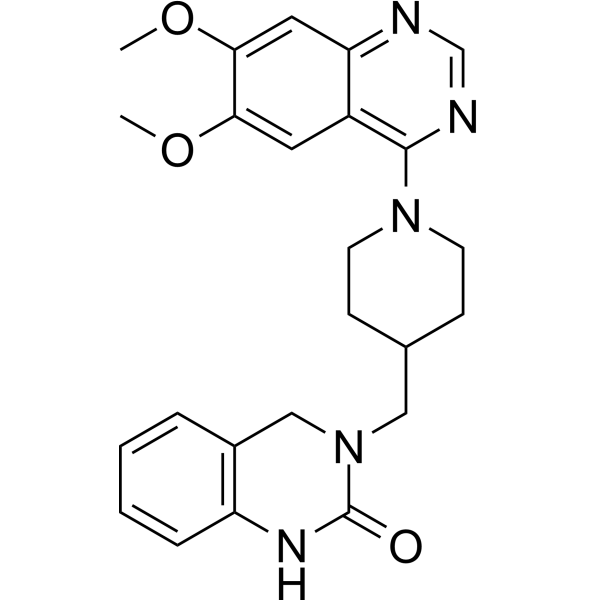
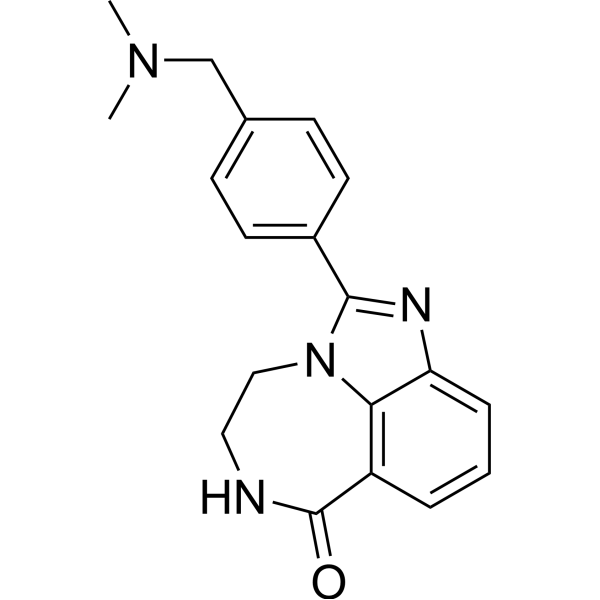
K-756 is a direct and selective tankyrase (TNKS) inhibitor, which inhibits the ADP-ribosylation activity of TNKS1 and TNKS2 with IC50s of 31 and 36 nM, respectively.
For research use only. We do not sell to patients.
- Purity: 99.25%
- CAS No.: 130017-40-2
- Formula: C24H27N5O3
- Molecular Weight:433.50
-
Storage:Powder -20°C, 3 years , 4°C, 2 years ; In solvent -80°C, 6 months , -20°C, 1 month

To place orders, for customer services and technical support, please contact: MedChemExpress USA
Tel: 609-228-6898 E-mail: [email protected] [email protected]


-
 Biological Activity
-
Chemical Information
-
Solvent & Solubility
- Protocol
- Purity & Documentation
- References
-
 Help & FAQs


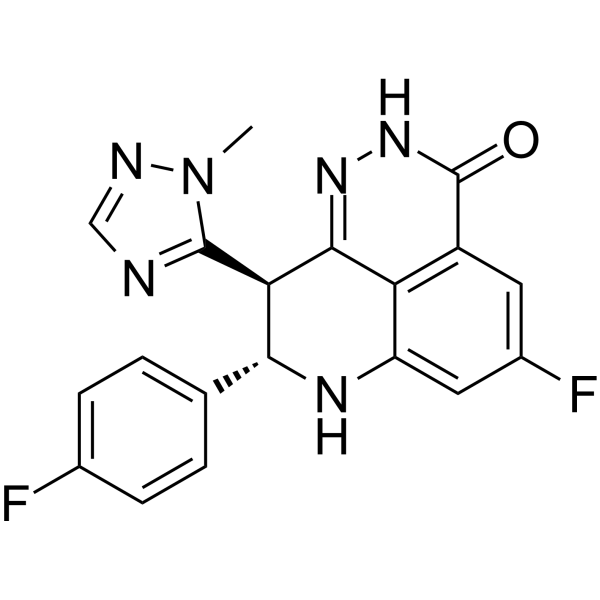
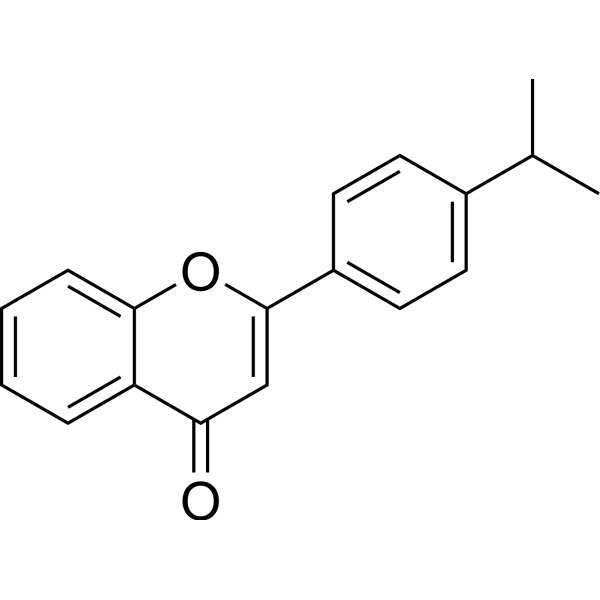
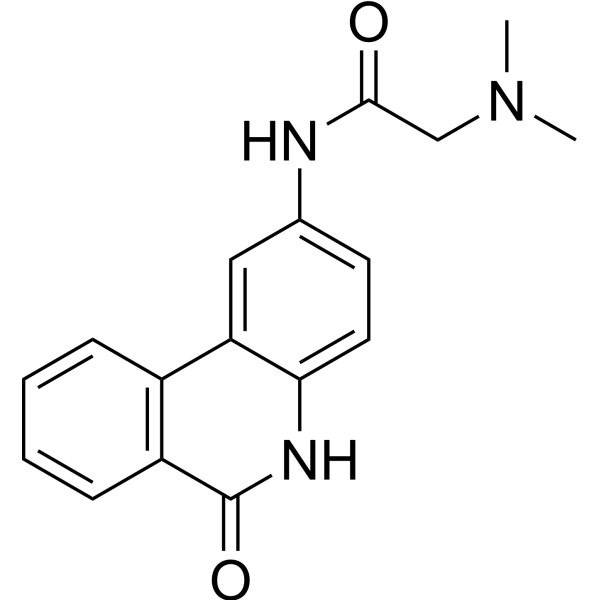
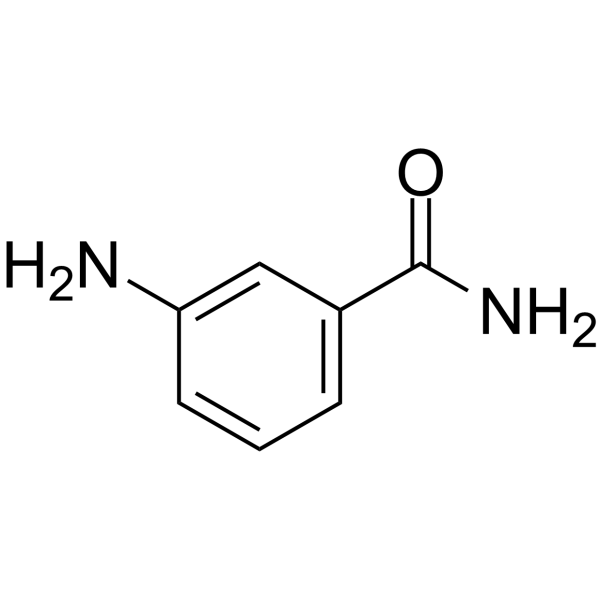
Publications Citing Use of MedChemExpress (MCE) K-756
More

Biological Activity
|
TNKS1 31 nM (IC50) |
TNKS2 36 nM (IC50) |
|
Cell Line

|
Type | Value | Description | References |
|---|---|---|---|---|
| COLO 320DM | GI50 |
780 nM
Compound: 55; K-756
|
Growth inhibition of human COLO 320DM assessed as reduction in cell viability by CCK8 assay
Growth inhibition of human COLO 320DM assessed as reduction in cell viability by CCK8 assay
|
[PMID: 33822624] |
K-756 is a novel and selective Wnt/β-catenin pathway inhibitor targeting tankyrase (TNKS). TNKS is one of the members of the PARP family (it is also known as PARP5). K-756 binds to the induced pocket of TNKS and inhibits its enzyme activity. To study the isoform selectivity of K-756, the PARP family enzyme inhibitory activity at 10 μM is evaluated. K-756 inhibits TNKS1 and TNKS2 by 97% and 100%, respectively. In contrast, the inhibitory activity of K-756 against PARP1, PARP2, PARP3, PARP6, PARP7, and PARP11 is less than 13%. K-756 inhibits the cell growth of APC-mutant colorectal cancer COLO 320DM and SW403 cells by inhibiting the Wnt/β-catenin pathway. K-756 strongly inhibits the reporter activity in DLD-1/TCF-Luc cells with an IC50 of 110 nM, but does not inhibit DLD-1/mtTCF-Luc cells, even at 1,000 nM. APC-mutant colorectal cancer cell line COLO 320DM and SW403 cells are treated with K-756 and after 144 hours, cell growth inhibition is measured by an XTT assay. The application of K-756 inhibits the cell growth of COLO 320DM with a GI50 of 780 nM. K-756 also inhibits SW403 with a GI50 of 270 nM[1].
MedChemExpress (MCE) has not independently confirmed the accuracy of these methods. They are for reference only.
MedChemExpress (MCE) has not independently confirmed the accuracy of these methods. They are for reference only.


Chemical Information
-
CAS No. 130017-40-2
-
Appearance Solid
-
Molecular Weight 433.50
-
Formula C24H27N5O3
-
Color White to off-white
-
SMILES
O=C1NC2=C(C=CC=C2)CN1CC3CCN(C4=C5C=C(OC)C(OC)=CC5=NC=N4)CC3
-
Shipping
Room temperature in continental US; may vary elsewhere.
-
Storage
Powder -20°C 3 years 4°C 2 years In solvent -80°C 6 months -20°C 1 month


Publications (2)
-
Journal Impact Factor
-
Most Recent
-
Nat Cell Biol
2024 Sep;26(9):1545-1557. PMID: 38997456 -


Solvent & Solubility
DMSO : 4.55 mg/mL (10.50 mM; Need ultrasonic; Hygroscopic DMSO has a significant impact on the solubility of product, please use newly opened DMSO)
Please refer to the solubility information to select the appropriate solvent. Once prepared, please aliquot and store the solution to prevent product inactivation from repeated freeze-thaw cycles.
Storage method and period of stock solution: -80°C, 6 months; -20°C, 1 month. When stored at -80°C, please use it within 6 months. When stored at -20°C, please use it within 1 month.
Please refer to the solubility information to select the appropriate solvent. Once prepared, please aliquot and store the solution to prevent product inactivation from repeated freeze-thaw cycles.
Storage method and period of stock solution: -80°C, 6 months; -20°C, 1 month. When stored at -80°C, please use it within 6 months. When stored at -20°C, please use it within 1 month.
Concentration (start) × Volume (start) = Concentration (final) × Volume (final)
Select the appropriate dissolution method based on your experimental animal and administration route.
- For the following dissolution methods, please ensure to first prepare a clear stock solution using an In Vitro approach and then sequentially add co-solvents:
- To ensure reliable experimental results, the clarified stock solution can be appropriately stored based on storage conditions. As for the working solution for In Vivo experiments, it is recommended to prepare freshly and use it on the same day.
- The percentages shown for the solvents indicate their volumetric ratio in the final prepared solution. If precipitation or phase separation occurs during preparation, heat and/or sonication can be used to aid dissolution.
Add each solvent one by one: 10% DMSO 90% (20% SBE-β-CD in Saline)
Solubility: ≥ 0.46 mg/mL (1.06 mM); Clear solution
This protocol yields a clear solution of ≥ 0.46 mg/mL (saturation unknown).
Taking 1 mL working solution as an example, add 100 μL DMSO stock solution (4.6 mg/mL) to 900 μL 20% SBE-β-CD in Saline, and mix evenly.
Preparation of 20% SBE-β-CD in Saline (4°C, storage for one week): 2 g SBE-β-CD powder is dissolved in 10 mL Saline, completely dissolve until clear.
Add each solvent one by one: 10% DMSO 40% PEG300 5% Tween-80 45% Saline
Solubility: ≥ 0.45 mg/mL (1.04 mM); Clear solution
This protocol yields a clear solution of ≥ 0.45 mg/mL (saturation unknown).
Taking 1 mL working solution as an example, add 100 μL DMSO stock solution (4.5 mg/mL) to 400 μL PEG300, and mix evenly; then add 50 μL Tween-80 and mix evenly; then add 450 μL Saline to adjust the volume to 1 mL.
Preparation of Saline: Dissolve 0.9 g sodium chloride in ddH₂O and dilute to 100 mL to obtain a clear Saline solution.
Please enter the basic information of animal experiments:
-
-
-
-
Recommended: Prepare an additional quantity of animals to account for potential losses during experiments.
Please enter your animal formula composition:
-
%DMSO +
Recommended: Keep the proportion of DMSO in working solution below 2% if your animal is weak.
-
%+
-
+%Tween-80 + +
-
%Saline +
The co-solvents required include: DMSO, . All of co-solvents are available by MedChemExpress (MCE). , Tween 80. All of co-solvents are available by MedChemExpress (MCE).
Working solution concentration: 0.22 mg/mL
Method for preparing stock solution: mg drug dissolved in μL DMSO. Stock solution concentration: mg/mL.
1. Take μL DMSO stock solution;
2. Add μL .
μL , mix evenly;
3. Then add μL Tween 80, mix evenly;
4. Then add μL
Please ensure that the stock solution in the first step is dissolved to a clear state, and add co-solvents in sequence. You can use ultrasonic heating (ultrasonic cleaner, recommended frequency 20-40 kHz), vortexing, etc. to assist dissolution.

Protocol
The activity of each enzyme is measured using a PARP1, PARP2, PARP3, PARP6, PARP7, and PARP11 Chemiluminescent Assay Kit, and a TNKS1 and TNKS2 Histone Ribosylation Assay Kit. Enzymatic reactions are conducted in duplicate at 30°C for 1 hour in a 50 μL mixture containing an assay buffer, an enzyme-coated plate, and a substrate. After the enzymatic reactions, 50 μL of Streptavidin-HRP is added to each well and the plate is incubated at room temperature for an additional 30 minutes. 100 μLs of developer reagents are added to the wells and luminescence is measured using a Synergy2 microplate reader. The luminescence data are analyzed using the GraphPad Prism software program[1].
MedChemExpress (MCE) has not independently confirmed the accuracy of these methods. They are for reference only.
For the cell viability assay, APC-mutant colorectal cancer cell line COLO 320DM and SW403 cells are seeded in 96-well white plates. siRNAs are reverse transfected by RNAiMax. After 144 hours, a cell viability assay is performed using a Cell Titer-Glo Luminescent Cell Viability Assay Kit. Luciferase activity is measured using a Top count NXT system. For the cell growth inhibition assay, cells are seeded in 96-well plates. The next day, the cells are treated with the compounds (e.g., K-756, 0.1 nM, 1 nM, 10 nM, 100 nM, 1 μM and 10 μM). After 0, 72, or 144 hours of incubation, XTT reagent is added to the cells. After 3 hours of incubation, the formation of formazan dye from tetrazolium salt XTT is measured using a SpectraMax 340PC system[1].
MedChemExpress (MCE) has not independently confirmed the accuracy of these methods. They are for reference only.
Mice[1]
SCID mice (CB17/Icr-Prkdcscid/CrlCrlj, male, 5 weeks old) are subcutaneously implanted with 5×10⁶ cells of DLD-1/TCF-Luc cells. After 13 days, the mice with a tumor volume of 236.38 to 595.80 mm3 are divided into groups of 5 animals. On the day after grouping, 0.5% MC 400 or K-756 (100, 200, and 400 mg/kg) is orally administered to the mice once a day for 3 days. Twenty-four hours after the last administration of first and second day and 25 hours after the last administration of the third day, the tumor tissues are collected from the mice and frozen in liquid nitrogen. Tumor total RNA is extracted using an RNeasy mini Kit and reverse-transcribed using VILO reagent. An RT-PCR is performed.
MedChemExpress (MCE) has not independently confirmed the accuracy of these methods. They are for reference only.


Purity & Documentation
-
Data Sheet (283 KB)
-
SDS (251 KB)
- English - EN (251 KB)
- Français - FR (251 KB)
- Deutsch - DE (251 KB)
- Norwegian - NO (251 KB)
- Español - ES (251 KB)
- Swedish - SV (251 KB)
- Italian - IT (251 KB)
- Korean - KR (251 KB)
- Portuguese - PT (251 KB)
-
Handling Instructions (2659 KB)
References


Complete Stock Solution Preparation Table
Please refer to the solubility information to select the appropriate solvent. Once prepared, please aliquot and store the solution to prevent product inactivation from repeated freeze-thaw cycles.
Storage method and period of stock solution: -80°C, 6 months; -20°C, 1 month. When stored at -80°C, please use it within 6 months. When stored at -20°C, please use it within 1 month.
| Optional Solvent | Concentration Solvent Mass | 1 mg | 5 mg | 10 mg | 25 mg |
|---|---|---|---|---|---|
| DMSO | 1 mM | 2.3068 mL | 11.5340 mL | 23.0681 mL | 57.6701 mL |
| 5 mM | 0.4614 mL | 2.3068 mL | 4.6136 mL | 11.5340 mL | |
| 10 mM | 0.2307 mL | 1.1534 mL | 2.3068 mL | 5.7670 mL |


K-756 Related Classifications
HY-U00422 Related Classifications
 Powered by Bioz