



DPc10
DPc10 is a biological active peptide. (This is amino acids 2460 to 2495 fragment of cardiac ryanodine receptor (RyR2). RyR2 controls calcium release from the sarcoplasmic reticulum, which begins muscle contraction. Mutated RyR2 is associated to ventricular tachycardia (VT) and sudden death.)
For research use only. We do not sell to patients.
- Formula: C194H293N45O49S2
- Molecular Weight:4103.80
-
Storage:
Please store the product under the recommended conditions in the Certificate of Analysis.

To place orders, for customer services and technical support, please contact: MedChemExpress USA
Tel: 609-228-6898 E-mail: [email protected] [email protected]


-
 Biological Activity
-
Chemical Information
- Protocols
- Purity & Documentation
-
 Help & FAQs




Biological Activity
Description


Chemical Information
-
Molecular Weight 4103.80
-
Formula C194H293N45O49S2
-
Sequence
Gly-Phe-Cys-Pro-Asp-His-Lys-Ala-Ala-Met-Val-Leu-Phe-Leu-Asp-Arg-Val-Tyr-Gly-Ile-Glu-Val-Gln-Asp-Phe-Leu-Leu-His-Leu-Leu-Glu-Val-Gly-Phe-Leu-Pro
-
Sequence Shortening
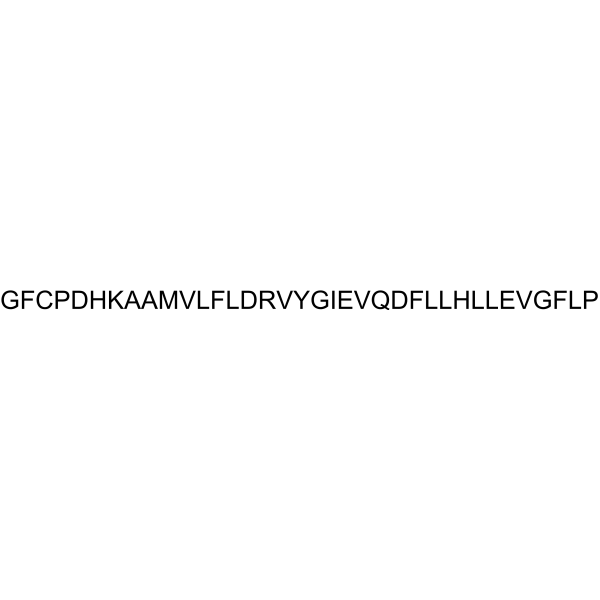
GFCPDHKAAMVLFLDRVYGIEVQDFLLHLLEVGFLP
-
Shipping
Room temperature in continental US; may vary elsewhere.
-
Storage
Please store the product under the recommended conditions in the Certificate of Analysis.


Purity & Documentation

Calculators
Concentration (start) × Volume (start) = Concentration (final) × Volume (final)


DPc10 Related Classifications
HY-P5494 Related Classifications
 Powered by Bioz