



Izorlisib
Based on 3 publication(s) in Google Scholar
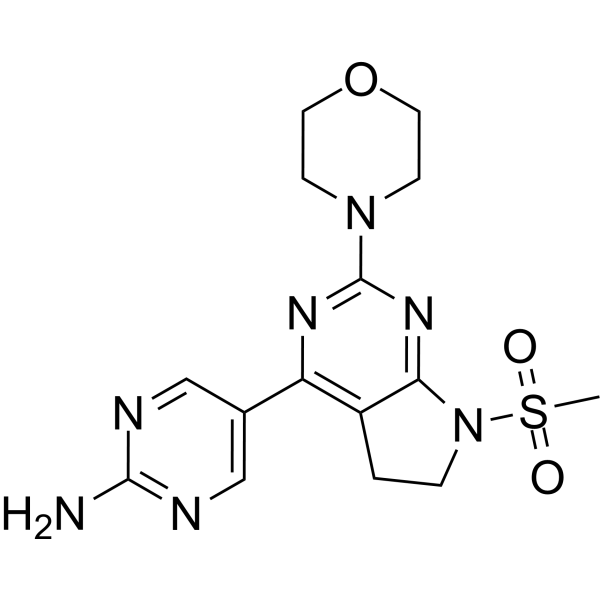
Izorlisib (CH5132799) is an orally active, selective Class I PI3K inhibitor with an IC50 value of 14 nM against PI3Kα. Izorlisib specifically inhibits Class I PI3K (particularly PI3Kα and its mutants) and blocks the PI3K/Akt/mTOR pathway; this leads to cell cycle arrest at the G1 phase and apoptosis without triggering feedback activation of Akt by competitively binding to the ATP-binding site of PI3K. Izorlisib can be used in research on cancers harboring PIK3CA mutations or PTEN loss (such as breast, ovarian, prostate, and endometrial cancers).
Nur für Forschungszwecke. Wir verkaufen nicht an Patienten.
- Reinheit : 99.01%
- CAS. Nr.: 1007207-67-1
- Formel: C15H19N7O3S
- Molecular Weight:377.42
-
Speicherung:Powder -20°C, 3 years , 4°C, 2 years ; In solvent -80°C, 2 years , -20°C, 1 year

To place orders, for customer services and technical support, please contact: MedChemExpress USA
Tel: 609-228-6898 E-mail: [email protected] [email protected]


-
 Biologische Aktivität
-
Chemical Information
-
Lösungsmittel & Löslichkeit
- Protokoll
- Reinheit & Dokumentation
- Verweise
-
 Help & FAQs


-
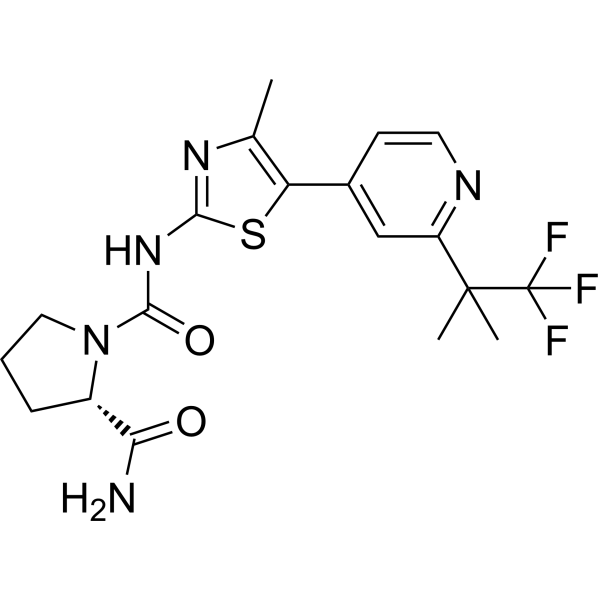
HY-15244
AlpelisibPI3Kα Inhibitor -
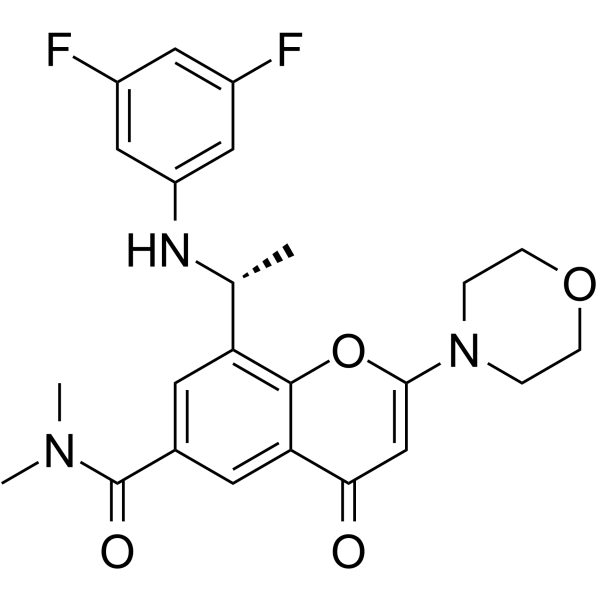
HY-12330
AZD8186PI3K Inhibitor -
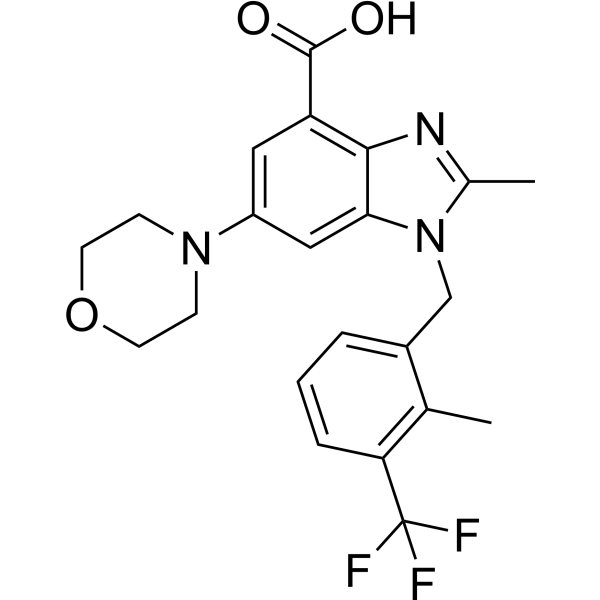
HY-15245
GSK2636771PI3Kβ Inhibitor -
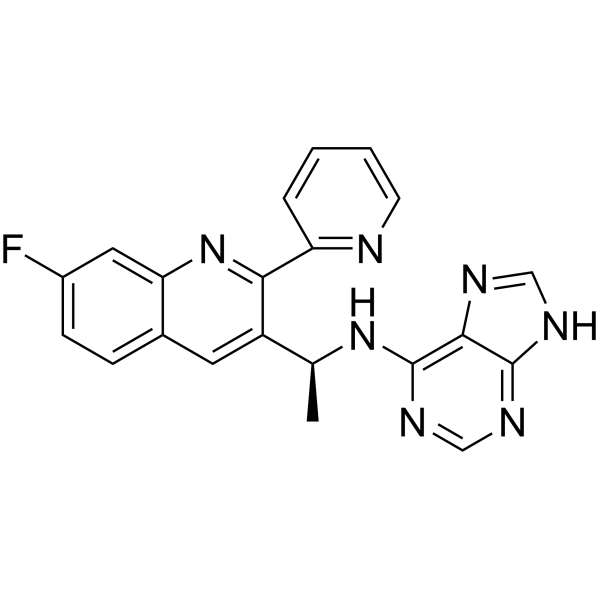
HY-12948
AMG319PI3Kδ Inhibitor -
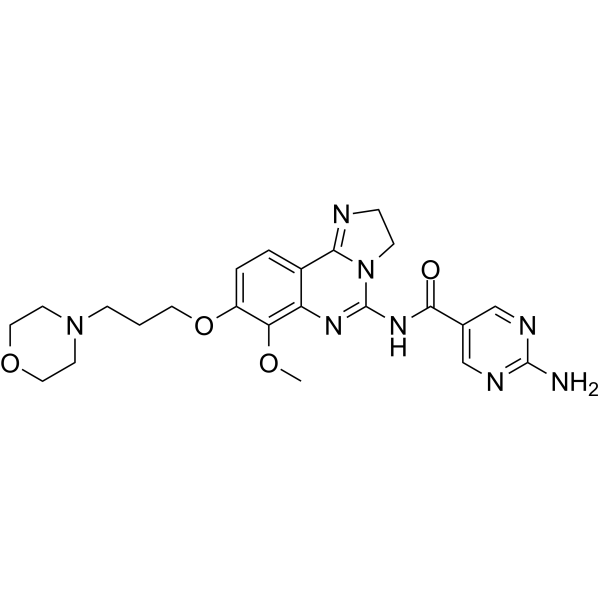
HY-15346
CopanlisibPI3K Inhibitor -
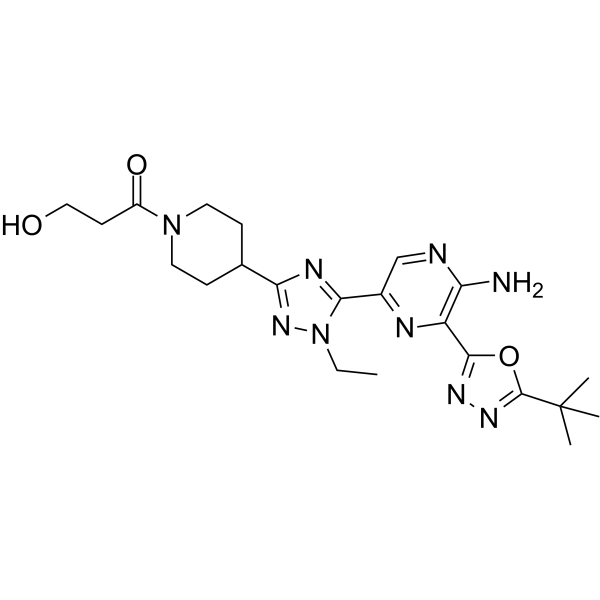
HY-12869
AZD-8835PI3Kα/δ Inhibitor -
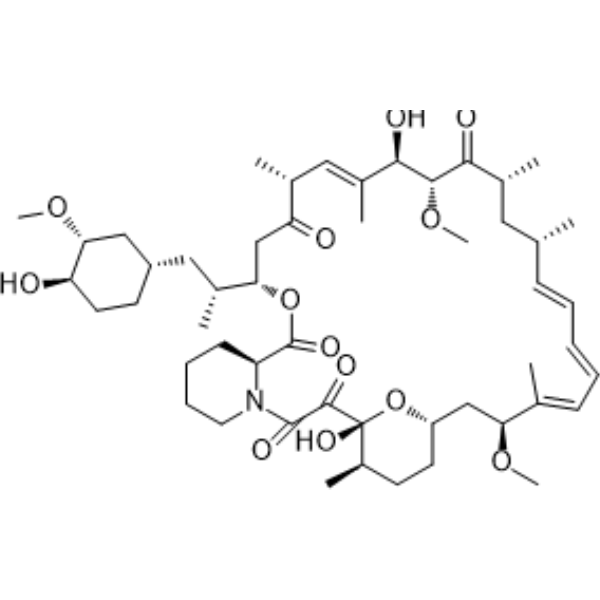
HY-10219
RapamycinmTOR Inhibitor -
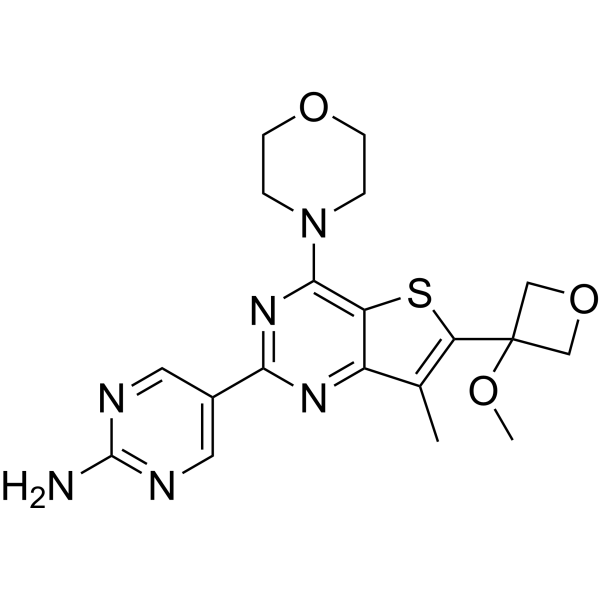
HY-12763
GNE-317PI3K/mTOR Inhibitor -
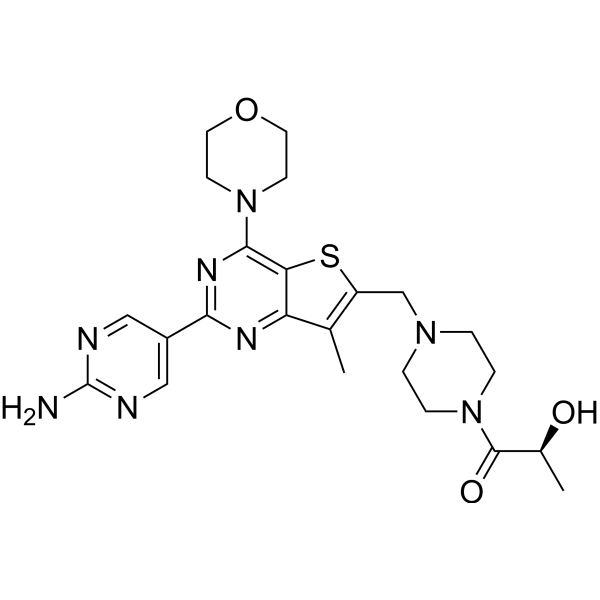
HY-13246
ApitolisibApoptosis Inducer -
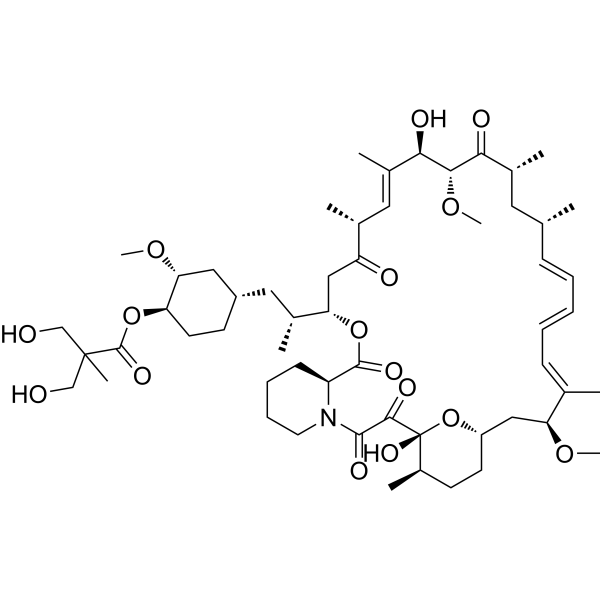
HY-50910
TemsirolimusmTOR Inhibitor -
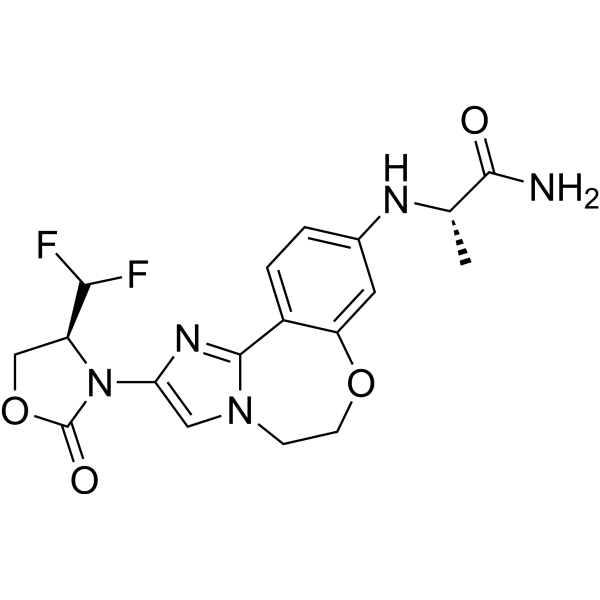
HY-101562
InavolisibPI3Kα Inhibitor -
HY-100716
EganelisibPI3Kγ Inhibitor
Publications Citing Use of MedChemExpress (MCE) Izorlisib
More

Biologische Aktivität
Beschreibung
IC50 & Target
[1]|
PI3Kα 14 nM (IC50) |
PI3Kα-H1047R 5.6 nM (IC50) |
PI3Kα-E542K 6.7 nM (IC50) |
PI3Kγ 36 nM (IC50) |
PI3Kβ 120 nM (IC50) |
PI3Kδ 500 nM (IC50) |
Cellular Effect
|
Cell Line

|
Type | Value | Description | References |
|---|---|---|---|---|
| T47D | IC50 |
0.056 μM
|
Significantly inhibits cell proliferation.
Significantly inhibits cell proliferation.
|
21316229 |
| MFE-280 | IC50 |
0.18 μM
|
Significantly inhibits cell proliferation.
Significantly inhibits cell proliferation.
|
21316229 |
| ME-180 | IC50 |
0.14 μM
|
Significantly inhibits cell proliferation.
Significantly inhibits cell proliferation.
|
21316229 |
| HCT-116 | IC50 |
0.2 μM
|
Significantly inhibits cell proliferation.
Significantly inhibits cell proliferation.
|
21316229 |
| SK-OV-3 | IC50 |
0.12 μM
|
Significantly inhibits cell proliferation.
Significantly inhibits cell proliferation.
|
21316229 |
In Vitro
Izorlisib (CH5132799) demonstrates potent and selective inhibition of Class I PI3Ks in cell-free assays (IC50 values: 14 nM for PI3Kα, 6.7 nM for PI3Kα E542K, 5.6 nM for PI3Kα H1047R, 120 nM for PI3Kβ, 500 nM for PI3Kγ, and 36 nM for PI3Kδ) [1].
Izorlisib (1 nM-10 μM; 2 h) inhibits PI3K/Akt/mTOR pathway signaling in KPL-4 and BT-474 cells [1].
Izorlisib (0.01 nM-10 μM; 24 h) inhibits downstream PI3K signaling pathways in BT-474, SK-OV-3, MDA-MB-453, and HCT116 cells without inducing negative feedback activation of Akt [1].
Izorlisib (0.076 nM-10 μM; 4 days) inhibits cell proliferation across 60 tumor cell lines, including those derived from breast, ovarian, prostate, and endometrial cancers [1].
Izorlisib (1 μM; 48 h) induces G1 cell cycle arrest and apoptosis in KPL-4 cells [1].
Izorlisib inhibites the proliferation of HCT116 (IC50 = 0.20 μM), KPL-4 (IC50 = 0.032 μM), T-47D (IC50 = 0.056 μM), SK-OV-3 (IC50 = 0.12 μM), MFE-280 (IC50 = 0.18 μM), and ME-180 (IC50 = 0.14 μM) cells[2].
MedChemExpress (MCE) has not independently confirmed the accuracy of these methods. They are for reference only.
-
Cell Line:KPL-4 cells, BT-474 cells
-
Concentration:0.001, 0.01, 0.1, 1, 10 μM
-
Incubation Time:2 h
-
Result:Suppressed the phosphorylation of Akt (S473, T308), PRAS40, S6K, S6, 4E-BP1, FoxO1, and FoxO3a.
-
Cell Line:BT-474, SK-OV-3, MDA-MB-453, HCT116 cells
-
Concentration:0.01 nM, 0.1 nM, 1 nM, 0.01 μM, 0.1 μM, 1 μM, 10 μM
-
Incubation Time:24 h
-
Result:Inhibited the phosphorylation of Akt, S6K, and 4E-BP1, and did not induce feedback activation of Akt.
-
Cell Line:60 human tumor cell lines including breast, ovarian, prostate, and endometrial cancers
-
Concentration:0.076 nM, 0.76 nM, 7.6 nM, 76 nM, 760 nM, 10 μM
-
Incubation Time:4 days
-
Result:Inhibited cell proliferation; cell lines harboring PIK3CA mutations showed higher drug sensitivity.
-
Cell Line:KPL-4
-
Concentration:1 μM
-
Incubation Time:48 h
-
Result:Induced cell cycle arrest in the G1 phase and increased the proportion of the sub-G1 (apoptotic) cell population.
Parmacokinetics
| Species | Dose | Route | T1/2 | CL | AUCinf | Tmax | Bioavailability |
|---|---|---|---|---|---|---|---|
| Dog[2] | 0.25 mg/kg | i.v. | 1.6 h | 6.4 mL/min/kg | 660 ng/L.h | / | / |
| Dog[2] | 1 mg/kg | p.o. | 3.3 h | / | 1430 ng/L.h | 4.5 h | 54.2 % |
| Mice[2] | 1 mg/kg | p.o. | 3.8 h | / | 978 ng/L.h | 0.25 h | 101 % |
| Mice[2] | 2 mg/kg | i.v. | 1.7 h | 17.5 mL/min/kg | 1930 ng/L.h | / | / |
| Monkey[2] | 0.25 mg/kg | i.v. | 3.2 h | 6.2 mL/min/kg | 692 ng/L.h | / | / |
| Monkey[2] | 1 mg/kg | p.o. | 6.7 h | / | 2170 ng/L.h | 4.0 h | 78.4 % |
| Rat[2] | 0.5 mg/kg | i.v. | 2.6 h | 6.3 mL/min/kg | 1350 ng/L.h | / | / |
| Rat[2] | 1 mg/kg | p.o. | 3.5 h | / | 1790 ng/L.h | 0.8 h | 66.2 % |
In Vivo
Izorlisib (12.5 mg/kg; p.o.; single dose; 0.5-24 h treatment) inhibits the phosphorylation of Akt and its downstream pathway proteins in a time-dependent manner in KPL-4 and BT-474 breast cancer mouse xenograft models[1].
Izorlisib (3.13-25 mg/kg; p.o.; once daily; >28 days) exhibits potent tumor growth inhibition and regression activity in mouse xenograft models of ovarian cancer (SK-OV-3), endometrial cancer (MFE-280), PTEN-deficient gastric cancer (GXF97), prostate cancer (PC-3), and KRAS-mutant colorectal cancer (HCT116)[1].
Izorlisib (12.5 mg/kg; p.o.; once daily; 12 consecutive days) shows synergistic anti-tumor activity when combined with Trastuzumab (HY-P9907) in a Trastuzumab-insensitive KPL-4 breast cancer mouse xenograft model, leading to complete tumor regression[1].
Izorlisib (12.5 mg/kg and 25 mg/kg; p.o.; once daily; 7-day continuous treatment) demonstrates potent regression of drug-resistant tumors and inhibition of the PI3K/mTOR signaling pathway in a BT-474 breast cancer mouse xenograft model that relapsed after long-term everolimus (HY-10218) treatment[1].
Izorlisib (25 mg/kg; p.o.; once daily; 11 days) inhibits tumor growth in a human prostate cancer PC-3 mouse xenograft model[2].
Izorlisib (12.5 mg/kg; p.o.; once daily; 2 weeks on/1 week off or 5 days on/2 days off; 6 weeks) induces potent tumor regression in a human breast cancer KPL-4 mouse xenograft model[2].
MedChemExpress (MCE) has not independently confirmed the accuracy of these methods. They are for reference only.
-
Animal Model:BALB-nu/nu mice (female) were were injected subcutaneously into the right flank with 4 × 10⁶ to 1.2 × 10⁷ with KPL-4 and BT-474 cells[1]
-
Dosage:0.39, 0.78, 1.56, 3.13, 6.25, 12.5, 25 mg/kg
-
Administration:p.o.; once daily; 11-13 days
-
Result:Significantly reduced tumor volume, particularly inducing rapid tumor regression in high-dose groups.
Reduced tumor cell proliferation and induced apoptosis.
-
Animal Model:BALB-nu/nu mice (female) were were injected subcutaneously into the right flank with 4 × 10⁶ to 1.2 × 10⁷ with KPL-4 and BT-474 cells[1]
-
Dosage:12.5 mg/kg
-
Administration:p.o.; single dose; treated for 0.5, 1, 2, 4, 7, 24 h
-
Result:Had a time-dependent inhibitory effect on the phosphorylation of Akt and its downstream pathway proteins.
-
Animal Model:BALB-nu/nu mice (female) were were injected subcutaneously into the right flank with 4 × 10⁶ to 1.2 × 10⁷ with SK-OV-3 (ovarian), MFE-280 (endometrial), PTEN-deleted GXF97 (gastric), PC-3 (prostate), and KRAS-mutant HCT116 (colorectal) cells[1]
-
Dosage:3.13, 6.25, 12.5, 25 mg/kg
-
Administration:p.o.; once daily; more than 28 days
-
Result:Potently inhibited tumor growth and promoted tumor regression.
-
Animal Model:BALB-nu/nu mice (female) were were injected subcutaneously into the right flank with 4 × 10⁶ to 1.2 × 10⁷ with BT-474 cells[1]
-
Dosage:12.5 mg/kg
-
Administration:p.o.; once daily; 12 consecutive days of treatment; Trastuzumab (30 mg/kg) was intravenously injected once a week for 2 weeks
-
Result:Overcame resistance to Trastuzumab monotherapy and generated significant synergistic antitumor activity when used in combination.
Resulted in complete disappearance of the tumors, and this disappearance was maintained throughout a follow-up period of over 1 month without any additional administration.
-
Animal Model:BALB-nu/nu mice (female) were were injected subcutaneously into the right flank with 4 × 10⁶ to 1.2 × 10⁷ with BT-474 cells[1]
-
Dosage:12.5 mg/kg, 25 mg/kg
-
Administration:p.o.; once daily; 7-day continuous treatment
-
Result:Induced a dose-dependent and remarkable regression of tumors that had regrown after long-term everolimus treatment.
Inhibited various effector proteins in the PI3K/mTOR pathway (including the phosphorylation of 4E-BP1) and did not induce the feedback activation of Akt and FoxO1 that is typically caused by everolimus.
-
Animal Model:Human prostate cancer PC-3 xenograft model[2]
-
Dosage:25 mg/kg
-
Administration:p.o.; once daily; for 11 days
-
Result:Significantly inhibited tumor growth, achieving a tumor growth inhibition (TGI) rate of 101%.
-
Animal Model:Human breast cancer KPL-4 xenograft model[2]
-
Dosage:12.5 mg/kg
-
Administration:p.o.; once daily; 2 weeks on/1 week off, 5 days on/2 days off; treatment started 25 days after tumor implantation and lasted for 6 weeks
-
Result:Induced strong tumor regression.
The strong tumor regression was maintained even in the intermittent dosing schedules.
Clinical Trial
| NCT Number | Sponsor | Condition | Start Date |
Phase
|
|---|---|---|---|---|
| NCT01329991 | Plexxikon| | 2011-05 | PHASE1 |


Chemical Information
-
CAS. Nr. 1007207-67-1
-
Appearance Solid
-
Molecular Weight 377.42
-
Formel C15H19N7O3S
-
Color White to gray
-
SMILES
NC1=NC=C(C2=C3C(N(S(=O)(C)=O)CC3)=NC(N4CCOCC4)=N2)C=N1
-
Synonyms
CH5132799
-
Versand
Room temperature in continental US; may vary elsewhere.
-
Speicherung
Powder -20°C 3 years 4°C 2 years In solvent -80°C 2 years -20°C 1 year


Publications (3)
-
Journal Impact Factor
-
Most Recent
-
Sci Transl Med
PP2A inhibition is a druggable MEK inhibitor resistance mechanism in KRAS-mutant lung cancer cells. [Abstract]2018 Jul 18;10(450):eaaq1093. PMID: 30021885 -
Molecules
In Vitro and in Vivo Activity of mTOR Kinase and PI3K Inhibitors Against Leishmania donovani and Trypanosoma brucei. [Abstract]2020 Apr 23;25(8):1980. PMID: 32340370 -
Sci Rep
QSAR analysis on a large and diverse set of potent phosphoinositide 3-kinase gamma (PI3Kγ) inhibitors using MLR and ANN methods. [Abstract]2022 Apr 12;12(1):6090. PMID: 35414065


Lösungsmittel & Löslichkeit
In Vitro:
DMSO : 4.55 mg/mL (12.06 mM; Need ultrasonic; Hygroscopic DMSO has a significant impact on the solubility of product, please use newly opened DMSO)
Please refer to the solubility information to select the appropriate solvent. Once prepared, please aliquot and store the solution to prevent product inactivation from repeated freeze-thaw cycles.
Storage method and period of stock solution: -80°C, 2 years; -20°C, 1 year. When stored at -80°C, please use it within 2 years. When stored at -20°C, please use it within 1 year.
Please refer to the solubility information to select the appropriate solvent. Once prepared, please aliquot and store the solution to prevent product inactivation from repeated freeze-thaw cycles.
Storage method and period of stock solution: -80°C, 2 years; -20°C, 1 year. When stored at -80°C, please use it within 2 years. When stored at -20°C, please use it within 1 year.
Konzentration (Stammlösung) × Volumen (Stammlösung) = Konzentration (Ziellösung) × Volumen (Ziellösung)
In Vivo:
Select the appropriate dissolution method based on your experimental animal and administration route.
- For the following dissolution methods, please ensure to first prepare a clear stock solution using an In Vitro approach and then sequentially add co-solvents:
- To ensure reliable experimental results, the clarified stock solution can be appropriately stored based on storage conditions. As for the working solution for In Vivo experiments, it is recommended to prepare freshly and use it on the same day.
- The percentages shown for the solvents indicate their volumetric ratio in the final prepared solution. If precipitation or phase separation occurs during preparation, heat and/or sonication can be used to aid dissolution.
In Vivo Dissolution Calculator
Please enter the basic information of animal experiments:
-
-
-
-
Recommended: Prepare an additional quantity of animals to account for potential losses during experiments.
Please enter your animal formula composition:
-
%DMSO +
Recommended: Keep the proportion of DMSO in working solution below 2% if your animal is weak.
-
%+
-
+%Tween-80 + +
-
%Saline +
The co-solvents required include: DMSO, . All of co-solvents are available by MedChemExpress (MCE). , Tween 80. All of co-solvents are available by MedChemExpress (MCE).
Working solution concentration: 0.22 mg/mL
Method for preparing stock solution: mg drug dissolved in μL DMSO. Stock solution concentration: mg/mL.
1. Take μL DMSO stock solution;
2. Add μL .
μL , mix evenly;
3. Then add μL Tween 80, mix evenly;
4. Then add μL
Please ensure that the stock solution in the first step is dissolved to a clear state, and add co-solvents in sequence. You can use ultrasonic heating (ultrasonic cleaner, recommended frequency 20-40 kHz), vortexing, etc. to assist dissolution.


Reinheit & Dokumentation
-
Data Sheet (291 KB)
-
SDS (393 KB)
- English - EN (393 KB)
- Français - FR (393 KB)
- Deutsch - DE (393 KB)
- Norwegian - NO (393 KB)
- Español - ES (393 KB)
- Swedish - SV (393 KB)
- Italian - IT (393 KB)
- Korean - KR (393 KB)
- Portuguese - PT (393 KB)
-
Handling Instructions (2659 KB)
Verweise
[1]. Tanaka H, et al. The selective class I PI3K inhibitor CH5132799 targets human cancers harboring oncogenic PIK3CA mutations. Clin Cancer Res. 2011 May 15;17(10):3272-81. [Content Brief]
[2]. Ohwada J, et al. Discovery and biological activity of a novel class I PI3K inhibitor, CH5132799. Bioorg Med Chem Lett. 2011 Mar 15;21(6):1767-72. [Content Brief]


Complete Stock Solution Preparation Table
Please refer to the solubility information to select the appropriate solvent. Once prepared, please aliquot and store the solution to prevent product inactivation from repeated freeze-thaw cycles.
Storage method and period of stock solution: -80°C, 2 years; -20°C, 1 year. When stored at -80°C, please use it within 2 years. When stored at -20°C, please use it within 1 year.
| Optional Solvent | Concentration Solvent Mass | 1 mg | 5 mg | 10 mg | 25 mg |
|---|---|---|---|---|---|
| DMSO | 1 mM | 2.6496 mL | 13.2478 mL | 26.4957 mL | 66.2392 mL |
| 5 mM | 0.5299 mL | 2.6496 mL | 5.2991 mL | 13.2478 mL | |
| 10 mM | 0.2650 mL | 1.3248 mL | 2.6496 mL | 6.6239 mL |


Izorlisib Related Classifications
HY-15466 Related Classifications
 Powered by Bioz