



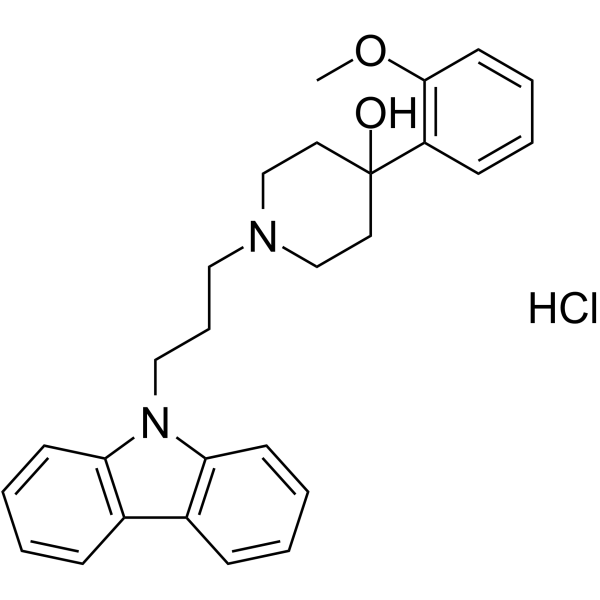
NNC 05-2090 hydrochloride

Based on 1 Customer Validation
NNC 05-2090 hydrochloride is a GABA uptake inhibitor and inhibitor of the β-GABA transporter (BGT-1) (IC50< /sub>: 10.6 μM). NNC 05-2090 hydrochloride also inhibits mGAT2 with a Ki value of 1.4 μM. NNC 05-2090 has anticonvulsant activity and can be used in the study of epilepsy and neurological diseases.
For research use only. We do not sell to patients.
- Purity: 98.53%
- CAS No.: 184845-18-9
- Formula: C27H31ClN2O2
- Molecular Weight:451.00
-
Storage:
4°C, sealed storage, away from moisture
* In solvent : -80°C, 6 months; -20°C, 1 month (sealed storage, away from moisture)

To place orders, for customer services and technical support, please contact: MedChemExpress USA
Tel: 609-228-6898 E-mail: [email protected] [email protected]


-
 Biological Activity
-
Chemical Information
-
Solvent & Solubility
- Purity & Documentation
- References
-
 Help & FAQs


-
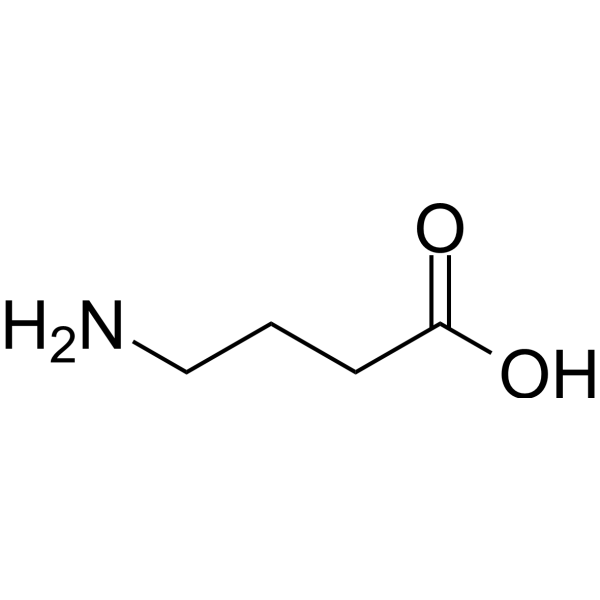
HY-N0067
γ-Aminobutyric acid
-
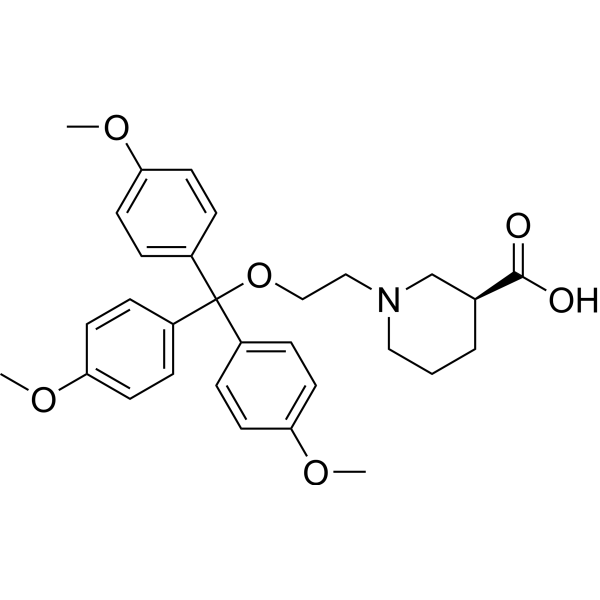
HY-103504
(S)-SNAP5114
-
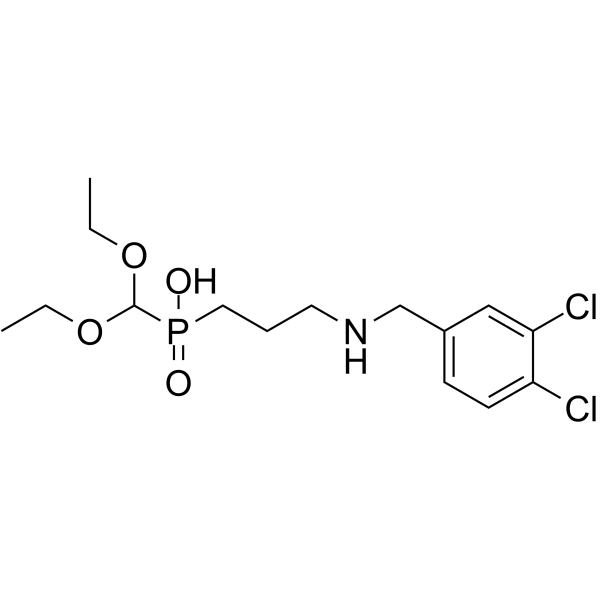
HY-103531
CGP52432
-
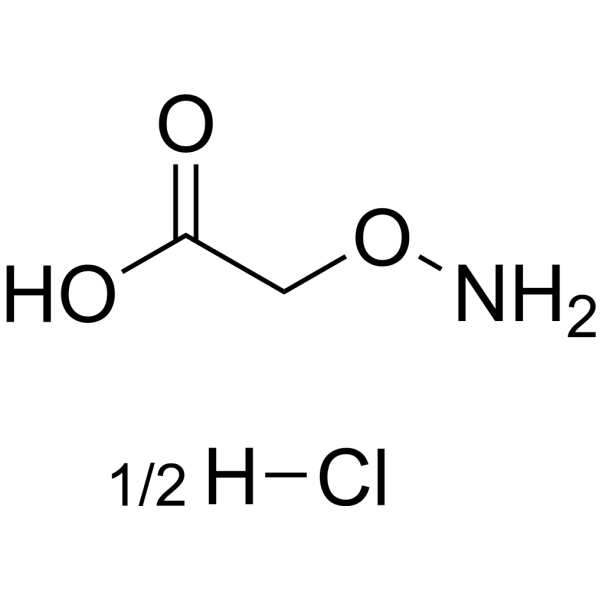
HY-107994
Aminooxyacetic acid hemihydrochloride
-
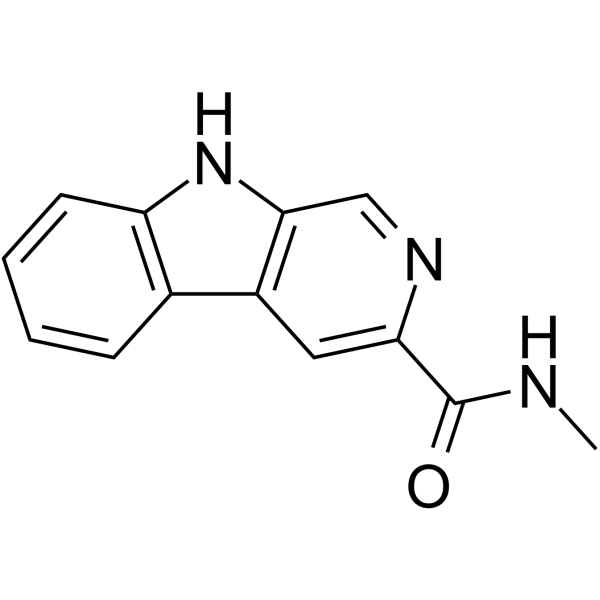
HY-100991
FG 7142
-

HY-103509R
NNC 05-2090 hydrochloride (Standard)
-
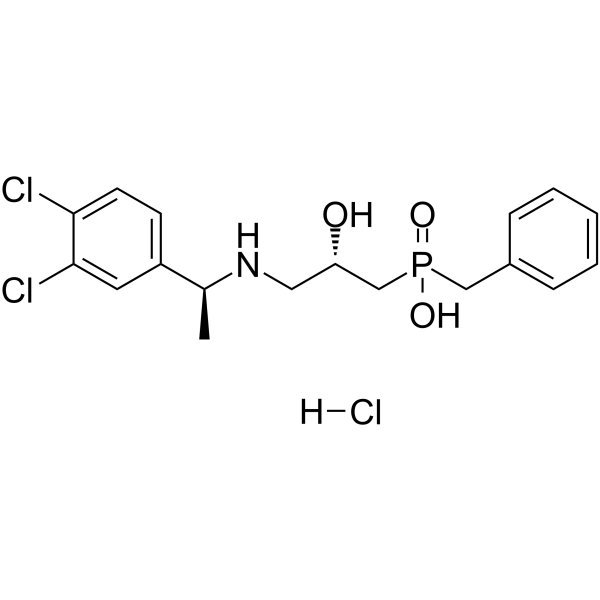
HY-103516
CGP55845 hydrochloride
-
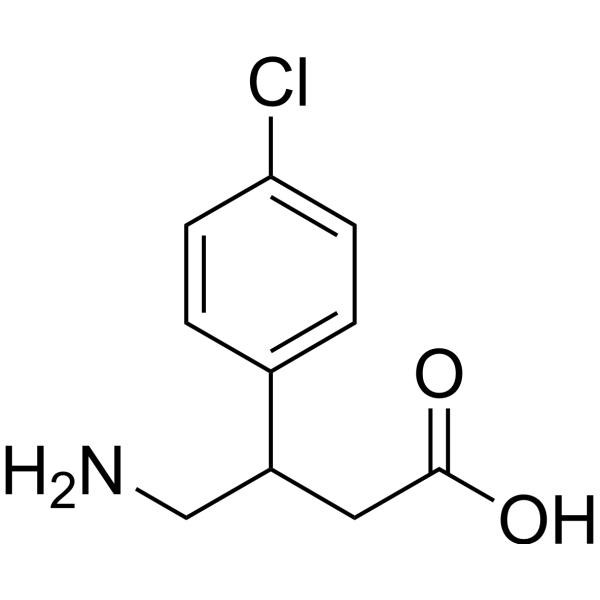
HY-B0007
Baclofen
-
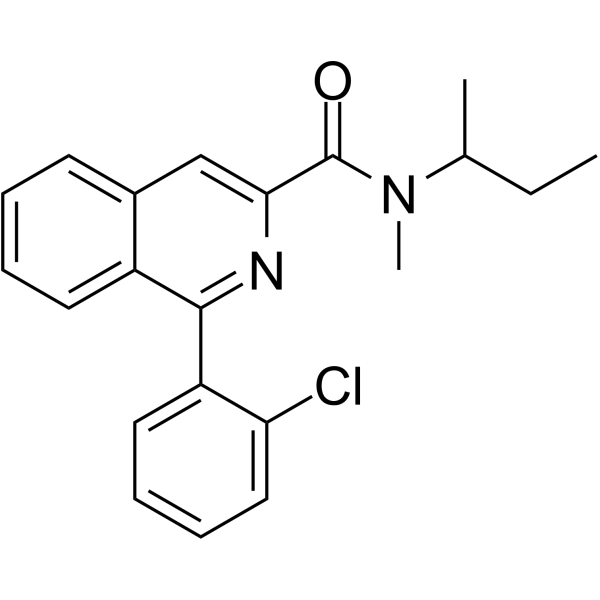
HY-19567
PK 11195
-
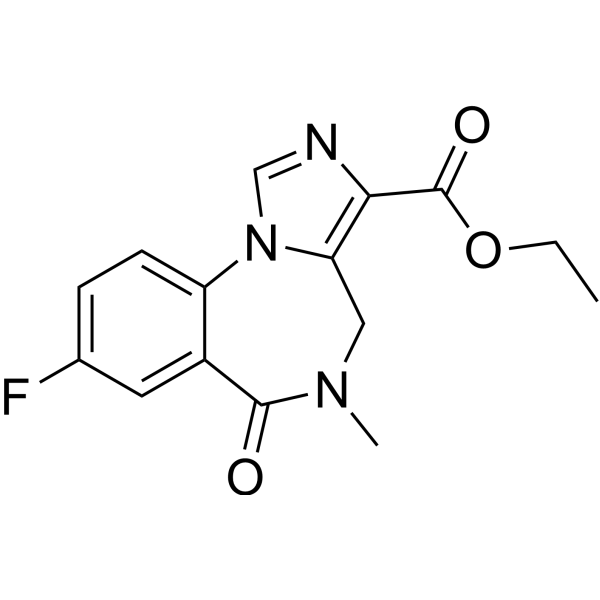
HY-B0009
Flumazenil
-
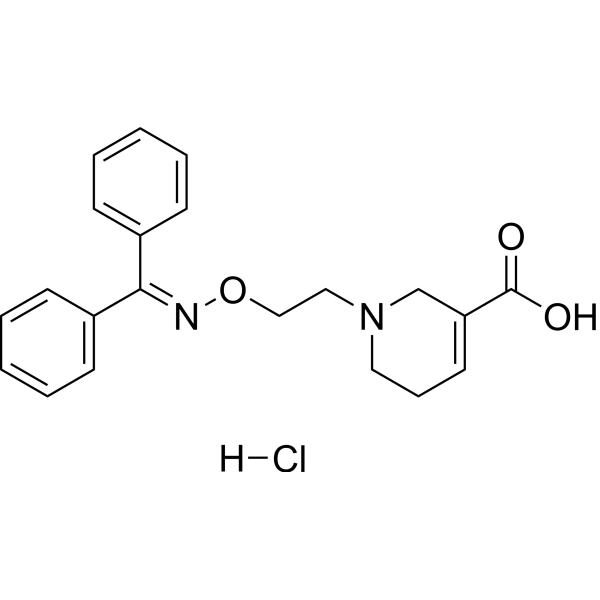
HY-103506
NNC-711
-
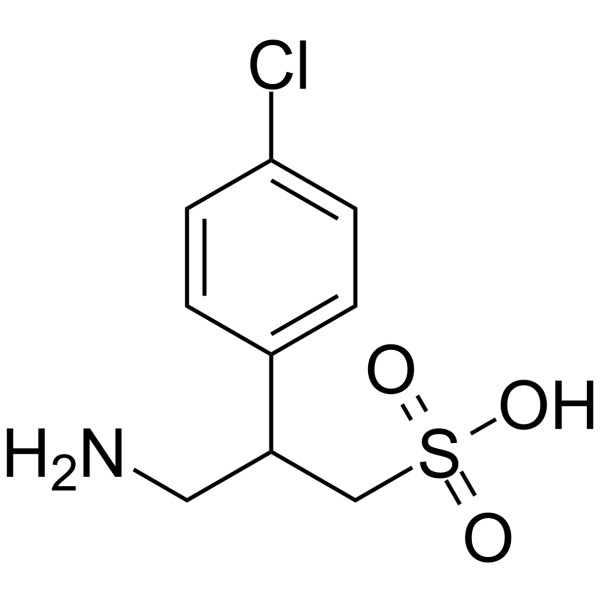
HY-100813
Saclofen


Biological Activity
NNC 05-2090 hydrochloride shows IC50 values for binding with prazosin and spiperone of 266 and 1632 nM, respectively[1].
NNC 05-2090 hydrochloride (0.1-100 μM) inhibits [3H]GABA uptake in synaptosomes from rat cortex with an IC50 value of 4.4 μM[1].
NNC 05-2090 hydrochloride (0.1-100 μM) inhibits [3H]GABA uptake in synaptosomes prepared from inferior colliculus with an IC50 value of 2.5 μM[1].
NNC 05-2090 hydrochloride inhibits serotonin, noradrenaline, dopamine transporters and BGT-1 with IC50 values of 5.29, 7.91, 4.08 and 10.6 μM, respectively[1].
NNC 05-2090 hydrochloride inhibits GAT-1, GAT-2 and GAT-3 with IC50 values of 29.62, 45.29 and 22.51 μM, respectively[1].
NNC 05-2090 dose-dependently inhibited sound-induced tonic and clonic convulsions in DBA/2 mice with an ED50 value 19 μmol/kg[2].
NNC 05-2090 dose-dependently antagonized tonic hindlimb extension in the maximal electroshock (MES) test with an ED50 values of 73 mmol/kg[2].
NNC 05-2090 significantly (PB0.05) reduces generalized seizure severity (seizure grade 3-5) at highest doses (72-242 mmol/kg) and NNC 05-2090 also significantly reduced afterdischarge duration at these doses (P<0.05)[2].
MedChemExpress (MCE) has not independently confirmed the accuracy of these methods. They are for reference only.
MedChemExpress (MCE) has not independently confirmed the accuracy of these methods. They are for reference only.
-
Animal Model:Partial sciatic nerve ligation (PSL) mice with mechanical allodynia[2]
-
Dosage:0.01, 0.1 and 0.3 mg/kg
-
Administration:Intraperitoneal injection or intrathecal injection; 0.1 mg/kg, once
-
Result:Dose-dependently reversed mechanical allodynia in PSL model mice by both intraperitoneal injection and intrathecal injection.


Chemical Information
-
CAS No. 184845-18-9
-
Appearance Solid
-
Molecular Weight 451.00
-
Formula C27H31ClN2O2
-
Color Light yellow to yellow
-
SMILES
OC1(CCN(CC1)CCCN2C3=C(C4=C2C=CC=C4)C=CC=C3)C5=C(OC)C=CC=C5.Cl
-
Shipping
Room temperature in continental US; may vary elsewhere.
-
Storage
4°C, sealed storage, away from moisture
* In solvent : -80°C, 6 months; -20°C, 1 month (sealed storage, away from moisture)


Solvent & Solubility
DMSO : 100 mg/mL (221.73 mM; Need ultrasonic; Hygroscopic DMSO has a significant impact on the solubility of product, please use newly opened DMSO)
Please refer to the solubility information to select the appropriate solvent. Once prepared, please aliquot and store the solution to prevent product inactivation from repeated freeze-thaw cycles.
Storage method and period of stock solution: -80°C, 6 months; -20°C, 1 month (sealed storage, away from moisture). When stored at -80°C, please use it within 6 months. When stored at -20°C, please use it within 1 month.
Please refer to the solubility information to select the appropriate solvent. Once prepared, please aliquot and store the solution to prevent product inactivation from repeated freeze-thaw cycles.
Storage method and period of stock solution: -80°C, 6 months; -20°C, 1 month (sealed storage, away from moisture). When stored at -80°C, please use it within 6 months. When stored at -20°C, please use it within 1 month.
Concentration (start) × Volume (start) = Concentration (final) × Volume (final)
Select the appropriate dissolution method based on your experimental animal and administration route.
- For the following dissolution methods, please ensure to first prepare a clear stock solution using an In Vitro approach and then sequentially add co-solvents:
- To ensure reliable experimental results, the clarified stock solution can be appropriately stored based on storage conditions. As for the working solution for In Vivo experiments, it is recommended to prepare freshly and use it on the same day.
- The percentages shown for the solvents indicate their volumetric ratio in the final prepared solution. If precipitation or phase separation occurs during preparation, heat and/or sonication can be used to aid dissolution.
Add each solvent one by one: 10% DMSO 90% (20% SBE-β-CD in Saline)
Solubility: ≥ 2.5 mg/mL (5.54 mM); Clear solution
This protocol yields a clear solution of ≥ 2.5 mg/mL (saturation unknown).
Taking 1 mL working solution as an example, add 100 μL DMSO stock solution (25.0 mg/mL) to 900 μL 20% SBE-β-CD in Saline, and mix evenly.
Preparation of 20% SBE-β-CD in Saline (4°C, storage for one week): 2 g SBE-β-CD powder is dissolved in 10 mL Saline, completely dissolve until clear.
Please enter the basic information of animal experiments:
-
-
-
-
Recommended: Prepare an additional quantity of animals to account for potential losses during experiments.
Please enter your animal formula composition:
-
%DMSO +
Recommended: Keep the proportion of DMSO in working solution below 2% if your animal is weak.
-
%+
-
+%Tween-80 + +
-
%Saline +
The co-solvents required include: DMSO, . All of co-solvents are available by MedChemExpress (MCE). , Tween 80. All of co-solvents are available by MedChemExpress (MCE).
Working solution concentration: 0.22 mg/mL
Method for preparing stock solution: mg drug dissolved in μL DMSO. Stock solution concentration: mg/mL. * In solvent : -80°C, 6 months; -20°C, 1 month (sealed storage, away from moisture)
1. Take μL DMSO stock solution;
2. Add μL .
μL , mix evenly;
3. Then add μL Tween 80, mix evenly;
4. Then add μL
Please ensure that the stock solution in the first step is dissolved to a clear state, and add co-solvents in sequence. You can use ultrasonic heating (ultrasonic cleaner, recommended frequency 20-40 kHz), vortexing, etc. to assist dissolution.


Purity & Documentation
-
Data Sheet (279 KB)
-
SDS (252 KB)
- English - EN (252 KB)
- Français - FR (252 KB)
- Deutsch - DE (252 KB)
- Norwegian - NO (252 KB)
- Español - ES (252 KB)
- Swedish - SV (252 KB)
- Italian - IT (252 KB)
- Korean - KR (252 KB)
- Portuguese - PT (252 KB)
-
Handling Instructions (2659 KB)
References
[1]. Dalby NO, et al. Anticonvulsant properties of two GABA uptake inhibitors NNC 05-2045 and NNC 05-2090, not acting preferentially on GAT-1. Epilepsy Res. 1997 Jul;28(1):51-61. [Content Brief]
[2]. N O Dalby, et al. Anticonvulsant properties of two GABA uptake inhibitors NNC 05-2045 and NNC 05-2090, not acting preferentially on GAT-1. Epilepsy Res. 1997 Jul;28(1):51-61. [Content Brief]
[3]. Jinzenji A, et al. Antiallodynic action of 1-(3-(9H-Carbazol-9-yl)-1-propyl)-4-(2-methyoxyphenyl)-4-piperidinol (NNC05-2090), a betaine/GABA transporter inhibitor. J Pharmacol Sci. 2014;125(2):217-26. [Content Brief]


Complete Stock Solution Preparation Table
Please refer to the solubility information to select the appropriate solvent. Once prepared, please aliquot and store the solution to prevent product inactivation from repeated freeze-thaw cycles.
Storage method and period of stock solution: -80°C, 6 months; -20°C, 1 month (sealed storage, away from moisture). When stored at -80°C, please use it within 6 months. When stored at -20°C, please use it within 1 month.
| Optional Solvent | Concentration Solvent Mass | 1 mg | 5 mg | 10 mg | 25 mg |
|---|---|---|---|---|---|
| DMSO | 1 mM | 2.2173 mL | 11.0865 mL | 22.1729 mL | 55.4324 mL |
| 5 mM | 0.4435 mL | 2.2173 mL | 4.4346 mL | 11.0865 mL | |
| 10 mM | 0.2217 mL | 1.1086 mL | 2.2173 mL | 5.5432 mL | |
| 15 mM | 0.1478 mL | 0.7391 mL | 1.4782 mL | 3.6955 mL | |
| 20 mM | 0.1109 mL | 0.5543 mL | 1.1086 mL | 2.7716 mL | |
| 25 mM | 0.0887 mL | 0.4435 mL | 0.8869 mL | 2.2173 mL | |
| 30 mM | 0.0739 mL | 0.3695 mL | 0.7391 mL | 1.8477 mL | |
| 40 mM | 0.0554 mL | 0.2772 mL | 0.5543 mL | 1.3858 mL | |
| 50 mM | 0.0443 mL | 0.2217 mL | 0.4435 mL | 1.1086 mL | |
| 60 mM | 0.0370 mL | 0.1848 mL | 0.3695 mL | 0.9239 mL | |
| 80 mM | 0.0277 mL | 0.1386 mL | 0.2772 mL | 0.6929 mL | |
| 100 mM | 0.0222 mL | 0.1109 mL | 0.2217 mL | 0.5543 mL |


NNC 05-2090 hydrochloride Related Classifications
HY-103509 Related Classifications
 Powered by Bioz