



SIRP alpha/CD172a Protein, Rat (HEK293, His)
Based on 1 Customer Validation
When paired with KLRD1, the NKG2C/CD159c protein recognizes MHC-E loaded with MHC-G peptides, thereby contributing to NK cell generation and function. It also regulates cytotoxic lymphocytes in viral infections. SIRP alpha/CD172a Protein, Rat (HEK293, His) is the recombinant rat-derived SIRP alpha/CD172a protein, expressed by HEK293 , with C-His labeled tag.
- Species: Rat
- Source: HEK293
-
Storage:Stored at -20°C for 2 years from date of receipt. After reconstitution, it is stable at 4°C for 1 week or -20°C for longer (with carrier protein). It is recommended to freeze aliquots at -20°C or -80°C for extended storage.


To place orders, for customer services and technical support, please contact: MedChemExpress USA
Tel: 609-228-6898 E-mail: [email protected] [email protected]


-
 Biological Activity
-
Technical Parameters
-
Product Properties
- Documentation
- Help & FAQs




Biological Activity
Description
When paired with KLRD1, the NKG2C/CD159c protein recognizes MHC-E loaded with MHC-G peptides, thereby contributing to NK cell generation and function. It also regulates cytotoxic lymphocytes in viral infections. SIRP alpha/CD172a Protein, Rat (HEK293, His) is the recombinant rat-derived SIRP alpha/CD172a protein, expressed by HEK293 , with C-His labeled tag.
Background
SIRP alpha/CD172a protein, an immunoglobulin-like cell surface receptor for CD47, serves as a versatile mediator in various cellular processes. Functioning as a docking protein, it induces the translocation of PTPN6, PTPN11, and other binding partners from the cytosol to the plasma membrane. Beyond its role in cellular adhesion, SIRP alpha supports the adhesion of cerebellar neurons, neurite outgrowth, and glial cell attachment. Additionally, it plays a potential key role in intracellular signaling during synaptogenesis and synaptic function. Involved in negative regulation, SIRP alpha regulates receptor tyrosine kinase-coupled cellular responses induced by cell adhesion, growth factors, or insulin. It further mediates negative regulation of phagocytosis, mast cell activation, and dendritic cell activation. Notably, CD47 binding prevents the maturation of immature dendritic cells and inhibits cytokine production by mature dendritic cells. SIRP alpha's significance extends to antiviral immunity, as it limits new world arenavirus infection by decreasing virus internalization. Acting as a receptor for THBS1, it stimulates the phosphorylation of SIRPA and, in response to THBS1, is involved in ROS signaling in non-phagocytic cells, stimulating NADPH oxidase-derived ROS production. SIRP alpha engages in diverse interactions with proteins such as PTPN11, GRB2, FGR, JAK2, SCAP1, SCAP2, FYB1, PTK2B, and TRIM2, illustrating its intricate role as a central player in cellular signaling and immune responses.
Verified Bioactivity
Measured by its binding ability in a functional ELISA. When Recombinant Mouse CD47 is present at 5 μg/mL, can bind Biotinylated Recombinant Rat CD172a. The ED50 for this effect is 157.1 ng/mL.
MCE Validation Data
-
Purity - SDS-PAGE
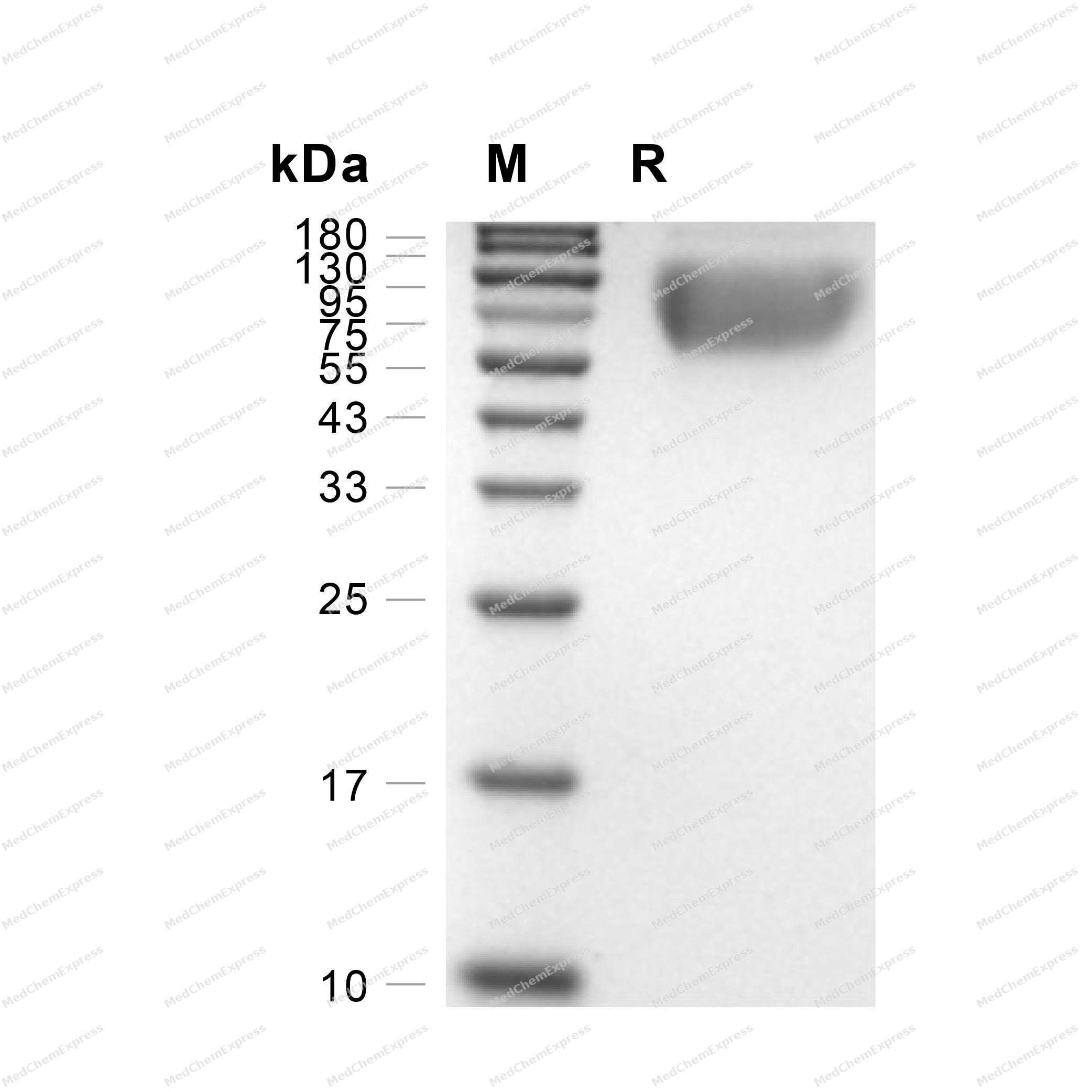
Purity - SDS-PAGE
-
Bioactivity - ELISA
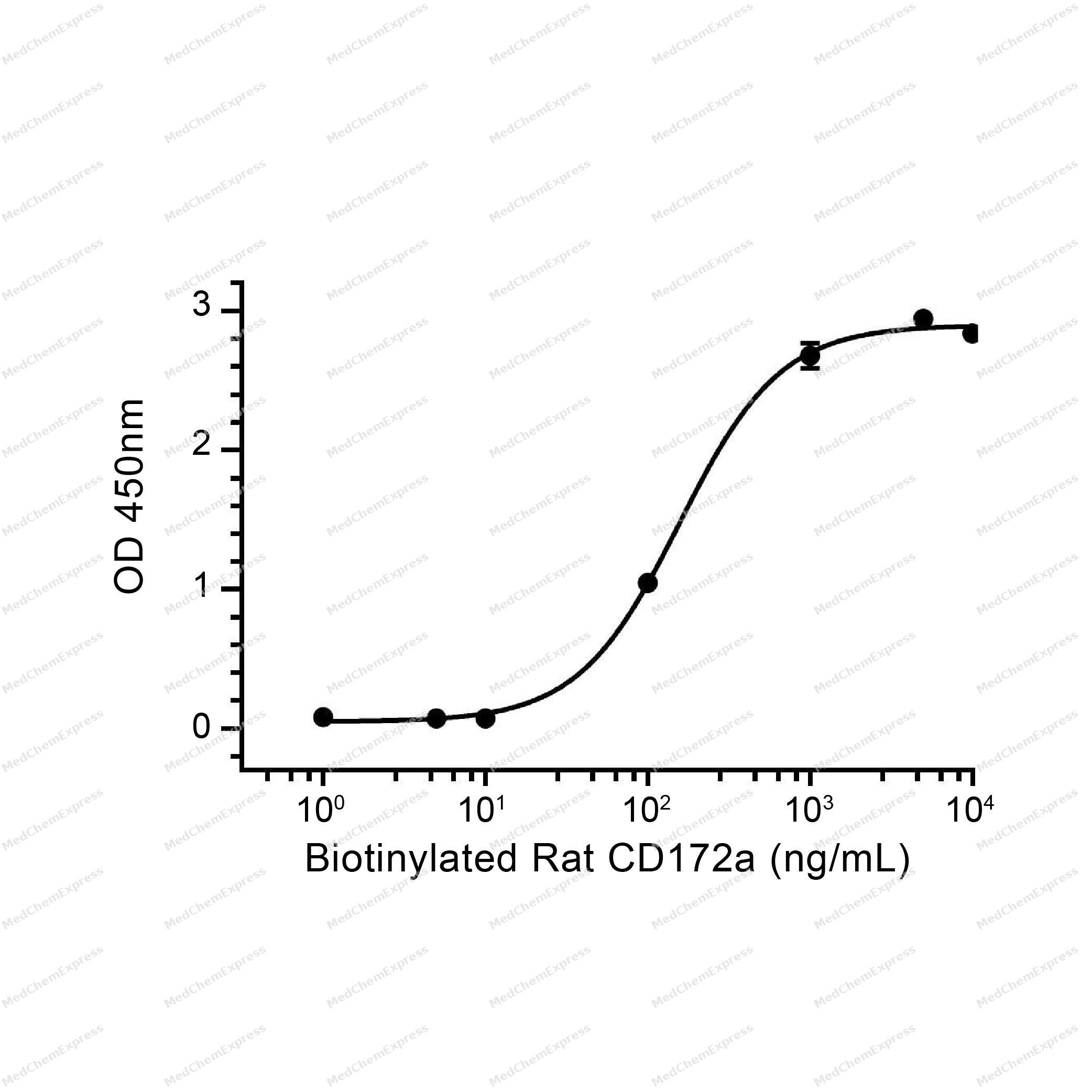
Bioactivity - ELISA


Technical Parameters
-
Species Rat
-
Source HEK293
-
Tag C-His
-
Accession
P97710 (K32-N373)
-
Molecular Construction
-
N-term
-
CD172a (K32-N373)
Accession # P97710 -
His
-
C-term
-
-
Protein Length
Extracellular Domain
-
Synonyms
SIRPA; MYD1; Prev. PTPNS1; Brain-Immunoglobulin-Like Molecule With Tyrosine-Based Activation Motifs; SHPS1; Brain Ig-Like Molecule With Tyrosine-Based Activation Motifs; SIRP; Protein Tyrosine Phosphatase, Non-Receptor Type Substrate 1; BIT; Tyrosine Phos
-
AA Sequence
KELKVTQADKSVSVAAGDSATLNCTVSSLTPVGPIKWFKGEGQNRSPIYSFIGGEHFPRITNVSDATKRNNMDFSICISNVTPEDAGTYYCVKFQKGIVEPDTEIKSGGGTTLYVLAKPSSPEVSGPDSRGSPGQTVNFTCKSYGFSPRNITLKWLKDGKELSHLETTISSKSNVSYNISSTVSVKLSPEDIHSRVICEVAHVTLEGRPLNGTANFSNIIRVSPTLKITQQPLTPASQVNLTCQVQKFYPKALQLNWLENGNLSRTDKPEHFTDNRDGTYNYTSLFLVNSSAHREDVVFTCQVEHDSQPAITENHTVRAFAHSSSGGSMETIPDNNAYYNWN
-
Molecular Weight
Approximately 63-80 kDa, based on SDS-PAGE under reducing conditions, due to the glycosylation.
-
Purity
≥ 95%, as determined by reducing SDS-PAGE.


Product Properties
Lyophilized powder
Lyophilized from a 0.2 μm filtered solution of PBS, pH 7.4. Normally 5 % - 8 % trehalose, mannitol and 0.01% Tween 80 are added as protectants before lyophilization.
<1 EU/μg, determined by LAL method.
It is not recommended to reconstitute to a concentration less than 100 μg/mL in ddH2O.
Stored at -20°C for 2 years from date of receipt. After reconstitution, it is stable at 4°C for 1 week or -20°C for longer (with carrier protein). It is recommended to freeze aliquots at -20°C or -80°C for extended storage.
Room temperature in continental US; may vary elsewhere.


Documentation
-
Data Sheet (238 KB)
-
SDS (251 KB)
- English - EN (251 KB)
- Français - FR (251 KB)
- Deutsch - DE (251 KB)
- Norwegian - NO (251 KB)
- Español - ES (251 KB)
- Swedish - SV (251 KB)
- Italian - IT (251 KB)
- Korean - KR (251 KB)
- Portuguese - PT (251 KB)
-
Handling Instructions (2659 KB)

Calculators
Concentration (start) × Volume (start) = Concentration (final) × Volume (final)


 Powered by Bioz

