3074 Results for "

modulating

" in MedChemExpress (MCE) Product Catalog:
Products (3074)

3074 Results for "modulating" in MCE Product Catalog:

Cat. No.: HY-160550
CAS No.: 3018836-86-4
Target:  

Phosphatase CXCR

Research Areas:  

Inflammation/Immunology

DPM-1003 is a modulator of protein tyrosine phosphatase 1B (PTP1B) and C-X-C chemokine receptor 4 (CXCR4). DPM-1003 binds to the non-catalytic disordered C-terminal fragment of PTP1B. DPM-1003 inhibits the PI3Kγ-mediated AKT/mTOR signaling pathway downstream of CXCR4. DPM-1003 improves the survival rate of mice in a transfusion-related acute lung injury model, and exerts a lung injury protective effect in preclinical mouse models of acute lung injury and sepsis. DPM-1003 can be used in research related to acute lung injury, acute respiratory distress syndrome, transfusion-related acute lung injury and sepsis .
loading...
    loading...
Cat. No.: HY-16443
CAS No.: 173534-37-7
Target:  

OAT

Research Areas:  

Metabolic Disease

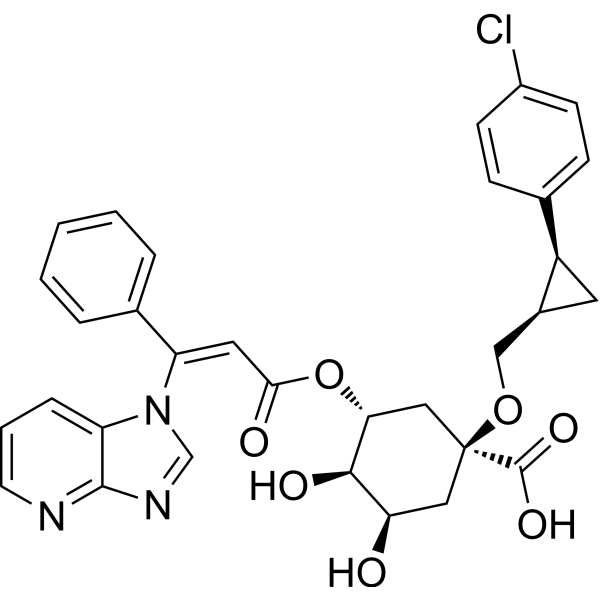
S-4048 is a glucose-6-phosphate translocase modulator and hypoglycemic agent. S-4048 is taken up by hepatocytes via OATP-1 and is rapidly eliminated via the hepatobiliary system in rats. S-4048 blocks glucose-6-phosphate translocase, prevents glucose-6-phosphate from entering the endoplasmic reticulum, and thereby interferes with the glucose-6-phosphatase system (i.e., the final step of hepatic gluconeogenesis and glycogenolysis) to regulate hepatic glucose production. S-4048 completely inhibits glucose production from pyruvate in GLUT2-deficient hepatocytes without affecting the release of cytoplasmic glucose. S-4048 effectively reduces blood glucose levels in rats and has been used in studies related to type 2 diabetes .
loading...
    loading...
Cat. No.: HY-16950AR
CAS No.: 68392-35-8
Synonyms: Afimoxifene (Standard); 4-OHT (Standard)
(E/Z)-4-Hydroxytamoxifen (Standard) is the analytical standard of (E/Z)-4-Hydroxytamoxifen. This product is intended for research and analytical applications. (E/Z)-4-Hydroxytamoxifen (Afimoxifene) is a racemic compound of (Z)-4-Hydroxytamoxifen and (E)-4-Hydroxytamoxifen isomers. (E/Z)-4-Hydroxytamoxifen is a selective estrogen receptor modulator with mixed estrogenic and antiestrogenic activity, which is also an active metabolite of Tamoxifen (HY-13757A). (E/Z)-4-Hydroxytamoxifen is an agonist of the G protein-coupled estrogen receptor (GPER) with relatively low affinity (100-1000 nM). (E/Z)-4-Hydroxytamoxifen is promising for research of cyclical mastalgia, such as breast pain, tenderness, and nodularity .
loading...
    loading...
Cat. No.: HY-170935
Research Areas:  

Cancer

SRSF1-IN-1 is a SRSF1 inhibitor. SRSF1-IN-1 inhibits SRSF1 expression, thereby modulating the splicing of Bcl-x pre-mRNA. SRSF1-IN-1 inhibits the proliferation of various cancer cells. SRSF1-IN-1 induces apoptosis in gastric cancer cells, reduces Bcl-xl expression, and upregulates cleaved PARP and caspase 3. SRSF1-IN-1 induces autophagy and promotes cell death. SRSF1-IN-1 exhibits anti-tumor activity in a mouse gastric cancer xenograft model. SRSF1-IN-1 can be used for the research of various cancers including liver cancer, gastric cancer, breast cancer, colon cancer, glioma, and melanoma .
loading...
    loading...
Cat. No.: HY-172736
CAS No.: 3005272-36-3
Synonyms: BMS-986458
Target:  

PROTACs BCL6 CD20

Research Areas:  

Cancer

Toviblideg (BMS-986458) is a highly selective, orally active cereblon-based BCL6 PROTAC degrader and antitumor agent. Toviblideg selectively degrades BCL6 by binding cereblon to the BTB domain of BCL6, thereby regulating the cell cycle, antiproliferative and interferon signaling pathways, and upregulating the expression and distribution of CD20. Toviblideg modulates the phenotype of follicular helper T cells and reduces circulating tumor DNA levels. The combination of Toviblideg with CD20xCD3 bispecific antibody also enhances the efficiency of T cell tumor infiltration and expansion. Toviblideg induces regression of BCL6-positive tumors and prolongs survival, and it is suitable for research related to B-cell non-Hodgkin lymphoma, diffuse large B-cell lymphoma, follicular lymphoma, and relapsed/refractory lymphoma .
loading...
    loading...
Cat. No.: HY-173062
CAS No.: 2994635-04-8
Research Areas:  

Others

BRD4 Inhibitor-40 (Compound 23) is the inhibitor for BRD that inhibits BRD4-BD1, BRD4-BD2, BRD2-BD1 and BRD2-BD2 with IC50s of 16.1, 142.18, 29.35 and 302.35 nM, respectively. BRD4 Inhibitor-40 modulates the expression of c-Myc and p21, arrests cell cycle at G1 phase, inhibits Pkd1-null (PN) renal cystic epithelial cells, and blocks the renal cysts formation in Madin-Darby canine kidney and embryonic kidney vesicle models. BRD4 Inhibitor-40 exhibits renal cysts inhibitory activity in mouse models .
loading...
    loading...
Cat. No.: HY-173679
CAS No.: 2569517-30-0
Research Areas:  

Infection Cancer

RBN012811 is a highly selective PROTAC-based PARP14 degrader. RBN012811 forms a ternary complex with cereblon by binding to the NAD + site of PARP14, and mediates the specific degradation of PARP14 via the ubiquitin-proteasome pathway (IC50=10 nM). RBN012811 effectively depletes endogenous PARP14 in various cell lines and primary human macrophages, thereby downregulating IL-10 production and IFN-β mRNA levels, increasing phosphorylated STAT1 levels to enhance inflammatory signaling, and inhibiting interferon-induced ADPr condensate formation. RBN012811 also modulates viral replication, exhibiting increased HSV1 replication while reducing VSV replication. RBN012811 has important application value in research related to cancer and viral infections .
loading...
    loading...
Cat. No.: HY-175504
CAS No.: 932544-59-7
Target:  

Dopamine Receptor PERK

Research Areas:  

Neurological Disease

MLS6357 is a D3 dopamine receptor (D3R)-selective positive allosteric modulator (PAM)-antagonist. MLS6357 exhibits antagonist activity in the D3R-mediated and the BRET-based β-arrestin recruitment assay with IC50s of 13 and 14 μM, and no activity for other DAR subtypes (D1R/D2R/D4R/D5R) (IC50 > 100 μM). MLS6357 is also an antagonist in the D3R-mediated Go-BRET assay with an IC50 of 17 μM. MLS6357 can be used for the study of neuropsychiatric disorders, including substance use disorder .
loading...
    loading...
Cat. No.: HY-178281
CAS No.: 931928-13-1
Research Areas:  

Neurological Disease

E0199 is a novel potent dual-target KV7/NaV modulator that activates the KV7 channel (KV7.2/7.3 (EC50 = 12.78 nM), KV7.2 (EC50 = 0.50 μM), and KV7.5 (EC50 = 27.14 nM) channels) while simultaneously blocks the NaV1.7 (IC50 = 0.52 μM), NaV1.8 (IC50 = 0.24 μM), and NaV1.9 (IC50 = 0.16 μM) channels. E0199 shows a potent analgesic effect without affecting heart and skeletal muscle ion channels critically in a chronic constriction injury (CCI) mouse model. E0199 can be used for Neuropathic pain (NP) research .
loading...
    loading...
Cat. No.: HY-179585
Target:  

Apoptosis

Research Areas:  

Cancer

DD-CIP2 is a DNA damage and apoptosis inducer. DD-CIP2 demonstrates effective anti-proliferative activity against multiple cancer cell. DD-CIP2 modulates the DNA damage response pathway, triggering robust DNA damage, cell cycle arrest, and apoptosis in vitro. DD-CIP2 demonstrates significant anti-tumor efficacy in vivo at well-tolerated doses, without substantial toxicity. DD-CIP2 exhibits superior cytotoxic potency against a broad panel of blood-and solid-tumor-derived cancer cell lines independent of their BRCA1/2 status. DD-CIP2 can be used for small-cell lung cancer (SCLC) and non small-cell lung cancer (NSCLC) research .
loading...
    loading...
Cat. No.: HY-18102BS
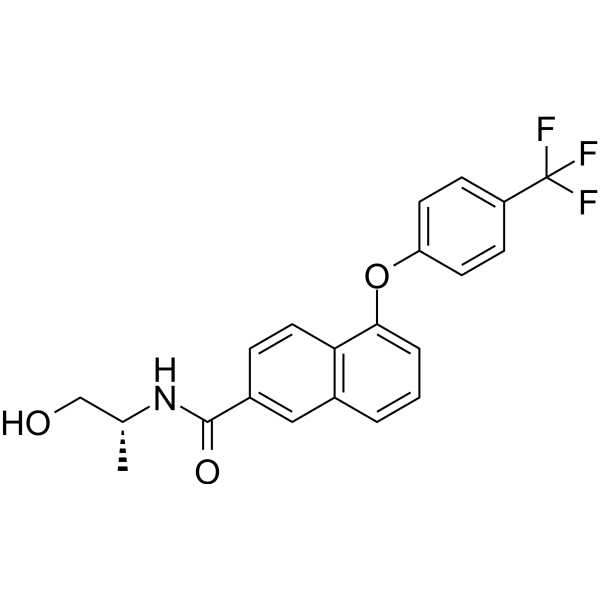
GLPG0492- 13C,d3 racemate is 13C-labeled GLPG0492 (racemate) (HY-18102B). GLPG0492 racemate is an orally active, non-steroidal selective androgen receptor modulator. GLPG0492 racemate exerts functional transactivation by binding to the ligand-binding domain of the receptor, exhibiting preferential partial agonist activity in muscle and bone tissues with low activity in reproductive tissues. GLPG0492 racemate effectively counteracts muscle atrophy-related pathways, significantly enhances muscle strength, maintains motor ability, reduces fibrosis and improves electrophysiological parameters. GLPG0492 racemate prevents immobilization-induced muscle atrophy and regulates muscle mass homeostasis, serving as a valuable tool compound for studies on Duchenne muscular dystrophy, muscle loss and various types of disuse musculoskeletal atrophy .
loading...
    loading...
Cat. No.: HY-181102
CAS No.: 3081614-92-5
TGR5 agonist 10 is a selective, allosteric and orally active Takeda G protein coupled receptor 5 (TGR5) agonist with EC50s of 0.8 μM and 0.6 μM for human TGR5 and mouse TGR5, respectively. TGR5 agonist 10 demonstrates selectivity for TGR5 over FXR. TGR5 agonist 10 activates hTGR5 and mTGR5 to induce cAMP accumulation, and positively modulates lithocholic acid functional activity and potency at hTGR5, with higher selectivity for cAMP formation over β-arrestin2 recruitment. TGR5 agonist 10 exerts glucose-lowering effects in Mus musculus oral glucose tolerance tests. TGR5 agonist 10 can be used for the research of diabetes .
loading...
    loading...
Cat. No.: HY-185978
CAS No.: 2133456-91-2
Target:  

GABA Receptor

Research Areas:  

Neurological Disease

GL-II-73 is a selective, orally active and blood-brain barrier permeable positive allosteric modulator of α5GABAA receptor, acting on the benzodiazepine-binding site of GABAA receptors. The binding selectivity of GL-II-73 for the α5 subtype is 6-, 11- and 12.5-fold higher than that for the α2, α1 and α3 subtypes, respectively . GL-II-73 reverses pilocarpine-induced hyperactivation of dopamine neurons in the ventral tegmental area, improves working memory and pyramidal neuron dendritic morphology in 5xFAD mice, but does not reduce β-amyloid load . GL-II-73 can be used in research related to Alzheimer's disease and temporal lobe epilepsy with comorbid psychosis .
loading...
    loading...
Cat. No.: HY-187204
Target:  

ROCK

Research Areas:  

Neurological Disease

RX-044 is a ROCK1/ROCK2 inhibitor with ROCK1 IC50 10.01 nM and ROCK2 IC50 9.68 nM, and demonstrates kinase selectivity. RX-044 induces reversible cell retraction, modulates cytoskeletal organization via F-actin depolymerization, inhibits cell contractility, and attenuates TGF-β2-induced cell migration. RX-044 preserves retinal ganglion cell survival, restores electroretinography responses, and ameliorates histopathological changes. RX-044 lowers intraocular pressure in a mouse ocular hypertension model. RX-044 shows no cytotoxicity in target cells. RX-044 exhibits initial ocular irritation that subsides with extended dosing. RX-044 can be used for the research of glaucoma .
loading...
    loading...
Cat. No.: HY-400902
CAS No.: 2506273-81-8
Target:  

YAP VEGFR Hippo (MST)

Research Areas:  

Cancer

VT3989 is an orally active pan-TEAD autopalmitoylation inhibitor that modulates the Hippo signaling pathway. VT3989 directly binds to TEAD transcription factors to block their palmitoylation modification, thereby disrupting the formation of YAP/TAZ-TEAD complexes and inhibiting downstream oncogenic transcriptional activity. VT3989 effectively inhibits the growth of NF2-deficient schwannoma and meningioma cells and reverses the Schwann cell phenotype. In addition, VT3989 exerts a synergistic effect when combined with Osimtinib (HY-15772) in EGFR-mutant non-small cell lung cancer models, significantly delaying tumor recurrence and prolonging survival. VT3989 can be used for the research of epithelioid hemangioendothelioma, malignant pleural mesothelioma, type 2 neurofibromatosis and related advanced solid tumors .
loading...
    loading...
Cat. No.: HY-90003AR
CAS No.: 30123-17-2
Tianeptine sodium salt (Standard) is the analytical standard of Tianeptine sodium salt (HY-90003A). This product is intended for research and analytical applications. Tianeptine sodium salt is an atypical antidepressant. Tianeptine sodium salt is a moderate-intensity agonist of the μ-opioid receptor (MOR), and to a lesser extent, is an agonist of the δ-opioid receptor (DOR). Tianeptine sodium salt is a glutamate modulator that can enhance AMPA receptor and antagonize NMDA receptor. Tianeptine sodium salt increases sensitivity of the α1 adrenergic receptor, which only manifests in chronic treatment. Tianeptine sodium salt exerts neuroprotective effects under stress/inflammation-induced conditions, exhibiting anti-inflammatory and antioxidant properties. Tianeptine sodium salt inhibits MMP-9 by suppressing the PI3K/Akt-mediated NF-κB pathway. Tianeptine sodium salt can be used to alleviate symptoms of depression and anxiety, but does not cause sedative effects.
loading...
    loading...
Cat. No.: HY-B0113AR
CAS No.: 95510-70-6
Synonyms: H 16868 sodium (Standard)
Omeprazole (sodium) (Standard) is the analytical standard of Omeprazole (sodium). This product is intended for research and analytical applications. Omeprazole sodium (H 16868) is an orally active H +,K +-ATPase inhibitor and a proton pump inhibitor. Omeprazole sodium competitively inhibits CYP2C19, CYP3A4, and CYP2C9 activity. Omeprazole sodium inhibits gastric acid secretion and can be used for acid-related gastrointestinal disorders. Omeprazole sodium inhibits pancreatic cancer cell proliferation, induces apoptosis, autophagosome accumulation (elevated LC3-I and LC3-II levels), oxidative stress, and cytogenetic imbalance, modulates lysosomal transport, reduces inflammatory cytokines. Omeprazole sodium alters small intestinal morphology and magnesium absorption, and induces gastric mucosa morphologic changes. Omeprazole sodium aslo has neuroprotective and antibacterial effects .
loading...
    loading...
Cat. No.: HY-B0113R
CAS No.: 73590-58-6
Synonyms: H 16868 (Standard)
Omeprazole (Standard) is the analytical standard of Omeprazole. This product is intended for research and analytical applications. Omeprazole (H 16868) is an orally active H +,K +-ATPase inhibitor and a proton pump inhibitor. Omeprazole competitively inhibits CYP2C19, CYP3A4, and CYP2C9 activity. Omeprazole inhibits gastric acid secretion and can be used for acid-related gastrointestinal disorders. Omeprazole inhibits pancreatic cancer cell proliferation, induces apoptosis, autophagosome accumulation (elevated LC3-I and LC3-II levels), oxidative stress, and cytogenetic imbalance, modulates lysosomal transport, reduces inflammatory cytokines. Omeprazole alters small intestinal morphology and magnesium absorption, and induces gastric mucosa morphologic changes. Omeprazole aslo has neuroprotective and antibacterial effects .
loading...
    loading...
Cat. No.: HY-B0113S4
Synonyms: H 16868-d3 sodium
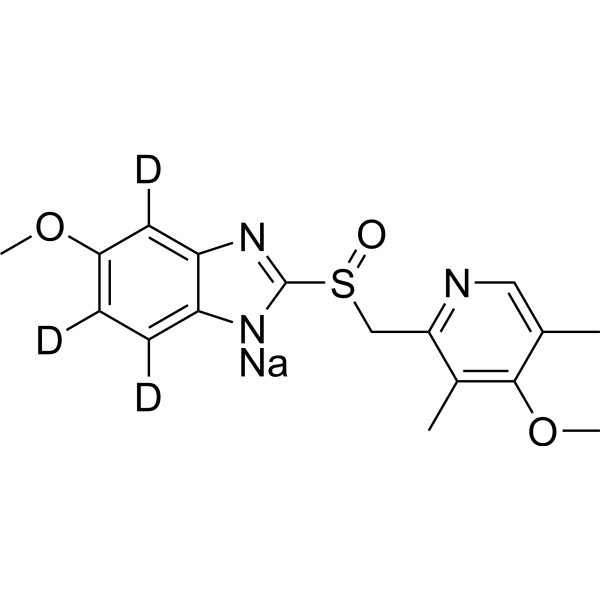
Omeprazole-d3 sodium is deuterated labeled Omeprazole (HY-B0113). Omeprazole sodium (H 16868) is an orally active H +,K +-ATPase inhibitor and a proton pump inhibitor. Omeprazole sodium competitively inhibits CYP2C19, CYP3A4, and CYP2C9 activity. Omeprazole sodium inhibits gastric acid secretion and can be used for acid-related gastrointestinal disorders. Omeprazole sodium inhibits pancreatic cancer cell proliferation, induces apoptosis, autophagosome accumulation (elevated LC3-I and LC3-II levels), oxidative stress, and cytogenetic imbalance, modulates lysosomal transport, reduces inflammatory cytokines. Omeprazole sodium alters small intestinal morphology and magnesium absorption, and induces gastric mucosa morphologic changes. Omeprazole sodium aslo has neuroprotective and antibacterial effects .
loading...
    loading...
Cat. No.: HY-B0504S1
CAS No.: 1173022-95-1
Synonyms: NSC13123-13C
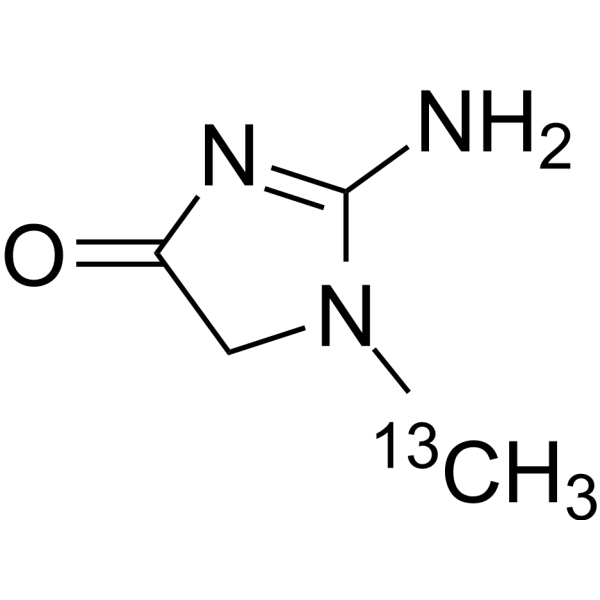
Creatinine- 13C is the 13C-labeled Creatinine. Creatinine (NSC13123) is an orally active, blood-brain barrier-permeable modulator of GABAA and NMDA receptors, with activities of antioxidation and metabolic regulation. Creatinine is generated via non-enzymatic conversion of creatine and phosphocreatine in muscle. Creatinine serum levels correlate with muscle mass, glomerular filtration rate, and extrarenal clearance, serving as an evaluation biomarker for renal function, muscle mass, and clinical outcomes, and used for perioperative renal risk assessment. In addition, Creatinine can induce specific Cryptococcus species to produce creatinine deiminase and act as their nitrogen source, while it can be secreted via renal tubules. Creatinine is widely used in research related to various diseases such as neurodegenerative diseases, psychiatric disorders, acute kidney injury, chronic kidney disease, and renal failure .
loading...
    loading...

